
Our readers keep the lights on and my morning glass full of iced black tea. As an Amazon Associate, I earn from qualifying purchases.
Specs are compiled from manufacturer listings and verified buyer reviews and can change over time — please confirm the key details on the product page before buying.
Acid in ordinary paper causes yellowing and brittleness over time. Ordinary paper turns yellow, brittle, and eventually crumbles because of the acids left in it during manufacturing. Acid-free archival paper is made to resist that decay, so your certificates, resumes, artwork, and family photos survive for generations instead of a few years.
I’m Min — the founder and writer behind Gadgets Feed. This guide is built by comparing the manufacturers’ published specifications and the patterns across verified customer reviews, so you get each pick’s real strengths and trade-offs instead of marketing spin.
To protect a once-in-a-lifetime document or wrap fragile heirlooms, you need acid free archival paper that matches your project’s weight, texture, and format. Match the sheet’s weight, texture, and format to your project’s needs for lasting protection.
Our Picks at a Glance


How To Choose The Best Acid Free Archival Paper
Before you buy, decide what the paper will actually do. Printing a resume demands a different sheet than wrapping a vintage dress or protecting a watercolor. Your project determines the weight, the cotton content, and if you need buffered or unbuffered paper (buffered has an alkaline reserve to neutralize acids; unbuffered has none, for items sensitive to alkalinity).
Match the weight to the job
Paper weight tells you how substantial the sheet feels. Lighter tissue around 7.3 lb is for wrapping and interleaving delicate items. Heavier 24 lb sheets work in most printers and carry certificates with confidence. A 32 lb cotton sheet feels noticeably more luxurious in hand — the difference between a printout and a presentation.
Cotton means longevity
Cotton fibers are naturally stronger and more stable than wood pulp. A 100% cotton sheet resists yellowing and holds up to handling far better over decades. If the paper is for a heirloom document, look for cotton rag content rather than a generic acid-free claim.
Buffered versus unbuffered for photos
Buffered paper contains an alkaline reserve that neutralizes future acid exposure. Unbuffered tissue has no added buffer, which matters for photographs and certain textiles that can react badly to alkaline compounds. For storing prints and negatives, choose unbuffered to avoid chemical interaction with the image itself.
Quick Comparison
| Model | Best For | Sheet Count | Paper Weight | Sheet Size | Amazon |
|---|---|---|---|---|---|
| Southworth Specialty Paper 964C★ Best Overall | Certificates with aged look | 500 | 24 lb | 8.5″ x 11″ | Amazon |
| Southworth Cotton Résumé PaperBest Value | Heirloom resumes & letters | 100 | 32 lb | 8.5″ x 11″ | Amazon |
| Gersoniel Archival TissueWrapping Pick | Wrapping clothes & photos | 100 | 7.3 | 20″ x 30″ | Amazon |
| Lineco Unbuffered Tissue | Photo & print interleaving | 12 | 10 | 30″ x 40″ | Amazon |
| Epson Velvet Fine Art Paper | Fine art inkjet prints | 20 | 10 | 8.5″ x 11″ | Amazon |
| Wanderings Handmade A4 | Wedding invites & calligraphy | 50 | 150 GSM | 8.3″ x 11.7″ | Amazon |
| Glassine Paper 16 x 20 | Artwork & food-safe wrapping | 100 | 24 | 16″ x 20″ | Amazon |
| NomadCraftsCo. Vintage Sheets | Pirate maps & medieval crafts | 75 | 150 GSM | 8.3″ x 5.8″ | Amazon |
| Southworth Parchment Ivory 984C | Elegant invitations & awards | 500 | 24 lb | 8.5″ x 11″ | Amazon |
In-Depth Reviews
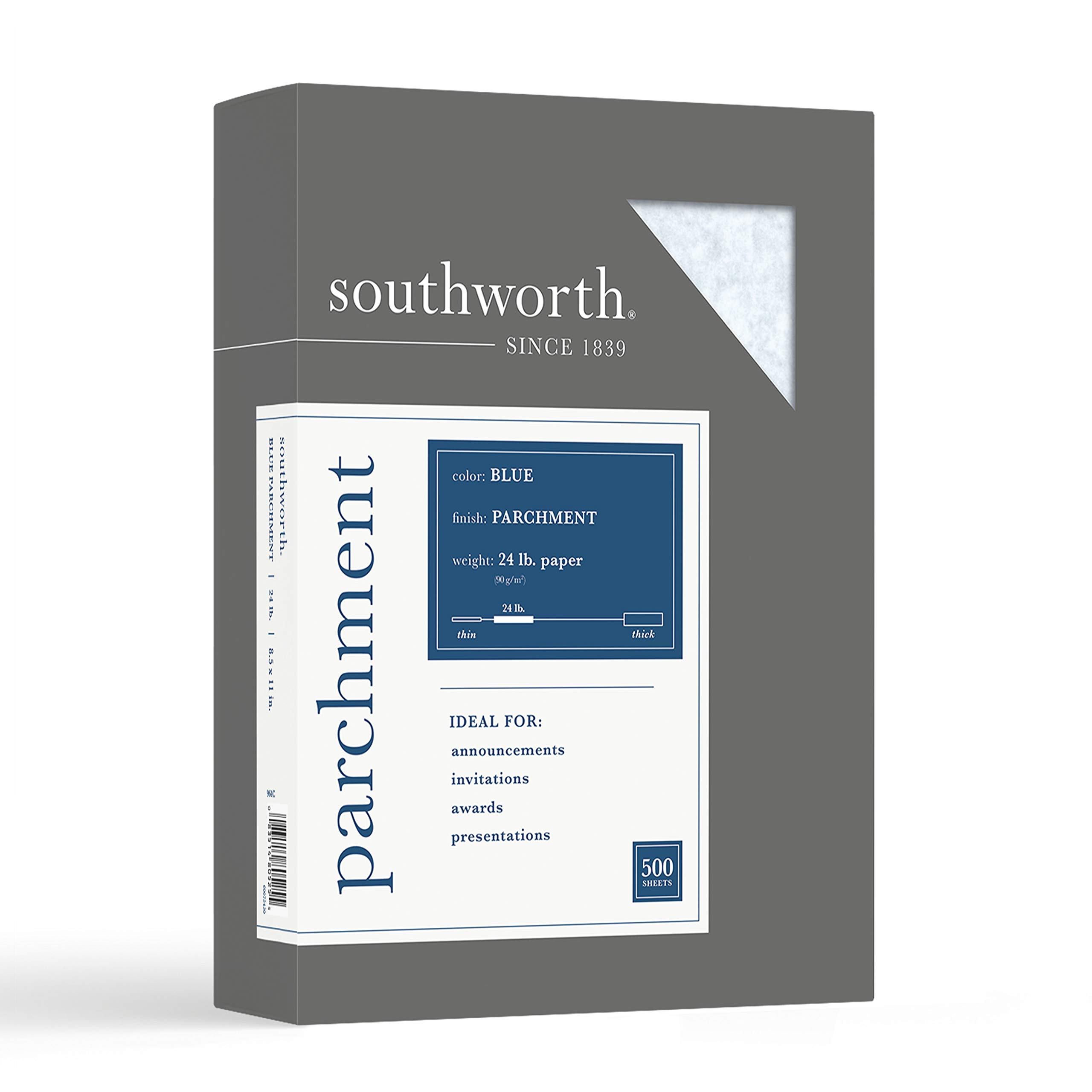
1. Southworth 8.5-inch x 11-inch Specialty Paper, 24 lbs., 100 Brightness
Our pick — over 4.5★ from 750+ verified ratings; the strongest balance of quality and price.
The five-hundred-sheet workhorse that gives certificates an heirloom feel while staying affordable.
For printing diplomas, wedding programs, and handmade books, this Southworth sheet is the crowd favorite — a full 4.8-star average across 700+ owners. You get 500 sheets of 24 lb, 100% cotton paper with an uncoated wove finish that takes ink beautifully. The standout trait owners rave about is the appearance: the copper-toned parchment delivers a genuinely aged, distinguished look straight from the start.
It runs through laser, inkjet, and copier machines without incident, and at 6.5 pounds per box it has real presence on your desk. Owners mention it is “slightly heavier than normal paper,” which is exactly what makes certificates feel worthy of framing. The 24 lb weight keeps it thin enough for laser printers while still feeling substantial — a balance that is hard to hit.
The only recurring gripe is bleed-through on certain projects, so test a single sheet before committing to a full print run. The box occasionally arrives with a crushed corner, but the paper itself holds up. As buyers report: “Price is reasonable for the quantity of 500 pages of paper.”
The Highlights
- 500 sheets of archival-grade cotton paper at a value price
- Copper parchment tone looks genuinely aged and prestigious
- Prints cleanly on inkjet, laser, and copier machines
The Trade-Offs
- Blue color and 24 lb weight won’t suit every project
- Bleed-through can occur with heavy ink coverage
Reach for it if: you need a large quantity of cotton archival paper for certificates, resumes, or programs and want an authentic old-world tone.
Look elsewhere if: your printer chokes on heavier sheets or you need pure white rather than a tinted parchment.
2. Southworth 100% Cotton Résumé Paper, 32 Lb, Recycled
A heavier, more luxurious cotton sheet that makes a first impression before you say a word.
This 32 lb cotton sheet gives resumes and letters a substantial, premium feel that stands out. At 32 lb, it is noticeably more substantial than the 24 lb option above — a 4.4x jump in weight class that owners can feel instantly. Its 100% recycled cotton, acid-free, and lignin-free construction resists yellowing for about a century.
Owners mention it holds up to heavy typing without damage, and the print comes out “very clear and legible.” One owner summed up the quality gap neatly: “Much heavier and higher quality than a competitor that claimed 72lb weight.” That is the real story — this sheet punches above what most resume papers deliver at this level.
The catch is the watermark. Most owners find it elegant and professional, but a few report it ruins the clean appearance they wanted. At 100 sheets per box and 1.8 pounds total, it is light enough to carry to interviews easily.
The Standout Spec: 32 lb 100% cotton recycled paper that resists yellowing and holds up to heavy use — the definitive pick for resumes, cover letters, and thank-you notes that need to feel premium.
The One Caveat: the watermark divides opinions, so check if you want that embossed marker on your letterhead before ordering.
Best for: anyone sending a resume, cover letter, or thank-you note that must feel substantial and sophisticated.
Think twice if: you dislike watermarks on your stationery or need a pure, bright white rather than the slightly warm cotton tone.
3. Gersoniel 100 Sheets 20 x 30 Inch Acid Free Archival Tissue Paper
A 20-by-30-inch shield that wraps your grandmother’s treasures without a single scratch.
This is a protection paper first and a printing paper never. Each of the 100 sheets is a generous 30″L x 20″W — about 2.7x the surface area of a standard letter sheet — giving you room to wrap clothing, artwork, old photographs, and even children’s books without folding them into creases. The thin 7.3 lb tissue is the lightest pick here, and that is exactly the point: it is soft enough to nestle against delicate surfaces.
Owners praise the quality most, especially how it “does not scratch my photographs” during transfers from boxes to portfolios. The acid-free construction protects against the humidity and light that degrade paper goods over time. It folds, shapes, and cuts easily for flower-making projects and gift wrapping alike.
Opinions split on durability — some find the sheets sturdy while others describe them as flimsy. This is inherently thin tissue, so treat it as a wrapping layer, not a rigid protector. An occasional delivery arrives with an unpleasant smell, which is worth knowing if you are packing items for long-term storage.
Owner Favorites
- Large 20″ x 30″ sheets wrap clothes, photos, and collectibles easily
- Acid-free build protects valuables from humidity and light
- Soft, non-scratching surface is safe for photographs and models
What to Expect
- Thin tissue tears more easily than heavyweight cotton sheets
- One delivery smelled of smoke, so inspect before long-term use
Reach for this if: you need an affordable, generous supply of acid-free tissue for wrapping clothes, photos, and gifts.
skip it if: you want a sturdy sheet you can reuse many times — this is single-use protective tissue.
4. Lineco Unbuffered Interleaving Tissue Paper, 30×40 Inches

Museum-grade unbuffered tissue that separates your prints and photos from the acid that would age them.
When the goal is preservation rather than presentation, this Lineco tissue is the specialist choice. Each of the 12 sheets is a commanding 30″ x 40″ — the largest surface here — and the paper is very thin at a 10 lb weight and just 0.001 density. That extreme thinness gives maximum translucency, so you can see your artwork through the protective layer while keeping it completely acid-free.
Unbuffered construction is the detail that matters for photographers: it contains no alkaline reserve, making it safe for colored prints, textiles, and watercolors that can react to buffered papers. Owners use it to wrap wedding dresses, veils, old photos, and sterling silver ornaments without fear of chemical interaction. The sheets fold without tearing and hold their shape during repeated handling.
The trade-off is quantity — 12 sheets is a modest supply compared to the 100-sheet packs here. But for genuine archival separation work, the quality justifies the smaller count. The brand is made in the USA and carries real conservation credibility.
Conservation Angle: unbuffered, acid-free, ultra-thin tissue specifically designed to interleave prints, documents, and textiles without chemical interaction.
The Honest Limit: 12 sheets goes quickly if you are wrapping large items, so budget for the higher cost per sheet.
Best for: photographers and collectors storing prints, negatives, wedding dresses, or heirloom textiles that need genuine conservation-grade separation.
Look elsewhere if: you just need bulk wrapping tissue for gifts or moving — you will not use the archival premium.
5. Epson Velvet Fine Art Paper (8.5×11 Inches, 20 Sheets)

A velvety cotton rag surface that makes digital prints look like original watercolors.
This is the paper for artists who want gallery-grade output from a home printer. The 100% cotton rag base is acid-free and museum quality, built to preserve fine art and photos for generations. The bright white surface — rated at 98 brightness — reproduces colors with excellent accuracy, and the paper’s enhanced 1440 dpi printing capability delivers crisp, gallery-worthy detail.
Owners consistently call out the paper quality as the defining strength, with the velvety matte finish making prints “look like watercolor.” The substantial weight gives prints a professional presence, and it works beautifully with Epson printers and Canon models alike. At 20 sheets per pack, this is a premium consumable for serious output rather than bulk printing.
The honest caveats: it is expensive per sheet, and at over 300 grams it is too thick for some office printers with lower weight limits. Owners suggest checking your printer’s maximum paper weight before buying. A slight cream cast means it is not a pure bright white, though most find that adds warmth.
Artist Wins
- Museum-quality cotton rag base preserves fine art for the long haul
- Velvety matte finish makes prints look hand-painted
- Bright 98-rated surface for accurate, vivid color reproduction
Printer Limits
- Too thick for printers capped under 300 grams
- Premium price per sheet limits bulk work
Reach for it if: you print fine art, watercolor reproductions, or professional portfolio pieces and want museum-grade longevity.
Think twice if: your printer has a low weight limit or you need budget paper for everyday document printing.
6. Wanderings Handmade A4 Cream Mixed Media Paper with Deckle Edge

Fourteenth-century papermaking technique meets your home printer for invitations with soul.
Each of these 50 sheets is handcrafted one at a time using techniques passed down since 14th-century India. The 150 GSM cotton paper is sun-dried and cold-pressed, then treated with a plant-based sizing that makes it genuinely versatile — watercolor, acrylics, ink, charcoal, and colored pencils all behave beautifully on the textured surface. The deckled edges give every sheet a charming, hand-torn finish.
This is the paper owners describe as “feels like 1800s rag paper” — soft, foldable, and willing to accept ink from a felt pen or a calligraphy nib without bleeding. It prints flawlessly through most home inkjet and laser printers, though you should feed sheets one at a time through the manual tray and run a test first. The 100% recycled cotton construction is acid-free, chemical-free, and tree-free.
The cost is higher per sheet than commodity paper, but this is a specialty product for wedding invitations, menus, period documents, and bespoke stationery. The warm cream tone and textured surface are the entire appeal — expect a handcrafted, not mass-produced, aesthetic.
The Sensory Sell: handmade cotton paper with a soft, slightly textured cold-pressed surface and deckled edges — the closest thing to 18th-century rag paper you can run through a printer.
The Practical Note: feed one sheet at a time and test before your full run, since printer tolerances vary on textured paper.
Best for: wedding invitations, calligraphy, period documents, and mixed-media art that deserve a handcrafted feel.
pass on it if: you need uniform, ultra-smooth paper for everyday printing — the texture is the point here.
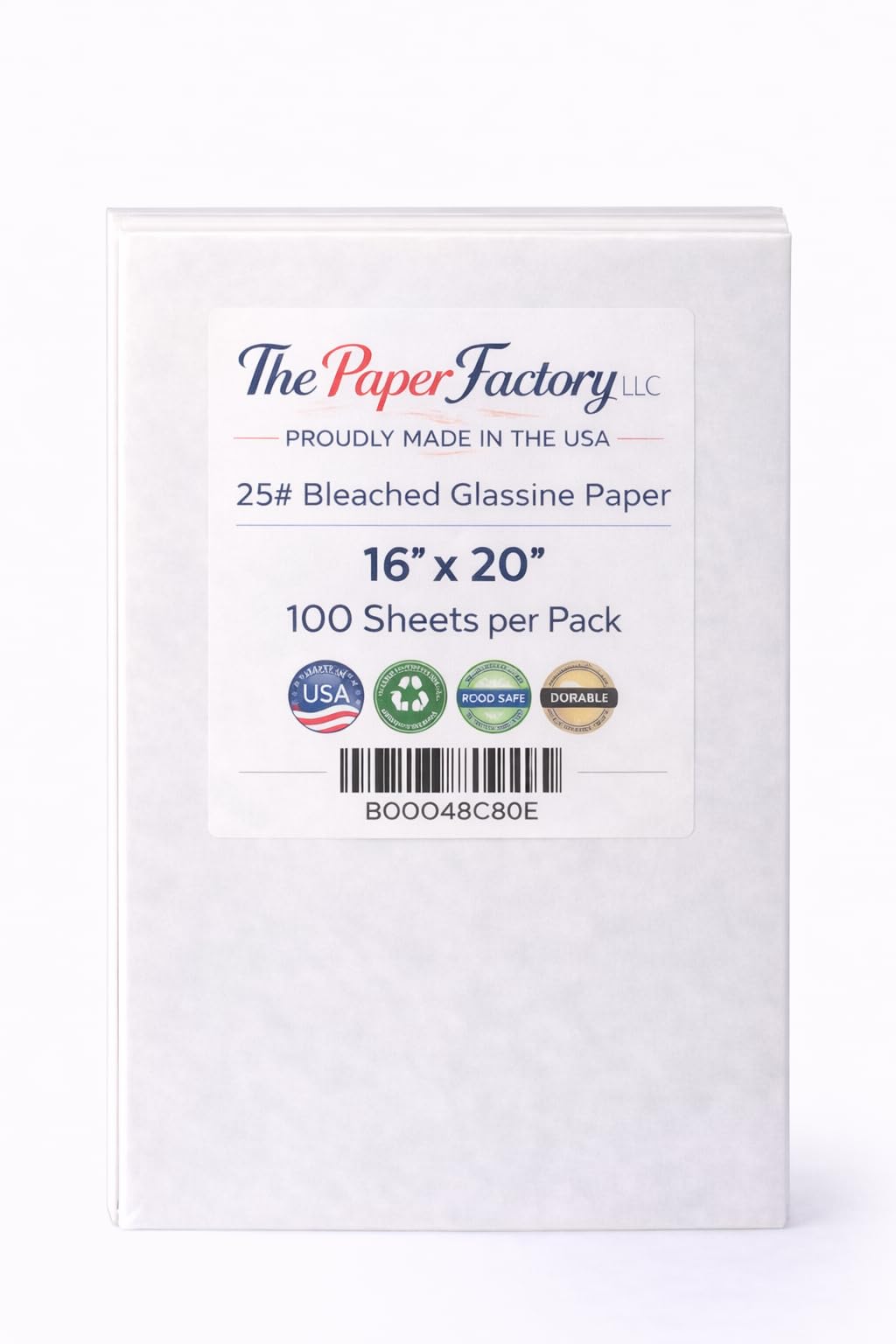
7. Glassine Paper 16 x 20 — 100 Sheets Premium Acid-Free Neutral pH
A translucent neutral-pH sheet that protects your art and wraps your lunch with equal grace.
Glassine is the chameleon of the archival world, and this 100-sheet pack shows why. The 24 lb neutral pH paper is acid-free and archival-grade for protecting documents, drawings, photographs, and negatives from dust and abrasion. But it is also grease-resistant and moisture-resistant, which is why owners rave about using it in the kitchen — weighing meat, separating baked goods, and wrapping deli items.
The translucent, smooth finish lets you see stored artwork without unwrapping it, and the paper folds, creases, and writes on without tearing. Owners use it between fine art drawings and silkscreens in museum storage boxes, praising how “absolutely no dents or creases” arrived thanks to careful packaging. Made in the USA, it is a versatile multi-purpose sheet that home, school, and professional settings all find useful.
The 16″ x 20″ size is a middle ground — large enough for most art prints but not the mammoth 30″ x 40″ of the Lineco tissue. It is food-safe, which is a rare bonus in this category.
The Multi-Tool
- Translucent finish lets you see stored art without unwrapping
- Grease and moisture resistant, yet still breathable
- Food-safe for wrapping baked goods and deli items
The Boundaries
- 16″ x 20″ size is smaller than full archival tissue sheets
- Not as thin or translucent as dedicated interleaving tissue
Best for: artists storing and separating prints, silkscreens, and drawings, plus anyone who wants one paper for both art and food prep.
Look elsewhere if: you need extra-large sheets for sprawling artwork or ultra-thin photo interleaving.
8. NomadCraftsCo. Blank Vintage Handmade Deckled Edge Paper, 75 Sheets

Seventy-five sheets of medieval-looking parchment for treasure maps and scrolls with real character.
This is the paper for projects that demand an antique soul — pirate treasure maps, ancient book pages, vintage invitation letters, and scrolls. The 75 handmade sheets are pressed to a 150 GSM weight and sun-dried, giving each one a distinct, rustic character. The deckled edges on all four sides complete the aged aesthetic beautifully.
The 8.3″ x 5.8″ sheets are smaller than standard letter size — closer to A5 — which suits crafts and cards rather than full documents. Owners describe the paper as “slick-smooth and durable,” taking ink, felt pen, and pencil well. One owner confirmed it works with quill ink without bleeding, and the 100% recycled, acid-free construction means your creations are built to last.
The honest split: bleed resistance is mixed. Some customers note no bleed even with felt pens, while others note it doesn’t work well with charcoal or pastels and can bleed through with certain inks. Durability is also inconsistent — some sheets are sturdy, others shred and crumble. Test your medium on a spare sheet before committing.
The Charm: deep parchment tone with four deckled edges that instantly reads as antique — ideal for maps, scrolls, and period-style crafts.
The Reality Check: medium compatibility is inconsistent, so test ink, charcoal, and pastel on a spare sheet first.
Reach for it if: you are making vintage-style crafts, maps, scrolls, or book pages and want that authentic aged look.
Think twice if: you need a dependable surface for heavy watercolor or wet media — this is a craft sheet, not a watercolor paper.
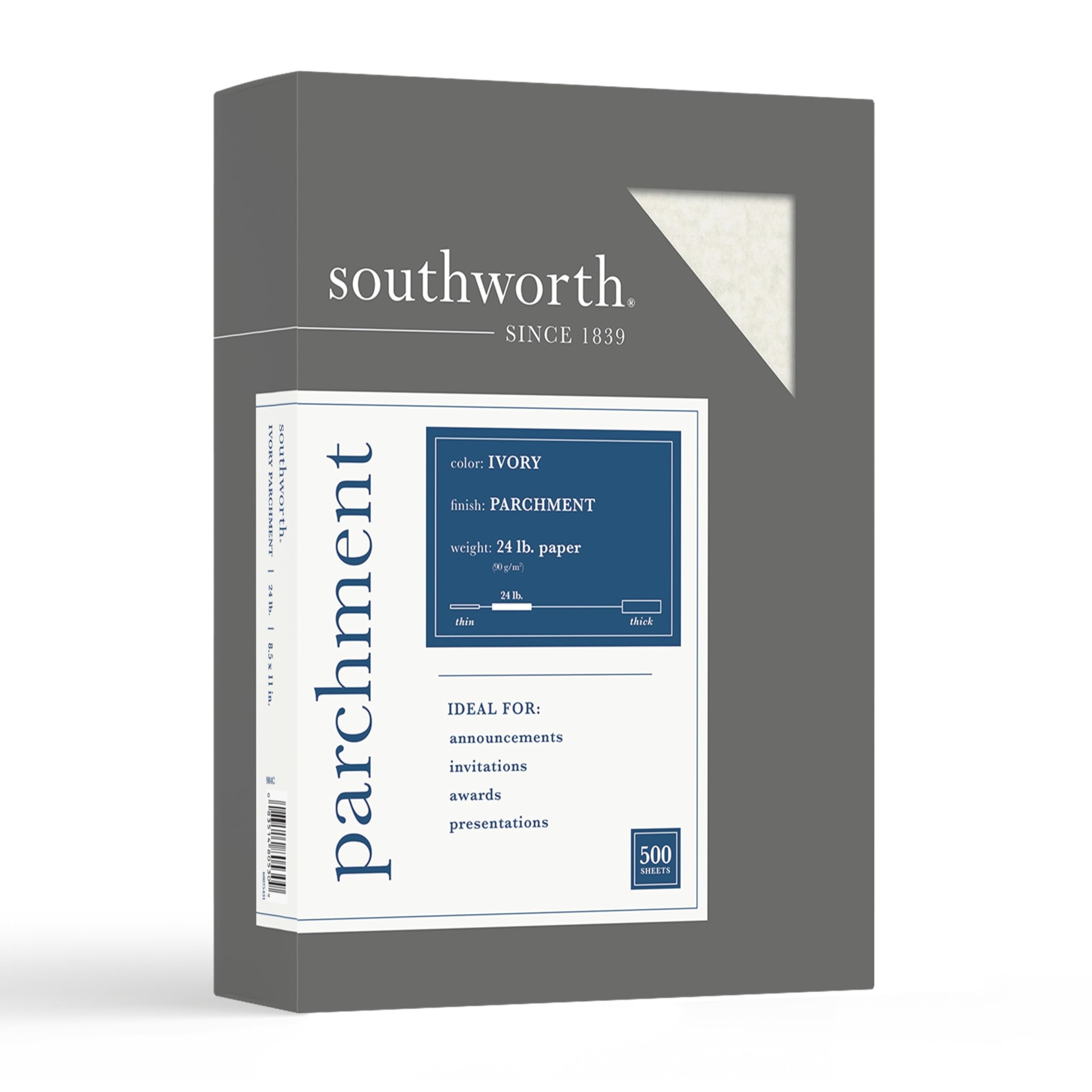
9. Southworth 984C Parchment Specialty Paper Ivory, 24 lb
A textured ivory parchment that turns awards and invitations into old-world keepsakes.
This Southworth parchment’s laid texture and ivory tone give awards and invitations an elegant, vintage look. The 500 sheets of 24 lb paper carry a laid texture and a warm ivory tone that owners consistently describe as “vintage” — sophisticated rather than stark. It is acid-free for archival quality, so your certificates and invitations will look as elegant decades from now as they do today.
This is the paper that makes calligraphy practice a joy — reviewers point out the slight texture grips ink beautifully with no bleeding, and it prints practice lines easily. It is compatible with laser, inkjet, and copier machines, and the color consistency across the entire 500-sheet box impresses repeat buyers. One owner noted it is as good as handmade paper at a fraction of the cost.
The 6.8 pound box is the heaviest in this lineup, which speaks to the sheer quantity you get. Owners praise the value for money above almost everything else — this is premium-feeling paper in a volume that lasts. The only limitation is that the laid texture and ivory tone won’t suit every project; this is a specialty sheet, not a general-purpose workhorse.
Why It Wins
- 500 sheets of acid-free parchment with an authentic laid texture
- Warm ivory tone works perfectly for awards and invitations
- Calligraphy-friendly surface with no ink bleeding
The Fit
- Specialty texture and color limit everyday document use
- Heaviest box here at 6.8 pounds, so handling takes effort
Best for: certificates, awards, invitations, and fancy letters that should feel like they came from another era.
it’s not for you if: you need a bright white, smooth sheet for routine printing — the parchment character is the entire appeal.
Understanding the Specs
Paper Weight: Pounds vs. GSM
Paper weight is measured two ways. The pound system (like 24 lb or 32 lb) reflects the weight of a ream of that paper, so higher numbers mean thicker, more substantial sheets. GSM, or grams per square meter, is the metric equivalent — 150 GSM is a heavy mixed-media weight, while tissue paper sits far lighter. Heavier paper feels more premium but can jam printers with low weight limits, so always check your machine’s maximum before buying thick cotton or art paper.
Buffered vs. Unbuffered Tissue
Buffered paper contains an alkaline reserve that neutralizes acids over time, making it a good all-purpose archival choice. Unbuffered tissue has no such reserve, which is essential for storing photographs, certain textiles, and color prints that can react negatively to alkaline compounds. For interleaving photos and prints, choose unbuffered; for general wrapping and document storage, buffered is fine.
Sheet Count and Size Realities
A 500-sheet box sounds like endless value, but those sheets are letter size — 11 inches long by 8.5 inches wide. A 100-sheet pack of tissue at 30 inches long by 20 inches wide gives you far more surface area for wrapping large items. Match the sheet count and dimensions to your actual project: bulk letter sheets for printing, large-format tissue for wrapping and interleaving.
The Cotton Content Question
Cotton fibers are naturally longer, stronger, and more stable than wood pulp, which is why 100% cotton paper is the gold standard for archival work. Cotton rag paper resists yellowing and withstands folding and handling far better over decades. If your document is a true heirloom — a degree, a family history, a published piece — the extra cost of cotton content is a worthwhile insurance policy.
FAQ
What is the difference between acid-free and archival paper?
Will thick cotton paper jam my home printer?
How long does acid-free cotton paper actually last?
What is buffered versus unbuffered tissue for storing photos?
Can I print on acid-free tissue paper?
What is glassine paper used for in preservation?
Is 24 lb paper thick enough for certificates?
How should I store acid-free paper to keep it archival?
Are recycled cotton papers as archival as virgin cotton?
What does pH neutral mean for archival paper?
Final Thoughts: The Verdict
For most buyers, the acid free archival paper winner is the Southworth Specialty Paper 964C because it pairs 500 sheets of cotton archival paper with an authentic aged look at a value that is hard to argue with. If you want a heavier, more luxurious sheet for resumes and correspondence that must impress, grab the Southworth 32 lb Cotton Résumé Paper. And for protecting photographs, prints, and heirloom textiles, the Lineco Unbuffered Tissue is the conservation-grade choice to reach for.
How We Picked
We do not accept paid placement. Every pick is matched to a real buyer and a real use-case; we do not hands-on test units.
Sources & Methodology
Specifications: manufacturer listings and product documentation. Review insights: verified customer reviews, as of August 2026. Pricing: not shown on this page (it changes often); check the current price via the retailer link.
As an Amazon Associate, Gadgets Feed earns from qualifying purchases. This does not affect which products we feature.