
Our readers keep the lights on and my morning glass full of iced black tea. As an Amazon Associate, I earn from qualifying purchases.
Specs are compiled from manufacturer listings and verified buyer reviews and can change over time — please confirm the key details on the product page before buying.
Stop fighting over dead zones by ditching the pocket hotspot. A 5G modem router—a box that takes a SIM card and turns cellular signal into real Wi-Fi for your whole home, RV, or office—fixes that for good. Here are nine models that matter, from business-grade tanks to battery-powered travel units, so you can match one to your exact coverage problem.
I’m Min — the founder and writer behind Gadgets Feed. This guide is built by comparing the manufacturers’ published specifications and the patterns across verified customer reviews, so you get each pick’s real strengths and trade-offs instead of marketing spin.
Focus on carrier compatibility and antenna quality first, because those two decide whether you end up with blazing speed or a frustrating paperweight. This is the honest 5g modem router breakdown that separates real-world winners from spec-sheet disappointments.
Our Picks at a Glance

How To Choose The Best 5G Modem Router
Before you click buy, answer three questions: which carrier you will use, if you need an outdoor-rated box, and whether you truly need a battery inside. Answer those and the right model basically picks itself.
Carrier certification is the gatekeeper
A router that is not certified for your carrier may still work, but you risk slow speeds, missing bands, or outright blocks. Brands like MOFINETWORK and GL.iNet say they work with Verizon, AT&T, and T-Mobile, while Hitron and Yeacomm name specific carriers. Check the SIM policy with your provider before committing, since some plans restrict multi-use SIMs.
Antennas decide your real-world speed
An internal antenna is fine if you have decent signal. Detachable or high-gain antennas matter when you are in a fringe area or a metal building. Outdoor units with IP67 waterproofing and Power over Ethernet (PoE) can live on a roof, where bars are stronger, and feed the network back down a single cable.
Dual SIM does not mean two active lines
Most dual-SIM routers here use “single standby,” meaning the second SIM is a backup for automatic failover, not a second stream of bandwidth. If you want to combine two connections for speed, you need load-balancing features or a more advanced multi-WAN setup — not just two slots.
Quick Comparison
| Model | Best For | Rated Speed | Wi-Fi Spec | SIM Slots | Amazon |
|---|---|---|---|---|---|
| MOFINETWORK MOFI6500★ Best Overall | Rural homes & businesses | 3.4 Gbps | Wi-Fi 6 (5 GHz) | Dual SIM | Amazon |
| Hitron D60Best Value | Budget-friendly backup | 3.4 Gbps | AX3000 Wi-Fi 6 | Nano SIM + eSIM | Amazon |
| UOTEK 5G CPECompact Pick | Value home internet | 1800 Mbps | Wi-Fi 6 (2.4 GHz) | 1 SIM | Amazon |
| SquareWiz RM520N | Tech-savvy tinkerers | 3.4 Gbps | AX3000 Wi-Fi 6 | 1 SIM | Amazon |
| GL.iNet Spitz AX | RV & road trips | 3000 Mbps | Wi-Fi 6 (5 GHz) | Dual SIM | Amazon |
| GL.iNet Puli AX | Portable power backup | 3000 Mbps | Wi-Fi 6 (5 GHz) | Dual SIM | Amazon |
| Yeacomm NR610 | Outdoor/roof installation | 4.67 Gbps | Wi-Fi 2.4 GHz | Dual Nano SIM | Amazon |
| Peplink B One 5G | Small business & families | 1 Gbps | Wi-Fi 6 Dual-Band | 1 SIM | Amazon |
| Teltonika RUTX50 | Industrial & pro installs | 3.3 Gbps | Wi-Fi 5 Dual-Band | Dual SIM | Amazon |
In-Depth Reviews
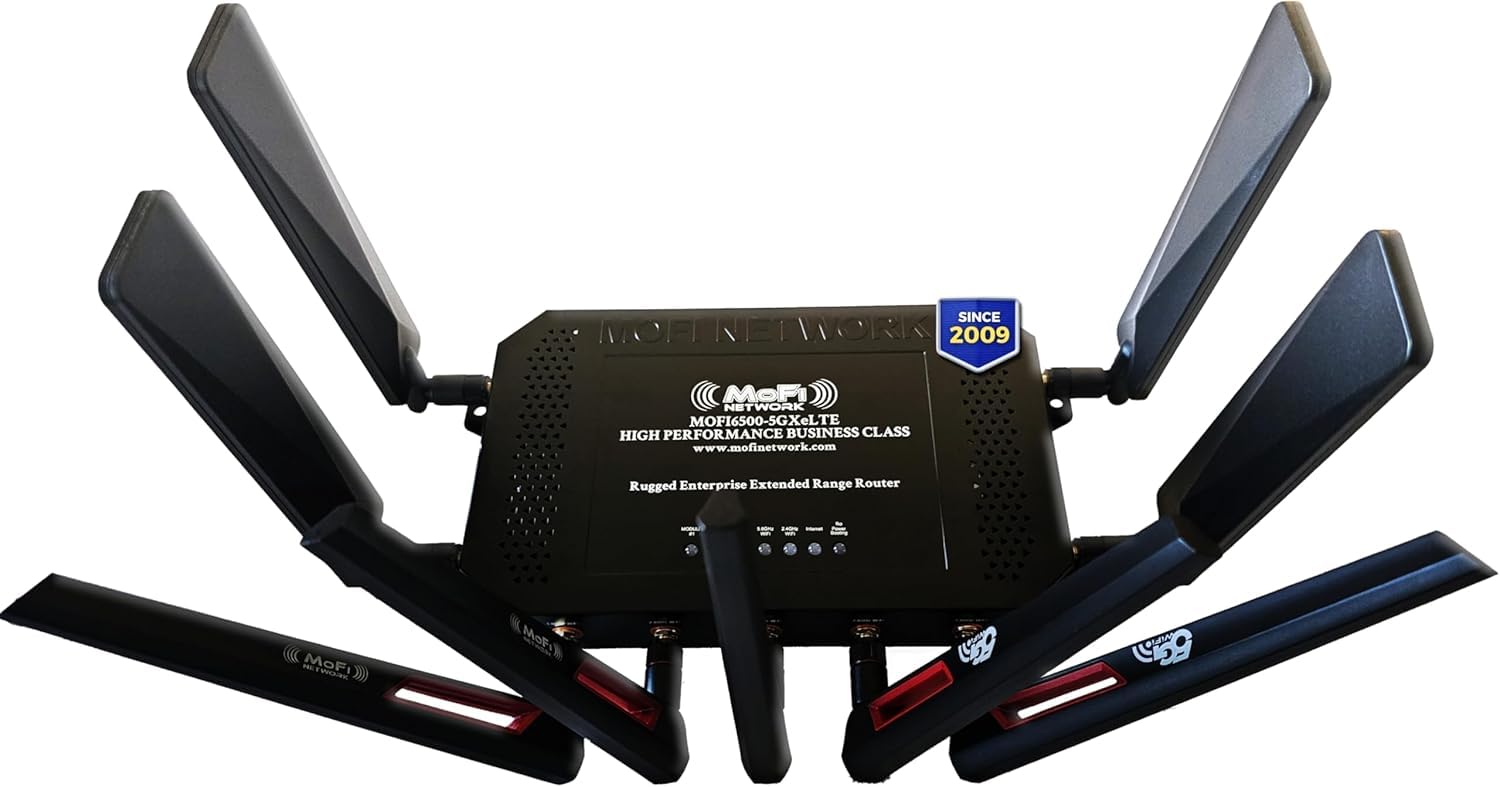
1. MOFINETWORK MOFI6500-5GXeLTE-RM520-HP
Our pick — over 4★ from 850+ verified ratings; the strongest balance of quality and price.
The rural workhorse that turns a weak bar into a four-bar farmhouse network.
This is the box for people who have given up on their ISP. The MOFI6500 runs on 5 GHz Wi-Fi 6 with built-in amplification, and it pushes a rated data transfer rate of 3.4 Gbps — enough headroom to replace a home broadband line entirely. The full metal case and detachable antennas are built for heat dissipation, which matters when a router sits in a hot garage or a utility closet for years.
The defining story here is coverage rescue. Buyers paired it with a Verizon SIM and an external Yagi antenna to boost a rural hotspot from 1 bar to 4 bars, delivering strong Wi-Fi across two buildings. It locks onto bands 3, 5, 13, and 66 in New Jersey, offering granular control that a consumer hotspot cannot match. Setup can be done in two minutes by a beginner, yet the interface has enough depth for a Linux-minded expert to run carrier aggregation and band lock.
One honest fine print: dual SIM here is failover only, not simultaneous. If you need two live connections at once, you need the DUAL model. Owners also note that in tough signal areas, a programmable periodic reboot keeps things stable. For an RV, a metal-building shop, or a two-building property, this is the one to beat.
Why owners love it
- Device quality is the most-praised trait — 77 owners single it out.
- Free toll-free tech support with quick email responses (20-minute turnaround reported).
- Dual SIM auto-failover keeps a constant connection.
The trade-offs
- Dual SIM is backup-only, not parallel bonding.
- Streaming performance gets mixed feedback.
- Value for money is debated; this is an investment, not a throwaway.
Reach for this if: you live in a rural dead zone and need a rugged, configurable router that can work with an external antenna to bridge buildings.
Look elsewhere if: you expect true simultaneous dual-SIM bonding, because this unit’s second slot is a failover safety net.
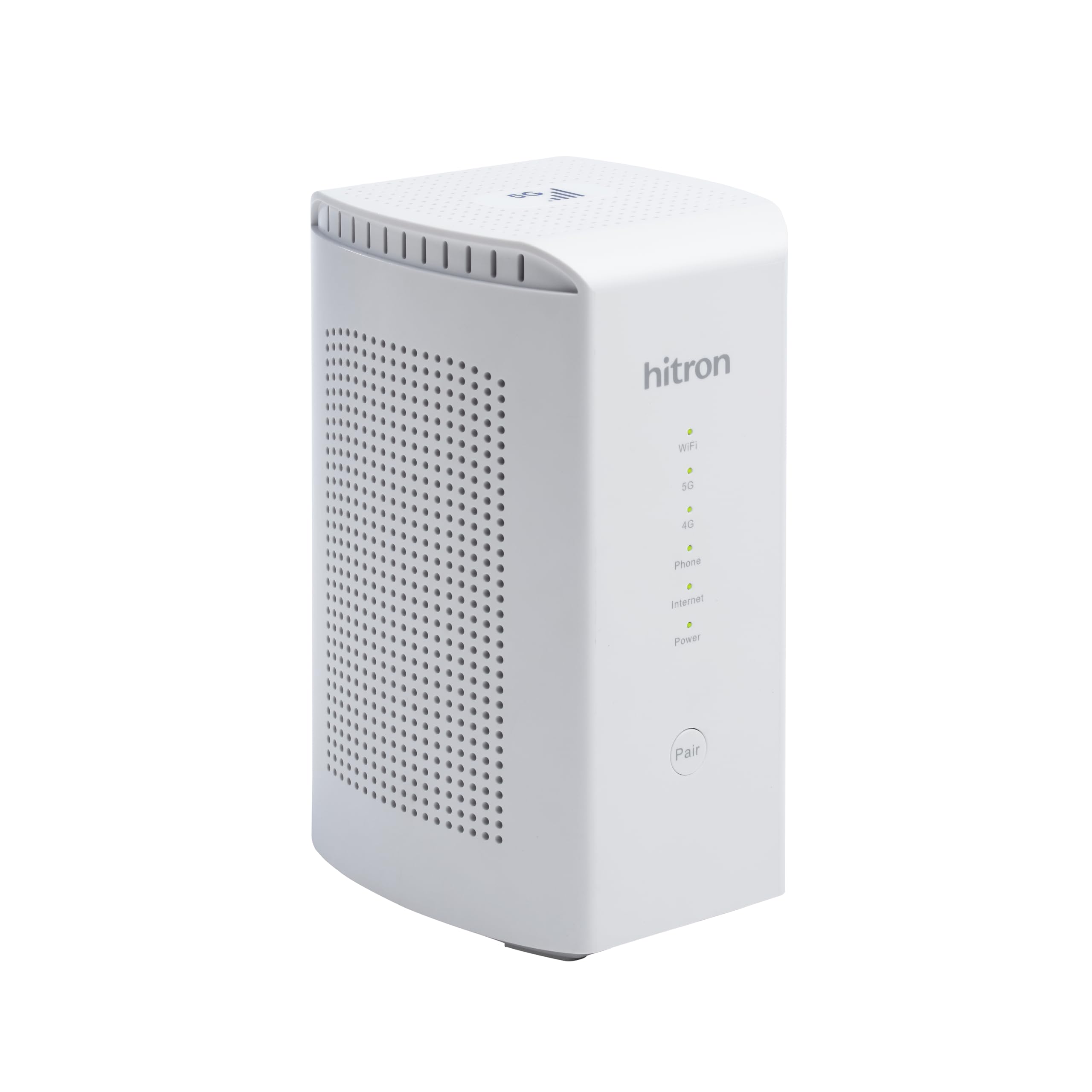
2. Hitron D60 5G Cellular Router
A certified carrier box that brings 5G speeds to the budget tier.
If you want the fastest path to 5G without spending premium money, the Hitron D60 is the entry point. It is certified to work with T-Mobile, AT&T, and US Cellular, and it supports both standalone (SA) and non-standalone (NSA) 5G networks. With a rated top speed of 3.4 Gbps on 5G NSA, this little unit delivers rapid data transfer even though it is priced as a value pick.
The interesting wrinkle is its 4×4 5GHz MIMO radios, which push WiFi speeds up to 5.4 Gigabits — a spec that outclasses many routers at double the price. It runs on the 2.4 GHz band for the Wi-Fi side, and the dual failover capability uses both a nano SIM and an eSIM to keep you online when the primary line drops. One owner hit 300 Mbps in a basement on T-Mobile—a strong result for an entry-level model.
The catch is reliability. A few buyers report the unit crashes after 6-48 hours of uptime and needs a power cycle, and the 3-month limited warranty is short. There are also complaints that firmware updates are scarce. If you can live with an occasional reset and want the certified, plug-and-play experience at a low entry cost, this fits.
Speed for the dollar: this pick delivers verified 300 Mbps performance even in a basement, so you get fast internet where other routers struggle.
Stability check: the recurring gripe is the crash-after-48h behavior, so treat it as a backup or accept the power-cycle ritual.
Best for: budget buyers on T-Mobile who want carrier certification and eSIM flexibility without the premium sticker.
Not for: anyone needing bulletproof uptime, given the reported crash cycle and short 3-month warranty.
3. UOTEK 5G SIM Card Router CPE
An 8-antenna 5G box that smashes the latency of your old gateway.
The UOTEK CPE is the dark-horse value play for home 5G internet. It packs 8 antennas — 4 for 4G and 4 for 5G — in a design that looks like a typical router, not a cellular modem. It runs WiFi 6 (802.11ax) with OFDMA and MU-MIMO, which means multiple phones, TVs, and consoles can stream at once without the network bogging down.
The spec that jumps out is its dual-band throughput of up to 1800 Mbps, enough for UHD streaming and real-time gaming. Owners mention an immediate T-Mobile connection that was stronger and faster than the stock Arcadyan and Sagecomm gateways, with better signal metrics across the board (RSRP -84 vs -97 dBm and RSRQ -10 vs -14 dBm). SA mode improved ping to 15-25 ms and added 20-30 Mbps on top.
The honest caveat is software. The mesh capability is advertised but the firmware is bare-bones, and one owner called the instructions poor, missing the default IP (192.168.100.1) and login. Another noted the unit ships with the older x55 chipset, so carrier aggregation is limited unless you update firmware. For the price, though, the speed and reliability win most people over.
Reliability is king here: 23 owners call it dependable, and it is the most-praised aspect.
Software is the weak link: basic interface and missing manual details, so be ready to hunt for the admin login.
Grab it if: you want a cheap, fast 5G home router that beats carrier-provided gateways and handles a whole house.
skip it if: you need true mesh networking, because the advertised mesh features are not actually present in firmware 2.2.2.
4. SquareWiz RM520N AX3000
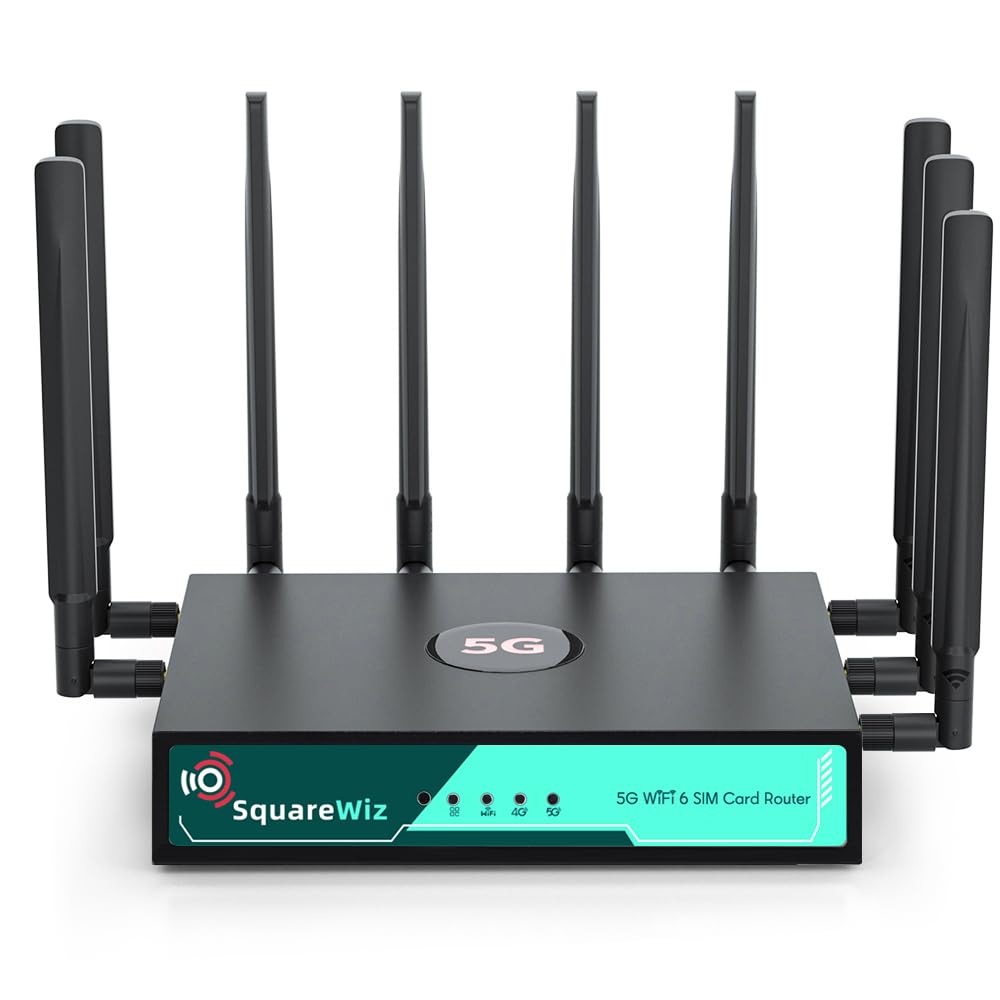
A 9-antenna tinkerer’s dream that rescues metal buildings and dead zones.
Inside the SquareWiz RM520N sits the Qualcomm SDX62 5G modem, the same silicon class used in flagship phones, and it shows. The rated cellular speed hits 3.4 Gbps, and the Wi-Fi 6 side delivers up to 574 Mbps on 2.4 GHz plus 2402 Mbps on 5 GHz, with support for 128 simultaneous WiFi users. That is serious capacity for a security-camera setup, a gaming rig, and a smart home all at once.
Where this router shines is antenna flexibility. It ships with 9 detachable high-gain antennas — 4 cellular at 5 dBi and 5 Wi-Fi at 5 dBi — and the SMA connectors let you bolt on an outdoor cellular antenna for truly marginal signal. The built-in VPN clients (PPTP, L2TP, GRE, WireGuard, Zerotier) make it a favorite for remote camera management, and multi-WAN tech supports Ethernet, Repeater, Cellular, and Tethering with load balancing and failover priorities.
The trade-off is supervision. Customers note it disconnects from the cellular network every 24 hours to a week, requiring a restart, and the scheduled 4 AM restart does not always fire. There is no company tech support or community forum, so you are on your own with software quirks. One owner boosted upload from 9 to 28 Mbps but saw download drop from 150 to 95 Mbps after a reset—a reminder that band-lock settings need careful tuning.
What it does brilliantly
- Solves poor indoor signal in metal buildings with 9 detachable antennas.
- Massive speed jump reported: 10/1 Mbps to 150/50 Mbps after setup.
- External SMA connectors for upgrading to a directional outdoor antenna.
What you babysit
- Drops cellular connection every 1-7 days; a restart is the only fix.
- Zero tech support, no forum, and some pop-ups in Chinese.
- Software settings like band lock and SA/NR selection do not always save.
Made for: hands-on users who value antenna flexibility for a metal building or remote location and accept some manual maintenance.
Steer clear if: you want set-and-forget reliability, because the weekly restart rhythm is real.
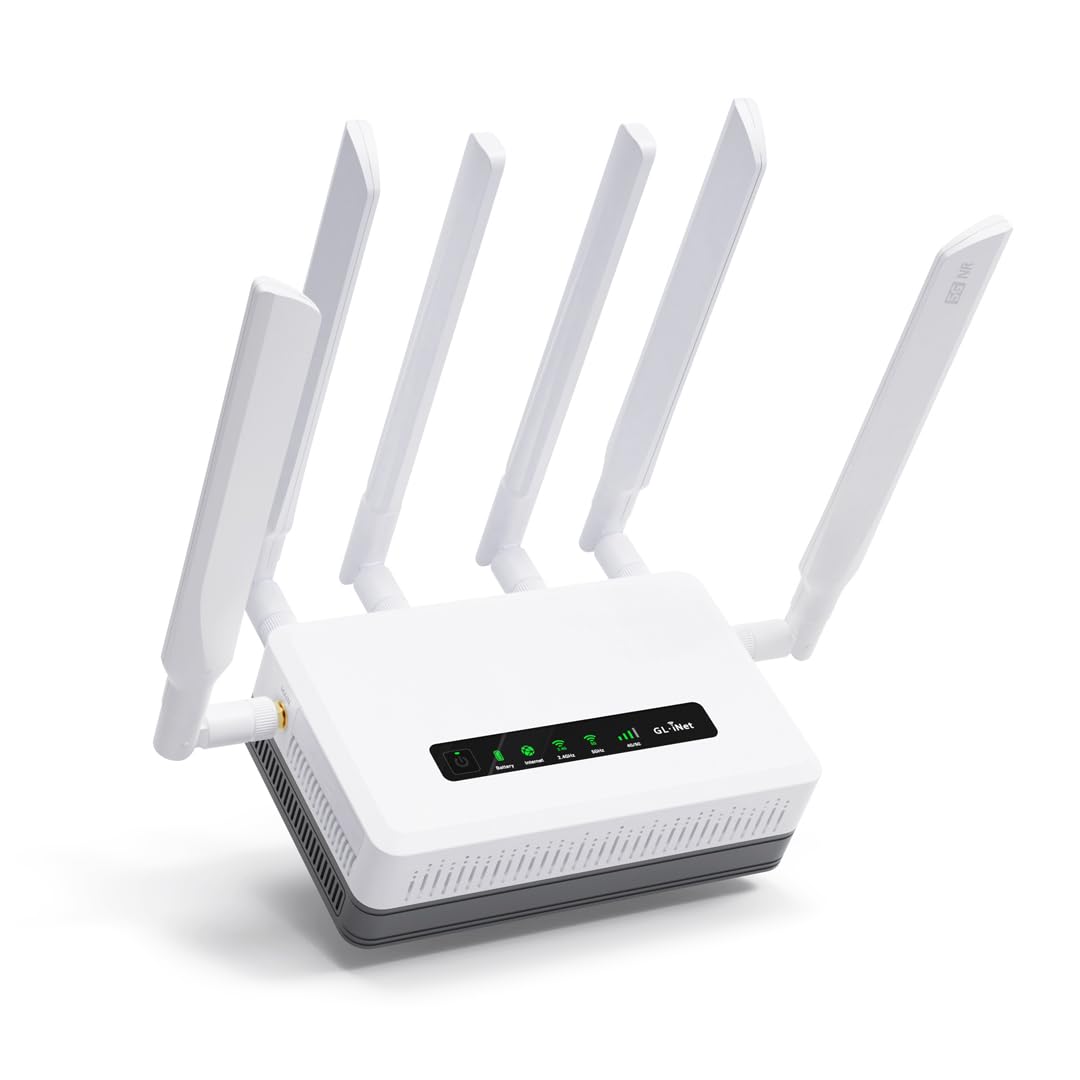
5. GL.iNet Spitz AX (GL-X3000)

The RV-friendly gateway with 6 detachable antennas and dual-SIM failover.
The Spitz AX is the gold standard for RV and road-trip networking. It is certified for AT&T and T-Mobile, runs Wi-Fi 6 with MU-MIMO, and offers dual-SIM with single standby for automatic failover between carriers. With a rated 3000 Mbps transfer rate, it handles a full RV’s worth of devices — phones, laptops, a streaming TV — without breaking a sweat.
What makes it a cult favorite is the OpenWrt firmware. Based on v21.02, it open up more than 5,000 plug-ins for customization, from VPN cascading to DNS over TLS and DNS over HTTPS. It comes with pre-installed OpenVPN and WireGuard, and the max VPN speed hits 150 Mbps on OpenVPN and 300 Mbps on WireGuard — so you can encrypt your traffic without killing your speed. Six detachable antennas and dual SIM slots give you serious deployment flexibility on the road.
The strong point is also the weak point. Reviewers point out speeds of 90-300+ Mbps on 5G, and many rave about the SMA antenna ports. But durability is the recurring complaint: the device tends to stop working after 4-6 months of constant use, and speed performance gets mixed reviews over time, slowing down with high latency until a reboot. It replaced a Verizon Jetpack for many, but it is not immune to needing attention.
The thing everyone raves about: build quality and signal strength — over 100 owners call it a solid, well-made unit.
The honest downside: reliability is the most-mentioned negative, with failures appearing after 4-6 months for a subset of owners.
Choose it for: RV living, road trips, or any mobile setup where you want carrier flexibility and deep OpenWrt control.
Be cautious if: you need a permanent always-on home router, given the reported 4-6 month failure pattern.
6. GL.iNet Puli AX (GL-XE3000)
A backpack-sized 5G router that keeps your office online through a power cut.
Take the Spitz AX’s brain, add a battery, and you get the Puli AX. This is the same 5G multi-WAN platform with dual-SIM single standby and Wi-Fi 6, but the built-in 6400mAh battery delivers up to 8 hours of uninterrupted connectivity. That spec turns it into a fail-safe for construction sites, events, and offices that cannot afford to go dark mid-meeting.
Portability is the whole point here. At 761 grams, it is hefty enough to feel solid but light enough to throw in a backpack, and the retractable antennas pull off for storage. Owners consistently describe it as the best mobile router they have used, with one hitting 120 Mbps inside a faraday-cage building — near max speed with an external antenna attached. The battery backup lasted hours through an outage—exactly the scenario it was built for.
The setup can frustrate at first. Some shoppers say the dual SIM slots share a single IMEI, which caused recognition issues, and the SIM was not initially detected until power cycles. But once configured, the OpenWrt base and VPN support (OpenVPN and WireGuard pre-installed) make it a genuine pro tool. The only recurring grumble is a lack of native Ethernet ports for a router of this class.
Performance is the headline: 20 owners prize its speed and range, and the external 4×4 antenna earns specific praise.
Setup friction is real: the dual-SIM single-IMEI quirk trips people up initially, so budget time for configuration.
Perfect for: mobile professionals, event setups, and anyone who needs a backup connection when the power and wired internet both drop.
Not ideal for: users who want to run many wired devices, since the Ethernet port count is thin.
7. Yeacomm NR610 Outdoor 5G Router

A rooftop 5G box with IP67 waterproofing that pulls in bars your window never sees.
When your router needs to live outside, the Yeacomm NR610 is one of the few real answers. It is rated IP67 for waterproof and dustproof use, works in temperatures from -30 to +55ºC, and supports Power over Ethernet (PoE) so a single cable runs power and data up to the roof. The built-in 6 high-gain antennas and 4X4 MIMO mean you do not have to add external antennas to get a strong signal.
The speed stories here are dramatic. Buyers report peak downloads of 500+ Mbps and uploads over 100 Mbps, with one seeing a boost from 150 to 300-500 Mbps down and from 5-10 up to 80 Mbps after mounting it high. The rated ceiling is 4.67 Gbps, which is the fastest number in this lineup. Signal reception goes from 1-2 bars in a home office window to a consistent 3-5 bars on the roof, with one owner describing a “world of difference” compared to alternatives.
The fine print matters. The Wi-Fi is 2.4 GHz only and meant for configuration, not speed tests — Yeacomm tells you to connect a Wi-Fi 6 router to the LAN port for real throughput. Also, the default IPv4v6 setting caused errors for some, requiring a switch to IPv6-only mode. For a farm, yard, or RV that needs a weatherproof connection, this is the specialist pick.
Speed is what wins people over: 12 owners cite it as the standout, with 600-800 Mbps downloads reported in the summary.
Know before you buy: it is a modem/gateway, not a full Wi-Fi 6 router, so plan to pair it with one for whole-home coverage.
Mount it if: your property has signal outside but not inside — a roof install with a 300ft cable can transform a weak area.
Pass on it if: you expect a standalone Wi-Fi 6 router, because the 2.4 GHz Wi-Fi is purely for setup.
8. Peplink B One 5G
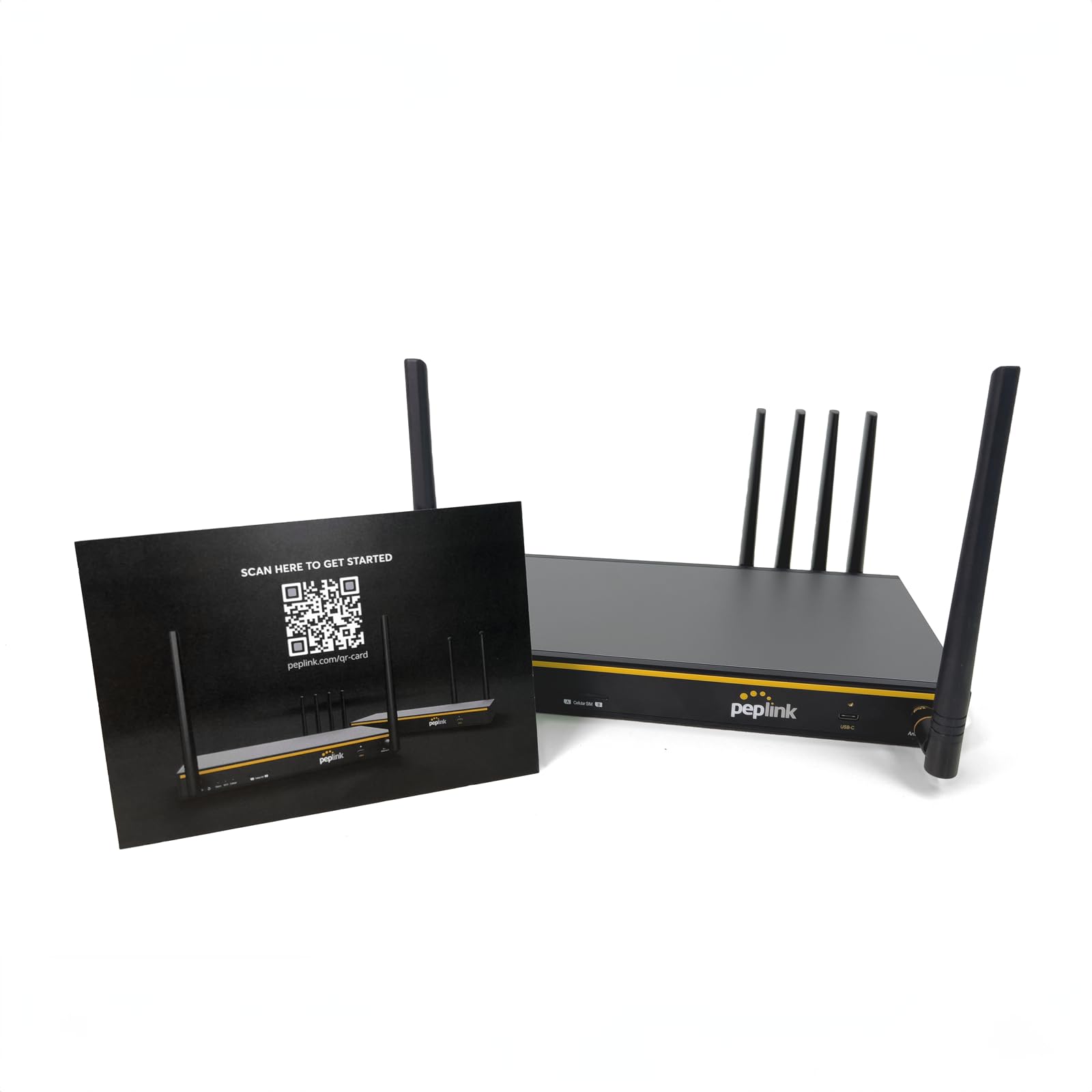
An enterprise-grade failover machine that turns a 30 Mbps connection into a steady 100 Mbps.
The Peplink B One 5G keeps your business online when the primary line drops. It offers gigabit dual-WAN (two internet inputs at 1 Gbps each) with smooth failover to 5G cellular, so your network stays alive automatically. The SpeedFusion technology (a feature that bonds multiple connections into one) keeps video calls and cloud apps smooth—critical for remote teams and branch offices.
The real-world numbers tell the story. One owner swapped out an old router with the same ISP and plan, and saw speeds jump from 30-60 Mbps to a consistent 100 Mbps—a plug-and-play win with the SIM card popped straight in. It supports 1-150 users, making it the most scalable option here, and it is certified to work with AT&T, T-Mobile, and Verizon. The 4 Gigabit LAN ports and two 1-Gigabit WAN ports give you real wired flexibility, including Starlink integration.
The catch is two-fold. First, the learning curve is steep — this is not a consumer router, and one review called the app and web UI outdated and unintuitive. Second, the price sits at the premium end of this list, and it is a one-time cost rather than a monthly rental. A rare harsh review called it a “paperweight” after constant drops at a trade show, but the consensus leans strongly positive for stable home and business use.
Stability is the selling point: owners describe it as reducing resets dramatically, with automatic firmware updates keeping it secure.
The real hurdle: configuration depth — it is a tool for those willing to learn, not for plug-and-play purists.
Ideal for: families with kids, rural homes replacing a hotspot, or small businesses needing bandwidth throttling, web filtering, and data tracking.
Think twice if: you want consumer-grade simplicity, because the admin interface demands time to master.
9. Teltonika RUTX50 Industrial 5G Router
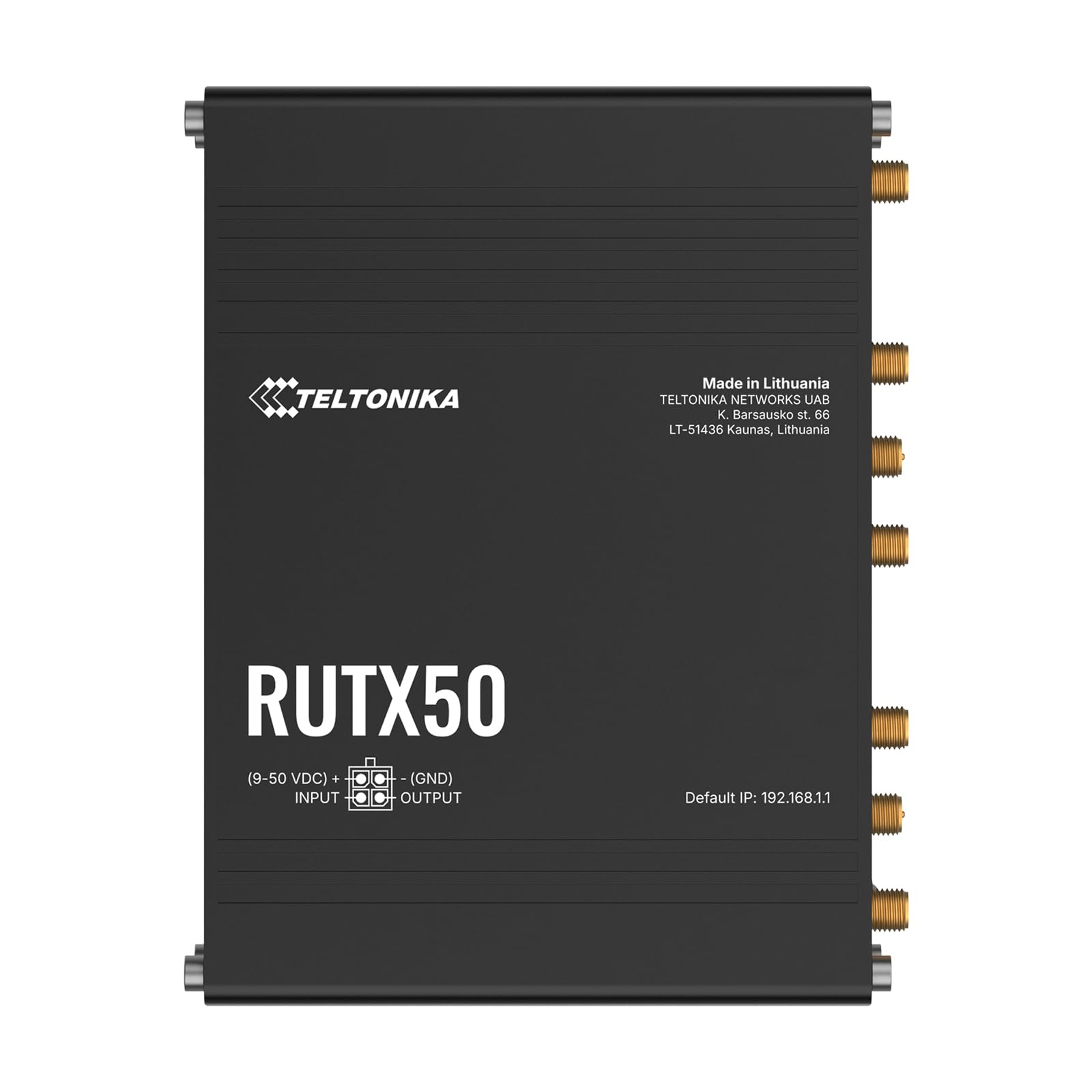
The field-proven industrial workhorse that triples signal where older units stumble.
Teltonika has a legendary reputation in industrial networking, and the RUTX50 is the flagship 5G expression of it. It delivers a rated 3.3 Gbps download speed, supports both standalone and non-standalone 5G modes, and falls back to 4G LTE Cat 20 and 3G when needed. The dual SIM with auto failover and WAN backup means this box keeps working even when one carrier drops you.
The build is unmistakably industrial. It uses WiFi 5 dual-band MU-MIMO — not the newer Wi-Fi 6 — but that is a deliberate choice for stability in professional environments that prioritize reliability over the latest spec. The antenna connectors are the giveaway: 4 SMA for LTE, 2 RP-SMA for WiFi, and 1 SMA for GNSS, giving you total control over signal acquisition. One long-term Teltonika user reports the signal tripled compared to an older model with stock antennas.
This is the router for a camper van mobile office or a remote installation that demands failover between T-Mobile, Vodafone, and a Starlink Mini over WAN. Owners praise the easy configuration and rock-solid performance, with one calling it the best modem for wireless internet, outperforming the brick the ISP supplies. The premium price reflects the industrial pedigree, and it earns that cost through sheer dependability.
Dependability is the reputation: long-time Teltonika users call it highly reliable, with professional-grade features and build.
The honest note: you pay for the industrial name, and the Wi-Fi 5 radio means it lags consumer Wi-Fi 6 routers on sheer wireless speed.
Pick it for: a camper van office, a remote site, or any mission-critical setup where failover between multiple WAN sources is non-negotiable.
Look past it if: you want the latest Wi-Fi 6 wireless speeds, because this prioritizes industrial stability over the newest radio standard.
Understanding the Specs
Carrier Certification vs. Band Coverage
The single biggest mistake is buying an uncertified router and expecting it to work perfectly. Certification means the manufacturer has tested the hardware with a specific carrier’s network. Look for explicit “certified for T-Mobile” or “works with AT&T” language. A router’s band coverage determines whether it can speak to the local towers at all, so if you are in a rural area, check that the device covers the bands your carrier uses there.
SA vs. NSA 5G Modes
Non-standalone (NSA) 5G uses the existing 4G network as an anchor, which is how most 5G works today. Standalone (SA) 5G uses a pure 5G core, which usually means lower latency and better speeds. Routers that support both give you future-proofing as carriers upgrade. If a router only handles NSA, it will still work, but it will not open up the full low-latency benefits of SA networks.
Dual SIM Failover vs. Load Balancing
Dual SIM slots are common, but the behavior differs. Failover means the second SIM only activates if the first one drops — a safety net, not a speed boost. Load balancing splits your traffic across both connections simultaneously, which can double throughput. Read the fine print: most routers advertise dual SIM but only offer failover, so do not expect two active lines unless the spec explicitly says load balancing.
Antenna Design and External Connectors
Internal antennas are fine for strong-signal areas. Detachable high-gain antennas help in fringe coverage, and SMA connectors allow you to attach a dedicated outdoor directional antenna for the worst cases. Outdoor units with IP67 waterproofing and Power over Ethernet (PoE) let you mount the modem on a roof or pole, where signal is strongest, and run power and data over a single cable.
FAQ
Will a 5G modem router work with my existing carrier SIM card?
What is the difference between standalone (SA) and non-standalone (NSA) 5G?
Can I use two SIM cards at the same time for double speed?
How many devices can a 5G router support simultaneously?
Do I need an outdoor 5G router for a rural property?
What does a VPN router actually do for me?
Why does my 5G router need periodic reboots?
Can a 5G router replace my home broadband entirely?
Final Thoughts: The Verdict
If you live in a rural area or a metal building and need a rugged, configurable router that works with an external antenna, the MOFINETWORK MOFI6500 is the crowd favorite—buyers praise its build quality more than any other in this roundup, making it the safest bet for demanding conditions. If you want the fastest path to 5G on a budget, the Hitron D60 brings certified carrier support to the entry tier. And for the RV crowd or anyone who needs a battery backup when the power drops, the GL.iNet Puli AX packs an 8-hour battery that keeps your network alive through an outage.
How We Picked
We do not accept paid placement. Every pick is matched to a real buyer and a real use-case; we do not hands-on test units.
Sources & Methodology
Specifications: manufacturer listings and product documentation. Review insights: verified customer reviews, as of August 2026. Pricing: not shown on this page (it changes often); check the current price via the retailer link.
As an Amazon Associate, Gadgets Feed earns from qualifying purchases. This does not affect which products we feature.