
Our readers keep the lights on and my morning glass full of iced black tea. As an Amazon Associate, I earn from qualifying purchases.
Specs are compiled from manufacturer listings and verified buyer reviews and can change over time — please confirm the key details on the product page before buying.
You want clear aquarium water without turning maintenance into a daily chore. The right media removes ammonia, odors, and haze; the wrong one clogs filters or leaves a mess. Here are the best picks for biological, chemical, and mechanical filtration, so you can match the right media to your tank.
I’m Min — the founder and writer behind Gadgets Feed. This guide is built by comparing the manufacturers’ published specifications and the patterns across verified customer reviews, so you get each pick’s real strengths and trade-offs instead of marketing spin.
Whether you keep a freshwater community tank, a saltwater reef, or a backyard pond, the right aquarium filtration media keeps water clear and your fish healthy, without constant water changes.
Our Picks at a Glance


How To Choose The Best Aquarium Filtration Media
Choosing media starts with understanding the three jobs it does: biological (growing bacteria), chemical (removing toxins), and mechanical (trapping debris). Most tanks need a mix, and the right combination depends on your filter and livestock.
Match Media to Your Filter Type
Canister filters have trays that hold loose media like ceramic rings or sintered glass. Hang-on-back (HOB) filters work best with mesh bags that fit their narrow chambers. Sumps give you the most flexibility, letting you stack media in any order. Ponds need bulk media in mesh bags, placed where water flows through them.
Know Your Goal: Bio vs. Carbon
Biological media (ceramic rings, sintered glass, bio blocks) rarely needs replacement—it just hosts bacteria. Activated carbon removes odors, yellow tint, and impurities but exhausts and must be replaced. Some media, like the CNZ kit, combine both in one box for convenience.
Consider Porosity and Surface Area
Greater surface area provides more space for beneficial bacteria to colonize. Porous ceramic with tiny holes is a favorite for this reason. Some premium media advertise huge surface-area numbers—like EHEIM’s 1800 sq ft per gallon—which translates to faster cycling and better stability. Just remember, more pores sometimes mean the media is more fragile.
Quick Comparison
| Model | Best For | Type | Quantity | Weight | Amazon |
|---|---|---|---|---|---|
| Marineland Black Diamond Carbon★ Best Overall | Chemical filtration, clearing haze | Activated Carbon | 40 oz | 2.5 pounds | Amazon |
| Fluval BIO-FXBio Workhorse | Premium bio filtration, canisters | Ceramic Media | 5 Liters | 2.84 kg | Amazon |
| EHEIM Substrat ProHigh Surface Area | High-surface-area bio media | Sintered Glass | 1 Liter | 1.7 pounds | Amazon |
| Reefing Art Ceramic Bio Media | Sump and canister bio filtration | Ceramic Pieces | 24 pieces | 1.8 pounds | Amazon |
| CNZ Filter Media Kit | All-in-one value, small tanks | Carbon + Bio Balls + Rings | 1 Kit | 2 pounds | Amazon |
| Aquapapa Bio Ceramic Rings | Ponds and large canisters | Ceramic Rings | 5 lb bag | 5 pounds | Amazon |
| Aquapapa 6 lbs Ceramic Rings | Value bulk with mesh bags | Ceramic Rings | 6 lbs + 6 bags | 6.71 pounds | Amazon |
| Aquatic Experts Premium Carbon | Clean, low-dust carbon | Granulated Carbon | 3 lbs | — | Amazon |
| hygger Bio Media Blocks | Large sumps and ponds | Ceramic Blocks | 40-Pack | 7.9 lbs | Amazon |
In‑Depth Reviews
1. Marineland Black Diamond Carbon Filter Media, 40 oz
Our pick — over 4.5★ from 13,000+ verified ratings; the strongest balance of quality and price.
The bulk carbon that clears haze in a day and keeps refilling simple.
When your tank goes hazy and you want it fixed fast, this heat-activated, bituminous coal-based carbon is the crowd favorite. Buyers report it cleared a cloudy aquarium “in just a day,” and the 40 oz container gives you enough to refill a filter net monthly for a long stretch. It removes odors, discoloration, and impurities across all filter types, earning its Best Overall spot.
The trade-off appears in the very first rinse. As owners mention, it’s “dusty (needs heavy rinsing)” — skip that step and dark dust can escape into your tank or clog impellers. The value is hard to argue with: 40 oz is a serious amount of carbon for the money, and owners of 75-gallon and even 160-gallon reef tanks report consistent results.
What wins people over is the sheer quality and effectiveness, backed by thousands of owners who praise its ability to keep tanks clear for weeks. It’s versatile too — one buyer uses it in a small dish in the fridge for odor control, which tells you how well it traps smells.
carbon that lasts
- Removes odors, discoloration, and impurities for clear water across all filter types
- Sized to keep working long after other carbons quit
- Bulk 40 oz amount means fewer reorders and steady monthly refills
needs a rinse
- Needs heavy rinsing before use to avoid releasing dark dust
- Fine dust can clog impellers if you skip the pre-rinse
heavy-duty filtration: you want reliable, bulk carbon for a medium to large tank and don’t mind a quick pre-rinse for clear water.
weekly upkeep: you hate any prep work — this one demands a thorough rinse before it hits your filter.
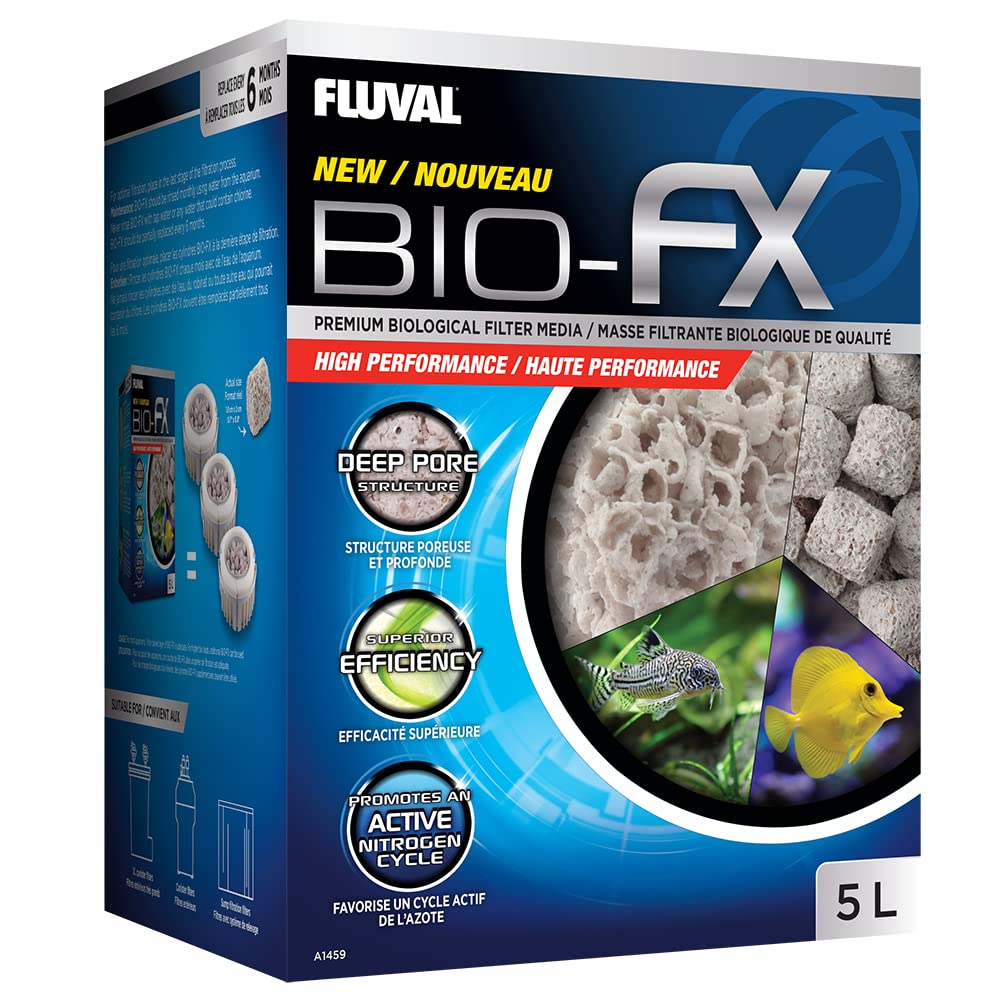
2. Fluval BIO-FX, Biological Aquarium Filter, 5L
The premium ceramic media with interconnected tunnels that keeps canisters clog-free.
If you run a canister filter and want maximum biological activity, this 5L bag of Fluval BIO-FX is the upgrade owners swear by. Its deep pore structure uses connected micro-tunnels that let water flow freely, discourage blockages, and give bacteria vast surface area to colonize. The material is inert ceramic, so it won’t alter your water chemistry — a detail that matters for sensitive reef tanks.
Customers note it’s “extremely porous” and quickly becomes the media of choice across all their filters, including HOBs and the FX2 canister. One owner swapped out their supplied media for this and now runs it everywhere, praising the “more places the bacteria can hide.” Its porous structure rapidly converts ammonia and nitrite, keeping water readings stable.
Maintenance is straightforward: rinse monthly with aquarium water and replace partially every 6 months. For best results, place it in the last stage of your filtration process.
biological powerhouse: the interconnected micro-tunnels deliver free water flow plus high biological activity — a rare combo that resists clogging.
pricier upfront: serious hobbyists running canisters who want stable ammonia control without frequent media swaps.
3. EHEIM Substrat Pro Biological Filter Media, 1L
The sintered glass pearl with an unbeatable 1800 sq ft per gallon surface area.
For hobbyists who want the most biological filtration per liter, EHEIM’s sintered pearl-shaped glass delivers a surface area structure of 1800 sq ft per gallon — a number that explains why it cycles tanks so fast. Reviewers point out fishless cycling consumed 4ppm of ammonia a day, which shows how quickly bacteria colonize this porous media.
It’s durable too, with owners noting “no crumbling during cleaning,” and it extends the time between filter cleanings. Maintenance is simple: lightly rinse every 1 to 3 months and replace every 3 to 6 months. It’s designed for all EHEIM filters like Classic, Ecco, and Pro 3, but owners run it in other canisters with mesh bags.
The honest caveat: it’s pricey for a 1L volume, and the small, light pellets are fiddly to handle. But for those who value efficiency, the cycling speed is worth it.
dense bio media: 1800 sq ft per gallon is the standout spec here, translating to rapid bacteria growth and stable water.
small batches: the 1L bag is small — bigger tanks need multiple bags, and the pellets are hard to handle without mesh bags.
4. Reefing Art Ceramic Bio Filter Media, 24 pcs

Porous ceramic pieces that give reef tanks a massive bio surface boost.
Saltwater and reef keepers, this one’s for you. Each box holds 24 pieces that are roughly the size of a Twinkie cut lengthwise, and their porous internal structure makes them ideal for sumps. Shoppers say adding these to a 60-gallon saltwater sump where they “fit and worked perfectly,” and another runs their 126-gallon reef tank on them.
The material is 100% aquarium-safe non-metallic ceramic that won’t leach aluminum or heavy metals — a key concern for delicate reef inhabitants. One owner broke some pieces in half to layer them sideways in their FX4 canister, showing how flexible they are for different filter layouts.
The thing everyone appreciates is the water quality improvements and bacteria-holding capacity. Just be ready for “a bucket of sand” when you open the package — the pieces shed some dust on first use, and a few arrive chipped. The durability feedback is mixed, with some reporting pieces can break apart during use.
bio diversity: reef and saltwater sumps where non-metallic, aquarium-safe media is non-negotiable.
bare filters: handle gently — some pieces break apart during use, and initial dust needs a rinse.
5. Aquapapa 6 lbs Premier Bio Ceramic Rings with 6 Mesh Bags

Six pounds of ceramic rings with the mesh bags you’d otherwise buy separately.
This is the bulk deal that saves you a second purchase. You get 6 lbs of 1/2″ x 1/2″ ceramic rings plus 6 reusable mesh bags (8″ x 5.5″), ready to drop into any filter. The hollow shape lets water flow through and resists clogging, while the porous ceramic hosts beneficial bacteria. Buyers report this filled 3/4 of their canister trays and the media baffle on their sump.
It’s a favorite for overstocked cichlid tanks — one owner runs it in both a 55 and 75-gallon setup. The individually bagged pounds make rinsing easy, and the plastic-zippered mesh bags are reusable indefinitely. It works in fresh and saltwater alike.
Quality and value are what owners praise most. The honest note: some find the rings less porous than expected, and durability feedback is mixed. But for the volume and included bags, it’s a smart budget-friendly buy for larger setups.
bagged convenience
- 6 lbs of ceramic rings plus 6 reusable mesh bags included
- Hollow shape resists clogging and promotes water flow
- Enough media to fill 3/4 of a canister tray or a sump baffle
bulky rings
- Some owners mention the rings seem less porous than expected
- Durability is a mixed bag — handle with care
easy install: big tanks and sumps where you need volume plus the convenience of ready-to-use mesh bags.
small filters: you want maximum porosity per piece — some rivals offer more surface area per ring.
6. Aquapapa Bio Ceramic Rings Filter Media, 5 lb Mesh Bag
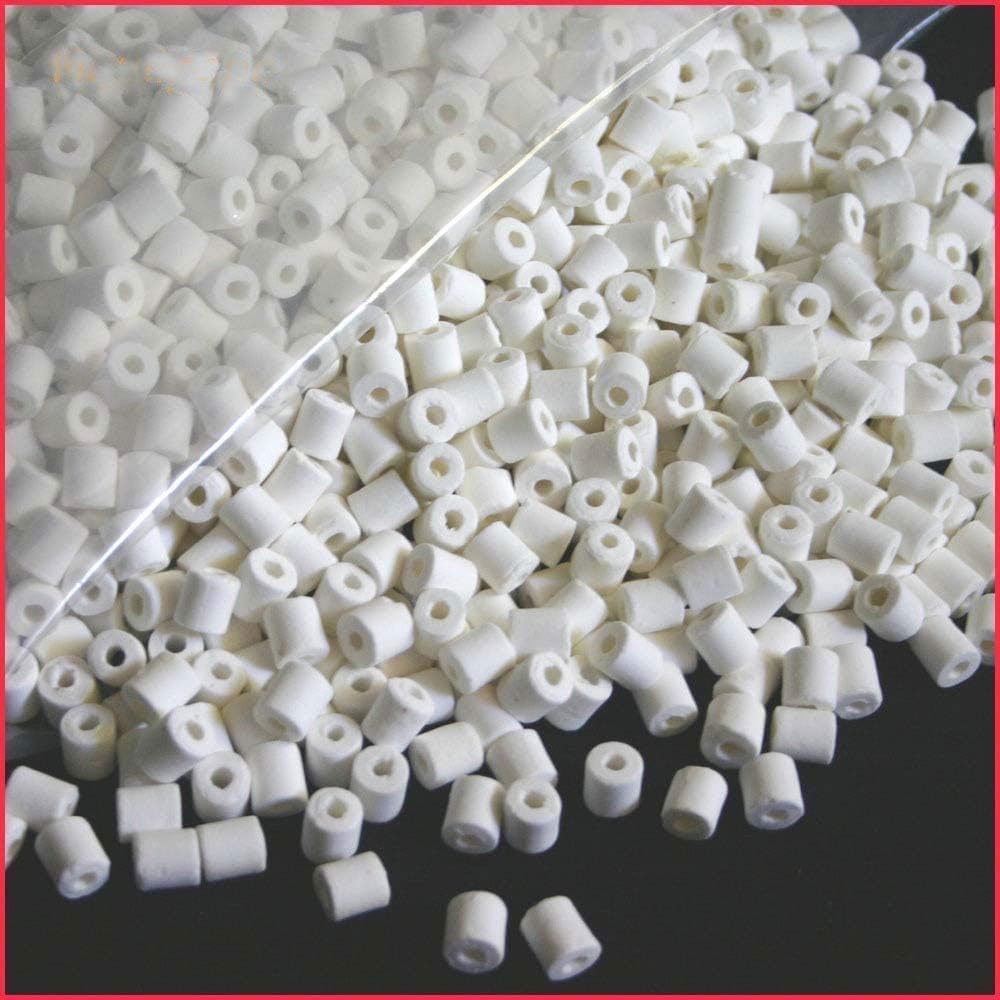
Dense ceramic rings that keep a 3500-gallon pond thriving.
This 5 lb mesh bag of 1/2″ x 1/2″ ceramic rings is built for serious biological loads. Customers note it kept a 3500-gallon pond alive with a medium fish load, with bacteria colonizing in just days. The uniform sizing promotes smooth water flow, and the highly porous ceramic boost surface area for cycle bacteria to break down ammonia and nitrites.
It’s versatile across freshwater, saltwater, koi ponds, and reefs. One owner found the rings dense enough to weigh down submersible filters, making them great for DIY biofilters, and noted the shift from algae to plant dominance in their pond. The bulk mesh bag simplifies rinsing, handling, and storage.
The recurring note: the rings run small, which can slow filter output flow if packed too tightly. A couple arrived chipped, though reviewers point out they’re durable overall — “really banged it around and haven’t broken any.” Mesh bags are not included, so grab some separately.
mesh bag bio: dense, heavy rings that stay put in waterfall boxes and intake areas, ideal for ponds and canisters.
similar to 5: buying mesh bags separately and rinsing weekly in pond setups for best results.
7. Aquatic Experts Premium Activated Carbon, 3 lbs with Mesh Bag
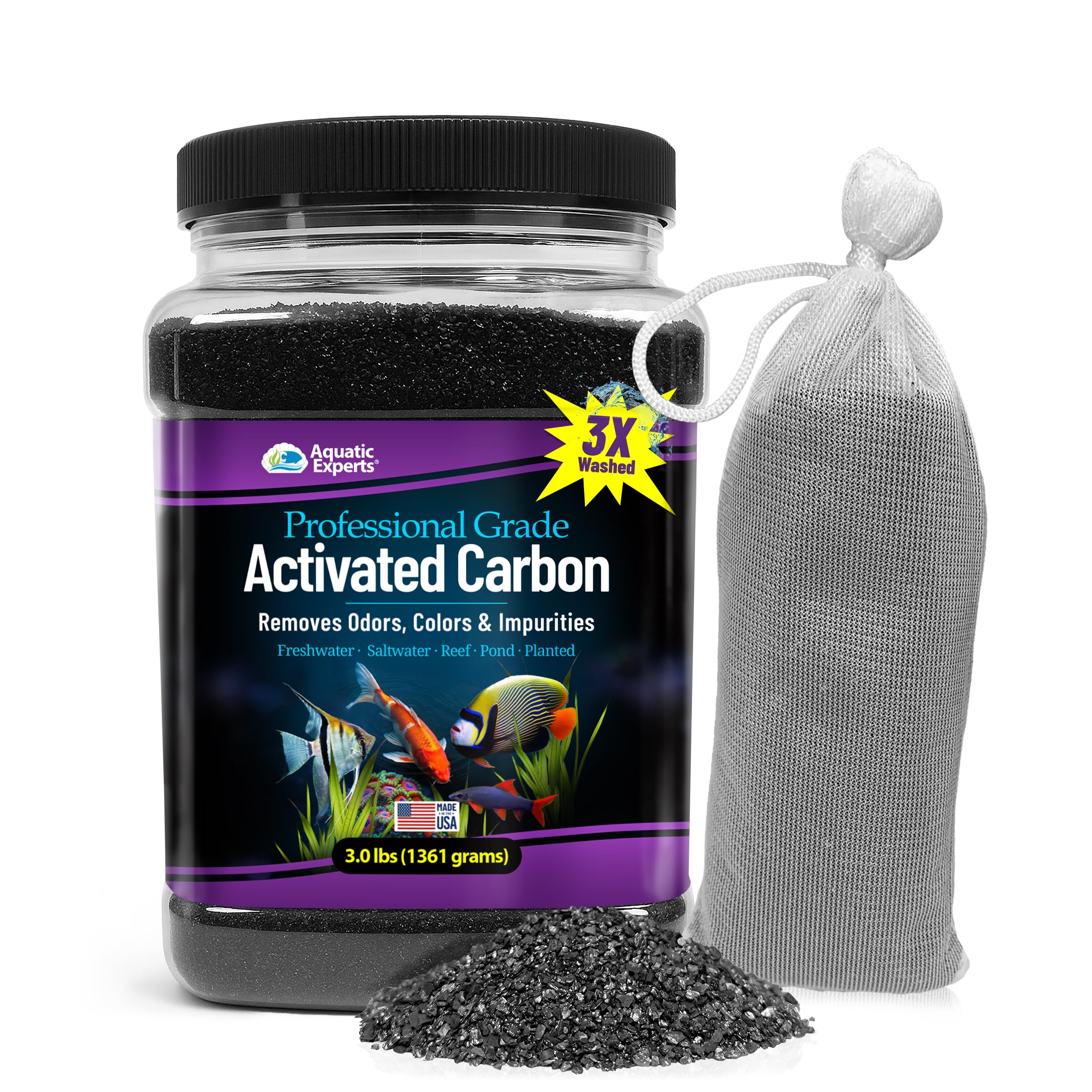
Carbon that’s deep-cleaned so rinsing doesn’t turn your sink black.
If you’ve ever rinsed bulk carbon and watched black dust coat your hands and sink, this is the fix. The maker deep-cleans the pores after heat activation, washing out a majority of the dust and fines so rinsing is actually easy. The result is granulated carbon that’s “hungry to rapidly trap contaminants,” leaving clearer, odor-free water.
Shoppers say crisp saltwater tanks with less algae on the glass, and one owner credits it with saving their aquarium from a full teardown. Its large internal surface adsorbs dissolved pollutants like yellow-brown tint, toxins, chlorine, most medications, and some heavy metals, keeping water clean and clear. A free reusable fine mesh bag is included.
Effectiveness and quality are what owners praise most. The mixed feedback centers on particle size — some find the granules very fine, and a few report fine particles escaping the included mesh bag. It’s a premium-tier price, but the cleaning and included bag add real value.
clear water: you want carbon that rinses clean and comes with a fine mesh bag for easy setup.
sensitive fish: the granules are fine — some escape the included bag, so consider a tighter mesh for canisters.
8. hygger 6.2-Inch Bio Media Ceramic Blocks, 40-Pack (7.9 lbs)

Big ceramic blocks you can crack to size for sumps, ponds, and canisters.
Most bio media comes as small rings, but hygger flips that with 40 large blocks, each measuring 6.2″ long and 1.5″ in diameter at roughly 90 grams. The big size makes them easy to place in sumps and pond filters, and you can crack them into any size needed. They serve dual duty: mechanical filtration to catch fine particles and biological filtration for beneficial bacteria.
The blocks are covered with thousands of porous tiny holes, providing large surface area for bio filtration while filtering out sparkling clear water. One owner used them in a fountain and reported it remained unclogged and clear. The total comes to approximately 7.9 lbs — a serious amount of media.
Quality, functionality, and size earn the most praise, with one buyer calling them the best large media on the market. Durability is mixed — some pieces arrived broken in shipping, though just as many report none broken at all. A few found them less effective in pond filters and removed them.
large canisters: you need large, crackable media for a sump, pond, or planted tank that won’t clog.
nanotanks: you want uniform small rings — these are chunky blocks that some found too large for certain filters.
9. CNZ Aquarium Filter Media Kit — Carbon, Bio Ball, Ceramic Ring

A starter kit with carbon, bio balls, and ceramic rings for a 32-gallon setup.
New to filter media and want everything in one box? This kit bundles activated carbon, polypropylene bio-balls, and extremely porous ceramic media, so you get chemical and biological filtration in a single purchase. Buyers report it’s “ideal for 32-gallon tank” and fits a 3-section filter with mesh bags, making setup fast for beginners and upgrades quick for the experienced.
It removes odor, colors, and organic pollutants; the ceramic media hosts bacteria, and bio-balls boost dissolved oxygen. One repeat buyer for goldfish reports the kit lasts 4-5 months with consistently clean water, calling it excellent value.
Buyers praise its value for money and effectiveness. Feedback on water quality is mixed — some see crisp results, others report cloudiness — and a few describe the carbon as poor quality. It’s a budget-friendly all-in-one, not a premium biological solution.
starter kits: beginners or smaller tanks (around 32 gallons) that need a complete media refresh in one box.
pro setups: the included carbon gets mixed reviews — swap in a dedicated carbon if you need heavy haze removal.
Understanding the Specs
Surface Area & Porosity
This is the single most important spec for biological media. More surface area means more room for beneficial bacteria to colonize, which directly translates to better ammonia and nitrite processing. Ceramic rings with fine pores and sintered glass with high porosity (like EHEIM’s 1800 sq ft per gallon) cycle tanks faster. The trade-off: highly porous media can be more fragile.
Media Type: Biological vs. Chemical
Biological media (ceramic, glass, bio-balls) hosts bacteria and rarely needs replacement — just periodic rinsing. Chemical media (activated carbon) removes odors, discoloration, and toxins but exhausts over time and must be swapped regularly. Some kits combine both, which is convenient but means you’ll replace the carbon portion while the ceramic keeps working.
FAQ
How often should I replace aquarium filter media?
Can I mix biological and chemical media in the same filter?
Why does my new carbon release black dust?
Is ceramic ring media safe for saltwater reef tanks?
What’s the difference between ceramic rings and sintered glass media?
How much media do I need for my tank size?
Will bio media fit in my hang-on-back (HOB) filter?
How do mesh bags help with filter media?
Final Thoughts: The Verdict
Across the board, the best aquarium filtration media winner is the Marineland Black Diamond Carbon because it clears haze fast and offers unbeatable bulk value. If you want premium biological filtration with maximum surface area, grab the Fluval BIO-FX. And for a complete, budget-friendly refresh in one box, the CNZ media kit is the one to reach for.
How We Picked
We do not accept paid placement. Every pick is matched to a real buyer and a real use-case; we do not hands-on test units.
Sources & Methodology
Specifications: manufacturer listings and product documentation. Review insights: verified customer reviews, as of August 2026. Pricing: not shown on this page (it changes often); check the current price via the retailer link.
As an Amazon Associate, Gadgets Feed earns from qualifying purchases. This does not affect which products we feature.