
Our readers keep the lights on and my morning glass full of iced black tea. As an Amazon Associate, I earn from qualifying purchases.
Specs are compiled from manufacturer listings and verified buyer reviews and can change over time — please confirm the key details on the product page before buying.
Mulch is one of those purchases where the bag in your cart rarely matches what ends up in your garden. Some “mulches” are really just soil amendments, others are seed blankets in disguise, and a few are engineered to outlast your fence posts. This guide cuts through the confusion, comparing the expanding coco blocks, the erosion-fighting straw bales, and the rubber options that skip the annual refresh entirely.
I’m Min — the founder and writer behind Gadgets Feed. This guide is built by comparing the manufacturers’ published specifications and the patterns across verified customer reviews, so you get each pick’s real strengths and trade-offs instead of marketing spin.
Whether you’re refreshing a flower bed, starting a vegetable patch, or protecting new grass seed, this breakdown of the best bagged mulch options helps you match the right material to the job without overpaying.
Our Picks at a Glance

How To Choose The Best Bagged Mulch
Before you pick a bag, know what job you’re actually asking the mulch to do. A slope that needs erosion control wants a totally different product than a tidy flower bed that needs weed suppression, and a container garden has different needs again.
Material: Organic vs. Inorganic
Organic mulches — like coco husk, straw, pine bark, and cocoa shells — break down over time and enrich your soil. Inorganic options, like shredded rubber, never decompose and instead lock in color and texture for years. If you want to build healthy soil, go organic; if you want a “low-maintenance” look, rubber wins.
Expansion and Coverage
Compressed bricks of coco coir are the wildcard here — a 10-pound block claims to expand to 16 gallons of mulch after soaking. That changes how you calculate cost per bed, because a tiny brick can fill a wheelbarrow. Always check the expanded volume in cubic feet or quarts, not just the bag’s weight.
Special Features for Slopes and Seeds
To keep seed in place on a slope or a new lawn, choose straw with a “tackifier” — a natural bonding agent that makes the straw sticky so it clings to itself and shields seed from washout and wind. Without it, plain straw slides off a hill in the first hard rain.
Quick Comparison
| Model | Best For | Material | Weight | Volume | Amazon |
|---|---|---|---|---|---|
| Gro-Med Coco Husk Chips★ Best Overall | Orchids & soil mixes | Coco Husk | 10 lbs | 65 quarts | Amazon |
| Back to the Roots Organic MulchInstant Garden | Container gardens | Coco Husk | 10 lbs | 2 cu ft | Amazon |
| EZ-Straw Seeding MulchSlope Saver | Lawn overseeding | Processed Straw | 21 lbs | 2.5 cu ft | Amazon |
| Rubberific Shredded Rubber | Playgrounds & borders | Shredded Rubber | 16 lbs | 0.8 cu ft | Amazon |
| 50150 Cocoa Bean Shell Mulch | Scented front yards | Cocoa Shells | 16 oz | 2 cu ft | Amazon |
| Rubberific Rubber Mulch Bagged | Long-lasting color | Rubber | — | — | Amazon |
| Soil Sunrise Pine Bark Nuggets | Houseplants & terrariums | Pine Bark | 6.6 kg | 30 quarts | Amazon |
| HealthiStraw GardenStraw | Vegetable beds | Wheat Straw | 20 lbs | 3 cu ft | Amazon |
| Blue Mountain Hay Garden Straw | Large bed coverage | Organic Straw | 25 lbs | — | Amazon |
In‑Depth Reviews
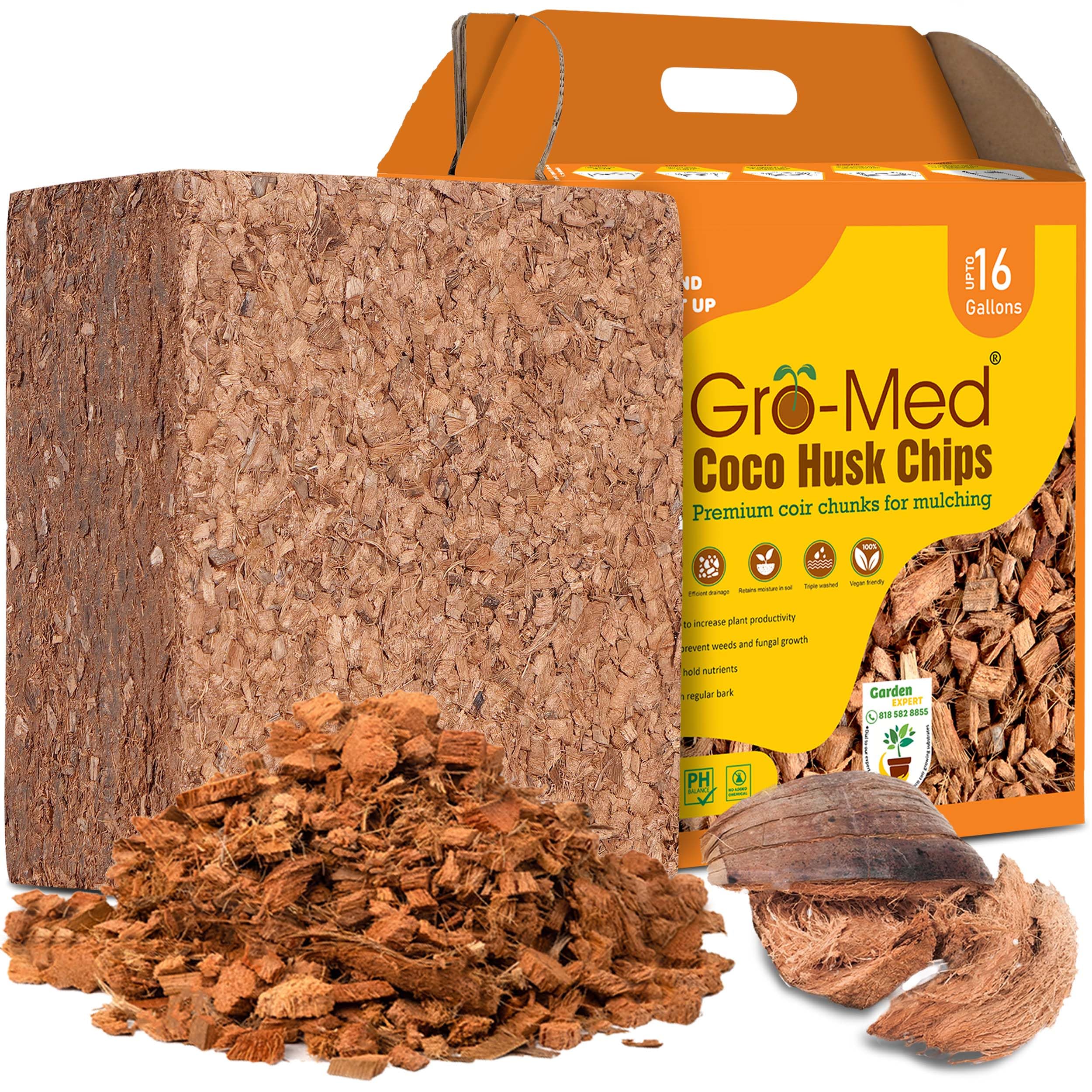
1. Gro-Med Coco Husk Chips for Plants
Our pick — over 4.5★ from 500+ verified ratings; the strongest balance of quality and price.
A 10-pound compressed block expands to 65 quarts of airy, root-friendly coco husk mulch.
This isn’t a mulch that just sits on top of the soil — it physically changes the structure of what you’re growing in. The compressed coco husk block claims to expand to 65 quarts of mulching medium, and buyers report that a 10-pound block delivers roughly 16 gallons of material after a 20-minute soak in warm water. That expansion ratio is the whole appeal: a small, easy-to-store brick becomes a wheelbarrow-load of mulch.
What wins people over here is the quality — it’s the most-praised aspect by a wide margin. The chips are triple-washed, which keeps electrical conductivity (EC) low and the pH balanced, so you avoid the nutrient-absorption problems that come with imbalanced acidity. They also hold up to 3 times more water than regular bark, which means fewer trips with the watering can during hot stretches.
Because the pieces are chunky rather than fine, they boost airflow around roots and resist compaction — a real advantage for orchids, Hoyas, and any plant that hates soggy feet. Owners mention that “the chips remain moist after watering but not overly wet to create rot,” which is exactly the balance moisture-loving plants need. It also works as reptile bedding, absorbing moisture three times better than standard substrates if you keep terrarium animals.
Why owners love it
- Expands enormously — one 10 lb block makes ~16 gallons of mulch
- Low EC and balanced pH from triple-washing protects plant roots
- Holds up to 3x more water than ordinary bark, cutting watering frequency
What to weigh up
- Texture is mixed — some bags come out more shredded than chunky
- Value is subjective depending on how much ground you need covered
Reach for this if: you grow orchids, Hoyas, or container plants that need sharp drainage and steady moisture without waterlogging.
Look elsewhere if: you want a flat, weed-blocking blanket for a large in-ground bed — the chunky texture suits potting mixes and top-dressing far better.
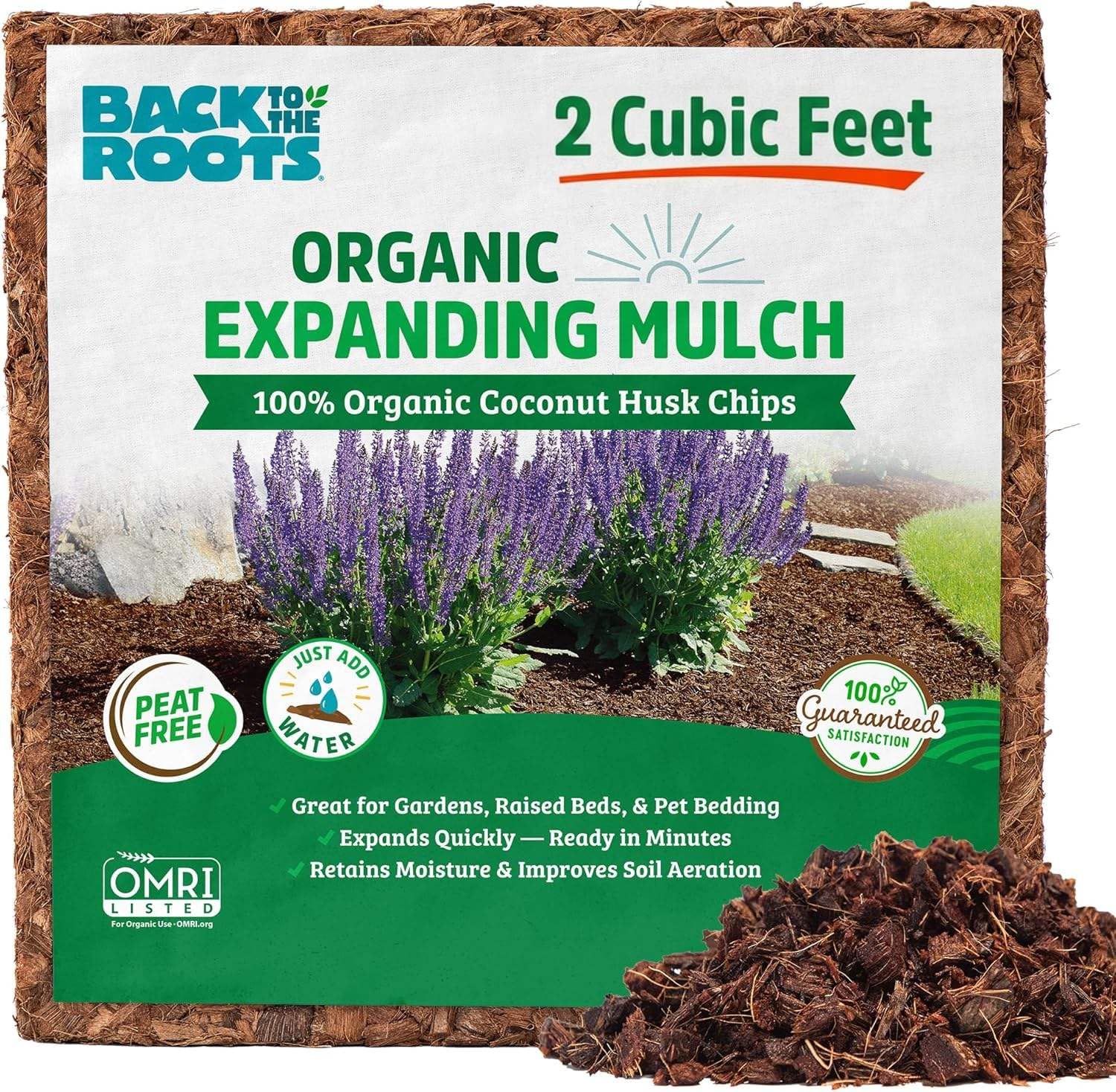
2. Back to the Roots 100% Organic Mulch
One 10-pound brick fluffs into over 2 cubic feet of clean, organic coco husk mulch.
This is the mulch for people who hate the mess of dragging bags of wet wood around the yard. The compressed 10-pound block of coconut husk expands to over 2 cubic feet of mulch, and the transformation is genuinely fun to watch. As owners put it: “So cool to watch this stuff grow and fluff up when you water it (yup, nerd) it easily gets 6-8x the size of the package.”
What buyers rave about most is the sheer yield from one brick — it fills wheelbarrows, which makes it a standout on value for anyone covering container vegetable gardens or raised beds. The mulch capacity is the single most-praised aspect, and it pairs with a reputation for holding moisture well, helping potted sunflowers resist evaporation and hydrangeas thrive.
Customers note a real catch: the brick resists breaking apart and soaking, so you need a yard, a hose, and a large tub — a poor fit for a small kitchen counter or tight apartment. But if you have room to rehydrate it, the result looks great, smells pleasant, and holds in place far better than loose straw.
Best trick: expand it in a wheelbarrow over a couple of rainy days and you skip the bags-and-shoveling routine entirely.
Reality check: plan for the rehydration hassle — splitting a rock-hard compressed block takes muscle or patience.
3. EZ-Straw Seeding Mulch with Tackifier
Tackified straw that locks seed to slopes and withstands hard rain.
If you’re overseeding a lawn or reseeding a hillside, this is the mulch engineered for exactly that job. The 21-pound bale of processed straw comes coated with a natural tackifier — a biodegradable bonding agent that gives the straw a tacky quality so it holds together and stays put. That tackiness is the difference between seed staying put and washing into the gutter.
Germination is the thing owners praise most, and the numbers back it up — grass sprouting in as little as 5 days is a recurring theme in feedback, with thyme seedlings following in 4. The straw mats down nicely when you step on it, and when dampened it sticks to itself, which is why it survives windy areas and several hard rainstorms without drifting.
It’s messy to apply — that’s the honest trade-off — but buyers consistently say it beats plain hay or straw from a feed store. At 21 pounds it’s heavy to haul but the 2.5 cubic foot bale covers up to 500 square feet, which makes it economical for a full lawn renovation. It’s safe for pets and children, biodegrades in place, and the manufacturer claims 99% weed-free material.
Its superpower: the tackifier locks seed to soil on slopes and windy yards where loose straw just blows away.
The catch: expect a messy application — wear gloves and old shoes, because this stuff clings to everything.
4. Rubberific Premium Shredded Rubber Mulch

Shredded rubber that mimics wood, never rots, and carries a 12-year color warranty.
This is the last bag of mulch you’ll buy for that bed, because shredded rubber doesn’t decompose. The 16-pound bag of brown shreds is made to mimic real wood mulch visually, and owners consistently report it looks convincingly like shredded wood landscaping while staying soft underfoot. It will not fade, rot, or compress, and the color comes with a 12-year warranty — a genuine multi-year proposition, not a single-season splash.
What buyers love most is the quality and the appearance, with feedback praising how it doesn’t move from where it’s placed. Paired with weed paper underneath, it delivers a no-weed bed, and it’s a favored choice for playground surfacing because it provides a cushioned surface to soften falls. It also turns out to be a deterrent — owners note dogs and cats won’t do their business on it.
The honest friction is value: the 0.8 cubic foot bag covers less ground than a comparable wood bag, and the price per bag adds up fast for large areas. There’s also a distinct rubber smell when fresh, and one owner flagged a strong odor on arrival. For small borders, tree rings, and play areas, the longevity justifies the premium; for blanketing a whole acre, the math gets heavy.
Why it’s worth it: a 12-year color warranty means this bed looks fresh for over a decade with zero annual re-mulching.
Know before you buy: the 0.8 cu ft bag covers a modest area, so measure your bed carefully before ordering.
5. 50150 Cocoa Bean Shell Mulch

Cocoa bean shells that release a chocolate scent and slowly feed the soil.
This is mulch for people who care about how the garden makes them feel, not just how it performs. Cocoa bean shell mulch has a genuinely lovely chocolate scent that fills the air around it, and buyers are nearly unanimous that it’s the most distinctive, pleasant feature — it’s the most-praised aspect by a wide margin. It adds a touch of class to front yard areas and looks rich and dark when laid down.
Beyond the aroma, it carries an approximate fertilizer value of 2.5-1-3, meaning it slowly feeds your soil, and it won’t burn vegetation even as it breaks down. Reviewers point out it enriches clay soil, controls weeds effectively, and is easy to spread with no splinters. For container plants in intense heat like Las Vegas, it arrives fresh and fragrant, unlike dried-out bags from other vendors.
The trade-offs are real and worth knowing. Mold growth on the surface is a documented issue, and some shoppers say it attracts bugs. The fragrance also fades over time, and it’s a premium-priced product that isn’t cost-effective for large outdoor areas. If you want an aromatic, attractive top-dressing for a smaller bed or porch planters, it’s delightful — just don’t blanket the whole yard with it.
Best for: small front beds and container plantings where the chocolate scent and deep color earn their keep.
Heads up: mold can form on the shells in damp shade, so give it airflow and expect the fragrance to fade.
6. Rubberific Rubber Mulch Bagged Brown

Shredded rubber that keeps its color and stays put for years without replacement.
Some mulches are an annual chore that needs replacing every spring. This shredded rubber is the opposite — it’s the “install once, admire for years” play. Buyers report replacing stone in a front garden with this rubber mulch and having it still look like fresh mulch was laid down two years later. That longevity is the core appeal, and the color lasting all year is the most-praised aspect.
The performance stories are impressive. One owner weathered a bad storm with “not one single shred was lost,” which speaks to how well the rubber interlocks and stays anchored. It’s a beautiful background for flowers, delivers a clean contrast against the rest of the yard, and has repeatedly earned fresh orders years after the first — the “neighbors are jealous” line appears in real feedback.
The honest math: the bag doesn’t cover much ground, and the per-bag price is steep — one reviewer noted the cost ran more than triple what they paid at a big-box store for additional bags. It’s also listed for sandy soil and full sun in USDA zone 3, so think of it as a premium finishing touch for smaller, high-visibility areas rather than a bulk solution for a sweeping lawn.
Pick it if: you want one weekend of work that looks pristine for years and survives storms without losing a shred.
Shop around if: you need many bags for a large area — the per-bag price compounds quickly beyond this product’s comfort zone.
7. Soil Sunrise 100% Natural Pine Bark Mulch Nuggets
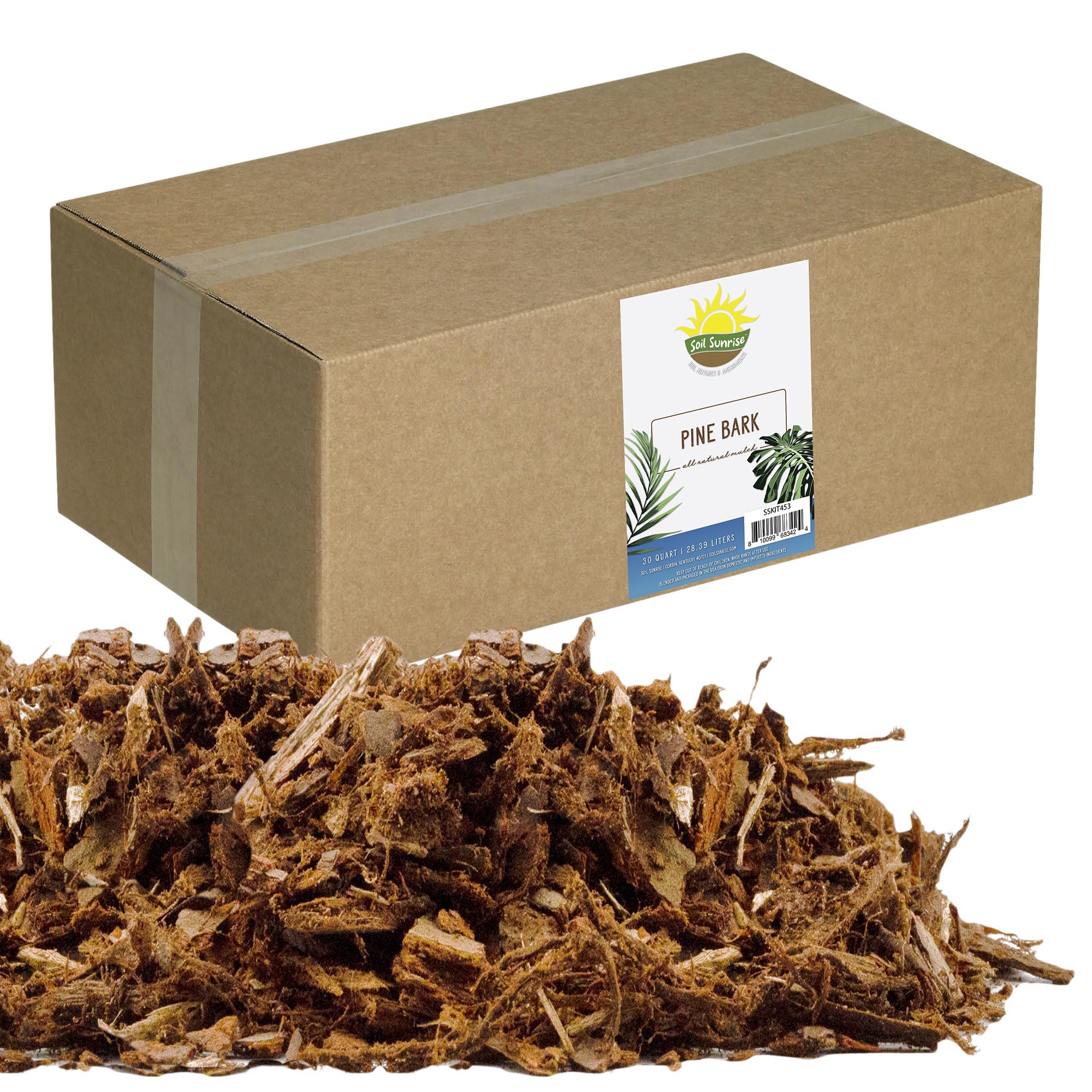
Consistent 1/2-inch pine bark nuggets that keep houseplants airy and tidy.
This is a mulch for the indoor gardener who wants a neat, presentable top-dressing that also improves the growing medium. The 30-quart bag holds 100% pine bark with no added fertilizers or pesticides, cut to an average 1/2-inch piece size. That consistency is the selling point — owners describe it as exactly what they wanted for gardenias and Meyer Lemon trees, maintaining an airy, slightly acidic soil profile.
Quality is what buyers praise most, followed closely by soil quality benefits. The nuggets are chunky enough to aid root oxygenation but fine enough for a pleasant texture, and they replace peat moss effectively in potting soil mixes. They keep moisture even, block pesky creatures from digging, and make a container garden look instantly more presentable — several owners call it nicer than what they’d pick up at a big-box home store.
Buyers repeatedly note the size consistency — some found no pieces larger than 1/16th inch, a mixed blessing if you prefer chunky texture over fine coverage. The 30-quart volume fits pots, terrariums, and bonsai care better than large landscape beds, and one buyer flagged that the bag arrived open in the box, risking spillage.
Best suited to: potted plants, terrariums, and small container gardens where clean appearance and consistent texture matter.
Consider first: if you want chunky or fine pieces — the 1/2-inch average runs smaller than many expect.
8. HealthiStraw GardenStraw
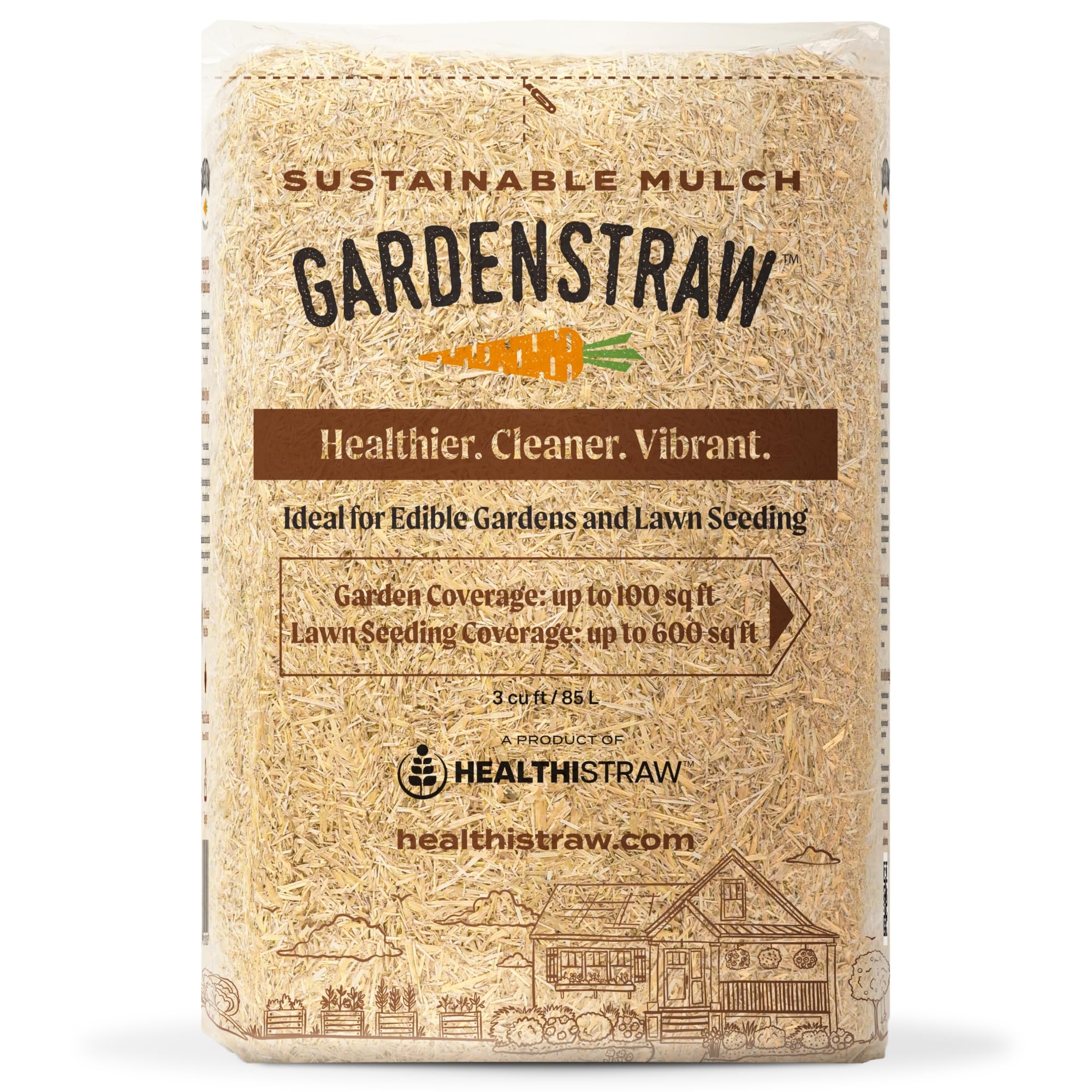
Wheat straw that reduces watering needs by up to 50% in vegetable beds.
This is the mulch that vegetable gardeners keep coming back to, and the reason is simple: it holds moisture in the soil for long stretches. The 3 cubic foot compressed bale of non-GMO wheat straw is the most highly-praised aspect for quality, and the water-conservation claim is bold — the manufacturer says it can reduce watering needs by up to 50%. In a summer vegetable bed, that’s the difference between a daily chore and a twice-a-week one.
Buyers describe it as light, easy to spread, and easy to remove and put back when you need to plant something new. The straw fibers interlock when watered, so it stays in place naturally without chemical binders and resists wind and rain. One owner covered two 30-square-foot beds plus 30 pots from a single bag and had leftovers for fall — the coverage per bag is a major part of its value reputation.
The seed question is the honest sticking point. Some owners mention it’s essentially seedless, while others find seeds sprouting in their beds. The manufacturer filters out dust, dirt, and as many seeds as possible, but “as many as possible” isn’t “all.” If you’re mulching around seedlings you want to protect from competition, treat this as low-seed but not zero-seed — and expect to pull the occasional sprout.
Choose it for: tomato, pepper, and strawberry beds where moisture retention and clean appearance pay off daily.
Watch out for: sprouting seeds — most bags are clean, but occasional sprouting means you might do a little weeding.
9. Blue Mountain Hay Organic Garden Straw Mulch
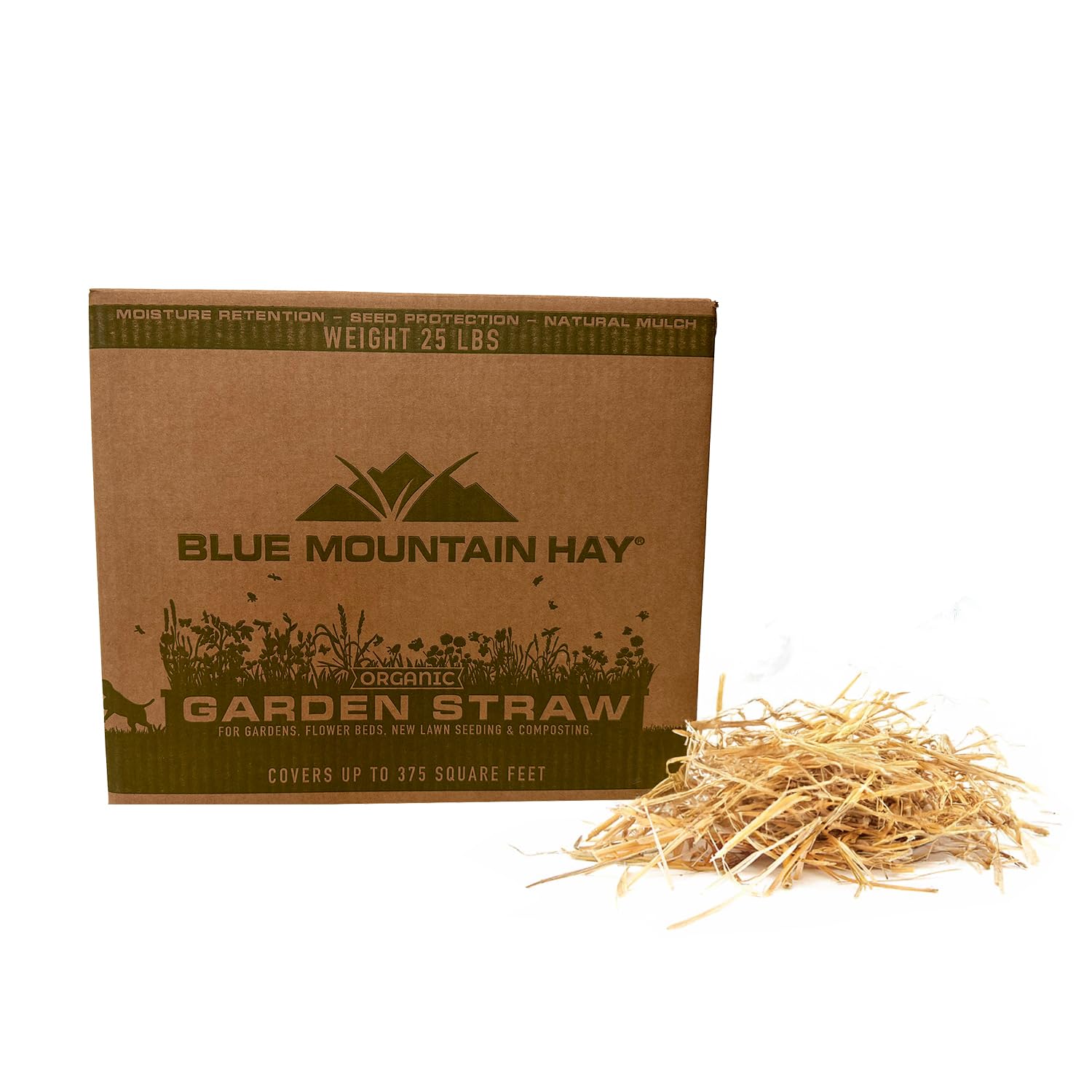
The 25-pound compressed bale built for covering serious garden ground
When you need to blanket a large vegetable patch or a long flower bed, this 25-pound bale of organic straw is the workhorse choice. It’s compressed for easy handling and storage, then expands when opened and spreads evenly — a 200-square-foot garden got a light but complete covering from a single box in real feedback. For raised beds, potato layering, and compost layering, it handles the volume without fuss.
The cleanliness is what earns the most consistent praise — buyers describe it as clean, soft, pure straw with no dirt or bugs, and it works well in raised vegetable beds. It helps prevent soil erosion, regulates soil temperature, and protects grass seed during new lawn seeding. One owner used it as a heat barrier in an 8x4x2 raised bed with pumpkins and confirmed the sprouting grain seeds were weak annuals, easy to pull.
The quality perception is genuinely split — that’s the honest read of the feedback. Some owners call it fantastic and clean, while others find it not worth the price, and the seed quantity is the recurring complaint. Because it’s minimally processed by design, expect some seeds and grain sprouts mixed in; the trade-off is that “minimally processed” is exactly why it stays clean, low-dust, and safe for pets.
Reach for it if: you need to cover a large area with clean, pet-safe organic straw and don’t mind pulling a few grain sprouts.
Think twice if: you absolutely cannot tolerate any seeds — the minimally processed nature means some sprouting is part of the deal.
Understanding the Specs
Expanded Volume vs. Bag Weight
Compressed coco coir bricks make bag weight almost meaningless on their own. A 10-pound block can expand to 65 quarts or 2 cubic feet of loose mulch, so always check the expanded volume in quarts or cubic feet to estimate how much ground you can actually cover. A heavier 25-pound straw bale and a 10-pound coco brick might both cover a similar bed — the weight tells you about shipping, not coverage.
Organic vs. Inorganic Longevity
Organic mulches like straw, pine bark, and cocoa shells break down over a season or two and feed the soil as they decompose. Rubber mulch never decomposes, which is why one brand offers a 12-year color warranty — it’s an inorganic material engineered to stay put. Your choice depends on building soil health (organic) or skipping annual re-mulching (rubber).
Tackifiers and Bonding Agents
A tackifier is a natural, biodegradable bonding agent sprayed onto processed straw that makes it tacky so it sticks to itself. That tackiness is what holds seed and soil in place on slopes and windy yards, preventing washout during hard rain. If you’re overseeding a lawn or covering a hill, a tackified straw product is the difference between seed staying put and ending up in the gutter.
Nutrient Value and pH
Some mulches do more than cover the ground. Cocoa shell mulch carries an approximate fertilizer value of 2.5-1-3, feeding the soil slowly without burning vegetation, while coco husk is triple-washed to keep EC low and pH balanced for reliable nutrient absorption. If you’re mulching around sensitive roots, check whether the product was washed or processed to avoid acidity swings.
FAQ
How much ground will a 10-pound coco husk block actually cover?
What is a tackifier and why would I want it in my mulch?
Will rubber mulch really last longer than wood or straw mulch?
Why does my straw mulch sprout weeds and how do I avoid it?
Is cocoa shell mulch safe for all plants?
What does OMRI Listed mean for a mulch product?
Can I use a bagged mulch product as reptile bedding?
How do I hydrate a compressed coco coir block?
Final Thoughts: The Verdict
If you want one dependable pick, the bagged mulch winner is the Gro-Med Coco Husk Chips because one small 10-pound block expands into 65 quarts of airy, moisture-retaining mulch that’s gentle on roots and proven with orchids and containers. If you’re seeding a new lawn or fixing a slope, the EZ-Straw Seeding Mulch is the one to reach for, since its tackifier locks seed in place through hard rain. And for anyone tired of re-mulching every spring, the Rubberific Shredded Rubber delivers a decade-plus of color with a 12-year warranty attached — the crowd favorite among the premium picks.
How We Picked
We do not accept paid placement. Every pick is matched to a real buyer and a real use-case; we do not hands-on test units.
Sources & Methodology
Specifications: manufacturer listings and product documentation. Review insights: verified customer reviews, as of August 2026. Pricing: not shown on this page (it changes often); check the current price via the retailer link.
As an Amazon Associate, Gadgets Feed earns from qualifying purchases. This does not affect which products we feature.