
Our readers keep the lights on and my morning glass full of iced black tea. As an Amazon Associate, I earn from qualifying purchases.
Specs are compiled from manufacturer listings and verified buyer reviews and can change over time — please confirm the key details on the product page before buying.
You have two ways to build a deck: cut and fasten a classic board yourself, or snap tiles together in an afternoon with no tools. A single black HDPE (high-density polyethylene, a tough recycled plastic) board lets you build a permanent structure, while a set of ten interlocking composite tiles covers an existing patio fast. Your choice depends on whether you are building something lasting or just covering a space that needs to look good quickly.
I’m Min — the founder and writer behind Gadgets Feed. This guide is built by comparing the manufacturers’ published specifications and the patterns across verified customer reviews, so you get each pick’s real strengths and trade-offs instead of marketing spin.
Both outperform wood in rot resistance, but they target different project types. For a no-tools, same-day patio upgrade, the interlocking tiles are the obvious pick. For custom framing, the 36-inch HDPE board allows cutting and shaping to spec. This is your artificial lumber deck starting point, and the right choice depends entirely on your project’s scope.
Our Picks at a Glance
How To Choose The Best Artificial Lumber Deck
The first fork in the road is whether you are building or covering. Raw boards like the BuyPlastic HDPE give you a genuine building material you can cut, drill, and screw into place, perfect for pergolas, planter boxes, or replacing a single rotten step. Interlocking tiles like the IDZO set are a surface solution — you snap them together over an existing concrete or wood floor to create a finished deck instantly.
Match the material to the job
HDPE (high-density polyethylene) board resists splintering and rot because it is plastic all the way through, not just coated. Composite tiles blend wood fibers with plastic, giving a wood-like look with waterproofing, but they are not meant to carry structural loads the way a solid lumber plank is. Think of composite tiles as the finish layer and HDPE board as the framework.
Check the thickness for real stability
Underfoot, thickness translates directly to feel. A 1-inch tile sits proud and solid, while a 0.75-inch board profile is standard for framing but feels slimmer as a walking surface. If you plan to walk on the result daily, thicker materials win. If you are building furniture or a step, the standard board dimension is the one that matches your joists and brackets.
Factor in cutting and tools
Composite tiles snap together with an interlocking mechanism, so you can skip the saw for straight runs — though trimming to fit corners does call for a jigsaw. A solid HDPE board demands cutting, drilling, and fastening with standard woodworking tools. Buyers report the plastic board is extremely strong but hard to cut through, which is a real consideration if you have limited tooling.
Quick Comparison
In‑Depth Reviews
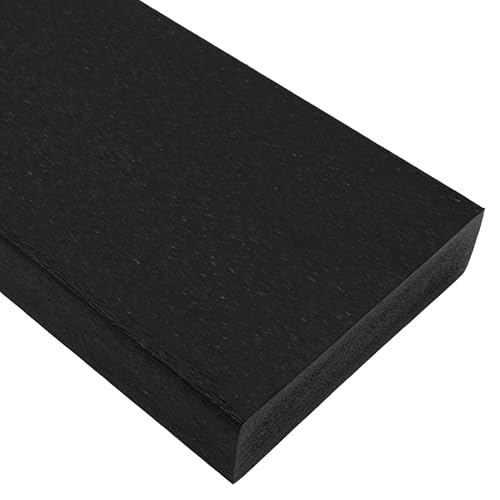
1. BuyPlastic Tangent Poly Lumber
A structural black board that replaces rotten wood and never splinters or rots again.
This is the pick for anyone who wants a true building material, not just a surface cover. The 1×4 profile measures a real 0.75 x 3.5 inches and runs 36 inches long, so it matches standard lumber dimensions for framing a step, a planter, or a pergola beam. It is made of HDPE (high-density polyethylene), a plastic that will not splinter, crack, or rot, and the UV-stabilized black finish resists fading outdoors.
Stains, chemicals, and dirt wash off with soapy water—no sealing or painting needed. Owners mention it pairs beautifully with a boat and matches color exactly, while others used it to replace a rotten wood step at the bottom of a porch. The crowd favorite — 4.7 stars across 30+ owners — makes it the genuine best overall for real construction.
The main drawback is cutting difficulty. Customers note it is “extremely strong product but hard to cut through,” which means you want decent tools and patience, not a flimsy handsaw. It also costs more than standard wood, though the color stability and rot resistance justify that premium over time.
The Build-It-Yourself Wins
- Can be cut, drilled, milled, and secured with standard tools
- Won’t splinter, crack, or rot — built for outdoor life
- UV-stabilized black color resists fading
- Dirt washes off with soapy water
The Real-World Friction
- Hard to cut through — bring a powerful saw
- Higher upfront cost than standard lumber
- Single board, so large decks require many pieces
Reach for this if: you are framing, building a step, or replacing a rotten board and want a material that never needs sealing.
Look elsewhere if: you want a no-tools, snap-together surface — this board demands cutting and fastening.
2. IDZO Wood Plastic Composite Deck Tiles

Ten interlocking square tiles that transform a bare patio in a single afternoon, no tools required.
If your project is covering rather than building, this is the faster route. Each tile is 11.75 x 11.75 inches and a full 1 inch thick — a third thicker than the 0.75-inch board profile above — which makes it feel noticeably more substantial underfoot. The set ships with ten tiles, and each one weighs 2.6 pounds, so a full carton is manageable for one person to move around the yard.
The tiles snap together with an interlocking mechanism, and the self-draining grid prevents water pooling. The material is FSC-certified wood plastic composite, combining the strength of wood with the waterproofing of plastic, and it resists fire, heat, and corrosion. Reviewers point out the install is easy and the look is great, with several noting it beats acacia wood, which warped and cracked for them.
Durability reports are mixed, so weigh fading and staining risks in hot climates. The tiles are praised for looking great and being easy to use, but one buyer in LA reported fading within a month of summer sun and dirt absorbing permanently. These are surface tiles, not structural boards, so a hot, harsh climate demands closer scrutiny before you commit.
The Fast-Upgrade Edge
- Snaps together with zero tools
- 1-inch thickness feels solid underfoot
- 100% FSC certified composite material
- Self-draining grid prevents water pooling
- Easy to cut with a jigsaw for custom fits
What To Verify First
- Hot-summer fading reported in one case
- Dirt can absorb into the composite surface
- Not structural — a surface layer, not framing
Grab these if: you want an instant, low-maintenance upgrade for a patio, balcony, or rooftop with no sawing for straight runs.
Think twice if: you live in an extreme sun climate or need to build a structural frame — this is a cover, not a beam.
Understanding the Specs
HDPE vs. Composite Material
HDPE (high-density polyethylene) is pure plastic, so it will never rot, splinter, or absorb moisture — the BuyPlastic board is a true structural substitute for wood. Composite tiles blend wood fibers with plastic for a more natural look and feel, but they trade some of that pure-plastic durability for the wood-like appearance.
Thickness and Stability
Thickness directly affects underfoot stability. The IDZO tiles measure a full 1 inch, giving a firm, stable platform underfoot. The BuyPlastic board is 0.75 inches thick, which is the standard profile for framing work like steps and pergolas. Match the thickness to the job: thick for walking, standard for building.
FAQ
What is the difference between HDPE lumber and composite deck tiles?
Can I cut the IDZO composite tiles to fit my space?
Will the BuyPlastic HDPE board rot or splinter outdoors?
How do I clean these artificial lumber decking options?
Is the IDZO composite decking FSC certified?
Can I use the HDPE board for a boat or marine project?
Will composite tiles hold up in a hot, sunny climate?
Which option is better for a balcony or rooftop?
Final Thoughts: The Verdict
For most buyers, the artificial lumber deck winner is the BuyPlastic Tangent Poly Lumber because it is a true structural material that replaces rotten wood and never rots again — the strongest, most versatile pick for real building projects. If you want instant coverage with no tools, grab the IDZO Composite Tiles for their snap-together install and full 1-inch thickness. The BuyPlastic board holds a 4.7-star score from a smaller owner base, while the tiles have more feedback but a mixed durability record, so the board is the safer bet for anyone who wants a material that lasts a lifetime outdoors.
How We Picked
We do not accept paid placement. Every pick is matched to a real buyer and a real use-case; we do not hands-on test units.
Sources & Methodology
Specifications: manufacturer listings and product documentation. Review insights: verified customer reviews, as of August 2026. Pricing: not shown on this page (it changes often); check the current price via the retailer link.
As an Amazon Associate, Gadgets Feed earns from qualifying purchases. This does not affect which products we feature.