
Our readers keep the lights on and my morning glass full of iced black tea. As an Amazon Associate, I earn from qualifying purchases.
Specs are compiled from manufacturer listings and verified buyer reviews and can change over time — please confirm the key details on the product page before buying.
A carbon steel chef knife is the choice when you want an edge that stays scary-sharp for weeks and a blade that takes a patina with every meal. Unlike stainless steel, carbon steel reacts with the food you cut, slowly forming a dark, protective layer that actually helps food release from the blade. The trade-off is real: you have to dry it by hand and oil it, because it will rust if you leave it wet.
I’m Min — the founder and writer behind Gadgets Feed. This guide is built by comparing the manufacturers’ published specifications and the patterns across verified customer reviews, so you get each pick’s real strengths and trade-offs instead of marketing spin.
You’ll see exactly which of these three blades fits your routine, and why the best carbon steel chef knife for you depends on how much time you will spend wiping it dry.
Our Picks at a Glance
How To Choose The Best Carbon Steel Chef Knife
Buying a carbon steel chef knife means deciding how much care you are willing to give it. Carbon steel will rust if you leave it wet, but it rewards you with an edge that keeps cutting long after stainless has dulled. Think about your cutting style, your grip, and your patience before you commit.
Blade length and height
Longer blades give you more slicing strokes per cut, but taller blades give you knuckle clearance so your fingers do not scrape the board. A 9-inch blade is a bigger swing for big jobs, while an 8-inch blade is more agile for tight spaces. If you chop a lot of vegetables, blade height matters more than blade length.
Steel type and edge angle
Carbon steel is the key, but not all carbon steel behaves the same. The edge angle — the degrees each side is sharpened to — determines how aggressive the cut feels. A thinner edge angle on a harder steel gives you a sharper cut that lasts, but it also chips more easily if you hit bone. Match the steel to the food you actually prep.
Handle and maintenance
The handle decides how comfortable a long prep session feels, and the care routine decides how long the blade lasts. Wood handles can crack if you soak them, and carbon blades need immediate drying to avoid rust. If you cannot commit to hand-washing and oiling, a carbon steel knife will frustrate you.
Quick Comparison
| Model | Best For | Blade Length | Blade Material | Handle | Amazon |
|---|---|---|---|---|---|
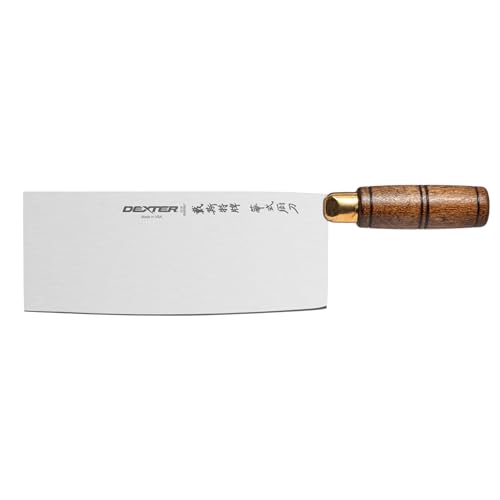
| Dexter Russell S5198★ Best Overall | Knuckle clearance and veg prep | 8 inches | High Carbon Steel | Wooden | Amazon |
| HOSHANHO Kiritsuke | Hand-forged Japanese edge | 9 inches | 10Cr15CoMoV Steel | Rosewood | Amazon |
| Misono EU Carbon Gyuto | Professional bulk prep | 8.2 inches | Swedish Carbon Steel | Composite Wood | Amazon |
In‑Depth Reviews
1. Dexter Russell S5198 Chinese Chef’s Knife
Our pick — over 4.5★ from 700+ verified ratings; the strongest balance of quality and price.
The workhorse that gives your knuckles breathing room without emptying the wallet
If you spend your evenings mincing garlic and slicing onions, the blade height here is the whole story. The 3-1/4-inch tall blade gives you real knuckle clearance so your fingers glide over the food instead of scraping the board, and that wide Chinese-style profile lets you scoop up a pile of chopped herbs in one motion. The high carbon stainless steel blade, 8 inches long, arrives sharp enough to break down a chicken joint, and Buyers report the edge stays sharp through extended use..
The weight is part of the charm — 12 ounces feels substantial in hand, which helps the blade do the work for you through dense vegetables. It is not a bone chopper, though; treat it as a slicing knife with cleaver proportions, and it will behave. The wooden handle is the one modest link, and the blade needs immediate drying since it is not stainless.
Decades of use show the handle stays tight, never coming loose., and it shows up sharp with no defects. It rusts if you let it sit wet, so keep a towel nearby. This is the pick that balances price, edge retention, and everyday comfort better than any other here.
Why it wins over the others
- Tall 3-1/4-inch blade means real knuckle clearance for fast veg prep
- 12-ounce weight feels solid and controllable in hand
- Proven durability — owners mention the handle stays tight for decades
The honest trade-offs
- Not meant for chopping bone — it will damage the edge
- Handle is functional rather than fancy
- Too tall to fit in a standard drawer
Reach for this if: you are a serious home cook who wants a proven, substantial blade for daily vegetable prep and does not need a bone chopper.
Look elsewhere if: you want a knife that lives in a crowded drawer or you plan to break down carcasses on a regular basis.
2. HOSHANHO 9 Inch Kiritsuke Chef Knife

A hand-forged kiritsuke that turns a 9-inch blade into a precision instrument
This one is for the cook who wants that Japanese-style cutting feel. The blade is built from 8 layers of composite steel wrapped around a 10Cr15CoMoV core, and the edge is hand-sanded to 12-15 degrees on each side — that tight angle is what makes it glide through tomatoes, sushi, and herbs with barely any pressure. It is 9 inches long and just 2.5 mm thick, which keeps it light and agile in a way the heavier Dexter cannot match.
The hand-hammered texture on the blade is not just for looks — it creates small pockets that stop food from sticking, so a slice of potato does not cling to the steel. The octagonal rosewood handle is comfortable in wet hands and designed for either grip, with two copper wires adding a bit of style. It weighs only 238 g, so long prep sessions do not tire your wrist.
Six-month customers note excellent edge retention on herbs and vegetables., though the care routine is strict: hand wash only, no bones, and no frozen food. A few units arrived with loose steel near the handle, requiring a quick grind.. If you want the sharpest, most beautiful blade here and will follow the care rules, this is the one.
Sharper and lighter: the 9-inch blade with a 12-15 degree edge out-cuts the Dexter’s 8-inch plain edge for delicate work, and at 238 g it feels almost half as heavy in hand.
The careful trade: the durability feedback is mixed, so treat this as a precision tool for vegetables and meat slicing, not a daily beater.
Choose this if: you want a hand-forged Japanese blade with a beautiful finish and do not mind a strict hand-wash routine.
Do not choose this if: you need a knife that survives bones, frozen food, or a busy household that forgets to dry blades.
3. Misono EU Carbon (Swedish) Steel Professional Gyuto

A hand-forged dragon of a knife built for long shifts and serious bulk prep
This is the knife for the line cook or the home cook who processes a lot of food at once. Misono uses Swedish carbon steel, considered one of the purest forms of carbon steel, and hammers it by hand in Sakai city just like traditional Japanese blades. The 70:30 asymmetrical bevel — sharpened at a steeper angle on one side than the other — creates a thin edge that approaches single-edged sharpness, and owners say it lets slices peel off to the right with almost no effort. It is 8.2 inches long, a versatile gyuto shape for meat, fish, and vegetables.
The dragon engraving on the face is a nod to its Sakai heritage, and the composite wood handle gives it a nice, heavy feel for a longer gyuto. In professional use, In professional use, it has processed 26 lbs of beef quickly and held its edge through most of a day., with a quick strop bringing it back. It is a true workhorse, though the maintenance is the most demanding of the three: carbon steel that is not stain resistant will discolor fast, so you dry it and oil it immediately after every use.
The edge is beyond razor sharp — Its edge is so sharp that an incorrect claw grip has drawn blood., so learn the pinch grip on the tang before you start. It is not an ideal first knife; it is for the cook who already knows how to care for carbon steel. If you treat it right, It earns a permanent spot in a professional kit..
Built for endurance: the Swedish carbon steel and hand-forged construction make this the most capable blade here for bulk prep and line service, with edge retention that outlasts the others.
Demands respect: rust resistance is the weak point — skip this if you are not ready to dry and oil the blade after every single use.
Pick this for: serious and professional cooks who want the sharpest, most traditional blade and already have a carbon steel care routine.
skip it if: you want a low-maintenance knife or you are new to sharpening and care — this one punishes neglect.
Understanding the Specs
Blade Angle and Sharpness
The edge angle — the degrees each side is ground to — decides how the blade bites into food. A tighter angle like 12-15 degrees gives a very sharp cut but chips more easily. A thicker 70:30 asymmetrical bevel concentrates sharpening on one face for a thin edge that still holds up. Match the angle to the food you cut.
Carbon Steel vs Stainless
Carbon steel is not stainless, which means it reacts with food to form a patina and can rust if left wet. The reward is a blade that stays sharp much longer and takes a better edge. You must dry it immediately and oil it after use. If you cannot commit to that routine, carbon steel will frustrate you.
FAQ
Why would I choose carbon steel over stainless steel for a chef knife?
What does a patina on a carbon steel blade mean?
Can I use a carbon steel chef knife to cut through bones?
How do I stop my carbon steel knife from rusting?
Is a 9-inch blade better than an 8-inch blade for a chef knife?
What is the best way to grip a carbon steel chef knife?
Are carbon steel knives harder to sharpen than stainless ones?
What is the difference between a gyuto and a kiritsuke knife?
Final Thoughts: The Verdict
For most people, the best carbon steel chef knife is the Dexter Russell S5198 because it pairs real knuckle clearance with proven decades-long durability and a price that stays reasonable. If you want the sharpest hand-forged Japanese edge with a beautiful rosewood handle, grab the HOSHANHO Kiritsuke. And for professional or serious cooks who will follow a strict dry-and-oil routine, the Misono Gyuto is the one to reach for when the prep load gets heavy.
How We Picked
We do not accept paid placement. Every pick is matched to a real buyer and a real use-case; we do not hands-on test units.
Sources & Methodology
Specifications: manufacturer listings and product documentation. Review insights: verified customer reviews, as of August 2026. Pricing: not shown on this page (it changes often); check the current price via the retailer link.
As an Amazon Associate, Gadgets Feed earns from qualifying purchases. This does not affect which products we feature.