
Our readers keep the lights on and my morning glass full of iced black tea. As an Amazon Associate, I earn from qualifying purchases.
Specs are compiled from manufacturer listings and verified buyer reviews and can change over time — please confirm the key details on the product page before buying.
Peeling corners, sliding tiles, and the lingering smell of solvent are the usual carpet tile nightmares. The right adhesive fixes all three, but only if you match the glue to your tile backing and your floor. This guide breaks down the best options into simple picks: liquid adhesives for permanent bonds, and peel-and-stick tabs for floating floors you can rearrange later.
I’m Min — the founder and writer behind Gadgets Feed. This guide is built by comparing the manufacturers’ published specifications and the patterns across verified customer reviews, so you get each pick’s real strengths and trade-offs instead of marketing spin.
Whether you’re tiling a basement, an RV, or a home office, the right adhesive for carpet tiles means the difference between a floor that lasts and one that needs constant fixing.
Our Picks at a Glance


How To Choose The Best Adhesive For Carpet Tiles
Before you buy any adhesive, flip a tile over and check its backing. That single detail decides which product will work for you, because a glue that bonds to foam rubber may slide right off a polypropylene backing.
Liquid Adhesive vs. Peel-and-Stick Tabs
Liquid adhesives like the ROBERTS pails give you a permanent, rock-solid bond that handles heavy foot traffic and commercial use. They take longer to install, need a trowel, and require clean-up. Peel-and-stick tabs create a floating floor — faster, cleaner, and fully removable, but they need a level, clean subfloor to grip properly.
Matching the Adhesive to Your Floor Type
Your subfloor matters as much as your tile. Concrete, plywood, and existing vinyl each accept adhesive differently. Some formulas explicitly list the surfaces they bond to, from concrete and steel to marble and terrazzo, so check that list before committing to a full pail.
Understanding Cure Time and Working Time
Working time is how long you have to slide a tile into position before the glue grabs. Cure time is how long until the bond reaches full strength. A long cure time means keeping weight off the floor for days, while a short one lets you walk on it the same day.
Quick Comparison
| Model | Best For | Form | Weight | Cure Time | Amazon |
|---|---|---|---|---|---|
| ROBERTS Universal 7350-1★ Best Overall | Vinyl-backed tiles & LVP | Liquid | 8.4 pounds | — | Amazon |
| ROBERTS 6700-1Top Performer | Indoor/outdoor carpet | Paste | 8.8 pounds | 48 hours | Amazon |
| AAT-390 GPremium Pick | Marine & RV flooring | Liquid | — | 7 days | Amazon |
| Lucida CoreBond | Multi-surface vinyl | Liquid | 8 pounds | 1 hour | Amazon |
| Vakerga 120 Tabs | Floating floors over any subfloor | Tabs | — | — | Amazon |
| JutboRstp 200 Pack | High-traffic corners | Double-sided tabs | — | — | Amazon |
| Flor Tactiles 30 Pack | Quick FLOR tile installs | Tape | — | — | Amazon |
| MaxTab FS 104 | Whole-room floating installs | Tabs | 16 ounces | — | Amazon |
In‑Depth Reviews
1. ROBERTS Universal Resilient Flooring & Vinyl-Backed Carpet Tile Adhesive
Our pick — 4.5★ from 400+ verified ratings; the strongest balance of quality and price.
The versatile liquid bond that survives desert-grade heat without lifting
This ROBERTS pail is the definition of a do-everything adhesive. It bonds vinyl-backed carpet tile, luxury vinyl tile (LVT), luxury vinyl plank (LVP), vinyl composition tile (VCT), and vinyl sheet goods — most of the flooring a homeowner actually installs. It is a pressure-sensitive acrylic latex, solvent-free, so it grabs with high initial strength the moment you set a tile down, yet stays workable long enough to adjust your layout.
What wins people over is how simple it is to use. It spreads cleanly, dries clear so your chalk lines stay visible, and holds carpet to camper walls and ceilings in 115°F+ heat without lifting or bubbling — a torture test most adhesives fail. The catch is a real one: adhesion gets mixed reviews. It works superbly on wood and properly prepared concrete, but a few buyers report it doesn’t hold tiles well in every situation. Make sure your subfloor is on its approved list — concrete, plywood, steel, marble, terrazzo, and well-bonded vinyl tile — and you’re set.
It also carries Microban protection, which helps fight the growth of stain-causing buildup inside the adhesive itself. Note that this is a 1-gallon can (3.78 L) weighing 8.4 pounds — slightly lighter than the ROBERTS 6700-1 pail at 8.8 pounds, a 5% gap that makes no practical difference in handling. Clean spills and tools immediately with water; once dry, this stuff is nearly impossible to remove.
Why it wins
- Bonds a huge range of vinyl and vinyl-backed tile
- Pressure-sensitive grab with long working time
- Survives 115°F+ heat without lifting
The trade-off
- Adhesion is surface-dependent — prepare subfloors properly
- Drying time varies by humidity and application thickness
The all-rounder: best if you’re laying vinyl-backed tiles over concrete or plywood and want one pail that handles multiple flooring types.
Think twice if: your floor is unsealed porous concrete in a damp basement — check your surface against its approved list first.
2. ROBERTS 6700-1 Indoor/Outdoor Carpet/Artificial Turf Adhesive
The thick-extreme-hold paste for decks, boats, and basement floors
If you need a bond that laughs at weather, this is the one. The ROBERTS 6700-1 is an SBR latex, solvent-free adhesive built for indoor and outdoor carpets — ideal for decks, sunrooms, and basements. It comes as a thick paste in an 8.8-pound pail, and its strength is the thing owners rave about, with effectiveness by far the most-praised quality across hundreds of experiences. This is the crowd favorite in the category — 4.4 stars with well over 4,000 ratings, the strongest owner base in this lineup.
It sticks to most indoor/outdoor carpets with polypropylene, rubber-backed (foam, marine, waffle), urethane, tufted, woven, and needle-bond backings. Spreads beautifully with a trowel and grabs hard — so hard that gloves can stick to tools if you’re careless. The bonding is extreme and durable, holding for years of service. On wood, it’s excellent; the honest caveat is aluminum, where grip stays poor even with preparation.
The full cure time is 48 hours, and some owners note it stays soft underfoot for a couple of days, so keep weight off the floor during that window. It also includes Microban protection to help prevent stains and odors. It’s heavier than the ROBERTS Universal at 8.8 pounds versus 8.4, a 5% difference you’ll barely notice. Expect a learning curve with application, but the secure, lasting result is worth it.
Built to last
- Extreme hold that survives years of use
- Works on a huge range of carpet backings
- Great on wood for decks and boat floors
Plan around
- 48-hour full cure time
- Poor grip on aluminum despite prep
Reach for this if: you’re gluing carpet to wood on a deck, sunroom, or boat and want maximum durability in a wet environment.
Keep looking if: you’re bonding to aluminum surfaces — this one simply doesn’t grip metal well.
3. Advanced Adhesive Technologies AAT-390 G Carpet Adhesive
The pro-grade marine bond that cleans up with plain water
This is the adhesive flooring pros reach for when a bond absolutely must not fail. The AAT-390 G is a water-based adhesive in a 1-gallon pail, and its standout trait is superior retention on marine carpet — boat owners repeatedly call it the best they’ve tried. It beats the ROBERTS 6700’s cleanup hands down: water-based means you clean tools with plain water, not mineral spirits, and the final hold is stronger with a longer set time.
It’s water-resistant after cure, which is why it wins on RV slider floors and boat decking. It trowels easily, goes a long way, and dries fast enough for tufting work. Owners praise the reasonable 24-48 hour dry time for a standard install, though the manufacturer rates full cure at 7 days — so don’t roll heavy furniture onto it immediately. On wood, it’s exceptional; on aluminum, results are questionable, with some reporting carpet eventually coming up. It’s pricey, and value opinions are genuinely split, so it’s not a budget buy.
The real beauty is that it won’t erode carpet rubber or powder over time, and it stays flexible for working on rugs. It’s not overly tacky during install, so you can adjust tiles before it sets. The trade-off is twofold: the premium cost and the 7-day full cure window. For a permanent marine or RV floor, that’s a fair deal.
The marine champion: If you need carpet tiles to stay put on a boat or RV floor, this adhesive grips firmly and cleans up with plain water, so you avoid harsh solvents. It costs more than other picks here, and you must wait a full 7 days for it to fully cure (harden) before heavy use.
Watch out: aluminum surfaces still shed the bond — stick to wood and properly prepped substrates.
4. Lucida Surfaces CoreBond Pro-Grade Solvent Free Adhesive
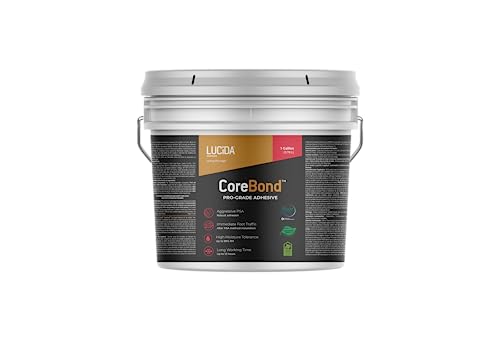
The clear, quick-curing glue that lets you walk on the floor today
If the thought of waiting two days to use a room makes you twitchy, this Lucida Surfaces can is your answer. It’s a solvent-free, pressure-sensitive adhesive with a 1-hour full cure time — the fastest in this entire lineup. You spread it, press your carpet tile or vinyl plank down, and it’s ready. Owners love how easy it is to wipe up excess while wet, then remove any dried residue with mineral spirits.
It’s rated for both residential and heavy-traffic commercial applications, so you’re not sacrificing strength for speed. A 1-gallon can covers approximately 175 square feet, and the working time is roughly 30 minutes to 1 hour depending on conditions — enough to lay a section and adjust tiles before it grabs. It bonds LVT, vinyl plank without attached backing, PVC, carpet tile, VCT, quartz tile, approved bio-based tile, fiberglass-backed sheet flooring, and vinyl-backed resilient sheet flooring. That’s a long compatibility list for one can.
The honest note is that adhesiveness gets mixed feedback — it works perfectly on concrete slabs and motorhome floors, but results vary on some surfaces. It weighs 8 pounds, and it’s clear, which keeps your layout marks visible during install. The quick cure is the headline here, and for a fast weekend install it delivers. It’s an effective, clean option that won’t leave you waiting.
The speed pick: a 1-hour cure and damp-cloth cleanup make this the fastest route to a walkable floor, with commercial-grade strength.
Best surface: concrete slabs and vinyl replacement jobs where its long compatibility list shines.
5. Vakerga Carpet Tile Adhesive Connectors 120 Pack
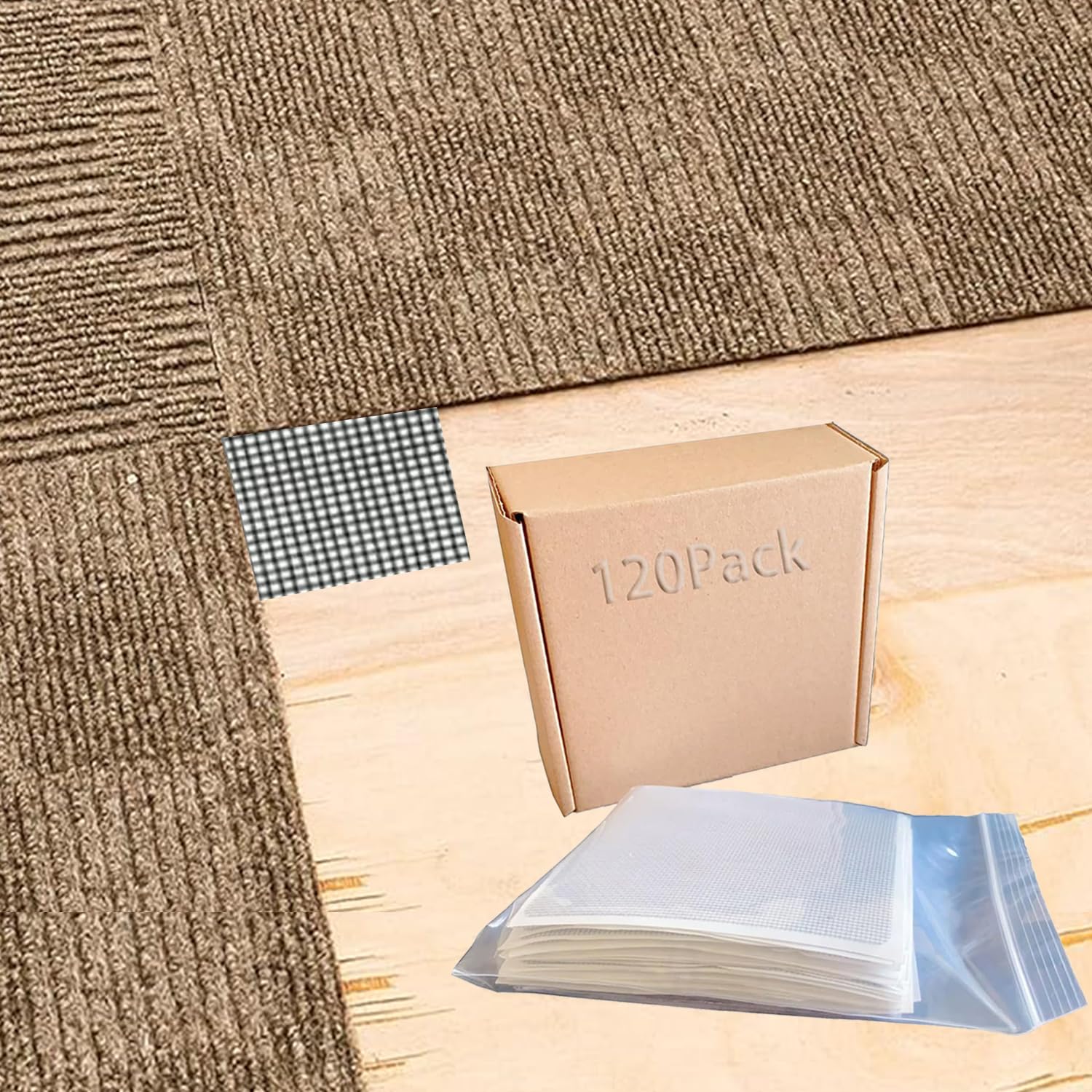
The no-glue mesh tabs that float a floor over almost anything
This is floating-floor simplicity. The Vakerga tabs are 4″ x 4″ fiberglass squares with one-sided adhesive — you peel and stick them to carpet tile corners, then set tiles sticky-side-up to connect neighbors. No pails, no trowels, no smell, no drying time. It’s the cleanest way to install carpet tiles, and owners confirm it: easy to cut, easy to install, and the sticky back stays put while the mesh top keeps rugs and carpets from sliding.
The beauty is the substrate list. You can float carpet tile over OSB, plywood, VCT, painted floors, high-moisture slabs, VAT, and ceramic — surfaces where liquid glue often struggles. One-sided adhesive means the tab grips the tile, not the floor, so you can lift and reconfigure your layout anytime. The rectangular shape trims easily with scissors for a better fit. Care is simple: spot-clean with mild detergent or spray down with a garden hose.
At 120 tabs per pack, this is a generous supply for a small room. It’s a budget-friendly entry into carpet tile installation, perfect for renters who don’t want permanent glue on a landlord’s floor. The honest limit is that floating floors rely on the tabs, so heavy rolling furniture might shift tiles — but for everyday foot traffic and rugs, it holds up. If you want removable, mess-free installation, this is the pick.
Why it’s easy
- Zero-mess, no-smell installation
- Works over OSB, plywood, VCT, painted floors, ceramic
- Trimmable for tight fits
Keep in mind
- One-sided — sticks to tile, not subfloor
- Floating floors can shift under heavy furniture
The renter’s friend: ideal when you want carpet tiles now but need the floor fully removable later, without subfloor damage.
Choose liquid glue instead if: you need a permanent bond under heavy rolling loads.
6. JutboRstp 200 Pack Double Sided Carpet Tile Tape

The heavy-duty double-sided tabs that hold corners under foot traffic
This is the value pack that keeps corners locked down. The JutboRstp tabs are 4″ x 4″ double-sided squares — adhesive on both sides — coated with high-viscosity hot melt adhesive and backed with release paper. You roll out a tab, press it to the floor, peel back the paper, and press the carpet down. Owners mention tiles staying perfectly in place under heavy foot traffic, with some installed for six months without a single tile coming up.
The strength is what gets noticed. It adheres well to both smooth and rough-textured surfaces, working on wood, plywood, tiles, vinyl, concrete, marble, carpet, and any indoor smooth surface without damaging them. It’s also residue-free — the cloth-based fiber removes by hand without leaving sticky marks or damaging the floor. That makes it ideal for installing carpets on hardwood floors, stair treads, pads, and mats.
The real-world catch is the backing. Getting both release papers off without wrinkling the tab takes a little practice; it’s a minor frustration owners note, but patience solves it. The adhesive itself is genuinely strong and quick, ideal for DIY projects where you want speed. At 200 tabs, this pack covers a whole room with spares for touch-ups. If you want maximum stick per dollar, this is the value play.
The value winner
- Strong double-sided hold on many surfaces
- Residue-free removal
- 200 tabs covers a full room
The learning curve
- Backing paper can wrinkle during removal
- Very sticky — place carefully the first time
Pick this for: high-traffic corners and stair treads where you want the strongest tab bond available at a value price.
Skip if: you’re impatient with fiddly backing paper on a large install.
7. Flor Tactiles Carpet Tile Adhesive Connectors 30 Pack

The quick-install tape roll made for FLOR and nylon tiles
This is the targeted fix for FLOR carpet squares. The Flor Tactiles connectors are an acrylic or rubber-based tape on a roll, designed to create a floating floor with much quicker installation than glue. They’re made for nylon, polyester, and wool tile backings — the common FLOR materials — and owners confirm they work well, holding carpet tiles together firmly. For a previous-tile reinstall, they do the job.
The speed is the selling point. Instead of spreading adhesive and waiting for tack, you place connectors, press tiles together, and move on. It’s a clean, contained installation with no odor and no cleanup. That’s a genuine advantage for a small room or a quick patch job.
Here’s the honest trade-off, and it’s a real one. Adhesiveness gets negative feedback, and the complaints aren’t gentle: edges can stick up, and one owner reported the FLOR-brand stickies lasted four years while these didn’t make it two months. Value for money also takes hits, with the 30-count pack feeling pricey for what you get. This is a convenience purchase for a specific tile brand, not a heavy-duty solution. If you’re all-in on FLOR and want a mess-free install, it’s fine; if you want lasting strength, look at the double-sided tabs instead.
A brand-specific convenience: quick and clean for FLOR nylon tiles, but the hold is the weak link — edges can lift and longevity trails the FLOR originals.
The catch: 30 count is a small supply, and owner sentiment on both stick and value is mixed.
8. MaxTab FS 104 Floating Carpet Tile Adhesive Roll
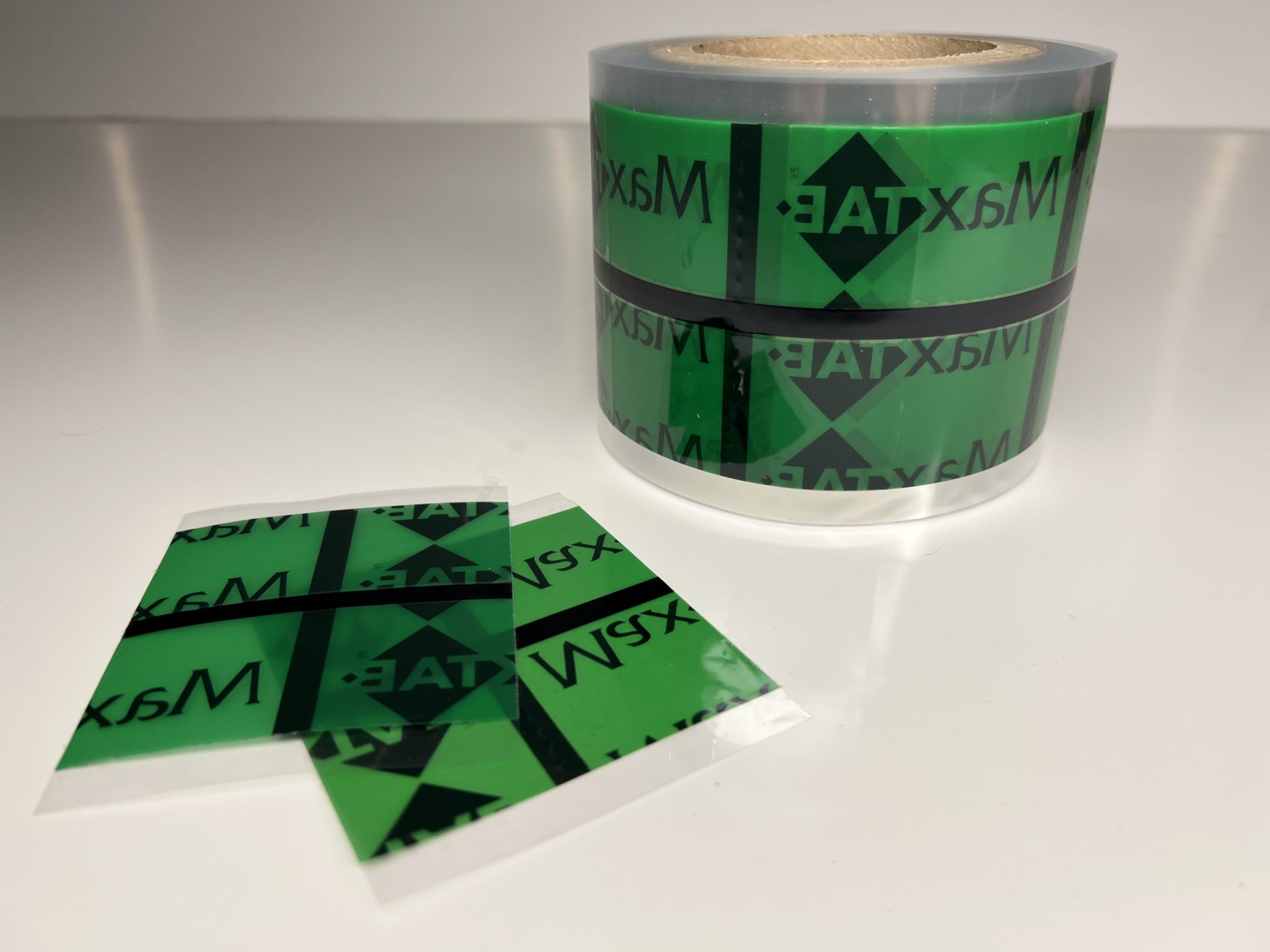
The professional tab roll engineered for whole-room floating floors
This is the commercial-grade answer to messy adhesives. MaxTab is a patented floating-floor system invented by FloatMax Systems Inc., and it arrives as one roll of tabs engineered to cover approximately 630 square feet (70 yards) of 20″x20″ carpet tile installation. That’s a whole office floor from a single purchase, and it’s the reason professionals use it. Each tab is 3.5″ x 3.5″ with a heavy-duty acrylic adhesive and a silicone cross-hatch that resists detergents and chemicals during floor washing.
It works with most modular carpet tiles and substrates, including concrete, OSB, VCT, painted floors, ceramic, and raised floors — perfect for offices, basements, and rental spaces. The advanced acrylic adhesive gives high shear strength and long-term stability, and the tabs are repositionable during install, allowing easy tile replacement or reconfiguration without damaging the subfloor below. Owners confirm it’s easy to use and keeps carpet tiles in place, with a simple, effective result.
The honest notes: it requires a level, clean floor, and dust or fiber residue can cause poor adhesion in spots. And the price draws comment — several owners call it expensive for what it is, even as they confirm it works. The roll is also a slim 16 ounces, a lightweight carry that belies its coverage. If you’re laying a large commercial space and want a clean, removable floating floor, this delivers productivity; just prep the surface carefully.
The pro system
- Huge 630 sq ft coverage per roll
- Spill-resistant silicone cross-hatch
- Repositionable during install
The conditions
- Needs a level, clean floor — dust kills adhesion
- Premium cost per roll
Built for the big jobs: choose this when you’re floating a commercial or whole-basement floor and want professional speed with clean removal.
Not the pick for: small patch jobs where the coverage and cost of a full roll are overkill.
Understanding the Specs
Solvent-Free vs. Solvent-Based
Solvent-free adhesives (like the acrylic latex here) have little to no odor and clean up with water. Solvent-based options are stronger on some surfaces but smell stronger and need chemical cleanup. For indoor rooms and RVs, solvent-free is the comfortable choice.
Cure Time vs. Working Time
Working time is how long you can slide a tile before the glue grabs — the ROBERTS Universal gives a long window, the Lucida gives 30 minutes to 1 hour. Cure time is full-strength bond: the Lucida hits 1 hour, the ROBERTS 6700 takes 48 hours, and the AAT-390 rates 7 days. Faster cure means you can use the room sooner.
FAQ
Will liquid carpet adhesive work on a concrete basement floor?
What’s the difference between one-sided and double-sided adhesive tabs?
How long does carpet tile adhesive take to dry?
Can I use the same adhesive for vinyl plank flooring and carpet tiles?
Is a floating floor with tabs as strong as glued-down carpet tile?
Will carpet tile adhesive damage my subfloor?
What surfaces can peel-and-stick carpet tile tabs bond to?
Which adhesive is best for a boat or RV carpet?
Final Thoughts: The Verdict
For most buyers, the adhesive for carpet tiles winner is the ROBERTS Universal because it bonds the widest range of vinyl and vinyl-backed tiles with high initial grab. If you want the absolute strongest outdoor or marine bond, grab the ROBERTS 6700-1. And for a fast, removable floating floor without any glue mess, the JutboRstp 200-pack is the one to reach for.
How We Picked
We do not accept paid placement. Every pick is matched to a real buyer and a real use-case; we do not hands-on test units.
Sources & Methodology
Specifications: manufacturer listings and product documentation. Review insights: verified customer reviews, as of August 2026. Pricing: not shown on this page (it changes often); check the current price via the retailer link.
As an Amazon Associate, Gadgets Feed earns from qualifying purchases. This does not affect which products we feature.