
Standing in the middle of a virtual concert, you instinctively reach out to touch a railing that isn’t there. The line between real and digital has never been thinner, but choosing the right headset means navigating a minefield of incompatible platforms, untethered freedom versus PC-tethered graphical fidelity, and the ever-present question of battery endurance. Get it wrong, and you are stuck with a paperweight that collects dust; get it right, and you own a portal to infinite worlds.
I’m Min — the co-founder and writer behind Gadgets Feed. I’ve spent hundreds of hours analyzing the technical architecture of the entire VR landscape, from fresnel lens coatings and panel types to inside-out tracking constellations and wireless streaming codecs, to make sure you buy the right portal on the first try.
Whether you are a hardcore gamer, a fitness enthusiast, or a curious first-timer, this guide breaks down every critical spec and real-world tradeoff to help you find the absolute best vr headsets for your specific needs and budget.
How To Choose The Best VR Headsets
Picking a VR headset is a decision between standalone convenience and PC-powered graphical horsepower. You must consider the tracking system, display quality, ergonomic comfort, and the ecosystem of games and apps you want to access. The wrong choice leaves you with headaches—both literal and figurative.
Standalone vs. PC-Tethered Architecture
Standalone headsets like the Meta Quest 3S integrate the processor, battery, and storage into the headset itself. They offer complete freedom of movement with no cables, but their graphical ceiling is limited by mobile-class chips like the Snapdragon XR2 Gen 2. PC-tethered headsets like the Valve Index or HTC Vive Cosmos Elite rely on your computer’s GPU and CPU, delivering higher polygon counts, more complex lighting, and higher frame rates, but they tether you to a cable or require a robust wireless streaming setup.
Display Resolution, Refresh Rate, and Field of View
Resolution per eye determines pixel density and the severity of the screen-door effect—the visible grid lines between pixels. Aim for at least 1832 x 1920 per eye for a comfortable experience. Refresh rate, measured in Hertz (Hz), dictates how smoothly motion renders; 90Hz is the baseline for comfort, while 120Hz or 144Hz dramatically reduces motion sickness for most users. Field of view (FOV) determines your peripheral awareness; wider FOV (110° and above) pulls you deeper into the virtual world.
Ecosystem and Content Library
Your headset locks you into its respective store and social platform. Meta’s Quest platform boasts the largest standalone library with over 500 titles, including exclusive blockbusters like Asgard’s Wrath 2 and Beat Saber. The PlayStation VR2 is exclusive to the PS5 ecosystem with titles like Horizon Call of the Mountain. PC VR headsets (Valve Index, HTC Vive) give you access to SteamVR’s massive library, including modding communities and simulation-grade experiences.
Ergonomics and Battery Life
Weight distribution, strap quality, and facial interface material determine whether you can play for hours or feel fatigued in 20 minutes. Battery life for standalone headsets typically ranges from 2 to 3 hours; look for hot-swappable battery designs or the ability to play while charging. For PC headsets, the cable length and management system (overhead pulleys) directly impact your freedom of movement.
Quick Comparison
On smaller screens, swipe sideways to see the full table.
| Model | Category | Best For | Key Spec | Amazon |
|---|---|---|---|---|
| Valve Index VR Full Kit | Premium PC VR | High-Fidelity PC Gaming | 144Hz refresh / 130° FOV | Amazon |
| Meta Quest 3S 128GB | Standalone Mixed Reality | Versatile All-in-One | Snapdragon XR2 Gen 2 / 8GB RAM | Amazon |
| PlayStation VR2 Horizon Bundle | Console VR | PS5 Exclusive Gaming | OLED 4K per eye / 120Hz / 110° FOV | Amazon |
| HTC Vive XR Elite Deluxe | Premium Standalone/PC | Mixed Reality & PC VR Hybrid | 3840×1920 combined / Diopter adjustment | Amazon |
| HTC Vive Cosmos Elite | PC VR Lighthouse | Room-Scale Accuracy | Lighthouse 1.0 tracking / Flip-up design | Amazon |
| Oculus Rift S | PC VR | Entry-Level PC VR | 1440×1600 per eye / Inside-out tracking | Amazon |
| Meta Quest 2 128GB | Standalone | Budget-Friendly Standalone | 1832×1920 per eye / 90Hz | Amazon |
| Oculus Quest 2 64GB | Standalone | Entry-Level Standalone | 1832×1920 per eye / 90Hz | Amazon |
| Acer AH101-D8EY WMR | Budget PC VR | Low-Cost PC VR Entry | 1440×1440 per eye / Inside-out tracking | Amazon |
In‑Depth Reviews
1. Valve Index VR Full Kit
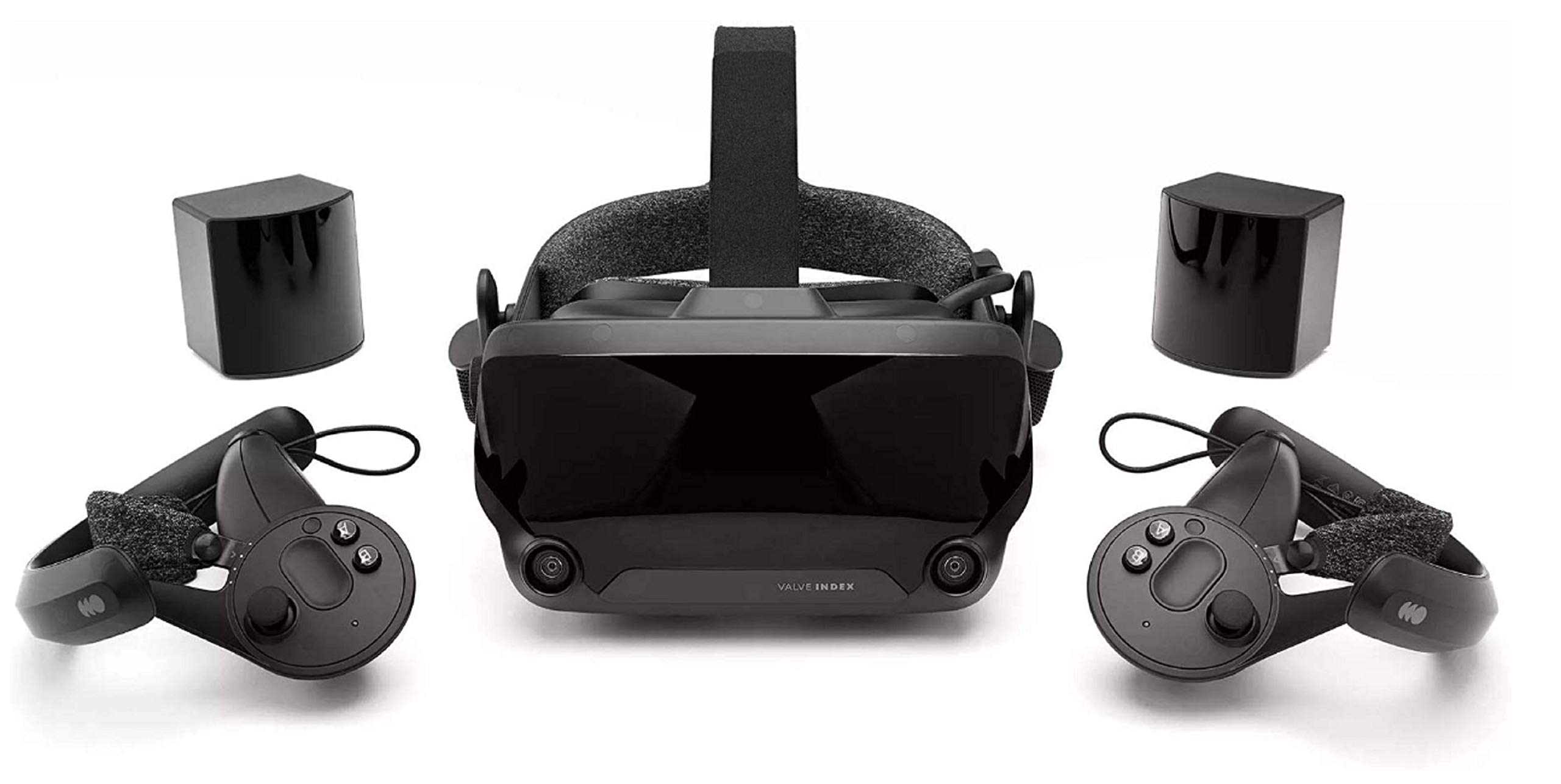
The Valve Index remains the gold standard for PC VR gaming, driven by its dual 1440 x 1600 LCDs with full RGB subpixels and a variable refresh rate that peaks at 144Hz. That ultra-low persistence global backlight illumination (0.330ms at 144Hz) virtually eliminates motion blur, making fast-paced titles like Beat Saber and Half-Life: Alyx feel impossibly smooth. The canted dual-element lens design delivers a 130° field of view, which is the widest on this list, dramatically improving peripheral immersion and spatial awareness.
The full kit includes the headset, two base stations 2.0, and the iconic Index Controllers that individually track each finger via capacitive sensors. The ergonomic design features physical IPD adjustment (58mm–70mm range), adjustable eye relief, and a rear cradle adapter that distributes weight evenly across the skull rather than pressing on the face. The integrated 3D spatial audio speakers hover just off the ears, creating a convincing soundstage without the clamping pressure of over-ear headphones.
The Index requires a tethered connection to a powerful gaming PC via USB and DisplayPort, and the cable management is a non-trivial consideration for room-scale play. The initial setup—mounting base stations, running cables, and configuring SteamVR—demands some technical patience, but the resulting tracking fidelity and visual clarity justify the investment for enthusiasts who prioritize raw performance and ecosystem depth.
Why it’s great
- 144Hz refresh rate is the smoothest in consumer VR, drastically reducing motion sickness
- 130° field of view is the widest available, pulling you deeper into virtual worlds
- Finger-tracking controllers offer unmatched hand presence in supported titles
Good to know
- Requires a high-end gaming PC and permanent base station setup for optimal tracking
- Heavier than most standalone options at ~1.8 lbs with cable drag during intense movement
2. Meta Quest 3S 128GB
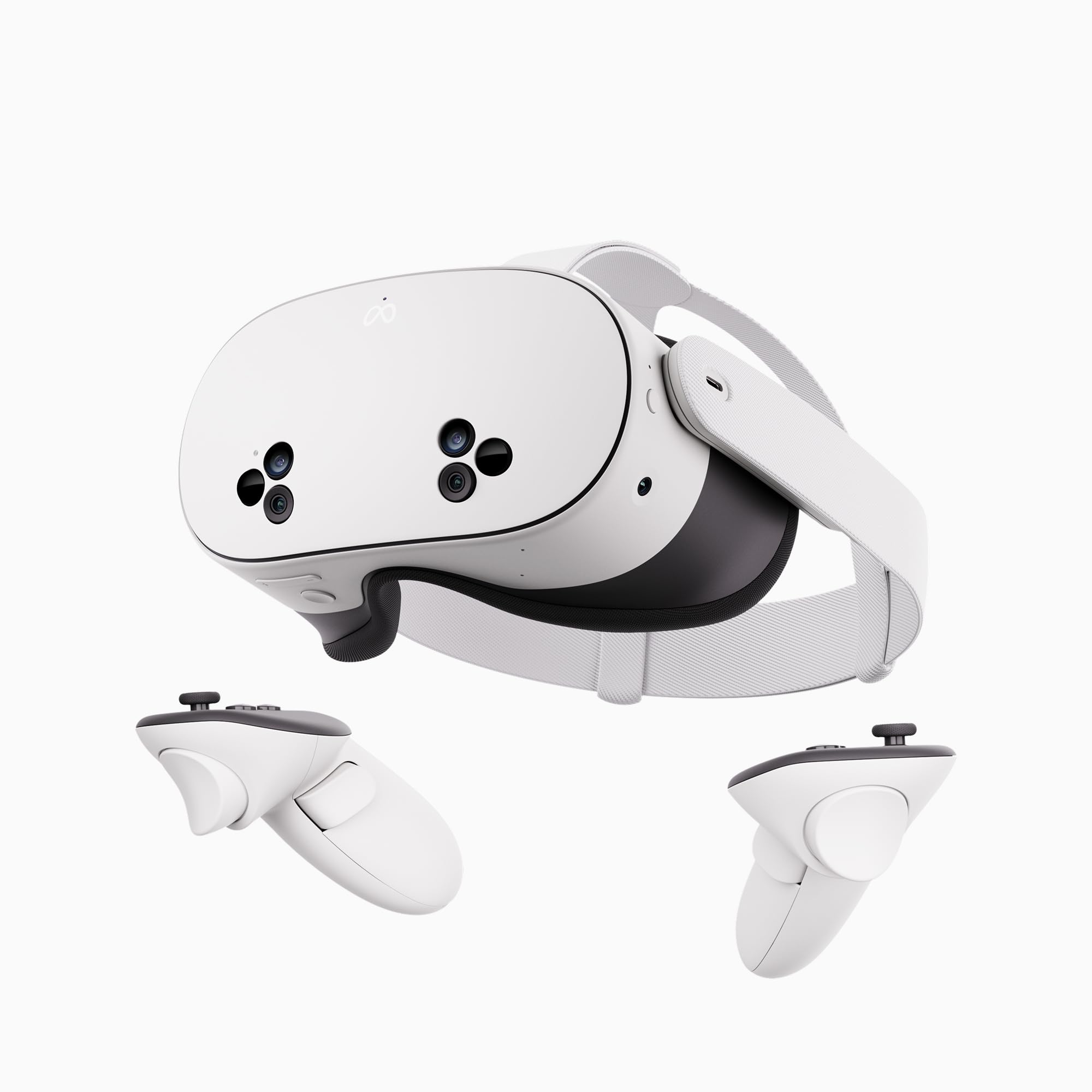
The Meta Quest 3S is the most well-rounded standalone VR headset on the market, striking a superb balance between price, performance, and ecosystem depth. Powered by the Snapdragon XR2 Gen 2 processor—the same chip found in the Quest 3—it delivers roughly double the graphical processing power of the Quest 2, resulting in noticeably sharper textures, faster load times, and more complex physics in titles like Asgard’s Wrath 2. The 8GB of RAM ensures that multitasking between apps and handling large game worlds remains fluid without stutter.
Visually, the 2064 × 2208 resolution per eye provides a dense pixel matrix that significantly reduces the screen-door effect compared to last-gen headsets. The dual RGB color cameras enable full-color passthrough mixed reality, allowing you to blend digital objects with your physical environment—a feature that transforms simple room scanning into an interactive playground. The 90Hz refresh rate is standard for the category, but the 4324mAh battery delivers a solid 3-hour average session before needing a recharge.
The 128GB storage is adequate for a library of 10–15 major titles, and the included 3-month Meta Horizon+ trial provides instant access to 40+ games. The headset is fully backward compatible with Quest 2 accessories and titles, and the wireless freedom is liberating for fitness apps like Supernatural or Thrill of the Fight. The renewed premium unit comes in pristine condition, but you should budget for a third-party headstrap upgrade, as the stock strap lacks the counterbalance needed for extended comfort.
Why it’s great
- Snapdragon XR2 Gen 2 chip provides smooth 90Hz gaming with complex physics
- Full-color passthrough mixed reality is genuinely useful for room integration and productivity
- Massive standalone game library with backward compatibility and wireless freedom
Good to know
- Stock headstrap causes front heaviness over long sessions; a third-party upgrade is recommended
- Battery life at 3 hours requires thoughtful charging management during marathon gaming
3. PlayStation VR2 Horizon Call of The Mountain Bundle

The PlayStation VR2 is a console-exclusive powerhouse that leverages the PS5’s hardware to deliver the most visually stunning VR experience on this list. Its custom OLED panels push 3840 x 2160 resolution per eye (4K HDR), producing true blacks and infinite contrast ratios that LCD panels simply cannot match. Horizon Call of the Mountain, included in this bundle, showcases the full potential of the headset with vibrant flora, deep shadowy caverns, and smooth 120Hz frame rates that make climbing and combat feel tactile and responsive.
Sony integrated several advanced haptic features directly into the headset: headset feedback vibrates in sync with in-game actions (a dragon’s roar or an arrow whizzing past), and the adaptive triggers in the Sense controllers provide variable resistance for drawing a bow or gripping a ledge. The eye-tracking system enables foveated rendering, where the headset renders only the area you are directly looking at in full detail, saving GPU resources and improving overall graphical fidelity without a performance hit. The 110° field of view is generous and helps mask the tunnel vision that plagues narrower headsets.
The primary limitation is the ecosystem lock-in—the PSVR2 only works with a PlayStation 5, and Sony has not yet released official PC drivers for SteamVR compatibility. The single-cable USB-C connection is simpler than the multi-cable setups of PC VR headsets, but it still tethers you to the console. The setup is remarkably fast: plug in, pair the controllers, and launch Horizon within minutes, making it the most friction-free premium VR experience available today.
Why it’s great
- OLED HDR panels deliver deep blacks and vibrant colors unmatched by any LCD headset
- Eye-tracking with foveated rendering optimizes performance for high-fidelity 120Hz gaming
- Headset haptics and adaptive triggers add a new dimension of physical immersion
Good to know
- Exclusive to PS5 with no official PC support, limiting its library to the PlayStation ecosystem
- Single USB-C cable still tethers you; wireless streaming is not an option at this time
4. HTC Vive XR Elite with Deluxe Pack

The HTC Vive XR Elite is a refined hybrid headset that excels as both a standalone mixed reality device and a PC VR headset. Its 3840 x 1920 combined resolution (1920 x 1920 per eye) delivers sharp, detailed visuals at 19 pixels per degree, and the 90Hz refresh rate provides smooth motion for most applications. The standout ergonomic feature is the stepless diopter adjustment dials, which allow you to correct vision (-6 to +6 diopters) directly on the headset without needing prescription lens inserts—a massive convenience for glasses wearers.
The Deluxe Pack upgrades the experience with the VIVE Face Gasket 2.0 for better light seal, a Deluxe Strap for improved weight distribution, and an MR Gasket for mixed reality passthrough. The hot-swappable battery design is a rare and practical feature: you can swap a depleted battery for a fresh one without powering down the headset, effectively doubling your play time. The four wide FOV tracking cameras enable room-scale inside-out tracking without external base stations, and the full-color passthrough camera with depth sensor makes mixed reality blending feel natural and responsive.
However, the standalone performance ceiling is lower than the Quest 3S due to an older chipset, and the app library is smaller than Meta’s ecosystem. The PC VR tethering via USB-C works well with SteamVR, but the headset’s real value proposition is for users who want one device that can serve both untethered mobile use and high-fidelity PC gaming without buying two separate headsets.
Why it’s great
- Built-in diopter adjustment eliminates the need for separate prescription lens inserts
- Hot-swappable battery design enables unlimited play sessions without downtime
- Compact form factor is lighter and more comfortable than most premium headsets
Good to know
- Standalone app library is smaller than Meta’s Quest ecosystem, with fewer exclusive titles
- Standalone processor is less powerful than the Snapdragon XR2 Gen 2 in the Quest 3S
5. HTC Vive Cosmos Elite Virtual Reality System

The HTC Vive Cosmos Elite returns to the Lighthouse tracking system (base station 1.0) that made the original Vive legendary, providing sub-millimeter positional accuracy across up to 160 square feet of play space. The dual 3.4-inch LCD panels deliver a combined 2880 x 1700 resolution, and the reduced pixel pitch minimizes the screen-door effect compared to earlier Vive models. The 90Hz refresh rate is standard, but the real strength here is the tracking fidelity—no inside-out system can match the occlusion-free precision of external base stations.
The flip-up design is a practical touch for quickly switching between VR and reality without removing the headset, making it ideal for development workflows or social applications where you need frequent context switching. The headset is modular: you can swap the front cover to switch between the Lighthouse tracking faceplate (included) and the standard inside-out tracking faceplate (sold separately), future-proofing the hardware for different tracking scenarios. The Vive Reality System interface provides a polished launcher for navigating SteamVR and Viveport content.
The weight is a significant drawback—at 12.85 pounds (including the box), the headset itself sits at the heavier end of the spectrum, and the forward weight distribution can cause neck fatigue during long sessions unless you invest in a counterbalanced strap. The Vive wands are durable but lack the finger tracking and ergonomic contours of the Valve Index controllers. The base stations require permanent mounting on opposite corners of the room, making this headset less portable and more suited to a dedicated VR space.
Why it’s great
- Lighthouse tracking provides flawless sub-millimeter accuracy with zero occlusion
- Flip-up design allows instant switching between VR and the real world
- Modular faceplate system adapts to different tracking and use case preferences
Good to know
- Heavy front-loading design causes neck strain during extended use
- Base station setup requires dedicated room space and permanent mounting
6. Oculus Rift S PC-Powered VR Gaming Headset

The Oculus Rift S is a PC-powered VR headset that served as the bridge between the original Rift and the standalone Quest line. Its dual 1440 x 1600 LCD panels run at 80Hz (slightly below the 90Hz standard), and the improved optics reduce the screen-door effect compared to the original Rift. The inside-out tracking system uses five cameras on the headset itself, eliminating the need for external sensors while providing reliable six-degree-of-freedom tracking within a reasonable play space.
The integrated audio solution uses speakers embedded in the halo band, which is convenient but lacks the bass response and spatial precision of dedicated over-ear headphones. The halo-style headband distributes weight more evenly than the Quest’s fabric strap, reducing face pressure, but the single-cable tether to the PC (DisplayPort + USB 3.0) limits movement range compared to wireless headsets. The included Touch controllers are ergonomic and responsive, with analog sticks and capacitive sensors for finger presence.
The Rift S shows its age: the 80Hz refresh rate is noticeable if you are sensitive to motion smoothness, and the resolution is lower than modern standalone headsets like the Quest 3S. The setup can be finicky, with some users reporting USB power issues requiring a PCIe USB card. This headset is best suited for budget-conscious PC gamers who already have a VR-ready computer and prefer the simplicity of inside-out tracking over base station setups.
Why it’s great
- Inside-out tracking with five cameras offers reliable room-scale without external sensors
- Halo headband design reduces face pressure compared to fabric strap headsets
- Access to the full Oculus PC library including exclusives like Lone Echo
Good to know
- 80Hz refresh rate is lower than the 90Hz standard, noticeable in fast-paced games
- Single DisplayPort + USB cable tethers you to the PC and can cause disconnection issues
7. Meta Quest 2 128GB

The Meta Quest 2, even in a market with newer hardware, remains the best value proposition for entering standalone VR. Its 1832 x 1920 resolution per eye on an LCD panel provides a crisp image with minimal screen-door effect for the price, and the 90Hz refresh rate ensures smooth gameplay for the vast majority of titles. The Snapdragon XR2 Gen 1 processor, while a generation behind the Quest 3S, still handles the entire Quest library—over 500 titles—with solid performance in games like Beat Saber, Supernatural, and Resident Evil 4 VR.
The 128GB storage variant offers enough space for a robust library of 10–15 major games, plus apps and media. The wireless design is liberating for fitness-focused users, and the built-in Guardian system effectively alerts you when you approach your play space boundaries. The headset supports Oculus AirLink, allowing wireless PC VR streaming from a compatible gaming PC—a feature that significantly extends its utility beyond standalone gaming.
The Achilles’ heel of the Quest 2 is its default fabric headstrap, which creates a front-heavy pressure point on the cheeks and forehead during extended use. A third-party Elite-style strap with a counterbalanced battery pack is almost mandatory for comfortable sessions longer than 30 minutes. The audio delivered through the built-in speakers is adequate but lacks bass, and the IPD adjustment has only three fixed positions (58mm, 63mm, 68mm), which can be a problem if your IPD falls between these values.
Why it’s great
- Best dollar-to-performance ratio in standalone VR with a massive 500+ title library
- Wireless AirLink support enables PC VR streaming without buying a second headset
- 128GB storage is sufficient for a healthy library of major titles and apps
Good to know
- Stock fabric headstrap causes significant face pressure; a third-party upgrade is essential
- Three-fixed-position IPD adjustment does not accommodate all face shapes comfortably
8. Oculus Quest 2 64GB (UK Model)
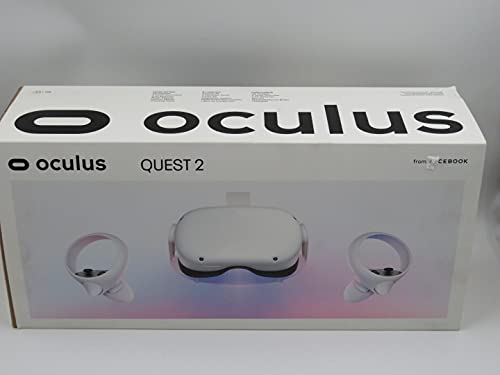
The 64GB variant of the Quest 2 is the entry point to standalone VR for the absolute lowest budget. It shares the exact same 1832 x 1920 per-eye resolution, 90Hz refresh rate, and Snapdragon XR2 Gen 1 processor as its 128GB sibling, delivering identical visual and gaming performance. The 50% more pixels than the original Quest statement holds true here, providing a noticeable jump in clarity for the previous generation.
The UK model designation means it ships with a UK power adapter, which is a minor inconvenience for US buyers who will need a plug adapter or a separate USB-C charger. The 64GB storage fills up fast—modern VR games like Medal of Honor: Above and Beyond can consume 40GB or more, leaving room for only a handful of titles before you are forced to manage storage aggressively. For users who intend to play a single game like Beat Saber or use the headset primarily for media consumption, the storage may be adequate.
The same ergonomic shortcomings apply: the stock strap is uncomfortable for extended use, and the fixed IPD positions may not align with your face geometry. The requirement for a Facebook (now Meta) account to activate and use the headset remains a privacy consideration. For buyers who can stretch their budget slightly, the 128GB version or the Quest 3S provide significantly better storage headroom and future-proofing without a massive price jump.
Why it’s great
- Identical core specs to the 128GB model at a lower entry price for the same VR experience
- Wireless standalone design works out of the box with no PC required
- Full compatibility with the Quest ecosystem including AirLink PC VR streaming
Good to know
- 64GB storage is restrictive; modern AAA VR titles quickly fill the available space
- UK power adapter included; US buyers need an adapter or separate USB-C charger
9. Acer AH101-D8EY Windows Mixed Reality Headset

The Acer AH101-D8EY is a Windows Mixed Reality (WMR) headset that offers the cheapest path to PC VR, but it comes with significant compromises. The dual 1440 x 1440 per-eye LCD panels (2880 x 1440 combined) produce a usable image with 90Hz refresh rate over HDMI 2.0 (60Hz over HDMI 1.4), but the pixel density is noticeably lower than modern headsets, and the screen-door effect is visible during gameplay. The 13-foot integrated cable tethers you to a PC, but the included HDMI and USB 2.0 connectivity is picky—many users report needing a dedicated USB 3.0 PCIe card and an HDMI-to-DisplayPort adapter to get the headset working.
The inside-out tracking cameras provide reliable positional tracking within the headset’s forward field of view, but the controllers lose tracking when they move behind your back or out of the camera’s range. The included Acer Motion Controllers are functional but require two AA batteries each, and they drain quickly—rechargeable batteries are a must. The setup process is the most finicky on this list: Windows Mixed Reality software, SteamVR, and Bluetooth adapter compatibility all need to align perfectly, and any weak link causes crashes or tracking loss.
The headset fits over glasses reasonably well, and the 100° FOV is competitive with mid-range PC headsets. However, the build quality is mixed—the foam padding around the nose has been reported to detach after only a few days of use. This headset is best suited for technically inclined users on a tight budget who are willing to troubleshoot hardware compatibility issues for the lowest possible entry price into SteamVR gaming.
Why it’s great
- Lowest price point for entry into PC VR and SteamVR gaming with inside-out tracking
- 100° field of view is competitive with mid-range headsets for a fraction of the cost
- Fits over glasses and runs on modest hardware (tested working with GTX 1050 Ti)
Good to know
- Setup is notoriously finicky, often requiring a PCIe USB card and DisplayPort adapter
- Controller tracking is limited to the front camera range; batteries drain rapidly
FAQ
Do I need a gaming PC to use a VR headset?
Can I play SteamVR games on a Meta Quest headset?
What does IPD mean and why is it important?
How long does the battery last on standalone headsets?
Can I wear glasses inside a VR headset?
Final Thoughts: The Verdict
For most users, the best vr headsets winner is the Meta Quest 3S because it delivers the perfect intersection of standalone freedom, powerful Snapdragon XR2 Gen 2 graphics, full-color mixed reality, and the largest content library at a price that doesn’t break the bank. If you want uncompromised PC VR visual fidelity and the buttery smoothness of 144Hz gaming, grab the Valve Index Full Kit. And for console gamers who own a PS5, nothing beats the PlayStation VR2 with its stunning OLED HDR panels and haptic-rich immersion for exclusive titles like Horizon Call of the Mountain.