
Our readers keep the lights on and my morning glass full of iced black tea. As an Amazon Associate, I earn from qualifying purchases.
Specs are compiled from manufacturer listings and verified buyer reviews and can change over time — please confirm the key details on the product page before buying.
Swapping out your factory door speakers is the single most effective way to breathe life into a tired car stereo, and the 6.5-inch size fits the vast majority of vehicles on the road. This guide cuts through the spec-sheet noise to help you pick the right pair for your ride, your music, and your budget.
I’m Min — the founder and writer behind Gadgets Feed. This guide is built by comparing the manufacturers’ published specifications and the patterns across verified customer reviews, so you get each pick’s real strengths and trade-offs instead of marketing spin.
You want door speakers that make your music sound alive, not just loud. This breakdown of the 6.5 door speakers shows you which models actually deliver on their promises, so you can pick the right upgrade for your car and your ears.
Our Picks at a Glance


How To Choose The Best 6.5 Door Speakers
Before you buy, understand the three numbers that define how a speaker sounds: power handling, sensitivity, and impedance. Getting these right for your car’s stereo or amplifier is the difference between a great upgrade and a disappointing one.
Power: RMS vs. Max Wattage
Ignore the maximum wattage number on the box. The RMS (Root Mean Square) rating tells you how much continuous power a speaker can handle cleanly, the number that actually defines your listening experience. If you’re using a factory head unit, look for speakers with low RMS requirements that can still play loud, while an aftermarket amplifier gives you the headroom to run higher-rated speakers.
Sensitivity: How Loud With Less Power
Sensitivity, measured in decibels (dB), tells you how efficiently a speaker converts power into sound. A speaker rated at 91 dB will play noticeably louder than one rated at 87 dB when both are fed the same low-power signal from a stock stereo. This spec is the single best predictor of whether a speaker will satisfy you without an amplifier.
Coaxial vs. Component Design
Coaxial speakers mount the tweeter (for high frequencies) in the center of the woofer, making them a simple drop-in replacement. Component systems separate the tweeter from the woofer, allowing for better staging and imaging but requiring a more involved installation with crossovers (the filters that split the audio signal).
Quick Comparison
| Model | Best For | RMS Power | Max Power | Design | Amazon |
|---|---|---|---|---|---|
| ORION Cobalt CM654★ Best Overall | Raw Volume | 250W | 1000W | Mid-Range | Amazon |
| Kenwood KFC-1666RBest Value | Budget Value | 30W | 300W | 2-Way Coaxial | Amazon |
| Rockford Fosgate R165-STop Performer | Clear Highs | 40W | 80W | Component | Amazon |
| HERTZ UNO K-165 | Natural Sound | — | — | Component | Amazon |
| PIONEER TS-A653FH | Stock Stereo Boost | 75W | 340W | 2-Way Coaxial | Amazon |
| CT Sounds Meso | Mid-Bass Punch | 150W | 300W | 2-Way Coaxial | Amazon |
| JBL GTO629 | Aiming Flexibility | — | — | 2-Way Coaxial | Amazon |
| Alpine S2-S65 | Hi-Res Detail | 80W | 240W | 2-Way Coaxial | Amazon |
| Memphis PRX60C | Flexible Install | — | — | Component | Amazon |
In-Depth Reviews
1. ORION Cobalt CM654
Our pick — over 4.5★ from 800+ verified ratings; the strongest balance of quality and price.
The 250W RMS mid-range driver that turns a basic system into a wall of clean, dynamic sound.
This is a mid-range speaker with a bullet tweeter, meaning it is built to handle the heavy lifting of high-volume playback without flinching. It boasts a staggering 1000W max power and 250W RMS, a 8.3x gap in RMS over the Kenwood KFC-1666R that makes it a clear choice for anyone planning to feed it serious amplifier power.
Despite its brawn, it remains efficient with a 96.67 dB sensitivity rating, so it gains volume easily even at lower power levels from a head unit. The bullet design lets it reach high frequencies without sacrificing the mid-range, and the 1.5-inch voice coil is built to survive the heat of extended use.
Buyers report a massive difference after swapping out old 6.5-inch Alpine speakers, noting the sound is clear and strong. The main caveat is fit: the mounting depth of 2.63 inches and overall diameter of 6.54 inches can be too big for some factory door enclosures, and the jeep JK specifically needs plastic trimming to accommodate the magnet. This is a speaker for the enthusiast who values output and clarity over a simple drop-in install.
Built For High Volume
- 250W RMS handles serious amplifier power without distortion.
- 96.67 dB sensitivity means it gets loud even on modest power.
- Bullet tweeter design plays a wide dynamic range of frequencies.
Know Before You Install
- Deep 2.63-inch mounting depth may not fit factory enclosures without trimming.
- It’s a mid-range driver, so pairing with a subwoofer is the best way to get deep bass.
- Does not include grilles, so you will need to protect them yourself.
Grab these if: you are building a system with an amplifier and want speakers that can take everything you throw at them.
Think twice if: you want a simple, bolt-in replacement for a stock stereo without any custom fitting.
2. Kenwood KFC-1666R
The 30W RMS coaxial that brings balanced, audiophile-friendly sound to a stock system.
The Kenwood KFC-1666R is the antithesis of the ORION’s brute force, offering a refined 40Hz – 22kHz frequency response that reproduces music with surprising fidelity. Its 30W RMS rating is modest next to the ORION’s 250W, but that’s the point: this speaker is designed to shine with the limited power a factory stereo provides.
Featuring a cloth woofer cone and balanced dome tweeter, it delivers pristine highs and deep lows without the harsh distortion that plagues cheaper drivers. The heavy-duty magnet design with a shallow depth makes it remarkably easy to install, and the included grilles offer built-in protection.
Owners mention these are a perfect fit for vehicles like the Honda Element, matching the factory 3-screw hole pattern without any drilling. Replacing blown factory speakers in an older CRV made a “great difference,” with the consensus being that bass isn’t the strongest point, but the overall clarity and value are exceptional. If you want a straightforward, high-quality sonic upgrade, this is the pair to beat.
easy Upgrade: The shallow depth, grilles, and proven hole pattern make this a true drop-in replacement for countless vehicles.
Trade-off: Bass response is adequate but not powerful; pair with a subwoofer if you need serious low-end thump.
3. Rockford Fosgate R165-S
The 40W RMS component system that delivers crisp, detailed highs and that classic Rockford build quality.
For a quality-first upgrade, the Rockford Fosgate R165-S separates the 6.5-inch woofers from the 1-inch tweeters, so you get a more rich soundstage. It handles 40W RMS and 80W peak, and it’s a direct factory replacement that works with your stock head unit, so you can install it without extra gear.
The woofer’s Mica injected polypropylene cone (a stiff, lightweight material) extends the frequency response, so you hear more detail in your music. The tweeter’s Mylar balanced dome delivers clear highs, and the kit includes integrated crossovers (electronics that split the audio signal) to keep everything clean. You can mount the tweeter flush, on the surface, or at an angle, so you can aim it for the best soundstage.
Owners rave about the crisp, clean sound, with one noting it replaced 8 factory speakers in a 2004 Monaro/GTO with no modifications needed. The recurring honest note is that it’s not for bassheads, with “plenty of treble and midrange, not much bass,” but for those who value vocal clarity and detail, the Rockford name delivers exactly what it promises.
Separation of Sound
- Separate tweeters create a wider, more detailed soundstage than coaxials.
- Versatile tweeter mounting options for flush, surface, or angled installs.
- Direct OEM installation with a full 1-year warranty.
Realistic Expectations
- Bass output is adequate at best; a subwoofer is required for deep lows.
- Some owners note the 6.5-inch frame can appear smaller than expected in certain door pods.
- Door panel fit can cause rattles at full volume with heavy bass.
Reach for this if: you listen to rock, podcasts, or acoustic music and value vocal clarity above all else.
Look elsewhere if: your priority is seismic bass from a simple door speaker install.
4. HERTZ UNO K-165
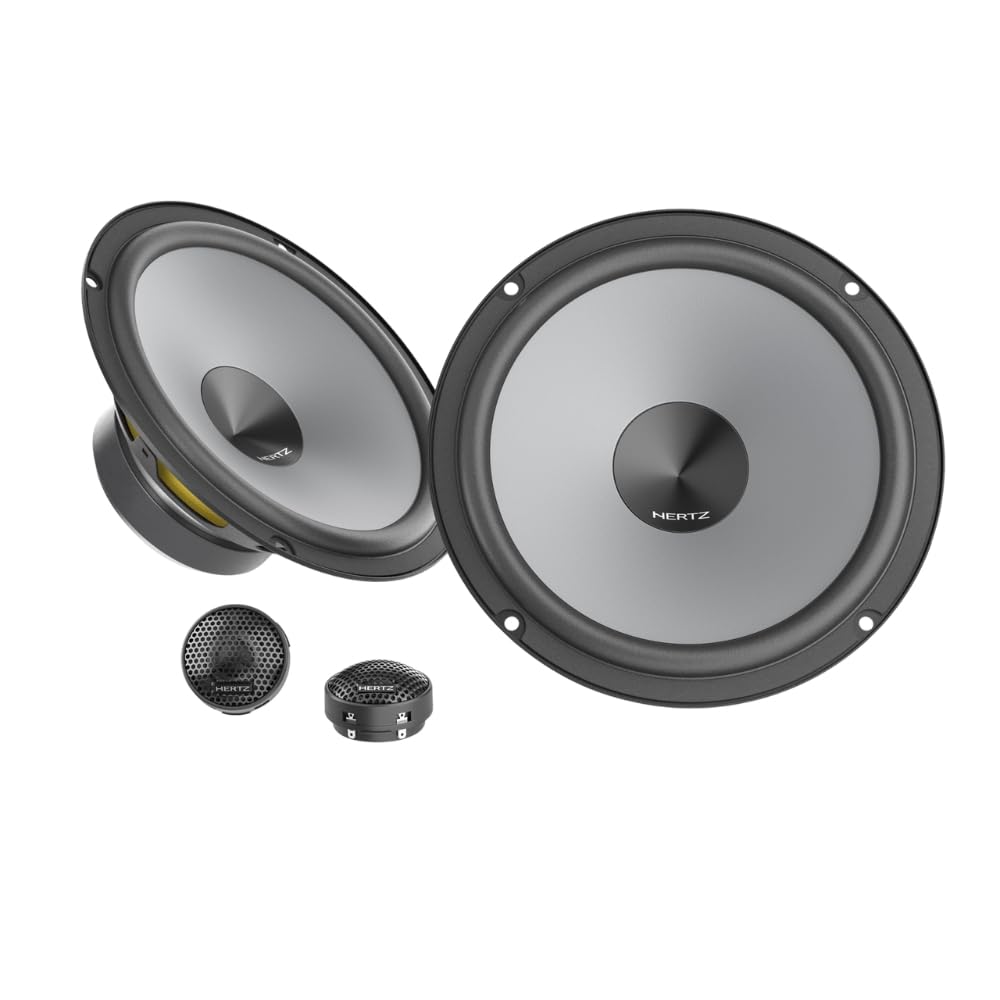
The natural-sounding component set that plays louder than its size suggests, with full, articulate bass.
Owners say the HERTZ UNO K-165 component system sounds natural, clean, and remarkably full, thanks to its water-repellent pressed paper woofer cone and neodymium tweeter (a lightweight, strong magnet type). The build quality earns consistent praise, with the ferrite woofer magnet and PEI tweeter dome (a durable plastic) giving it a sturdy, well-engineered feel.
The spec sheet is lean, but real-world performance wins people over. Reviewers agree these speakers play louder at any given wattage, and the bass blends smoothly with mids and highs for an articulate, rich sound. One owner compared them favorably against pricier Infinity and MB Quart models, choosing the HERTZ for superior value.
They excel as replacements for stock speakers, with a 2019 Honda Accord Hybrid owner calling them an “excellent upgrade” with better bass and louder output. It’s note they do require some power to really shine, and the tweeters can be slightly bright on a factory head unit. For a discerning listener who appreciates a balanced, high-fidelity sound, the HERTZ K-165 is a standout choice.
Articulate and Loud: The water-repellent paper cone and neodymium tweeter deliver a punchy, natural sound that bests many competitors at the price point.
Power Note: These are not for a bare-bones factory stereo; they reward a system with a decent amplifier or aftermarket head unit.
5. PIONEER TS-A653FH

The 91 dB sensitivity coaxial that makes a stock stereo sound far more expensive than it is.
The PIONEER TS-A653FH is all about efficiency, with a 91 dB sensitivity rating that guarantees clear, loud sound even with lower power inputs. This makes it a phenomenal choice for anyone keeping their factory head unit, as it squeezes every last watt out of the stock system to deliver dynamic sound without distortion.
Its 2-way design packs a 75W continuous power handling and a 340W max, with a frequency response that stretches from 40 Hz to 49 kHz. The included 6-1/2-inch multi-fit installation adapters expand compatibility, which owners confirmed with “perfect hole alignment” on various GM vehicles and a perfect fitment on a Cruze.
Reviewers consistently praise the Pioneer for tight, controlled bass, warm vocals, and clean highs, with one calling them a “great value.” The honest trade-off: they need a good EQ and quality source to shine, and on deck power alone they might be slightly less loud than stock—but they sound far better. If you want an easy, high-performing upgrade that bridges stock and amplified systems, the Pioneer is a top contender.
Efficiency Experts
- 91 dB sensitivity gets loud and clear on low-power factory stereos.
- Multi-fit adapters included to simplify installation across various vehicles.
- Broad 40 Hz to 49 kHz frequency response for detailed playback.
Setup Dependencies
- To open up their full potential, they really benefit from an amplifier.
- They are a touch less loud than some stock speakers at the same volume setting.
Pick these if: you are running a stock stereo and want the best possible sound without adding an amplifier.
Consider a step up if: you already have an amp and want a speaker with higher RMS handling to match it.
6. CT Sounds Meso

The 150W RMS coaxial that punches hard with rich mid-bass and snappy, detailed highs.
The CT Sounds Meso brings serious bass to a coaxial design, thanks to a high-quality fiberglass cone and nitrile butadiene rubber surround. It handles a healthy 150W RMS per set and 300W max, making it a strong choice for those running a modest aftermarket amplifier who want a speaker that can keep up.
The custom-engineered drivers are built for high tonal accuracy, providing a well-balanced mix of powerful mid-bass and clear highs. The attached silk-dome tweeters feature a CCAW voice coil and neo magnet, which owners say recreate vocals with stunning clarity. The build quality is another highlight, with buyers describing it as “extremely well” put together.
Owners have fitted these easily into a Chevy Express 3500 and even a jet boat, noting the clean output and punchy sound even with a cheap marine head unit. The spring-loaded connectors make installation a breeze, with no crimping or splicing needed. The only mixed feedback is that they can sound slightly harsh at very high volumes, but that’s tunable with a DSP or EQ, and a minor quibble for a speaker this capable.
Built to Impress: The fiberglass cone and rubber surround deliver a rich, powerful sound that belies the price point.
Easy Install, Big Sound: Spring-loaded connectors and included grilles make this a straightforward, premium-feeling upgrade.
7. JBL GTO629
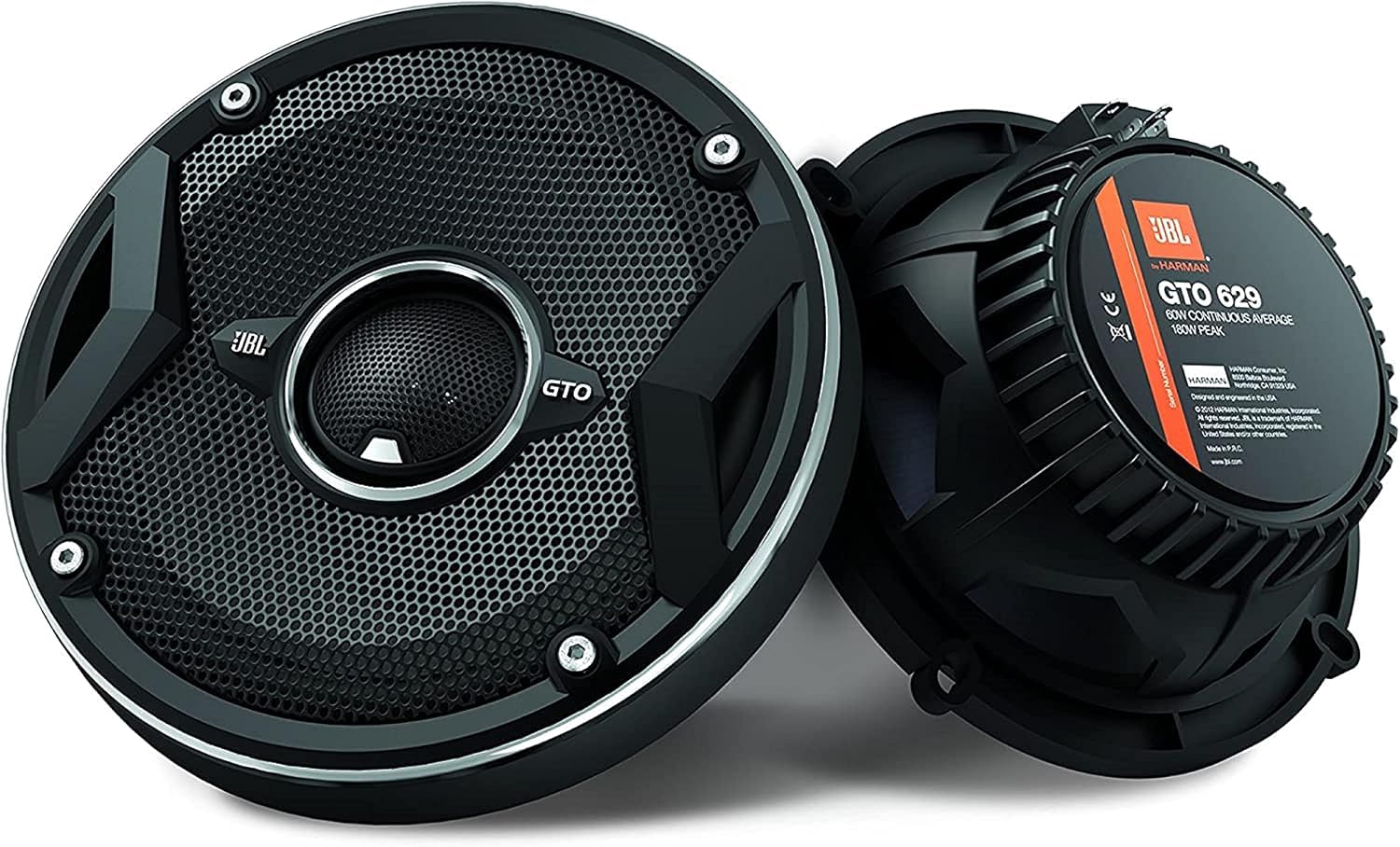
The coaxial with an aimable UniPivot tweeter that directs lifelike sound straight to your ears.
The JBL GTO629 fixes a common car audio issue: door speakers sit low, firing at your shins, not your ears. Its patented UniPivot tweeter lets you physically aim the high-frequency sound toward your listening position, so you get a more lifelike, rich soundstage.
Under the hood, the carbon-injected Plus One cones are larger than others in their size class, which JBL says means they move more air and produce more bass. It also features a dual-level tweeter volume adjustment, so you can tune the highs to your taste or compensate for a less-than-perfect install location. The dedicated 12dB/octave crossover components ensure the right frequencies reach the right drivers.
Owners describe the sound quality as excellent, with strong mid-bass and crisp highs, noting it’s a “great beyond great” upgrade for truck door speakers. There’s an honest note about durability, with some units reportedly not lasting a year, and the fit isn’t perfect for every vehicle. For those who value tunability and sound staging, the GTO629’s unique tweeter design is a compelling reason to choose JBL.
Precision Sound
- Aimable UniPivot tweeter focuses sound at your ears for a lifelike stage.
- Dual-level tweeter adjustment lets you fine-tune the highs.
- Low-impedance design boost output from stock head units.
Considerations
- Durability is a known risk, with some owners reporting failures within a year.
- Mounting cutout requires 5-1/16 inches, so check if it matches your doors.
- Bass can be weak if your factory stereo sends a limited signal.
Choose this if: your speakers are mounted low in the door and you want to aim the sound up to ear level.
Be cautious if: you need a speaker that will endure years of harsh conditions without question.
8. Alpine S2-S65

The Hi-Res certified coaxial that reveals studio-level detail up to 40kHz in your music.
For the tech-forward buyer, the Alpine S2-S65 carries a Hi-Res Audio certification, meaning it’s engineered to reproduce frequencies up to 40kHz—beyond what most ears can hear, but crucial for capturing a recording’s full atmosphere. Its cone blends Poly Propylene, Glass Fiber, and Mica for lightweight construction, high output, and low distortion.
Alpine’s exclusive HAMR (High Amplitude Multi-Roll) surround technology lets the cone move further, producing powerful, accurate bass. With a 6.5-inch woofer and integrated 1-inch tweeters, it handles 240W peak and 80W RMS, enough to fill your car with rich, dynamic sound.
Owners are consistently impressed with the volume and lack of distortion, with one calling them a “mid line for Alpine which still places them above many competitors’ top line offerings.” Another owner has run a version for ten years and reports they still sound great, a strong nod to reliability. The only minor gripe: one user might add a separate tweeter, but overall, this premium coax delivers accurate, natural sound.
Detail and Dynamics
- Hi-Res Audio certified to reproduce frequencies up to 40kHz.
- HAMR surround technology delivers powerful, accurate bass.
- 80W RMS handling provides a sturdy, rich sound.
Things to Note
- The grille is sold separately, so you’ll need to add KTE-S65G for protection.
- To fully appreciate the Hi-Res detail, you need high-quality audio sources.
Get this for: a listener with high-resolution music files who wants every detail reproduced with accuracy.
One limitation: The lack of included grilles means an extra purchase if you want physical protection.
9. Memphis PRX60C

The component set that demands a bit of effort and rewards you with fantastic clarity and towering volume.
The Memphis PRX60C is a serious component system for the enthusiast who isn’t afraid of a more involved install. It pairs 6.5-inch woofers with polypropylene cones and butyl rubber surrounds, separate 1-inch poly dome tweeters, and separate crossovers (the filters that split the signal). This setup is perfect for OEM factory applications where you want to upgrade the sound dramatically.
The inclusion of separate crossovers is a major plus, giving you the flexibility to wire the system as a true component setup. Owners have even gotten creative, replacing tweeters in a Mustang and using the included crossovers to build a custom component system with their own mids. The tweeters themselves are infinitely adjustable on a 360-degree axis, so you can aim them perfectly for the best imaging.
The sound is described as fantastic, with “quality mid/high range” and excellent clarity, even keeping up with dual 12-inch subs in a Ford Fiesta. The honest caveat is that they are not recommended for stock head units due to being underpowered at 15W per channel, but they truly shine with an amplifier. For a builder who wants maximum flexibility and performance, the Memphis PRX60C is a rewarding project.
Built For The Builder
- Separate crossovers for woofers and tweeters offer total system design freedom.
- Infinitely adjustable 360-degree tweeter angle for perfect sound staging.
- Butyl rubber surround and polypropylene cone for durability and clear sound.
Installation Demands
- Needs an aftermarket amplifier to sound its best; weak on factory power.
- More components mean more wiring and mounting points to plan.
Ideal for: the hobbyist who enjoys the build process and wants a custom-tailored soundstage.
Not for: anyone looking for a simple plug-and-play replacement on a stock stereo.
Understanding the Specs
RMS vs. Max Power
RMS (Root Mean Square) is the continuous power a speaker can handle, your real-world listening number. Max power is the brief peak it can survive. A 50W RMS speaker played with a 50W amplifier will sound clean; a 30W RMS speaker with the same amp will distort.
Sensitivity (dB)
This measures how loud a speaker plays with a given amount of power. Higher is better, especially with a factory stereo. A 96 dB speaker is far more efficient than an 89 dB one, meaning it gets louder with less strain.
FAQ
Will 6.5-inch speakers fit in my car?
What is the difference between 2-Way Coaxial and Component speakers?
Do I need an amplifier for new door speakers?
How long do car door speakers last?
Is a higher wattage speaker always better?
What does sensitivity (dB) mean for my listening experience?
Can I mix different speaker brands in my car?
What is the ‘bullet’ design on the ORION speakers?
What does Hi-Res Audio Certified mean?
Final Thoughts: The Verdict
For the ultimate in output and clarity, the 6.5 door speakers winner is the ORION Cobalt CM654 because its monster 250W RMS handling and efficient 96.67 dB design deliver distortion-free volume that dwarfs the competition. If you want a simple, high-value drop-in upgrade for your factory stereo, grab the Kenwood KFC-1666R. And for a listener chasing studio-grade detail and a tunable soundstage, the Alpine S2-S65 is the one to reach for.
How We Picked
We do not accept paid placement. Every pick is matched to a real buyer and a real use-case; we do not hands-on test units.
Sources & Methodology
Specifications: manufacturer listings and product documentation. Review insights: verified customer reviews, as of August 2026. Pricing: not shown on this page (it changes often); check the current price via the retailer link.
As an Amazon Associate, Gadgets Feed earns from qualifying purchases. This does not affect which products we feature.