
Our readers keep the lights on and my morning glass full of iced black tea. As an Amazon Associate, I earn from qualifying purchases.
Specs are compiled from manufacturer listings and verified buyer reviews and can change over time — please confirm the key details on the product page before buying.
Sliding forward into an aero tuck shouldn’t feel like a punishment, yet so many clip-on bars turn a comfortable ride into a battle with wrist pain and a wobbly front end. The real trick is finding a set that adjusts to your body, not the other way around—and that adjustability is the single biggest factor separating a bar you’ll keep from one you’ll return.
I’m Min — the founder and writer behind Gadgets Feed. This guide is built by comparing the manufacturers’ published specifications and the patterns across verified customer reviews, so you get each pick’s real strengths and trade-offs instead of marketing spin.
The honest take: the best aero bars let you fine-tune arm pad width, reach, and height so you actually hold the position without fighting the bike.
Our Picks at a Glance

How To Choose The Best Aero Bars
Before you buy aero bars, answer three quick questions: what diameter are your handlebars, how much adjustability do you need, and do you want to leave them on or pop them off between rides? Answer those honestly, and you have already narrowed the field.
Check Your Handlebar Clamp Diameter First
Most modern road bikes use a 31.8 mm clamp, but older bikes and some hybrids use 26.0 mm. Some bars come with shims (spacers) to adapt, while others fit one size only—so measure your bar before you order. The Full Speed Ahead Vision Team, for example, is built for a 31.8 mm basebar only.
Adjustability Is What You’re Actually Paying For
A cheap bar that forces your elbows into one fixed width will feel fine for the first 10 minutes and miserable by mile 30. Look for independent arm pad width and fore-aft adjustment so you can shift your weight correctly. The Profile Design Sonic/Ergo offers a width range from 124mm to 290mm in 18.5mm steps, which is the kind of range that fits nearly any shoulder width.
Extension Bend and Length Affect Your Reach
The bend—J-bend, S-bend, or straight—changes where your hands naturally rest. Longer extensions push you further forward, which helps tall riders but can strain your neck on long rides. The BBB AeroMax uses extra-long 350mm J-bend bars for maximum reach, while the Controltech Sirocco maxes out at 213mm for a more compact, upright tuck.
Quick Comparison
| Model | Best For | Weight | Clamp Diameter | Extension Length | Amazon |
|---|---|---|---|---|---|
| Profile Design Sonic/Ergo★ Best Overall | Total fit adjustability | 559g | Clip-on | 400mm | Amazon |
| REDSHIFT Quick-ReleaseBest Versatile | On-the-fly switching | 1.4 pounds | 31.8mm / 26.0mm | Adjustable | Amazon |
| BBB AeroMax BHB-60 | Budget race-ready reach | 350 g | 25.4 / 31.8 mm | 350mm | Amazon |
| Profile Design Legacy II | Easy install value | 450g | 31.8mm / 26.0mm | Fixed | Amazon |
| BBB AeroComfort BHB-59 | Comfort-first trainer rides | 540 g | 22.2 / 25.4 / 31.8 mm | Adjustable | Amazon |
| Controltech Sirocco Mini | Carbon lightweight tuck | 363 g | 31.8 mm | Max 213mm | Amazon |
| FSA Vision Team Clipon | Budget trainer bars | 1.4 pounds | 31.8mm | 230–270mm | Amazon |
In‑Depth Reviews
1. Profile Design Sonic/Ergo/4525a Aerobar
Our pick — over 4.5★ from 350+ verified ratings; the strongest balance of quality and price.
The fit-anyone wing that converts a road bike into a time-trial machine.
The defining feature here is a staggering 124mm to 290mm arm pad width range in 18.5mm steps, which means nearly any shoulder width gets a proper perch. Buyers report it works well for tall riders—6’1″ owners in particular—though you’ll likely need to adjust your seat and bar position to get the elbows settled in the cradles.
What wins people over is the sheer quality of the build, with the adjustability coming a close second. The Ergo/10mm pads relieve wrist stress, and a handful of owners mention no numbness in hands and fingers even on long gravel rides. It weighs 559g in a matte black finish, which is honest for an aluminum bar—noticeably heavier than the 350 g BBB AeroMax above.
The honest catch: the durability feedback is mixed. A few owners note the clamps lack index marks, so realigning after removal takes some fiddling. The recurring advice from the review pages is to ride quiet roads first while you adapt to the initial wobble before you gain full control.
Reach for: you want the widest possible fit range and don’t mind spending for it.
Look elsewhere: you’re a very tall rider with long arms—some owners say the bars simply aren’t built for extreme reach.
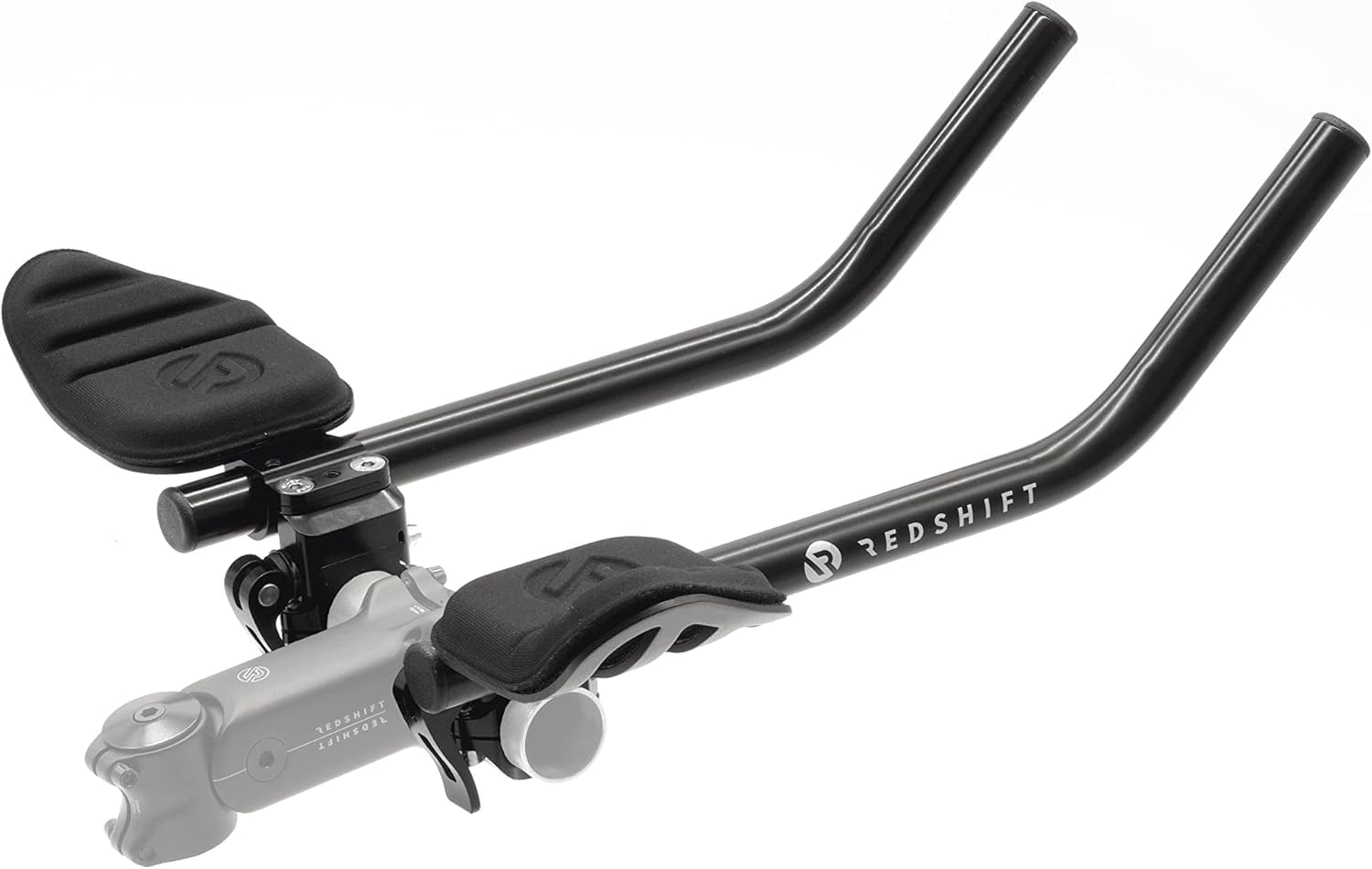
2. REDSHIFT Quick-Release Clip-On Alum Aerobars
The only bars here that vanish from your bike in seconds, no tools needed.
This is the pick for riders who live in the mountains but race on the flats. The patented quick-release mechanism lets you switch between road and aero positions mid-ride, and it reattaches into the exact same setup every time—so you don’t lose your fit. It fits a 31.8 mm handlebar and adapts to 26.0 mm with shims sold separately.
Quality is the thing everyone raves about, with ease of use as the runner-up. Owners describe a tight clamp with no creaks or rattles when the skewers are properly tightened, alongside a comfortable removable elbow pad. An owner running two sets—one on a trainer bike and one on a road bike—calls them unique for that on-off flexibility.
At 1.4 pounds it’s right in line with the FSA Vision Team, though the real trade-off is the noise. The recurring gripe is a rattle that appears if the quick-release skewers aren’t clamped down hard, and on road bikes the bars sit low enough that some riders need risers to avoid neck strain on long rides.
Choose for: the ability to bounce between road and tri positions without re-tuning your fit.
Know before: you’ll want the clamp tight to silence the occasional rattle.
3. BBB Cycling AeroMax BHB-60

Extra-long J-bend reach at a weight that disappears on the bike.
The AeroMax leans into maximum aerodynamics with extra-long 350mm J-bend bars that push you into a proper low tuck. At just 350 g it’s the featherweight of the aluminum crowd—a full 54% lighter than the 540 g BBB AeroComfort in this same lineup, which you’ll feel on a long climb.
It fits both 25.4 and 31.8 mm handlebars, and a buyer with an older 1″ bar confirms the included spacers made mounting rock-solid. Customers note no cable interference on a Giant TCR, adjustable fore-aft, and independent armrests that eliminate wrist tension. The foam padding (EVA material) keeps the ride comfortable over 100 miles.
The catch is fit for taller riders. A 6’2″, 195lb owner found the J-bend too short and narrow with no height adjustment, and ended up recommending Profile Design bars instead. If you’re over 6 feet, measure your reach expectations before committing.
Best for: riders on a budget who want a race-ready reach without the weight penalty.
skip it if: you’re tall—the fixed geometry won’t stretch to fit you.
4. Profile Design Legacy II Aerobars

A 30-minute install that reportedly adds 2mph of free speed.
The Legacy II is the most-installed bar in this lineup, and the reason is simple: it comes with the parts to fit both 31.8 mm and 26.0 mm bars right in the box. A 30-minute install was all one owner needed, and the same buyer reported an instant 2mph top speed bump within four rides—an honest, repeated theme across owners.
It’s built from forged 6061-T6 aluminum with Venturi-style armrests that offer multiple hand positions, which owners say reduces drag and fatigue during a 70.3. The width-adjustable and rotationally adjustable armrests adapt to your frame, and at 450g it stays respectably light for an aluminum bar.
The trade-off is adjustability depth. There’s no length adjustment—a 6’3″ rider wanted longer extensions—and the stability feedback is mixed, with some owners noting less stability on a hybrid bike. A few also mention wrists feeling slightly uncomfortable from the inward cant, so it’s worth a test ride before a race.
Classic bend comfort: the fastest path to aero speed for the casual triathlete who values simplicity over infinite tuning.
5. BBB Cycling AeroComfort BHB-59

The trainer-day favorite that cradles you instead of crunching you.
The AeroComfort creates a 35mm lift with its two-piece design, which is exactly what you want for an indoor virtual ride where you’re planted in one position for hours. The foam padding (EVA material) covers the handlebars, and foam sleeves wrap the steerer tubes—so your forearms get a genuinely soft landing spot.
Fit is what buyers praise most, with comfort as the runner-up. The bars curve in toward the stem, which means you don’t have to redo your handlebar tape during install. One owner who had shoulder replacement surgery calls them a lifesaver because they redistribute weight to the forearms and reduce shoulder strain on longer rides. The clamp fits 22.2, 25.4, and 31.8 mm handlebars—the widest compatibility in this list.
The honest caveat is durability. A single owner reported the connection apparatus broke right after the return period ended, leaving no recourse. It’s a rare anecdote against a mostly positive fit story, but it’s the reason value-for-money feedback lands as mixed rather than glowing.
At 540 g it’s also the heaviest bar here, so it’s best kept for trainer use rather than race day.
Made for: indoor trainers and post-injury riders who put comfort above outright speed.
Not for: weight weenies—the extra grams and rare durability question argue against race-day use.
6. Controltech Sirocco Mini Carbon Clip-on

A carbon mini-wing that mounts to the stem or the bar for a tight tuck.
The Sirocco Mini earns its spot with a 45° armrest angle and a compact max length of 213mm, giving you a shorter, more stacked position than the long-reach bars in this guide. At 363 g, it is lighter than the aluminum competition while carbon construction soaks up road vibration. You can mount it to the stem or the handlebar—a flexibility none of the other picks offer.
Owners describe three distinct ways of holding the bars, which keeps your hands from cramping on a long time trial. It’s built for a 31.8 mm clamp, so check your bar before ordering. The install is genuinely simple, with one owner noting you may struggle to find a spot for a Garmin computer mount afterward—a top-tube mount solved it.
The trade-off is reach. At 213mm max, it’s dramatically shorter than the 350mm BBB AeroMax, so it suits riders who want an upright aero position rather than a stretched-out tuck. Given its compact nature, it’s best for those who already have a reasonably aero road position and just want to shave a few seconds.
Carbon dampens buzz: a premium, lightweight bar for riders who value a compact tuck and carbon comfort over maximum reach.
7. FSA Vision Team Clipon

A J-bend clip-on that’s perfectly priced for trainer experiments.
The Vision Team is the entry point that lets you test whether aero bars suit your riding without a big commitment. It’s built for a 31.8 mm basebar with an adjustable extension from 230mm to 270mm—a modest range that gives you some reach flexibility. The bead-blasted anodized black finish with laser graphics keeps it looking sharp on a race bike.
Reviewers point out roughly 200 indoor miles with easy install and a comfortable setup once dialed in, and owners note the bolts come Loctite-treated for confidence. The 80mm width (center-to-center) suits high-performance road bikes, and replaceable armrest pads add comfort on longer sessions.
This is where the honest quality concerns live. The brief across reviews is that the left armrest pad can delaminate, the right elbow rest can snap underneath, and one owner reported a crash when the left armrest failed mid-ride. The bar is also the same 1.4 pounds as the REDSHIFT above but without the quick-release versatility.
At this budget tier, it’s best viewed as a trainer-only bar or a stepping stone—not a race-day trust anchor.
Fit for: budget riders who want to learn the aero position indoors for the first time.
Think twice: you plan to ride aggressively outdoors—the quality consistency just isn’t there yet.
Understanding the Specs
Clamp Diameter and Compatibility
The clamp diameter is the width of your handlebar where the aero bar attaches. Most modern road bikes use 31.8 mm, but older bikes often use 26.0 mm or even 25.4 mm. A bar that fits your specific diameter mounts solidly and safely—a mismatched clamp can slip or damage your bars. Some models include shims (small spacers) to adapt between sizes, so always check the included components before buying.
Arm Pad Width Adjustment
Arm pad width is the distance between your elbow rests, and it needs to match your shoulder width for comfort. An adjustable width lets you position your forearms naturally instead of forcing them into a fixed stance, which prevents wrist strain and numbness on longer rides. The Profile Design Sonic/Ergo offers the widest range here—124mm to 290mm in 18.5mm steps—while the FSA Vision Team is fixed at 80mm.
FAQ
Will aero bars fit my road bike handlebars?
How much faster will aero bars make me?
Are clip-on aero bars safe for outdoor riding?
What is the difference between J-bend and S-bend extensions?
Can I use aero bars on a hybrid bike?
How long do aero bars take to install?
Do aero bars work for tall riders?
What does armrest angle mean and why does it matter?
Final Thoughts: The Verdict
For most buyers, the aero bars winner is the Profile Design Sonic/Ergo because its 124mm–290mm width range fits nearly any rider and its build quality earns the most consistent praise. If you want the flexibility to pop your bars off between a road ride and a race, grab the REDSHIFT Quick-Release. And for a budget-friendly way to test the aero position on the trainer, the BBB AeroMax is the one to reach for.
How We Picked
We do not accept paid placement. Every pick is matched to a real buyer and a real use-case; we do not hands-on test units.
Sources & Methodology
Specifications: manufacturer listings and product documentation. Review insights: verified customer reviews, as of August 2026. Pricing: not shown on this page (it changes often); check the current price via the retailer link.
As an Amazon Associate, Gadgets Feed earns from qualifying purchases. This does not affect which products we feature.