
Restoring a 1970s combination storm window means hunting for the exact operator, sash lock, weatherstrip, or clip that a manufacturer stopped making decades ago. The wrong part wastes hours of labor and leaves your home drafty.
I’m Min — the co-founder and writer behind Gadgets Feed. I’ve spent countless hours cross-referencing vintage window hardware specifications, analyzing customer data on fitment and durability, and mapping which modern replacements truly match the dimensions and mounting patterns of original 1970s combination storm window components.
Knowing exactly which dimensions to measure before you order is the difference between a quick repair and a frustrating return. This guide cuts through the guesswork to help you find the best 1970s combination storm window parts that actually fit your specific window assembly.
How To Choose The Best 1970s Combination Storm Window Parts
Mismatching a single mounting dimension or hand orientation can render an entire part unusable. Focus on these three criteria before adding anything to your cart.
Measure the Mounting Centers
For casement operators, the distance between mounting holes — often 3-7/8 inches and 4-3/4 inches on center — must match your window frame exactly. For tilt latches, the 2-inch hole center spacing is a common standard, but always verify with calipers. A 1/16-inch discrepancy means the screw holes won’t align.
Identify the Correct Hand and Orientation
Casement operators and sash locks are handed. A right-hand operator is determined by viewing the window from inside looking out. For locks, a left-hand unit places the sash lock on the left interior side. Getting this backward means the mechanism cannot engage properly.
Match the Kerf or Slot Width for Seals
Weatherstripping for 1970s storm windows typically uses a T-slot or kerf mount. Standard T-slot receptacles accept a 3/16-inch anchor width, while kerf mounts require a 3/16-inch depth and 1/8-inch width. The bulb diameter of 5/16-inch is common, but measure your existing slot to confirm compatibility.
Quick Comparison
On smaller screens, swipe sideways to see the full table.
| Model | Category | Best For | Key Spec | Amazon |
|---|---|---|---|---|
| Andersen #7191-32 Sash Lock | Sash Lock | OEM replacement for Andersen casements (1974-1995) | Left-hand, stone finish, metal construction | Amazon |
| Seal Supply Kerf Weatherstrip | Weatherstrip | Draft-proofing for casement and storm windows | 5/16″ bulb, 17′ length, white TPE | Amazon |
| Seal Supply T-Slot Weatherstrip | T-Slot Seal | Filling gaps in 3/16″ T-slot receptacles | 5/16″ bulb, 17′ length, black TPE | Amazon |
| Prime-Line H 3520 Casement Operator | Crank Handle | Replacing failed casement cranks on 1970s windows | 9″ arm, right-hand, diecast zinc | Amazon |
| Prime-Line PL 14843 Flush Clips | Screen Clips | Securing dual window screens on narrow rails | 1-11/16″ x 3/4″, nickel-plated steel, 25-pack | Amazon |
| Andersen Storm Door Weatherstrip | Door Sweep | Replacing worn sweeps on Andersen storm doors | 43″ length, dual fins, cut-to-fit | Amazon |
| Honoson Window Tilt Latches | Tilt Latch | Bulk replacement of brittle sash tilt latches | 2″ hole center, plastic, 40-piece set | Amazon |
In‑Depth Reviews
1. Andersen #7191-32 Sash Lock & Keeper (Left Hand) in Stone

This Andersen sash lock is the definitive OEM replacement for casement and awning windows manufactured between 1974 and 1995. The left-hand orientation positions the lock on the interior left side, matching the original hardware pattern exactly. Buyers consistently report a perfect fit with no filing or modification required.
Machined from painted metal rather than plastic, this part provides the same satisfying engagement and secure seal as the factory-installed lock did decades ago. It includes all necessary mounting hardware, eliminating the need for a separate trip to the hardware store. The stone finish integrates seamlessly with original window frames.
For anyone with Andersen Primed Wood or Perma-Shield windows, this is not a compromise — it is the exact part the manufacturer designed for your frame. The higher cost reflects genuine OEM quality that universal alternatives rarely match. Customer reviews unanimously confirm straightforward installation and years of reliable service.
Why it’s great
- Genuine Andersen OEM part guarantees fit without modifications
- Durable metal construction outlasts plastic competitors
- Includes mounting hardware for simple installation
Good to know
- Only compatible with specific Andersen window models (1974-1995)
- Left-hand version only — verify your orientation before ordering
2. Seal Supply Kerf Mount Window Weatherstrip Seal (5/16″ Bulb, 17′, White)

Manufactured in the U.S. from Thermoplastic Elastomer (TPE), this weatherstrip provides a conforming seal that significantly reduces drafts around 1970s storm windows. The 5/16-inch bulb diameter fills standard kerf slots, and the 17-foot length covers multiple windows. Users report halving HVAC consumption after replacing brittle original seals.
The kerf mount design uses a rigid T-anchor that slides into the slot without adhesive, making installation a one-minute-per-window job. No glue, no staples, no special tools. The TPE compound remains flexible in cold weather, unlike PVC seals that harden and crack with age. Five color options — white, black, bronze, brown, and beige — match most window frames.
One minor caveat: if your kerf channel is narrower than the standard 1/8-inch width, the anchor may not stay seated. Measure your slot depth (3/16-inch is standard) and width before purchasing. For the vast majority of 1970s storm window kerf receptacles, this seal delivers an immediate, noticeable improvement in comfort.
Why it’s great
- USA-made TPE resists cracking and stays flexible in low temperatures
- Tool-free kerf mount installs in seconds without adhesive
- Multiple length (up to 50′) and color options for versatile fitment
Good to know
- May not grip securely in non-standard or damaged kerf channels
- Color matching can be tricky if original seal shade has faded
3. Seal Supply T-Slot Mount Window Weatherstrip Seal (5/16″ Bulb, 17′, Black)

For storm windows and screen frames with a 3/16-inch T-slot receptacle, this weatherstrip is the standard upgrade. The Thermoplastic Elastomer bulb provides a supple yet durable seal that compresses against the window sash without permanent deformation. Users highlight the reinforced T-anchor that pulls through the slot smoothly and stays locked in place.
The 17-foot black coil covers several windows, and the 5/16-inch bulb diameter is the most common size for residential storm window gaskets. Unlike foam tape that degrades after one season, this TPE construction resists UV rays and temperature swings. The material thickness of 1/32-inch strikes a balance between flexibility and structural integrity.
If your existing seal uses a T-slot rather than a kerf, this is the correct replacement. The black color blends well with dark window frames and screen assemblies. One customer noted the packaging lacked a label, so verifying the USA origin is difficult, but the build quality speaks for itself in every review.
Why it’s great
- Reinforced T-anchor provides secure retention in standard 3/16″ slots
- TPE bulb remains flexible and UV-resistant for long service life
- Available in 17′ and 25′ lengths to accommodate multiple windows
Good to know
- No adhesive backing — relies entirely on T-slot friction
- Packaging lacks country-of-origin labeling on some units
4. Prime-Line H 3520 9-Inch Aluminum Diecast Casement Operator (Right Hand)

The Prime-Line H 3520 is a diecast zinc casement operator with a 9-inch arm, designed to replace failed cranks on 1970s-era windows. Its mounting hole centers of 3-7/8 inches and 4-3/4 inches match the pattern found on many mid-century casements. The steel worm drive gear provides smooth operation when used on a window that opens without excessive friction.
Installation requires only a Phillips head screwdriver and takes roughly five minutes. The matching aluminum-finish crank handle is included, so no separate purchase is needed. Several customers on 1970s and 1950s windows confirmed the button thickness and gap align correctly with original hardware.
However, the diecast construction is noticeably lighter than vintage steel operators. Reviews note that the gear can slip during the last half-inch of closure on stiff windows, and one buyer reported the handle crank could not be tightened. This part is best suited for windows that operate freely — not for frames that are warped or painted shut.
Why it’s great
- Matches 3-7/8″ and 4-3/4″ mounting centers common on 1970s windows
- Includes matching crank handle and uses a steel worm gear drive
- Quick Phillips screwdriver installation in under five minutes
Good to know
- Diecast zinc feels less robust than original steel operators
- Gear slip reported on windows requiring significant force to close
5. Prime-Line PL 14843 Nickel-Plated Double-Wing Flush Clips (25 Pack)
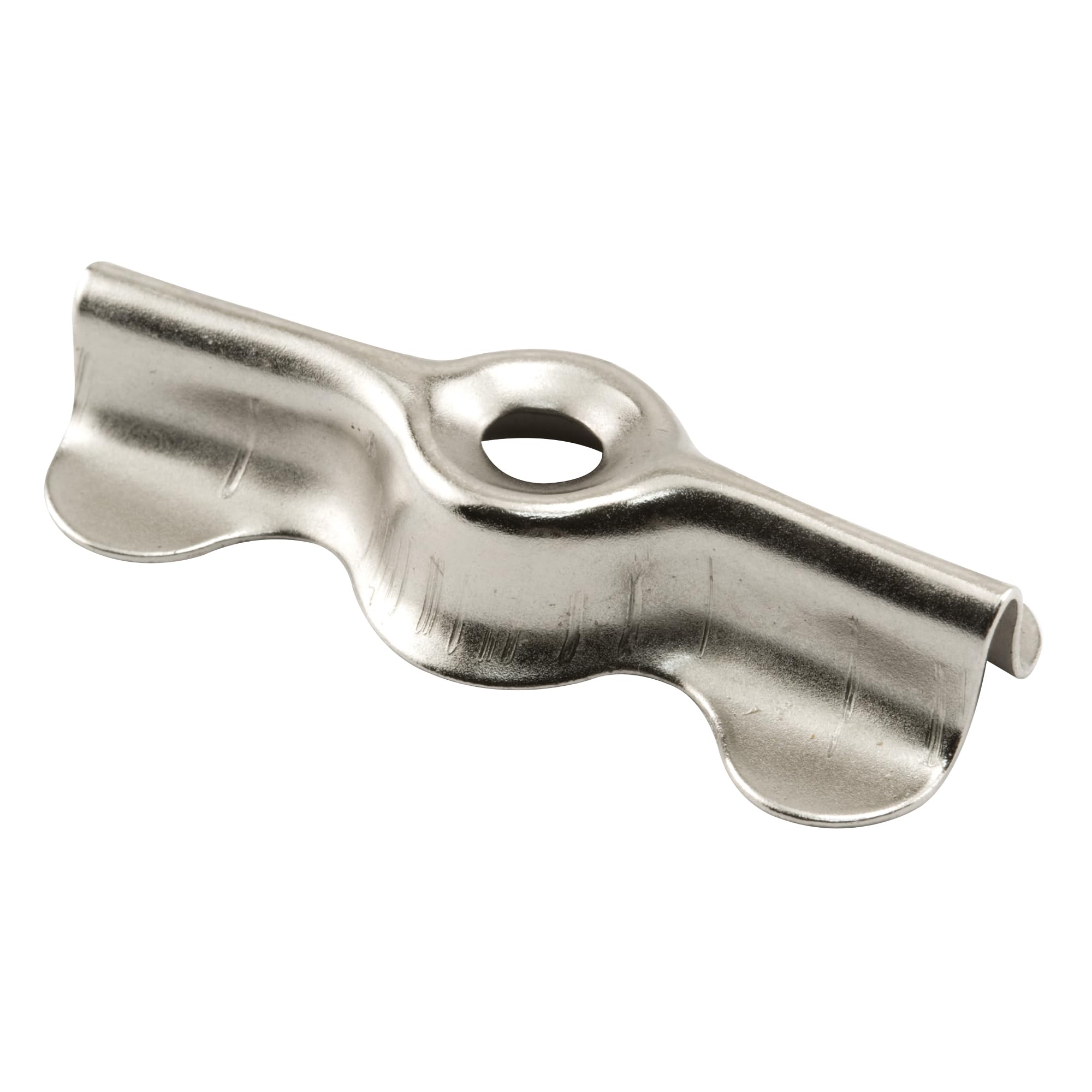
Double-wing flush clips are often the missing puzzle piece for vintage storm windows and screen doors that have lost their tension hold. This 25-pack from Prime-Line offers nickel-plated steel clips measuring 1-11/16 inches by 3/4 inches, designed to secure two adjacent screens on narrow rails. The corrosion-resistant finish keeps them functional through years of weather exposure.
Buyers consistently praise the value compared to hardware store pricing, noting these are difficult to find in the original double-wing design. The clips are notably heavier and more substantial than many expected, providing a firm grip that prevents screens from rattling or falling out. They work equally well on wooden screen frames and aluminum storm door channels.
The only recurring issue is that some packages arrive without the fastening screws. A quick trip to the garage for #6 or #8 pan-head screws resolves this, but check the package contents before starting your project. For anyone restoring multiple windows, this 25-count supply covers the entire house with leftovers for future repairs.
Why it’s great
- Hard-to-find double-wing design secures two screens simultaneously
- Nickel-plated steel resists corrosion in outdoor storm window use
- 25-pack provides ample coverage for whole-house projects
Good to know
- Screws may be missing from the package — verify before installation
- Clips are larger than some buyers anticipate — measure your rail width
6. Andersen Storm Door Bottom Sweep Fin Weatherstrip (43-Inch)
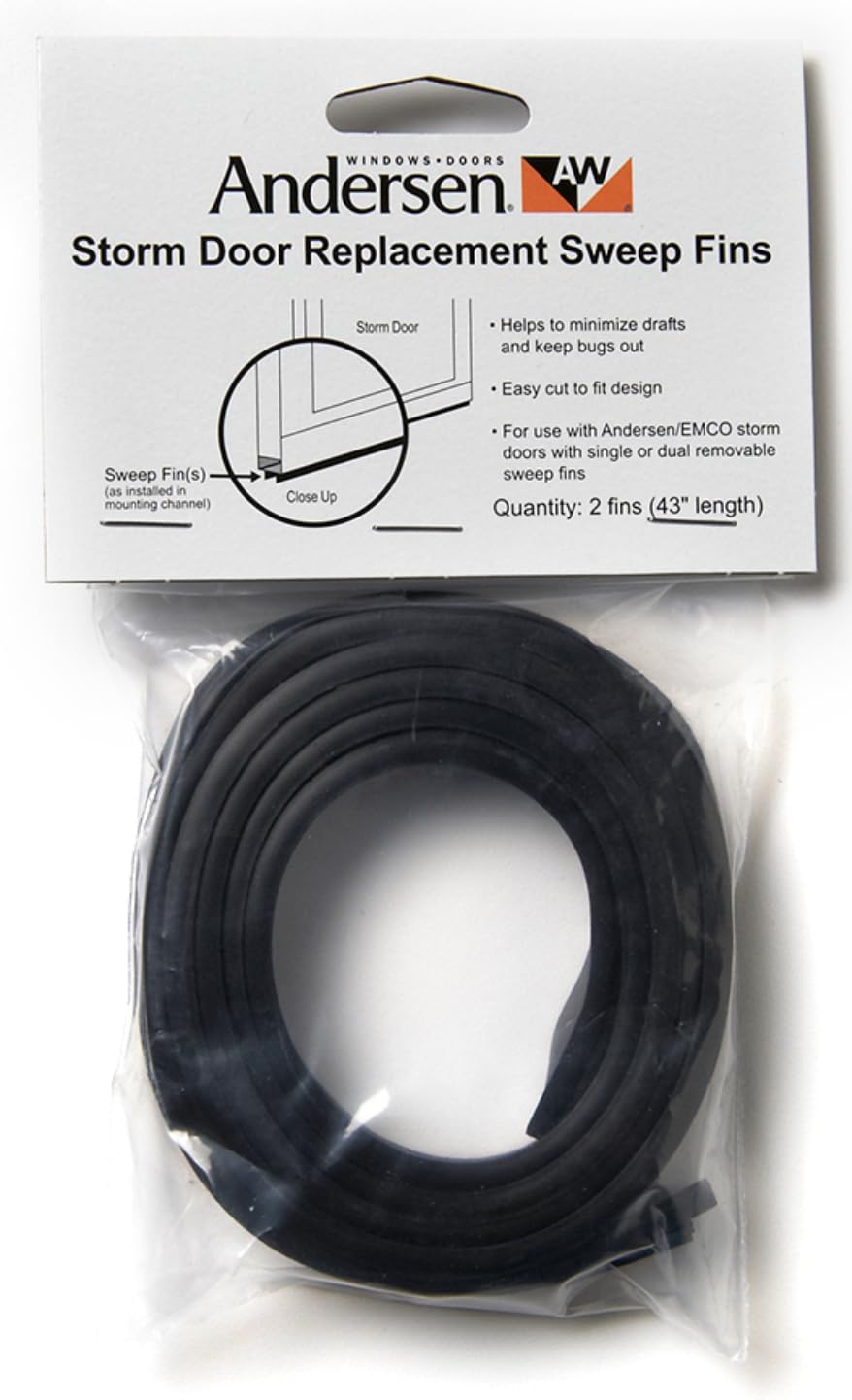
Andersen storm doors from the 1970s use a proprietary L-shaped sweep channel that third-party weatherstripping cannot replicate. This OEM bottom sweep comes as two 43-inch fins that trim to fit doors up to 32 inches wide. The plastic-and-rubber composition slides into the existing channel and reduces the gap that allows drafts, insects, and small animals to enter.
Installation is straightforward: cut the fin to length, slide it into the sweep channel, and close the door to seat it. Users recommend leaving at least one inch of material past the door edge and trimming the excess after the first close for a perfect seal. The dual-fin design provides two contact points against the threshold, doubling the draft barrier.
The primary drawback is the premium pricing relative to generic weatherstripping. Andersen’s proprietary channel dimensions leave no room for substitutes, so you pay for the guaranteed fit. Customers confirm the original part number 42115 matches 1970s models precisely, making this the only reliable option for restoring your storm door seal.
Why it’s great
- Genuine Andersen OEM part guaranteed to fit L-shaped sweep channels
- Dual-fin design doubles draft protection at the bottom threshold
- Cut-to-fit length allows precise trimming for non-standard door widths
Good to know
- Significantly more expensive than universal alternatives
- Only fits Andersen storm doors with proprietary L-channel sweeps
7. Honoson Window Tilt Latches (Plastic, 2-Inch Hole Center, 40-Piece Set)

Plastic window tilt latches from the 1970s become brittle after decades of UV exposure, cracking when you tilt the sash for cleaning. This 40-piece set from Honoson provides 20 left-hand and 20 right-hand spring-loaded latches with a 2-inch hole center spacing that matches many vintage single- and double-hung windows. The white plastic construction blends with standard sash finishes.
Customers replacing latches on 30-year-old windows report a perfect snap-in fit with no modification needed. The spring mechanism delivers a firm locking click and smooth tilting action, actually improving on the original hardware’s feel. One user replaced 20 latches in about an hour, a strong endorsement of the design’s consistency.
The set does not include screws, so you will need to reuse the originals or purchase #6 x 1/2-inch pan-head screws separately. A few reviewers noted that latches intended for deeper sash channels may not seat fully in thinner frames. Measure your existing latch width and hole spacing before committing to this bulk purchase.
Why it’s great
- 40-piece set covers both left and right sides for 20 windows
- Spring-loaded mechanism provides positive engagement and smooth tilt
- Tool-free snap-in installation on compatible sash frames
Good to know
- Screws not included — must reuse originals or purchase separately
- Plastic construction may not fit deeper sash channels without modification
FAQ
How do I determine if my casement operator is right hand or left hand?
What does the 5/16 inch bulb diameter refer to on weatherstripping?
Can I use a T-slot weatherstrip in a kerf channel?
Why do some Prime-Line casement operator reviews mention gear slipping?
Final Thoughts: The Verdict
For most users, the best 1970s combination storm window parts are the Andersen #7191-32 Sash Lock and the Seal Supply Kerf Weatherstrip because they restore factory-level fit and draft protection. If you need a functional casement crank for a smooth-running window, the Prime-Line H 3520 delivers solid value. And for bulk replacement of broken tilt latches across multiple sashes, nothing beats the coverage of the Honoson 40-piece set.