
The jump from a mechanical hard drive or even a SATA SSD to a fast NVMe solid-state drive is one of the most dramatic upgrades you can make to any PC or laptop. A good 750GB-class drive — which in practice means the excellent 500GB and 512GB models that dominate this price band — slashes boot times to seconds, obliterates game loading screens, and makes file transfers across a Gen4 interface feel instant.
I’m Min — the co-founder and writer behind Gadgets Feed. I’ve spent hundreds of hours analyzing benchmark sheets, real-world user reports, and long-term durability data across every major SSD brand to find which drives actually deliver on their rated speeds without sacrificing reliability.
Whether you are breathing new life into an aging laptop or building a gaming rig that can handle the latest AAA titles, you need a drive that balances sheer throughput with consistent performance. This guide cuts through the marketing jargon to identify the absolute best 750gb ssd drive for your specific workload and budget.
How To Choose The Best 750GB SSD Drive
The SSD market is crowded with models that look identical on paper but feel completely different under load. The key differentiators come down to the NAND type, the controller’s caching strategy, and the interface generation your motherboard supports.
PCIe Gen3 vs Gen4 — The Real-World Gap
A Gen4 drive like the TEAMGROUP T-Force G50 (5,000 MB/s read) can load a large open-world game environment in half the time of a Gen3 drive. However, if your motherboard only has a Gen3 slot, the drive will still run but will be capped at Gen3 speeds (~3,500 MB/s). Always check your system’s specs before paying a premium for Gen4.
NAND Flash and Cache — TLC vs QLC
TLC (Triple-Level Cell) NAND writes three bits per cell and offers better endurance and sustained write speeds than QLC (Quad-Level Cell). Drives like the Kingston NV3 use TLC with SLC caching to give you burst speeds over 5,000 MB/s even if sustained writes eventually slow down. For an operating system drive or a gaming library, TLC is the safer bet.
Form Factor and System Compatibility
All the drives reviewed here use the M.2 2280 form factor, which is the standard length (80mm) for modern laptops and desktops. Make sure your motherboard has an open M.2 slot supporting either PCIe Gen3 or Gen4 x4 lanes. SATA-based 2.5-inch drives like the SanDisk SSD Plus are a fallback only if your system lacks an M.2 slot entirely.
Quick Comparison
On smaller screens, swipe sideways to see the full table.
| Model | Category | Best For | Key Spec | Amazon |
|---|---|---|---|---|
| TEAMGROUP T-Force G50 | Mid-Range | PS5 / Gaming | 5,000 MB/s Read (Gen4) | Amazon |
| Western Digital WD Green SN350 | Entry-Level | Budget / Raspberry Pi | 2,400 MB/s Read (Gen3) | Amazon |
| Kingston NV3 | Mid-Range | General Upgrade | 5,000 MB/s Read (Gen4) | Amazon |
| PNY CS2241 | Mid-Range | Boot Drive / Steam | 4,700 MB/s Read (Gen4) | Amazon |
| SanDisk SSD Plus | Entry-Level | Legacy Laptops / PS2 | 545 MB/s Read (SATA) | Amazon |
| WD Blue SN5100 | Premium | AI Workflows / Creators | 6,600 MB/s Read (Gen4) | Amazon |
| Western Digital 512GB Gaming | Premium | High-IOPS Gaming | 5,000 MB/s Read / 800K IOPS | Amazon |
In‑Depth Reviews
1. TEAMGROUP T-Force G50 512GB NVMe SSD

The T-Force G50 sits at the sweet spot of the mid-range, offering genuine Gen4 bandwidth with a 5,000 MB/s sequential read speed that makes Windows boot times effectively disappear. Its ultra-thin graphene heat spreader keeps thermals in check even inside a PS5’s cramped bay, and the SLC caching algorithm delivers burst performance that rivals drives costing significantly more. This is the pick for anyone who wants Gen4 speeds without stretching into the premium price bracket.
Built with 3D TLC NAND rather than the cheaper QLC found on some competitors, the G50 provides better sustained write endurance for tasks like installing large game files or copying video projects. The 2TB version was praised by users for its reliability as a drop-in upgrade for older laptops, and the 5-year warranty from TEAMGROUP provides peace of mind for a primary drive.
The only catch is that the 512GB capacity (which fits the 750GB-class theme) has been subject to price volatility, occasionally climbing closer to premium territory during supply shortages. But when it lands at its typical price, it is the best value Gen4 drive on this list.
Why it’s great
- Full PCIe Gen4 speeds (5,000 MB/s) at a mid-range price
- Graphene heat spreader keeps temps low without bulky heatsink
- 5-year warranty and 3D TLC NAND for long-term reliability
Good to know
- Price can spike during inventory shortages
- 512GB capacity means reformatting loss on PS5 reduces usable space
2. WD Blue SN5100 500GB NVMe SSD
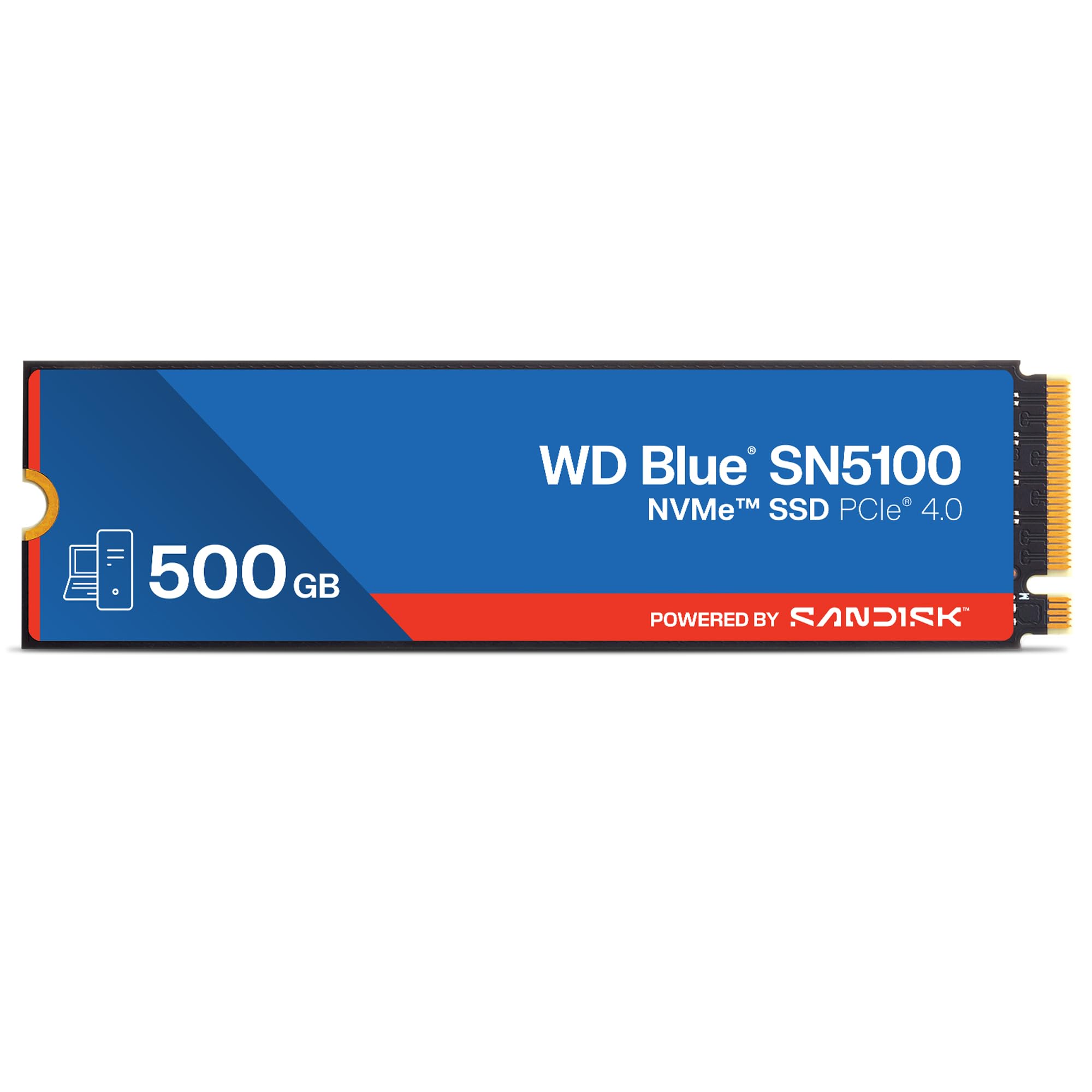
The WD Blue SN5100 pushes the envelope on Gen4 performance with a staggering 6,600 MB/s sequential read speed — about 30% faster than the previous generation of WD Blue drives. This is the drive you want if you regularly move large video project files or work with AI-enabled workflows that benefit from the combined bandwidth of Sandisk nCache 4.0 and 3D CBA NAND technology.
Installation is a straightforward M.2 2280 fitment with backward compatibility to Gen3 slots (where it will run at reduced speeds, but still over 3,000 MB/s). Users have reported flawless behavior in gaming laptops with no throttling or stuttering, and the download of Acronis True Image for data migration makes cloning your old drive a simple process. The 5-year limited warranty reinforces its premium status.
The downside is that you pay a premium for that top-tier read speed, and the 500GB capacity is modest compared to the 1TB and 2TB variants that offer better value per gigabyte. If your budget allows, this is a future-proof choice that will keep your PC feeling snappy for years.
Why it’s great
- Blistering 6,600 MB/s reads — fastest Gen4 drive here
- Sandisk nCache 4.0 for fast large-file transfers
- 5-year warranty and included cloning software
Good to know
- 500GB capacity is small relative to the premium price
- Performance drop noticeable if installed in a Gen3 slot
3. Western Digital 512GB Gaming Gen4 NVMe SSD

This WD Gaming drive is engineered for exactly what its name implies: high-IOPS gaming scenarios. With random read performance of 460K IOPS and random write performance of an exceptional 800K IOPS, it excels at loading game assets and textures far faster than drives that only optimize for sequential speeds. The 5,000 MB/s sequential read ensures the OS and game launchers feel instant.
The drive uses a PCIe Gen4 x4 interface and is compatible with both desktop and laptop M.2 slots. Customers have used it successfully to upgrade 256GB laptops to a much more usable 512GB, eliminating the constant “low disk space” warnings. The OEM packaging keeps the cost lower than retail-boxed alternatives, though it comes with a 1-year limited warranty through the seller rather than Western Digital directly.
The shorter warranty period is the principal trade-off here — most competitors offer 3-5 years. For a secondary game drive or a laptop upgrade where the original machine will be replaced in a couple of years, this is a excellent value. For a mission-critical boot drive, the extra warranty of the TEAMGROUP or WD Blue is worth the difference.
Why it’s great
- Outstanding 800K random write IOPS for game loading
- Full Gen4 sequential speeds at 5,000 MB/s
- OEM pricing makes it accessible for budget builds
Good to know
- Only 1-year warranty through the seller
- OEM packaging — no retail box or accessories
4. Kingston NV3 500GB NVMe SSD

The Kingston NV3 delivers the same headline Gen4 speed as the TEAMGROUP G50 (5,000 MB/s read) at a budget-friendly price that often undercuts the competition. It uses TLC NAND with full SLC caching to provide the initial burst performance that makes booting Windows and launching applications feel dramatically faster than any SATA drive. For a general system upgrade, this is the least expensive way to get into genuine Gen4 territory.
Users have reported excellent real-world experiences — instant boot times, quick app loading, and smooth game transfers. One reviewer noted that the drive performs at around 3 GB/s if your motherboard is set to Gen3 in BIOS, but setting it to Gen4 unlocks the full 5,000 MB/s. The low power consumption also makes it ideal for laptops where battery life matters.
The caveat is that sustained write speeds drop after the SLC cache fills up — typically after writing 5-10 minutes of continuous data. This is a minor issue for OS and gaming use, but video editors or anyone moving large files frequently may want a drive with DRAM cache or better sustained performance.
Why it’s great
- Affordable entry into Gen4 speeds (5,000 MB/s)
- TLC NAND with SLC cache for snappy everyday use
- Low power draw — excellent for laptops
Good to know
- Sustained writes slow after cache fills
- Blue PCB may not match all build aesthetics
5. PNY CS2241 500GB NVMe Gen4 SSD

PNY’s CS2241 is a quiet powerhouse in the mid-range segment, offering 4,700 MB/s sequential reads and a robust 5-year limited warranty backed by 24/7 US-based technical support. It is a no-nonsense drive that has earned a loyal following among users who value reliability over peak marketing numbers — one buyer reported their unit was 99% healthy after an entire year of heavy use as a system drive.
The drive is particularly well-suited as a Steam game library drive, where the Gen4 bandwidth translates to faster level loads and asset streaming. It stays cool during operation — no heatsink required in most systems — and it maintains compatibility with both old and new motherboards. The black PCB looks clean in any build.
The main downside is the lack of dedicated firmware update tools from PNY. If you buy a used or open-box unit, you may need to use Linux to perform a secure erase or check SMART data, as PNY’s software support is minimal compared to WD or Kingston. For a new-in-box purchase, this is a non-issue.
Why it’s great
- Rock-solid reliability with 99% health after 1 year reported
- 5-year warranty with US-based support
- Runs cool — no heatsink required for normal use
Good to know
- No official firmware or secure erase utility from PNY
- Read speeds (4,700 MB/s) slightly behind top Gen4 competitors
6. Western Digital 500GB WD Green SN350 NVMe SSD

The WD Green SN350 is the budget-oriented option that prioritizes power efficiency and affordability over raw speed. With Gen3 PCIe speeds of up to 2,400 MB/s, it is still significantly faster than any SATA SSD (which tops out at ~550 MB/s), making it a tremendous upgrade for older laptops or systems with only a Gen3 M.2 slot. It is also a favorite among Raspberry Pi 5 users for its low power draw.
While the drive uses QLC NAND, which has lower write endurance than TLC, the 500GB model is adequate for an OS drive or a game library for casual users. The WD SSD Dashboard software lets you monitor drive health and firmware updates directly. One customer noted that despite being rated as a low-end NVMe, it exceeded the rated speed in benchmarks, hitting 2,700-2,900 MB/s in real-world testing.
The trade-offs are clear: the 3-year warranty is shorter than premium drives, and the QLC NAND means sustained write performance will drop off faster than with TLC drives. This is not the drive for heavy video editing or daily terabyte-level file transfers, but for a simple, reliable, everyday boot drive, the price is hard to beat.
Why it’s great
- Very budget-friendly entry into NVMe speeds
- Low power consumption — ideal for Raspberry Pi 5
- WD SSD Dashboard for health monitoring
Good to know
- QLC NAND — lower write endurance than TLC drives
- 3-year warranty is shorter than many competitors
7. SanDisk SSD Plus 500GB SATA III SSD
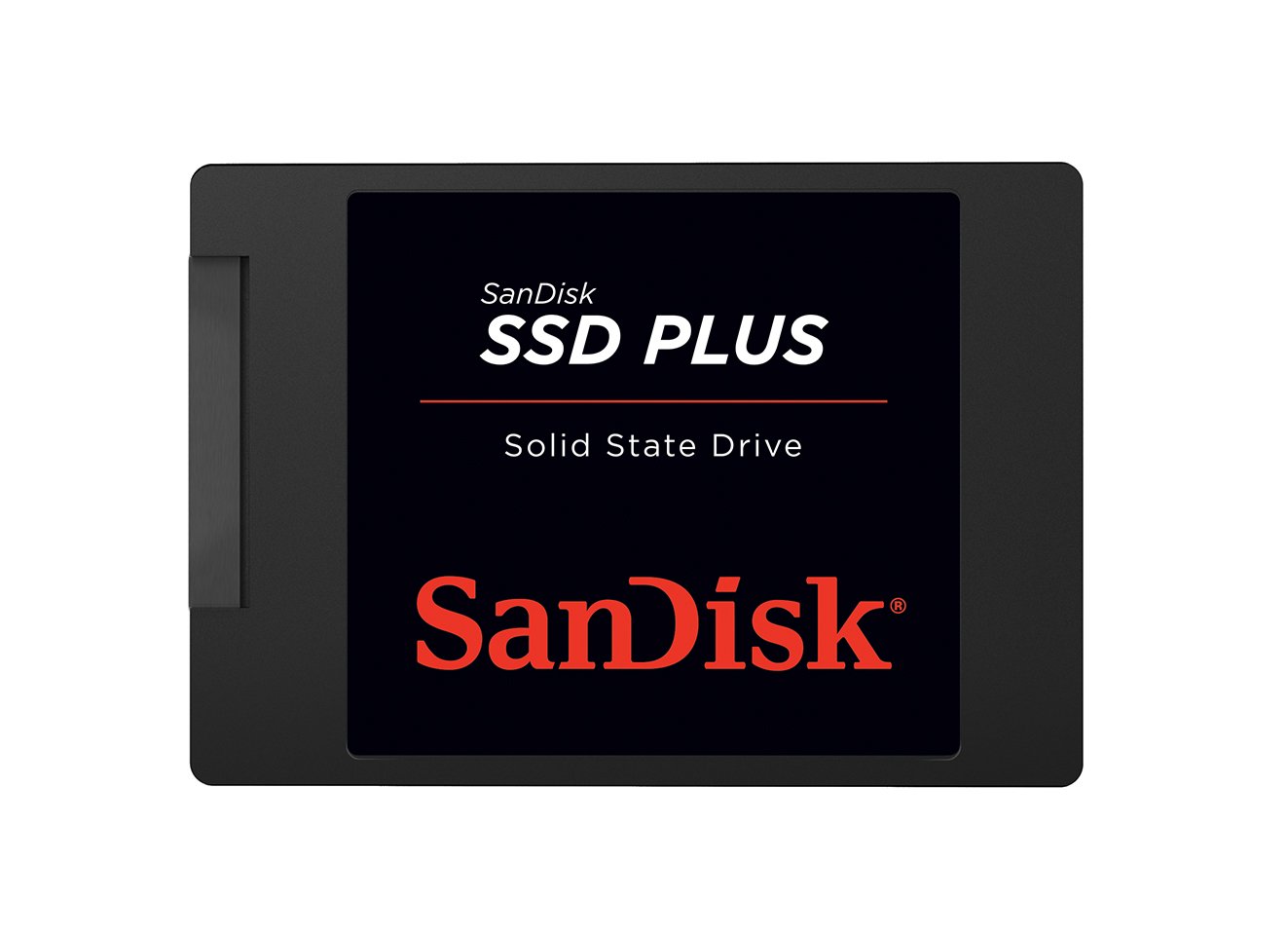
The SanDisk SSD Plus is the lone SATA drive in this roundup because it fills a genuine niche: systems that lack an M.2 slot entirely. This 2.5-inch drive uses the ubiquitous SATA III interface (6 Gb/s) and delivers sequential reads of up to 545 MB/s — the ceiling of the SATA protocol. It is a straight drop-in replacement for an old hard drive in any laptop or desktop with a 2.5-inch bay.
Customers have found excellent use cases beyond simple upgrades: one buyer installed it in a modded PlayStation 2 for a silent, reliable 500GB game library, while another uses it in a security camera recording system where continuous writes are the norm. The drive runs cool, is completely silent (no moving parts), and SanDisk’s brand reliability is well-established.
If your system supports an M.2 NVMe slot, you should absolutely go for one of the faster drives above — the 10x speed difference is transformative. But for breathing life into old hardware that only accepts SATA, this is the most reliable and well-reviewed option available at this capacity point.
Why it’s great
- Perfect for legacy systems with only SATA ports
- Silent, cool-running, and shock-resistant
- Proven reliability for 24/7 use (e.g., security DVRs)
Good to know
- SATA bandwidth limits speed to ~550 MB/s (no NVMe speeds)
- Not a value if your motherboard has an M.2 slot
FAQ
Is a 500GB or 512GB SSD enough for gaming in 2024?
Can I use a PCIe Gen4 SSD in a Gen3 motherboard slot?
How do I install an M.2 2280 SSD in my laptop or desktop?
What is TBW and why does it matter?
Final Thoughts: The Verdict
For most users, the best 750gb ssd drive winner is the TEAMGROUP T-Force G50 because it delivers genuine Gen4 speeds (5,000 MB/s), uses durable TLC NAND, and includes a graphene heat spreader that keeps it cool in consoles and laptops — all at a price that competes with entry-level Gen3 drives. If you want the absolute fastest sequential reads for creative workloads, grab the WD Blue SN5100. And for a budget-conscious upgrade on a Gen3 system, nothing beats the value of the Kingston NV3.