
Our readers keep the lights on and my morning glass full of iced black tea. As an Amazon Associate, I earn from qualifying purchases.
Specs are compiled from manufacturer listings and verified buyer reviews and can change over time — please confirm the key details on the product page before buying.
A dead fridge means spoiled food, a flooded kitchen floor, and a costly cleanup. A backup battery for a refrigerator keeps your compressor running silently through blackouts, storms, and rolling outages. This guide matches a power station’s real capacity to your fridge’s actual draw, so you buy once and stay calm when the lights go out.
I’m Min — the founder and writer behind Gadgets Feed. This guide is built by comparing the manufacturers’ published specifications and the patterns across verified customer reviews, so you get each pick’s real strengths and trade-offs instead of marketing spin.
During an outage, your fridge is the most critical appliance to keep running. The right backup battery for refrigerator keeps your food cold and your family safe, but only if you match its capacity, output, and recharge speed to your specific needs.
Our Picks at a Glance
How To Choose The Best Backup Battery For Refrigerator
Your refrigerator is the hungriest appliance in your home during an outage — it cycles on and off all day, and each startup needs a burst of power far above its running wattage. Pick a station that handles that startup surge and carries enough total energy (watt-hours) to keep the compressor going for the hours or days you need.
Capacity: Match watt-hours to your fridge’s appetite
Capacity is measured in watt-hours (Wh), which tells you how much energy the battery holds. A typical modern fridge draws roughly 100–200W while running, but it cycles, so a 2,000Wh station can realistically keep one running for 24–35 hours depending on the model and ambient temperature. Capacity is your “days of cold food” number — the higher the watt-hours, the longer you can ride out an outage.
Output: Don’t trip on the startup surge
The compressor in your fridge needs a sudden spike of power — called surge or peak wattage — every time it kicks on. This surge can be 2–3 times the fridge’s normal running wattage. A station with 2,000W+ peak output handles that spike easily, which is why every pick here offers at least 2,000W of peak power. Check the station’s continuous output too, since that’s what it delivers hour after hour.
Battery chemistry: LiFePO4 for longevity
Nearly every serious backup option uses lithium iron phosphate (LiFePO4) cells, a chemistry that lasts for thousands of charge cycles before degrading. A LiFePO4 station retains most of its capacity after years of daily use, making it a long-term investment, not a disposable gadget.
Quick Comparison
| Model | Best For | Capacity (Wh) | AC Output (W) | Weight | Amazon |
|---|---|---|---|---|---|
| EF ECOFLOW DELTA 3 Max★ Best Overall | Overall fridge backup | 2048 | 2400 (3400 X-Boost) | — | Amazon |
| DABBSSON 2000LBest Value | Value + high surge | 2048 | 2200 (3300 Boost) | 41 lb | Amazon |
| Anker SOLIX S2000Fridge Expert | 35-hr fridge runtime | 2010 | 1500 (3000 Peak) | 35.7 lb | Amazon |
| BLUETTI Elite 200 V2 | High continuous output | 2073.6 | 2600 (3900 Lifting) | 53.4 lb | Amazon |
| Anker SOLIX C2000 Gen 2 | Expandable runtime | 2048 | 2400 (4000 Peak) | 41.7 lb | Amazon |
| BLUETTI FridgePower | Slim fridge-side fit | 2016 | 1800 (3600 Surge) | 41.9 lb | Amazon |
| Jackery Explorer 2000 v2 | Lightweight portability | 2042 | 2200 | 39.5 lb | Amazon |
| PECRON E3600LFP | Whole-home capacity | 3072 | 3600 | 79 lb | Amazon |
| ABOK Ark3600 | Max expandable power | 3840 | 3600 (4500 Peak) | 92 lb | Amazon |
| Jackery HomePower 3000 | Whole-home + RV | 3072 | 3600 (7200 Surge) | 59.5 lb | Amazon |
| EF ECOFLOW DELTA Pro | Max capacity & output | 3600 | 3600 (4500 X-Boost) | 99 lb | Amazon |
In‑Depth Reviews
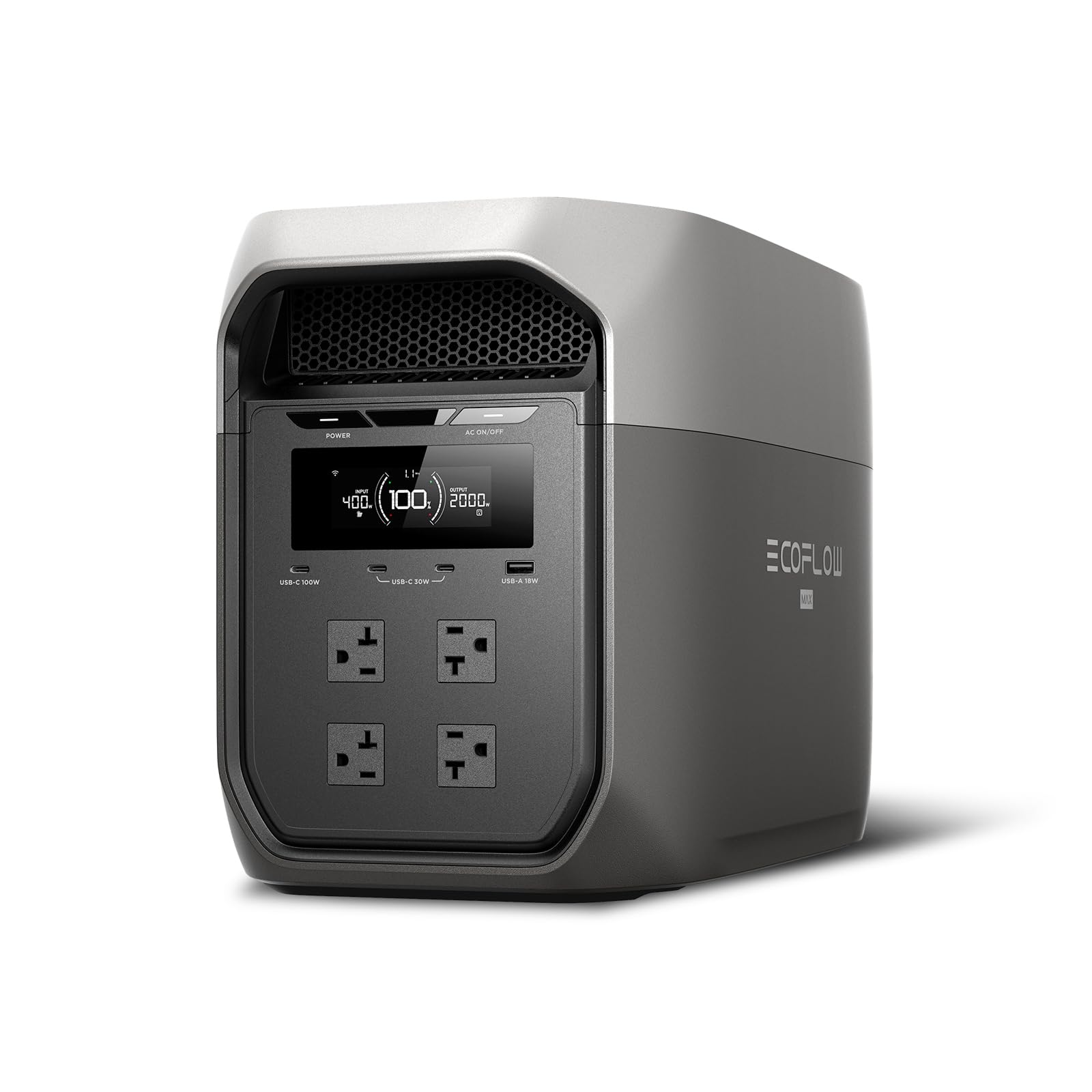
1. EF ECOFLOW DELTA 3 Max
Our pick — over 4.5★ from 500+ verified ratings; the strongest balance of quality and price.
The 2048Wh powerhouse that recharges faster than your coffee brews.
When the power cuts at dinner time, this is the station you want plugged into your fridge. Its 2048Wh battery and 2400W continuous output handle a full-size refrigerator with room to spare, and the 3400W X-Boost mode covers nearly any appliance you’d throw at it. The <10ms transfer time means your fridge, computer, and medical devices never even notice the outage — no blip, no reboot.
Buyers report the charging speed is the standout feature: “Charging speed is a little over an hour,” one owner noted, and the specs back that up with 0–80% in just 1.13 hours via X-Stream technology. That’s a station that can top up between storms or during a lull, so you’re always ready for the next one. The LiFePO4 battery is rated for a 10-year daily-use lifespan, plus a 5-year extended service period.
What wins people over is the combination of raw performance and sheer power capacity — it’s the kind of unit that runs “most appliances in a home,” as the review consensus puts it. The trade-off is weight; it’s heavy enough that you’ll want to keep it near the fridge rather than haul it around. For a dedicated home backup that doubles as a camping companion, this is the complete package.
What makes it the top pick
- 2048Wh capacity runs a fridge for extended outages
- 3400W X-Boost handles high-draw appliances
- Recharges 0–80% in just 1.13 hours
- 10ms transfer keeps electronics safe
Who should look elsewhere
- Heavy build isn’t ideal for frequent carrying
- The crowd favorite here — 4.7 stars across 500+ owners
- Premium-tier investment for occasional outages
Reach for this if: you want one station that covers a fridge, a microwave, and power tools without thinking twice.
Balance check: it’s heavier than the Anker SOLIX S2000 below, so consider where it will live before you buy.
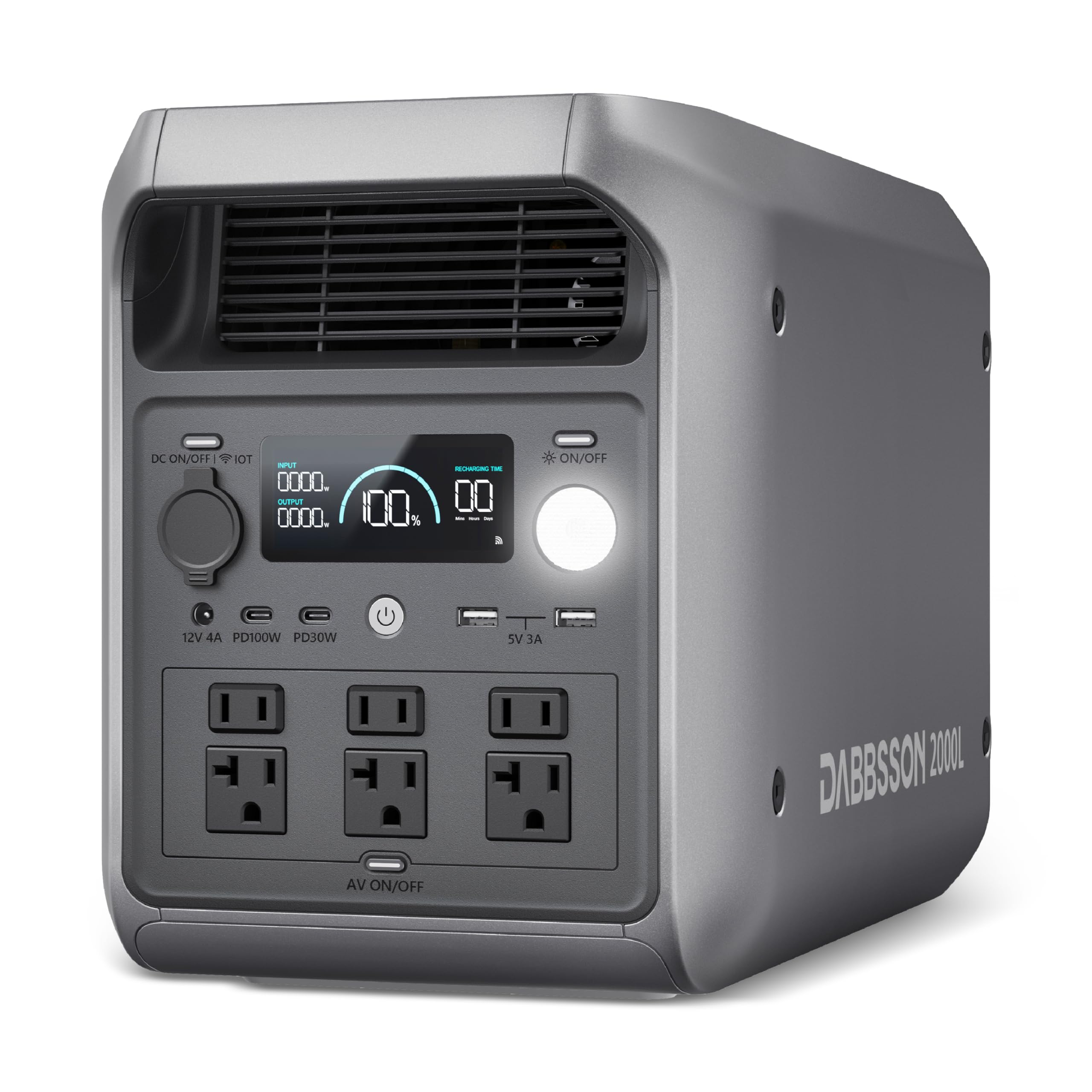
2. DABBSSON 2000L
Maximum fridge-running surge power at a budget-friendly sticker.
This station gives you the full 2048Wh of capacity but throws in a 3300W power boost that outmuscles many pricier rivals when your fridge compressor kicks on. At just 41 lb, it’s lighter and more compact than most high-capacity stations, so it slips into a closet or campsite setup without dominating the space. Its semi-solid LiFePO4 cells handle 4000+ deep cycles to 80% capacity, lasting over 10 years of daily use.
Owners mention it handled a 2.4–2.5kW load without breaking a sweat, which is well beyond what a typical refrigerator needs. The 6 AC outlets mean you can run the fridge plus a coffee maker, an e-bike charger, or a heater all at once. Recharge to full in just 1 hour via AC, or pair it with solar input up to 800W MPPT if you want an off-grid option.
The thing everyone raves about is its reliability — it’s the kind of unit that powers lights and tools daily without a hiccup. The honest trade-off: the app functionality gets mixed feedback, and the fan can run loudly on a non-variable cycle at times. But for the price-to-capacity ratio, this is the value king of the list.
Where it shines: 3300W boost for compressor startups plus 6 AC outlets mean you’re never choosing between the fridge and the coffee maker during an outage.
The honest catch: a few owners note the app can be finicky to pair, and the fan isn’t whisper-quiet — treat the app as a bonus, not the main interface.
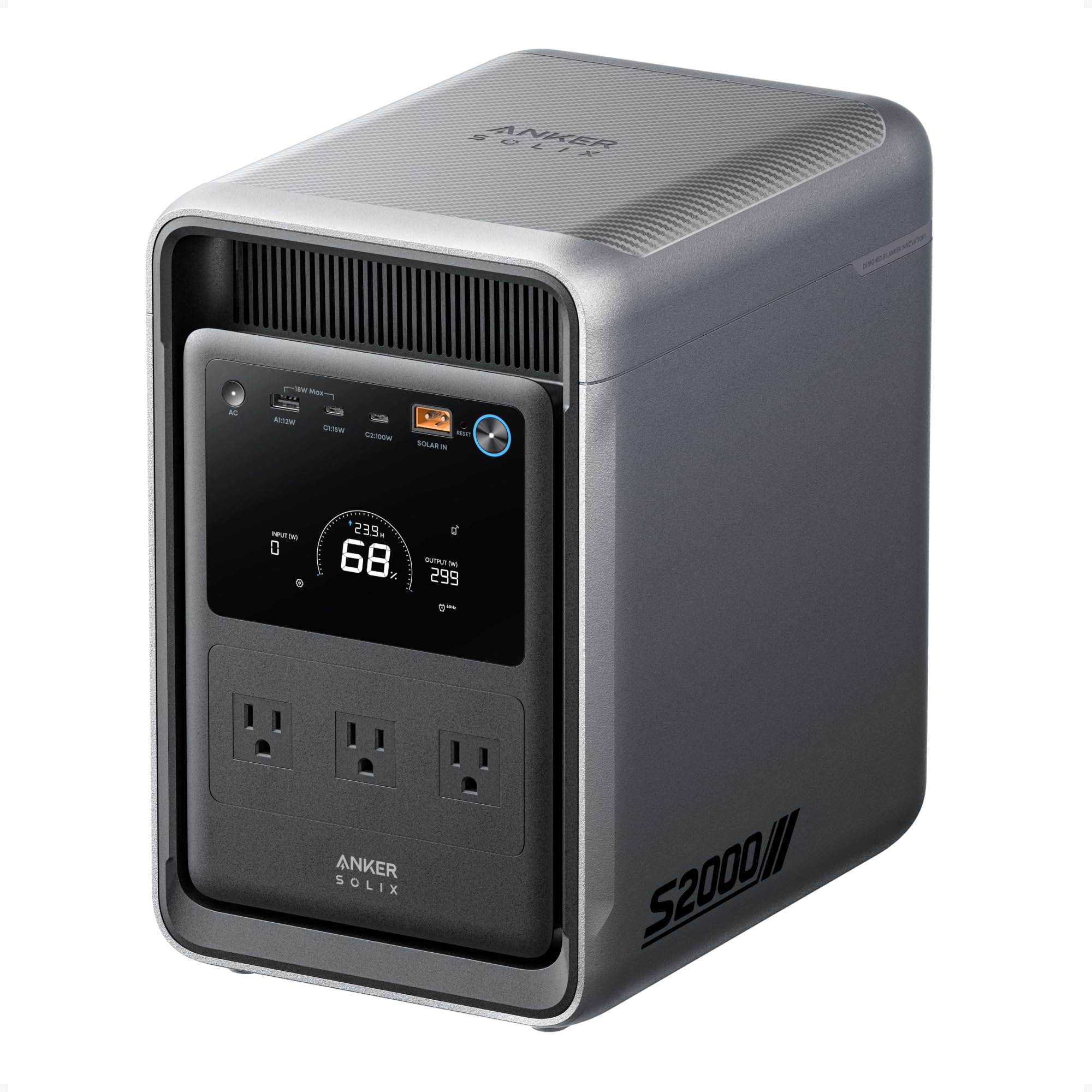
3. Anker SOLIX S2000
The lightest 2kWh station built specifically to keep your fridge cold for 35 hours.
Anker designed the S2000 around one job — keeping your refrigerator running — and the numbers show it. With a 6W idle draw and 10% higher efficiency than comparable systems, it runs 20% longer than other 2kWh stations, keeping your fridge powered for a stated 35 hours. At just 35.7 lb and 30% smaller than the industry average, it’s the easiest big battery to move from the kitchen to the car.
The 1,500W continuous output and 3,000W peak handle the compressor surge without issue, and the 10,000-cycle LFP battery gives it a 15-year lifespan — that’s a decade and a half of storm seasons covered. Customers note it survived a 30-hour outage while powering a lamp, fridge, coffee maker, and even a tankless water heater, then still had about 30% charge left. That’s real-world proof the 35-hour claim holds up.
What wins people over is the combination of compact size and genuine performance — 2kWh that fits in a footprint 30% smaller than the category norm. The trade-off: the fan gets noticeably noisy at 1200W charging, and one owner noted a strong burning smell on first charge that dissipated. For pure fridge duty in a light package, this is the specialist’s choice.
Why it’s a fridge specialist: the 6W standby draw sips power between outages, so the battery is still full when you actually need it.
Near the 1500W line: it’s not the station for a microwave plus a fridge simultaneously — keep it for the fridge and smaller essentials.
4. BLUETTI Elite 200 V2

A 2600W continuous wallop that runs a fridge plus nearly everything else at once.
BLUETTI’s HyperWatt tech gives the Elite 200 V2 a 2600W continuous output and a 3900W power-lifting surge — the kind of headroom that starts a fridge compressor, an air fryer, and a microwave without blinking. With 9 simultaneous device outputs and 4 AC outlets, this is a station that powers a household, not just a single appliance. Reviewers point out running fridges, freezers, an induction stove, and a 3D printer all at once.
Its CNAS-certified automotive-grade LiFePO4 battery supports over 6,000 cycles — 12 times the industry average — for a 17-year lifespan. Idle draw drops to just 10W, 3 times lower than similar stations, which means less wasted energy between outages. Charge from 0–80% in 50 minutes with dual AC and DC input, or go full in 2 hours with the alternator charger.
What the review pages sum up best: it’s “the best they’ve owned,” delivering substantial power in a compact 50lb package that runs fridges for 24 hours straight. The honest trade-off is weight at 53.4 lb — not the lightest — and charging speed gets mixed feedback depending on the method. It also lacks a 30A RV port, so it’s home-focused rather than camper-focused.
The power play
- 2600W continuous beats the DABBSSON’s 2200W output
- 3900W surge starts any fridge compressor easily
- 17-year lifespan with 6000+ cycles
- 0–80% charge in 50 minutes
The weight to know
- 53.4 lb is heavy for frequent moving
- No 30A RV port for camper hookups
Pick this if: you want one station that powers the fridge and a full kitchen workday without compromise.
skip it if: you need to carry your battery regularly — the lighter Jackery v2 is the better travel companion.
5. Anker SOLIX C2000 Gen 2
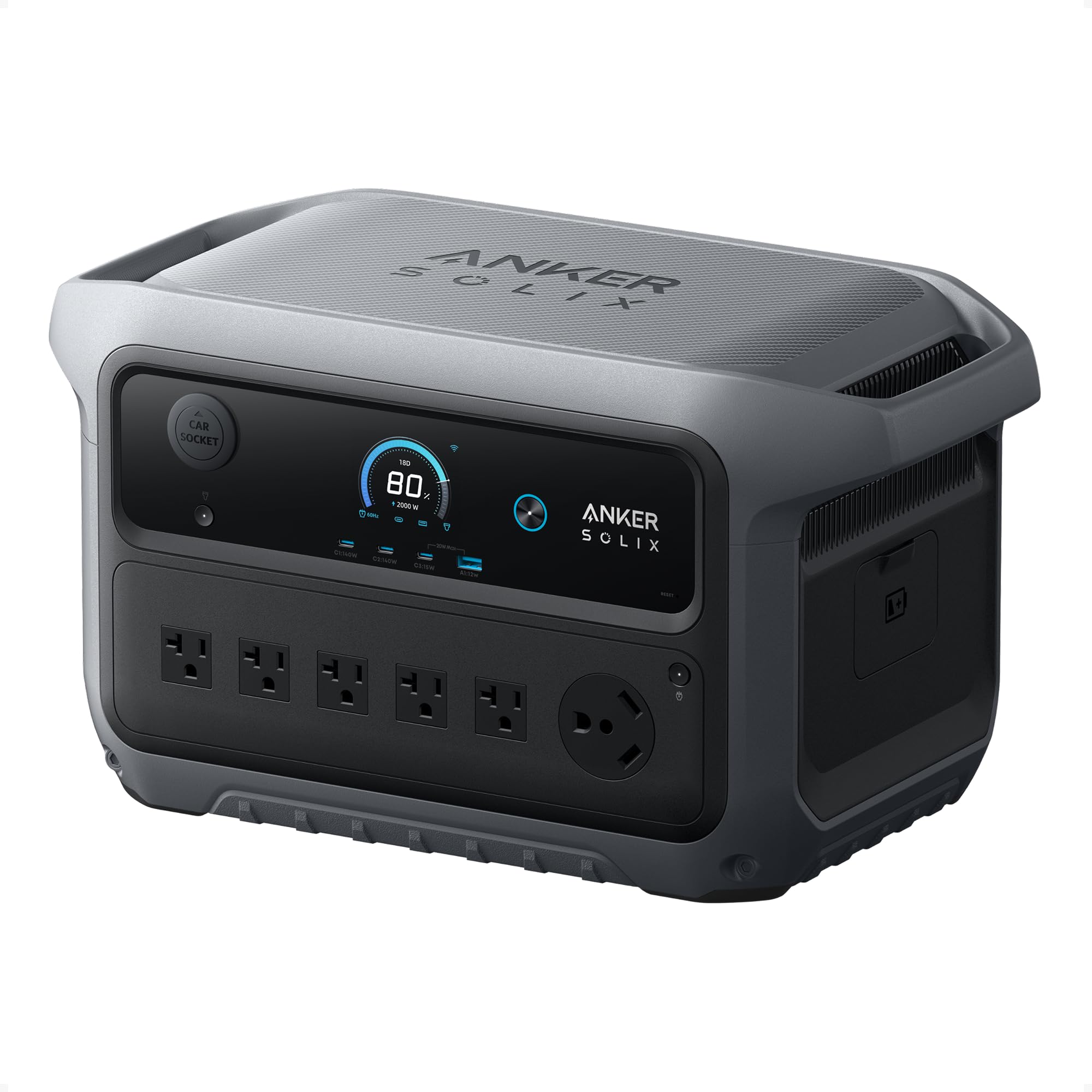
The 2kWh station that grows to 4kWh when your outage gets serious.
What sets the C2000 Gen 2 apart is its upgrade path. Start with 2,048Wh and a 9W standby draw that powers a dual-door fridge for up to 32 hours — then add an expansion battery to reach 4kWh and stretch that to 64 hours. That’s a full weekend of cold food plus a Monday of normal life before you even think about recharging. The 4,000W peak output handles most window and RV air conditioners too.
Recharging is the other headline: a full 100% in just 58 minutes via AC and solar, so you can top up between outages or during a sunny break. The 800W alternator charging replenishes from your car in 3 hours — 8 times faster than a standard car socket. At 41.7 lb, it’s 25% lighter and 29% smaller than similar products, so the expansion doesn’t come at the cost of portability.
Shoppers say it runs a TV, fridge, and WiFi for over 10 hours easily, with one camp owner keeping an RV fridge, fans, and pumps going for 3 days and still having 27% left. The honest note: the app’s runtime estimates can be off for cycling appliances like fridges. But the expandability makes this the most future-proof mid-range option here.
The growth angle: no other mid-range pick lets you double capacity later — buy the base now, add the expansion battery when your budget allows.
App caveat: treat the app’s fridge runtime estimate as a rough guide, not gospel.
6. BLUETTI FridgePower
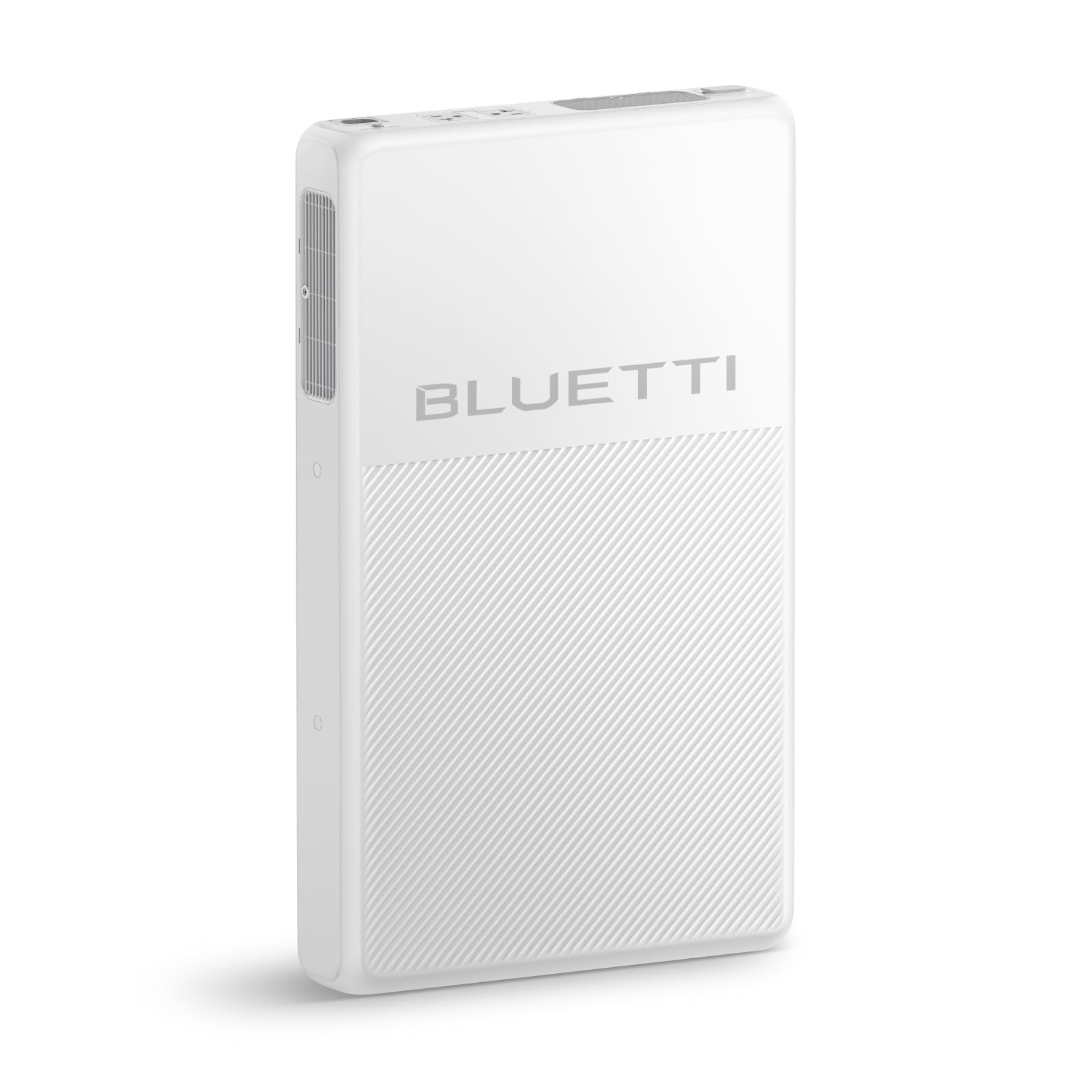
The ultra-slim 75mm station designed to hide behind your fridge, not in your way.
This is the only station on the list purpose-built for refrigerator backup, and it shows. The 75mm ultra-slim profile fits 99.65% of kitchen gaps — behind the fridge, on a wall, or in a side cabinet — so you lose zero floor space. It supports both freestanding and wall mounting with a 5-minute DIY install, complete with mounting brackets and wall anchors in the box. This is the “install it and forget it” fridge backup.
The 4W standby draw delivers 26% longer runtime (about 4.5 hours more) than competitors at the same capacity, and it expands to 8064Wh with BlueCell 200 batteries for up to 4 days of fridge runtime. That’s a week’s worth of groceries saved. The DualGuard UPS switches to battery in 10ms with four intelligent modes — Standard, PV Priority, Time of Use, and Customized — so it adapts to your utility rates.
Buyers report it kept side-by-side fridges running through a 6-hour outage without a blip, and the app even pushes severe weather alerts that trigger automatic fast charging. It’s quiet during the day and only a little louder while charging at night. The trade-off: it’s heavy at 41.9 lb, and mounting it on top of a refrigerator isn’t easy — plan for the wall-mount install instead of a high perch.
The unique angle: no other pick disappears into your kitchen like this — it’s a fridge battery that lives with the fridge.
Plan the install: the weight makes wall mounting the smart move; putting it atop a tall fridge is a two-person job.
7. Jackery Explorer 2000 v2

The 2kWh station that’s 41% lighter than the pack, made for moving between fridge and campsite.
Jackery’s Cell-to-Body (CTB) technology, borrowed from EV design, lets the Explorer 2000 v2 pack 2,042Wh into a frame that’s 41% lighter and 34% smaller than typical 2kWh stations. At 39.5 lb, it’s the lightest full-capacity fridge backup here — a real difference when you’re hauling it from the kitchen to the car for a camping trip. The 2200W AC output across 3 ports runs a fridge plus essentials without strain.
Recharging is versatile: 0–80% in just 66 minutes with AC Fast Charging, or a full charge in 102 minutes via Emergency Super Charging in the app. The Silent Charging mode tops up in 5 hours at just 30dB — quiet enough for an overnight charge in a bedroom. Owners mention keeping refrigerators and freezers running for up to 3 days on a charge, with one off-grid user running a medium fridge, large fan, and dehumidifier simultaneously.
What wins people over is the longevity play: a LiFePO4 battery rated for 10 years, backed by a 20ms UPS switch and UL1778 certification. The honest trade-off: the app’s Bluetooth connection gets unreliable reviews, and the solar barrel ports can flex when plugged in. For the weight-conscious buyer, though, this is the one to grab.
Why it stands apart: 39.5 lb is a genuine back-saver versus the 53 lb BLUETTI Elite — that’s a 13.5 lb difference you feel on every carry.
Small caveat: the app pairing can be finicky, so don’t rely on phone control as your primary interface.
8. PECRON E3600LFP

A 3072Wh giant on wheels that turns a fridge outage into a non-event.
If your goal is whole-home coverage rather than just fridge survival, the E3600LFP delivers. At 3,072Wh with a pure sine wave 3600W output, it runs a fridge, a freezer, a sump pump, and lighting simultaneously — and the included trolley means the 79 lb weight rolls wherever you need it. The real kicker is expandability: with four EP3800-48V batteries, capacity grows to 18.43kWh, which is days of full-home power.
The 16 output options cover everything — 4 AC outlets, a TT-30 RV port, 4 USB-A, 2 USB-C at 100W, a cigar port, and DC outputs. Recharge fully in 1.3 hours at 3200W AC input, or in 1.5 hours with 8×300W solar panels.
The built-in BMS protects against short circuits, overload, and overheating. The trade-off is clear: at 79 lb, this is a stationary home unit, not a carry-around station. But for the homeowner who wants one permanent answer to outages — fridge included — the value is hard to match.
The capacity story: 3072Wh is 50% more than the 2048Wh units above — that’s the difference between one rough night and three comfortable days.
Know the trade: the trolley handles the weight, but this is a “set it in the garage” unit, not a camping companion.
9. ABOK Ark3600
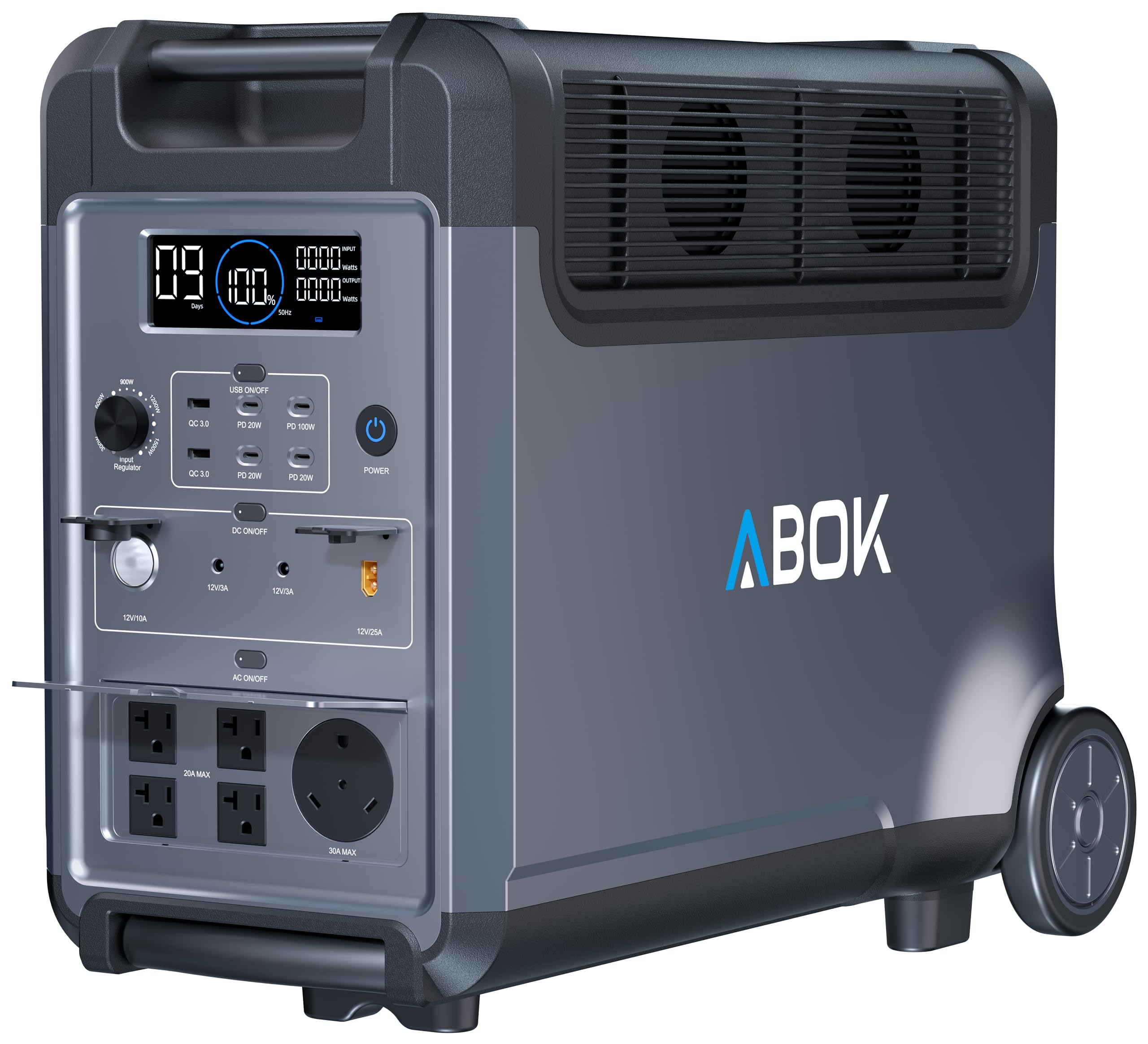
The biggest single-unit capacity here — 3840Wh that expands to over 11kWh.
For the truly power-hungry home, the Ark3600 starts at 3,840Wh — nearly double the 2kWh stations — and expands to 11,520Wh with extra batteries. That’s not just fridge backup; that’s fridge, freezer, well pump, and home office all running through a multi-day outage. The 3600W rated output and 4500W peak handle 99% of household appliances, and the telescoping handle plus wheels make the 92 lb unit surprisingly mobile.
Recharging is flexible: full in 3 hours via AC alone, or 1.29 hours with AC + PV combined. The 15 output ports include a 30A AC outlet, 4 AC at 20A, USB-C at 100W, and DC options. Customers note it kept a refrigerator running continuously, powered a wet vac, heat gun, and drill simultaneously, and ended a workday at 22% charge. The build quality earns high marks, with one owner calling its support “much better” than a leading rival.
The honest note: power output gets mixed feedback, with some owners questioning whether it delivers the full advertised wattage. And at 92 lb, it’s the heaviest pick here, wheels notwithstanding. But for max single-unit capacity with a 2+3 year warranty, the Ark3600 is the heavyweight champion.
The capacity play: 3840Wh runs a fridge for days and still has power for the rest of the house — no other single unit here starts bigger.
Set expectations: some reviewers point out the wattage reads lower than advertised — test your unit’s real output when it arrives.
10. Jackery HomePower 3000
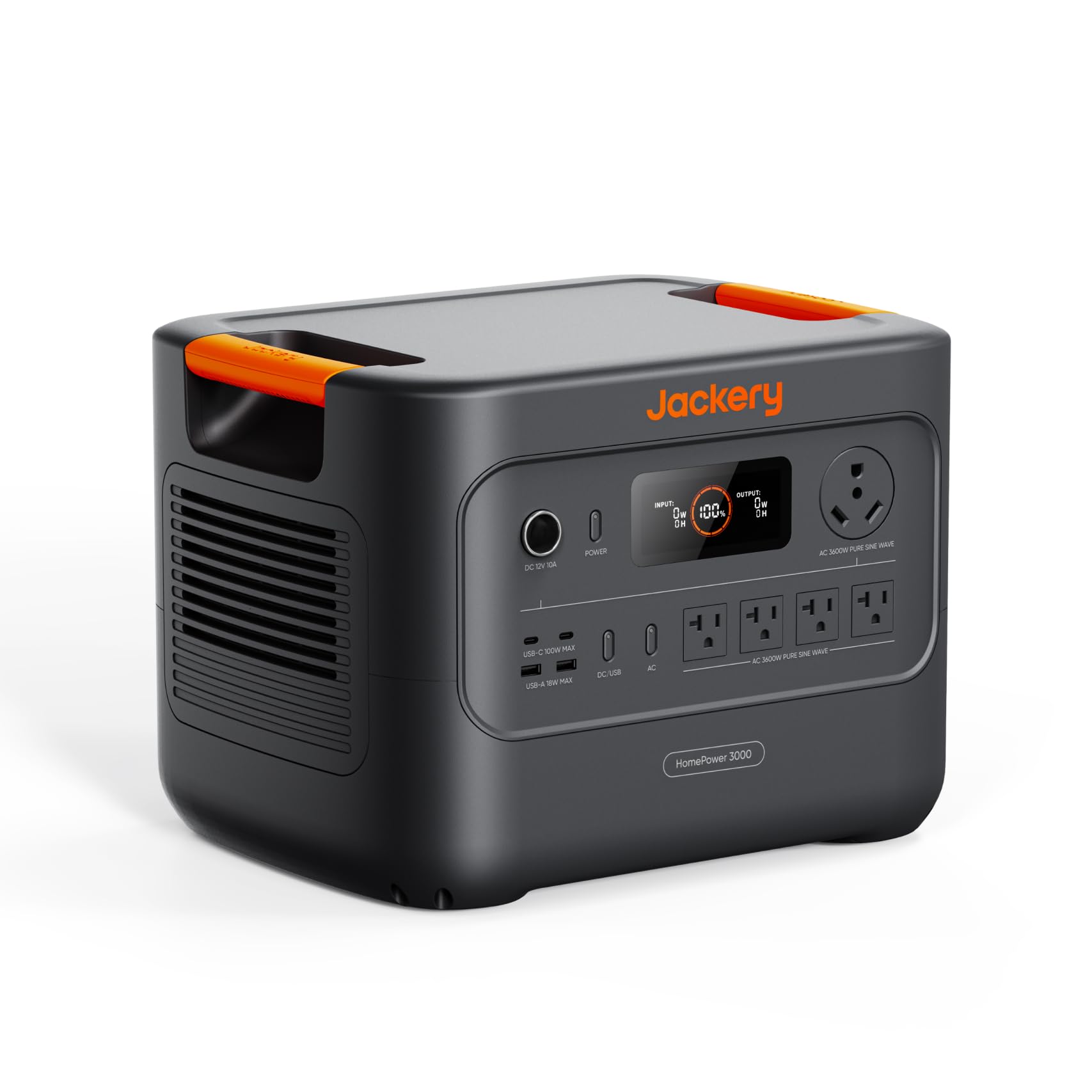
A 3072Wh workhorse that keeps a fridge cold for 30+ hours and powers the whole house besides.
The HomePower 3000 is Jackery’s answer to whole-home essentials: 3600W output with a 7200W surge and 3,072Wh capacity that powers a household for up to 15 hours, keeping a refrigerator running for 1–2 days. Shoppers say it ran a Whirlpool side-by-side fridge for 30+ hours and still had juice — one owner powered a large TV, router, lamps, and an electric blanket for hours. The dual 100W PD ports fast-charge phones and tablets.
The ≤20ms UPS switch keeps security cameras, medical refrigerators, and even Zoom calls running without a blip during outages. Recharge fully in 1.7 hours via hybrid AC and DC, or 2.2 hours AC-only; pair it with 2×200W solar panels for an 80% charge in 9 hours. The built-in TT-30 RV port makes it a direct plug-and-play camper companion. ChargeShield 2.0 AI algorithms extend the 4,000-cycle LiFePO4 battery’s lifespan.
What wins people over is the blend of sheer capacity and the handy 30A outlet — one owner picked it specifically over a rival for that RV hookup. The trade-off: at 59.5 lb and with a fan that hits around 60dB under load, it’s heavy and not whisper-quiet. It’s also the first 3kWh station with CTB tech, making it 47% smaller and 43% lighter than comparable models.
The versatility angle: no other station here combines a 30A RV outlet, 7200W surge, and 3kWh capacity in one box.
Placement matters: the fan noise under load makes it better for a garage or utility room than a bedroom UPS.
11. EF ECOFLOW DELTA Pro
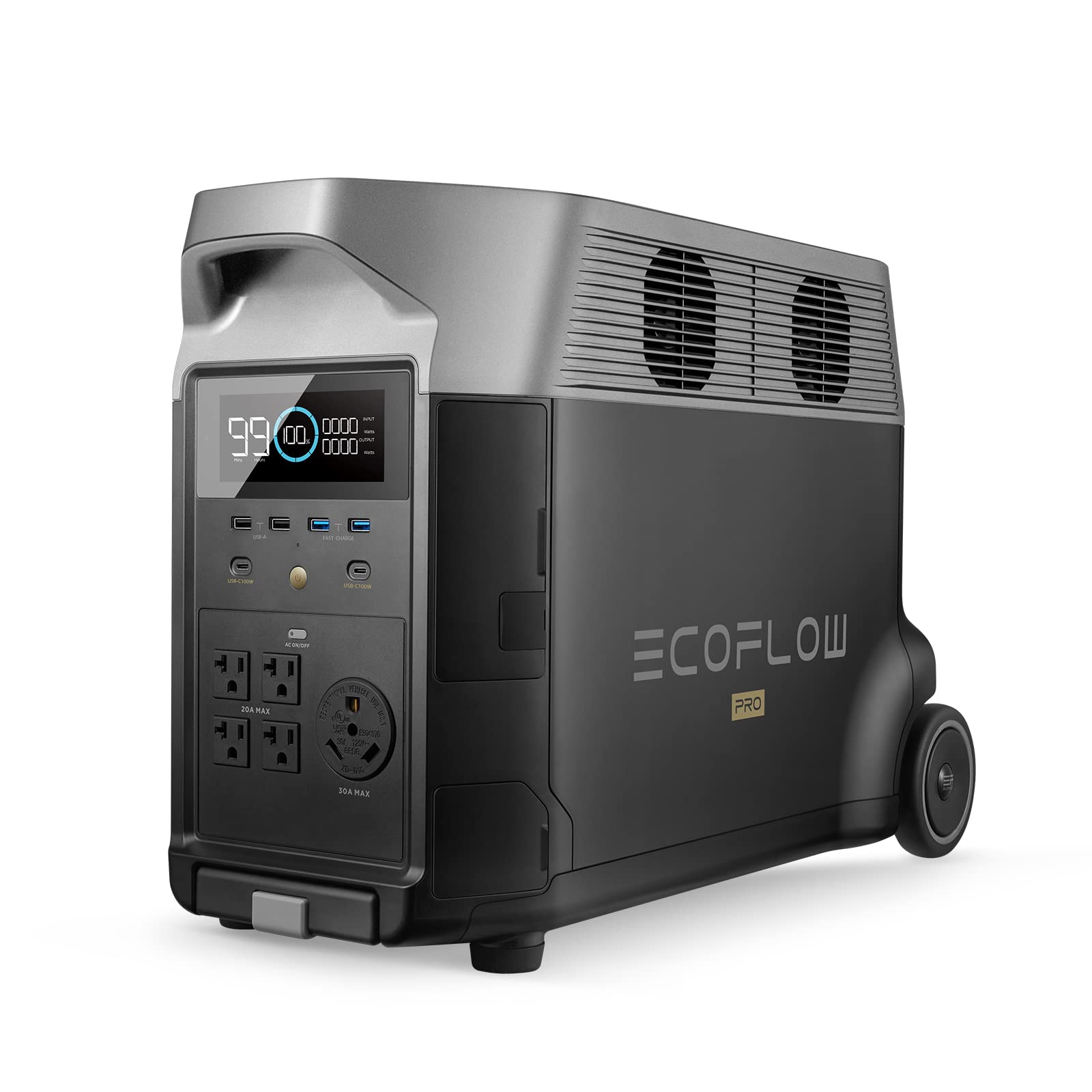
The 3600Wh flagship that can expand to 25kWh and run nearly your entire house.
This is the endgame of portable backup. The DELTA Pro starts at 3,600Wh with a 3600W AC output, expands to 4500W with X-Boost tech, and can pair two units for 7200W. Add Extra Batteries or Smart Generators and capacity climbs from 3.6kWh all the way to 25kWh — that’s a week or more of full-home power. It runs 99.99% of heavy-duty devices, from a fridge to a heat press to power tools.
You can get this station back to full power in as little as 1.8 hours when you plug into a 240V outlet at 3000W, or 2.7 hours from a standard 1800W wall outlet. If you have solar, 4×400W panels recharge it in 2.8 hours at up to 23% solar conversion efficiency (the percentage of sunlight turned into electricity). You have 5 charging options total: EV station, solar, wall, smart generator, or car outlet. For powering your gear, there are 15 output methods, including 5 AC outlets, 2 USB-C ports at 100W each, and an Anderson port (a heavy-duty connector for large devices). Buyers report running 9 hours of operation at 400 watts output with power to spare.
What wins people over is the trust factor: it’s the unit buyers turn to for vendor markets, mobile businesses, and whole-house essentials, handling heat press loads flawlessly. The honest trade-off: at 99 lb it’s the heaviest station here, and the fan gets noisy under load. This is a stationary power plant, not a travel companion — but for the buyer who wants to never think about outages again, it’s the definitive answer.
The expansion story
- 3600Wh base with 25kWh max expansion
- 7200W with two paired units
- 5 charging methods for any situation
- 3600W output runs 99.99% of appliances
The weight reality
- 99 lb is a permanent-install commitment
- Fan noise under load needs a non-bedroom spot
Get this if: you want a permanent whole-home backup that can grow with your needs for years.
Consider the size: it’s the heaviest pick — plan where it lives before you buy.
Understanding the Specs
Watt-Hours (Wh) — Your Runtime Currency
Capacity, measured in watt-hours (Wh), is the total energy the battery stores — and it’s the single most important number for fridge backup. A 2,000Wh station typically runs a modern fridge for about 24–35 hours, while a 3,000Wh+ station stretches that toward 2 days or more. Match the Wh to how long you need food to stay cold: the bigger the number, the longer your confidence.
Surge vs. Continuous Watts — The Compressor Secret
Your fridge draws a burst of power — the surge — every time the compressor starts, then settles into a much lower running draw. Surge (or peak) wattage must cover that startup spike; continuous wattage covers the steady load. Any station with 2000W+ surge handles a standard fridge, but bigger homes with freezers or well pumps want 3000W+ for safety.
FAQ
How long will a 2000Wh power station run my refrigerator?
What’s the difference between surge and continuous wattage for a fridge?
Can I plug my fridge directly into a power station?
Do I need a 3000Wh station or will 2000Wh do?
How long does a backup battery take to recharge after an outage?
Can I add solar panels to recharge during a long outage?
What does the UPS switchover time mean for my fridge?
Is a 1500W-output station enough for a standard refrigerator?
How many charge cycles will a LiFePO4 backup battery last?
Can a power station run a fridge and a freezer at the same time?
What’s the real-world runtime difference between a 2000Wh and a 3000Wh station?
Final Thoughts: The Verdict
For most buyers, the backup battery for refrigerator winner is the EF ECOFLOW DELTA 3 Max because it pairs a 2048Wh capacity with 3400W X-Boost output (a feature that lets it power devices above its rated wattage) and a 1.13-hour recharge — the complete package for fridge protection and beyond. If you want the lightest station that still runs a fridge for 35 hours, grab the Anker SOLIX S2000. And for whole-home coverage that keeps a fridge plus a freezer and office gear alive for days, the PECRON E3600LFP is the one to reach for.
How We Picked
We do not accept paid placement. Every pick is matched to a real buyer and a real use-case; we do not hands-on test units.
Sources & Methodology
Specifications: manufacturer listings and product documentation. Review insights: verified customer reviews, as of August 2026. Pricing: not shown on this page (it changes often); check the current price via the retailer link.
As an Amazon Associate, Gadgets Feed earns from qualifying purchases. This does not affect which products we feature.