
Your oxygen sensor hits the chassis, the pipe, or a tight clearance, and the check engine light stays on. The fix isn’t a different sensor — it’s a 90 degree O2 sensor spacer that reroutes the angle without compromising the reading or triggering a code. This is the category-specific part that turns a no-fit into a permanent install, and choosing the wrong thread or material wastes your weekend.
I’m Min — the co-founder and writer behind Gadgets Feed. In building this guide, I’ve cross-referenced thread standards (NPT sizes from 1/8 to 3/8), pressure ratings up to 2800 PSI, material durability across aluminum alloy 6061-T6 and 304 stainless steel, and customer complaints about cross-threading, sealant needs, and angle accuracy across dozens of verified reviews.
Below, I break down the best adapters, weld-in bungs, and clamp kits so you can pick the exact 90 degree o2 sensor spacer that solves your clearance problem without leaks or rework.
How To Choose The Best 90 Degree O2 Sensor Spacer
Picking the wrong adapter means an exhaust leak, a stripped thread, or a sensor that still won’t fit. Focus on three things: the thread size and standard, the material’s ability to handle exhaust heat, and whether you want a weld-in bung or a mechanical clamp. The application — sensor relocation vs. adding a wideband bung — determines the exact part you need.
Thread Size and Standard
Most oxygen sensor ports use a thread size of 18mm x 1.5, but the adapters and spacers in this category use NPT (National Pipe Thread) sizes. A 1/8 NPT female-to-male 90-degree adapter is common for sensor relocation where the port is already tapped. The 1/4 NPT and 3/8 NPT versions exist for larger sensor bodies or different mounting points. NPT size is a nominal measurement — the actual thread diameter is different, so always verify your port’s thread pitch before ordering.
Material and Heat Tolerance
Aluminum 6061-T6 is lightweight, corrosion-resistant, and works well for sensor adapters away from direct exhaust flow. However, 304 stainless steel handles temperatures up to 1472°F and withstands the thermal cycling of exhaust manifolds without warping or galling. For weld-in bungs, stainless steel is the standard; for thread-on adapters, aluminum is sufficient if you use anti-seize and avoid over-torquing.
Angle Accuracy and Fitment
Not all angled bungs are exactly 45 degrees from the pipe surface — some are actually 60 degrees from vertical, which changes the sensor’s final position. Read recent reviews to confirm the real angle. A 90-degree elbow adapter gives a hard turn, while a 45-degree bung offers a gentler redirect. The wrong angle can still cause clearance issues with the sensor body or wiring.
Quick Comparison
On smaller screens, swipe sideways to see the full table.
| Model | Category | Best For | Key Spec | Amazon |
|---|---|---|---|---|
| EVIL ENERGY 1/8 NPT 90° Elbow | Adapter Elbow | Sensor relocation with high pressure tolerance | 1500 PSI max, 6061-T6 aluminum | Amazon |
| TAISHER 304 SS 1/4 NPT 90° Elbow (2-Pack) | Adapter Elbow (2-Pack) | High-temp engine bay and misting systems | 2800 PSI max, 304 stainless, 2-pack | Amazon |
| JUWEVAZU 60012 Clamp Kit | Clamp Bung Kit | No-weld sensor installation on exhaust pipes | M18 x 1.5 thread, clamp mount, ceramic gasket | Amazon |
| Allstar Performance ALL34152 18mm Bung | Weld-In Bung | Adding weld-in bung for wideband or narrowband | 18mm thread, angled, steel | Amazon |
| Vibrant Performance 1193A 45° Bung | Weld-In Bung | Welding O2 bung on header or exhaust pipe | 18mm thread, 45° angle, stainless steel | Amazon |
| Podavelle 1/8 NPT 90° Adapter | Adapter Coupler | Simple angle correction for sensor ports | 1/8 NPT female-to-male, aluminum, compact | Amazon |
| Podavelle 3/8 NPT 90° Adapter | Adapter Coupler | Large-port sensor or oil pressure angle fix | 3/8 NPT female-to-male, aluminum, anodized | Amazon |
In‑Depth Reviews
1. EVIL ENERGY 1/8 NPT 90 Degree Elbow
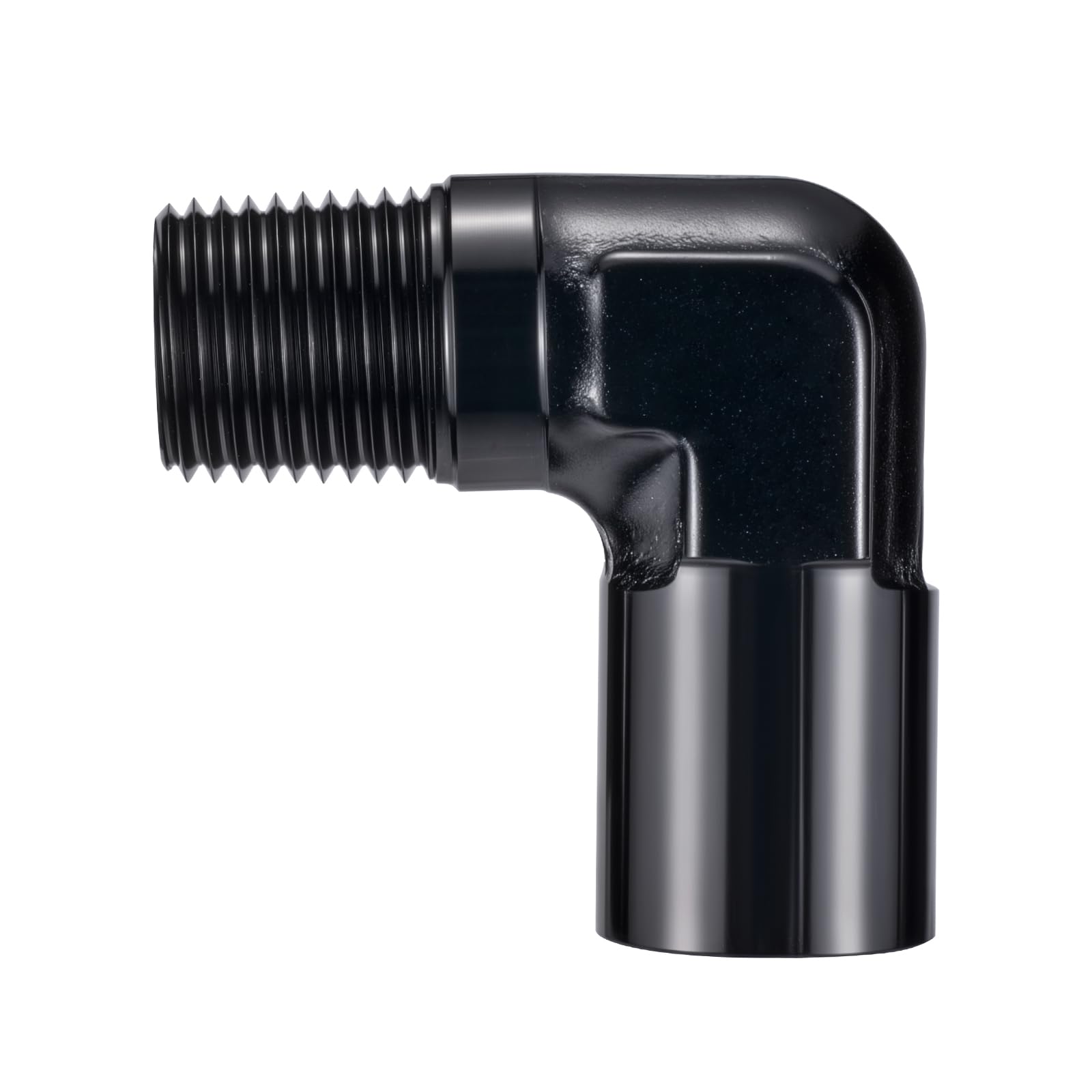
The EVIL ENERGY elbow uses 6061-T6 aluminum with a 1500 PSI working pressure, making it one of the strongest adapters in the 1/8 NPT class. The 60-degree tapered NPT threads require sealant or PTFE tape — customers note that dry installation risks leaks. At -65°F to 252°F range, it suits fuel rails and sensor ports away from direct exhaust.
One verified buyer reported cross-threading on the first unit, with the second threading smoothly. This suggests quality control variance on thread finish, so install by hand first and back off if resistance feels wrong. The anodized black finish resists corrosion and blends into engine bay aesthetics.
For a sensor relocation that needs a hard 90-degree turn and can handle 1500 PSI without blowing, this is the premium pick. Just use thread sealant and avoid impact tools.
Why it’s great
- High 1500 PSI rating suitable for fuel and pressure applications
- Compact 1/8 NPT size fits tight sensor port locations
- Anodized aluminum resists corrosion well
Good to know
- Some units have thread finish inconsistencies
- Requires PTFE tape or sealant for leak-free seal
- Temperature range limited to 252°F — not for direct exhaust
2. TAISHER 304 SS 1/4 NPT 90° Elbow (2-Pack)

The TAISHER elbows are forged from 304 stainless steel with a 2800 PSI max working pressure — nearly double the EVIL ENERGY adapter. They tolerate -62°C to 800°C (-80°F to 1472°F), which makes them suitable for exhaust manifold proximity, not just remote sensor ports. The 1/4 NPT thread size fits applications with larger sensor bodies or existing 1/4 NPT ports.
You get two elbows in one package. Customers report using them in high-pressure misting systems at 1000 PSI without issue, and in automotive O2 sensor relocation where the stainless steel won’t rust. The forging process yields denser material than cast parts, reducing the risk of porosity leaks.
If you need a high-temperature, high-pressure 90-degree adapter and want the corrosion resistance of 304 stainless at a mid-range price, this 2-pack is the strong value play.
Why it’s great
- 2800 PSI rating handles extreme pressure applications
- 304 stainless resists rust and high exhaust heat
- Two-piece set provides spare or dual-use capability
Good to know
- 1/4 NPT is larger than common O2 sensor port size
- Stainless can gall on threads without anti-seize
- No included sealant — use pipe dope or PTFE tape
3. JUWEVAZU 60012 Clamp Bung Kit
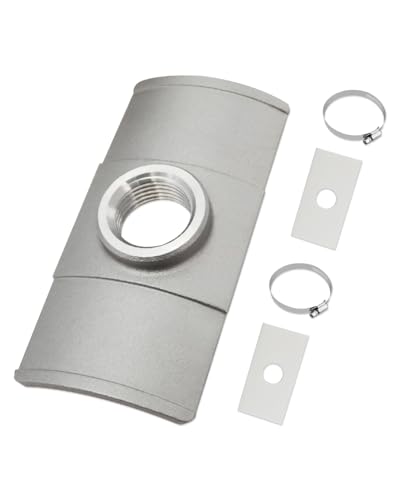
This kit sidesteps the need for welding entirely. The 304 stainless steel clamp mounts onto an existing exhaust pipe, and the ceramic thermal insulation gasket creates a seal that resists exhaust temperatures. The bung uses M18 x 1.5 thread — the standard for most narrowband and wideband oxygen sensors — so your sensor threads directly in without adapters.
Customers report using it after catalytic converter theft where the original bung was cut off, or to add an aftermarket wideband without pulling the exhaust system. The clamp design fits pipes of varying diameters and adjusts for position before tightening. Several reviewers note it’s not as permanent as a weld but works reliably for months or years with no leaks.
For anyone who can’t weld or wants a reversible O2 sensor installation, this clamp kit delivers a tight seal with the correct thread pitch right out of the box.
Why it’s great
- No welding required — clamps onto existing exhaust pipe
- M18 x 1.5 thread fits standard O2 sensors directly
- Ceramic gasket withstands exhaust heat well
Good to know
- Clamp may shift under extreme vibration if not torqued properly
- Not as permanent as a welded bung installation
- Only one thread size available (M18 x 1.5)
4. Allstar Performance ALL34152 18mm Angled Bung

Allstar Performance’s ALL34152 is a weld-in bung made from alloy steel with an 18mm thread pitch. It’s designed for adding an O2 sensor port to headers or exhaust pipes, particularly for aftermarket EFI systems like FiTech. The angle helps route the sensor wiring away from hot surfaces or obstructions.
Customers praise the perfect angle for Vance & Hines pipes and aftermarket air/fuel ratio gauge installations. The steel material welds cleanly with MIG or TIG and holds up to exhaust temperatures without cracking. The bung thickness provides enough material for a strong weld bead without burning through.
If you’re adding a bung from scratch and want a reliable steel weld-in unit, the Allstar bung is a straightforward, quality choice with verified fitment across multiple header brands.
Why it’s great
- Alloy steel welds easily with MIG or TIG
- Proper 18mm thread for standard O2 sensors
- Angle helps clear wiring and chassis components
Good to know
- Weld-in only — no clamp or adapter option
- Steel may rust if not painted or coated after welding
- No included thread insert or anti-seize
5. Vibrant Performance 1193A 45° Stainless Steel Bung

Vibrant Performance’s 1193A is a stainless steel weld bung sold at a 45-degree angle. Note: multiple customers report that the actual angle from vertical is 60 degrees per Vibrant’s own specs, not 45 as listed on Amazon. This matters if you’re aiming for a precise sensor orientation. The stainless steel material is easy to weld and resists exhaust corrosion.
Users have welded this onto Ford Ranger headers and Harley Davidson exhausts for wideband conversions. The bung accepts 18mm x 1.5 thread sensors. The angle allows the sensor wiring to route more cleanly than a straight bung, reducing the risk of the wire touching the header.
For a weld-in bung that’s widely trusted across automotive and motorcycle builds, the Vibrant 1193A is a solid choice — just confirm the actual angle before finalizing your placement.
Why it’s great
- Stainless steel resists corrosion and heat
- Widely used across automotive and motorcycle builds
- Threads accept standard 18mm O2 sensors
Good to know
- Amazon description says 45° but actual angle is ~60° from vertical
- Weld-in only — no adapter or clamp option
- Single unit, no gasket or sealant included
6. Podavelle 1/8 NPT 90 Degree Adapter
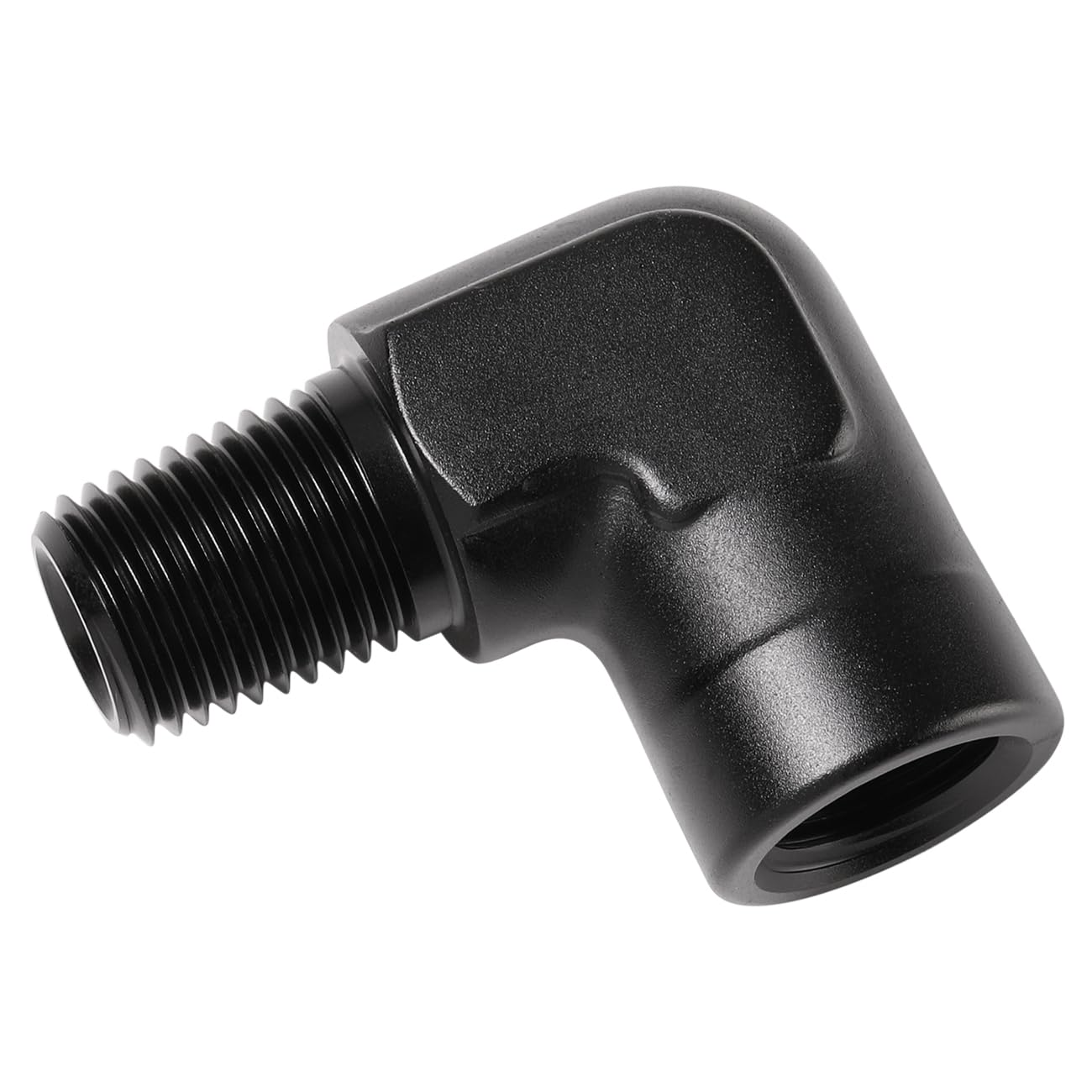
The Podavelle 1/8 NPT adapter is the entry-level option for correcting sensor angle in tight spaces. Machined from 6061-T6 aluminum with a black anodized finish, it converts a 1/8 NPT female port to a 1/8 NPT male at 90 degrees. Compact at 1.25 x 0.9 x 0.5 inches, it fits into spaces where larger adapters won’t.
Customers have used it on SBC rear oil holes and air hose drums — not always for O2 sensors, but the NPT compatibility means it works wherever a 1/8 NPT sensor or fitting needs a quick angle change. All reviews are 5/5, citing perfect fitment and quality finish. The lightweight design (0.01 kg) won’t stress the sensor port.
If you need a simple, inexpensive 90-degree adapter for a 1/8 NPT sensor port and don’t require extreme heat or pressure ratings, the Podavelle does the job reliably.
Why it’s great
- Very compact for tight clearance spaces
- Consistent 5/5 customer feedback on fitment
- Anodized aluminum resists corrosion adequately
Good to know
- 1/8 NPT only — larger sensors need a different size
- Aluminum limits heat tolerance compared to stainless
- No included sealant — requires PTFE tape
7. Podavelle 3/8 NPT 90 Degree Adapter
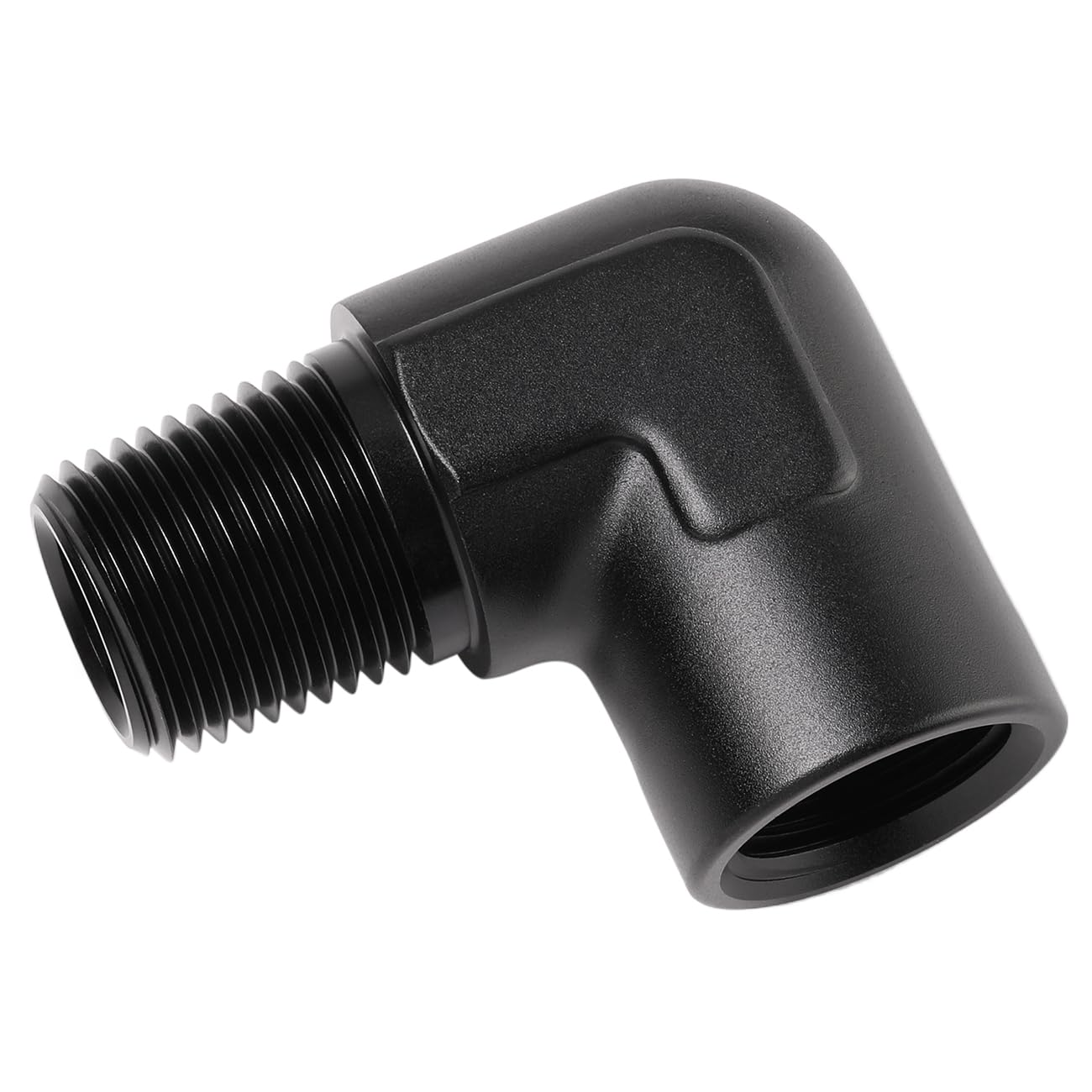
The larger 3/8 NPT version of the Podavelle adapter handles bigger sensor bodies or ports. Same 6061-T6 aluminum construction with anodized finish, compatible with gasoline and alcohol-based fuels. Dimensions are 1.85 x 1.5 x 0.7 inches — significantly larger than the 1/8 NPT variant, giving more clearance for the sensor body itself.
Like its smaller sibling, this adapter receives consistent 5/5 reviews for perfect angle and excellent quality. It’s been used for oil pressure sensor relocation as well as O2 sensors. The 3/8 NPT thread is less common for oxygen sensors but common in fuel system and pressure sensor applications.
If your sensor port uses 3/8 NPT threads or you need a larger internal diameter for flow, the Podavelle 3/8 adapter is a solid budget-friendly choice with proven reliability.
Why it’s great
- Larger 3/8 NPT size fits bigger sensor bodies
- Excellent customer reviews across multiple applications
- Compatible with gasoline and alcohol fuels
Good to know
- 3/8 NPT is non-standard for most O2 sensor ports
- Aluminum limits exhaust-direct heat exposure
- Check your port size carefully — NPT is nominal, not actual diameter
FAQ
What thread size does a standard oxygen sensor use?
Can I use a 90 degree spacer to fix a check engine light?
Do I need PTFE tape or sealant on NPT threads?
Is a weld-in bung stronger than a clamp-on adapter?
Final Thoughts: The Verdict
For most users, the 90 degree o2 sensor spacer winner is the EVIL ENERGY 1/8 NPT Elbow because it combines a strong 1500 PSI rating with compact aluminum construction at a mid-range price, making it the most versatile adapter for sensor relocation. If you need high-temperature durability for proximity to the exhaust, grab the TAISHER 304 SS 2-Pack. And for a no-weld installation that adds a standard M18 O2 sensor port to any exhaust pipe, nothing beats the JUWEVAZU 60012 Clamp Kit.