
Our readers keep the lights on and my morning glass full of iced black tea. As an Amazon Associate, I earn from qualifying purchases.
Specs are compiled from manufacturer listings and verified buyer reviews and can change over time — please confirm the key details on the product page before buying.
When the temperature drops past freezing, a regular winter coat stops working and starts just looking cold. An arctic down parka is built for that different reality — bitter wind, deep snow, and hours outside where the wrong insulation means a miserable day. This guide prioritizes real warmth, honest fit, and multi-winter durability over seasonal hype.
I’m Min — the founder and writer behind Gadgets Feed. This guide is built by comparing the manufacturers’ published specifications and the patterns across verified customer reviews, so you get each pick’s real strengths and trade-offs instead of marketing spin.
Fill power, shell protection, and true-to-size fit are the three specs that decide if a parka actually earns its place. Here is your focused breakdown of the arctic down parka for women built around what real owners experience in severe cold.
Our Picks at a Glance
How To Choose The Best Arctic Down Parka For Women
Buying an arctic parka is about matching the coat to your coldest reality. You want a jacket that handles the worst weather you actually face, not the worst weather a brand can imagine. The place to start is insulation quality, then the shell that protects it, then the fit that lets you move and layer.
Insulation and Fill Power
Down insulation is measured by fill power, which tells you how much loft each ounce of down provides. A higher number means more trapped air for the same weight, which translates to more warmth with less bulk. For arctic conditions, you want the warmest fill you can afford because a parka with weak insulation cannot be fixed by a thicker sweater.
Shell Protection Against Wind and Wet
The shell is your first defense against the wind that steals body heat instantly. Look for a tight-weave shell with a water-repellent finish so light snow and sleet bead off instead of soaking into the down. Some parkas add a fleece-lined torso to block wind and add a soft touch against your skin.
Fit, Length, and Layering Room
An arctic parka should fit looser than a fashion coat because you need to move and layer sweaters underneath. Check the length, too — a mid-thigh or knee-length cut protects more of your body than a hip-length jacket. Sizing varies wildly between brands, so measure yourself and read whether the fit runs small or generous before you commit.
Quick Comparison
| Model | Best For | Fill Power | Length | Weight | Amazon |
|---|---|---|---|---|---|
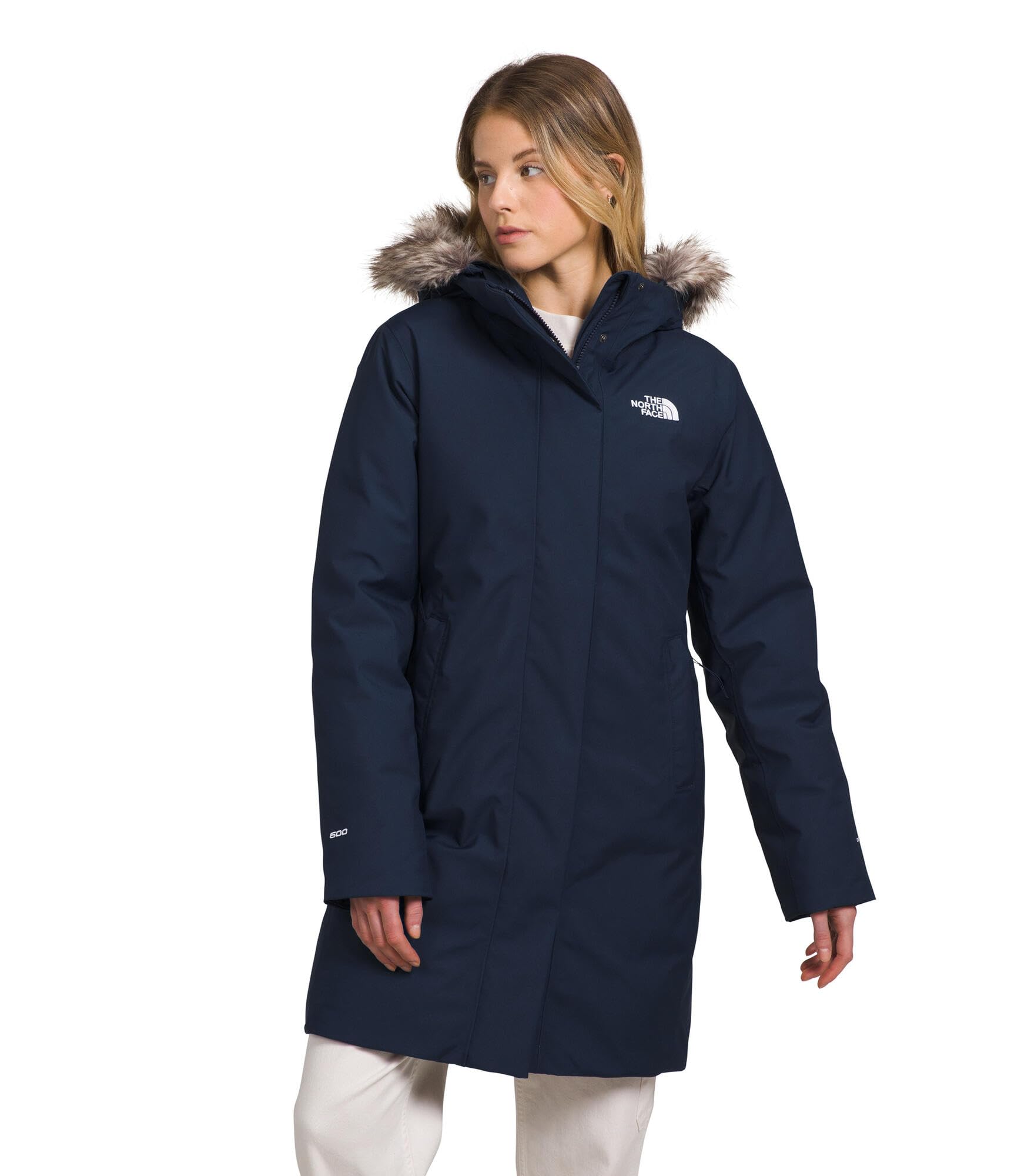
| The North Face Arctic Parka★ Best Overall | Best Overall — All-Round Warmth | 600 Fill | Hip | 3.31 lb | Amazon |
| Marmot Montreaux Coat | Premium Pick — Extreme Cold & Comfort | 700 Fill | Past Knees | — | Amazon |
| Fitouch Waukee Long Down Coat | Best Value — Full-Length Coverage | 750+ Fill | Mid-Calf | 3.2 lb | Amazon |
| Eddie Bauer Crystal Ridge Down Parka | Compact Pick — Lightweight Warmth | Premium Down | Mid-Thigh | — | Amazon |
In‑Depth Reviews
1. The North Face Women’s Arctic Parka
Our pick — 4.5★ from 250+ verified ratings; the strongest balance of quality and price.
A dependable all-rounder with balanced warmth for harsh city winters
This is the parka that wins the top spot because it nails the balance most arctic coats miss: genuinely warm without feeling like you are wearing a sleeping bag. The 600 fill down insulation uses recycled material, and the outer shell carries a DryVent waterproof membrane plus a non-PFC durable water-repellent finish, so sleet and wet snow stay outside where they belong. A standard fit gives you room to layer, which is exactly why buyers describe pulling it on over sweaters for Michigan winters.
Quality is the thing owners praise most — over fifty reviewers call it out, with warmth a close second. The recurring scene in the review pages is someone walking into genuinely cold, windy conditions and staying comfortable, often the very first wear. Buyers report that in 20 degree weather with strong wind, it holds its own even compared to a thinner, cheaper parka they already owned. It also packs down small enough to toss in luggage for an Alaska cruise, which is not something you can say about every heavy parka.
The trade-off to know before you buy is that it runs slightly generous. A 5’2″ owner found the large flattering and roomy enough for a sweater, while another buyer at 5’6″ wanted a bit more space and sized up, so the fit is personal. A few owners feel it is simply priced too high for what it delivers, even as most call it a good buy — that value debate is the one real split in the feedback. Compared to the Marmot below, this one leans lighter and more packable, where the Marmot pushes further into extreme-cold territory.
What wins owners over
- Waterproof DryVent shell with a non-PFC water-repellent finish shrugs off wet snow
- Recycled 600 fill down keeps you warm without the heavy coat feel
- Roomier cut layers easily over sweaters for deep-cold days
What to know first
- Fit runs a bit big — check reviews on your usual size before ordering
- A minority of buyers feel the price outruns the warmth
The best all-round package: pick this if you want one parka that handles icy city commutes, freezing wind, and packing for a cold-weather trip without bulk.
Watch the sizing: if you are between sizes or plan thick layers, the generous cut means you may actually stay true to size or even size down.
2. Marmot Women’s Montreaux Coat

A knee-length 700-fill parka blending style with extreme-cold performance
If your winters regularly hit zero and below, this is the parka that steps up when a lighter coat quits. The 700 fill power down gets a water-resistant treatment called Down Defender, so an unexpected rain shower will not flatten your insulation, and a fleece-lined torso adds a second layer of wind protection right where you feel it most. The fleece continues into the handwarmer pockets and wrist cuffs, which is the kind of small comfort that makes a freezing walk bearable.
Appearance is the thing owners rave about most — over 170 reviewers single out how good it looks — and the warmth is a close second at over 160 mentions. The length is a big part of the appeal: it drops past the knees, protecting more of your body than a hip-length jacket, and owners describe it as too warm even at 20°F with the fleece lining inside. A two-way zipper stops the coat from bunching when you sit, and a removable hood with a synthetic fur ruff keeps snow out of your face.
The honest catch is sizing, and it is the most-discussed downside in the reviews. This coat runs small, especially across the chest and shoulders — the feedback is loud that you should size up, and owners who sized up are the ones calling it their favorite winter coat. The zipper also gets mixed notes, with occasional reports of it being finicky, so treat it gently. It is heavier in feel than the North Face above, but that extra substance is exactly what extreme cold demands.
The comfort details
- 700 fill down with water-resistant Down Defender survives unexpected rain
- Past-the-knee length and fleece-lined torso block wind where it bites
- Fleece handwarmer pockets and wrist cuffs keep hands and sleeves cozy
Size before you buy
- Fits snug, especially in the chest — most owners recommend sizing up
- The zipper gets mixed feedback, so it is worth handling carefully
Reach for this if: you face true sub-zero cold and want a long, fleece-lined parka that keeps you warm without layers of bulk.
Look elsewhere if: you are between sizes or broad in the chest — order up a size or this will feel tight.
3. Fitouch Women’s Waukee Long Down Coat Parka Jacket

A full-length value pick with the highest fill power per dollar here
This is the parka that gives you the most insulation per dollar, and the math is simple: a 750+ fill power down coat that hits mid-calf for a budget-friendly price. The long cut is the defining move here — owners describe it covering their legs down to mid-calf, which means your thighs and knees stay warm in a way a hip-length jacket cannot match. The shell is a 20D polyester weave with a non-PFC water-repellent finish, so it shrugs off light rain and wind on the daily commute.
Warmth is the thing owners praise most — over 125 reviewers call it out — and quality runs a close second. The review pages tell the same story from New York City winters to Minnesota cold and even plus-size buyers in -20F conditions, all describing a coat that keeps the whole body warm when the temperature plummets. Deep pockets hold phones securely, a double zipper lets you stride freely, and the hood is removable for a sleeker look when the weather cooperates.
The most-discussed trade-off is the zipper, which gets mixed feedback — some owners find it strong, others report it needs a little soap to glide smoothly or fails over time. One owner also found the arm decal reading “COMFORT IS BETTER FITOUCH” easy to cover, so it is worth knowing it is there. At 3.2 pounds it is the lightest full-length option here, and unlike the Marmot above it is not fleece-lined, but for sheer coverage and fill power at this price, it is hard to argue with.
Why it wins on value
- 750+ fill power down is the highest insulation rating on this list
- Mid-calf length protects your whole legs from the cold
- Removable hood and double zipper add everyday flexibility
The honest trade-offs
- Zipper quality gets mixed reviews — smooth it with soap if it catches
- The arm decal bugs some owners until they cover it
The coverage king: buy this if you want maximum leg warmth and the highest fill power without spending premium money.
Treat the zipper gently: if you are hard on zippers, this is the one weak point to watch.
4. Eddie Bauer Women’s Eddie Bauer Crystal Ridge Down Parka
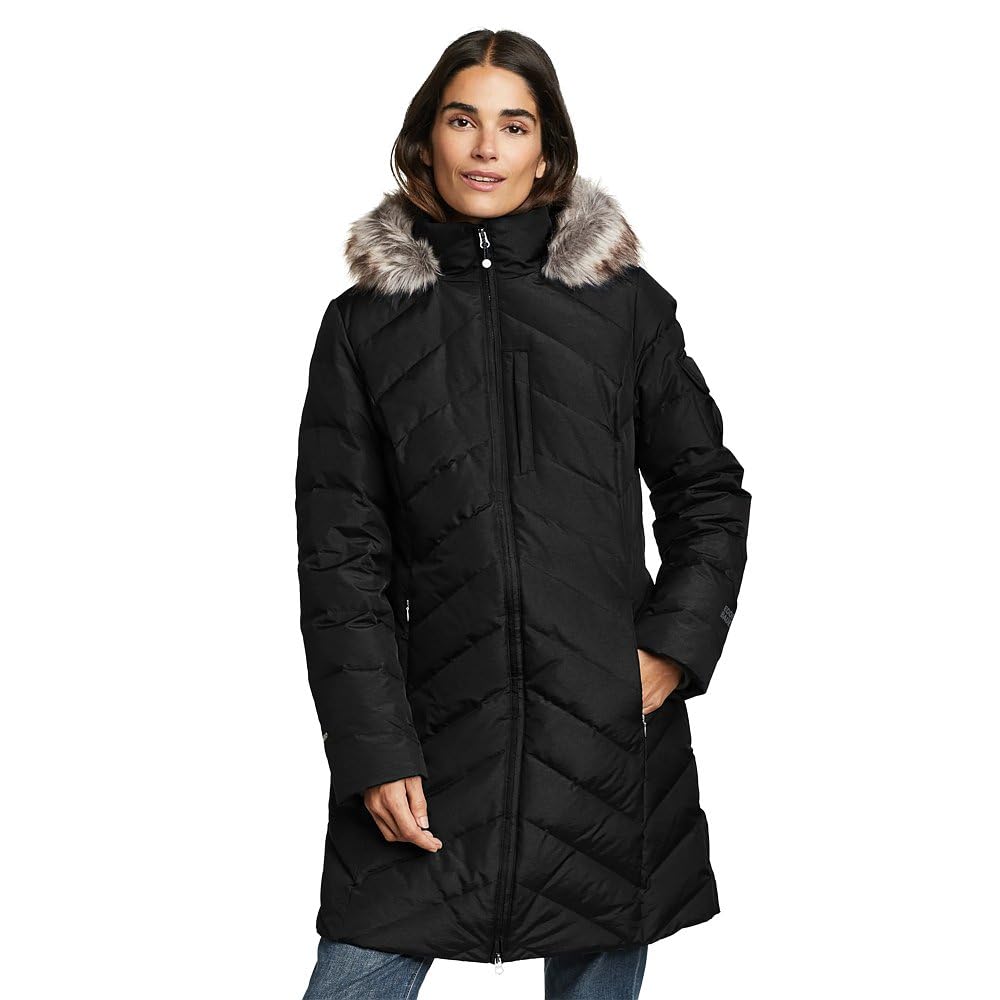
A featherlight parka delivering deep-cold warmth, with a petite-friendly fit
Do not let the compact feel fool you — this Eddie Bauer parka earned its place by being genuinely warm in serious cold while staying remarkably light. Owners confirm it holds up in -20°F Alaska conditions, proving its arctic-grade warmth. The premium down insulation delivers sub-zero warmth, and the metallic cross-dye of the nylon/polyester/cotton shell gives the fabric a subtle sheen that makes it look more expensive than it is.
The big win for smaller frames is that this coat fits petites beautifully. A 5’0″ owner found the sleeves the right length and the cut flattering, which is rare for a down parka. Quality is the thing owners praise most, with warmth a close second, and the length earns its own positive mentions. One owner bought a second after a decade of use, signaling long-term durability.
The catch, and it is a genuinely annoying one, is the hood. The listing advertises a snap-off hood, but several owners mention the hood does not actually detach, and there are isolated complaints of a broken main zipper on arrival. The navy color also reads almost black to some buyers, so if you want an obvious blue, keep that in mind. Compared to the Fitouch above, this one is shorter and lighter, best if you want warmth without the full-length commitment.
What makes it special
- Verified -20°F warmth from Alaska owner tests
- Petite-friendly fit with sleeves that are not too long
- Lightweight build that does not feel like a heavy coat
What to double-check
- The hood is advertised as snap-off but some owners say it stays attached
- A few customers note the navy shade looks nearly black
The lightweight warm one: choose this if you are petite or want genuine -20°F warmth without a heavy, bulky parka.
Verify the hood: if you plan to detach the hood often, the description may not match what arrives.
Understanding the Specs
Fill Power and Warmth
Fill power measures how much loft each ounce of down gives you — a higher number traps more warm air for the same weight. A 600 fill parka is warm for most city winters, while a 700 or 750+ fill steps up for true sub-zero conditions. More fill power also means less bulk, so you stay warm without looking like you are wearing a duvet.
Shell and Water Resistance
The shell is what stops wind and wet from stealing your body heat. A tight-weave fabric with a durable water-repellent (DWR) finish makes rain and snow bead off before they soak into the down. Some parkas add a fleece-lined torso or cuffs, which gives you an extra layer of wind protection exactly where it matters.
FAQ
What fill power should I look for in an arctic down parka?
Will a hip-length parka keep me warm enough in negative temperatures?
How do I know which size to order if I want to layer sweaters underneath?
Is a waterproof shell necessary for an arctic parka?
Can I wear an arctic parka for everyday city use or is it too much?
Are down parkas hard to pack for travel?
What is a two-way zipper and why does it matter in a parka?
Final Thoughts: The Verdict
If you want one dependable pick, the arctic down parka for women winner is the North Face Arctic Parka because it delivers dependable warmth, a waterproof shell, and a packable build that suits real city winters. If you want maximum comfort in extreme sub-zero cold, grab the Marmot Montreaux with its fleece-lined torso and past-the-knee length. And for the best coverage per dollar, the Fitouch Waukee brings a 750+ fill power and mid-calf cut that is tough to beat.
How We Picked
We do not accept paid placement. Every pick is matched to a real buyer and a real use-case; we do not hands-on test units.
Sources & Methodology
Specifications: manufacturer listings and product documentation. Review insights: verified customer reviews, as of August 2026. Pricing: not shown on this page (it changes often); check the current price via the retailer link.
As an Amazon Associate, Gadgets Feed earns from qualifying purchases. This does not affect which products we feature.