
Our readers keep the lights on and my morning glass full of iced black tea. As an Amazon Associate, I earn from qualifying purchases.
Specs are compiled from manufacturer listings and verified buyer reviews and can change over time — please confirm the key details on the product page before buying.
An accurate heart rate watch is the difference between training smart and guessing. The right one tracks your pulse reliably through workouts, sleep, and daily life without constant recalibration or wrist-strap frustration. This guide breaks down the top performers across the price spectrum, focusing on which ones deliver readings you can actually depend on during real activity.
I’m Min — the founder and writer behind Gadgets Feed. This guide is built by comparing the manufacturers’ published specifications and the patterns across verified customer reviews, so you get each pick’s real strengths and trade-offs instead of marketing spin.
The smart pick balances sensor technology, battery endurance, and how the data fits your routine. accurate heart rate watch choices here range from rugged outdoor models to sleek everyday wearables, each with its own trade-off between features and battery life.
Our Picks at a Glance

How To Choose The Best Accurate Heart Rate Watch
Buying a heart rate watch is about matching sensor quality to your activity type. Runners, swimmers, and daily wellness trackers all need different things from their wearable.
Optical Sensor vs. Chest Strap
Most watches use an optical sensor that shines light into your wrist to detect blood flow. This works well for steady-state cardio, but can drift during high-intensity intervals or weightlifting when wrist movement and muscle contraction interfere. If you need lab-grade precision for training zones, some watches pair with external chest straps via Bluetooth for a more direct electrical signal.
Battery Life and Charging
You will only get accurate heart rate data if the watch stays on your wrist, so battery life matters. Full-featured smartwatches last about a single day, while dedicated fitness bands and hybrid watches can go multiple weeks between charges. Decide if you are okay with nightly charging or prefer a device that survives a full training cycle.
Display and Readability
AMOLED displays offer vibrant colors and high brightness, like the 1500 nits HBM brightness on one budget band for direct sunlight readability. Some rugged models use transflective displays that prioritize battery life over visual flair. Think about where you train — bright outdoor runs demand a screen you can read at a glance.
Quick Comparison
| Model | Best For | Battery Life | Display | Heart Rate Accuracy | Amazon |
|---|---|---|---|---|---|
| Samsung Galaxy Watch 7★ Best Overall | Smartwatch & AI Wellness | 30 hours (425 mAh) | AMOLED | Improved with Galaxy AI | Amazon |
| XIAOMI Mi Smart Band 10Budget Champion | Budget battery king | 21 days (200 mAh) | 1.72″ AMOLED | Optical, mixed reviews | Amazon |
| COROS PACE 4Top Performer | Serious runners | 19 days daily / 41 hrs GPS | 1.2″ AMOLED | Optical, praised | Amazon |
| Fitbit Charge 6 | Fitness tracking value | 7 days | OLED | 24/7 optical, mixed | Amazon |
| Fitbit Sense 2 | Stress management | 6+ days | AMOLED | 24/7 optical, mixed | Amazon |
| Garmin Instinct 3 | Rugged outdoor use | 18 days (350 mAh) | 1.2″ AMOLED | Wrist-based, praised | Amazon |
| Apple Watch SE 3 | iPhone ecosystem | 18 hours | Always-On Retina | Optical, consistent | Amazon |
| Withings ScanWatch 2 | Classic analog style | 30 days (180 mAh) | Hybrid analog | Medical-grade ECG | Amazon |
| Samsung Galaxy Watch Ultra | Extreme durability | 60 hours (590 mAh) | AMOLED | Galaxy AI enhanced | Amazon |
In‑Depth Reviews
1. Samsung Galaxy Watch 7 44mm
Our pick — over 4.5★ from 7,500+ verified ratings; the strongest balance of quality and price.
The smartwatch that filters out body movement for genuinely steadier pulse readings mid-workout.
The Galaxy Watch 7 leads this list because its improved Heart Rate Tracking uses Galaxy AI to filter out your body’s movements during exercise. That means fewer wild spikes from arm swing and more trustworthy data when you’re pushing hard — the exact scenario where wrist sensors usually stumble.
Its 425 milliamp_hours battery is the second-largest here (trailing only the Ultra) and the crowd favorite holds a 4.6-star rating across thousands of owners. The catch: buyers report the battery genuinely weak at 11-14 hours on some units, though fast charging recovers 79% in 1 hour and 100% in 2 hours, so a quick top-up gets you through a long day.
Beyond heart rate, you get sleep tracking with sleep apnea detection (a feature that flags breathing pauses during sleep), an Energy Score that uses yesterday’s activity to rate today’s physical readiness, and Wellness Tips that suggest next steps. Owners describe it as a mini phone on your wrist — texting, calls, and NFC (near-field communication, a tap-to-pay system) payments all work smoothly with Samsung phones.
Why It Wins the Day
- AI-filtered heart rate tracking cuts through body motion for steadier readings
- Energy Score and Wellness Tips turn raw data into daily guidance
- Fast wireless charging — 79% in 1 hour
Where It Tests Patience
- Battery life is the recurring gripe — some owners see 11-14 hours
- Lock screen re-locks frequently, needing multiple open up for Google Pay
Reach for this if: you want a full smartwatch that also nails heart rate accuracy through AI filtering and pairs flawlessly with a Samsung phone.
Look elsewhere if: multi-day battery endurance is non-negotiable and you don’t want to charge daily.
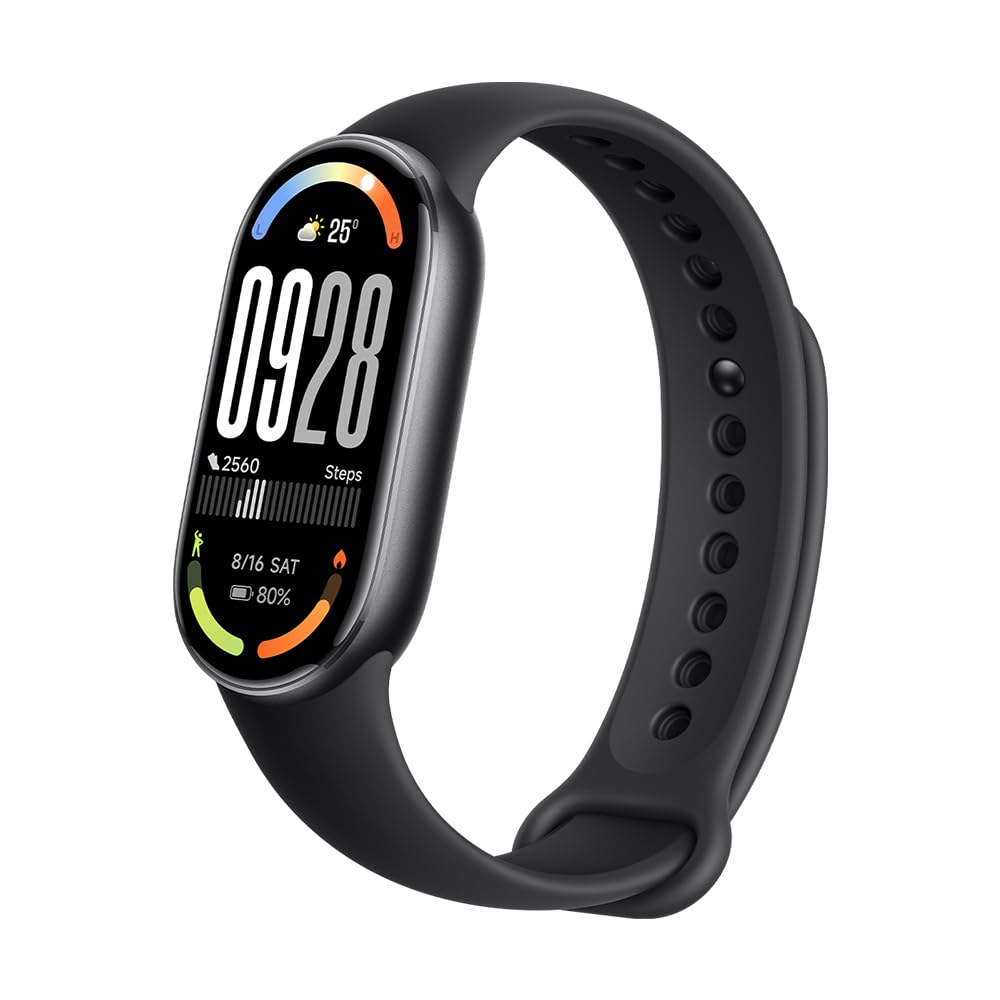
2. XIAOMI Mi Smart Band 10
A 21-day battery in a featherlight band that outlasts premium rivals by weeks.
The Xiaomi Mi Smart Band 10 flips the battery script: its 200 milliamp_hours cell is the smallest here, yet it delivers 21 days of rated life — a 3.0x gap versus the Fitbit Charge 6’s 7 days. Owners mention real-world endurance of 10-12 days, calling it ideal for rough jobs and sleep tracking alike.
Functionality earns the most praise, with over 200 owners highlighting the feature density for the price — heart rate, sleep stages, SpO2 (blood oxygen level), stress, weather, flashlight, music control, and a remote camera trigger all in a band that weighs almost nothing. The 1.72-inch AMOLED (a vivid screen type) reaches 1500 nits HBM (high brightness mode) brightness, so you can read it in direct sunlight.
What wins people over is value: buyers routinely say it beats the Fitbit Charge 6 on accuracy, display size, and free watch faces, with no subscription required. The honest caveat is that accuracy gets mixed feedback, and Xiaomi Fit app only supports the metric system — you’ll need a third-party connection through Google Fit to see pounds and inches.
The Long Game
- 21-day battery life — a 3.0x gap over the Charge 6’s 7 days
- 1500 nits HBM brightness stays readable in direct sun
- No subscription — free watch faces and full feature set
The Trade-Off
- Accuracy and connectivity are the most mixed points among owners
- App defaults to metric; imperial units need a Google Fit workaround
Best for: budget buyers who want maximum features and weeks of battery, not a phone-replacement smartwatch.
Not for: anyone who wants imperial units from the start or needs rock-solid Android connectivity.
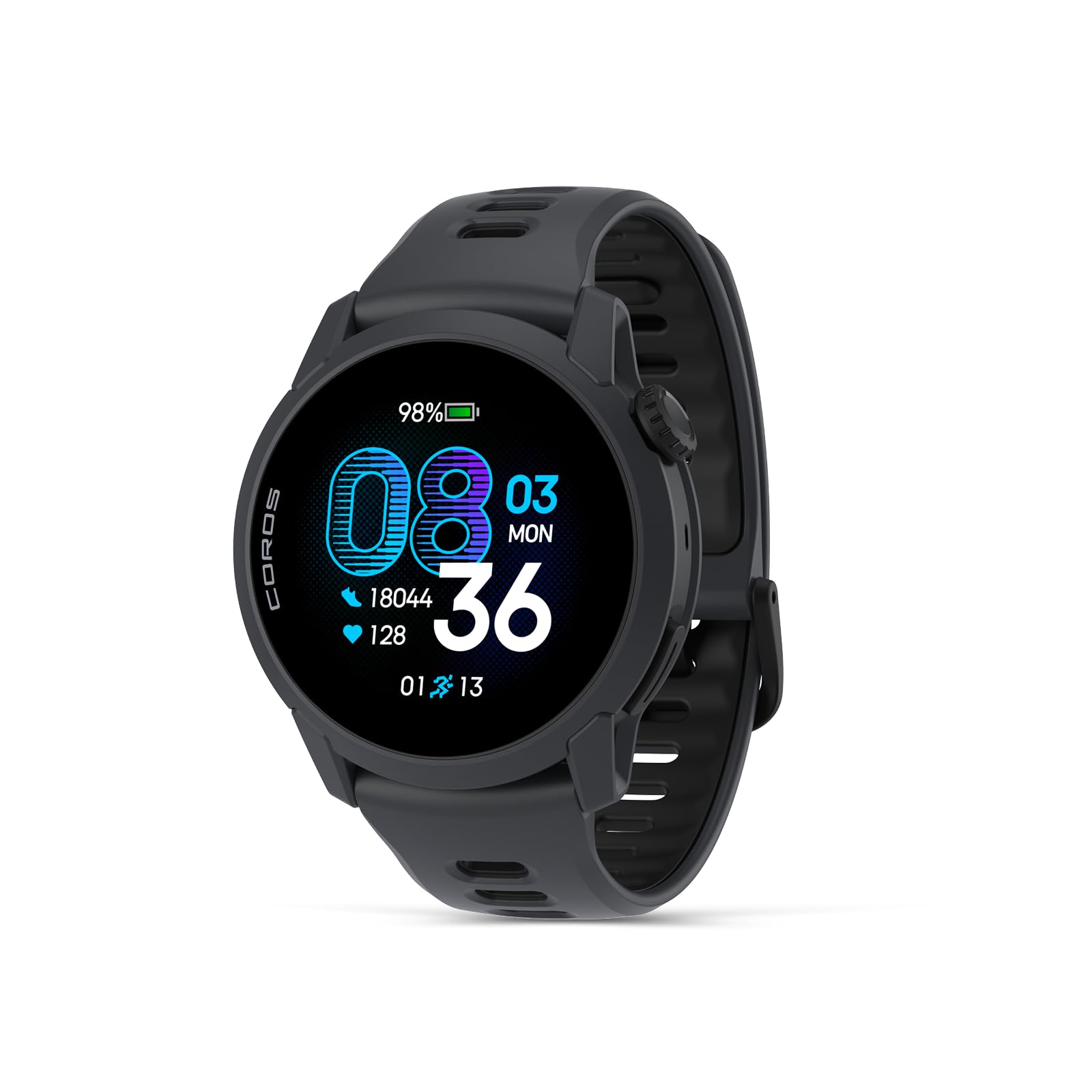
3. COROS PACE 4
The runner’s watch that weighs less than an energy gel yet tracks a 12-mile run on 75% battery.
The COROS PACE 4 is built for people who train with purpose. Weighing only 32g with the nylon band and just 11.8mm thin, it’s lighter than an energy gel and comfortable enough for 24/7 wear — a detail that matters when you sleep with it for recovery tracking.
Functionality and accuracy are the two most-praised aspects, with owners noting its accurate heart rate and responsive UI. A 12-mile run with music, max GPS, and always-on max brightness still leaves 75% battery — that’s the 41 hours of continuous GPS use doing heavy lifting. The 1.2-inch AMOLED touchscreen delivers 164% higher resolution than the PACE 3.
It beats the Fitbit crowd for swimming and cycling accuracy, and serious runners upgrade from Garmin for the 2-year warranty and dual GPS capability that works without a cell phone. The catch: it’s a sport watch, so gym lift logging gets cumbersome, and the mineral glass screen wants a protector. It also falls short of the Galaxy Watch 7 on battery capacity — 200 milliamp_hours versus 425 — but makes up for it with efficiency, rated at 19 days of daily use.
Built for the miles: accurate HR and GPS in a 32g package rated for 19 days of daily use or 41 hours of continuous GPS — a runner-first tool, not a lifestyle gadget.
One real limit: it’s not a smartwatch, so heavy app integration and gym workout logging take extra effort.
4. Garmin Instinct 3 AMOLED

A rugged outdoor companion with an AMOLED screen and a battery that shrugs off multi-day treks.
The Garmin Instinct 3 is for the outdoors crowd — the kind of person who needs accurate heart rate and GPS data when the pavement ends. Its 45mm fiber-reinforced polymer case and metal-reinforced bezel are engineered to survive rough conditions, and customers note solid tracking accuracy out on the trail.
Design gets the most praise, alongside battery life that owners confirm reaches the full 18 days between charges — a 13-hour trek used just 34% battery. There’s no touchscreen; five buttons control everything, which takes about a week to adjust to but prevents accidental inputs mid-activity. The built-in LED flashlight with variable intensities and strobe modes is called a genuine must-have for night navigation.
It ties the Galaxy Watch 7 at 4.6 stars but trails in total review volume — the Instinct 3 has hundreds of ratings versus thousands for the Samsung. That’s not a knock on quality; this watch is simply a more specialized tool for data lovers and outdoor athletes, with health monitoring including wrist-based heart rate, advanced sleep, and Pulse Ox (noting it’s not a medical device).
Trail-proof and then some: multi-band GPS with SatIQ plus an 18-day battery and a flashlight built in — the no-daily-charging promise actually holds.
The adjustment: no touchscreen and software that feels clunky to some; you trade convenience for rugged reliability.
5. Withings ScanWatch 2
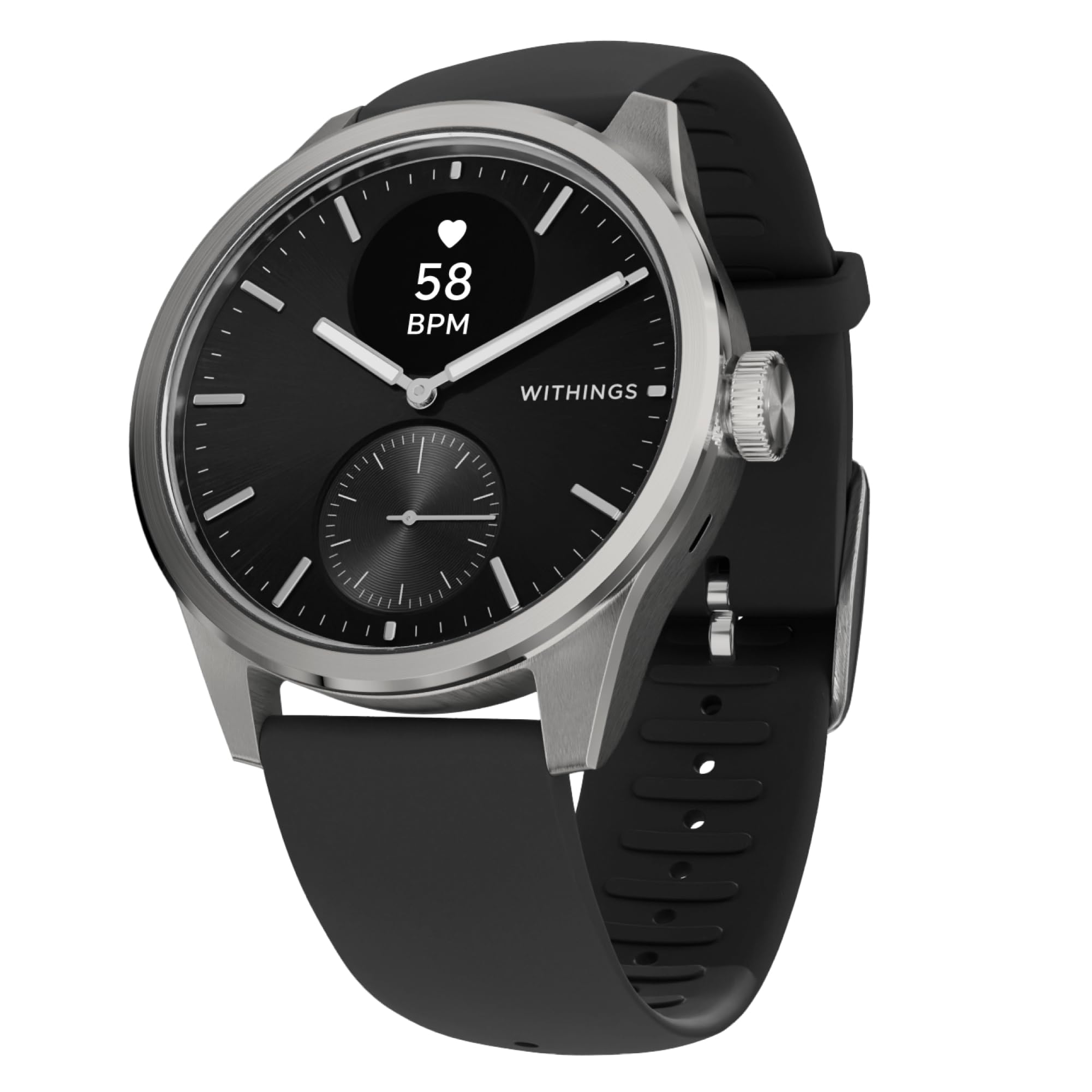
A hybrid watch that hides serious heart monitoring behind classic analog hands.
The Withings ScanWatch 2 solves the biggest objection to heart rate watches: it looks like a traditional timepiece, not a gadget. With a stainless steel case and sapphire glass, it dresses up for work and still tracks your pulse continuously — the smartwatch for people who don’t want a smartwatch.
Its battery is the endurance champion here at 30 days rated (180 milliamp_hours), and reviewers point out 2-3 week real-world life with heavy use. The health monitoring is the standout: a 30-second medical-grade ECG with AFib detection via the Withings ECG App, plus high and low heart rate notifications, sleep stage tracking, and VO₂ max across over 40 sports.
Functionality and appearance are the most-praised aspects, with owners loving the professional look and the fact that it shrinks phone distraction. The honest limits: there’s no built-in GPS (it uses your phone’s), the charging port draws complaints, and some owners find the domed crystal hard to read. Battery life claims also get mixed feedback — some see a week, others nearly a month.
Health-first, phone-second: medical-grade ECG and 30-day battery in an analog profile that reads as a real watch, not a tracker.
Know the limits: no onboard GPS, a finicky charging cradle, and battery endurance varies widely by use.
6. Samsung Galaxy Watch Ultra
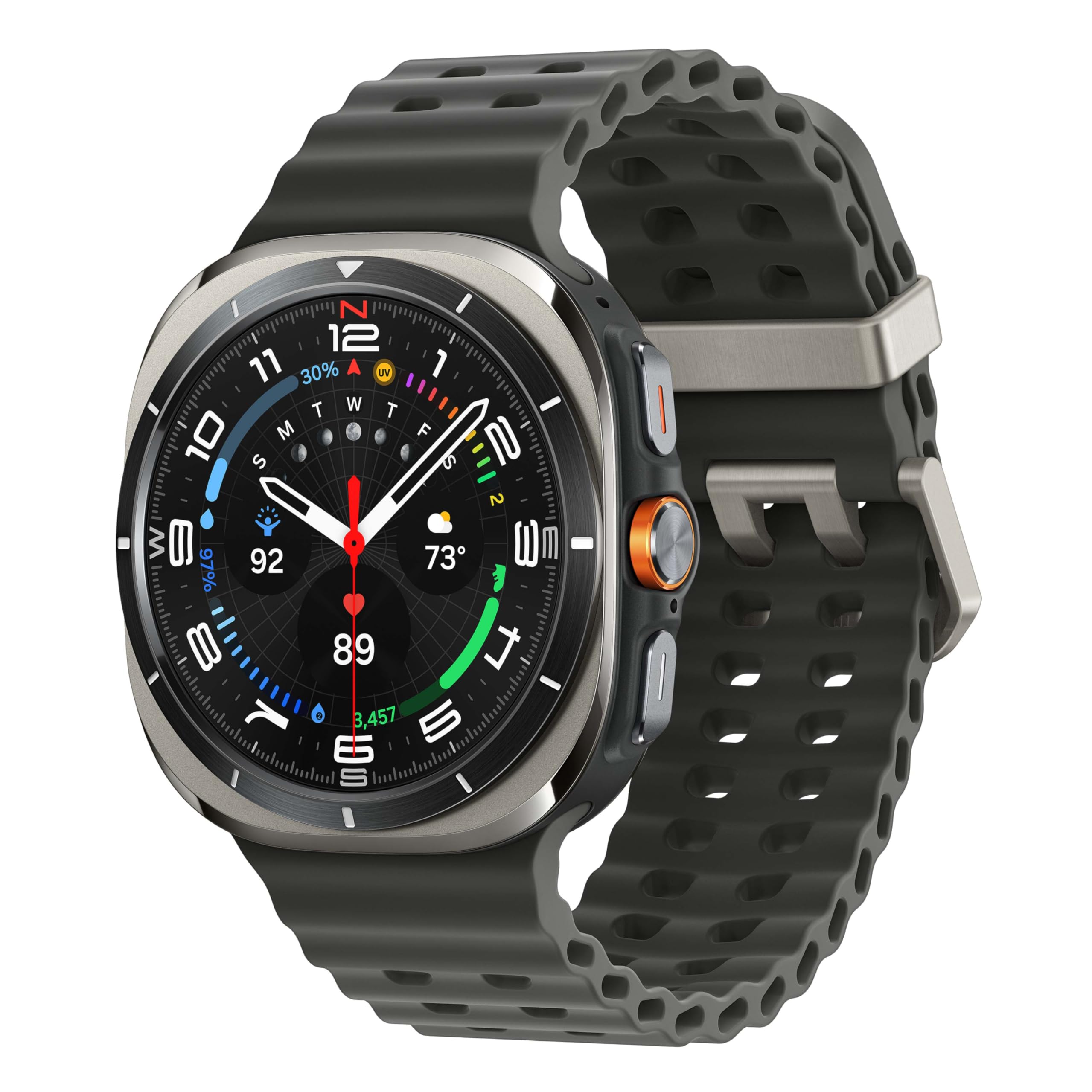
The titanium tough-guy Galaxy with the biggest battery in this lineup and ocean-ready confidence.
The Galaxy Watch Ultra is the heaviest hitter here, and not just in price. Its 590 milliamp_hours battery is the largest in this comparison — a 2.1x gap over the Mi Band 10’s 200 milliamp_hours — rated for 60 hours of average use. Owners say battery improves after a learning period, with tune settings reaching 3.5 days.
Its titanium design stands up to rainy or dusty conditions and even ocean swimming, making it the pick for adventurers who want Samsung’s smartwatch ecosystem. Appearance draws the most praise by far, with owners calling it the watch that does almost everything — heart rate, ECG, sleep, stress, GPS, wallet, and calls all in one LTE package.
Heart Rate Tracking with Galaxy AI filters out body movement for more precise readings during workouts, same as the Watch 7. The trade-offs: it’s bulky (too big for some wrists), health tracking trails Garmin for dedicated athletes, and an LTE carrier fee is needed for calls away from your phone. It also requires a Samsung phone for full functionality — iPhone owners will bounce off it.
The Heavyweight Perks
- 590 mAh cell — a 2.1x capacity gap over the Mi Band 10
- Titanium case rated for ocean swimming and dusty conditions
- AI-filtered heart rate tracking for steadier workout readings
The Burden
- Bulky case that doesn’t suit smaller wrists
- Health tracking considered inferior to Garmin for serious athletes
- Requires a Samsung phone and LTE carrier fee for full use
Choose this for: the most durable, longest-lasting Galaxy Watch that handles ocean swims and multi-day trips without a charger.
skip it if: you have a smaller wrist, an iPhone, or want Garmin-level fitness analytics.
7. Apple Watch SE 3
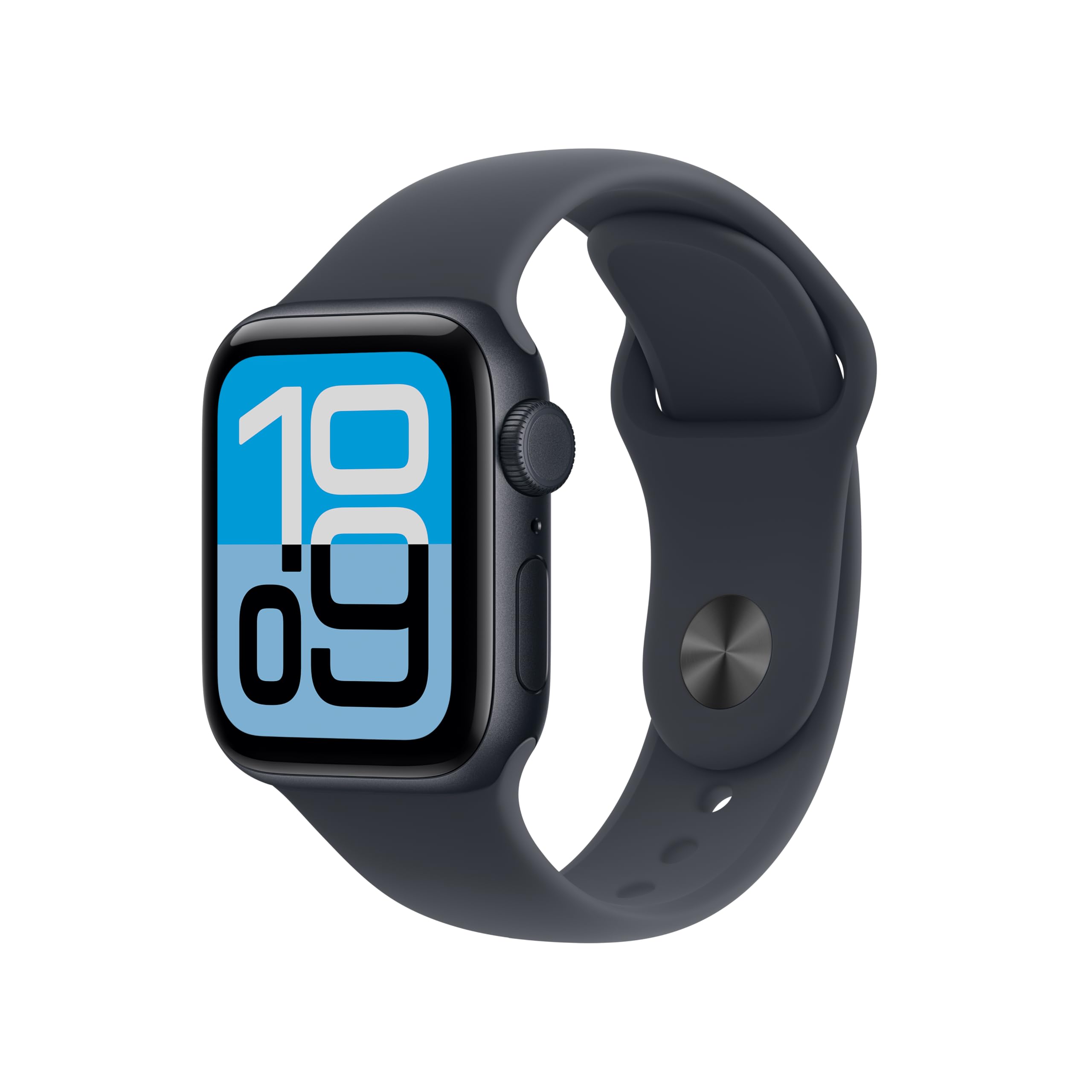
The iPhone-native tracker that keeps heart rate consistent and leaves your phone at home.
The Apple Watch SE 3 is the obvious answer for iPhone owners who want dependable heart rate tracking without paying flagship prices. It pairs with iPhones easily, and owners praise the consistent heart rate and fitness tracking plus simple sleep tracking. The 40mm aluminum case is light and comfortable enough for everyday wear.
Functionality is the most-praised aspect, and the GPS + Cellular model lets you send texts, make calls, and even connect to emergency services without your iPhone nearby — a freedom owners genuinely appreciate. It includes irregular heart rhythm alerts and notifications for unusually high or low heart rate, plus wrist temperature tracking while you sleep for cycle insights.
The real tension is battery: 18-hour rated life from sunup to sundown, and owners note it needs daily charging — with some saying they charge at least twice a day. Fast charging helps (up to 8 hours of battery in just 15 minutes), but this is a daily-charge device, not a week-long tracker. It lacks ECG and blood oxygen found on pricier models, and the always-on display is a welcome addition over the SE 2.
For the Apple loyal: accurate fitness and heart data, crash and fall detection, and 5G connectivity that works without a phone nearby.
The daily ritual: 18-hour battery means nightly charging; it’s a companion, not a multi-day endurance tool.
8. Fitbit Sense 2

A stress-first smartwatch with all-day cEDA tracking and a 50-meter water rating.
The Fitbit Sense 2 puts stress management at the center, with all-day detection using cEDA (a sensor that tracks electrodermal activity — tiny changes in sweat on your skin) and a daily Stress Management Score. For people whose heart rate spikes from anxiety as much as exercise, this is the watch that connects the dots.
On the heart front, it offers an ECG app for atrial fibrillation assessment, irregular heart rhythm notifications, SpO2 tracking, and 24/7 heart rate. It’s water resistant to 50 meters, and shoppers say using it in pools, hot tubs, and showers without issues. The 6+ day battery beats most full smartwatches, with a 30-minute charge getting you back days.
The catch is honesty about mixed feedback: accuracy gets divided reviews — some call it very accurate, others report wild heart rate readings. The stock band is widely disliked for narrow wrists, and only 6 watch faces can be installed at once. Also, this is one of the few picks with a dated 2022 release (September 23, 2022) and no built-in GPS — it relies on connected GPS from your phone.
Stress-aware by design: cEDA all-day stress detection plus ECG and a 50-meter water rating make it a wellness-first choice.
The honest split: accuracy is genuinely mixed among owners, and the stock band disappoints narrow wrists.
9. Fitbit Charge 6

A slim fitness band with built-in GPS and Google Wallet, if consistency and durability cooperate.
The Fitbit Charge 6 is the band-style option that does the most for the money on paper: built-in GPS, 40+ exercise modes, 24/7 heart rate, and compatibility with exercise machines that show your pulse in real time. It also packs turn-by-turn Google Maps directions and tap-to-pay via Google Wallet.
Quality earns the most owner praise, and the 7-day battery is a solid mid-pack showing — though it trails the Mi Band 10’s 21 days by a 3.0x gap. It’s slim and comfortable, and some owners switched from an Apple Watch to this for the lighter feel and comprehensive app with premium subscription covering sleep, SpO2, HRV, and skin temperature.
The honesty note: reliability and durability get mixed-to-negative feedback, with a recurring story of the device quitting after about two months and connectivity problems stopping syncs with phones. A single owner also reported distance as wildly off (1 mile shown as 0.3). Quality is real, but consistency is the question mark — this is the pick to treat as a gamble, not a sure thing.
Feature-dense band: built-in GPS, 40+ modes, and Google Wallet in a slim, comfortable form factor.
The durability gamble: recurring reports of units dying around two months and sync drops make this the least consistent pick here.
Understanding the Specs
Optical Heart Rate Sensor
Every watch here uses an optical sensor that shines light through your skin to measure blood flow. It’s accurate for steady cardio, but wrist movement during intervals or weightlifting can cause drift. Higher-end models use AI filtering — like Galaxy AI on the Samsung watches — to subtract body motion and steady the reading.
Battery Capacity & Life
Battery capacity in milliamp_hours (mAh) doesn’t tell the whole story — efficiency matters. The Mi Band 10 has just 200 mAh yet rates 21 days, while the Galaxy Watch Ultra’s 590 mAh rates 60 hours. More features and brighter AMOLED displays drain faster. Check the rated days, not just the mAh number, when comparing.
FAQ
How accurate are wrist-based optical heart rate monitors during exercise?
Which watch has the longest battery life for continuous heart rate tracking?
Do I need a chest strap for accurate heart rate during HIIT or weightlifting?
Can these watches detect irregular heart rhythms or atrial fibrillation?
Will these watches work with an iPhone?
What is the difference between cEDA and standard heart rate tracking?
Are fitness band heart rate monitors as accurate as full smartwatches?
How does sleep tracking affect heart rate watch choices?
Final Thoughts: The Verdict
Across the board, the accurate heart rate watch winner is the Samsung Galaxy Watch 7 because its AI-filtered heart rate tracking and full smartwatch features justify daily charging. If you want multi-week battery endurance, grab the XIAOMI Mi Smart Band 10 at a budget price. And for serious runners who prioritize accuracy and featherlight comfort, the COROS PACE 4 is the one to reach for.
How We Picked
We do not accept paid placement. Every pick is matched to a real buyer and a real use-case; we do not hands-on test units.
Sources & Methodology
Specifications: manufacturer listings and product documentation. Review insights: verified customer reviews, as of August 2026. Pricing: not shown on this page (it changes often); check the current price via the retailer link.
As an Amazon Associate, Gadgets Feed earns from qualifying purchases. This does not affect which products we feature.