
Our readers keep the lights on and my morning glass full of iced black tea. As an Amazon Associate, I earn from qualifying purchases.
Specs are compiled from manufacturer listings and verified buyer reviews and can change over time — please confirm the key details on the product page before buying.
You can replace a hardwired smoke detector without calling an electrician, because most units plug into a connector already on your ceiling. Your real choices are sensor type, battery backup, and whether the alarm links to others in your home. Here is how to pick the best 120 volt smoke detector for your wiring and your safety.
I’m Min — the founder and writer behind Gadgets Feed. This guide is built by comparing the manufacturers’ published specifications and the patterns across verified customer reviews, so you get each pick’s real strengths and trade-offs instead of marketing spin.
You’ll see how a single 120V hardwired unit can upgrade your whole home’s safety net without a single new wire pulled. a 120 volt smoke detector plugs into existing wiring for nonstop protection that never relies on batteries alone.
Our Picks at a Glance


How To Choose The Best 120 Volt Smoke Detector
Hardwired detectors run on your home’s 120V AC power, so they don’t depend on a battery for everyday sensing. The battery is there as a safety net for power outages. Most plug into a standard connector, which makes replacing an old unit a simple twist-and-plug job.
Match the sensor to the fire risk
Ionization sensors are quickest at detecting fast-flaming fires, while photoelectric sensors (which use a light beam to spot smoke particles) respond faster to slow, smoldering fires. Many modern units pick one or the other, so think about where the alarm will live before you choose.
Count your interconnect needs
Interconnected alarms all sound together when one detects smoke, which is a huge advantage in a multi-level home. Most hardwired models can link with a set number of other units by the same brand — this matters if you’re replacing just one alarm or a whole house full of them.
Check the battery backup strategy
A standard 9V backup means an annual battery swap on a ladder. A sealed 10-year lithium battery removes that chore entirely, but when it dies, you replace the whole unit. The right choice depends on how much you value maintenance versus long-term convenience.
Quick Comparison
| Model | Best For | Sensor Type | Battery Backup | Connection Limit | Amazon |
|---|---|---|---|---|---|
| SMI100-AC /9120B 12pack★ Best Overall | Whole-home replacement | Ionization | 9V (included) | Up to 12 devices | Amazon |
| First Alert SMI105-ACBest Value | Low-maintenance single swaps | Precision Detection | 10-Year Sealed | Interconnectable | Amazon |
| 9120BAReliable Classic | Simple plug-in replacement | Ionization | 9V (included) | Up to 12 devices | Amazon |
| Kidde 20SAR | Faster smoke detection | Advanced Sensing | 2 AA | Kidde alarms | Amazon |
| 9120LBLA | No annual battery swaps | Ionization | 10-Year Sealed | Up to 12 devices | Amazon |
| Siterlink GS562A 2pk | Budget-friendly pairs | Photoelectric | 9V | Interconnected | Amazon |
| Kidde i12040 | Contractor-grade install | Ionization, Photoelectric | 9V (included) | Up to 24 devices | Amazon |
| First Alert SC9120B | Smoke + CO protection | Electrochemical + Intelligent | 10-Year Sealed | — | Amazon |
| SITERWELL GS562A 5pk | Max home coverage | Photoelectric | 10-Year Life 9V | Up to 12 alarms | Amazon |
In‑Depth Reviews
1. First Alert SMI100-AC /9120B 12-Pack
Our pick — over 4.5★ from 800+ verified ratings; the strongest balance of quality and price.
Twelve alarms that rewire your whole home’s safety in one afternoon.
If you’re replacing every detector in a large house, this 12-pack is the fastest route to full coverage. Each unit is hardwired with a 9-volt battery backup, so you get constant monitoring even during a power failure. The ionization sensor is built to catch fast-flaming fires and puts out an 85-decibel alarm you’ll hear from anywhere.
Buyers report these plug right into the original wiring harness and mount on a standard outlet box, which makes the swap about as close to tool-free as this job gets. You can link them with other compatible BRK or First Alert detectors, so a single sounding alarm triggers the whole network. The package even includes the mounting brackets and hardware, plus the 9-volt batteries — a rare all-in-one deal.
The main honesty note: reliability gets mixed feedback in the review pages, with some owners describing occasional false alarms. That is the trade-off you accept for a 12-pack at this value, and the sheer convenience of replacing a dozen aging units at once wins most people over.
What Makes It a Whole-Home Winner
- 12 units cover an entire house in one order
- Wiring harness and 9V batteries included in the box
- Connects with other BRK and First Alert models
- 85-decibel alarm with single test/silence button
Who Should Think Twice
- Occasional false alarms are the most-discussed gripe
- Ionization-only sensing, so smoldering fires are less its specialty
Grab it if: you’d rather buy one box for the entire home than piece together six separate orders.
Look elsewhere if: you want a photoelectric sensor for better smoldering-fire detection.
2. First Alert SMI105-AC
A single unit that kills the annual battery swap for a decade.
This one is 2.2 inches thick and weighs just 11.2 ounces, so it sits flush on your ceiling without looking clunky. The headline feature is the 10-year sealed battery backup — no more climbing a ladder every year to change a 9V. If the power goes out, it keeps watching for the entire life of the alarm.
First Alert’s Precision Detection technology is built to cut down on cooking nuisance alarms while still giving early warning in a real fire. The end-of-life warning tells you when the whole unit needs replacing, and an alarm indicator lights up on the unit that actually triggered — handy in an interconnected setup. The Easy Adapter Plug in the box means you usually don’t touch any wiring.
One function that earns steady praise is the simple swap-in: owners say they unplugged old detectors and plugged this one into the same connector, and it immediately tested and interconnected with the existing units. The catch is durability is mixed — some report the sealed battery lasting a full 7 years, others are skeptical it will reach 10. For the price, though, the decade of zero-maintenance is a strong argument.
The No-Ladder Appeal
- 10-year sealed battery, no annual 9V swaps
- Precision Detection reduces cooking false alarms
- Easy Adapter Plug for a no-rewire install
- End-of-life warning and initiating-alarm indicator
Reality Check
- Sealed battery means replacing the whole unit when it dies
- Durability reports are mixed on reaching the full decade
Choose this if: you want a single, low-maintenance swap that you can set and forget for years.
skip it if: you’d rather keep replaceable 9V batteries for a small upfront saving.
3. First Alert 9120BA
The no-fuss drop-in replacement for a tired old hardwired unit.
Some homes just need a straight swap, and that is exactly what this alarm is built for. It wires straight into your 120-volt electrical system with no rewiring needed, and the 9-volt battery in the box keeps it alive through outages. The ionization sensor targets fast-flaming fires, and the easy-access battery drawer means the one maintenance task is genuinely painless.
You can connect it with up to 12 other First Alert or BRK hardwired detectors, so it’s a natural fit when you’re extending an existing interconnected system. The review pattern here is almost boringly consistent: “worked as advertised” shows up again and again, and owners mention units running for a long time after install. One owner’s detector had a label saying to replace it in 2026 — ten years after their house was built — and swapping in this unit was the cure.
The honest limits are few: it’s ionization-only, so if you’re specifically worried about smoldering fires, a photoelectric or dual-sensor unit suits you better. But for the thousands of homes that already run First Alert or BRK wiring, this is the path of least resistance.
Drop-in champ: If your house already runs BRK or First Alert wiring, this is the most straightforward replacement you can buy, with a decade of reported service life from owners.
4. Kidde 20SAR
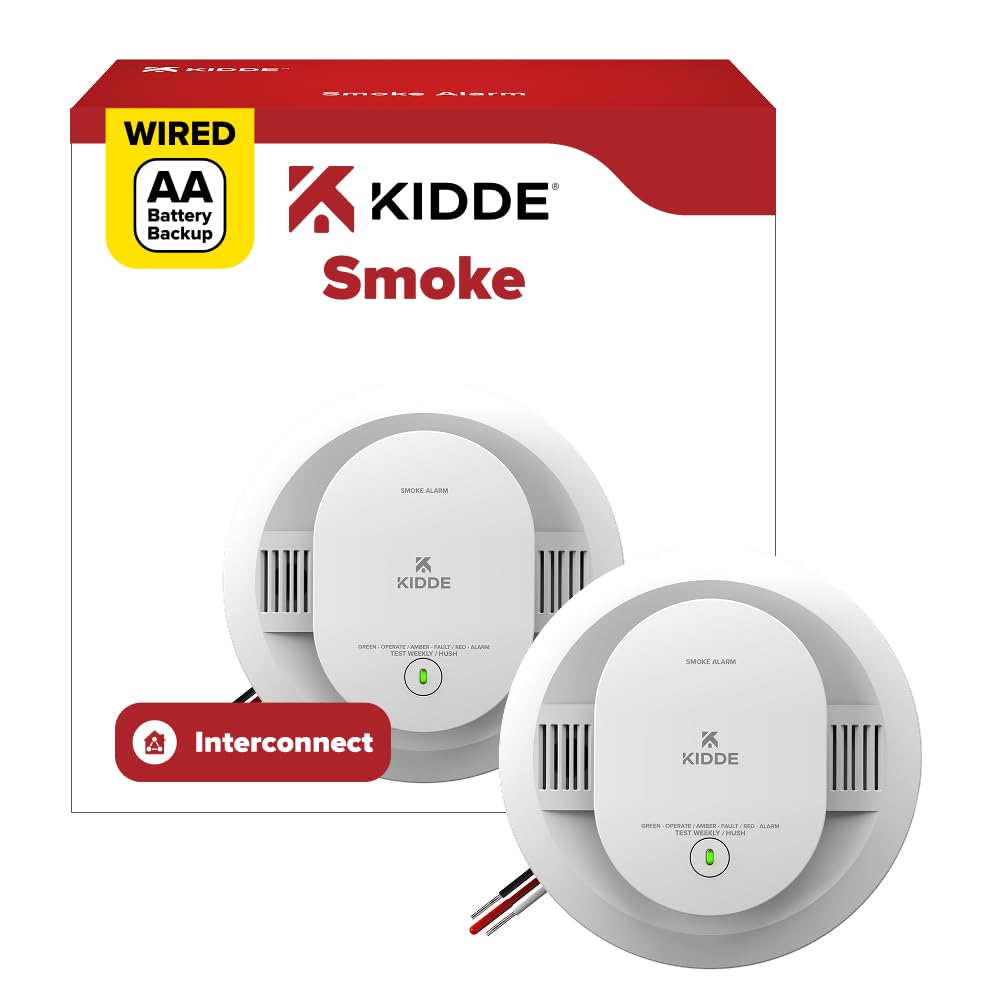
Faster smoke detection with a backup that uses common AA batteries.
This Kidde model detects smoke over 25% faster than the standard baseline, with an 85-decibel alarm and red LED for clear warning. and pairs it with an 85-decibel alarm and a red LED for a clear visual warning. It connects straight to 120V AC power and runs on two AA batteries as backup — so if you already keep AAs around, you never need a specialty 9V. A 10-year limited warranty backs it from the date of purchase..
The bragging point here is reduced false alarms: advanced sensing helps distinguish real smoke from everyday cooking or steam. Customers note the interconnect setup is easy, with one swapping 12 units on a common circuit with no trouble at all. The mounting base is a touch larger than older models, which actually saves you from touch-up painting when you replace outdated units.
The honest caveats are real, though. Battery life is a genuine mixed bag — some owners praise the 10-year battery while others say the AAs drain every 2-3 weeks. And reliability as a category has some negative feedback, so it’s worth knowing this is more of a budget-conscious pick than a premium one.
Why It Wins People Over
- 25% faster smoke detection response
- AA batteries are easy to find and replace
- Interconnects with other Kidde alarms
- Red LED gives a clear visual cue
The Fit Note
- Battery life reports vary widely — some see quick drain
- Reliability feedback is mixed, not uniformly positive
Best for: homeowners who want quick detection and already run a Kidde ecosystem.
Not ideal for: anyone who wants a sealed 10-year battery and zero battery upkeep.
5. First Alert 9120LBLA

You keep your existing 120V wiring, and the built-in battery backs it up for ten years, so you stay protected even during a power outage.
This is the 9120B formula you already know, but with the 9V drawer replaced by a sealed lithium battery built for a decade. It wires directly into your 120-volt system with no rewire, and the ionization sensor handles fast-flaming fires. The big win is maintenance: no annual 9V changes for years on end.
It also links with up to 12 other First Alert or BRK hardwired detectors, so it drops into an existing network without fuss. Owners consistently note the base diameter fits the same spot as older units, which means no touch-up paint on the ceiling. Sensitive but not prone to false alarms, with a loud clear test button — that’s the owner consensus in a nutshell.
The trade-off is pure economics: the sealed battery means the whole alarm is replaced at end of life, and some owners find the price per unit too high to swap all five detectors at once. The common strategy is to replace them gradually as the budget allows rather than all together.
The no-touch favorite: If your existing base fits and you never want to change a 9V again, this is the cleanest upgrade — just budget for replacing units one at a time.
6. Siterlink GS562A 2-Pack
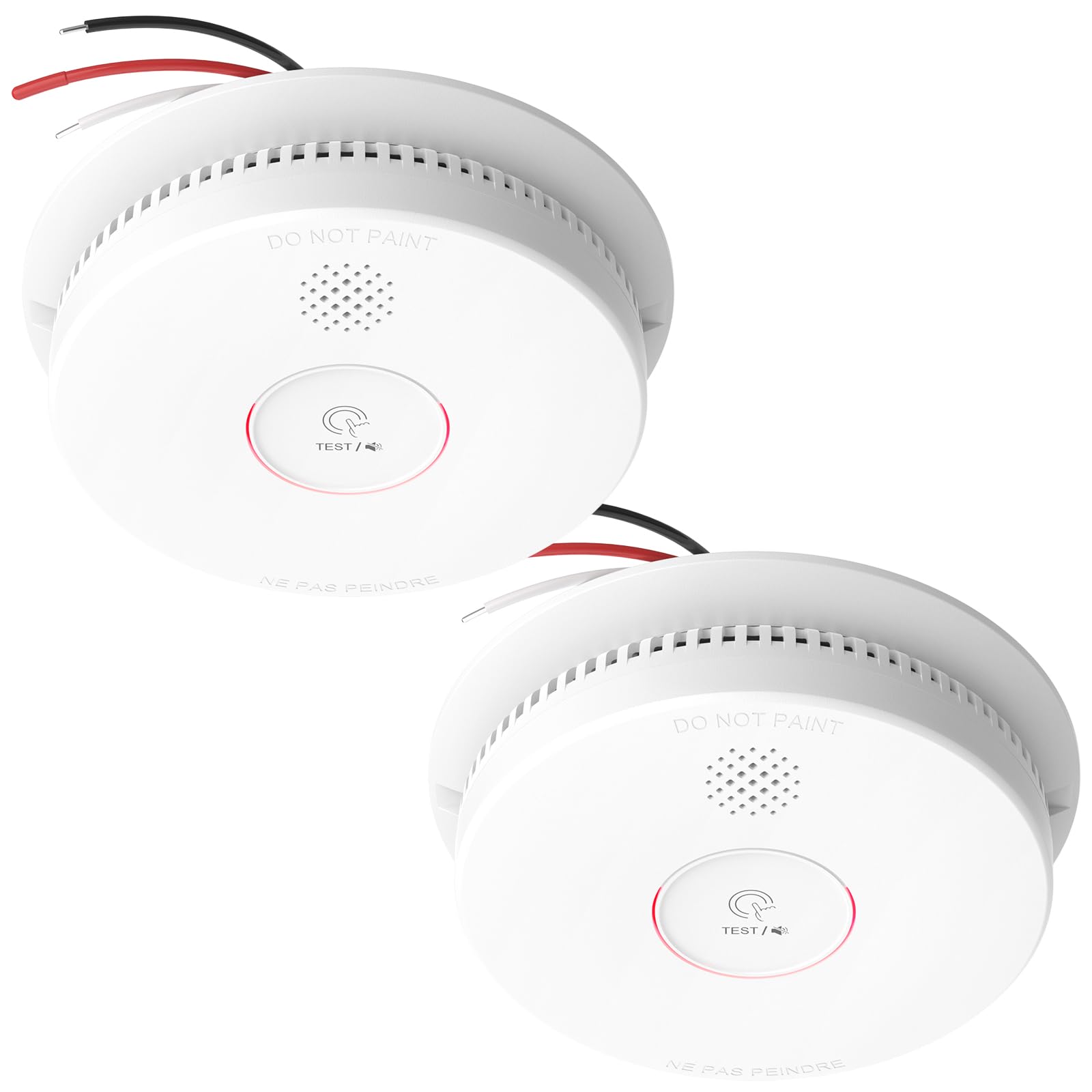
Two photoelectric alarms that quiet the kitchen false-alarm noise.
If your kitchen constantly sets off your current detector, this 2-pack is worth a look. These run on 120V AC wiring with a 9V battery backup for outages, and the photoelectric sensor is the better match for smoldering fires and steam from cooking. The advanced sensing is specifically aimed at cutting nuisance alarms from daily cooking.
The interconnect feature means one alarm sounding sets off all of them for a faster evacuation, and the one-touch silence mode mutes things for up to 10 hours — a real blessing at 2 a.m. The built-in LED indicator is soft and visible without being the kind of bright light that disturbs sleep in a child’s room.
Owners replacing 20-year-old detectors report finishing the whole job in under an hour, though some had to rewire the pigtail directly with wire nuts when the connector didn’t match. They also note the mounting plates differ from other brands. It’s a solid budget-friendly pair, but be ready for a possible connector tweak.
What Owners Appreciate
- Photoelectric sensor handles smoldering fires and steam
- 10-hour one-touch silence mode
- Interconnected — one alarm triggers all
- Soft LED won’t disturb sleep
Watch For
- Pigtail connector may not match older wiring
- Reliability feedback is mixed, with some random alarms
Reach for these if: you’re replacing two aging units on a budget and want photoelectric sensing.
Look elsewhere if: you need a guaranteed plug-and-play connector match with your existing wiring.
7. Kidde i12040
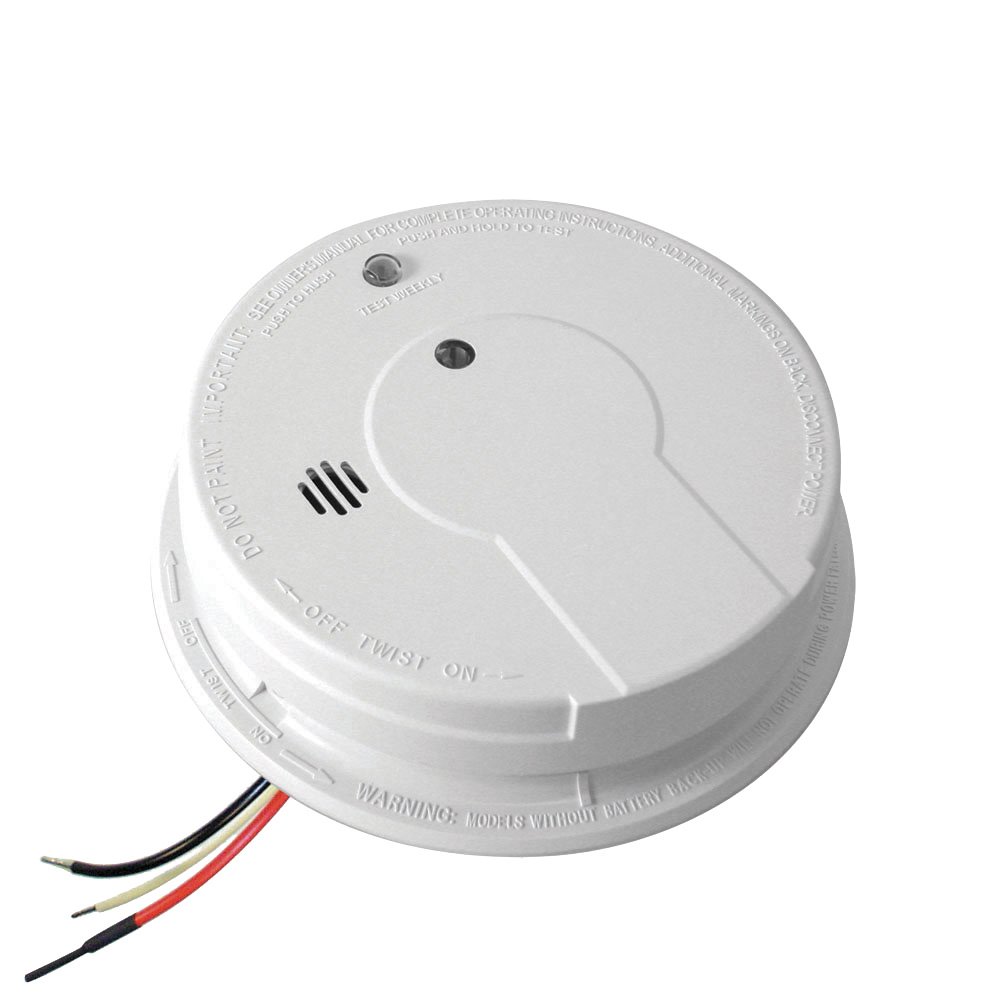
The contractor-grade alarm that links up to 24 devices across a home.
This is the one pros reach for when they need maximum interconnect flexibility. It can connect up to 24 devices — 18 of which can be initiating alarms — including smoke, CO, and heat detectors, all from Kidde.. The front battery pull tab lets you activate the 9V backup without pulling the unit off its bracket, which is a small feature that saves real time on a ladder.
The install details are where this shines. The pre-stripped wiring harness with an easy-off cap skips the need for a stripper tool, and the tinned strands improve conductivity and wire-nut grip. A dust cover protects the sensor during construction, cutting nuisance alarms before you even move in. The one-button design runs both the Hush silence function and the test, and a tamper-resistant lock deters theft. Alarm memory flashes a red LED to show which unit started the alarm.
Reviewers point out a 30-minute setup and appreciate that it comes with an adapter to fit newer Kidde connectors. The catch is durability — some units are reported to die within 8 months to a few years, and the battery life is called mixed rather than great. It’s premium in features, but not in longevity certainty.
Built for the Job Site
- Interconnects up to 24 Kidde devices
- No stripper tool needed for wiring
- Dust cover reduces construction false alarms
- Alarm memory shows the initiating unit
Know Before You Buy
- Durability reports are mixed — some fail early
- Battery life gets inconsistent owner feedback
Pick this for: large homes or job sites where 24-device interconnect and tool-free wiring matter most.
Think twice if: you’re buying one unit for a simple swap and don’t need the pro-grade extras.
8. First Alert SC9120B

One ceiling spot that watches for both smoke and carbon monoxide.
If you want to cover two threats with one device, this combination alarm is the smart move. It pairs an electrochemical carbon monoxide sensor with intelligent smoke sensing that reduces nuisance alarms, all on your existing 120V hardwire. The 10-year battery backup means constant monitoring for the life of the alarm, even in a blackout..
The included adapter plugs are the standout feature — they make replacing an existing hardwired alarm a true plug-and-play job with zero rewiring. Indicator lights on the face show whether smoke or CO is present, and an 85-decibel siren delivers the warning. A locked drawer holds the 10-year lithium battery, and an end-of-life signal tells you when the whole unit needs replacing. The 10-year limited warranty covers it, and it’s tested to UL standards..
Owner feedback is strong on this one: quality and functionality get steady praise, with one buyer noting it swapped in and tested “Good” within minutes, and another calling it a “perfect replacement” that ended annoying false alarms. The adapter cables and durability do draw a few negative notes, so it’s not immune to the occasional dud.
Two Threats, One Device
- Combines smoke and CO detection in one alarm
- Adapter plugs mean no rewiring to install
- 10-year sealed lithium battery backup
- 85-decibel siren with visible indicator lights
The Fine Print
- Replacing one unit costs more than a smoke-only alarm
- A few shoppers say adapter and durability concerns
Get this if: you want one device handling both smoke and carbon monoxide without extra clutter.
Pass if: you already have a separate CO detector and just need smoke-only coverage.
9. SITERWELL GS562A 5-Pack
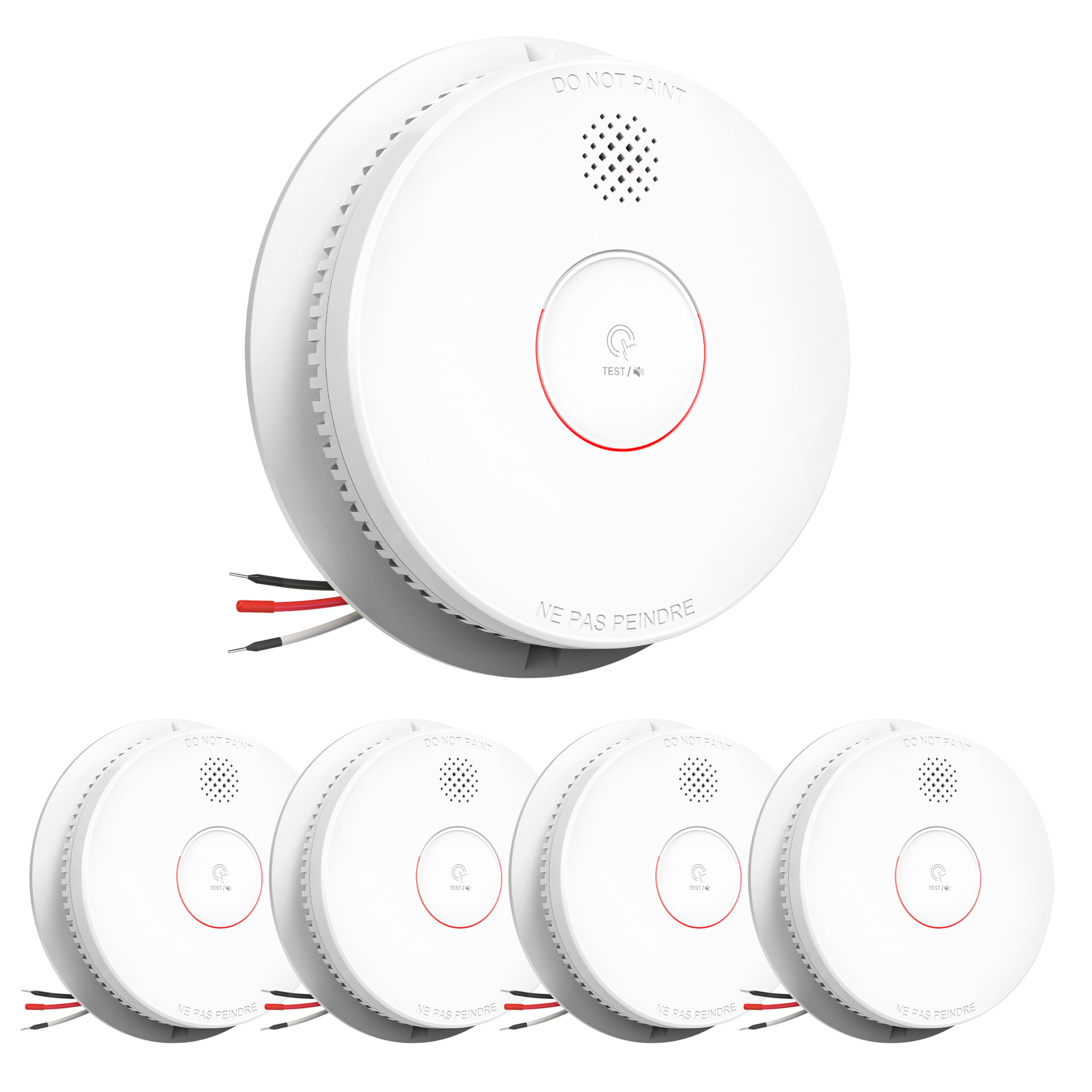
Five linked photoelectric alarms that blanketed an entire home at once.
This 5-pack is built for a full-house sweep in a single order. Each unit is a hardwired photoelectric alarm that can interconnect with up to 12 total alarms, sounding more than 85 decibels across every unit when one detects smoke. The photoelectric sensing is tuned for smoldering fires and reducing the cooking false alarms that plague ionization units.
The 10-year product life is the headline: the units are rated for a decade of service, with a 9V battery backup for outages., and each runs on the included 9V battery for power-outage protection. A low-battery signal tells you when to swap in a fresh one. A Do Not Disturb mode, activated by the test button, silences low-voltage or fault alerts for about ten hours so you’re not woken by flashing or beeping at night. The green LED stays on during normal operation, and the red LED flashes every 40 seconds as a visual status check.
Buyers who were nervous about rewiring report the job was far easier than expected, finishing five replacements in well under an hour. The honest caveats: reliability feedback is mixed, with some units going off for no apparent reason, and a few deliveries have arrived missing connectors. The 5-pack price tag is premium, but so is the coverage.
Maximum Coverage
- 5-pack covers a whole home in one order
- Photoelectric sensor suits smoldering fires
- 10-hour Do Not Disturb mode for nighttime
- Interconnects up to 12 alarms total
Consider This
- Premium price for the 5-pack format
- Reliability is mixed; occasional random alarms reported
Buy it for: a complete multi-level home upgrade where photoelectric sensing is your priority.
Hold off if: you only need one or two units and don’t want to pay for the bulk format.
Understanding the Specs
Ionization vs Photoelectric Sensors
Ionization sensors use a small amount of radioactive material to detect fast-flaming fires — the kind that burn hot and spread quickly. Photoelectric sensors use a light beam and are better at spotting slow, smoldering fires before they erupt into flames. Many modern homes run a mix, or choose dual-sensor units, to cover both fire types.
Interconnect Limits
Interconnect is what makes every alarm in the house sound when one detects smoke. The limit matters: some units link up to 12 devices, others up to 24 — and the devices usually need to be the same brand to talk to each other. If you’re extending an existing system, check that your new alarm is compatible with what’s already on your ceiling.
Battery Backup Types
A replaceable 9V or AA battery means a quick swap every year or so, and it keeps the alarm alive during power outages. A sealed 10-year lithium battery removes the annual chore entirely, but when it reaches end of life, you replace the whole detector instead of just the battery. Your call depends on how you feel about ladders.
UL Listing and Local Codes
A UL-listed alarm has been tested against recognized safety standards, which matters for insurance and local building codes.. If you’re selling a home or finishing a basement, your inspector may require specific certifications and a certain number of interconnected units. Check your local requirements before you buy.
FAQ
Can I replace my old hardwired smoke detector with a different brand?
What does a 120-volt hardwired smoke detector do during a power outage?
How many hardwired smoke detectors can I connect together?
Is ionization or photoelectric better for a kitchen?
How long does a hardwired smoke detector last?
Do I need an electrician to install a hardwired smoke alarm?
What’s the difference between a smoke alarm and a smoke and CO combination alarm?
Why does my hardwired smoke detector beep even after I change the battery?
Can a hardwired smoke detector work without the battery installed?
How many smoke detectors do I need per floor?
Final Thoughts: The Verdict
For most homes, the 120 volt smoke detector winner is the First Alert 12-Pack because it solves the biggest pain point in one order: replacing a dozen aging units across a whole house. If you want a single low-maintenance swap with a sealed 10-year battery, grab the SMI105-AC. And for layered protection against both smoke and carbon monoxide, the SC9120B is the one to reach for.
How We Picked
We do not accept paid placement. Every pick is matched to a real buyer and a real use-case; we do not hands-on test units.
Sources & Methodology
Specifications: manufacturer listings and product documentation. Review insights: verified customer reviews, as of August 2026. Pricing: not shown on this page (it changes often); check the current price via the retailer link.
As an Amazon Associate, Gadgets Feed earns from qualifying purchases. This does not affect which products we feature.