
A single bottle of the wrong additive on a sub-zero morning can leave you stranded with a fuel line locked solid by ice crystals. Water contamination from condensation, ethanol separation, or a wet fill-up turns your gas tank into a winter liability, starving the engine of fuel and causing sputtering, hard starts, or a complete no-go.
I’m Min — the co-founder and writer behind Gadgets Feed. I’ve spent countless hours comparing the chemical formulations, water-absorption capacities, and real-world freeze-point suppression data of dozens of gas-line treatments to sort the effective from the merely marketed.
Whether you’re winterizing a daily driver, a boat, or a generator, finding the right antifreeze for gas line means understanding which formula actually displaces water and prevents ice before it forms.
How To Choose The Best Antifreeze For Gas Line
Not all gas-line antifreeze products work the same way. Some use methanol to lower the freezing point of existing water, while others use isopropyl alcohol to absorb water and pass it through the combustion chamber. Your climate, vehicle type, and usage frequency all factor into which chemistry suits you best.
Methanol vs. Isopropyl: The Chemistry of “Dry Gas”
Methanol-based treatments, often called “dry gas,” reduce the freezing point of water in the fuel system and help keep it suspended so it doesn’t collect and freeze in low points like fuel lines. Isopropyl-based formulas, like those from Iso-HEET, actually absorb water — up to five times more — and allow it to be burned off safely during combustion. For extreme cold or heavy water contamination, isopropyl products offer superior water-handling capacity.
Water-Absorption Capacity per Ounce
One bottle of a standard 12-ounce methanol treatment can handle small amounts of condensation. But if you suspect a significant water intrusion — from a bad gas station or a missing gas cap — you need a formula that can absorb several times its volume in water. Checking the “treats up to X gallons” ratio gives you a direct line on how aggressive the additive is for your tank size.
Additive Compatibility: Fuel System vs. Engine Protection
Some gas-line antifreeze products also include fuel-system cleaners, corrosion inhibitors, and stabilizers. If you’re using the product year-round rather than just for winter, a multi-function formula that cleans injectors and prevents rust adds ongoing value. For dedicated winter-only use, a pure water-remover and freeze-point suppressor is often more cost-effective.
Quick Comparison
On smaller screens, swipe sideways to see the full table.
| Model | Category | Best For | Key Spec | Amazon |
|---|---|---|---|---|
| Iso-HEET 28202-24PK | Premium | Extreme cold / heavy water | Absorbs 5x more water than dry gas | Amazon |
| Gold Eagle HEET 2820 | Mid-Range | Winter start protection | 12-oz bottle treats 1 tank | Amazon |
| Red Line 60302 | Mid-Range | Water removal + fuel lubrication | Treats up to 250 gallons | Amazon |
| Quicksilver Quickare | Mid-Range | Marine / boat engines | Cleans varnish + gum deposits | Amazon |
| Garden at Home RV Antifreeze | Budget | RV / plumbing winterization | Protects to -100°F | Amazon |
| Zerex G40 Concentrate | Premium | Engine coolant replacement | Si-OAT technology / 5-yr guarantee | Amazon |
| Zerex American Vehicle 50/50 | Mid-Range | Ready-to-use engine coolant | Pre-mixed 50/50 / -34°F protection | Amazon |
In‑Depth Reviews
1. Iso-HEET Water Remover And Premium Fuel Line Antifreeze + Injector Cleaner (28202-24PK)

The Iso-HEET formula stands apart because it uses isopropyl alcohol rather than methanol, absorbing up to five times more water than standard dry gas products. Each 12-ounce bottle treats 20 gallons of fuel, making it effective against serious condensation or water contamination from a bad fill-up. For drivers in harsh winter climates, this is the most reliable chemical defense against ice formation in the fuel system.
Users who add one bottle per fill-up in severe cold report instant starts even in sub-zero conditions, with no sputtering or hesitation. The bulk 24-pack ensures you never run out mid-season, and the added injector cleaner helps maintain fuel-system hygiene year-round. Loyal users point to years of trouble-free winter driving as proof of its consistency.
Packaging can be an issue — some cases arrive with a broken or open bottom, losing a bottle or two in transit. But the product itself arrives sealed and functional in most shipments, and the value per bottle in the bulk case is hard to beat for anyone who treats multiple vehicles or equipment.
Why it’s great
- Absorbs 5x more water than methanol dry gas
- Bulk 24-pack offers excellent per-bottle value for frequent users
- Combines water removal with injector cleaning
Good to know
- Bulk-case packaging occasionally arrives damaged
- Isopropyl formula costs more per bottle than basic methanol options
2. Gold Eagle Co. 12Oz Gasline Antifreeze (Pack Of 24) 2820
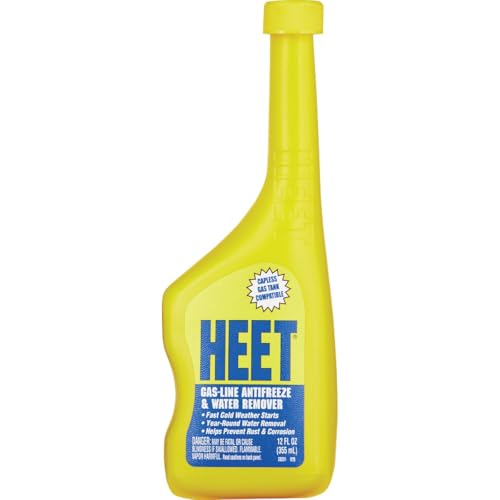
Gold Eagle HEET is the classic methanol-based “dry gas” that has been preventing fuel-line freeze for decades. Each 12-ounce bottle is designed for a single tank of gas, making it a straightforward solution for drivers who need quick winter protection. The formula works by lowering the freezing point of water, keeping it liquid enough to pass through the fuel system and be burned off.
Users in moisture-prone environments report that consistent use eliminates condensation-related problems such as hard starts and rough idle. The 24-pack pricing undercuts most auto-parts store shelf prices, making it a smart stock-up for fleet owners or households with multiple gas-powered vehicles and yard equipment. Some users even report it burns cleanly as an alcohol stove fuel in a pinch.
Because it uses methanol, it doesn’t absorb as much water as isopropyl-based alternatives. For severe contamination or extreme sub-zero conditions, you may need a more aggressive formula. But for standard winterization and light condensation control, this remains a proven, affordable workhorse.
Why it’s great
- Classic methanol dry gas proven over decades of winter use
- Significantly cheaper than isopropyl alternatives per bottle
- Reliable start-up protection in standard cold weather
Good to know
- Not ideal for heavy water contamination or extreme cold
- No added fuel-system cleaner or stabilizer
3. Red Line 60302 Fuel System Water Remover And Antifreeze – 12 Ounce
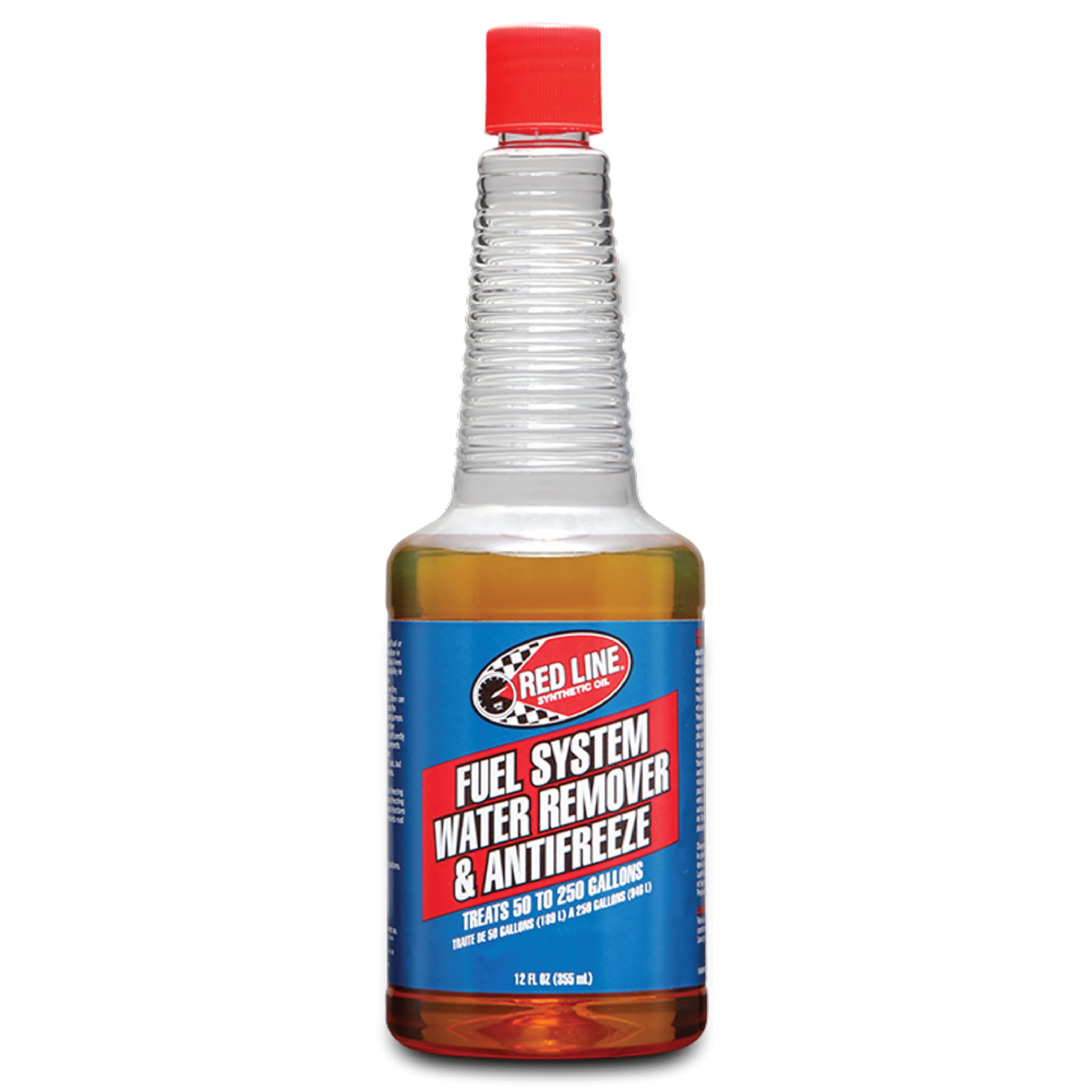
Red Line 60302 is a high-concentration fuel-system water remover that treats up to 250 gallons per 12-ounce bottle — far more than most competitors. This makes it an exceptional value for anyone maintaining large fuel tanks, multiple vehicles, or equipment fleets. It significantly reduces the freezing point of water in the fuel system while also providing fuel lubrication to protect injectors and pumps.
Real-world reports confirm its effectiveness at resolving water-related engine issues. One user salvaged a Saab 9000 that was running poorly in single-digit temperatures — after adding one bottle, it ran perfectly. Others report it eliminated engine jerking and jumping caused by water-contaminated gas from low-volume stations within 35 miles of driving.
The formula works in both diesel and gasoline systems, adding versatility that single-purpose products lack. Because it’s concentrated, you need to measure carefully for partial tanks — over-treating won’t harm the engine, but under-treating can leave water unprotected. The unscented formula has minimal odor compared to some methanol-heavy alternatives.
Why it’s great
- Treats 250 gallons per bottle — best cost-per-gallon ratio
- Works in both diesel and gasoline fuel systems
- Provides fuel lubrication alongside water removal
Good to know
- Requires careful measurement for small tanks
- Higher initial cost per bottle than single-use options
4. Quicksilver Quickare Fuel Treatment – 12 Oz.

Quicksilver Quickare is engineered and tested by Mercury Marine to their original equipment manufacturer (OEM) specifications, making it the go-to choice for boat owners who need a fuel treatment that won’t harm marine engines. It removes varnish and gum deposits from fuel lines, tanks, carburetors, injectors, intake valves, and spark plugs while also keeping fuel fresh for up to three months.
Boaters who add it to every tank report zero fuel-related issues over years of use, with many calling it the only treatment they trust in their marine motors. The ability to clean existing deposits makes it useful for spring start-ups after winter storage, when stale fuel and varnish buildup are common problems.
While it’s designed for marine use, it works with all grades of gasoline and ethanol blends, making it applicable to cars and small engines as well. The 12-ounce bottle is small, and you’ll need multiple bottles for larger fuel tanks. It’s also pricier per ounce compared to generic automotive treatments.
Why it’s great
- Mercury Marine OEM-tested — safe for outboard and inboard motors
- Cleans varnish and gum deposits from entire fuel system
- Keeps fuel fresh for up to three months
Good to know
- Higher price per ounce than universal automotive treatments
- Small bottles require multiple units for large fuel tanks
5. Garden at Home RV/Waterline Antifreeze – 1 Gallon (-100°F)

This pink RV antifreeze from Garden at Home is designed for winterizing water systems in RVs, boats, pools, and seasonal homes, protecting down to -100°F. The non-toxic, biodegradable formula is safe for drinking-water plumbing systems and won’t damage rubber seals or plastic pipes. Its bright pink color makes it easy to verify system coverage during winterization.
RV owners in bitterly cold climates like Minnesota report it keeps camper water systems functional through sub-zero stretches without cracking pipes or damaging fittings. The sturdy gallon jug with a pour spout simplifies filling, and the lack of harsh chemical smell is a welcome feature for enclosed spaces. It also works well for winterizing garden sprayers and other outdoor equipment.
This is a plumbing antifreeze, not a fuel-system additive — do not pour it into your gas tank. It contains propylene glycol rather than alcohol-based water absorbers, so it’s intended for water lines and holding tanks only. For gas-line freeze protection, stick to products specifically labeled for fuel systems.
Why it’s great
- Non-toxic and safe for potable water systems
- Protects down to -100°F for extreme cold climates
- Bright pink color for easy system coverage verification
Good to know
- For plumbing systems only — not for use in fuel tanks
- Propylene glycol formula, not alcohol-based water absorber
6. Zerex G40 Phosphate and Nitrite Free Concentrate Antifreeze/Coolant – 1 Gallon
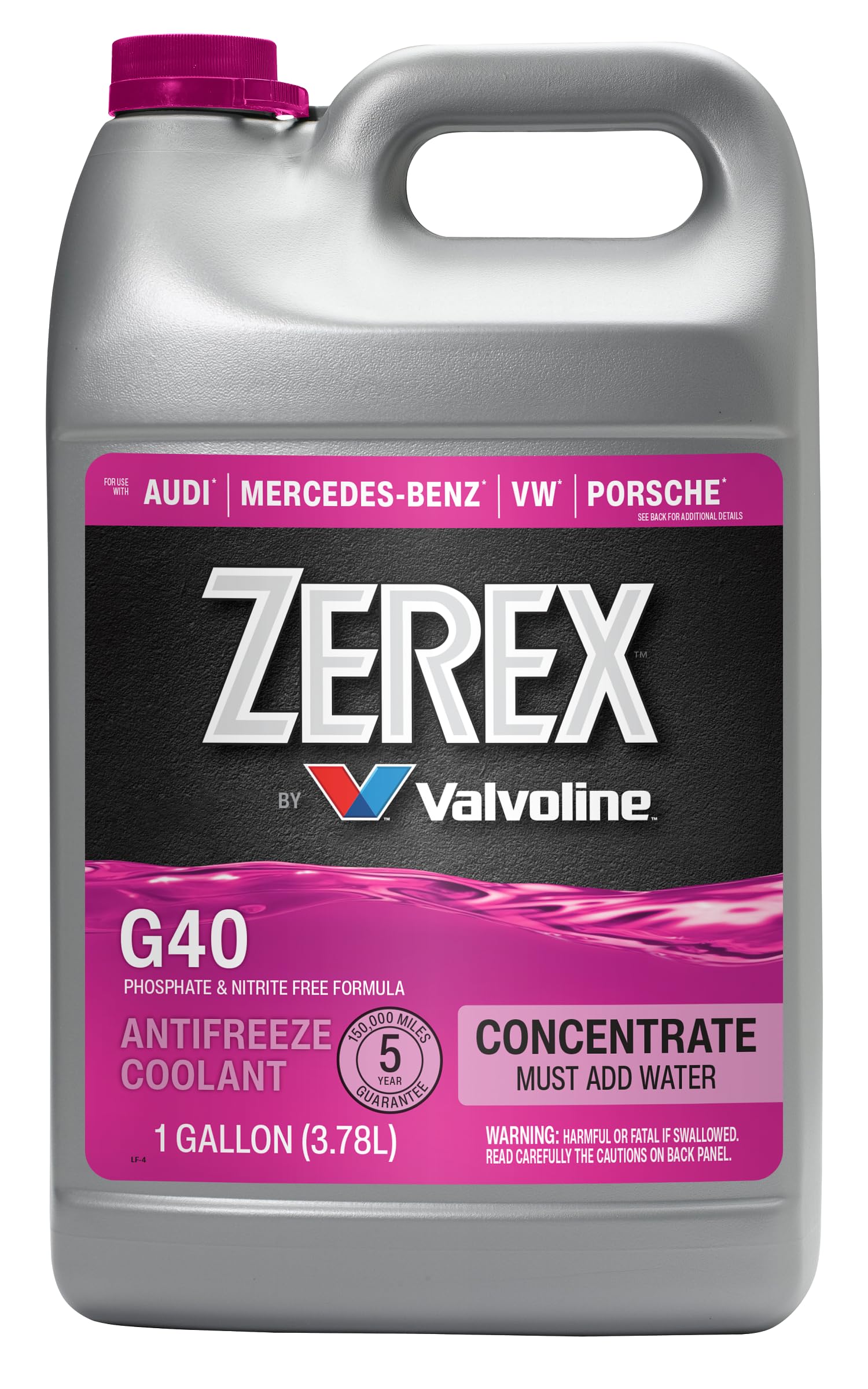
Zerex G40 is a premium Si-OAT (Silicated-Organic Acid Technology) concentrate formulated for European and Asian vehicles that require phosphate-free and nitrite-free coolant. The violet concentrate allows you to mix your own ratio — 50/50 for standard protection down to -34°F, or up to 70/30 for extreme protection down to -84°F. It’s batch-tested in the lab and fleet-tested in the real world.
Users consistently note that this is identical to dealer-branded coolant but costs significantly less, especially when purchased in bulk from Amazon rather than at the parts counter. The 5-year/150,000-mile guarantee provides peace of mind against freeze-ups or boil-overs. Several owners mention using it for multiple vehicle flushes and top-offs with no performance issues.
Because it’s a concentrate, you need to mix it with demineralized water before adding it to the radiator — not as convenient as a pre-mixed 50/50 solution. It’s also specific to vehicles requiring Si-OAT chemistry, so check your owner’s manual before using it in older American or Asian cars that may need different OAT formulations.
Why it’s great
- Si-OAT technology protects all cooling system metals including aluminum
- Flexible mixing ratios for extreme cold conditions
- 5-year/150,000-mile manufacturer guarantee
Good to know
- Requires mixing with demineralized water before use
- Not compatible with all vehicle types — check OEM requirements
7. Zerex American Vehicle 50/50 Ready-to-Use Antifreeze Coolant – 1 Gallon

Zerex American Vehicle 50/50 is a pre-mixed OAT antifreeze/coolant designed for modern American vehicles, providing freeze protection down to -34°F and boil protection up to 265°F. The orange formula is ready-to-use straight from the jug — no mixing, no measuring, just pour and go. It’s formulated with Organic Acid Technology to resist corrosion, scale, and rust on all cooling system metals including aluminum.
Owners of American vehicles like the Chevy Cruze 1.4L Turbo report using this brand for years without any cooling system issues. The 5-year/150,000-mile guarantee matches premium brands at a more accessible price point. The pre-mixed convenience eliminates the risk of incorrect dilution, which is a common cause of inadequate freeze protection.
This is an engine cooling system antifreeze, not a fuel-line water remover. It should not be added to your gas tank. For fuel-system ice prevention, pair this with a dedicated gas-line antifreeze product. It’s also specific to American vehicles — European and Asian models may require different OAT chemistries.
Why it’s great
- Pre-mixed 50/50 — no measuring or dilution required
- 5-year/150,000-mile guarantee against freeze or boil-over failure
- OAT technology protects aluminum and other cooling system metals
Good to know
- Engine coolant only — not a fuel-line additive
- Formulated for American vehicles; check compatibility with imports
FAQ
Can I use RV plumbing antifreeze in my gas tank?
How often should I add gas-line antifreeze to my vehicle?
Is methanol dry gas safe for modern fuel-injected engines?
Final Thoughts: The Verdict
For most users, the antifreeze for gas line winner is the Iso-HEET Water Remover And Premium Fuel Line Antifreeze because its isopropyl formula absorbs five times more water than standard dry gas, making it the most effective defense against winter fuel-line freeze and condensation. It also doubles as an injector cleaner for year-round value. If you want the best cost-per-gallon ratio for treating large fuel tanks or multiple vehicles, grab the Red Line 60302. And for marine engines requiring OEM-spec protection, nothing beats the Quicksilver Quickare Fuel Treatment.