
Our readers keep the lights on and my morning glass full of iced black tea. As an Amazon Associate, I earn from qualifying purchases.
Specs are compiled from manufacturer listings and verified buyer reviews and can change over time — please confirm the key details on the product page before buying.
You want a belt grinder that shapes steel fast without overheating the edge, so your blade keeps its hardness. The right machine turns a flat bar into a clean bevel; the wrong one fights you on tracking and heat. Focus on belt size, motor power, and speed control — these three specs decide how your blades turn out.
I’m Min — the founder and writer behind Gadgets Feed. This guide is built by comparing the manufacturers’ published specifications and the patterns across verified customer reviews, so you get each pick’s real strengths and trade-offs instead of marketing spin.
Whether you are a first-time bladesmith or a shop veteran, the right machine depends on belt size, horsepower, and variable speed. This is your honest, spec-first look at the belt grinder for making knives so you buy the one that fits your steel and your skill level the first time.
Our Picks at a Glance

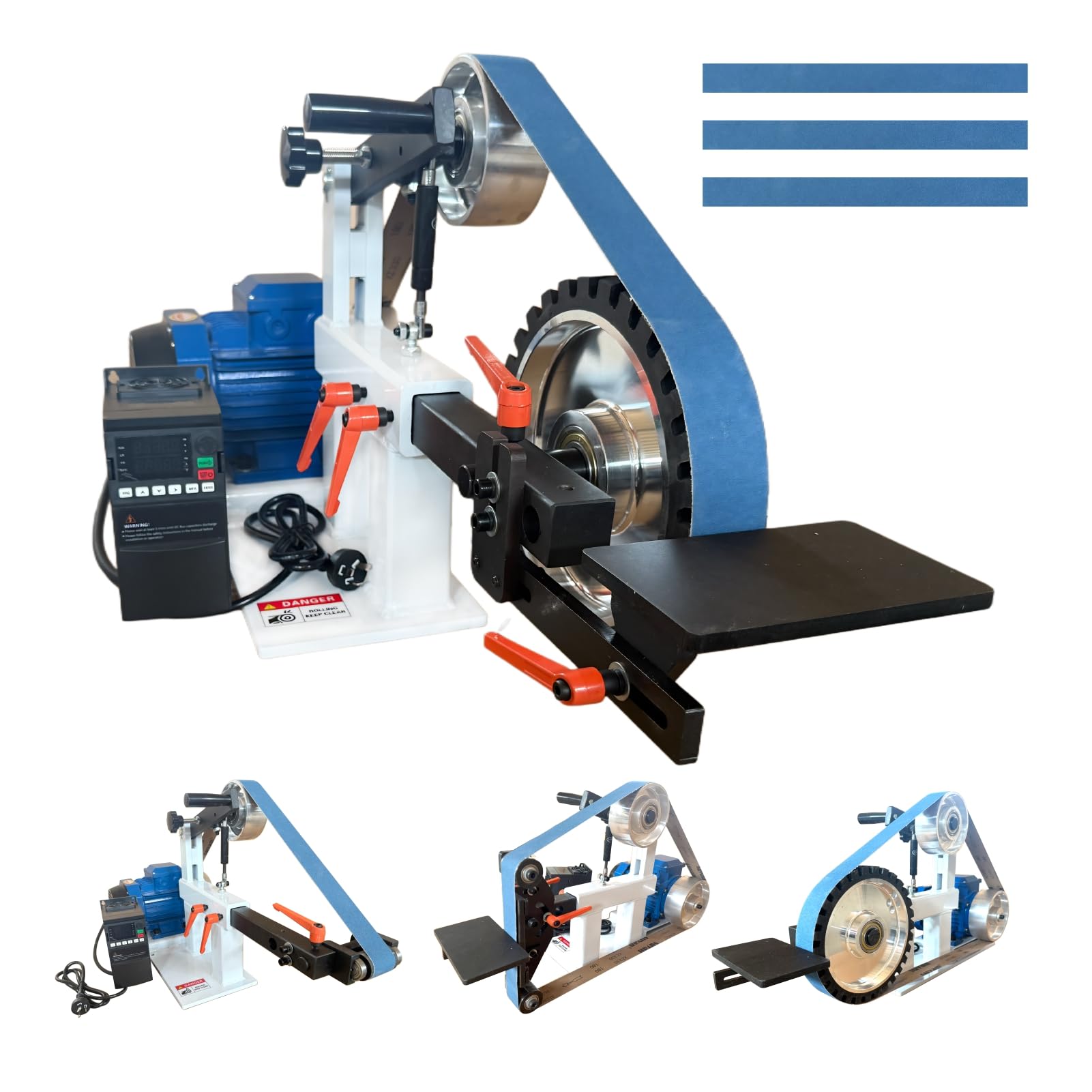
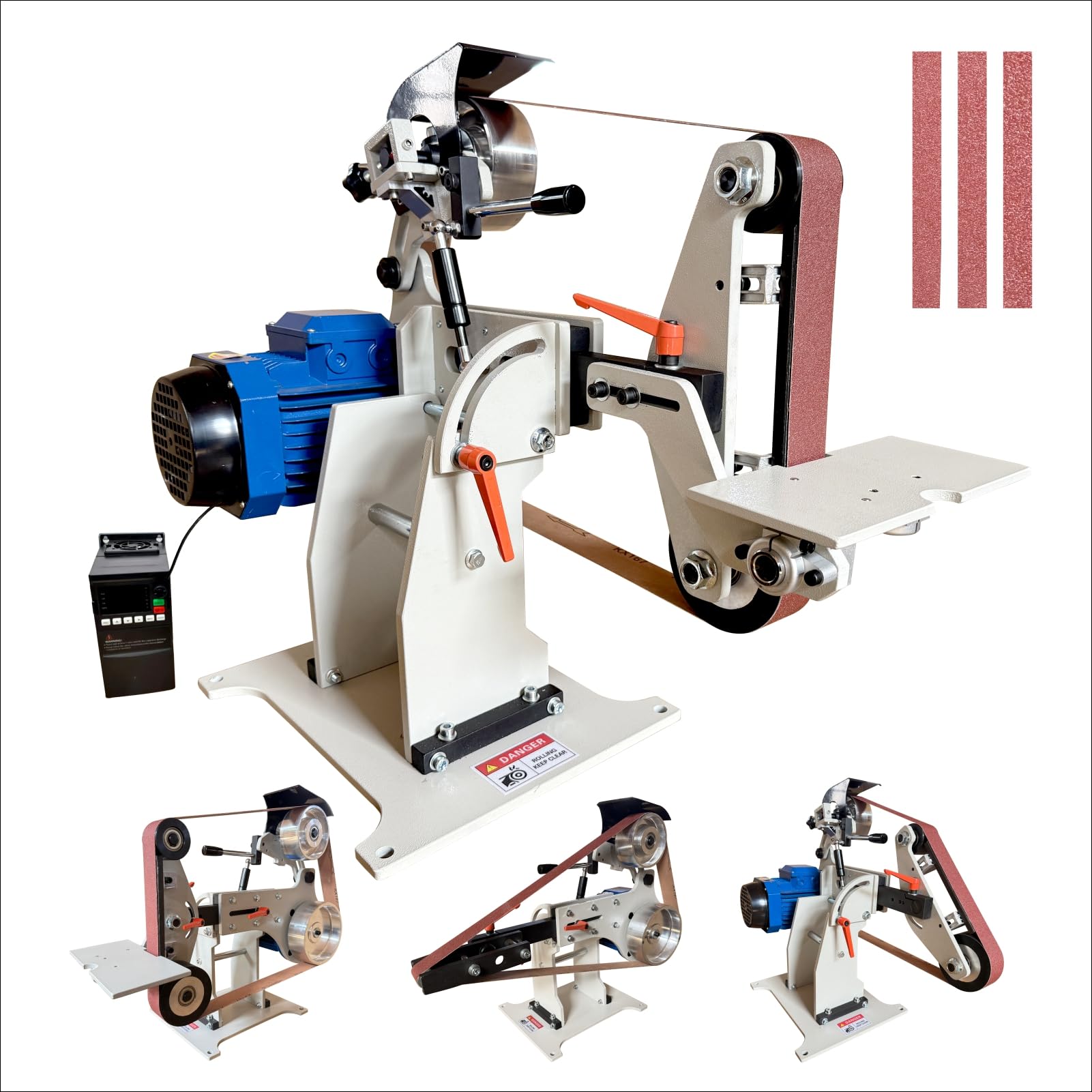
How To Choose The Best Belt Grinder For Making Knives
Knife grinding is all about controlled metal removal. You need a belt that runs true, a motor that doesn’t bog down, and a speed you can adjust so the edge never overheats. Here is what actually matters when you’re comparing machines.
Belt Size Sets Your Ceiling
The 2×72-inch belt is the gold standard for knife making because the long belt runs cooler and gives you more surface for bevels. Smaller 1×30 belts are great for sharpening and light profiling, but they limit how fast you can remove material on a full blade.
Motor Power and Speed Control
Look at the amperage and RPM together. A higher amperage motor, like a 14 A unit, holds torque under heavy grinding pressure. A variable frequency drive (VFD) lets you dial down the belt speed — critical for final edges where heat is the enemy of hardened steel.
Setup and Tracking
A grinder is only as good as its belt tracking. Look for quick-release belt changes and an adjustable tracking knob. A machine that is easy to align will keep you grinding instead of fighting the belt.
Quick Comparison
| Model | Best For | Belt Size | Motor Power | Max Speed | Amazon |
|---|---|---|---|---|---|
| Grizzly G1015★ Best Overall | Serious hobbyist 2×72 | 2×72 in | 14 A | 1725 rpm | Amazon |
| JLD 2×72 (B0FDFC23S5)Top Performer | Heavy stock removal | 2×72 in | 1500W (2HP) | 2900 rpm | Amazon |
| JLD Professional (B0G1RYK3X4)Precision Pick | Variable-speed pro work | 2×72 in | 1500W | 3000 rpm | Amazon |
| JLD 2×72-82 (B0FM7YRG49) | Professional bladesmiths | 2×72-82 in | 1500W | 3000 rpm | Amazon |
| KFMK 1×30 VFD | Precision bevel guides | 1×30 in | 5 A | 5000 rpm | Amazon |
| VEVOR 1×30 VFD | Compact budget grinding | 1×30 in | 550W | 5500 rpm | Amazon |
| KFMK 2×42 Combo | Versatile belt + disc | 2×42 in | 3.5 A | 3580 rpm | Amazon |
| BUCKTOOL 1×30 | Low-speed sharpening | 1×30 in | 2.3 A | 1790 rpm | Amazon |
In‑Depth Reviews
1. Grizzly Industrial G1015 Knife Grinder, Sander, and Buffer
Our pick — over 4.5★ from 100+ verified ratings; the strongest balance of quality and price.
The 2×72 workhorse that proves real knife grinding does not require a five-figure budget.
This is the machine most hobbyist bladesmiths graduate to, and the reason is the belt size. The 2×72-inch belt is the industry standard for knife making, and the G1015 runs it with a powerful 14 A motor — a full 6.1x amperage gap over the BUCKTOOL 1×30 in this list. That kind of torque means you can push hard on a bevel without the belt stalling out.
Speed is a deliberate 1725 rpm, which is half the spin of the KFMK 2×42 combo’s 3580 rpm. Buyers report the grinder performs all three grinding types — slack belt, flat platen, and an 8″ contact wheel — without changing setups. The auxiliary arbor accepts buffing wheels, sanding drums, or flap wheels, so it doubles as a polisher for finished blades.
The thing everyone raves about is the value, and assembly is genuinely easy with a roughly 40-minute build time and quick-release belt changes. Bring patience for the tracking adjustment, though. Some units arrive with the tracking arm slightly misaligned, and owners have fixed it with a simple arm swap or an electrical tape shim.
Why It Wins
- 14 A motor powers through thick steel stock
- 2×72 belts are affordable and everywhere
- Slack belt, platen, and contact wheel all work
Know Before You Buy
- Single-speed only — no VFD for heat control
- Small stock platen benefits from an upgrade
- Tracking may need a factory-defect fix
Reach for this if: you are an amateur knife maker ready for the 2×72 standard and want a powerful, easy-to-assemble base to learn on.
Look elsewhere if: you need variable speed for final edge work — this runs one fast speed only.
2. JLD 2×72 Belt Grinder Sander with VFD
A 2×72 with a VFD that chews through stock removal then slows for a perfect final edge.
This machine earns its keep because it pairs the pro-standard 2×72 belt with a 1500W pure copper motor spinning at 2900 rpm. That is nearly double the speed ceiling of the Grizzly, and the VFD lets you dial it right back down for finishing. The result is one machine that handles aggressive beveling and delicate polishing.
You get three grinding heads — circular, flat, and arc — plus three zirconia corundum belts in 100, 180, and 240 grit. The 240 mesh belt achieves a surface finish below Ra1.6, which is the kind of mirror polish you want before heat treat. The steel frame is welded at all joints, so it stays rigid under heavy passes.
Owners mention the motor runs smooth and the VFD (variable frequency drive, which lets you adjust speed) works well, but plan a DIY mounting bracket because it doesn’t bolt to a standard stand. One owner calls it “fantastic grinder for the money,” and the crowd agrees it performs above its price. It needs a dedicated 30 amp plug, and the control box benefits from extra dust protection.
Performance Notes
- 1500W motor with 2900 rpm top speed
- VFD offers stepless speed control
- Three grinding heads for diverse work
Setup Reality
- Requires a dedicated 30 amp circuit
- Needs DIY mounting bracket or pedestal
- Unsealed control box is dust-prone
Who it’s for: anyone who wants pro 2×72 capability with variable speed and does not mind a little DIY mounting.
The trade-off: the unsealed VFD box means you should add dust shielding in a busy shop.
3. JLD Professional Belt Grinder Sander 2×72
Industrial-grade 2×72 with a 2.2kW VFD for stepless speed control from 0 to 2800 rpm.
The headline here is the 2.2kW variable frequency drive, which is a serious step up in speed control. Where the standard JLD uses a smaller VFD, this one gives you stepless adjustment from 0-2800 rpm. That means you can crawl the belt for heat-free final edges or open it up for heavy hogging.
The 1500W pure copper motor drives a thickened, powder-coated steel frame that stays vibration-free under prolonged heavy work. Customers note it will “keep up with my Pheer 454” while running quieter and with more versatility. The included transformer lets you run it from a standard 110V outlet, which is a thoughtful touch.
The thing that impresses owners is the grinding efficiency — the maker claims a 30% increase over standard models. You get two pro grinding kits covering circular, flat, and arc work, plus 60, 100, and 180-grit belts so you can go from rough deburring to fine polish without stopping. The one real complaint is the lack of a manual, which makes error codes hard to clear if the VFD trips.
Spec Highlights
- 2.2kW VFD with 0-2800 rpm range
- 1500W pure copper motor
- Industrial-grade anti-rust frame
Watch Out For
- No manual included for VFD programming
- Error codes can be confusing to clear
- Separate transformer adds a startup switch
Pick this if: you want 2×72 power with genuinely fine speed control for bevel grinding and finishing.
Think twice if: you are not comfortable troubleshooting a VFD without a manual on hand.
4. JLD 2×72-82 Belt Grinder Sander
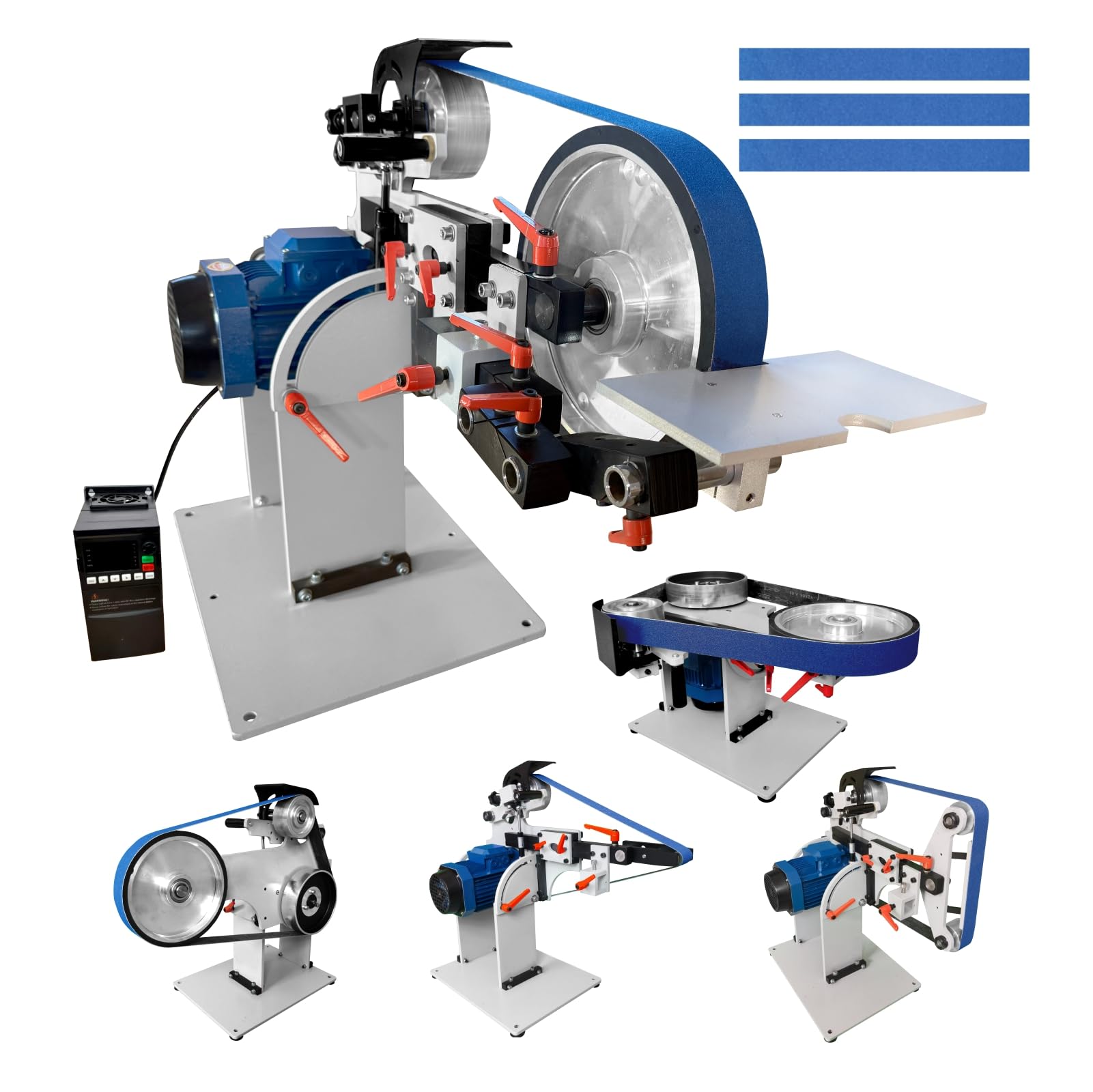
A 187-pound steel beast built to eat thick stock and hold its line under pressure.
This is the heaviest machine on the list, and that weight is the whole point. The thick steel frame — owners estimate around 200 lbs in practice — gives you the rigidity to take aggressive cuts at 1/2″ rebar without vibration or deflection. The 1500W motor at 2900 rpm pairs with a 2.2kW VFD for infinitely adjustable speed and direction.
What owners rave about is the customizability. The programmable VFD and smooth belt adjustment and tracking make this feel like a machine you can tailor to your exact grinding style. It swings a 9.2-inch round grinding disc, and the three grinding heads cover circular, flat, and arc work. Reviewers point out it “performs like something three times the cost.”
The included 60, 100, and 180-grit zirconia corundum belts handle everything from rough material removal to fine finishing. Go in knowing the manual is poor and the speed knob takes 35-45 full turns to sweep the range. Also, the VFD is not compatible with US 240V without a transformer, though one is included for standard 120V use.
Built To Last
- Heavy steel frame minimizes vibration
- Programmable 2.2kW VFD
- Three grinding attachments included
Heavy Costs
- Very loud — hearing protection required
- Poor manual and complex VFD programming
- Tall and heavy — needs a low bench
For the pro: professional bladesmiths who want a tank that stays put and handles a full day of grinding.
Not for: tight shops with limited bench space — this machine needs room and a sturdy base.
5. KFMK 1×30 Variable Speed Belt Sander
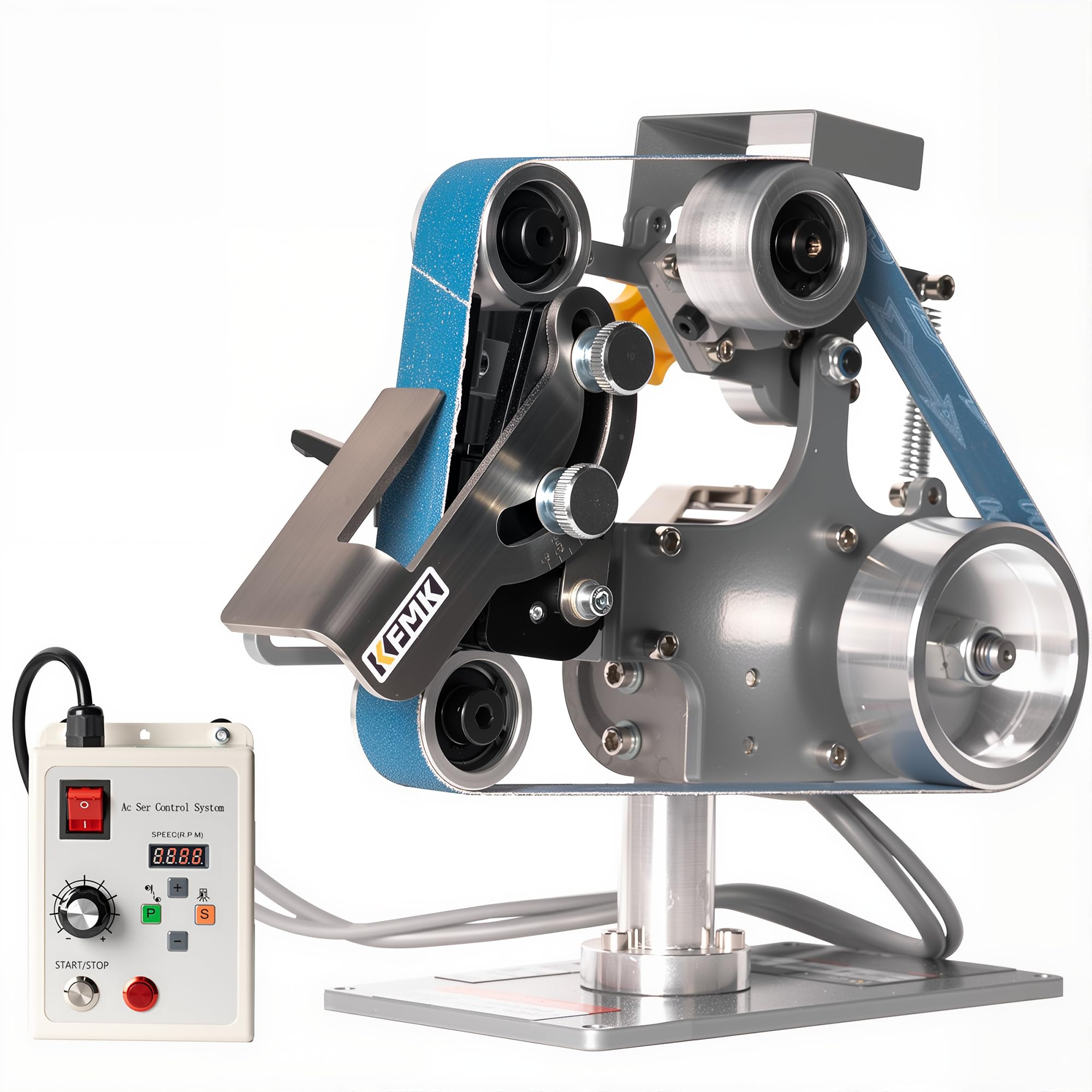
The 1×30 that thinks it’s a 2×72, with a precision angle guide and full VFD control.
Do not let the 1×30 belt size fool you — this machine is built for serious knife work. The defining feature is the included KSAG-5 Angle Guide, which delivers repeatable bevel grinding with far less guesswork. Shoppers say it is the best 1×30 guide they have tried, with solid, stable, and accurate results for both edge-leading and edge-trailing work.
The welded all-steel frame keeps vibration low, and the 5 A motor spins to 5000 rpm. The VFD control gives you smooth speed adjustment for everything from stock removal to polishing, and the forward/reverse switch helps reduce burr formation when sharpening. It operates horizontally or vertically, so you can set it up the way your bench allows.
The standout feature is the angle guide, which owners say works perfectly with the BUCKTOOL 1×30 as well. One owner notes a minor modification is needed for wide bevels, but the repeatable angles and reduced guesswork make it a top pick. The build quality earned the most praise in reviews, with buyers calling it heavy-duty and very durable.
Why It Shines
- KSAG-5 angle guide for repeatable bevels
- Full VFD variable speed control
- Forward and reverse belt direction
Consider This
- 1×30 belt limits heavy stock removal
- Minor mod needed for very wide bevels
- Instructions are easy to miss during setup
Best for: knife makers focused on precise, repeatable bevels and edge geometry rather than heavy material removal.
skip it if: you plan to grind full blades from thick bar stock — you will want a 2×72 for that.
6. VEVOR 1×30 Variable Speed Belt Grinder

A compact 1×30 with real variable speed that punches far above its price class.
This is the entry point that does not feel like one. The 550W pure copper motor spins to 5500 rpm, and the VFD gives you stepless speed regulation — so you can run fast for material removal or slow for controlled sharpening. Buyers report it is quiet at full speed and tracks well from the start.
The kit is the real value story. You get three sanding belts in 100, 180, and 240 grit, plus two grinding moulds for circular and flat work. The reinforced steel body and detachable workbench let you run it vertically or horizontally. Owners mention it replaces a bench grinder entirely and is “compact and powerful” for minimal shop space.
Despite its size, it handles metal grinding well — one buyer reports it grinds metal easily and the controls work as described. A few owners note the flat platen bearings ran hot until reamed, and there’s no reverse function. Still, the value is tough to top for a first machine.
Best Attributes
- True VFD variable speed control
- Includes 3 belts and 2 grinding moulds
- Compact and quiet at 5000 rpm
Limits
- No reverse belt direction
- Flat platen bearings may run hot
- 1×30 belt limits heavy stock removal
Reach for it if: you want a budget-friendly first grinder with real variable speed for sharpening and light knife work.
Not for: grinding full-length bevels on thick blades — step up to a 2×72 for that job.
7. KFMK 2×42 Belt & 6″ Disc Sander Combo

Two sanders in one footprint, giving you a belt for bevels and a disc for precise flats.
This combo is built for versatility. The 2×42 belt sander handles the knife making and sharpening, while the 6″ disc sander with a 6-1/8 x 9 in. table adjusts to a 45° angle for precise work. Both tables are generous — the belt gets a 6-3/4 x 9 in. platform — giving you a stable surface for guided passes.
The 3.5 A motor spins the belt at 3580 rpm, and the belt can be positioned vertically or horizontally. That flexibility, plus the included miter gauge and tool rest, makes this a capable all-rounder for a small shop. Owners mention it is great for sharpening blades and chisels, with good build quality and value, and one notes achieving “a perfect edge on just about anything.”
The main honesty caveat: the motor is effectively 1/3 HP, not the 1/2 HP the listing advertises. It slows under heavy use, and the included honing stone can arrive warped. For lighter knife work and sharpening, though, the combination of belt and disc makes this a smart space-saving pick.
What You Get
- 2×42 belt plus 6″ disc in one unit
- Adjustable work tables on both stations
- Miter gauge and tool rest included
Honest Limits
- Motor is closer to 1/3 HP than advertised
- Belt table grooves can be uneven
- Included honing stone may be warped
Choose it for: a space-saving combo that handles both bevel grinding and precise disc work in one unit.
pass on it if: you do heavy full-day grinding — the motor will bog down under sustained load.
8. BUCKTOOL 1×30 Low Speed Belt Sander
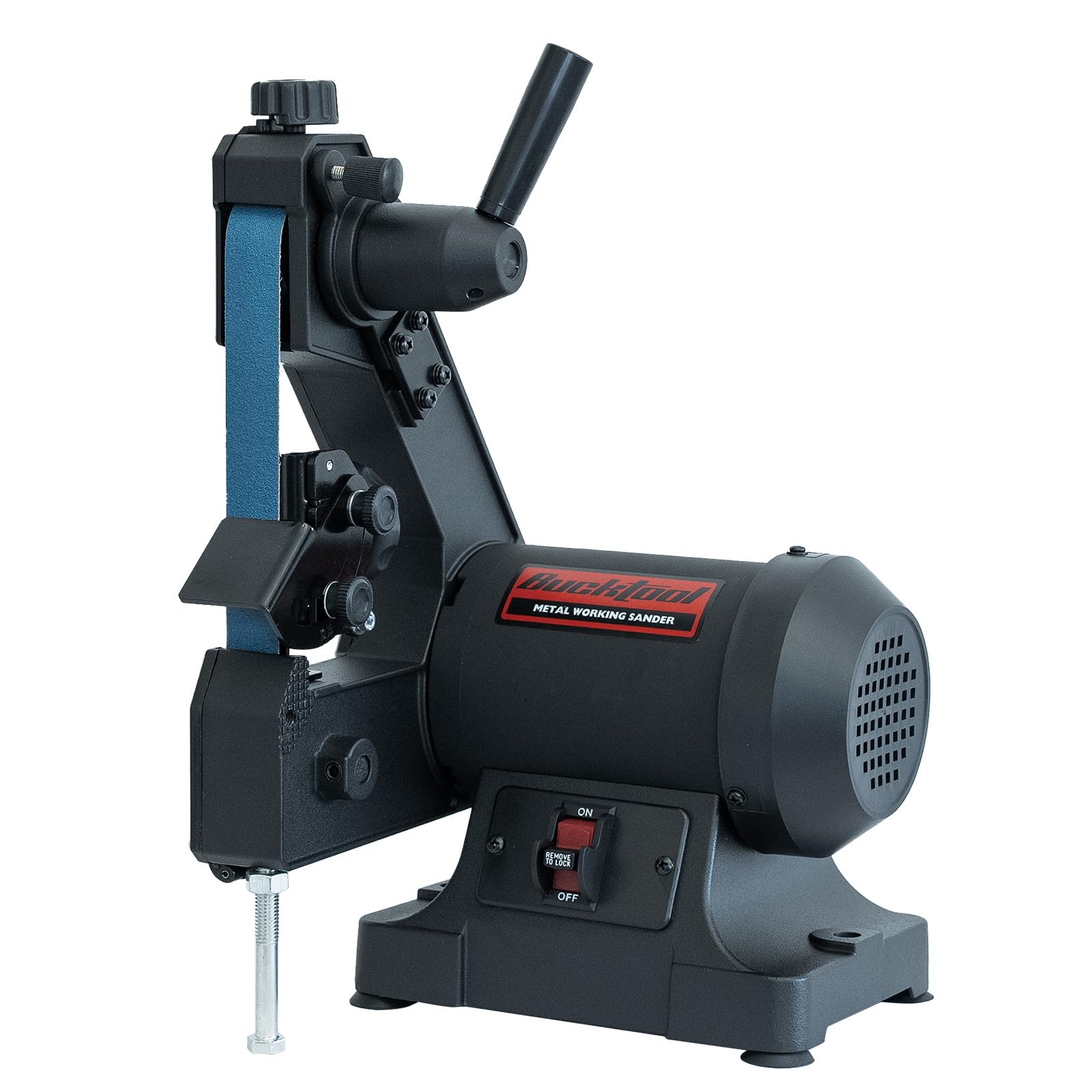
A low-speed specialist that keeps your edge cool while you sharpen and grind.
This machine is built around one idea: slow is better when you are working near the edge of a blade. Running at just 1790 rpm, it cuts heat buildup dramatically compared to standard woodworking sanders. Customers note the slower speed gives “much better control and significantly reduces heat build” — critical when you are sharpening hardened steel.
The 2.3 A induction motor delivers smooth, consistent torque with less vibration than a brushed motor. The adjustable knife sharpening guide swings from 10° to 45°, so you can lock in a consistent edge angle for knives, chisels, and other tools. One-button belt cover removal makes belt changes genuinely fast.
The safety key prevents accidental startup, and the 2-year limited warranty adds confidence. Owners love it enough that at least one is “saving to buy a second one.” The catch: at 2.3 A, this is the lightest motor on the list, so it’s strictly for sharpening and light profiling, not heavy stock removal. One buyer hit a support issue, but the consensus is strongly positive.
Why It Works
- Low 1790 rpm prevents edge overheating
- 10-45° angle guide for consistent edges
- Quick-release belt changes
The Limits
- 2.3 A motor is light-duty only
- 1×30 belt is small for full blade work
- No VFD — speed is fixed
Perfect for: sharpening and maintaining edges with zero heat risk, or as a dedicated finishing station.
Not for: shaping a blade from raw bar stock — you will run out of belt and power quickly.
Understanding the Specs
Belt Size: 2×72 vs 1×30
The 2×72-inch belt is the knife maker’s standard because the longer belt dissipates heat and offers more surface for bevel grinding. The 1×30 is a sharpening and light-profiling format. If you are grinding full blades, start with a 2×72; if you are maintaining edges, a 1×30 is lighter and cheaper.
Motor Power and Amperage
Amperage tells you how much torque the motor holds under load. A 14 A motor like the Grizzly will power through a heavy bevel pass, while a 2.3 A unit like the BUCKTOOL is for lighter work. Match the motor to how much steel you plan to remove per session.
Variable Frequency Drive (VFD)
A VFD (a speed controller for the motor) lets you dial the belt speed up or down smoothly. Low speed is critical for final edges where heat ruins hardened steel. Machines without a VFD run one fixed speed, which is fine for rough grinding but risky for fine finishing.
Belt Tracking and Setup
Tracking is how well the belt stays centered on the wheels as it spins. A quick-release mechanism and a tracking knob let you adjust and swap belts fast. Good tracking means less time fighting the machine and more time grinding your bevel.
FAQ
What belt size is best for making knives?
Why is variable speed important on a knife grinder?
What does amperage mean for a belt grinder?
How do I prevent my blade from overheating while grinding?
Is a 1×30 belt sander enough for knife making?
What is a VFD on a belt grinder?
How important is belt tracking on a grinder?
Can I use a woodworking belt sander for knives?
Final Thoughts: The Verdict
If you want one dependable pick, the belt grinder for making knives winner is the Grizzly G1015 because it delivers the pro-standard 2×72 belt with a powerful 14 A motor at a price hobbyists can justify. If you want full variable speed for heat-free edge work, grab the JLD 2×72 VFD. And for a compact first machine that sharpens beautifully without burning edges, the BUCKTOOL 1×30 is the one to reach for.
How We Picked
We do not accept paid placement. Every pick is matched to a real buyer and a real use-case; we do not hands-on test units.
Sources & Methodology
Specifications: manufacturer listings and product documentation. Review insights: verified customer reviews, as of September 2026. Pricing: not shown on this page (it changes often); check the current price via the retailer link.
As an Amazon Associate, Gadgets Feed earns from qualifying purchases. This does not affect which products we feature.