
Our readers keep the lights on and my morning glass full of iced black tea. As an Amazon Associate, I earn from qualifying purchases.
Specs are compiled from manufacturer listings and verified buyer reviews and can change over time — please confirm the key details on the product page before buying.
You don’t need to drain your wallet to sound clear on calls, streams, or recordings. The right budget microphone filters out keyboard clatter and puts your voice front and center, and this guide breaks down the top nine that actually deliver.
I’m Min — the founder and writer behind Gadgets Feed. This guide is built by comparing the manufacturers’ published specifications and the patterns across verified customer reviews, so you get each pick’s real strengths and trade-offs instead of marketing spin.
From tap-to-mute gaming mics to studio-style XLR options, here are the best budget microphone picks that balance clarity, build, and features for any setup.
Our Picks at a Glance


How To Choose The Best Budget Microphone
To pick the right mic, you need to match the tech to your space and your gear. Start with how the mic connects, then think about the pickup pattern, and finally look at the extras that make daily use easier.
USB vs XLR: Pick Your Path
USB mics are the true plug-and-play option. They connect straight to your computer with a single cable and need no extra gear, which is why most budget buyers start here. They work with major software like Discord, OBS Studio, and Zoom right from the start. XLR mics, by contrast, require an audio interface or mixer to function, so they involve extra cost and setup, but they offer an upgrade path if you ever invest in better audio gear later.
Pickup Pattern: How Much Room Noise Is Okay
A cardioid pattern captures sound mainly from the front, which helps reject noise from the sides and rear. It is the most common choice for streaming and vocals. Supercardioid narrows that focus even further, suppressing more from the back and sides, which suits noisier rooms. If your space has a lot of echo or background hum, the tighter the pattern, the cleaner your voice will sound.
Quick Comparison
| Model | Best For | Pickup Pattern | Connectivity | Key Feature | Amazon |
|---|---|---|---|---|---|
| Razer Seiren V3 Mini★ Best Overall | First-time streamers | Supercardioid | USB Type-A | Tap-to-Mute Sensor | Amazon |
| InnoGear Gaming MicRGB Showstopper | RGB gaming setups | Cardioid | USB-C | Boom Arm & RGB Modes | Amazon |
| FIFINE K669BCrowd Favorite | Versatile all-rounder | Cardioid | USB Type-A/C | Volume Knob | Amazon |
| ZealSound BKD-11 | Mobile content creators | Cardioid | USB-C + Adapters | Zero-Latency Monitoring | Amazon |
| TONOR TD510 air S+H | Future upgraders | Dynamic | USB & XLR | AI Noise Cancellation | Amazon |
| FIFINE K669D | Studio-style recording | Dynamic Cardioid | XLR | Metal Build | Amazon |
| HyperX SoloCast 2 | Minimalist setups | Cardioid | USB-C to USB-A | Built-in Pop Filter | Amazon |
| Razer Seiren V2 X | Detailed voice capture | Supercardioid | USB Type-C | Integrated Digital Limiter | Amazon |
| Logitech G Yeti Orb | LIGHTSYNC fans | Cardioid | USB Type-A | LIGHTSYNC RGB | Amazon |
In‑Depth Reviews
1. Razer Seiren V3 Mini USB Microphone
Our pick — over 4.5★ from 850+ verified ratings; the strongest balance of quality and price.
The Razer Seiren V3 Mini uses a supercardioid pattern to suppress room noise in a compact, tiltable design.
The Razer Seiren V3 Mini leads our list because it nails the essentials that matter most to new streamers. Its supercardioid pickup pattern is tighter than standard cardioid mics, so it focuses on your voice while suppressing distracting sounds like typing or mouse clicks. At 8.32 ounces, it is light enough to sit unobtrusively on any desk, yet the tiltable stand with a built-in shock absorber dampens accidental knocks and bumps.
What wins people over is the quality — the custom condenser capsule captures detail, especially at higher frequencies, and the tap-to-mute sensor with its LED status indicator is a standout convenience. Setup is genuinely plug-and-play: just connect the USB cable to a PC and it works with Discord, OBS Studio, and XSplit without needing drivers or software. The frequency response of 20 KHz means it handles voice range easily, and the audible noise floor of 20 db keeps things clean. Some buyers report that background noise dampening is weak from the start, but it is fixable via software settings like Razer Synapse, which also open up studio-level sample rates and separate volume mixes.
Why It Wins
- crisp voice for singing, streaming, and podcasts
- Compact size with stable, adjustable stand
- Intuitive tap-to-mute with clear LED indicator
- Plug-and-play setup with no drivers required
What to Know
- Background noise dampening is weak without software tweaks
- Best suited for streaming, not casual chat
Grab it for: your first streaming or podcast setup where you want reliable, clear sound with minimal fuss.
Look elsewhere if: you are a casual chat user who won’t adjust software settings to tame background noise.
2. InnoGear Gaming Mic USB Computer Microphone
The InnoGear Gaming Mic bundles a boom arm, four RGB modes, and a cardioid capsule that outperforms pricier rivals.
The InnoGear Gaming Mic brings a complete package for gamers who want their setup to look as good as it sounds. The adjustable boom arm swings smoothly into position while the 6.56ft (2m) USB cable gives you plenty of reach. It offers four distinct RGB lighting modes — solid color, multi-color gradient, single-color gradient breathing, and single-color gradient transitions — so you can match your rig’s aesthetic. The upgraded cardioid condenser capsule amplifies sound clarity, and the touch-sensitive mute button on top plus a large gain control knob at the base give you quick, hands-on control.
The thing everyone raves about is the sound quality, which reportedly beats two pricier mics in head-to-head PC tests. The noise cancellation earns mixed feedback, though some owners mention it blocks out dog paws and sounds from three feet away. Setup is fast — “installing is fast just plug and play,” as customers note — and it works with Windows PCs, Macs, PS4, and PS5. Note that it is NOT compatible with Xbox, and the stand is functional but not premium. For competitive gamers prioritizing team communication, the zero-latency monitoring keeps you in control of your voice output.
Solid Value: A feature-rich boom arm mic that delivers strong sound and flashy looks for the money, with the only real compromises being the basic stand and Xbox incompatibility.
Ideal for: gamers and streamers who want RGB flair, a boom arm, and console compatibility (PS4/PS5) in one affordable kit.
Not for: Xbox players or those who find RGB lighting unnecessary — both are deal-breakers here.
3. FIFINE K669B USB Microphone
The FIFINE K669B pairs an all-metal build with a cardioid capsule and volume knob at a budget price.
The FIFINE K669B is the most-reviewed and most-trusted budget mic on this list, and for good reason. Its solid, sturdy metal construction with a stable tripod stand feels genuinely premium, a rarity at this tier. The cardioid condenser capsule captures your voice with clear, smooth, and crisp output while reducing background noise, making it a favorite for voiceovers, livestreams, and podcast interviews. The built-in volume knob lets you adjust louder or quieter on the fly — or turn it to zero for privacy.
What stands out is its versatility: it works across desktop, laptop, PS4, and PS5, and reviews note it rivals the Blue Yeti in cardioid audio quality while being smaller, lighter, and all-metal. The 5.9-foot USB cable plugs directly into a USB-A port. One catch is durability — while many say it is still going strong, others report it stopped working within a month, so treat it as a value pick, not a lifetime investment. Placement also matters; speaking too close adds noise, so keep some distance. The audible noise floor is a low 16 db, making it one of the quietest options here.
Built to Last
- Solid metal frame that holds up to daily use
- crisp sound that rivals pricier mics
- Volume knob for quick, easy adjustment
- Broad compatibility including PS4/PS5
Worth Watching
- No mute button on the mic itself
- Some units reported failing within a month
Best for: beginners who want a reliable, all-metal all-rounder for recording, streaming, and meetings while staying affordable.
Think again if: you need a dedicated mute button or want a mic that guarantees years of heavy use.
4. ZealSound Microphone BKD-11 PRO

The ZealSound BKD-11 PRO includes phone adapters, a boom arm, and zero-latency monitoring for cross-device content creation.
The ZealSound BKD-11 PRO is the most complete package here for creators who move between devices. It captures clear, detailed speech with 96 kHz sampling (a high audio resolution that preserves fine vocal detail) and a cardioid pickup pattern (picks up sound mainly from the front, reducing background noise), plus a built-in noise reduction chip. What truly separates it is mobile compatibility — the included Lightning-compatible adapter and USB-C adapter let you connect to iPhones, iPads, and Android phones without buying extra accessories. The scissor boom arm extends up to 30.8 inches and rotates 360°, while the foldable tripod offers a quick tabletop alternative.
Reviews praise its clear sound and easy setup, with owners noting it works great on Samsung S25 Ultra and other devices via adapters. The 3.5mm zero-latency monitoring jack (a headphone port with no delay) lets you hear your voice in real time, and the one-touch mute button shows a large red indicator when live — perfect for avoiding hot-mic moments. The detachable pop filter softens plosives from P/B words, and the shock mount absorbs table bumps. Durability gets some negative feedback, so handle with care, but the 3-year after-sales support adds confidence. At 1.7 pounds, it is substantial but not heavy.
Kit King: No other budget mic bundles a boom arm, tripod, pop filter, shock mount, and phone adapters — it is the most versatile starter kit on this list.
Reach for this if: you make short-form content on phones and want one mic that works across PC, iPhone, and Android.
Look elsewhere if: you want a tank-like build — some durability concerns were flagged by owners.
5. TONOR Dynamic Gaming Microphone TD510 air S+H
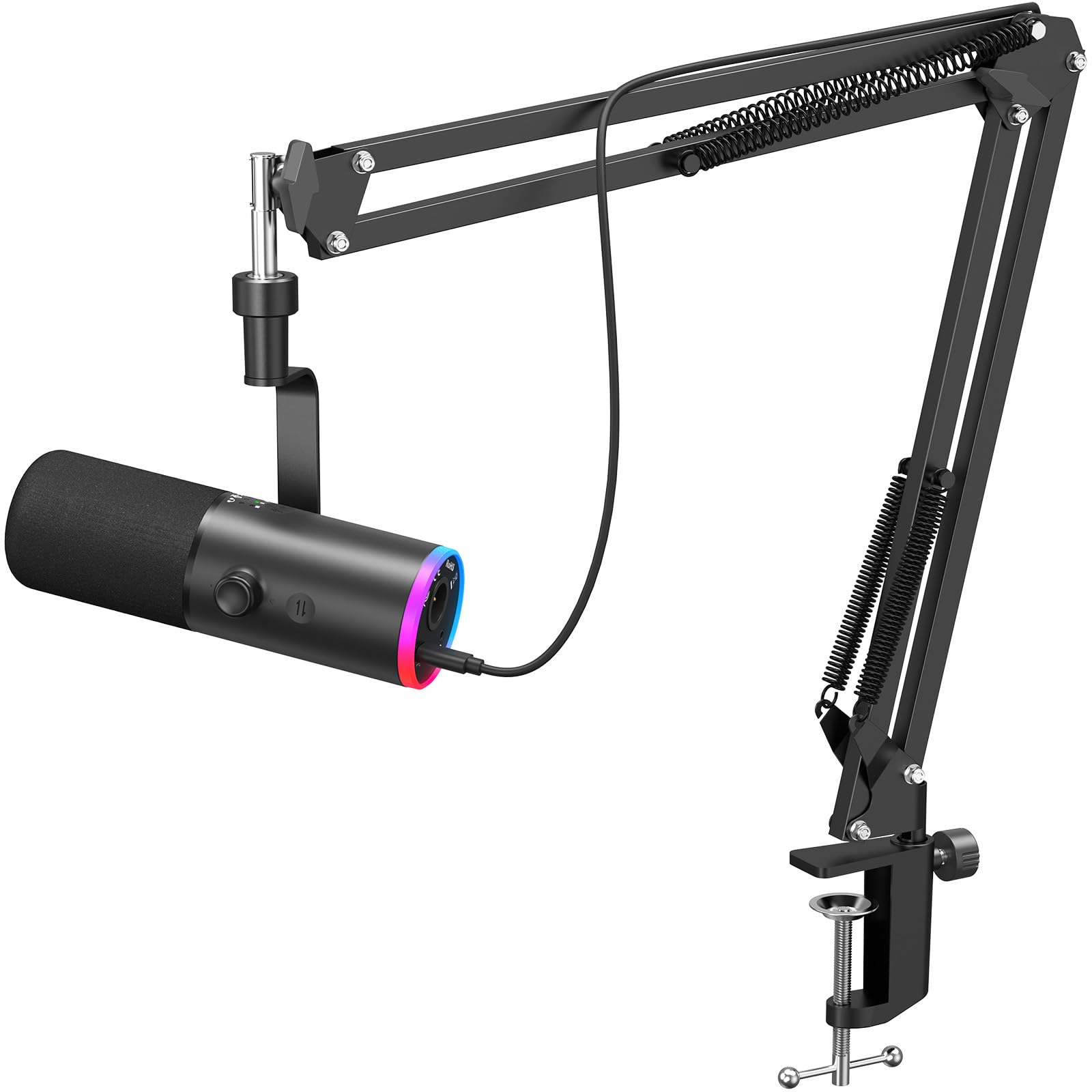
The TONOR TD510 air S+H offers USB and XLR outputs, letting you upgrade to an interface without replacing the mic.
The TONOR TD510 air S+H is the smart choice for gamers who plan to upgrade their audio setup later. Its dual USB and XLR outputs mean you can start with plug-and-play USB simplicity, then move to a sound card or XLR interface without replacing the microphone itself — a money-saving upgrade path. The triple AI noise cancellation minimizes distracting background sounds like keyboard clatter, making it effective for gaming streams and voice chats. It also supports microphone and headphone volume control with a 3.5mm jack for real-time monitoring.
Reviewers point out it sounds amazing on both PC and phone, with a sturdy clamp that is more sturdy than previous mics. It is genuinely plug-and-play with no drivers required, working on computers and PS4/PS5 in USB mode. At 850 grams, it is solid on the included boom arm. One honest note: the noise cancellation works via USB, not XLR (a professional audio connection), and the physical settings have minimal effect — you will get the best results using software like OBS compressors and EQ. It is not compatible with Xbox, but for content creators wanting flexibility, this dual-mode design is a standout.
Smart Flexibility
- USB and XLR outputs for future upgrades
- AI noise cancellation for clean gaming chat
- Sturdy clamp and boom arm included
- Plug-and-play across PC and PS4/PS5
Know the Limits
- Noise canceling only works via USB, not XLR
- Physical controls have minimal effect without software
Pick this for: gamers who want an entry-level mic that won’t become obsolete when you invest in an audio interface.
skip it if: you never plan to move beyond USB and want simpler on-mic controls.
6. FIFINE K669D XLR Dynamic Microphone

The FIFINE K669D uses a dynamic cardioid capsule and metal build to reject background noise for XLR setups.
The FIFINE K669D is the pick for creators ready to step into the XLR world. Its dynamic cardioid design with a low noise floor excels at blocking background noise while keeping your voice natural and original — ideal for untreated rooms where reflections and hum are common. The metal build feels solid and well-constructed, with a durable grille that resists wear. It handles loud vocals easily with an SPL of 120dB, producing soft, smooth mid, high, and low audio without distortion.
What impresses owners is how it outperforms pricier rivals, capturing rich lows with excellent side and rear rejection that minimizes bleed. It works well for vocals, acoustic guitars, and percussion. The suggested recording range is 1.5 to 4 inches from the top of the end-addressing mic, and it mounts to most stands via 3/8’’ and 5/8’’ threads. Be aware this is XLR only — it requires an audio interface or mixer, and the XLR cable is NOT included. Low sensitivity means you will likely need a gain boost, but with EQ and compression, pro sound is achievable.
Noise Shield: The low noise floor and unidirectional pattern make this the best budget mic for noisy, untreated rooms — if you already own an interface.
Built for: podcasters and vocalists with an audio interface who want a sturdy dynamic mic with minimal background noise.
Not for: anyone without XLR gear — you’ll need an interface and cable before this works at all.
7. HyperX SoloCast 2 USB Condenser Mic
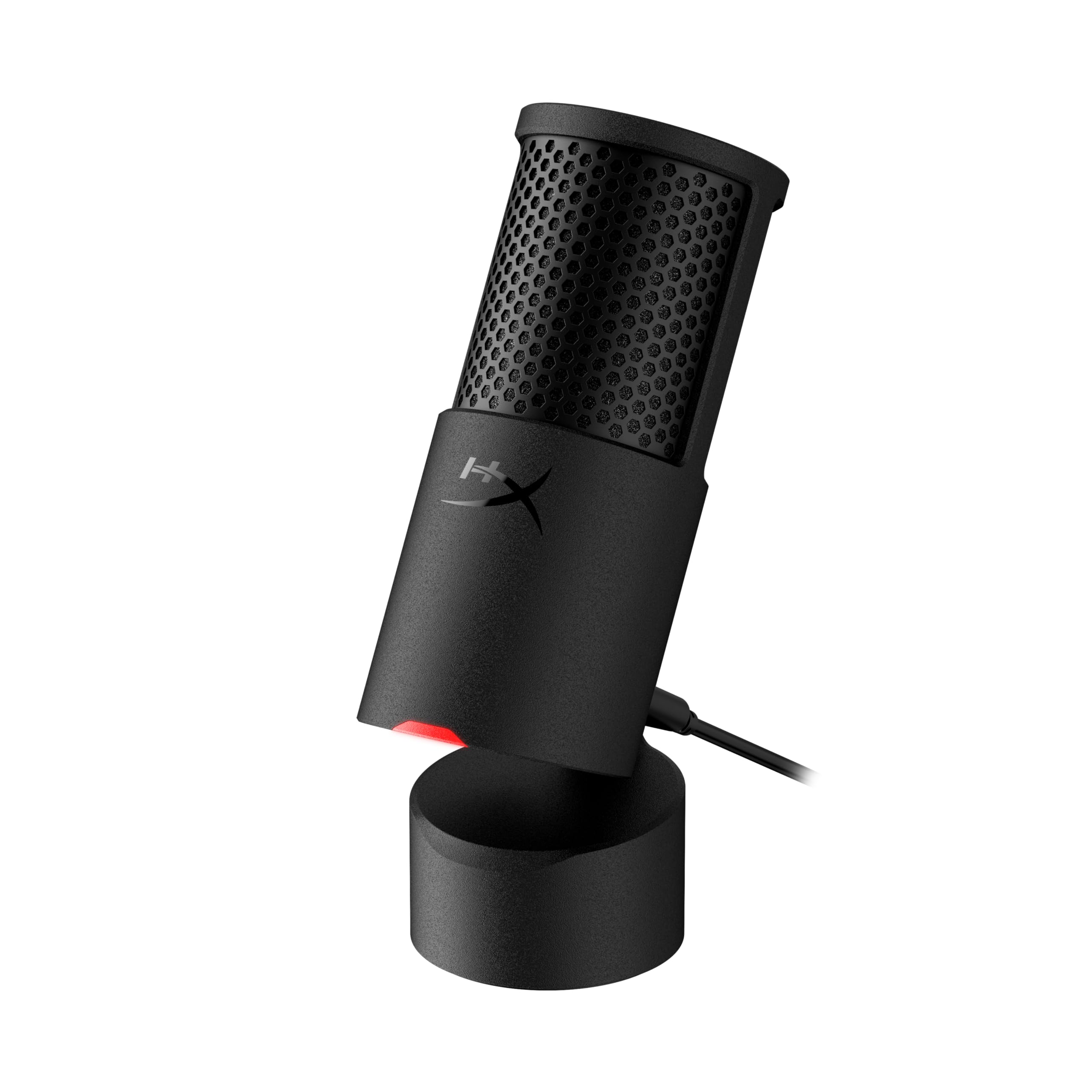
The HyperX SoloCast 2 delivers 24-bit/96kHz audio with a built-in pop filter and shock mount in a compact design.
The HyperX SoloCast 2 is engineered to capture less unwanted noise, with a built-in suspension system delivering shock mount benefits in a no-fuss design. It records high-resolution audio at 24-bit bit depth and a 96kHz sampling rate — a spec that rivals much pricier mics and ensures your voice comes through full and rounded. Everything you need is built in: a foam pop filter, tiltable stand with weighted base, and mic arm threads, so there are no extras to buy.
Owners love the responsive tap-to-mute with LED indicator, noting the silent capacitive mute is flawless. The audio is clear and present, with exceptional pickup range — one owner reports crisp audio from 25-30 feet. The cardioid polar pattern captures sound best from the front while reducing pickup from the sides and rear. Audio filters are customizable via HyperX NGENUITY software, including high-pass, low-pass, and voice enhancement filters that reduce rumble and soften sharp tones. The main caveats: it is strictly directional (audio drops off if you go off-axis), and it can pick up ambient sounds like keyboards and fans without a boom arm or software tweaks.
Studio Sound, Tiny Footprint
- 24-bit / 96kHz audio quality
- Built-in pop filter and shock mount
- Silent, responsive tap-to-mute
- Compact, low-profile design
Small Trade-offs
- Strictly directional — off-axis audio drops off
- Picks up ambient noise without software or boom arm
Choose this for: minimalist setups where you want premium sound quality in the smallest possible footprint.
Consider another if: your desk layout forces you to speak off-axis or you refuse to use software noise filters.
8. Razer Seiren V2 X USB Condenser Microphone

The Razer Seiren V2 X captures fine vocal detail with a 25mm capsule and digital limiter for distortion-free streams.
The Razer Seiren V2 X pairs a 25mm condenser microphone capsule with a supercardioid pickup pattern, capturing voices with high accuracy at higher frequencies while suppressing noise from the back and sides. The integrated digital limiter automatically prevents clipping and peaking, so you won’t sound broken-up or noisy even during chaotic streams. Its front-mounted gain control and mute button let you adjust settings quickly without touching software.
This mic is a favorite for dictation and recording — one owner reports it picks up whispers from 18 inches away, far better than webcam mics. It delivers sound quality that some say matches Shure and Rode performance at a fraction of the price. The built-in shock absorber dampens vibrations from accidental knocks and bumps. You can plug a headset directly into the mic for monitoring, which helps maintain optimal audio levels on busy voice channels. It is durable too, surviving multiple concrete drops in one owner’s experience. Some users report mixed compatibility with PS5 and Xbox Series X not recognizing it, so verify your console before buying. The audible noise floor is 78 db, and it needs a foam pop filter if you game near a fan.
Voice Precision: The 25mm capsule and digital limiter make this the most detail-hungry mic here — superb for dictation and vocals, less ideal for casual console chat.
Best for: PC users who value detailed voice capture and want durable build quality with reliable mic monitoring.
Check first if: you primarily game on PS5 or Xbox — compatibility is mixed and may require a workaround.
9. Logitech G Yeti Orb Condenser RGB USB Gaming Microphone

A tiny orb that brings LIGHTSYNC flair and clear sound to any desk.
The Logitech G Yeti Orb packs premium RGB gaming aesthetics into a compact, unique shape. Its LIGHTSYNC RGB logo and status light work with G HUB to enable custom illumination effects that adapt to your play, creating a more rich experience. The condenser capsule features a cardioid pickup pattern tune for game streaming, zeroing in on your voice while ignoring key clicks and other noise. USB plug-and-play means you just connect the cable and go.
Owners love the crisp voice transmission, with one noting they sound better than on their old Blue Yeti v1 and can work from 3 feet away. The plug-and-play functionality is a big plus — it works on both PC and Mac. The compact size blends into your desk setup, and the customizable logo color via G Hub lets you match it to your other Logitech G gear. The main downsides: noise cancellation is mixed (some say it picks up everything in the background), there is no mute button on the mic itself, and the size feels small to some. Lightweight at best, it has an impedance of 600 ohms and a frequency range of 20Hz to 20kHz.
Compact Charm
- LIGHTSYNC RGB with G HUB customization
- Clear, focused sound for streaming
- True plug-and-play on PC and Mac
- Small footprint that blends into any desk
Keep in Mind
- No mute button on the device
- Noise cancellation is hit or miss in louder rooms
Ideal for: Logitech G fans who want RGB ecosystem integration and simple, clear sound for streaming and meetings.
Pass if: you need a hardware mute button or game in a noisy environment where strong noise rejection is essential.
Understanding the Specs
Pickup Pattern & Polar Response
This describes where the microphone hears sound from. Cardioid hears mainly from the front, rejecting noise from the sides and rear — the standard for vocals and streaming. Supercardioid narrows that focus further, picking up even less from the back and sides, which helps in noisier rooms. Dynamic mics are generally less sensitive than condensers, making them better at handling loud sources and rejecting ambient noise, while condensers capture more detail and higher frequencies.
Sampling Rate & Bit Depth
These numbers define audio resolution. A 96kHz sampling rate and 24-bit bit depth capture more detail and dynamic range than standard 48kHz/16-bit audio, meaning your voice sounds fuller and less “flat” in recordings. For voice chat and streaming, this matters less than for podcasting or music recording, where you want that extra headroom to work with in editing.
FAQ
Can I use a budget USB microphone with my PS5 or Xbox?
What is the difference between a condenser and a dynamic microphone?
Will a budget mic work with my iPhone or Android phone?
Do I need an audio interface for an XLR microphone?
How do I reduce background noise like keyboard clatter?
What does zero-latency monitoring mean?
Is the Razer Seiren V3 Mini better than the Seiren V2 X?
Why does the HyperX SoloCast 2 pick up background noise?
Final Thoughts: The Verdict
For most people, the budget microphone winner is the Razer Seiren V3 Mini because it nails clear sound and tap-to-mute convenience in a compact, plug-and-play design. If you want RGB flair and a boom arm, grab the InnoGear. And for creators working across phone and PC, the ZealSound BKD-11 is the one to reach for.
How We Picked
We do not accept paid placement. Every pick is matched to a real buyer and a real use-case; we do not hands-on test units.
Sources & Methodology
Specifications: manufacturer listings and product documentation. Review insights: verified customer reviews, as of September 2026. Pricing: not shown on this page (it changes often); check the current price via the retailer link.
As an Amazon Associate, Gadgets Feed earns from qualifying purchases. This does not affect which products we feature.