
A blooming indoor plant transforms a room from a static space into a living, breathing ecosystem. The challenge is selecting a variety that will actually flower reliably in the lower light and controlled temperatures of a home, rather than just producing leaves. This guide cuts through the garden-center hype to compare the top contenders based on real bloom cycles, light tolerance, and survival rates.
I’m Min — the co-founder and writer behind Gadgets Feed. I’ve spent hundreds of hours digging into the data on pet-safe foliage, reblooming triggers, and shipping survivability, cross-referencing customer reports with botanical specs to separate the plants that thrive from those that merely survive.
Whether you crave bold tropical flowers or subtle year-round blossoms, this detailed analysis of the best blooming indoor plants will equip you with the facts you need to pick a winner for your home.
How To Choose The Best Blooming Indoor Plants
Selecting a flowering houseplant is not just about picking the prettiest picture. You must match the plant’s biological needs—light intensity, humidity, and watering rhythm—to your home environment. A Peace Lily will bloom in a dim corner where a Kalanchoe would fail, and an African Violet needs steady moisture that a succulent would rot in.
Light Exposure & Bloom Triggers
Most indoor bloomers are classified as “bright, indirect light” plants, meaning they need a few hours of strong, filtered sunlight (east or west window) to set buds. Plants like the Peace Lily are rare exceptions that flower in low light, but fewer blooms will result. If your space lacks a bright window, choose a low-light performer or supplement with a grow light on a 12-hour timer.
Watering Rhythm & Humidity
Blooming plants need consistent moisture during their active growing phase, but the type matters. A Prayer Plant (Maranta) goes limp dramatically when thirsty, signaling exactly when to water. Succulents like Kalanchoe prefer a soak-and-dry cycle. For tropicals like the Bromeliad, water the central cup rather than the soil. Overwatering is the fastest way to kill any flowering indoor plant.
Quick Comparison
On smaller screens, swipe sideways to see the full table.
| Model | Category | Best For | Key Spec | Amazon |
|---|---|---|---|---|
| Peace Lily (Spathiphyllum) | Low-Light Bloomer | Year-round white blooms in dim rooms | 6-inch pot, ready to flower | Amazon |
| Lemon Lime Maranta | Pet-Safe Prayer Plant | Night-folding leaves + tiny white blooms | 14-inch height, 4-inch pot | Amazon |
| Bromeliad Guzmania | Tropical Centerpiece | Long-lasting bright red/pink bracts | 6-inch pot, 5 lb total weight | Amazon |
| Triostar Stromanthe | Foliage Showstopper | Pink/green variegated leaves, rare | 12-16 inch tall, 4-inch pot | Amazon |
| Kalanchoe (3-Pack) | Succulent Blooms | Year-round bold orange/red/yellow flowers | 3.5-inch pots, 7 inches tall | Amazon |
| Bird of Paradise (4-Pack) | Exotic Perennial | Large orange/blue crane flowers | 2-inch pot, 6-10 inch height | Amazon |
| African Violet (3-Pack) | Compact Rebloomer | Continuous violet/pink flowers indoors | Assorted colors, blooms/buds shipped | Amazon |
In‑Depth Reviews
1. American Plant Exchange Peace Lily (Spathiphyllum)
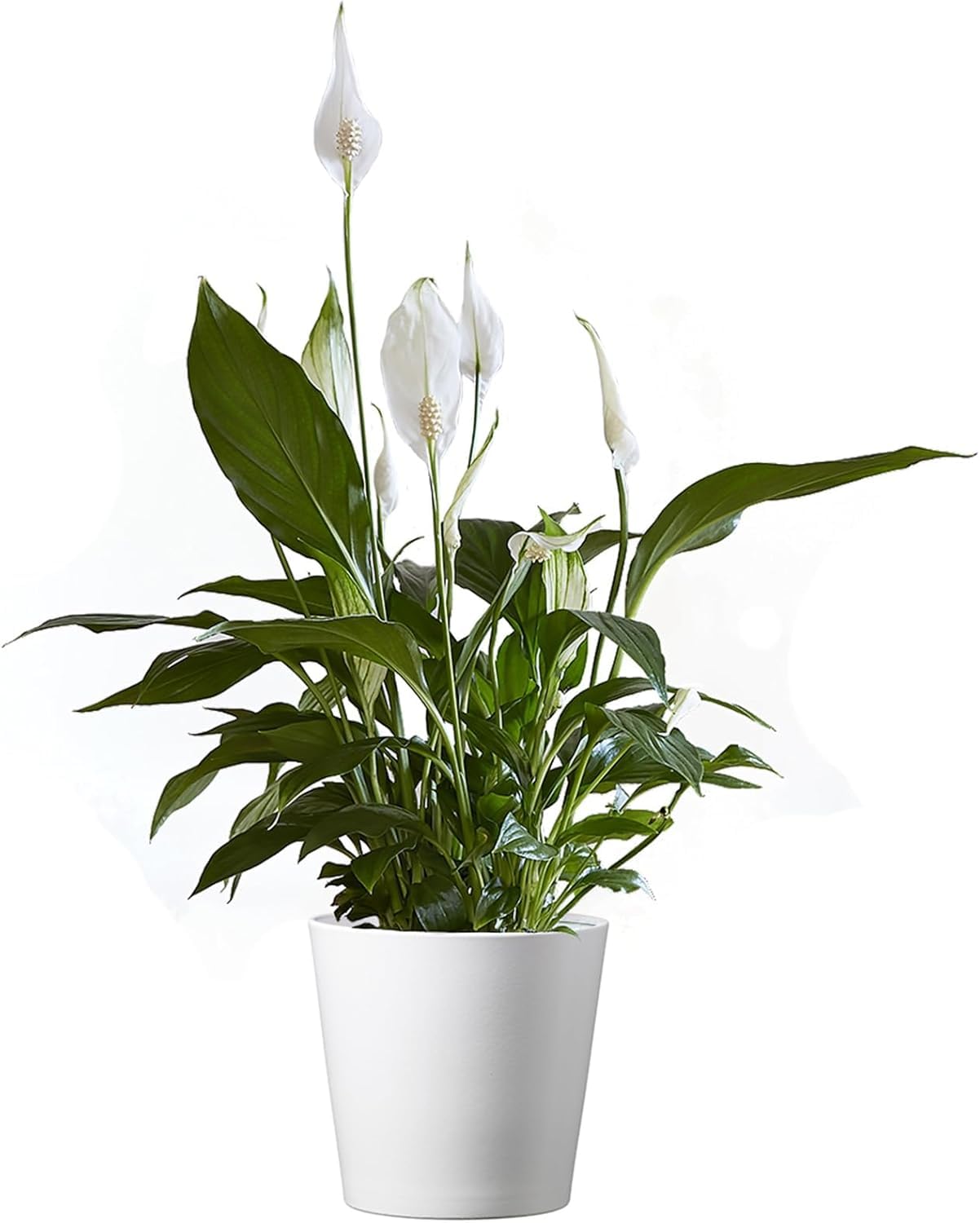
The Peace Lily remains the gold standard for reliable indoor flowering precisely because it does not demand a sun-drenched windowsill. This 6-inch pot specimen from American Plant Exchange arrives with established roots and the potential for its classic white spathe blooms to appear year-round, even in low to medium light conditions. Customer reports confirm that plants often arrive with buds or flowers, and many see new growth within weeks.
The Spathiphyllum is also one of the best air-purifying houseplants, actively removing common indoor pollutants like benzene and formaldehyde. Its watering needs are unusually intuitive—the leaves droop dramatically when thirsty, then perk back up within hours of a drink, making it nearly impossible to overwater if you watch the foliage. This forgiving nature makes it the top choice for beginners and busy households.
The primary consideration is shipping stress: because Peace Lilies hold a lot of water in their stems, they are prone to wilting or frost damage in transit. Several reviews note that plants arriving in winter without thermal protection developed black spots on the leaves and flowers. Order in mild weather or confirm the seller uses cold-weather packaging to avoid disappointment.
Why it’s great
- Thrives and blooms in low light conditions where most flowering plants fail
- Dramatic drooping leaves serve as a clear, foolproof watering indicator
- Proven air-purifying capabilities remove VOCs from indoor air
Good to know
- Highly susceptible to cold damage during winter shipping without insulation
- Can arrive wilted after transit; requires immediate rehydration
2. Hopewind Lemon Lime Maranta Prayer Plant

The Lemon Lime Maranta is a dual-purpose performer: it offers the captivating visual spectacle of leaves that fold upward at night like praying hands, and it produces small, delicate white flowers under proper conditions. This 12-16 inch plant from Hopewind arrives in a 4-inch nursery pot and is an ideal size for a desk, windowsill, or shelf where its vibrant green-and-yellow striping can be appreciated up close.
Certified by the ASPCA as non-toxic to cats and dogs, this Prayer Plant removes the anxiety of sharing your space with a blooming houseplant. Its care regimen is straightforward—bright, indirect light and watering when the top half of the soil is dry—but it does require higher humidity than average. Owners consistently report that the plant arrives well-packaged and healthy, with many noting vigorous growth and frequent reblooming after repotting.
The most common issue reported is the plant’s sensitivity to dry air. In heated homes during winter, the leaf edges may brown or curl unless a humidifier is used. The plant also wilted quickly if shipped in hot weather without adequate moisture. This is not a set-and-forget plant, but for those willing to mist or run a humidifier, the interactive foliage is worth the effort.
Why it’s great
- Pet-safe and non-toxic, certified by the ASPCA for homes with cats and dogs
- Distinctive nyctinastic leaf movement creates a dynamic living display
- Vibrant Lemon Lime coloring adds bright contrast to any room
Good to know
- Requires consistently high humidity to prevent leaf edge browning
- Can be sensitive to shipping stress in extreme temperatures
3. American Plant Exchange Bromeliad Guzmania

The Bromeliad Guzmania delivers the most architecturally dramatic bloom of any plant in this guide. Its central rosette of green leaves gives rise to a tall, brightly colored bract—typically red, pink, or orange—that remains vibrant for 6 to 12 weeks. This 6-inch pot specimen from American Plant Exchange is a grower’s pick, meaning you receive a mature plant already showing its signature flower spike or about to push one.
Bromeliads are epiphytic, which means their care is different from typical soil-based plants. You water the central cup (the “tank”) rather than the potting mix, and they thrive in bright, indirect light. They are also one of the most pet-safe flowering options, listed as non-toxic. Customer reviews consistently praise the size and health of the plants upon arrival, noting that the bracts remain showy for months without any special effort.
The primary drawback is that the mother plant flowers only once, then slowly declines while producing “pups” (offsets) that take a year or more to bloom. Another frequent complaint is color accuracy: the “grower’s pick” may be red instead of the pink shown in product photos, which can clash with existing decor. If you want a specific color, this open-stock model is a gamble.
Why it’s great
- Bract color lasts 3+ months, far longer than typical cut flowers
- Thrives on neglect; water the cup, not the soil
- Non-toxic to pets and easy to maintain
Good to know
- Mother plant dies after flowering; future blooms require pup propagation (1-2 years)
- Flower color is random (grower’s pick), may not match the photo
4. Hopewind Triostar Stromanthe
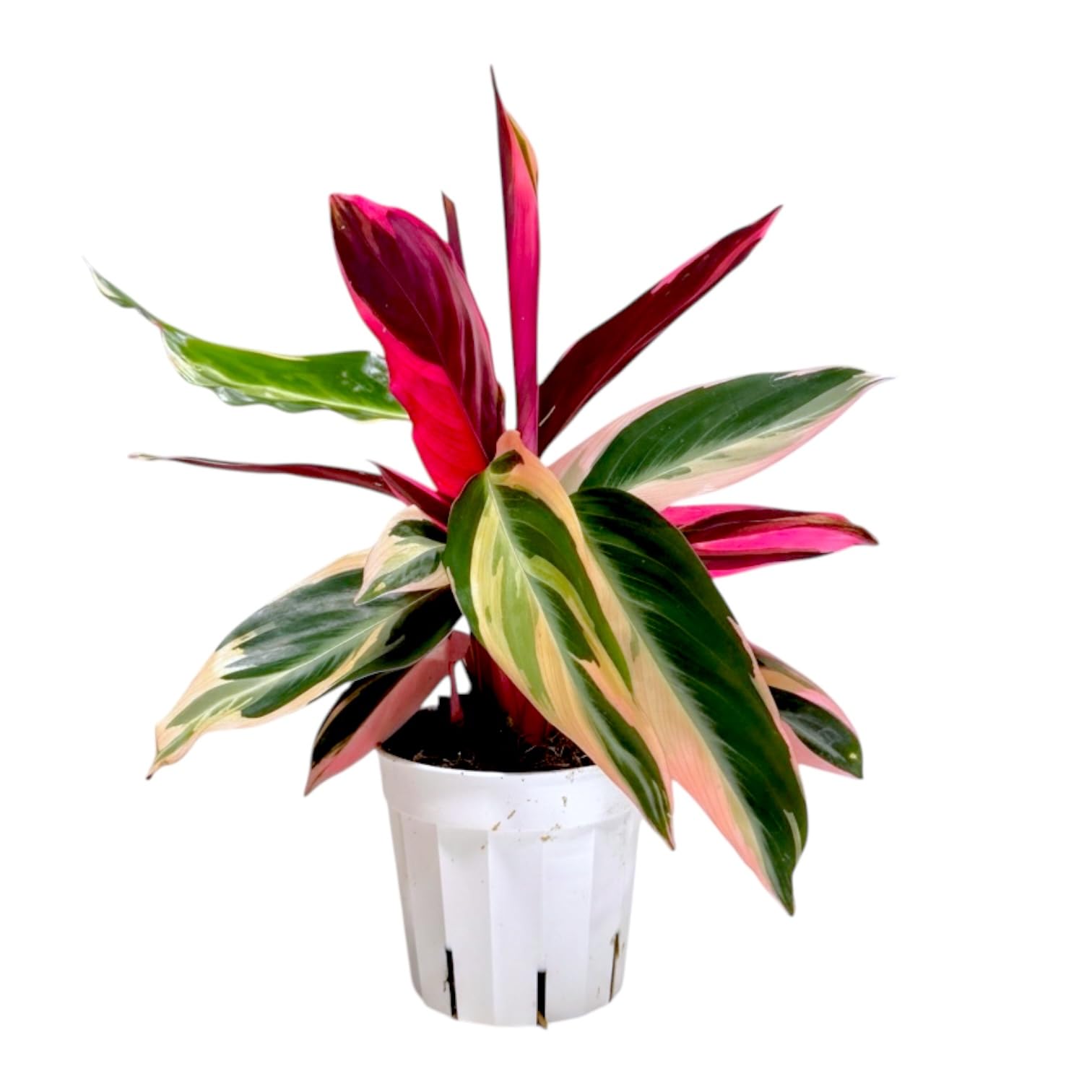
The Stromanthe Triostar earns its spot on a blooming plants list not because of its flowers (which are small and infrequent indoors) but because of its astonishing painted-leaf display. Each leaf is a canvas of green, cream, pink, and burgundy, giving the plant a perpetually flowering appearance without requiring a single bud. This 12-16 inch specimen from Hopewind is a top-tier foliage statement for collectors who want color that never fades.
As a member of the Marantaceae family (Prayer Plants), the Triostar has the same nyctinastic leaf movement as the Maranta, folding its leaves upward at night. It is, however, more demanding than the Lemon Lime Maranta: it needs consistently high humidity (50-60% or higher) or the leaf edges will crisp. Customer reports confirm that a humidifier is essentially mandatory unless you live in a naturally damp climate.
On the plus side, Hopewind’s packaging is excellent—multiple reviewers note that the plant arrived healthy despite rough handling by the postal service. The roots were well-developed and the soil was appropriately moist. The main risk is that buyers who do not account for the humidity requirement may watch the beautiful pink margins brown and die back within weeks. This is not a beginner plant.
Why it’s great
- Tricolor leaves (pink, cream, green) provide continuous visual interest
- Nyctinastic leaf folding adds an interactive element day and night
- Gorgeous, statement plant that draws attention in any collection
Good to know
- Extremely demanding of high humidity; leaf edges crisp without it
- Infrequent flowering indoors; primarily a foliage plant
5. Fam Plants Bird of Paradise (4-Pack)
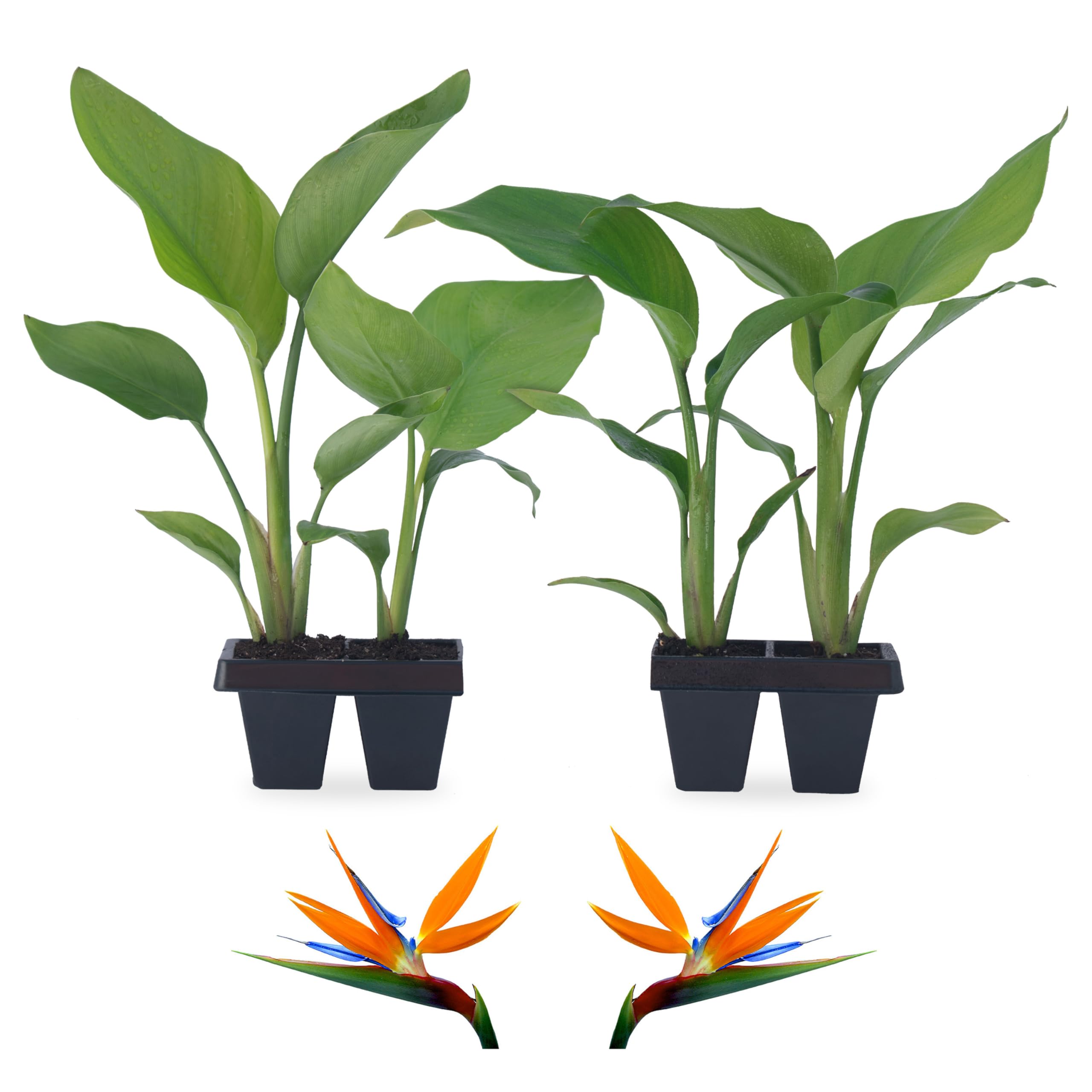
The Bird of Paradise (Strelitzia reginae) is the ultimate goal for many indoor gardeners: a truly exotic flowering plant that produces the unmistakable orange-and-blue crane-shaped blooms. This 4-pack from Fam Plants offers a head start, delivering four young plants in 2-inch pots that, with patience and bright light, can grow to 5 feet tall and eventually flower after 2-3 years. The juvenile plants are already vigorous and healthy, with strong root systems.
The value proposition here is outstanding for those planning a larger indoor display. Four plants provide a lush, full look from the start, and each plant is a perennial that returns year after year. The Strelitzia is also a known air-purifying species. Customer reviews confirm that the packaging is excellent and that the plants arrive in great condition, with care instructions included.
Realism is critical: these are starter plants at 6-10 inches tall. They will not flower for at least 2-3 years under optimal conditions (full sun or very bright grow lights). The plants require a lot of space as they mature, and they are not suitable for low-light rooms. Several buyers mentioned the plants were smaller than expected, so this is a long-term investment, not an instant gratification plant.
Why it’s great
- Produces iconic, exotic crane-like blooms after maturity (2-3 years)
- Four-pack provides excellent value for creating a lush tropical display
- Perennial with air-purifying benefits, returning year after year
Good to know
- Young plants are small (6-10 inches); flowering requires patience and space
- Needs very bright light or direct sun to meet its full blooming potential
6. Plants for Pets Florist Kalanchoe (3-Pack)
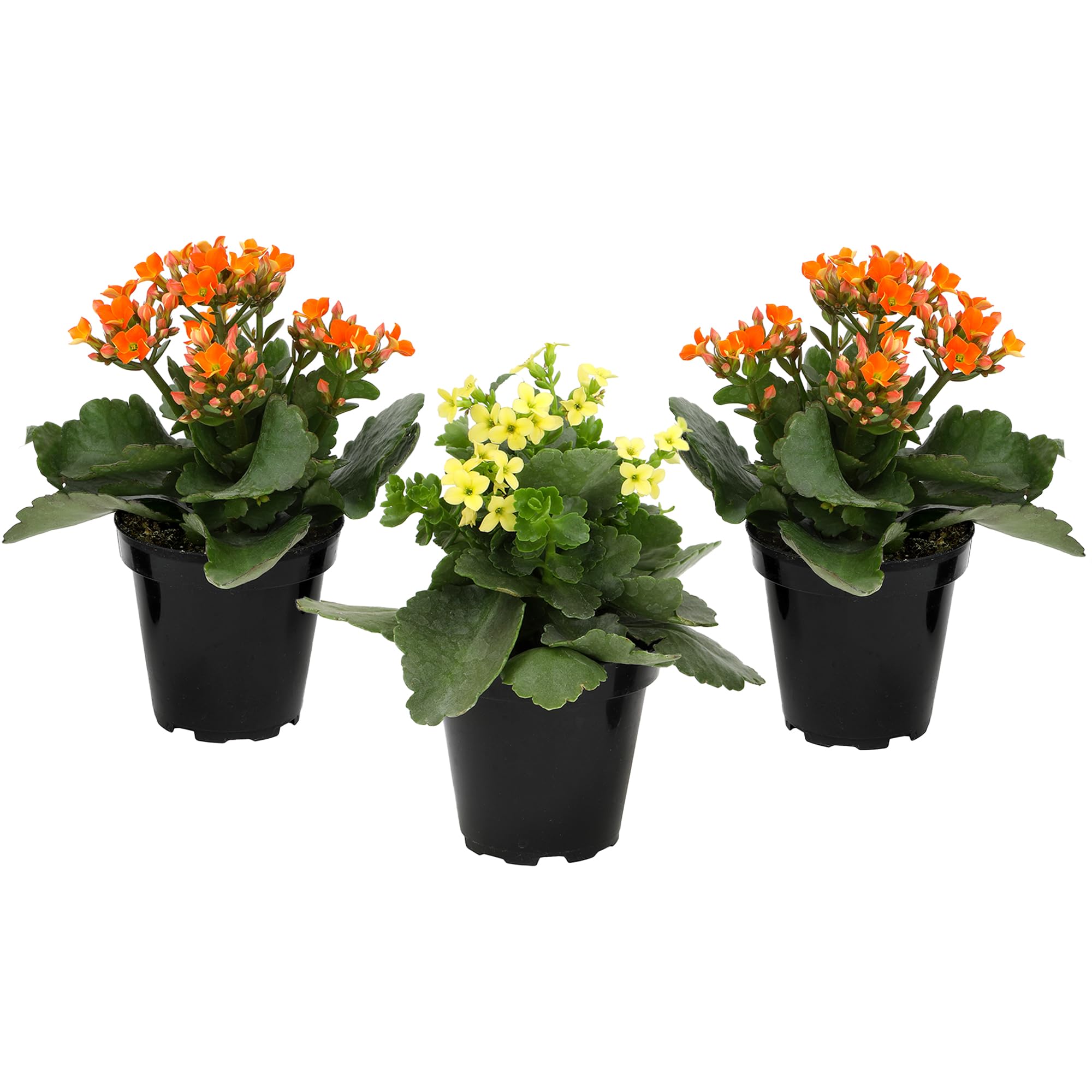
The Kalanchoe (Flaming Katy) is a succulent that defies the rule that succulents are foliage-only plants. This 3-pack from Plants for Pets arrives with blooms in vibrant orange, red, and yellow, and with proper care the flowers can last for months. As a drought-tolerant succulent, it is one of the most forgiving plants on this list—ideal for those who travel frequently or tend to underwater.
Year-round blooming is the headline feature. The Kalanchoe is a short-day plant, meaning it sets buds when nights are long, which replicates its natural winter/spring cycle. Indoors, this translates to multiple bloom cycles per year if you manage light exposure. The 3.5-inch pots are the perfect size for a windowsill collection, and the plants are compact enough to group for a big visual impact. Customers note that they adapt quickly and push out new buds within a month.
The blooms are sensitive to water and physical damage. Several reports mention that the flowers arrived slightly crushed or mushy from being packed while wet. The solution is to remove the damaged flower heads promptly; the foliage usually remains healthy. Also, because these are flowering succulents, they need a bright, sunny spot—low light will cause the blooms to drop and the plant to stretch (etiolate).
Why it’s great
- Drought-tolerant succulent; forgiving for forgetful waterers
- Year-round blooming potential with bright, bold flower colors
- Compact 3.5-inch pots ideal for tight spaces and grouping
Good to know
- Delivery of 3 units at once
7. JM BAMBOO African Violet (3-Pack)

The African Violet (Saintpaulia) is the classic reblooming houseplant, capable of flowering nearly continuously indoors when given the right conditions. This 3-pack from JM BAMBOO ships novelty varieties with growers’ choice of color, meaning each plant is a surprise pack of violet, pink, red, or white. The value lies in getting three mature plants that are already in bloom or bud at the time of shipping.
African Violets thrive in bright, indirect light and need consistent moisture—the soil should be kept evenly moist, not wet and not dry. They are compact by nature, making them perfect for small spaces. The packaging is a strong point: customers report double-wrapped boxes that protect the leaves and buds even when USPS mishandles the parcel. The plants settle in quickly and many owners report multiple rounds of flowers within weeks.
These are not the show-quality, perfectly flat-leaved specimens you see in competition photos. The grower’s choice means you may get a plant with a flower color or leaf shape you do not love. Additionally, the plants can suffer leaf breakage during shipping, especially in storms. While the vendor is praised for customer service, the unpredictable color is a dealbreaker for some. This is a great option for casual growers who enjoy the surprise, not perfectionists.
Why it’s great
- Ships in bloom or bud, offering immediate flowering gratification
- Compact size fits easily on small desks and shelves
- Excellent, protective packaging minimizes transit damage
Good to know
- Flower color is random (grower’s choice); you cannot pick the shade
- Leaves are fragile and can break during shipping despite good packaging
FAQ
How do I get a Kalanchoe to rebloom indoors?
Is the Lemon Lime Maranta safe for cats and dogs?
Final Thoughts: The Verdict
For most users, the best blooming indoor plants winner is the Peace Lily because it combines reliable, year-round white blooms with unmatched tolerance for low light and a foolproof watering cue. If you want a pet-safe plant with interactive night-folding leaves, grab the Lemon Lime Maranta. And for bold, long-lasting tropical color that requires almost no care, nothing beats the Bromeliad Guzmania.