
Our readers keep the lights on and my morning glass full of iced black tea. As an Amazon Associate, I earn from qualifying purchases.
Specs are compiled from manufacturer listings and verified buyer reviews and can change over time — please confirm the key details on the product page before buying.
You need a grounding wire that gives a stray electrical surge a safe path to the earth, and the right 10 AWG copper option depends on your project. This guide compares eight reliable choices, from premium marine-grade spools to budget-friendly THHN coils, so you can match the exact conductor to your job without overpaying.
I’m Min — the founder and writer behind Gadgets Feed. This guide is built by comparing the manufacturers’ published specifications and the patterns across verified customer reviews, so you get each pick’s real strengths and trade-offs instead of marketing spin.
Whether you’re grounding a TV antenna, a solar array, or a boat’s electrical system, the right 10 awg copper ground wire delivers lasting conductivity and corrosion resistance for your specific environment.
Our Picks at a Glance


How To Choose The Best 10 AWG Copper Ground Wire
Before you add a spool to your cart, you need to think about where the wire will live. A wire buried in the ground needs a different jacket than one running through a dry conduit in your garage. Choose the jacket based on where the wire will live—buried, in conduit, or exposed to salt air.
Solid vs. Stranded Conductors
A solid core is a single thick piece of copper, which makes it ideal for stationary runs like grounding an antenna mast. Stranded wire bundles many thin copper threads together, giving you flexibility to bend around corners and absorb vibration without breaking — a feature you want in a boat or a vehicle.
Pure Copper vs. Tinned Copper
Bare copper conducts electricity excellently, but it can oxidize over time when exposed to salt air. Tinned copper is coated with a layer of tin to prevent that corrosion, which is why marine standards demand it. If your project is near the ocean, you should prioritize tinned strands for long-term reliability.
Insulation and Jacket Ratings
The jacket shields the copper from heat, moisture, and abrasion. A 600V rating covers standard 120V/240V residential circuits and most solar panel voltages. Check the temperature range—wires rated for extreme cold stay flexible during winter installs.
Quick Comparison
| Model | Best For | Conductor Type | Max Current | Length | Amazon |
|---|---|---|---|---|---|
| TEMCo Solar PV Wire★ Best Overall | Solar & direct burial | 19-Strand Bare Copper | 50 A | 100 Feet | Amazon |
| Ancor 108010 Marine WireMarine Legend | Saltwater & vibration | Ultra-Flexible Tinned | — | 100 Feet | Amazon |
| CONEPY Marine WireBoat Favorite | Boat & automotive | Multi-Strand Tinned | — | 50 Feet | Amazon |
| NAOEVO 2-Conductor | 12V accessories & lighting | 105-Strand Tinned | — | 30 Feet | Amazon |
| Ancor 108002 Marine Wire | Compact marine runs | Ultra-Flexible Tinned | — | 25 Feet | Amazon |
| JXCN-PXTR THHN Wire | Budget antenna grounding | Single-Strand Copper | 40 A | 30 Feet | Amazon |
| GEARit THHN Building Wire | Long conduit runs | 10-Strand Copper | — | 150 Feet | Amazon |
| PHAT SATELLITE Ground Wire | Pre-terminated satellite | Solid Bare Copper | — | 15 Feet | Amazon |
In-Depth Reviews
1. TEMCo 10 AWG Solar PV Wire
Our pick — over 4.5★ from 950+ verified ratings; the strongest balance of quality and price.
The American-made solar wire with 50-amp headroom and a 19-strand core.
This is the pick for anyone running power from solar panels to a charge controller, especially if that run goes underground between buildings. The 19-strand pure copper core delivers a max current of 50 A, and the XLPE insulation is rated for direct burial — meaning you can trench it without needing conduit. Buyers report it “works well on 115-ft run with 6x100W panels,” confirming it handles real-world solar distances.
Value wins people over — 71 owners call it a great deal for the length. The 100-foot spool suits a full panel run, not a small patch job. The Ancor 108010 below is softer and more corrosion-resistant, but the TEMCo carries 25% more current at 50 A versus 40 A on the budget THHN, giving you extra safety margin for high-output setups.
The trade-off is flexibility. Some owners find the thick insulation stiff, making it harder to bend around tight corners. The insulation also gets mixed feedback on thickness, with a few wishing it were even beefier. If you need to snake wire through a cramped engine bay, a softer marine wire is easier to route.
Why it wins
- 50 A max current rating for high-power solar runs
- 100 ft length covers long distances in one spool
- Direct burial rated with UL 4703 certification
The trade-offs
- Insulation stiffness makes tight bends difficult
- Some units run slightly under advertised gauge
Reach for this if: you’re wiring a solar array or burying a line and want a certified 50 A conductor.
Look elsewhere if: you need maximum flexibility for tight engine-bay routing, or you’re just grounding a small antenna.
2. Ancor 108010 Tinned Copper Wire
The tinned, ultra-flexible 100-footer that shrugs off saltwater and vibration.
This is the premium choice for anyone whose grounding run lives near the ocean or on a boat. Each strand is tinned to resist corrosion, and the ultra-flexible Type 3 stranding is engineered to absorb vibration without fatiguing. The vinyl jacket stays flexible even in extreme cold at -40 deg F/C, so winter installation doesn’t turn the wire into a frozen rod.
Owners consistently praise its quality and value, noting it’s not just for marine use — the high corrosion resistance is appreciated for outdoor solar projects near the sea. The 100-foot length gives you plenty of room for a full boat rewire or a long run from a panel to a ground rod. Its premium vinyl insulation is rated at 600 volts and resists salt water, battery acid, oil, and gasoline.
You’re paying for tinning and flexibility that you don’t strictly need for a dry indoor conduit run. If your wire never touches salt air, the added corrosion resistance is a luxury rather than a necessity.
The verdict: the ultimate corrosion-proof grounding wire for saltwater environments; overkill for dry indoor use.
Best if: your ground wire faces salt spray, engine vibration, or extreme cold on a regular basis.
Think twice if: you just need a cheap indoor ground — a standard THHN will do the job for less.
3. CONEPY 10 Gauge Marine Wire
Oxygen-free tinned copper duplex with a thick PVC jacket built for the ocean.
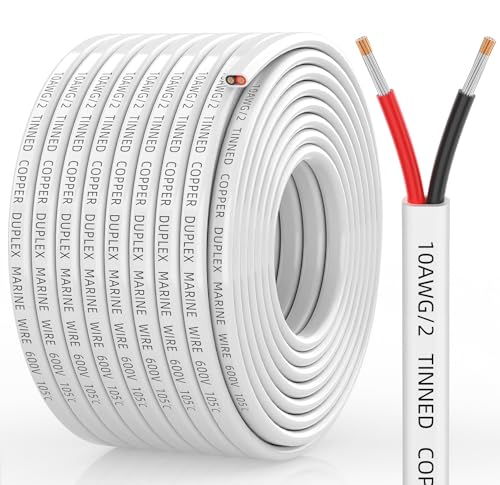
This duplex cable bundles two 10 AWG conductors into one jacket, which makes it a fast solution for powering a trolling motor or rewiring a boat’s 12V supply. Each conductor packs 74 strands of 0.3 mm tinned copper, giving you flexibility and a 5.26 mm² cross-section. The jacket is IP68 waterproof, and the wire handles a wide -40°F to 221°F operating range.
Quality is the thing everyone raves about — it’s the most-mentioned aspect by a wide margin among owners. Buyers used it to “rewire the main 12v supply on my boat” and praised how well-insulated it is. The thick PVC jacket resists saltwater corrosion and UV rays, making it a standout for exposed runs on a pontoon or trailer.
The honest downside is the length. A few owners note the advertised length isn’t always accurate, so measure before you cut your conduit. It’s also priced at a premium tier for a 50-foot spool — you’re paying for the marine-grade tinning and the duplex convenience.
Why owners pick it
- 2-conductor design saves wiring time
- IP68 waterproof rating for wet environments
- Thick PVC jacket resists saltwater and UV
Before you buy
- Some owners mention the actual length falls short
- Premium price per foot for marine duty
Grab it for: a fast, clean 12V boat rewire where a duplex cable saves you hours.
skip it if: you need an exact measured length or you’re on a strict budget — measure first.
4. NAOEVO 10 Gauge Wire 2 Conductor

The ultra-flexible 105-strand duplex that solders cleanly for 12V accessory wiring.
This is the go-to for DIYers wiring lights, horns, fans, and relays in a car, RV, or boat. The 105 strands of 0.24 mm tinned copper inside each circuit make it exceptionally soft and easy to bend into tight spaces. The 30-foot length is enough to run power to multiple accessories around a vehicle, and the included 16 heat-shrink tubes and 4 cable ties are a thoughtful bonus.
The standout feature is how well it solders. Customers note clean, solid connections to XT-60 and other connectors, which is critical for a reliable ground or power feed. It’s rated up to 600V, but it’s explicitly designed for low-voltage 5V to 24V applications where flexibility matters more than raw ampacity.
It’s a specialized tool — not a building wire. The thin, soft jacket doesn’t have the armored protection of a THHN wire meant for conduit, so it’s best kept inside a vehicle or protected enclosure. All eight reviews rate it top-quality, and the flat profile makes it easy to route under carpets and panels.
The takeaway: a premium-feeling, solder-friendly duplex for automotive and marine accessory work, not for trench or conduit runs.
Choose this when: you’re adding 12V accessories and want a wire that’s a joy to solder and bend.
Pass on this if: you need a direct-burial or conduit-rated ground wire for a building.
5. Ancor 108002 Marine Grade Wire
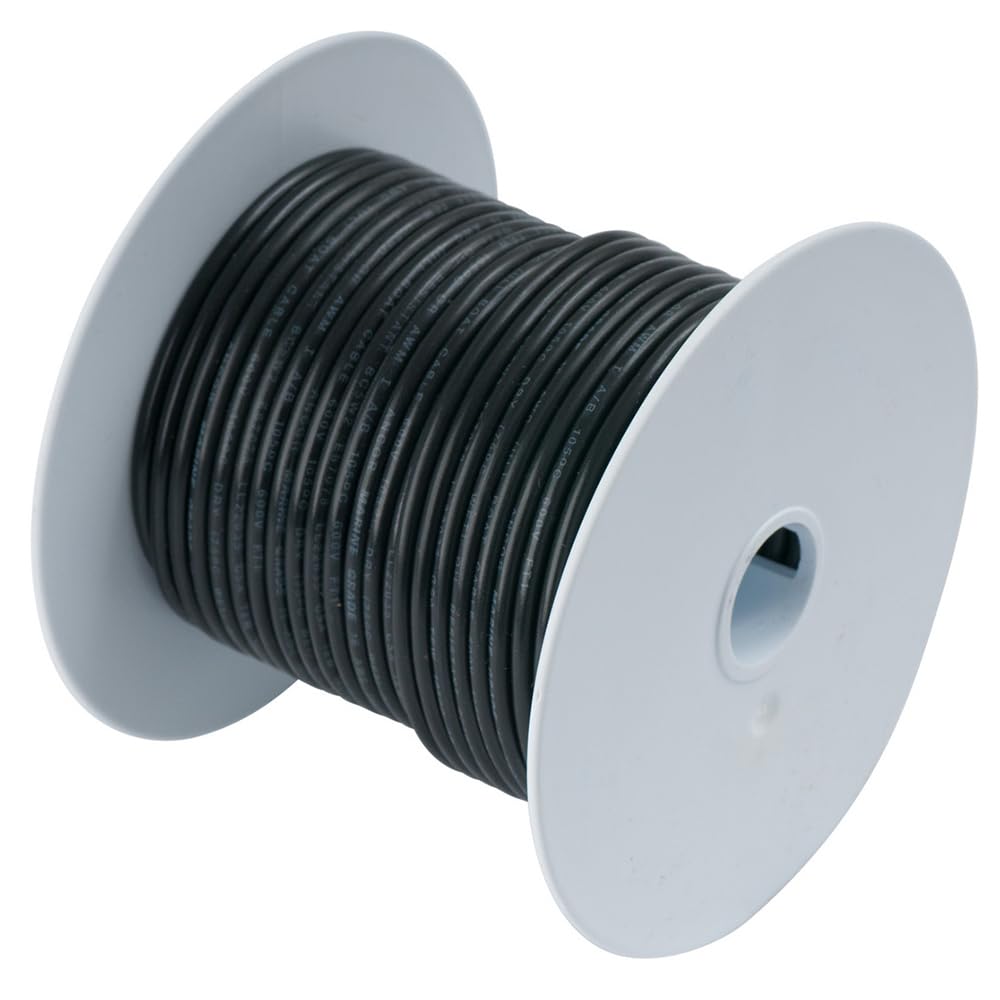
The 25-foot marine tinned wire that stays flexible in extreme cold for tight boat routing.
This is the shorter, more affordable sibling to the 100-foot Ancor above, ideal for a single trolling motor feed or a short outdoor solar project near the ocean. It carries the same ultra-flexible Type 3 stranding and tinned copper construction, so it resists corrosion and vibration fatigue. The premium vinyl jacket is rated at 600 volts and 105°C dry, and it resists salt water, battery acid, oil, and gasoline.
Boaters are the core audience here. One owner used it to wire a 12V Minn Kota Powerdrive trolling motor and noted it “does not heat up and melt like other cheap brands.” Another used it for an outdoor solar project near the ocean, confirming the tinning’s real-world value in salt air. It’s substantially more flexible than the TEMCo’s stiff solar insulation.
The trade-off is simple: 25 feet is a short run. If you’re wiring a full boat or running a long distance, the 100-foot Ancor 108010 is the better value — this shorter spool is for completing a specific task, not starting a big project.
The strengths
- Tinned copper resists saltwater corrosion
- Ultra-flexible for tight boat spaces
- Resists oil, gasoline, and extreme cold
The limit
- 25-ft length suits small jobs only
- Premium per-foot cost for marine grade
Perfect for: one specific marine or coastal job that needs a short, corrosion-proof feed.
Not for: whole-boat rewiring — buy the longer spool for that.
6. JXCN-PXTR 10 Gauge THHN Wire
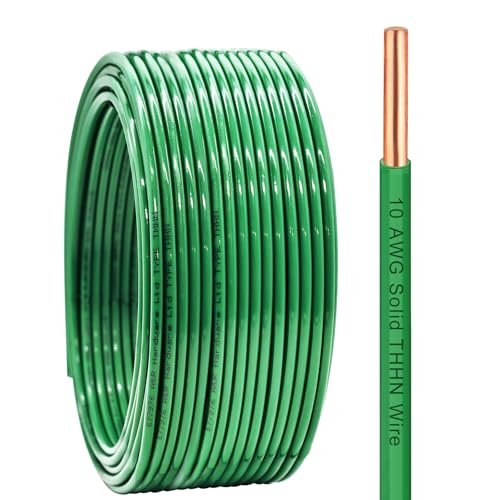
The entry-level solid copper THHN that gets a TV antenna grounded on a budget.
This 30-foot green spool is the low-cost answer for a simple grounding task like a roof antenna or a small residential panel. The single-strand solid copper conductor gives lower resistance and is less prone to oxidation over time compared to cheaper alloys. The nylon and PVC insulation is rated for 600V and handles up to 40 A of current.
Buyers sum it up best: “It is grounding wire, easy to work with, used to ground TV antenna on my roof!” The solid core is easy to strip and terminate, and the green jacket makes identification simple. It’s rated for dry and wet conditions at 90°C and 75°C respectively, so it’s fine for outdoor use where it won’t be physically abused.
The honest caveat is that this isn’t marked with UL certification, which some buyers noted. It’s also a single solid wire, not a multi-conductor cable — a detail that trips up a few people. For a heavy-duty conduit run, the GEARit below offers more length and a stranded core, but for a quick, cheap antenna ground, this fits the bill.
What you get
- Budget-friendly single-strand copper
- 40 A rating for standard grounding
- Easy to strip and work with
Know before buying
- No UL marking on the jacket
- Single wire, not a duplex cable
Best for: a cost-conscious antenna or small panel ground where the wire stays put.
pass on it if: your local code inspector demands a UL-listed conductor.
7. GEARit 10 Gauge THHN Building Wire

The marathon 150-footer with a 10-strand core for long conduit pulls and panels.
When you’re running ground wire through a house, a workshop, or a commercial panel, the last thing you want is to run out halfway. This 150-foot spool of stranded THHN is built for exactly those long pulls. The 10-strand copper construction improves flexibility for routing through conduit and tight control panels, while the PVC and nylon jacket resists heat, moisture, oil, and gasoline.
It’s rated at 600V and 90°C, putting it firmly in professional-building-wire territory. The green jacket helps you identify the ground conductor quickly in a crowded panel. Owners confirm it’s a quality product that “works well for my application,” and the sheer length makes it the best value per foot for a whole-home grounding project.
The main gripe is physical: the wire often arrives rolled and tied rather than on a spool, which makes it harder to pull cleanly. Stripping it is also reportedly tough — a few owners found the nylon jacket stubborn to remove. If you’re doing a massive commercial run, the spool presentation matters; if you’re patient with a stripper, the length is the dealmaker.
The big win
- 150 ft covers entire house or shop runs
- 10-strand core aids conduit pulling
- 600V 90°C rated for professional use
The friction
- May arrive tied, not on a spool
- Jacket is difficult to strip
Choose it for: long, code-compliant conduit runs where length is more important than ease of stripping.
Look elsewhere if: you want a neat spool or need wire that strips easily.
8. PHAT SATELLITE INTL Ground Wire

The ready-to-install 15-footer with connectors already crimped on both ends.
This is the fastest solution on the list for grounding a satellite dish or rooftop antenna. It comes in a convenient 15-foot length, and critically, it arrives with connectors already installed on both ends. Reviewers point out “the connectors at both ends are well made and perfectly installed,” so you can go from the box to the mast without crimping a single terminal.
The core is 100% pure solid bare copper, wrapped in a UL-listed, CSA-certified THHN jacket. That means it’s rated for outdoor and harsh use, with a thermoplastic nylon coating that resists heat and abrasion. It’s the easiest pick for a homeowner who wants a clean, professional-looking ground without buying a crimping tool.
The downside is the length and flexibility. At 15 feet, it’s strictly for short runs — you won’t rewire a house with it. And like most solid-core wires, it’s stiff, so routing it around sharp corners takes some persuasion. The price is higher per foot than bulk THHN spools, but you’re paying for the convenience of pre-made connections.
The verdict: a plug-and-play satellite ground that trades raw value for pre-terminated convenience.
Ideal for: a DIY antenna ground where you want a factory-quality connection with zero crimping.
Not ideal for: long runs or tight bends — get a bulk spool for that.
Understanding the Specs
Strand Count
The number of individual copper threads twisted together inside the jacket. A single-strand solid core is cheaper and fine for static runs, but a multi-strand core — like the 19-strand TEMCo or the 105-strand NAOEVO — bends far more easily and resists breaking from vibration. For boats and vehicles, always prioritize a high strand count.
Maximum Current Rating
This tells you how many amps the wire can safely carry before it starts to heat up. A 10 AWG wire rated at 50 A, like the TEMCo, handles heavier loads than a 40 A-rated THHN wire. Grounding currents are low, but a higher amp rating adds surge safety margin.
Insulation and Jacket Type
THHN is a thermoplastic jacket with a nylon coating, designed for dry and wet locations in conduit. XLPE, used on the TEMCo, is a cross-linked polyethylene that’s tougher and specifically rated for direct burial in the ground. Marine wires use a thicker PVC that resists saltwater, oil, and UV rays, making them more durable in harsh outdoor environments.
Voltage and Temperature Ratings
A 600V rating means the insulation safely handles residential and most solar panel voltages. The temperature rating (e.g., 90°C dry, -40°F cold) defines the safe flexibility range. For winter outdoor installs, a cold-rated wire stays pliable and easier to handle.
FAQ
What is the difference between solid and stranded 10 AWG grounding wire?
Can I bury 10 AWG ground wire directly in the ground?
Why is tinned copper better for marine grounding?
Is a higher maximum current rating better for grounding?
What does the 600V rating on THHN wire mean?
Why is the wire on a 150-foot spool not always delivered on a spool?
Can I use a 10 AWG marine wire for my solar panel project?
Why is the 10 AWG wire’s insulation stiff and hard to bend?
Is it safe to use a non-UL-listed wire for grounding a TV antenna?
How do I choose between a 25-foot and a 100-foot spool?
Final Thoughts: The Verdict
For most buyers, the best 10 awg copper ground wire is the TEMCo Solar PV Wire because it pairs a certified 50 A rating with 100 feet of direct-burial-ready XLPE insulation, making it the safest all-rounder for solar and outdoor runs. If you’re fighting saltwater corrosion on a boat, the Ancor 108010 gives you class-leading tinned flexibility. And for a quick, cheap antenna ground, the JXCN-PXTR THHN gets the job done while staying affordable.
How We Picked
We do not accept paid placement. Every pick is matched to a real buyer and a real use-case; we do not hands-on test units.
Sources & Methodology
Specifications: manufacturer listings and product documentation. Review insights: verified customer reviews, as of September 2026. Pricing: not shown on this page (it changes often); check the current price via the retailer link.
As an Amazon Associate, Gadgets Feed earns from qualifying purchases. This does not affect which products we feature.