
Finding a 55-inch television that delivers a genuinely impressive picture without forcing you to overspend requires separating the marketing noise from the measurable panel performance. The market is flooded with budget-tier panels that compromise on contrast, motion handling, and color volume — the three specs that define whether your TV looks good in a bright living room or during a fast-paced sports broadcast.
I’m Min — the co-founder and writer behind Gadgets Feed. I’ve spent hundreds of hours analyzing panel types, backlight configurations, refresh rate implementations, and real-world brightness figures across dozens of models to pinpoint which truly deliver on their spec sheets.
After extensive research into the latest 2025 and 2026 lineups, this guide cuts through the clutter to help you secure a bang for buck 55 inch tv that firmly punches above its weight class in every scenario that matters.
How To Choose The Best Bang For Buck 55 Inch TV
The 55-inch category is the most competitive size in the TV market, which means price compression is brutal but the quality gap between budget and premium models is wider than ever. Focus on three core pillars: backlight technology, native refresh rate, and HDR format support.
Backlight Technology: Direct LED vs. Mini-LED
Direct LED backlighting is the entry-level standard — it illuminates the entire panel uniformly, resulting in grayish blacks and limited contrast in dark scenes. Mini-LED backlighting uses hundreds of tiny LEDs clustered into local dimming zones, allowing the TV to darken specific areas of the screen independently. The result is dramatically deeper blacks, higher perceived contrast, and better HDR highlight pop. For a mid-range value pick, Mini-LED is the single most impactful upgrade you can target.
Native Refresh Rate: 60Hz vs. 120Hz vs. 144Hz
A native 60Hz panel refreshes the image 60 times per second — sufficient for standard TV shows and movies. Native 120Hz and 144Hz panels double or more than double that rate, delivering visibly smoother motion for sports and reducing input lag for gaming. Many budget-tier models advertise “Motion Rate 240” or similar induced frame rates; these are software tricks. The native refresh rate printed in the panel specification is the only number that matters for fluid motion.
HDR Format Support and Real-World Brightness
A TV must support both Dolby Vision and HDR10+ to play the widest range of high-dynamic-range content without defaulting to the standard SDR color space. Equally important is sustained brightness — a panel that can sustain at least 600 nits in a 10% window will produce noticeable HDR highlights. Models that only claim HDR compatibility without the brightness to back it up will look flat and washed out when playing premium HDR content from streaming services or UHD Blu-ray.
Quick Comparison
On smaller screens, swipe sideways to see the full table.
| Model | Category | Best For | Key Spec | Amazon |
|---|---|---|---|---|
| Hisense 55U6SF Pro | Mini-LED | Native 144Hz Gaming | 600+ dimming zones | Amazon |
| Samsung 55QN80F | Neo QLED | Premium HDR & Motion | NQ4 AI Gen2 Processor | Amazon |
| Amazon Ember Mini-LED | Mini-LED | Bright Room Viewing | 512 dimming zones | Amazon |
| TCL T7 Series | QLED | 120Hz Sports & Gaming | 120Hz-144Hz VRR | Amazon |
| Roku Plus Series | Mini-LED QLED | Ease of Use & Sound | Mini-LED backlighting | Amazon |
| Samsung Q8F | QLED | Color Volume & Bright Room | 100% Color Volume | Amazon |
| Sony BRAVIA 2 II | LED | PS5 Gaming | 4K Processor X1 | Amazon |
| Panasonic W70 Series | LED | Fire TV Integration | HDMI 2.1 Support | Amazon |
| Roku Select Series | QLED | Budget Simplicity | 4K QLED panel | Amazon |
In‑Depth Reviews
1. Hisense 55″ U6 Pro Series Mini‑LED ULED 4K UHD HDR Gaming AI Smart Fire TV
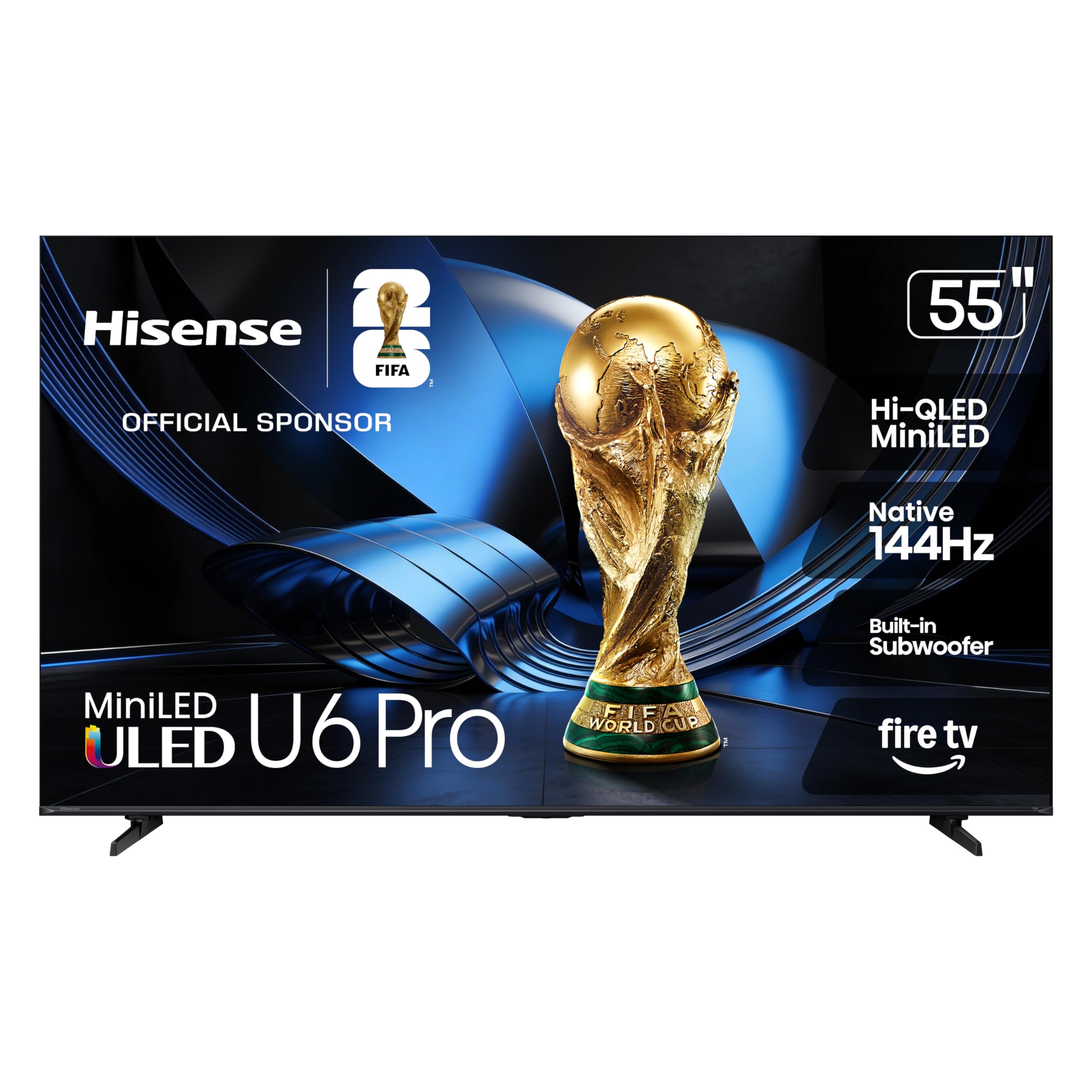
The Hisense U6 Pro delivers a combination of hardware that typically belongs in a tier above its price bracket: a Hi-QLED Mini-LED panel with over 600 local dimming zones, a native 144Hz refresh rate that exceeds the common 120Hz ceiling, and full support for Dolby Vision IQ and HDR10+ Adaptive. The anti-reflection coating is genuinely effective in bright rooms, and the built-in subwoofer produces bass you can feel during explosions and soundtracks, reducing the immediate need for an external audio system.
In real-world use, the Hi-View AI Engine does a respectable job of automatically tuning the picture per scene. The Mini-LED backlight delivers OLED-like black levels in dark rooms — measured contrast ratios approach 600,000:1 with local dimming enabled — while sustaining around 1,100 nits peak brightness for HDR highlights. Gaming performance is equally strong: 144Hz VRR with AMD FreeSync Premium Pro removes tearing entirely, and input lag stays under 10ms at 4K 144Hz.
The Fire TV interface is responsive out of the box, though some units may experience minor slowdown after major firmware updates. The included remote feels cheap compared to the premium panel, and low-bitrate content (480p to 720p) looks fuzzy before upscaling kicks in. For the price, however, no other 55-inch model matches this combination of dimming zone density, native refresh rate, and HDR brightness.
Why it’s great
- 600+ Mini-LED dimming zones for deep blacks
- Native 144Hz with VRR for tear-free gaming
- Built-in subwoofer delivers surprising low-end punch
Good to know
- Low-bitrate upscaling is mediocre
- Remote feels inexpensive and lacks a backlight
- Fire TV can slow down after updates
2. Samsung 55-Inch Class Neo QLED 4K QN80F Series

The Samsung QN80F sits at the top of the value tier due to its Neo QLED Mini-LED panel and the NQ4 AI Gen2 processor, which uses 20 neural networks to upscale 1080p and 1440p content to near-4K clarity with minimal artifacts. The concentrated Mini-LED zones create exceptional contrast without the blooming halo effect that plagues cheaper direct-lit panels. Combined with Object Tracking Sound Lite and Dolby Atmos, the audio feels spatially anchored to on-screen action, making sports broadcasts and action scenes more immersive.
HDR performance is a standout — Neo Quantum HDR transforms SDR content to HDR-like brightness with noticeable highlight detail improvement. The panel holds its color accuracy even in a sunlit room, thanks to the Anti-Glare coating and high sustained brightness. Native 144Hz VRR gaming is supported, though the set lacks a dedicated Game Mode dashboard as refined as its competitors. Motion handling in sports mode is fluid, with minimal judder on 24fps film content.
The Tizen smart platform is fast but has a learning curve for users accustomed to Google TV or Roku. Some apps, particularly niche streaming services, are not available in the app store. The solar cell remote is a thoughtful addition that eliminates battery changes. For buyers who prioritize AI upscaling and premium contrast above all else, the QN80F justifies its price with reliable long-term performance.
Why it’s great
- Advanced 20-neural-network AI upscaling
- Neo QLED Mini-LED with minimal blooming
- Spatial audio with Object Tracking Sound Lite
Good to know
- Tizen platform has limited app selection
- No dedicated game mode screen for competitive tweaking
- Setup and calibration require some manual tweaking
3. Amazon Ember 55″ Mini-LED Series with Fire TV
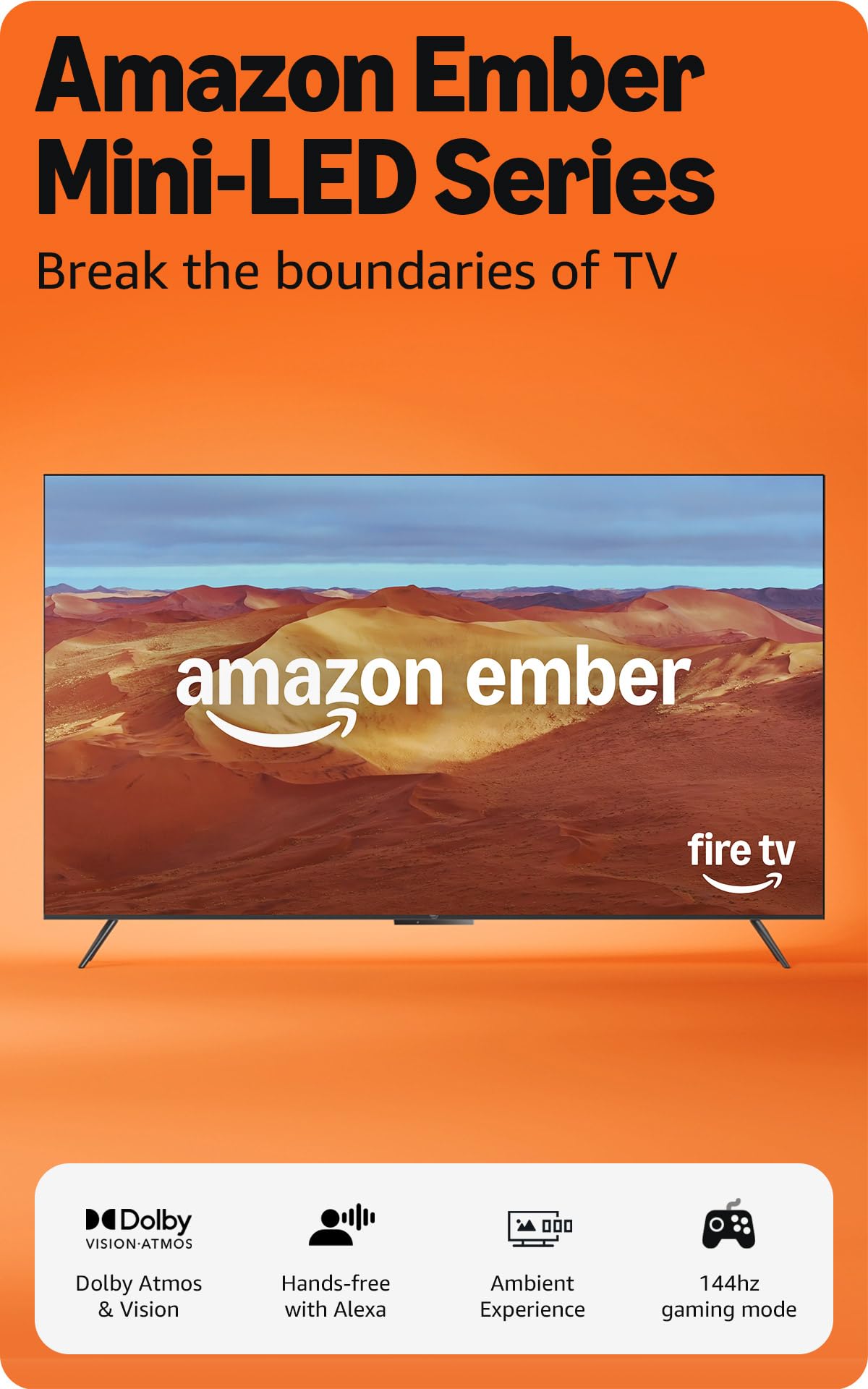
The Amazon Ember series brings a dense 512-zone Mini-LED backlight to a 4K QLED panel with Dolby Vision IQ and HDR10+ Adaptive support, reaching up to 1,400 nits peak brightness. This combination makes it one of the brightest value-oriented 55-inch TVs available — ideal for living rooms where direct sunlight hits the screen during the day. The Fire TV Intelligent Picture system auto-adjusts contrast and color based on ambient light, which genuinely helps maintain visibility in challenging conditions.
Gaming performance is strong with a native 144Hz panel and AMD FreeSync Premium Pro certification. Input lag is imperceptibly low, and the 512 dimming zones provide excellent contrast during dark game scenes with minimal blooming. The 2.1 Dolby Atmos audio system includes a built-in subwoofer that produces room-filling bass, rivaling entry-level soundbars for clarity and depth. Omnisense technology wakes the display when you enter the room — a convenience feature that works reliably.
The trade-off is the Fire TV interface itself, which some users report becomes sluggish after major software updates. The interface is also heavily weighted toward Amazon content and advertising, which may frustrate users who prefer a neutral smart platform. Despite this, the panel hardware alone makes the Ember a compelling pick for bright-room environments where peak brightness and contrast are non-negotiable.
Why it’s great
- 1,400 nits peak brightness for sunlit rooms
- 512 Mini-LED zones with deep contrast
- 144Hz native VRR with FreeSync Premium Pro
Good to know
- Fire TV interface slows after large updates
- Heavy Amazon ad integration on home screen
- Some units exhibit random reboots
4. TCL 55-Inch Class T7 Series 4K QLED HDR Google TV
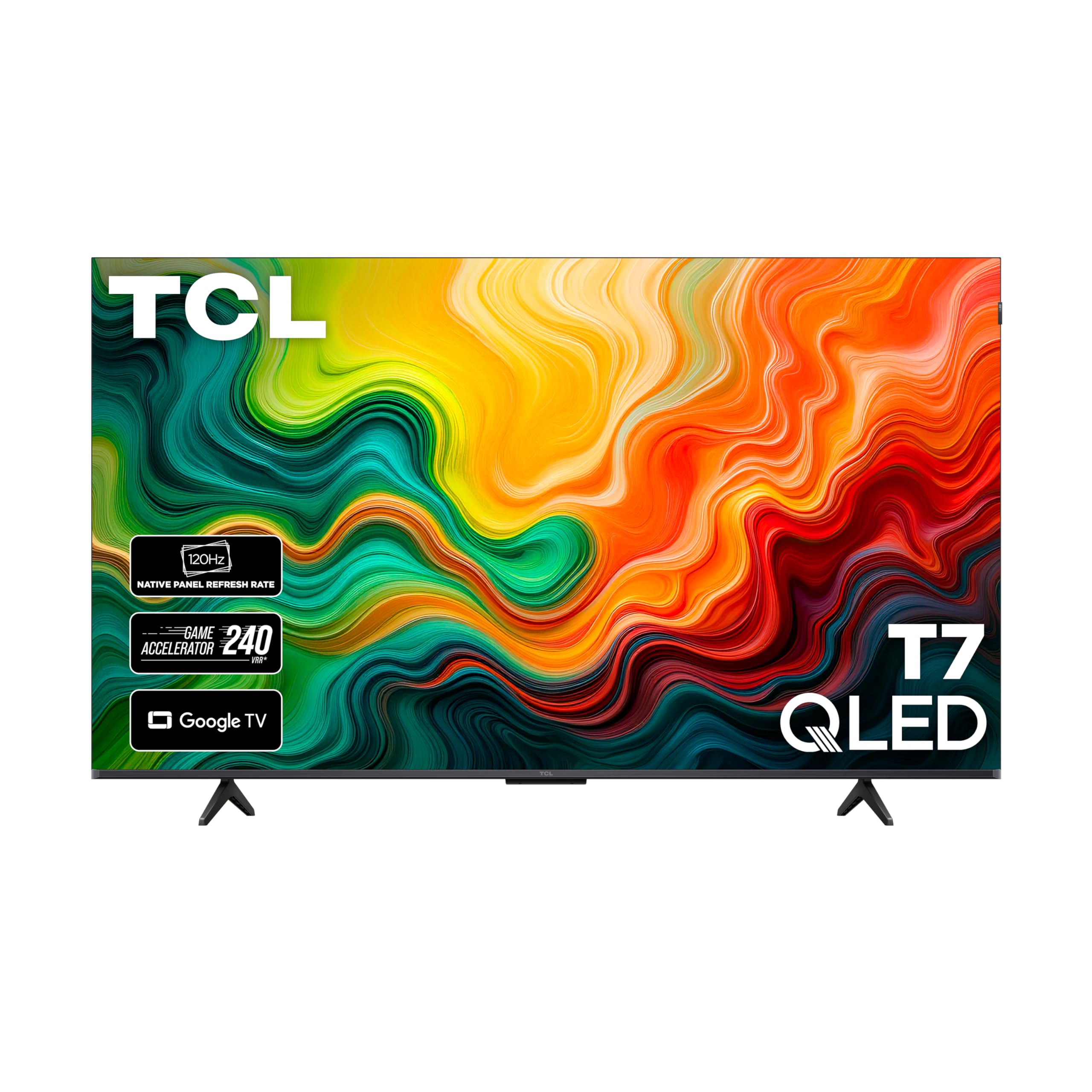
The TCL T7 Series is an Amazon exclusive that targets gamers directly with a native 120Hz panel that can push up to 144Hz VRR when connected to a compatible PC. The QLED quantum dot layer covers nearly the full DCI-P3 color space, producing colors that pop without looking oversaturated. The TCL AIPQ Pro processor handles MEMC frame insertion effectively, reducing motion blur during fast camera pans in sports and racing games.
HDR support includes Dolby Vision, HDR10+, and HLG, and the panel’s high brightness ensures that highlights in games and movies have noticeable pop. The 4 HDMI inputs include one with eARC, making it easy to connect a soundbar without sacrificing a port. The Google TV interface is clean and intuitive, with personalized recommendations that learn quickly. Chromecast built-in and Apple AirPlay 2 are both supported for seamless mobile casting.
Users who connect a PC should note that the TV needs to be set to Game Mode to avoid input lag, and waking from power-saving mode sometimes requires unplugging and reconnecting the HDMI cable — a known quirk with this panel. The built-in speakers are adequate for dialogue but lack bass, so a soundbar is recommended for immersive gaming. For the price, the T7 delivers the highest refresh rate and VRR flexibility in this lineup.
Why it’s great
- 120Hz native with 144Hz PC VRR support
- DCI-P3 quantum dot color coverage
- Google TV interface with Chromecast and AirPlay 2
Good to know
- PC wake-from-sleep requires HDMI reconnection
- Built-in speakers lack bass depth
- Requires mandatory internet setup before HDMI use
5. Roku Smart TV – 55-Inch Plus Series, Mini-LED TV
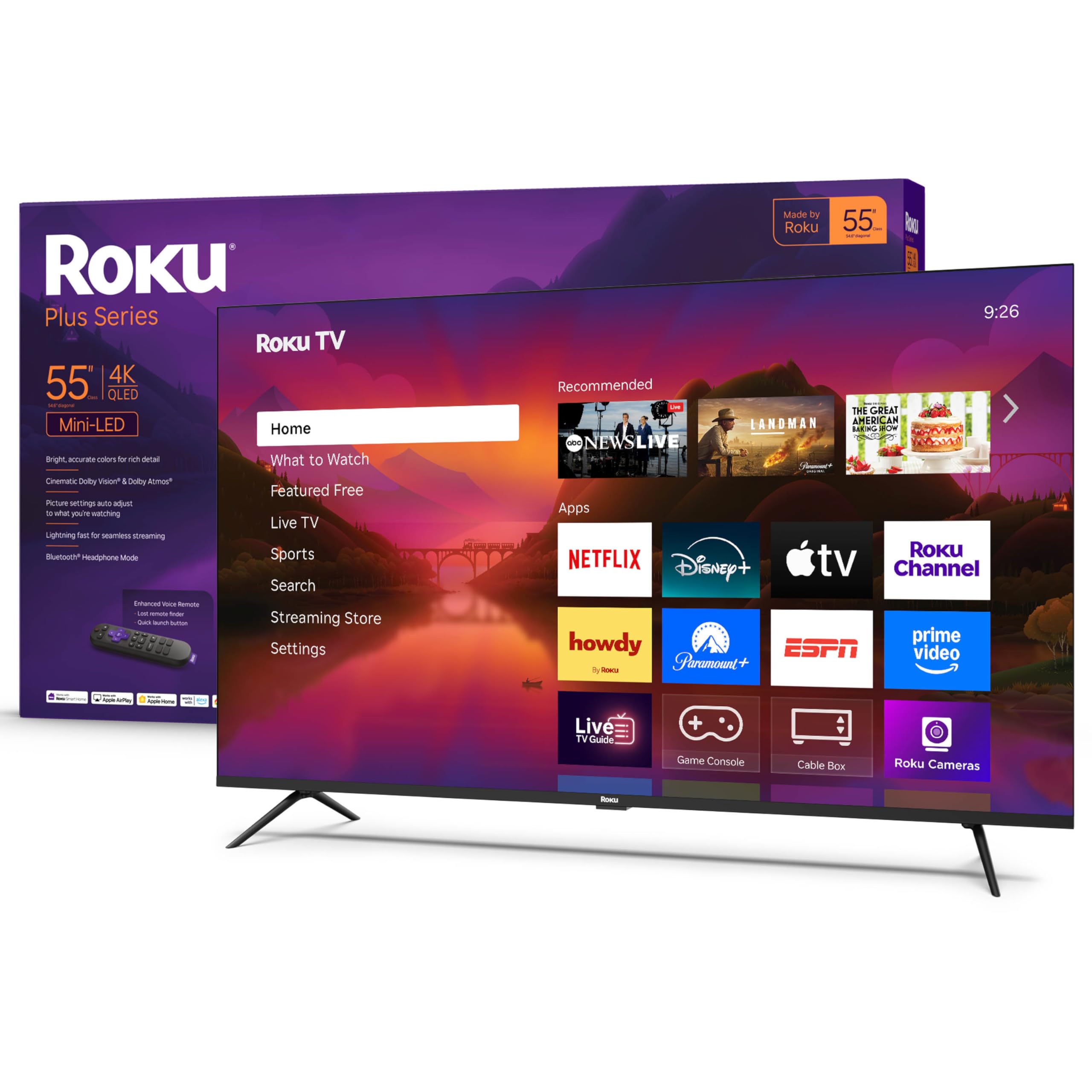
The Roku Plus Series takes everything great about the Roku OS — simplicity, speed, near-universal app support — and wraps it around a Mini-LED QLED panel with Dolby Vision. The Mini-LED backlighting delivers punchy contrast and vibrant colors that outperform standard LED panels at a similar price. The AI-powered Roku Smart Picture Max automatically refines color and sharpness per scene, and it does so without the heavy-handed overprocessing seen on some competitors.
Audio is where the Plus Series stands out: Dolby Atmos support combined with a built-in subwoofer produces surprisingly full sound with clear dialogue and noticeable bass during action sequences. Bluetooth Headphone Mode is a genuinely useful feature for late-night viewing without disturbing others. The Enhanced Voice Remote includes a lost remote finder and app shortcuts that speed up navigation significantly. Wi-Fi performance is strong, with apps launching quickly even on busy networks.
The trade-off is that the Roku settings menu is relatively basic compared to Google TV or Tizen — users looking for granular color temperature or gamma adjustments will find limited options. The Mini-LED zones are effective but not as dense as the Hisense U6 Pro or Amazon Ember, so blooming is slightly more noticeable in high-contrast scenes. For buyers who value a fuss-free, fast OS and great out-of-the-box audio, the Plus Series is a top contender.
Why it’s great
- Roku OS is fast, simple, and universally supported
- Built-in subwoofer for room-filling Dolby Atmos sound
- Mini-LED QLED panel with AI scene optimization
Good to know
- Settings menu lacks advanced calibration options
- Mini-LED zone density is lower than top competitors
- No USB port, only USB-C
6. Samsung 55-Inch Class QLED Q8F 4K UHD Smart TV

The Samsung Q8F focuses on color fidelity above all else, using Quantum Dot technology that maintains 100% Color Volume — meaning colors stay accurate and vibrant even as brightness drops or increases. This is a rare spec for the price bracket, and it makes the Q8F ideal for watching nature documentaries, animation, and any content where color accuracy matters more than absolute black levels. The Q4 AI processor upscales lower-resolution content to 4K with minimal artifacts, and the AirSlim design keeps the profile close to the wall.
Samsung Vision AI analyzes content type and room lighting to adjust picture and sound automatically. The result is a consistently pleasing image that doesn’t require manual calibration. The 4K 144Hz VRR support covers gaming needs, and Samsung’s Game Bar provides an OLED-like overlay for adjusting aspect ratio, input lag, and refresh rate mid-game. The solar-powered remote eliminates battery waste, though some users report it takes a few days to hold a full charge initially.
The Audio follows Samsung’s familiar pattern — decent built-in sound that works for casual viewing but falls short of the Roku Plus or Hisense U6 Pro’s built-in audio. A soundbar is practically required for immersive sound. The Tizen smart platform is functional but not as intuitive as Roku or Google TV. For color-critical buyers who want a Samsung panel without paying Neo QLED pricing, the Q8F delivers exceptional value.
Why it’s great
- 100% Color Volume for accurate HDR at any brightness
- 4K 144Hz VRR with Game Bar overlay
- Ultra-slim AirSlim wall-hugging design
Good to know
- Built-in audio lacks bass; soundbar recommended
- Tizen platform lags behind Roku in app availability
- Tabletop legs are unstable; wall mounting advised
7. Sony BRAVIA 2 II 55 Inch 4K UHD LED Smart TV

The Sony BRAVIA 2 II is built around the 4K Processor X1, and its exclusive PlayStation 5 integration sets it apart. Auto HDR Tone Mapping recognizes the PS5 and automatically optimizes the TV’s HDR settings for the console’s output, and Auto Genre Picture Mode switches to Game Mode when a game is launched and back to Cinema mode for movies. These features remove the friction of manually switching picture presets every time you change activity.
Motionflow XR handles fast-moving sports and action scenes with minimal blur, and the 4K XR-Reality PRO upscaling engine brings streaming content to near-4K resolution with clean edge definition. The Google TV interface is fast and populated with all major apps, plus Sony Pictures CORE includes a selection of free movies. Bluetooth 5.3 and Wi-Fi 5 connectivity are standard, and the two HDMI 2.1 ports support 4K 120Hz for PS5 and Xbox Series X.
The downside is that the BRAVIA 2 II uses a standard LED panel rather than Mini-LED or QLED, so black levels are grayish in dark rooms compared to the Hisense or Amazon Ember. Some units suffer from WiFi dropouts and freezing that require a hard reset — a known intermittent issue. For PS5 owners who want seamless console integration, however, the BRAVIA 2 II provides a smoother experience than any third-party TV at this price.
Why it’s great
- Exclusive PS5 Auto HDR and Auto Genre switching
- 4K XR-Reality PRO upscaling is top-tier
- Google TV with Sony Pictures CORE free movies
Good to know
- Standard LED panel — no Mini-LED or QLED
- Some units experience WiFi dropouts and freezing
- Low sustained brightness compared to competitors
8. Panasonic W70 Series 55″ LED 4K Ultra HD Smart Fire TV
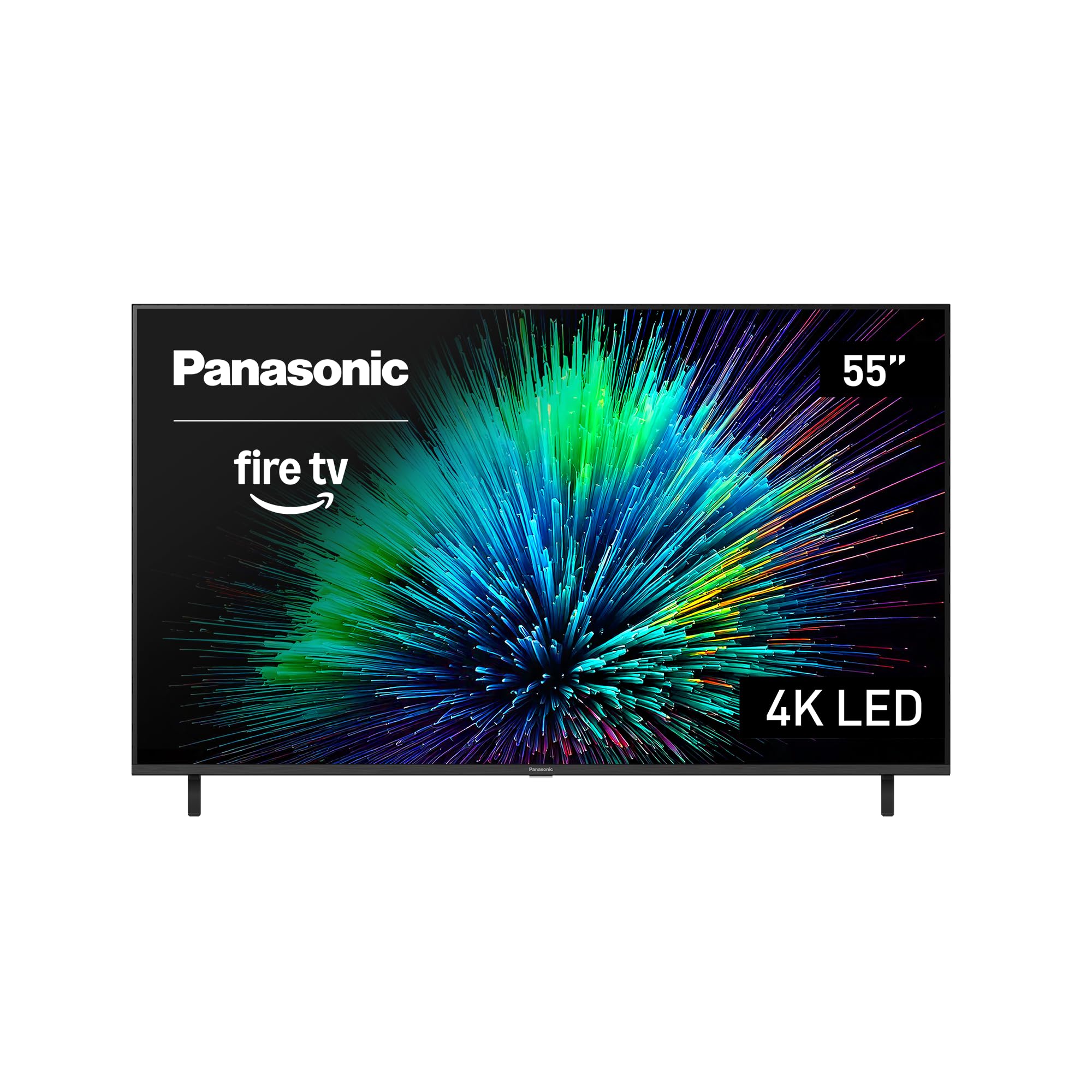
The Panasonic W70 brings a known brand to the Fire TV ecosystem for those who want a reliable panel without the quirks of budget off-brands. The 4K Studio Color Engine and HDR Bright Panel produce clean, natural colors with the HDR10+ support that Panasonic is known for. The inclusion of HDMI 2.1 with eARC and four HDMI ports gives ample connectivity for gaming consoles, soundbars, and streaming devices. Bluetooth 5.0 and Wi-Fi 5 are standard.
Setup is fast — under 10 minutes via QR code for existing Fire TV users — and the Alexa-enabled voice remote is responsive for searches and smart home control. Apple AirPlay 2 support rounds out the casting options. The panel has a sturdy metal stand that provides stability, and the picture quality is consistent with no obvious panel uniformity issues. MEMC technology keeps motion smooth during sports and fast-paced content.
Performance complaints center on the Fire TV processor feeling sluggish compared to dedicated streaming sticks. App switching can be slow, and some users report the interface freezing or the TV turning on randomly. The panel itself is a standard LED without local dimming, so black levels are average. For the price, the W70 is a safe, recognizable choice for those who prioritize brand reliability and Fire TV integration above panel technology.
Why it’s great
- Established Panasonic panel reliability
- HDMI 2.1 with eARC for modern audio setups
- Fast setup with Fire TV QR code pairing
Good to know
- Fire TV interface can feel sluggish
- Standard LED panel — limited contrast and black levels
- Some units experience random power-on behavior
9. Roku Smart TV 2026 – 55-Inch Select Series, 4K QLED TV
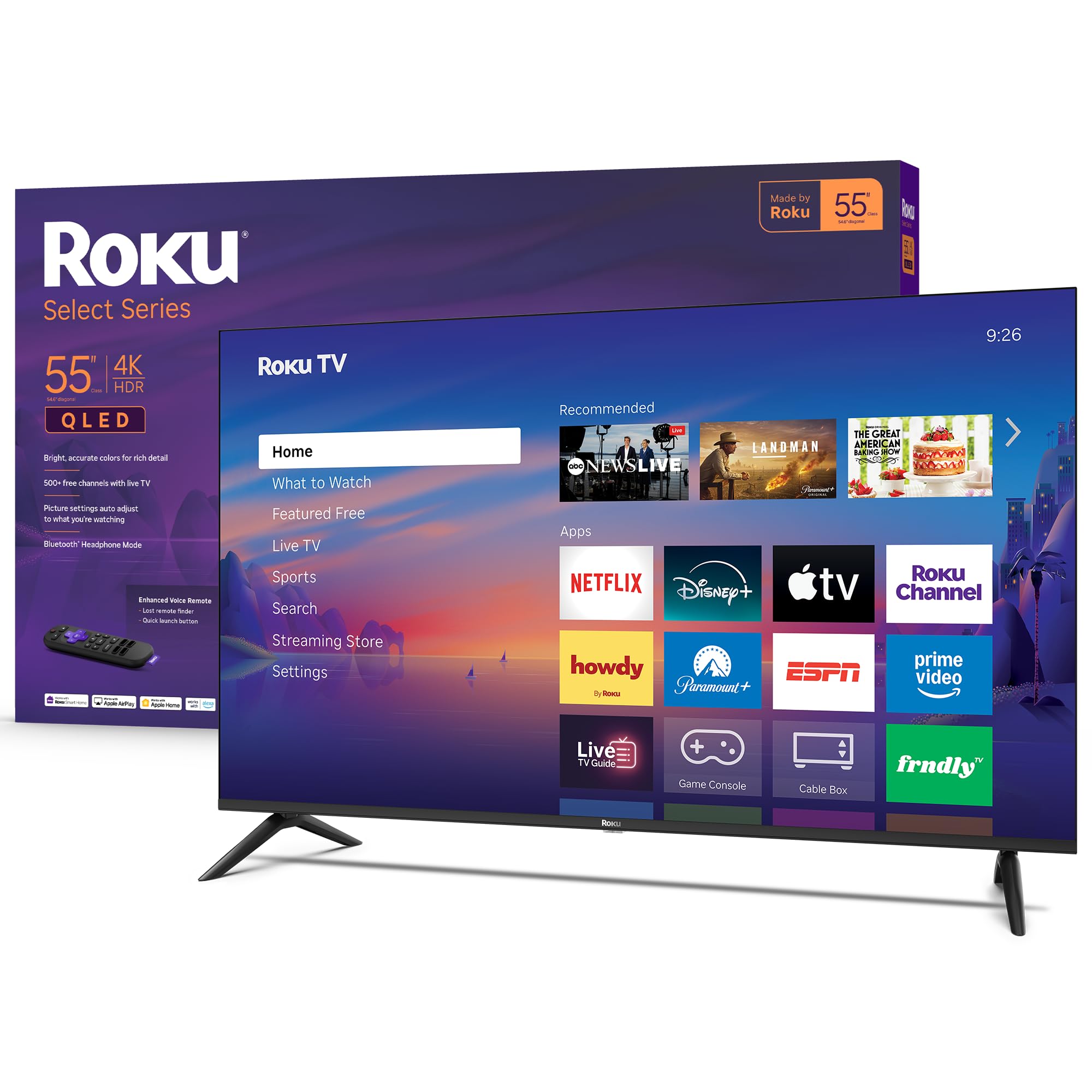
The Roku Select Series is the entry point to 4K QLED viewing, offering a 55-inch QLED panel with HDR10 support at a price point that undercuts almost every competition. The direct LED backlighting delivers good colors thanks to the quantum dot layer, and the Roku OS remains the gold standard for simplicity and speed — apps launch in a snap, and automatic updates keep the interface fresh. Bluetooth Headphone Mode for private listening is a genuinely useful addition that budget TVs often omit.
Picture quality is solid for the price: sharp 4K detail, bright colors that aren’t oversaturated, and Roku Smart Picture cleaning up incoming signals automatically. The frameless design looks more premium than the price suggests, and the voice remote with lost remote finder is a practical feature. The panel supports VRR for basic gaming, though it’s limited to 60Hz since the native refresh rate is 60Hz. Game Mode reduces input lag noticeably for casual gaming.
The compromises are predictable: the direct LED backlight means blacks are gray in dark scenes, and the built-in speakers are average — fine for news and dialogue but thin for movies and music. There’s no Dolby Vision support, so HDR content defaults to HDR10 which is less impactful. For buyers who watch mostly SDR content or need a secondary TV for a bedroom, the Select Series offers the best cost-per-inch value in this roundup.
Why it’s great
- Lowest price for a 55-inch QLED panel
- Roku OS remains the fastest and simplest smart platform
- Bluetooth Headphone Mode for private listening
Good to know
- Direct LED backlight — gray blacks in dark rooms
- No Dolby Vision HDR support
- Built-in speakers lack bass and volume
FAQ
Does a 60Hz panel really matter for watching movies on a 55-inch TV?
Can I use a Mini-LED TV without local dimming turned on to save power?
What is the practical difference between Dolby Vision and HDR10 on a budget 55-inch TV?
Final Thoughts: The Verdict
For most users, the bang for buck 55 inch tv winner is the Hisense 55U6SF Pro because it delivers a dense Mini-LED backlight array, a native 144Hz panel, and full Dolby Vision IQ and HDR10+ Adaptive support at a price that undercuts competing models with similar specs. If you prioritize a fast, universally compatible smart platform and great out-of-the-box audio, grab the Roku Plus Series. And for a PS5-centric living room setup where seamless console integration matters, nothing beats the Sony BRAVIA 2 II.