
Our readers keep the lights on and my morning glass full of iced black tea. As an Amazon Associate, I earn from qualifying purchases.
Specs are compiled from manufacturer listings and verified buyer reviews and can change over time — please confirm the key details on the product page before buying.
The real challenge with Alphonso mango pulp is finding a can that delivers the fruit’s signature honeyed richness rather than a generic sugary base. Some brands lean heavily on added sweetness to mask a flat base, while others let the fruit’s natural balance shine. This guide compares five top Alphonso pulp options, highlighting which suit drinks, desserts, or bulk pantry stocking, plus what to check on delivery.
I’m Min — the founder and writer behind Gadgets Feed. This guide is built by comparing the manufacturers’ published specifications and the patterns across verified customer reviews, so you get each pick’s real strengths and trade-offs instead of marketing spin.
From bartender-grade bottles to multi-can pantry packs, this breakdown of the alphonso mango pulp landscape tells you exactly which tin to grab for your lassi, your cheesecake, and your margarita.
Our Picks at a Glance
How To Choose The Best Alphonso Mango Pulp
Alphonso mangoes, harvested in a short Indian season, are prized for their superior flavor and balanced sweetness. A quality tin should deliver that same rich, honeyed taste, not a generic sweet blob. Look for brands that highlight the Alphonso name or a premium Indian variety like Kesar, and check whether the pulp is sweetened or natural before you commit.
Sweetened vs. Natural Pulp
Some buyers want pulp ready for a dessert or a drink without adding a thing, while others are baking and want to control the sugar themselves. A label that lists “Alphonso Mango Pulp, Sugar & Citric Acid” is telling you exactly what you’re getting — a sweetened product. If the brand markets a “sweet” version, treat that as a hint that the can leans sugary. For a lassi or a mango shake, a sweetened pulp is often a shortcut; for a cheesecake or a pie, you might prefer a more natural base so the final dish isn’t cloying.
Packaging and Shipping Condition
Heavy cans often suffer damage during cross-country shipping. Dented tins, ruptured seals, and rust spots are common complaints, and a dented can means lost product and a higher cost per usable ounce. When you’re weighing a big multi-pack against a single tin, remember that a larger box doesn’t guarantee safe arrival. Check the brand’s packaging approach and inspect every can immediately upon arrival.
Quick Comparison
| Model | Best For | Total Volume | Sweetness | Pack Size | Amazon |
|---|---|---|---|---|---|
| Finest Call★ Best Overall | Bartender-grade drinks | 101.4 fl oz | Sweetened | 3 bottles | Amazon |
| DeepReal Taste Pick | Real mango taste, single can | 30 oz | Natural | 1 can | Amazon |
| Natco | Sweetened baking and shakes | 47.62 oz | Sweetened | 3 cans | Amazon |
| Eastern Feast | Desserts and cheesecakes | 120 oz | Sweetened | 4 cans | Amazon |
| Rani | Lassis and smoothies, bulk | 180 oz | Natural (Kesar) | 6 cans | Amazon |
In‑Depth Reviews
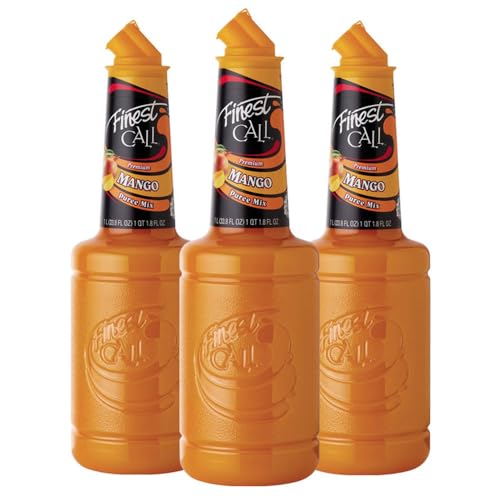
1. Finest Call Premium Mango Fruit Puree Drink Mix
Our pick — over 4.5★ from 450+ verified ratings; the strongest balance of quality and price.
The pour-friendly bottle built for high-speed bar service and spicy margarita experiments.
This is the one that turns your home counter into a cocktail station. Finest Call leans on Alphonso mangoes — harvested in that narrow Indian window — for superior flavor and balanced sweetness, then packages the puree in a patented dispensing closure designed for precise, high-speed pours. That means no sticky cap fumbling mid-drink; you get a controlled stream exactly when you need it.
The 3-pack delivers 101.4 fluid ounces across three bottles, and at 8.73 pounds total, this is the heavyweight of the group — nearly five times the shipping weight of the single Deep can. Buyers report it makes “great for mango margaritas,” with one standout combo being a spicy marg mixed with jalapeño syrup. The bottle format also wins over smoothie makers who want a splash-and-go ingredient rather than a can to crack open.
Because this is a drink mix rather than a straight pulp, it lands on the sweetened side — perfect for cocktails and smoothies, less ideal if you’re baking a savory-leaning dish. The verdict here is simple: if your mango pulp lives in a shaker or a blender, this is the pick that earns its fridge space.
What the Bar Crowd Loves
- Patented pour spout gives a clean, precise stream
- Alphonso base delivers balanced sweetness
- Boxed 3-pack protects the bottles in transit
Where It Differs
- It’s a drink mix, not a cooking pulp
- Heavier shipping weight at 8.73 pounds
Reach for this if: you’re making mango margaritas, daiquiris, or smoothies and want a bartender-grade pour.
Look elsewhere if: your recipe needs a plain, unflavored pulp for baking or savory cooking.
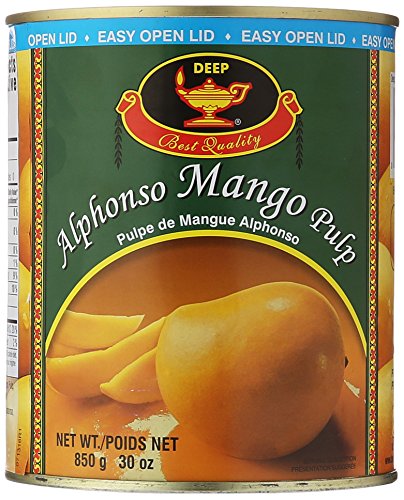
2. Deep Alphonso Mango Pulp
A single no-fuss can that delivers honest, real mango flavor for pies, kulfi, and ice cream.
Deep keeps things refreshingly simple: one 30-ounce can, a “real mangoes taste” promise, and a long shelf life. What wins people over here is the flavor — the thing everyone raves about is how close it gets to fresh Alphonso. Buyers used it for the New York Times quick Mango Kulfi recipe (heavy cream plus a 30-ounce can) and reported it “tasted delicious.”
The can measures 5 x 4 x 5 inches and tips the scales at just 1.88 pounds, making it the featherweight of this lineup — a 6.0x gap in total volume versus the Rani 6-pack. It’s also the most budget-friendly entry here, which matters when you’re testing a brand for the first time. Shipping has historically been a sore spot, but owners mention the company learned from dented-can complaints — one arrival was “very carefully padded in a larger box than I expected.”
The honest trade-off is value: some find it a touch expensive for what’s in the tin, and one unfortunate can delivered a bitter aftertaste. But for a single-can pantry staple that nails the Alphonso character, this is the one to try before committing to a multi-pack.
A One-Can Wonder: Deep delivers the real mango flavor you want, in a light 1.88-pound package that’s easy to store. The taste is the star, even if the value occasionally gets questioned.
Pick this for: a single-can test run before you buy in bulk, especially for kulfi, shakes, and desserts.
Pass if: you need a huge volume for batch cooking or catering.
3. Natco Alphonso Mango Pulp (Sweet)

Three sweetened 450g tins that turn porridge, yoghurt, and ice cream into mango-flavored treats.
Natco’s approach is all about convenience wrapped in a sweetened taste. Each 450g can is labeled “sweet,” so you know the sugar work is done for you. The pack of 3 adds up to 47.62 ounces total, and the cans themselves are on the shorter, wider side at 9.84 x 3.94 x 3.94 inches — easy to stack on a pantry shelf. One buyer’s take: “3 tins will last me forever,” a nod to how far a single can stretches when you’re mixing it into shakes or spooning it over porridge.
Customers note using it for ice cream and adding it to natural yoghurt, with the sweetness making it a drop-in ingredient for breakfast bowls. The recommended-use crowd also loves it for mixing with fruit in shakes — the pulpy texture holds up well in a blender. It’s a vegetarian-friendly product, which broadens its appeal for households with dietary preferences.
The catch is simple: this is a sweetened product, so it’s not for recipes where you want to control sugar yourself. And at 3.31 pounds for the trio, it’s mid-weight in this lineup — heavier than a single Deep can but far lighter than the Finest Call 3-pack at 8.73 pounds.
The Sweetened Shortcut
- Sweet flavor means no extra sugar needed
- Three cans give good pantry longevity
- Works in shakes, porridge, and yoghurt
Keep in Mind
- Sweetened taste limits savory or sugar-controlled recipes
- Wider cans take up more shelf depth
Best for: quick breakfast upgrades and dessert mixing where a sweet base saves you a step.
Not for: bakers who prefer an unsweetened canvas and want to add their own sugar.
4. Eastern Feast Alphonso Mango Pulp
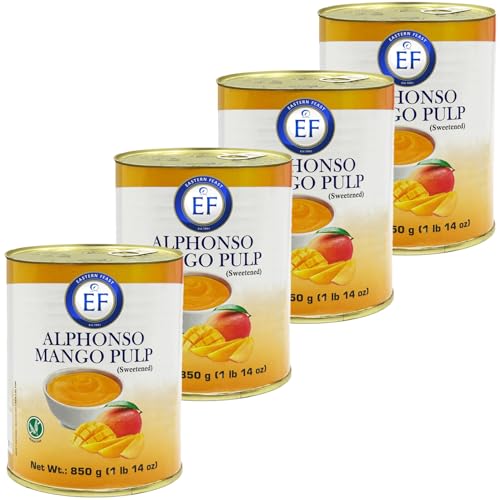
The sweetened four-pack that a NYT Cooking cheesecake recipe specifically calls out by name.
Eastern Feast markets itself as “sweetened to perfection,” made from sun-ripened Alphonso mangoes with an ingredients list that’s short: Alphonso Mango Pulp, Sugar, and Citric Acid. The 4-pack gives you 120 ounces total from four 30 oz cans, each with an easy-open lid and a gluten-free label. This is the pick that bakers gravitate toward — in fact, the NYT Cooking basque mango cheesecake recipe calls this brand out by name, and reviewers point out it “did not disappoint.”
Beyond cheesecake, the reviews paint a versatile picture: mango cake, mango pie, and mango lassis all get glowing mentions. The rich taste is what wins people over, which is exactly what you want from a “King of Mangoes” product. One summer-long buyer kept “repeating our order several times,” calling it the next best thing to eating fresh mango — a strong signal for anyone who can’t find quality pulp in local markets.
The recurring gripe is quality control on the can itself: stained labels and missing expiration dates sent one disappointed buyer to the trash. The 8.39 x 8.19 x 5.67-inch package ships at just 1.88 pounds, which is surprisingly light for a 4-pack — check your cans on arrival. For dessert bakers who follow specific recipes, the flavor payoff is worth the inspection.
Baker’s Choice: When a specific recipe names your brand, you know the flavor profile is dialed in. Eastern Feast delivers that cheesecake-ready richness, with the caveat that you should check each can’s label and date stamp.
Grab this for: cheesecakes, pies, and cakes where a sweetened, rich pulp carries the mango flavor.
Inspect carefully: stained labels and missing dates have been reported, so check every tin when it arrives.
5. Rani Mango Pulp Puree (Kesar)
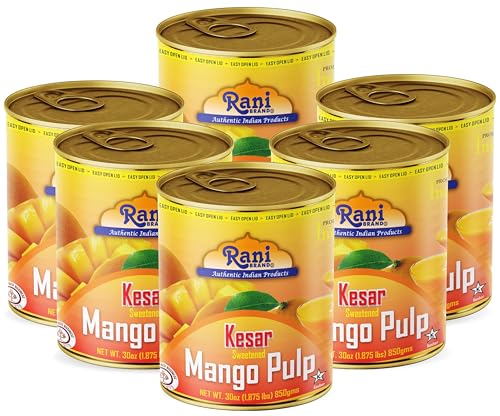
The six-can bulk buy that powers restaurant-style mango lassis all summer long.
Rani’s 6-pack is the volume king here — 180 ounces total, which is a 6.0x gap over the single Deep can. Each 30 oz tin uses the Kesar variety of Indian mangoes, a close cousin to Alphonso prized for its one-of-a-kind taste. This is the can that Indian restaurants use for mango lassi, and the recipe right on the can makes home prep easy. The product line carries a long list of credentials: Kosher, 100% Natural, Non-GMO, no preservatives, no colors, vegan, and gluten-friendly.
What wins people over is the taste — buyers consistently praise its quality and note it’s “not overly sweet,” which is a relief for anyone tired of cloying store-bought purees. One happy customer called it “absolutely the best tasting mango puree you’ll ever try,” using it for gelato, Mangoritas, and shakes alike. For a USA-based company selling quality foods for over 40 years, the consistency shows in the reviews.
The honest catch is packaging: out of a 6-can pack, some shoppers say 4 of 6 cans arriving dented, with 1 ruptured and spilled — a real loss that raises the effective cost per usable can. Rust spots and dirty cans also surface as occasional issues. At 1.87 pounds declared shipping weight but with a 14.17 x 12.48 x 7.05-inch package, the box is bulky, so inspect every can the day it lands. The flavor payoff is immense, but the shipping lottery is real.
The Bulk Advantage
- 180 oz across 6 cans is the biggest volume here
- Kesar variety delivers a distinct, not-overly-sweet taste
- Kosher, Non-GMO, vegan, and gluten-friendly
Shipping Roulette
- Dented cans and ruptured seals are recurring reports
- Rust spots on cans appear occasionally
Buy this for: heavy lassi and smoothie households that will power through six cans before they go stale.
Be ready for: possible dented cans in transit — count your usable cans and inspect seals on arrival.
Understanding the Specs
Alphonso vs. Kesar Variety
The Alphonso mango is often called the “King of Mangoes” for its rich, honeyed flavor and smooth texture. Kesar is a closely related premium Indian variety with a similarly distinctive taste — Rani uses Kesar in its pulp. Both deliver that authentic Indian mango character, so if you see either name on the label, you’re getting a step above generic sweet mango puree.
Sweetened vs. Natural Pulp
Check whether the label says “sweet” or lists sugar in the ingredients. A sweetened pulp like Natco or Eastern Feast is ready for desserts and drinks with no extra sugar. A natural pulp like Deep or Rani lets you control the sweetness yourself — better for baking where you’re already adding sugar, or for those who find commercial purees too cloying.
FAQ
What is the difference between Alphonso and Kesar mango pulp?
Is Alphonso mango pulp sweetened or unsweetened?
How long does an opened can of mango pulp last?
Can I use Alphonso mango pulp for baking a cheesecake?
What is the best mango pulp for making mango lassi?
Is the Finest Call mango puree the same as canned pulp?
How much mango pulp is in a typical pack?
Why do my cans of mango pulp arrive dented?
Final Thoughts: The Verdict
For most buyers, the alphonso mango pulp winner is the Finest Call because it pairs true Alphonso flavor with a bartender-designed pour that makes drinks easy. If you want a bulk pantry pack for lassis and smoothies, grab the Rani. And for a single-can taste test before you commit, the Deep is the one to reach for.
How We Picked
We do not accept paid placement. Every pick is matched to a real buyer and a real use-case; we do not hands-on test units.
Sources & Methodology
Specifications: manufacturer listings and product documentation. Review insights: verified customer reviews, as of September 2026. Pricing: not shown on this page (it changes often); check the current price via the retailer link.
As an Amazon Associate, Gadgets Feed earns from qualifying purchases. This does not affect which products we feature.