
The key difference between a thriving banana tree plant at home and one that never fruits comes down to matching the right variety to your climate and indoor growing conditions. Cold-hardy varieties like Musa Basjoo can survive snowy winters, while Dwarf Cavendish and Grand Nain are bred for warmer zones and smaller spaces. Choosing poorly means either a plant that struggles against frost or one that outgrows your living room within months.
I’m Min — the co-founder and writer behind Gadgets Feed. I’ve spent countless hours analyzing the root systems, growth rates, and hardiness zones of live banana tree plants sold online, comparing hundreds of buyer reports to separate the genuinely resilient starters from the weak pups that rarely survive transplanting.
This guide breaks down seven of the most popular live banana tree plant options based on cold tolerance, growth speed, and fruit potential, so you can confidently pick the best banana tree plant for your specific setup and skill level.
How To Choose The Best Banana Tree Plant
Selecting the right banana tree plant for your situation requires understanding a few non-negotiable specs that determine whether the plant will thrive or die within weeks. Temperature tolerance, mature height, and whether the variety fruits are the three core filters every buyer needs before clicking “add to cart.”
Cold Hardiness and USDA Zones
If you plan to grow outdoors north of Zone 8, the single most important spec is the plant’s minimum temperature survival rating. Musa Basjoo is the only common variety that can handle frost down to 10°F, making it the only realistic choice for gardeners in Zones 3-7. Every other variety — Dwarf Cavendish, Grand Nain, Kokopo — demands warm conditions and will die if exposed to freezing temps. Ignoring this mismatch is the #1 reason banana plant purchases fail.
Dwarf vs. Full-Size Pseudostem Height
Indoor growers and small-yard gardeners must verify the mature height before buying. A standard Grand Nain can reach 15+ feet, which is unmanageable for most living rooms. Dwarf Cavendish tops out around 6-10 feet, making it the most practical indoor fruit-producing option. The trade-off is that dwarf varieties produce smaller bunches of fruit and grow more slowly than their full-sized cousins.
Fruit Production vs. Ornamental Use
Not every banana plant sold online will actually produce edible fruit. Cold-hardy varieties like Musa Basjoo are grown primarily for their massive tropical leaves and winter resilience — their fruit is seedy and inedible. If your goal is homegrown bananas for the kitchen, you need a Dwarf Cavendish or Grand Nain starter that has been verified to fruit. Even then, fruiting depends on consistent heat, full sun, and a long enough growing season (often 9-12 months of warmth).
Quick Comparison
On smaller screens, swipe sideways to see the full table.
| Model | Category | Best For | Key Spec | Amazon |
|---|---|---|---|---|
| Musa Basjoo Banana Tree | Cold Hardy | USDA Zones 3-7 outdoor planting | Survives down to 10°F | Amazon |
| Banana Plant Dwarf Cavendish (4 Pack) | Fruiting Dwarf | Small gardens & indoor pots | Mature at 6-10 ft. | Amazon |
| Banana Trees Grand Nain (4 Pack) | Fruiting Standard | High-yield warm-zone gardens | Compact growth habit | Amazon |
| Kokopo Banana Tree (2 Pack) | Ornamental | Striking red-mottled foliage | 15+ ft. mature height | Amazon |
| Coffee Plant Arabica (4 Pack) | Fruiting Bush | Coffee lovers & edible gardening | Partial shade required | Amazon |
| Costa Farms White Bird of Paradise | Indoor Tropical | Large indoor statement plant | 2-3 ft. at delivery | Amazon |
| CANNA-Musifolia (3 Bulbs) | Bulb Perennial | Ornamental tropical foliage | 3-5 eye bulbs | Amazon |
In‑Depth Reviews
1. Musa Basjoo Banana Tree – 1 Ft. Tall Cold Hardy Banana Plant
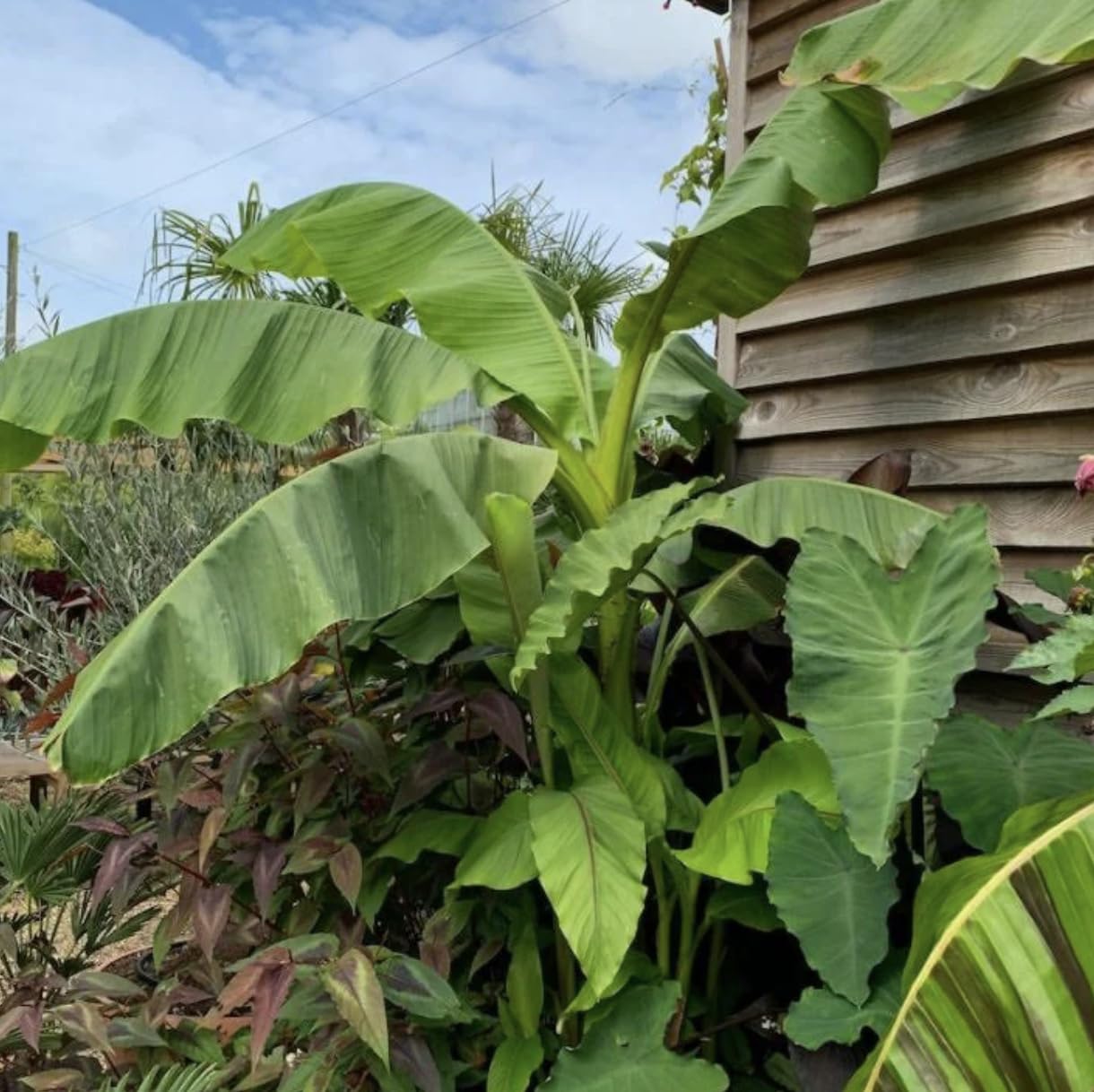
Musa Basjoo stands alone as the only true cold-hardy banana that can be planted outdoors year-round in Zones 3 through 7. Its rhizome tolerates ground temperatures as low as 10°F, meaning the pseudostem may die back in winter but the root system will send up vigorous new shoots each spring. This variety ships as a single starter at over 12 inches tall in a 2.5 x 3.5-inch cup, giving you a strong head start compared to the tiny 2-inch plugs common with other sellers.
Growth speed is exceptional — buyers report new leaves emerging nearly daily during the growing season with mature heights reaching 15 feet or more by late summer. The foliage is massive and authentic, providing the full tropical canopy effect that ornamental growers want. Because it rarely produces edible fruit, this is purely a foliage powerhouse for landscaping and statement planting.
The packing is consistently praised; plants arrive with leaves intact and moist soil. A small percentage of buyers reported limp arrivals or early death, but the seller appears responsive with replacements. For anyone gardening outside the frost-free zones, this is the only intelligent starting point.
Why it’s great
- Only variety capable of overwintering outdoors in Zones 3-7 reliably
- Fast growth to 15+ feet in a single season with minimal care
- Consistent positive feedback on plant size and packaging quality
Good to know
- Fruit is inedible and seedy — this is an ornamental-only banana
- Some units arrive slightly wilted after shipping; immediate potting and water are essential
2. Banana Plant Dwarf Cavendish (4 Pack)

Dwarf Cavendish is the go-to variety for anyone who wants actual homegrown bananas but lacks the space for a 15-foot monster. This four-pack from Fam Plants ships organic starter plants that mature at a manageable 6-10 feet, making them viable for large containers, patios, or compact garden beds in Zones 8 and above. The plants arrive as small pups — typically 3-6 inches above the root plug — which can feel underwhelming out of the box, but the growth rate in warm, humid conditions is genuinely impressive.
Buyers in Texas, Florida, and other hot-summer regions report the plants reaching several feet within 6-8 weeks when potted up progressively. The key is stepping them into larger pots as the roots fill out, which maximizes the growth curve significantly. The reflective heat wrap packaging has been credited with saving plants even after being left in freezing mailboxes, a nice touch for shipping resilience.
The biggest risk here is the startup size — some buyers receive pups as small as 2-3 inches, which are fragile and require careful nursing. A minority of orders arrived broken due to inadequate packing. Still, for the price of a four-pack, the cost per viable plant is low enough to absorb some loss, and successful plants produce sweet, full-size Cavendish bananas in their second year with proper winter protection.
Why it’s great
- Grows to a manageable 6-10 ft. ideal for containers and small spaces
- Produces full-size edible bananas when kept warm and in full sun
- Four plants per order provides redundancy for losses and faster grove establishment
Good to know
- Starter pups are very small (2-6 inches) and require careful transplanting
- Not frost-tolerant — must be brought indoors or overwintered in Zones 8+
3. Banana Trees Grand Nain (4 Pack)

Grand Nain is the commercial industry standard for a reason — it combines high yield, disease resistance, and a compact growth habit that outperforms many other fruiting varieties in garden settings. This four-pack from Fam Plants ships organic starter plants that mature more quickly than Dwarf Cavendish due to Grand Nain’s naturally vigorous growth genetics. The plants are self-fruitful, meaning a single starter will produce bananas without needing a second plant for cross-pollination.
Buyers report that the 4-6 inch pups establish quickly when potted into well-draining soil and given full sun. The compact nature of Grand Nain means it takes up less lateral space, allowing multiple plants to be grown in tighter arrangements. Some customers received an extra bonus plant, which suggests consistent overshipping — a positive indicator of the seller’s packing process. The growth rate in warmer regions is fast enough that expectant gardeners can see substantial canopy development within the first season.
The main trade-off is that these starters are genuinely tiny — several reviews noted they are “pinky finger” sized, which can be disappointing if you expected a more established plant. A small percentage of orders arrived dead, and the seller’s customer service has mixed reviews regarding replacements. But for the sheer number of plants and the proven genetics of Grand Nain, this pack offers high potential for anyone willing to baby the pups through their first month.
Why it’s great
- Self-fruitful variety — one plant is enough to produce bananas
- Compact growth habit suits container and tight-space growing
- Faster maturity timeline compared to many other fruiting banana varieties
Good to know
- Pups arrive extremely small (2-4 inches) and need very careful handling
- Not cold hardy — requires frost-free conditions or indoor overwintering
4. Kokopo Banana Tree – 2 Live Starter Plants – Musa
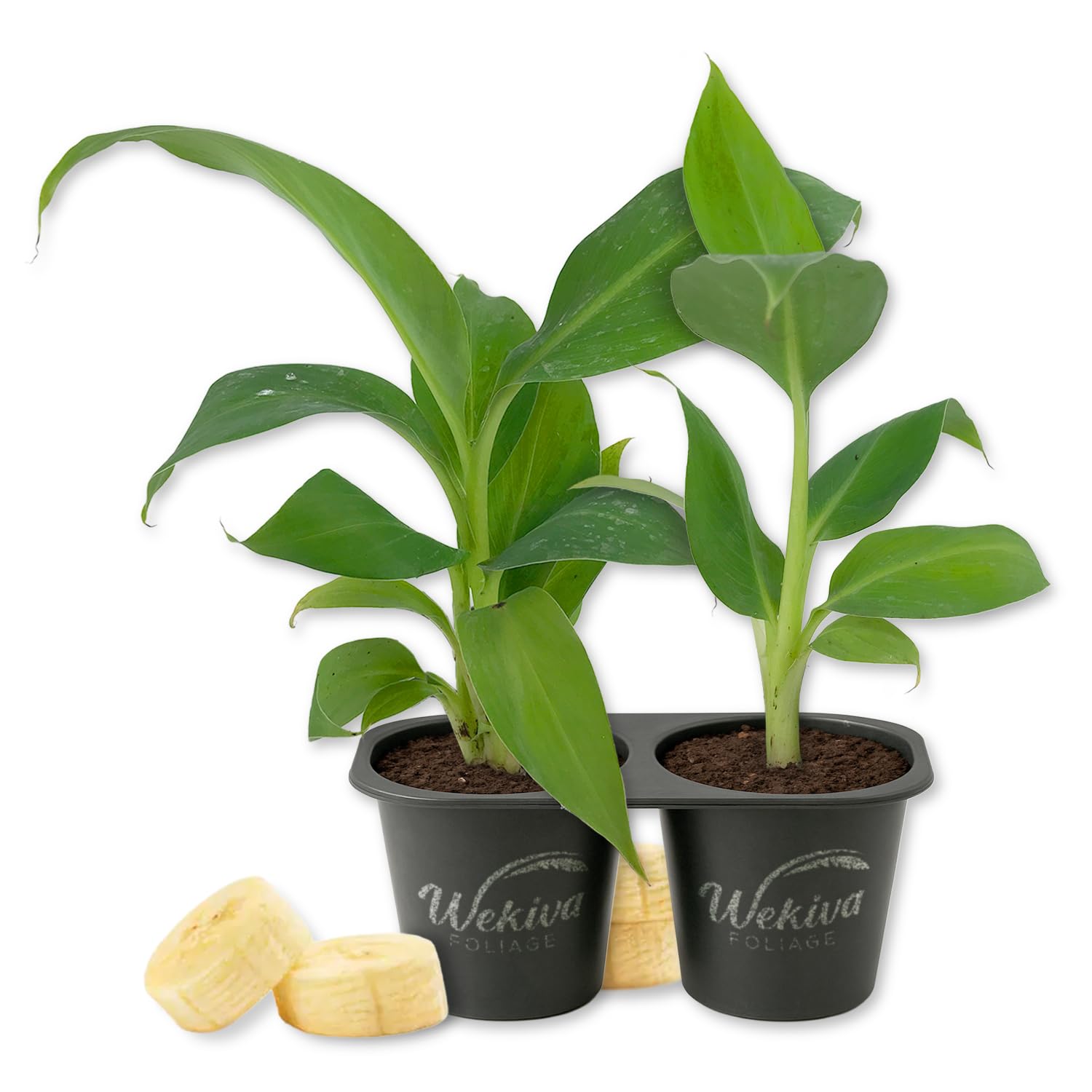
Kokopo banana trees are the showstoppers of the Musa genus, distinguished by dark green leaves on top and brilliant dark reds and maroons underneath — foliage that creates dramatic visual contrast in any garden. This two-pack from Wekiva Foliage ships live starters that can grow aggressively, with one buyer reporting that two plants produced 14 pups within a single season. Mature height exceeds 15 feet, with leaves spanning 3 feet or more, so these are not for cramped spaces.
The growth vigor is almost overwhelming. Multiple buyers note that the plants “take over your yard” if given enough space, spreading through prolific offsets that can be separated and shared. The dark red undersides of the leaves are a unique cosmetic feature that no other banana in this list offers. The packaging is consistently described as careful and protective, with plants arriving healthy despite transit.
The downside is size unpredictability — some customers received very small plants that struggled, and a few reported complete die-off. The need for a 50+ PPF grow light indoors is real for anyone not in a tropical or subtropical climate. Additionally, this is primarily an ornamental variety; fruit production is not guaranteed, and the bananas are not the same quality as Cavendish or Grand Nain. It is a foliage-first plant that happens to grow like a weed.
Why it’s great
- Unique red-mottled leaf undersides create unmatched ornamental appeal
- Extremely prolific offset production for propagating a full grove
- Aggressive growth rate delivers a massive tropical look quickly
Good to know
- Requires substantial space — 15+ ft. tall with huge leaf spread
- Fruit quality is secondary to foliage; not a reliable food-producing variety
5. Coffee Plant Arabica (4 Pack) Real Live Plant

This four-pack of Arabica coffee plants is a smart companion purchase for banana growers who want to expand their edible garden with another tropical food-producing plant. Coffee Arabica shares similar growing preferences with banana trees — warm temperatures, rich organic soil, and consistent moisture — making them natural neighbors in a food forest setup. The plants are organic and ship at a manageable starter size with moist root plugs that survive shipping well.
Unlike banana trees, coffee plants thrive in partial shade rather than full sun, which makes them versatile for understory planting beneath taller banana canopies. Buyers consistently report healthy arrivals with perky leaves and generous sizing for the price point. The air purification claim is a nice bonus for indoor growers, and the plants have shown resilience in various climates from Florida to cooler regions.
These are not banana trees, so the comparison is indirect — but for anyone building a productive edible landscape, this four-pack offers an excellent value complement. The main consideration is that coffee plants grow slowly compared to bananas and require several years to produce beans. For immediate visual impact, they will not match a banana’s growth speed, but they provide a different kind of long-term reward.
Why it’s great
- Compatible growing conditions with bananas — great companion plant
- Partial shade tolerance fills understory space that bananas cannot
- Four organic starters for a low investment per plant
Good to know
- Slow growth to bean production — several years before harvest
- Not a banana tree — different care requirements and growth habit
6. Costa Farms Live White Bird of Paradise, Large 2-3 Foot Tall
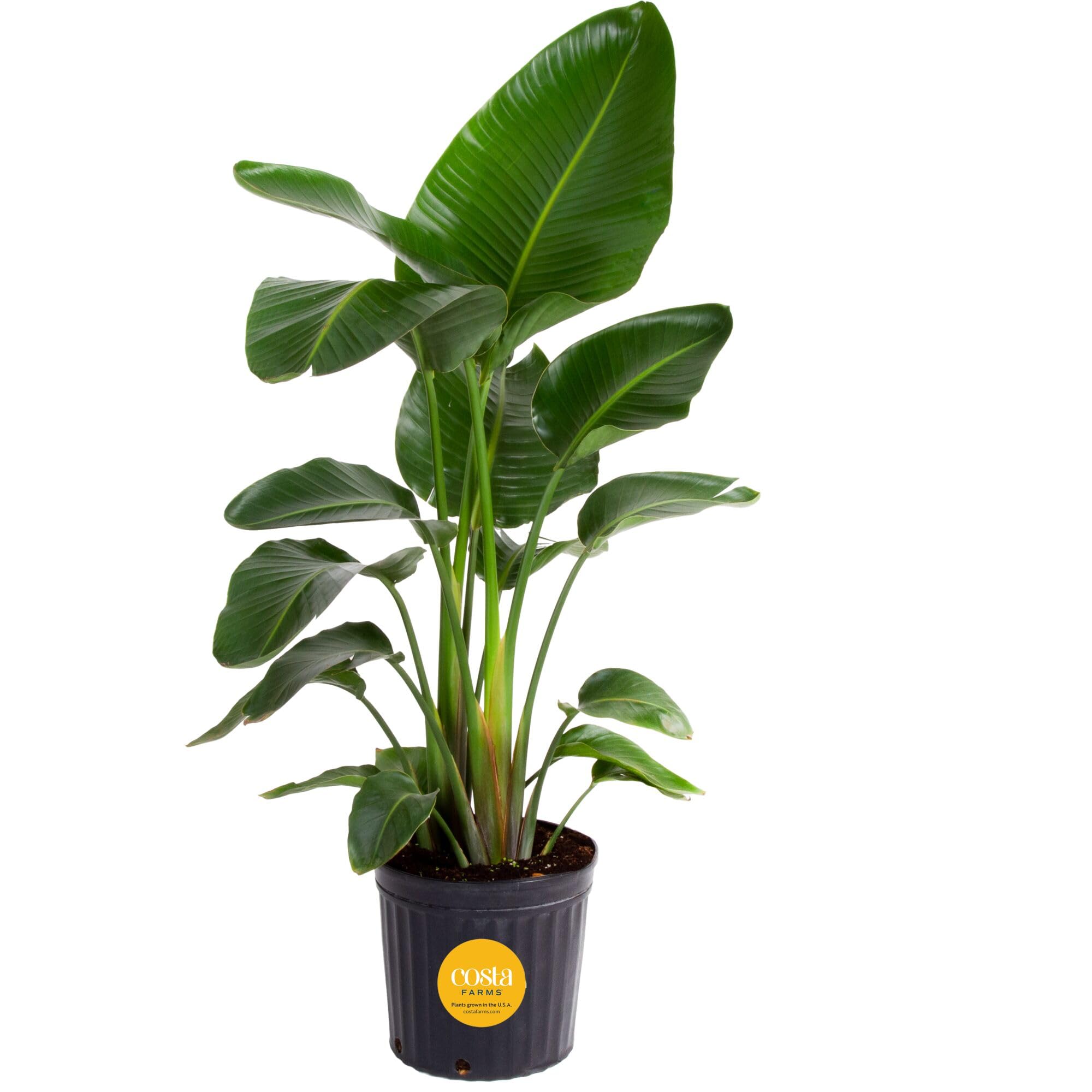
Strelitzia nicolai, commonly sold as White Bird of Paradise, is frequently mistaken for a banana tree because of its large banana-like leaves and upright pseudostem growth habit. This Costa Farms live plant arrives at a substantial 2-3 feet tall in a plastic grow pot, weighing in at 12 pounds — making it the most established plant in this list straight out of the box. It is designed specifically for indoor use, tolerating lower light conditions better than true banana trees.
The leaves are massive and split naturally as they mature, creating the iconic tropical silhouette without needing the high heat and humidity that real banana trees demand. Costa Farms is a major nursery with consistent quality control, and buyer feedback shows healthy arrivals with minimal transplant shock. The plant is a natural air purifier and adapts well to indoor environments, making it the most foolproof option for anyone who wants the banana look without the specialized care requirements.
The trade-off is that this is not a banana tree and will never produce edible fruit. It also grows slowly indoors compared to outdoor banana varieties, and some leaves may arrive split or damaged from shipping. Over a year, with good care, it can thrive and grow substantially larger, but it will never reach the explosive growth rate of a Musa Basjoo or Grand Nain. For guaranteed tropical aesthetics with minimal fuss, this is the safest bet.
Why it’s great
- Arrives as a large, established plant (2-3 ft.) — no waiting for small pups
- Genuine banana-like foliage without demanding full sun or heat
- Reliable indoor performance from a reputable national nursery
Good to know
- Not a true banana plant and will never produce edible fruit
- Growth is slow compared to banana trees; leaves may arrive slightly damaged
7. CANNA-Musifolia 3 Per Bag Huge 3-5 Eye Bulbs

Canna bulbs are a budget-friendly alternative for anyone who wants a tropical aesthetic similar to a banana tree plant but at a fraction of the cost and maintenance. These are not true Musa bananas — they are Canna lilies from the Musifolia variety, which produces large, banana-like foliage on upright stalks with the added benefit of vibrant summer flowers. Horn Canna Farm delivers three massive bulbs with 3-5 eyes each, ensuring multiple stalks per bulb.
The germination speed is outstanding: buyers report sprouts emerging within 4 days and full leaf development by the end of the first week. Unlike banana trees, these are true perennials that come back reliably from the ground each year in Zones 7-10, and the bulbs are deer resistant. Sandy soil and full sun are the preferred conditions, which aligns closely with what many Southern gardeners already have. The bulbs arrive in moist soil and are consistently described as huge and healthy compared to competitors.
The primary downside is that these are not banana trees and will not produce edible fruit or the massive pseudostem structure of a true Musa. The foliage, while impressive, maxes out at 4-6 feet rather than the 15-foot canopy of real bananas. For a low-investment, high-reliability tropical look that requires minimal care and returns year after year, these bulbs are an exceptional choice. Just do not expect bananas.
Why it’s great
- Germinates and leafs out in under a week — instant gratification
- Deer resistant and perennial in Zones 7-10 with minimal care
- Bulbs are significantly larger and healthier than budget competitors
Good to know
- Not a true banana tree — no fruit, no 15-foot pseudostem
- Mature height is limited to 4-6 feet compared to actual banana varieties
FAQ
Can I grow a banana tree plant indoors year-round?
How long does it take for a banana tree plant to produce fruit?
Final Thoughts: The Verdict
For most users, the best banana tree plant winner is the Musa Basjoo because it is the only variety that survives outdoor winters in cold climates while delivering massive tropical foliage at a rapid growth rate. If you want actual homegrown bananas and have a warm zone or indoor space, grab the Dwarf Cavendish 4-pack for its compact fruiting potential. And for the safest indoor tropical statement with no special care requirements, nothing beats the Costa Farms White Bird of Paradise.