
Our readers keep the lights on and my morning glass full of iced black tea. As an Amazon Associate, I earn from qualifying purchases.
Specs are compiled from manufacturer listings and verified buyer reviews and can change over time — please confirm the key details on the product page before buying.
A yard that turns into a sponge after every rainstorm usually means a long list of plants that refuse to grow there. The fix isn’t better drainage — it’s picking shrubs that treat wet feet as a feature, not a flaw. This guide focuses on three proven performers for those low, boggy, pond-edge spots where most ornamentals rot and sulk.
I’m Min — the founder and writer behind Gadgets Feed. This guide is built by comparing the manufacturers’ published specifications and the patterns across verified customer reviews, so you get each pick’s real strengths and trade-offs instead of marketing spin.
If your yard has a soggy corner where nothing seems to thrive, these bushes for wet soil are built to handle it—they grow reliably in marshy ground and offer visual interest all year, whether you’re filling a pond’s edge with fast-spreading grass or adding a winter-stem shrub to a rain garden.
Our Picks at a Glance
How To Choose The Best Bushes For Wet Soil
Wet soil kills most shrubs not because of the water itself, but because waterlogged earth starves the roots of oxygen. The winners in this category are species that evolved in wetlands and swamps, so their roots cope fine with saturated ground that would drown a typical garden plant.
Match the plant to the wetness level
Not all wet spots are equal. A spot that sits in standing water for days needs a true marginal plant like common rush, which tolerates being submerged. A spot that simply drains slowly after rain is fine for a dogwood, which handles damp earth but prefers not to be flooded permanently.
Potted roots beat bare-root for speed
A shrub that arrives fully rooted in its pot has a serious head start over a bare-root sapling. The rooted plant is ready for immediate planting without the shock of transplanting, which means you spend less time nursing it through its first season.
Plan for the plant’s mature size
A young twig that looks small in its nursery pot can turn into a 3-foot rush or a 5-foot dogwood within a few seasons. Give it room at planting time so you are not digging up a well-established root system later to make space.
Quick Comparison
| Model | Best For | Plants Included | Mature Height | Standing Water | Amazon |
|---|---|---|---|---|---|
| Juncus effusus (Common Soft Rush)★ Best Overall | Pond edges & water gardens | 1 | 36 inches | Up to 6 inches | Amazon |
| Cornus Sericea Dogwood (Red Twig) | Wet areas with winter color | 1 | 5 feet | Tolerant, not submerged | Amazon |
| 5 Red Twig Dogwood Shrubs | Filling large wet zones | 5 | Up to 5 feet | Boggy, poorly-drained | Amazon |
In‑Depth Reviews
1. Perennial Farm Marketplace Juncus effusus (Common Soft Rush)
Our pick — over 4★ from 350+ verified ratings; the strongest balance of quality and price.
The rush that thrives where it literally sits in water, forgiving even the worst drainage.
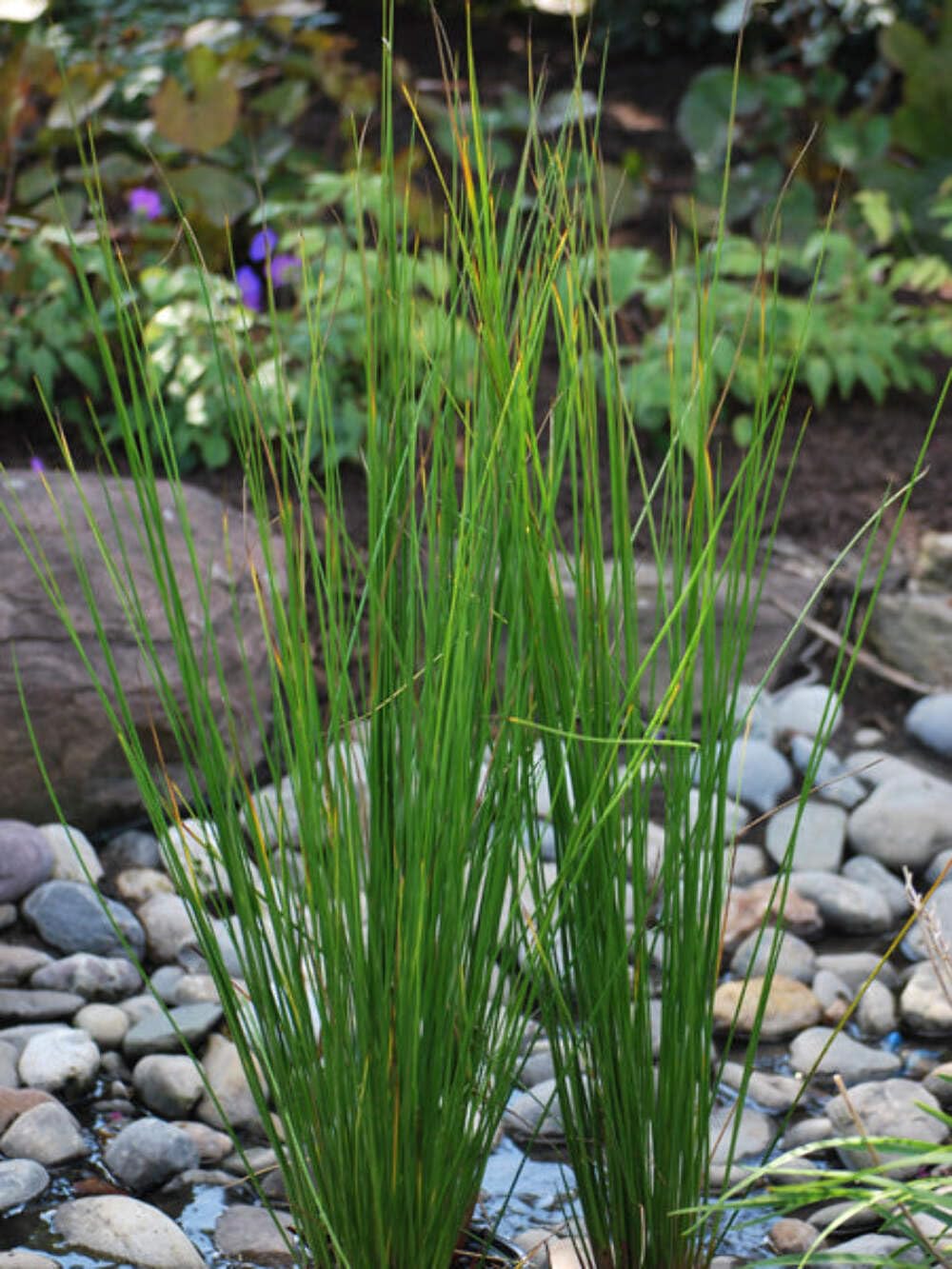
This is the pick for the truly impossible spot — a pond edge or water garden where the soil never dries out. Common soft rush is a native of U.S. wetlands and can sit in up to 6 inches of standing water, so you can plant it right at the waterline and it will take off. Its rounded stems reach up to 3 feet tall in a rich green fanning clump, giving the water’s edge a soft, textured silhouette.
The quality reputation here is strong — owners consistently describe the plant as healthy, well-sized, and quick to establish in a goldfish pond. What wins people over is the packaging: the box is marked clearly as a live plant, and the rush arrives fully rooted in its pot, ready for immediate planting. It is also highly deer resistant, so you will not be fighting off nibblers.
The plant is hardy in USDA Zones 2-9, which covers a huge slice of the country. The one real limitation: it is shipped as a single plant, so a broad border needs several. A few buyers report plants that did not make it — the recurring gamble with any live shipment — but the majority find it a healthy, thriving buy.
Why it wins
- Sits happily in up to 6 inches of standing water
- Fully rooted in the pot, ready to plant on arrival
- Highly deer resistant, hardy in Zones 2-9
Know before you buy
- Sold as a single plant, so a large edge needs multiples
- A handful of owners received plants that did not survive
Reach for this if: you have a pond, water garden, or low spot that stays saturated for days on end.
Think twice if: you need to cover a big area fast — this is one clump, not a spreading colony.
2. Cornus Sericea Dogwood (Osier- Red Twig)

A leafy green shrub that turns bright yellow or red in winter, built for impossible wet corners.
This is the shrub for the wet, boggy area that also needs to look good in the dead of winter. Red twig dogwood is a green leafy shrub with white flowers in season, then delivers its real show when the leaves drop — the bare stems turn a vivid yellow or red that pops against snow. It is cold hardy and reaches a full height of up to 5 feet in just a few years.
What makes it a standout for wet ground is its adaptability: this plant works well in wet areas that pose a problem for many other shrubs. It does fine in full or partial sun, so you are not locked into one exposure. The roots handle the damp earth that would drown a typical garden shrub, making it a go-to for rain gardens and slow-draining zones.
Arrival quality earns consistent praise — owners mention the plants arrive quickly, packed with obvious care, and stay healthy in their pots for a week or more before planting. One honest caveat: a single owner reported the plant died within two months despite following the directions, a reminder that live plants always carry some risk once they leave the nursery.
Why it stands out: Most wet-soil plants offer green foliage; this one adds genuine winter color on top of its water tolerance.
The trade-off: It prefers damp but not permanently submerged ground, so keep it out of standing water.
Grab it for: a slow-draining corner that needs a taller shrub with off-season interest.
Leave it for: spots that stay flooded — that is the rush’s job, not this dogwood’s.
3. 5 Red Twig Dogwood Shrubs – Red Osier Bushes (6-12″ Tall)
Five small starts that multiply your planting coverage in a single order, built for boggy ground.
This pack is the numbers play: you get 5 Red Twig Dogwood plants at roughly 6-12 inches tall each, which is 5x the plant count of the single Cornus Sericea above. That unit count matters when you are trying to fill a wide rain garden or a long pond edge without buying five separate orders. The shrubs are bred for exactly the problem spots — they flourish in boggy, poorly-drained ground where most shrubs fail.
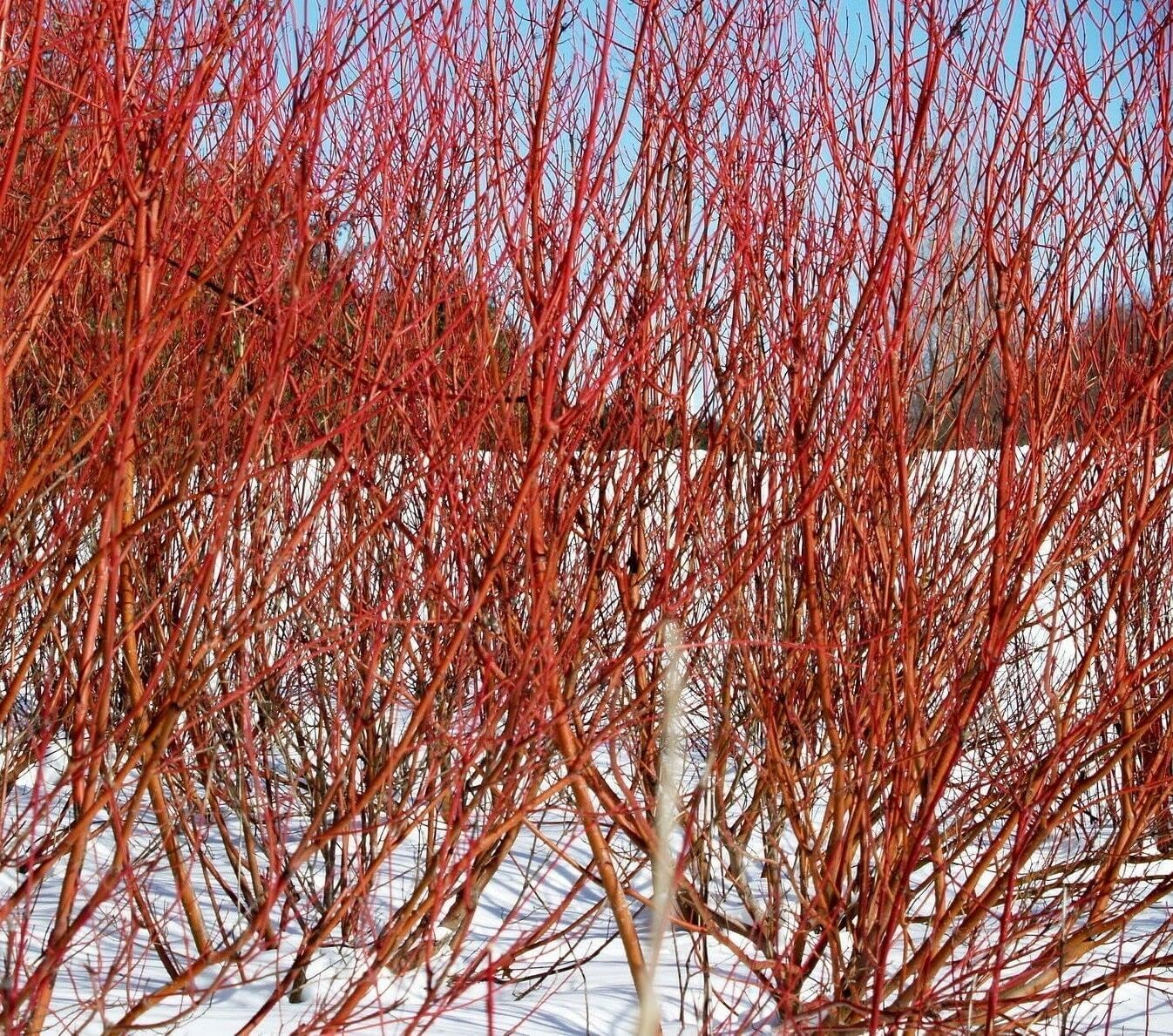
Winter is the payoff here. The brilliant crimson-red stems create a striking display against snow, and the shrub keeps delivering through the year with spring flowers, summer foliage, and fall color. Maintenance is genuinely low: just cut back older stems every few years to keep the youngest red branches coming, and the plants are marked GMO-free.
Here’s the trade-off: these come as young, small starts, not mature bushes. Some buyers were surprised by the size even though the description said so, and survival varies—a few customers note all but one start failing, while others say the roots are strong and the plants arrived in great shape. Given the low price per plant, you get good value if you’re patient and plant them in the right conditions.
What you get
- 5 plants in one order — 5x the coverage of a single shrub
- Crimson winter stems add drama against snow
- Low maintenance: cut back old stems every few years
Set expectations
- Starts are small at 6-12 inches, not established bushes
- Survival varies — some orders lose most of the five
Best suited to: filling large wet zones on a budget, where you are willing to wait for small starts to mature.
Not the pick if: you want one impressive, established shrub immediately — buy the single larger dogwood instead.
Understanding the Specs
Standing water tolerance
This is the single biggest spec for wet soil. A marginal plant like common rush can sit in up to 6 inches of water, meaning you can plant it right at the waterline. A dogwood, by contrast, handles damp ground but should not be permanently submerged — match the plant to how long your spot actually stays flooded.
USDA hardiness zone
This tells you which climates a plant can survive year-round. The rush is hardy in USDA Zones 2-9, a very wide cold-hardy range. Always check the zone listed before ordering, because some sellers restrict shipping to certain states entirely, so a plant may not be legally deliverable to your region.
Mature height and spacing
Young plants look deceptively small, so the mature height is the number that actually matters for your layout. The rush tops out at about 3 feet and should be planted 18 inches apart, while the dogwood can reach 5 feet tall in a few years. Give each start room to spread or you will be relocating them later.
Rooted pot vs bare-root
A plant that arrives fully rooted in its nursery pot is ready for immediate planting with far less transplant shock. Bare-root or young saplings, like the small red twig starts, need more patience and care in their first season. Check the listing for whether you are getting an established root ball or a young cutting.
FAQ
Can common soft rush really sit in standing water all season?
What is the difference between red twig dogwood and common soft rush for wet areas?
How long does red twig dogwood take to reach full height?
Will these shrubs survive a yard that floods after heavy rain?
Are these plants resistant to deer?
What does it mean when a plant ships dormant or trimmed?
How far apart should I plant common soft rush?
How do I keep red twig dogwood stems the brightest red?
Final Thoughts: The Verdict
For most buyers, the strongest pick among these bushes for wet soil is the Juncus effusus (Common Soft Rush) because it handles the wettest conditions of all three while earning the strongest quality reputation from owners. If you want winter color and a taller shrub for a slow-draining corner, grab the Cornus Sericea Dogwood. And for filling a large boggy zone on a budget with five young starts, the 5 Red Twig Dogwood Shrubs spread your coverage the furthest per order.
How We Picked
We do not accept paid placement. Every pick is matched to a real buyer and a real use-case; we do not hands-on test units.
Sources & Methodology
Specifications: manufacturer listings and product documentation. Review insights: verified customer reviews, as of September 2026. Pricing: not shown on this page (it changes often); check the current price via the retailer link.
As an Amazon Associate, Gadgets Feed earns from qualifying purchases. This does not affect which products we feature.