
Our readers keep the lights on and my morning glass full of iced black tea. As an Amazon Associate, I earn from qualifying purchases.
Specs are compiled from manufacturer listings and verified buyer reviews and can change over time — please confirm the key details on the product page before buying.
When you break down whole roasts, trim briskets, or slice steaks at home, the right butcher knife makes clean, single-stroke cuts through sinew and fat—while a poor one turns dinner prep into an arm workout. You want a blade that glides, not fights, and this guide compares nine top contenders on the steel, edge geometry, and handle design that matter most when the blade meets the bone.
I’m Min — the founder and writer behind Gadgets Feed. This guide is built by comparing the manufacturers’ published specifications and the patterns across verified customer reviews, so you get each pick’s real strengths and trade-offs instead of marketing spin.
Finding the butcher knife you’ll reach for every time means weighing edge retention, blade length, and handle comfort against your own cutting volume.
Our Picks at a Glance


How To Choose The Best Butcher Knife
Before picking a knife, think about what you cut most. If you mostly trim and slice large roasts into steaks, a longer blade with a curved edge shines. If you frequently chop through bones, a heavy cleaver-style blade is the better fit. Matching the blade shape to your task matters more than any single spec.
Blade Steel and Hardness
The steel type tells you how long the edge stays sharp. High-carbon stainless steel, like the German 1.4116 and Japanese AUS-10V, resists rust while holding a fine edge. Hardness is measured in Rockwell (HRC); a higher number means better edge retention but a more brittle blade. Look for a value around 56 to 62 HRC for a balance of sharpness and durability.
Edge Angle and Geometry
The edge angle per side controls cutting ease. A lower angle — like 12 degrees or 14-16 degrees — creates a sharper, more precise slice. However, these edges require careful handling. A hollow or granton edge (with small divots) reduces friction, so meat releases cleanly, which is a real advantage on fatty cuts.
Handle and Balance
A comfortable, non-slip handle prevents hand fatigue during long sessions. Full tang construction (the steel runs through the entire handle) adds stability and balance. Consider the weight distribution: a heavier front end gives more power for large cuts, while a lighter blade offers better control.
Quick Comparison
| Model | Best For | Blade Length | Edge Angle | Handle Material | Amazon |
|---|---|---|---|---|---|
| Cutluxe 10″★ Best Overall | Large roast slicing | 10 inches | 14–16 degrees | Pakkawood | Amazon |
| Mercer BPX 8″Pro’s Choice | Professional breaking | 8 inches | 15 degrees | Glass-filled nylon | Amazon |
| Sunnecko Nakiri 7″Best Value | Vegetables & boneless meat | 13 centimeters | 12 degrees | Pakkawood | Amazon |
| Dexter Outdoors 8″ | Commercial durability | 8 inches | — | Grip-Tex | Amazon |
| KEEMAKE 8″ | Everyday versatility | 8 inches | 8–12 degrees | Pakkawood | Amazon |
| BLADESMITH 6.3″ | Chopping bones | 6.3 inches | — | Pear wood | Amazon |
| Victorinox 9.8″ | Commercial slicing | 9.8 inches | — | Fibrox | Amazon |
| DALSTRONG 10″ | Premium breaking | 10 inches | — | G-10 | Amazon |
| WÜSTHOF 8″ | High-end home butchering | 8 inches | — | Stainless steel | Amazon |
In‑Depth Reviews
1. Cutluxe Butcher Knife 10″ Bullnose Carving Knife
Our pick — over 4.5★ from 950+ verified ratings; the strongest balance of quality and price.
The beefy blade that turns whole ribeyes into perfect steaks with one confident draw.
The Cutluxe is the knife that owners describe as slicing through Boston Butts “like butter,” and that praise comes straight from the crowd favorite with a 4.8 rating across 900-plus owners. Its defining feature is the 10-inch blade of high-carbon German steel, hand-sharpened to 14–16 degrees per side, which gives you both serious length and a razor edge for precision slicing.
The design leans into control. The bulbous tip adds length to the cutting edge for longer, cleaner cuts, while the added front weight gives extra power on large cuts. The luxury pakkawood handle is triple-riveted and full tang, so the steel runs through the entire grip for stability. It handles whole ribeye and strip roasts exceptionally well — buyers report that it “handled 4 roasts with only honing,” meaning you can work a whole batch without stopping to sharpen.
The steel is forged to a 56+ Rockwell hardness, so it resists rust and stains while holding that edge. In head-to-head terms, its 10-inch blade beats the Mercer BPX at 8 inches — a 25% more gap on length for those big breaking jobs. The trade-off is that a blade this thin and sharp demands care; it’s a slicing and trimming tool, not a bone chopper.
What Wins Owners Over
- Long 10-inch blade for clean, full-stroke cuts on large roasts
- Hand-sharpened 14–16 degree edge that stays sharp for multiple roasts
- Triple-riveted pakkawood handle with full tang for a secure grip
Consider Before Buying
- Thin, flexible blade is not meant for chopping through bone
- Added front weight takes some getting used to for fine work
Reach for this if: you regularly break down whole ribeyes, briskets, or pork shoulders and want a blade that glides through with minimal effort.
Look elsewhere if: you need a heavy cleaver for splitting bones — this one is built for slicing, not smashing.
2. Mercer BPX Breaking Butcher Knife, 8 Inch M13713
The working pro’s favorite that holds a 15-degree edge through a full shift.
When owners mention that this is a “professional meat cutter favorite” and one who prefers it over F. Dick, you know this 8-inch Mercer earns its keep. The ice-hardened high-carbon German steel delivers increased blade strength, and the mirror-finished surface allows for extra smooth cutting and release. The 15-degree edge holds well through a day of breaking down large cuts.
You get a comfortable, non-slip grip even with wet or fatty hands, thanks to the textured, ergonomic glass-reinforced nylon handle (a tough plastic with embedded glass fibers for extra strength). Customers note it “cuts rib roast easily” and produces “perfect flat steaks.” At 5.6 ounces, it feels light yet substantial, so you can trim large pieces and slice steaks without fatigue.
Its overall 16-inch length gives you leverage on big cuts, though the 8-inch blade is shorter than the Cutluxe’s 10 inches — a gap that matters if you tackle whole subprimals in a single draw. Reviewers point out the edge can arrive slightly “toothy” with a minor burr, but a quick pass on a 1000-grit stone fixes it. This is a knife that’s easy to touch up and stays sharp for days with occasional steeling.
As one owner summed it up: “Shoppers say it makes quick work of breaking down and trimming large cuts, and the hard steel holds the 15° edge well.”
Built for the daily grind: the glass-filled nylon handle outlasts wood in wet conditions, making this a true workhorse for regular meat processing.
The verdict: if you want a pro-grade breaker that balances sharpness, grip, and value, this is your knife.
Who should skip: anyone needing a longer 10-inch blade for single-stroke slicing of whole ribeyes.
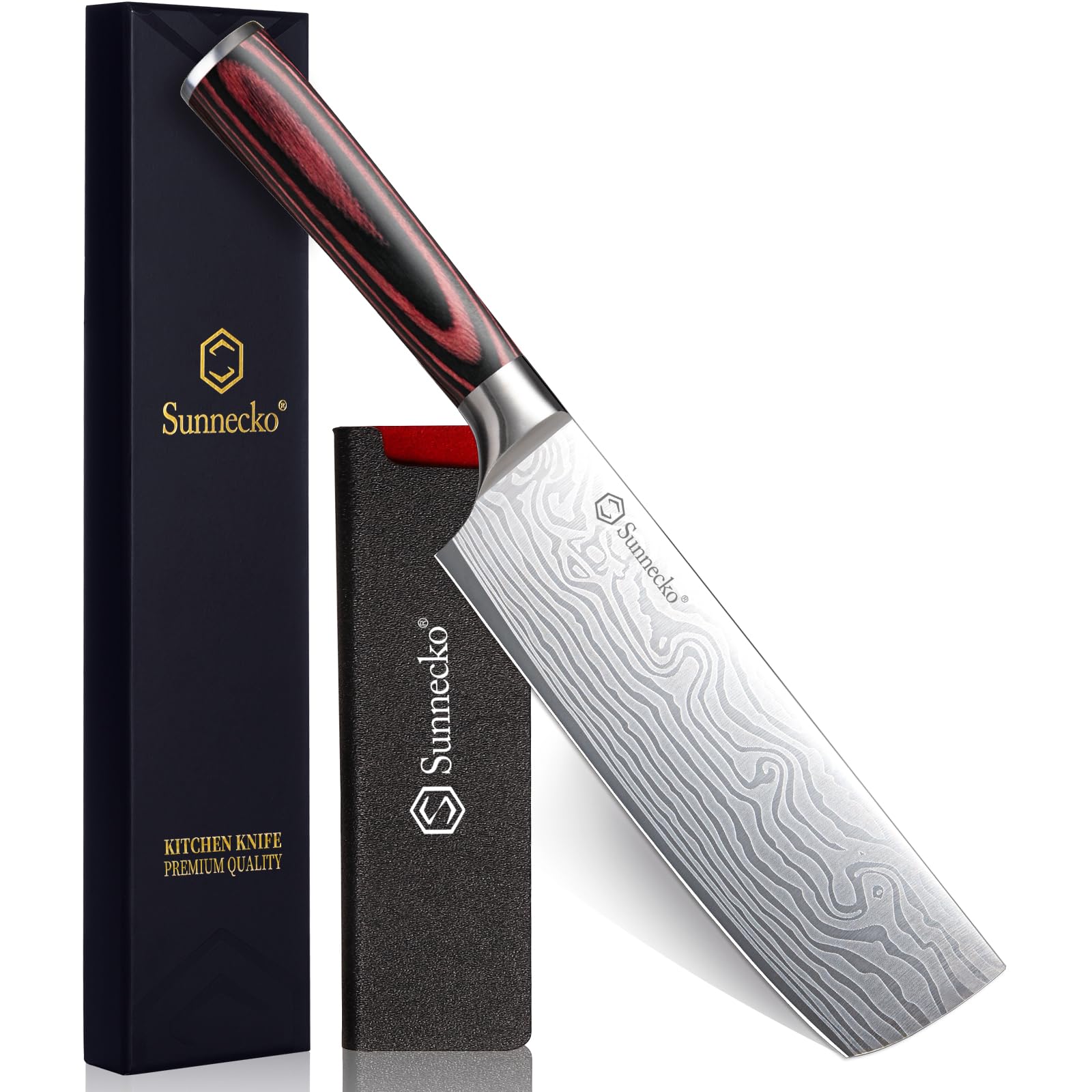
3. Sunnecko Nakiri Knife – 7″ Chef Knife
A nimble 7-inch all-rounder that chops vegetables and boneless meat with equal ease.
The Sunnecko is the crowd-pleaser that wins owners over with its razor-sharp, hand-polished 12-degree double-bevel edge that stays sharp for a long time. As a nakiri-style (a flat-bladed Japanese vegetable knife) it excels at chopping vegetables and fruits, but it also handles boneless meat easily. The blade is forged from Japanese high-carbon stainless steel that resists rust.
Weight is its superpower. At just 0.48 lb, this is a knife you can use for hours of prep without hand fatigue. The ergonomic pakkawood handle provides a non-slip grip and perfect balance. Its overall 9.5-inch length makes it significantly more compact than the Mercer, which runs 16 inches — a 68% more gap that makes the Sunnecko far easier to store and maneuver in smaller kitchens.
The 13-centimeter blade is on the shorter side for butchering large roasts, but it shines on everyday tasks. Owners note it “cuts chicken and lamb chops cleanly” and handles heavy vegetable prep well. One thing to know: the included sheath can trap moisture and needs to dry fully, so air it out after washing the knife.
Why It’s a Great Daily Knife
- Feather light at 0.48 lb for fatigue-free chopping
- 12-degree edge makes slicing vegetables and meat smooth
- Wavy pattern on the blade reduces food friction
Keep in Mind
- Not designed for chopping through bone
- Sheath can hold moisture if not dried properly
Best for: home cooks who want one light, sharp knife for veggies and boneless meat without spending much.
Think twice if: you regularly break down whole animals — the shorter blade lacks the length for large cuts.
4. Dexter Outdoors 8″ Butcher Knife – S112-8PCP
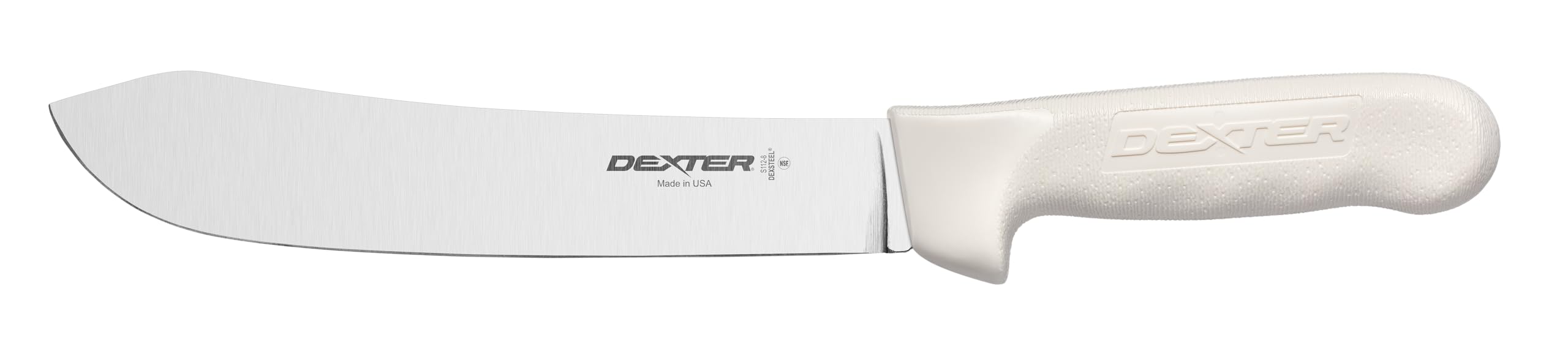
The no-nonsense American workhorse that handles raw dog food duty and brisket alike.
When owners say “they’re not pretty, but a great workhorse,” they’re describing the Dexter’s no-frills appeal. This 8-inch blade is made from DEXSTEEL, a stain-free high-carbon steel that is hand-honed for superior sharpness and long-lasting edge retention. It’s NSF Certified for food safety and proudly made in the USA. The wide blade profile with a curved edge delivers clean, efficient cuts in a single motion.
The textured Grip-Tex handle provides slip-resistant control and reduces hand fatigue, which matters when you’re cutting through “cheap stringy chicken and kidney” for raw pet food. Buyers report the blade went right through tough cuts straight out of the package and stays sharp. It’s praised as being easy to sharpen but holding its edge well, and versatile enough to double as a standard chef knife.
Unlike the Cutluxe’s front-heavy balance, the Dexter feels balanced and light in hand. However, it has no sheath included, and its unique shape means it won’t fit a standard knife block. If you want a knife that will survive commercial-style abuse without fuss, this is it.
A true utility blade: buyers consistently call out its sharpness and how it holds an edge for a long time, even with heavy weekly use cutting raw meats.
Choose this if: you want a durable, easy-to-sharpen knife for heavy weekly use — raw feeders and hunters love it.
Pass on it if: you prefer a wooden-handled, showpiece knife for your block; this one is pure function.
5. KEEMAKE 8″ Chef Knife
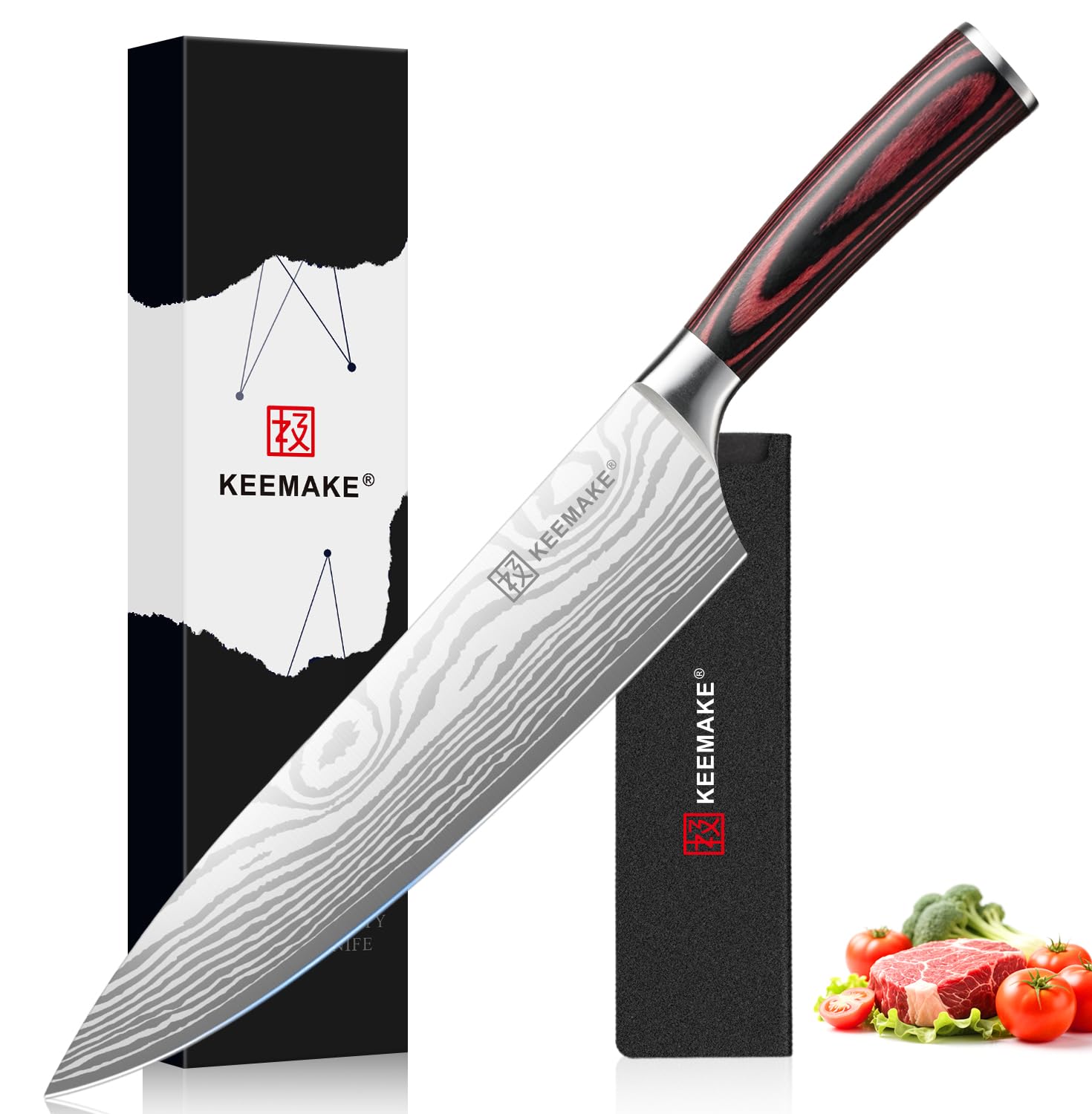
An 8-inch all-purpose blade that slices through butternut squash and raw beef strips without quitting.
The KEEMAKE is the knife for cooks who want one tool that does everything. Forged from high-end 1.4116 high-carbon stainless steel with a 58±2 HRC hardness, it delivers lasting sharpness. The blade is hand-sharpened to a very fine 8°–12° edge on each side, letting it glide through ripe tomatoes, delicate fish fillets, crusty bread, and even partially frozen meat.
This is the knife that handles a weekend of meal prep — from breaking down whole chickens to slicing butternut squash and pineapple — without stopping to sharpen mid-task. The ultra-durable pakkawood handle features a curved design and sloped bolster that promotes a secure pinch grip, reducing wrist strain during long sessions. Owners say it chops great, slices right through meats, and feels comparable to knives costing far more.
Its 8.48-ounce weight gives a reassuring heft that powers through dense vegetables like squash or carrots. The included gift box and protective sheath make it a ready-to-wrap present. It’s a chef-style knife, not a dedicated butcher’s knife, so it lacks the long curved edge of a cimeter (a traditional butcher blade), but its versatility suits everyday cooking better than a single-purpose cutter.
Why It Stands Out
- Very fine 8–12 degree edge for precise, clean cuts
- 58±2 HRC steel balances sharpness with edge retention
- Gift box and sheath included
The Caveat
- Not a true breaking knife for large subprimal cuts
- Edge is so fine it requires careful handling and hand washing
Grab this for: the home cook who wants one sharp, comfortable knife for everything from breaking down chickens to slicing fruit.
skip it if: you specifically need a long curved blade for trimming whole briskets.
6. BLADESMITH Meat Cleaver Butcher Axe Bone Chopper – 6.3″

The 6.3-inch beast that laughs at chicken bones and pork ribs.
When you need raw power to chop through bone, the BLADESMITH cleaver is the tool. Crafted from 7Cr17MoV carbon stainless steel at a 58±2 HRC hardness, this axe-shaped blade is designed for chopping the “big guys” — pork ribs, chicken bones, and turkey carcasses. Owners mention cutting through chicken bones without worry, making it essential for anyone preparing stock or feeding pets a raw diet.
The design focuses on delivering force. The high-density V-shape blade features a super sharp edge with high edge retention, and the axe shape means you won’t feel jarring when chopping. The ergonomic full tang handles a pear wood grip that absorbs oil from poultry and meat, preventing slips and enhancing corrosion resistance. At 1.8 pounds, it has the heft to power through tough cuts.
Unlike the Cutluxe’s precision slicing, this cleaver thrives on brute force. One owner notes the edge “needs some work” and it’s “not going to be slicing tomatoes” — this is a specialist tool, not an all-rounder. It’s best for smashing through bones, cutting meat, and even mashing potatoes or garlic with its spine. It also works well for outdoor hunting tasks.
Built for raw power: the well-distributed 1.8-pound weight and sharp edge make short work of any bone-cutting job, from ribs to chicken carcasses.
Reach for it when: you need to split bones for stock, raw pet diets, or hearty stews — this is a true cleaver.
Not for you if: you only slice boneless roasts; a breaking knife will serve you better.
7. Victorinox Fibrox 10 Inch Cimeter Meat Cutting Knife

The 10-inch curved blade that sweeps through subprimal cuts and fat caps in one motion.
The Victorinox is an “absolute workhorse” that delivers razor-sharp performance at a commercial grade. Its 9.8-inch curved cimeter blade sweeps through subprimal cuts and fat caps smoothly, making it ideal for slicing steaks and trimming beef loins. The high-carbon stainless steel blade is stamped, not forged, yet owners praise how well it holds its edge and how easy it is to sharpen.
What makes it special is the ergonomic Fibrox handle — a textured, non-slip grip that reduces fatigue even during long butchering sessions. Despite its 10-inch total length, it’s large enough to slice beef in one clean cut. Owners note it “cuts beautifully” and lets them butcher a chuck roll in less time than other knives. The blade is thin but durable, and it’s dishwasher safe for easy cleanup.
The trade-off is packaging: some units ship in a plastic bag with the blade exposed, so inspect it on arrival. It also lacks a sheath, so you’ll need to add one for safe storage. At 13.92 ounces, it has a solid weight that powers through large cuts without being tiring.
What Makes It a Pro Staple
- Long 9.8-inch curved edge for single-stroke slicing
- Textured Fibrox handle stays grippy even when wet
- Dishwasher safe and easy to sharpen
Watch Out For
- Thin blade demands careful handling
- No sheath included and packaging can be minimal
Ideal for: serious home butchers and pros who want a long, curved slicer that’s easy to maintain and a joy to use.
Think twice if: you prefer a forged, heavier blade — this stamped knife is lightweight and nimble by design.
8. DALSTRONG Bull Nose Butcher Knife – 10 inch – Shogun Series ELITE

A 67-layer Japanese Damascus showpiece that sails through large game and briskets with surgical ease.
The DALSTRONG Shogun is the premium pick for those who want performance and artistry. Its core is AUS-10V Japanese super steel, vacuum heat treated to 62+ Rockwell hardness for extraordinary edge retention. The blade is wrapped in 67 layers of premium high-carbon stainless steel, creating a stunning Damascus pattern that owners describe as a “mirror finish with underlying patterns visible at different angles.”
This 10-inch bull nose breaking knife is engineered to slice through flesh, break cartilage, and trim fat from beef, pork, poultry, and fish. The rounded tip increases blade strength and allows for longer, cleaner cuts — customers note it sails through moose, deer, and elk without getting lost in the meat. The ultra-premium G-10 handle is impervious to heat, cold, and moisture, offering a hand-polished ergonomic shape for superior control.
While it’s a joy to use, this knife demands respect. The AUS-10V steel is tricky to sharpen — it needs a whetstone due to the metal type and angle. It’s also hand-wash only; the dishwasher or sink will dull the edge. The included sheath is a plus, but some owners buy a separate carrying case for extra protection.
Performance meets art: owners consistently praise its razor-sharp edge from the start and describe it as “a joy to use every time” for heavy butchering.
Invest in this if: you want a high-performance breaking knife with stunning looks and the patience to maintain a prized edge.
Look past it if: you want a low-maintenance blade — this one needs a whetstone and careful hand washing.
9. WÜSTHOF Classic 8″ Hollow Edge Artisan Butcher Knife

A balanced 8-inch artisan blade from Solingen that glides through fatty roasts with minimal drag.
The WÜSTHOF Classic carries over 200 years of Solingen, Germany cutlery tradition, and it shows in the details. This 8-inch artisan butcher knife features a hollow edge — small divots along the blade that reduce drag, making it perfect for clean cuts on fatty and tough meat. The high-carbon stainless steel holds a razor edge for a long time, requiring minimal sharpening.
Owners consistently praise its balance and cutting performance. The full tang rigidity makes it “scary sharp” at cutting ribeyes from roasts quickly and easily. It’s lightweight at 8.48 ounces, with a comfortable grip that makes it ideal for home meat butchers. The blade handles summer sausage and various cuts of meat with ease, making it a versatile choice for both pros and home cooks.
Unlike the DALSTRONG’s demanding maintenance, the WÜSTHOF is more forgiving, though it still requires hand washing. This is a knife for the home butcher who wants precision and heritage — the 8-inch blade is shorter than the Cutluxe’s 10 inches but offers superb control for detailed trimming. It’s also a fantastic gift for knife enthusiasts who appreciate German engineering.
What You Get
- Hollow edge reduces drag on fatty cuts
- Superb balance and full tang rigidity
- High-carbon steel holds edge with minimal sharpening
Consider First
- Premium investment for a single-purpose blade
- Hand wash only to preserve the edge
Perfect for: the home butcher who values balance, precision, and a brand with a legacy — “Wusthof knives are the best you can get,” as loyal owners say.
pass on it if: you’re on a budget or prefer a longer blade for whole subprimal cuts.
Understanding the Specs
Rockwell Hardness (HRC)
Steel hardness is measured on the Rockwell scale (HRC), which tells you how well the edge holds up. A higher number—like 62+ on the DALSTRONG—means the edge stays sharp longer, but the blade is more brittle and prone to chipping. A lower value like 56 (on the Cutluxe) gives a tougher, more forgiving edge that resists damage. Most butchers find a balance between 56 and 60 HRC for a balance of edge retention and durability.
Edge Angle
The edge angle per side determines how aggressive the cut is. A lower degree — like 12 degrees on the Sunnecko and KEEMAKE — gives a razor-sharp, precise slice. Higher angles like 15 degrees (Mercer) offer a sturdier edge that’s easier to maintain. Consider your cutting style: precision slicing favors low angles, while heavy use favors higher ones.
Full Tang vs. Stamped
A full tang blade means the steel runs through the entire handle, offering better balance and stability — this is common on forged knives like the Cutluxe, Mercer, and DALSTRONG. Stamped blades, like the Victorinox, are cut from a single sheet of steel, making them lighter and more flexible. For heavy butchering, full tang is preferred for control; for nimble slicing, stamped can feel more agile.
Handle Material
The grip affects control and hygiene. Pakkawood (on the Cutluxe, Sunnecko, and KEEMAKE) is a durable, resin-impregnated wood that resists moisture. Glass-filled nylon (Mercer) and Fibrox (Victorinox) offer non-slip, dishwasher-safe durability. G-10 (DALSTRONG) is a military-grade composite that resists heat, cold, and moisture. Pear wood (BLADESMITH) absorbs oil for a non-slip grip when cutting meat.
FAQ
What is the difference between a butcher knife and a cleaver?
Which blade length is better: 8 inches or 10 inches?
Is a higher Rockwell hardness always better?
What does a hollow or granton edge do?
How do I maintain the edge on my butcher knife?
Is a full tang knife worth the extra cost?
Can I use a Japanese nakiri knife for butchering?
How heavy should a butcher knife be?
Should I buy a single butcher knife or a set?
How do I safely store a butcher knife?
Final Thoughts: The Verdict
If you want one dependable pick, the butcher knife winner is the Cutluxe 10″ because its hand-sharpened 14–16 degree edge and full tang pakkawood handle deliver the perfect blend of length, power, and value for breaking down large roasts. If you want a professional-grade tool with a non-slip grip for all-day use, the Mercer BPX 8″ is a crowd favorite. And for those who need to chop through bones, the BLADESMITH 6.3″ cleaver is the one to reach for.
How We Picked
We do not accept paid placement. Every pick is matched to a real buyer and a real use-case; we do not hands-on test units.
Sources & Methodology
Specifications: manufacturer listings and product documentation. Review insights: verified customer reviews, as of September 2026. Pricing: not shown on this page (it changes often); check the current price via the retailer link.
As an Amazon Associate, Gadgets Feed earns from qualifying purchases. This does not affect which products we feature.