
Our readers keep the lights on and my morning glass full of iced black tea. As an Amazon Associate, I earn from qualifying purchases.
Specs are compiled from manufacturer listings and verified buyer reviews and can change over time — please confirm the key details on the product page before buying.
An alpine night turns miserable in a hurry when your body heat bleeds into frozen ground. This guide ranks 11 insulated pads by R-value, weight, and comfort to keep you warm on cold ground. We looked at all-insulated models (meaning R-value 3 or higher) and used flexible matching for that spec, so a pick here serves your alpine needs even if it isn’t the exact number you searched.
I’m Min — the founder and writer behind Gadgets Feed. This guide is built by comparing the manufacturers’ published specifications and the patterns across verified customer reviews, so you get each pick’s real strengths and trade-offs instead of marketing spin.
You are looking for a pad that balances warmth, packed size, and price, and the alpine sleeping pad winners below each earn their spot on comfort or insulation data from real owners.
Our Picks at a Glance


How To Choose The Best Alpine Sleeping Pad
Alpine camping means cold ground, and your pad is the only layer between you and it. The R-value tells you how well the pad blocks ground cold — higher numbers mean more warmth, and for alpine use you want that number at 3 or above to stay comfortable.
Read the R-value, not the thickness
Thick pads feel plush, but thickness alone does not equal warmth. A thin pad with a high R-value from reflective layers can outwarm a thick foam pad with lower insulation, so check the R-value first and treat thickness as a comfort bonus, not a warmth guarantee.
Match the pad to your camp style
If you hike miles with a pack on your back, weight and rolled size rule everything — an ultralight air pad around 1-2 pounds makes sense. If you drive to camp, a heavy self-inflating foam pad with a built-in pump delivers hotel comfort that you never carry far.
Check the width for your sleep position
Side sleepers and tall people need width and length to avoid rolling off cold edges. A 20-inch-wide pad suits small frame sleepers, while a 25-inch-wide pad gives roomier tossing room — read the dimensions before you buy.
Quick Comparison
| Model | Best For | R-Value | Thickness | Weight | Amazon |
|---|---|---|---|---|---|
| Acacia 4″ Self Inflating★ Best Overall | Winter car camping comfort | 6 | 4.3 inches | 5.3 lbs | Amazon |
| Sea to Summit Camp Plus SIBest Solo Car Camper | Solo car camping warmth | 4.3 | 2.6 inches | 3 lbs | Amazon |
| Naturehike 27oz UltralightBudget Backpacking Pick | Budget backpacking warmth | 4.6 | 3.2 inches | 1.7 lbs | Amazon |
| Hikenture 4″ Self Inflating | Fast electric-pad setup | 9.5 | 4 inches | 5.4 lbs | Amazon |
| Therm-a-Rest Basecamp | Trusted cot and tent comfort | 6 | 2 inches | 3 lbs 6 oz | Amazon |
| Big Agnes Divide Insulated | Light 3-season backpacking | 4.0 | 3.25 inches | 23 oz | Amazon |
| Therm-a-Rest NeoAir XLite NXT | Ultralight year-round trekking | 4.5 | 3 inches | 16 oz | Amazon |
| Big Agnes Rapide SL | Wide 3-season backpacking | 4.8 | 3.5 inches | — | Amazon |
| Lost Horizon Option3 | Couples car camping | 13 | 4.5 inches | 7.65 kg | Amazon |
| Exped MegaMat | Premium tent and SUV comfort | 8.1 | 4 inches | — | Amazon |
| NEMO Tensor Extreme | Extreme cold mountaineering | 8.5 | 3.5 inches | — | Amazon |
In‑Depth Reviews
1. Acacia 4″ Thick Self Inflating Sleeping Pad
Our pick — 4.5★ from 400+ verified ratings; the strongest balance of quality and price.
The self-inflating winter pad that sleeps like your bed at home
Its R-value of 6 traps heat for reliable winter warmth without overheating in summer. Its 4.3 inches of foam support takes up to 220 pounds without bottoming out, so side sleepers get real hip and shoulder cushioning instead of cold pressure points.
Its Y-shaped telescopic foam cuts rolled bulk by up to 60% after deflation. It still weighs 5.3 lbs and packs to 7″ x 7″ x 27″, so this is a car-camping or bike-travel companion — not something you want on a multi-day hike. A 2-way valve does most of the inflating automatically, and you can fine-tune softness using the carry bag as a pump sack.
Buyers report good sleep across multiple weekends, with one noting it worked well even at high elevation. The recurring, honest gripe is air retention: a small number of owners hit a leak or a valve fault, though the company’s response got consistent praise for quick replacements. The rugged 30D elastic fabric with a TPU reinforced coating is built to resist abrasions and punctures along the way.
What Wins People Over
- Comfort is the top praise by a wide margin — over 130 owners single it out
- High 6 R-value keeps you warm in real winter conditions
- Functional 2-way valve simplifies setup and pack-down
The Honest Trade-Offs
- Air retention gets mixed feedback, so test it before a big trip
- At 5.3 lbs it is a car-camping pad, not a backpacking one
- A few units arrive with valve or leak faults, though support responds fast
Reach for this if: you camp from a car or bike and want winter-grade warmth plus bed-like thickness in one self-inflating package.
Look elsewhere if: you need to carry a pad deep into the backcountry — the 5.3 lbs weight rules this out for hiking.
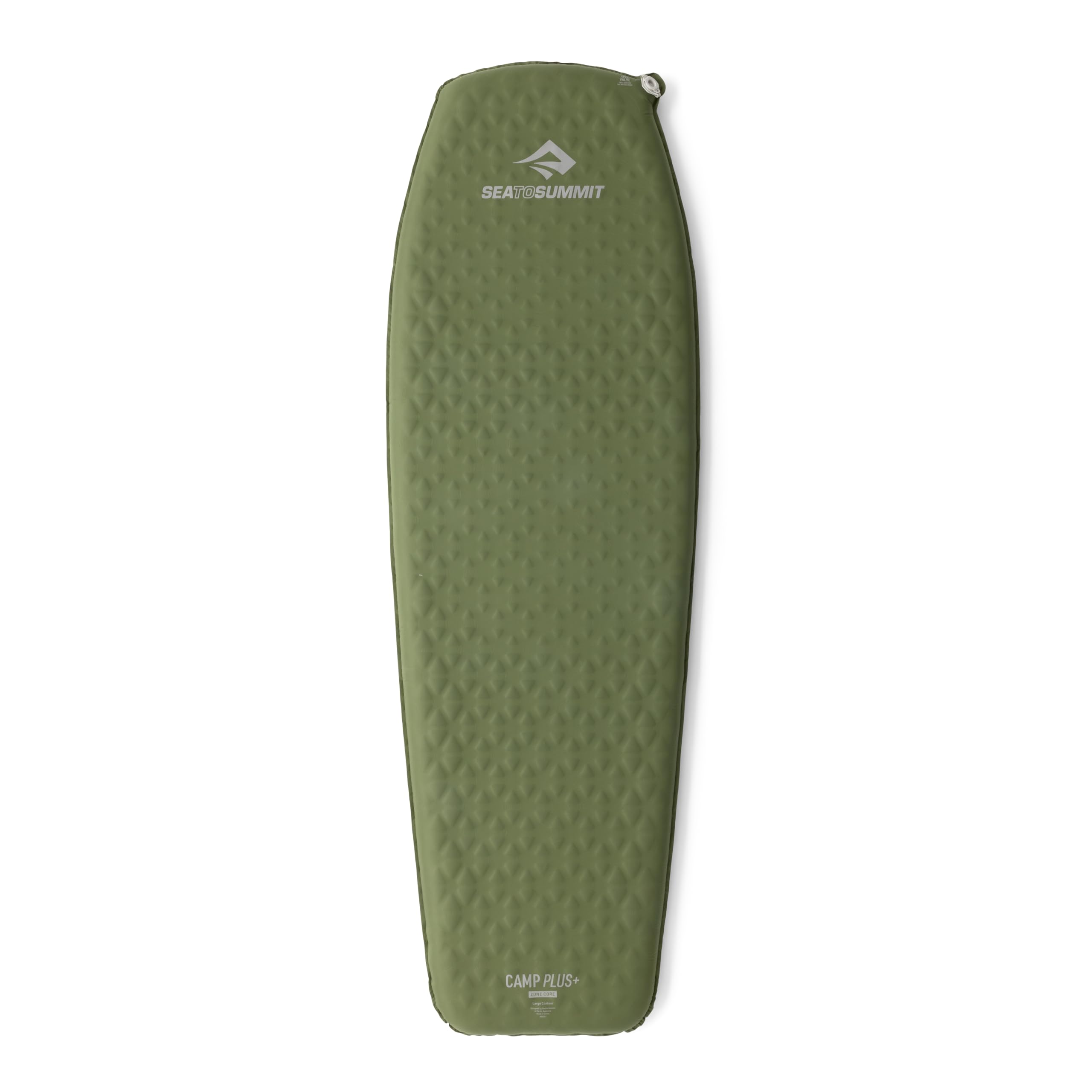
2. Sea to Summit Camp Plus SI Sleeping Mat
A featherlight 4-season foam pad that packs down to almost nothing
At 3 pounds and packing to 12.6 x 7.5 inches, this mat is the lightest self-inflating foam option here, which is why owners call it a solid middle ground between car and light trek. Its 4.3 R-value insulates against all but the coldest ground, while the 2.6-inch thickness offers a memory-foam feel that buyers consistently describe as comfortable and warm.
The tapered Large size measures 78 x 25.2 inches, and the contour shape adds 12 percent more sleep surface area than a straight cut. A multi-function reversible valve handles fast inflation, one-way deflation, and fine pressure tuning — plus an Xpel valve update for tighter rolls. The durable 75D polyester face fabric is built to last year after year.
Owners mention it is an excellent pad once the foam expands — which can take about a week after shipping — and that it holds air and packs smaller than bulkier rivals. The honest caveat is that self-inflation is slow at first, so plan on a few breaths or a pump to finish the job. Its 4.3 R-value sits below the Acacia’s 6, but it is a full 1.7 lbs lighter for anyone counting pack weight.
Build quality wins: the craftsmanship is the most-praised trait, with comfort close behind, and the valve design earns special mentions for preventing accidental deflation.
The fit note: this is a solo camper’s mat — owners agree it is too bulky for backpacking trips despite the light weight, so treat it as a car-camping upgrade.
Best for: the solo camper who wants a warm, quality foam pad that stays compact in the trunk without the heavy weight of larger foam models.
Not for: hardcore backpackers — the packed size adds volume you will regret on trail miles.
3. Naturehike 27oz Ultralight Sleeping Pad
The ultralight air pad that out-warms pads twice its price
If you count every ounce on the trail, this pad is your pick: it weighs just 770g (27.2 oz) and packs down to Φ13 x 22cm — about the size of a Nalgene bottle, as one 6’4″ buyer put it. That tiny size still delivers a 4.6 R-value (a measure of insulation against heat loss), rated for temperatures down to -4°F/-20°C, so you stay warm on serious alpine nights.
The warmth comes from the NKTR AIR heat-reflective system: eight layers of aluminum molding inside separate air chambers to cut convective heat loss, while a perforated aluminum layer keeps noise down. The 3.2-inch (8cm) thick design cushions rocky ground, and the punching-point structure spreads pressure evenly so you do not feel the floor beneath you.
Customers note it inflates in roughly 4-5 squeezes with the included pump sack, stays quiet, and held up on cold January nights in the mountains. The durable 20D nylon with TPU is the material doing the heavy lifting here. A few owners hit durability issues at internal quilting points after heavy use, which is the trade-off of any ultralight air pad — check the included TPU repair kit before trusting it on a long expedition.
Why It Wins
- Comfort is the standout — owners praise the ergonomic chambers for side and back sleepers
- 4.6 R-value rivals pads costing far more
- Packs down to Nalgene-bottle size for easy backpacking
The Fine Print
- Noise level gets mixed reviews — some find it quiet, others hear crinkling
- Durability is the recurring concern after many nights
- A narrow 25.2-inch width may feel small for wide sleepers
Grab this when: the trail matters more than the campsite — it is the budget-friendly ultralight that keeps you warm without weighing you down.
Think twice if: you are a restless wide sleeper who needs extra room to toss around.
4. Hikenture 4″ Thick Self Inflating Sleeping Pad
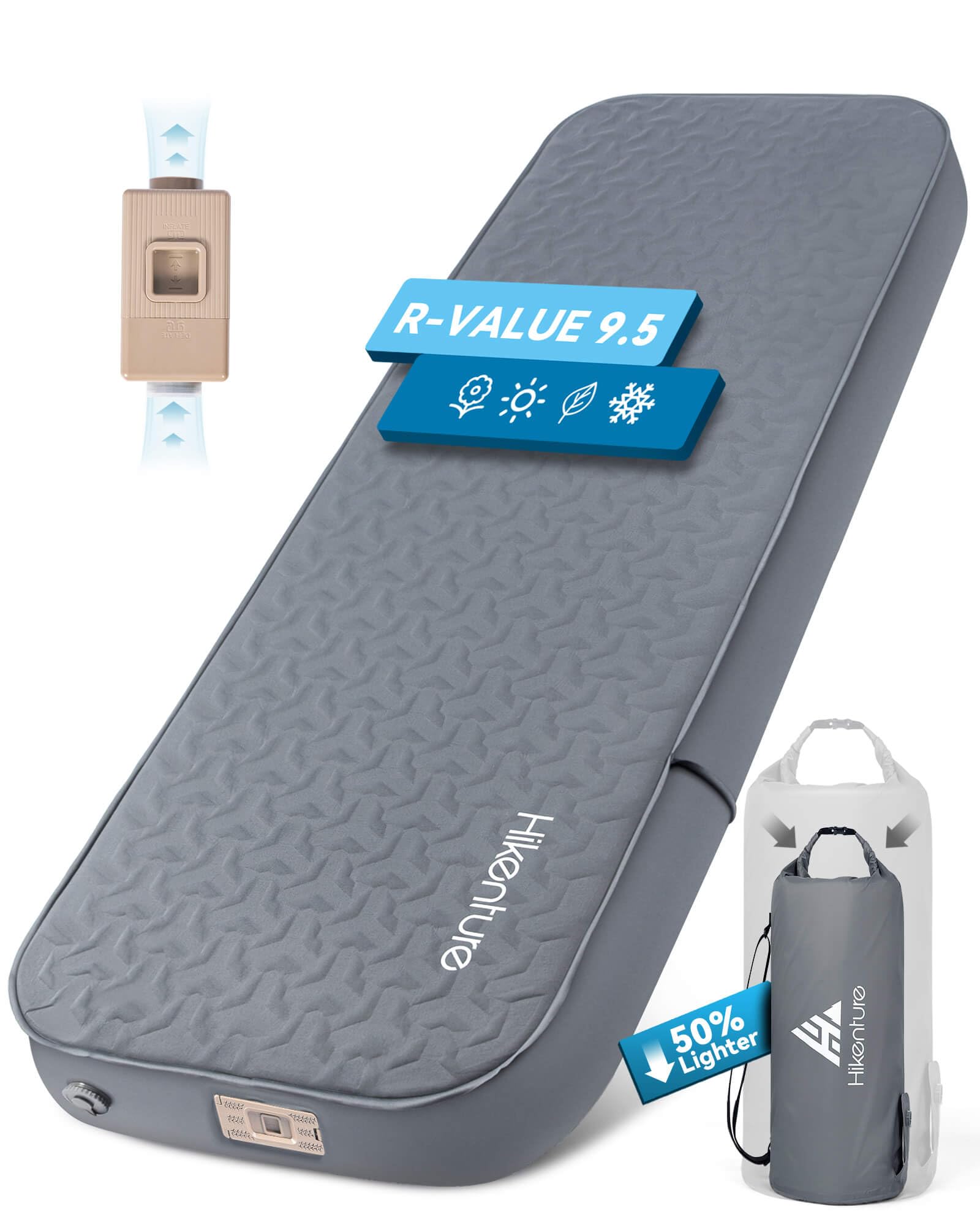
This pad’s built-in electric pump inflates it in 90 seconds, and its 9.5 R-value keeps you warm in winter.
No manual pumping here — a built-in electric pump inflates this pad to firmness in 90 seconds flat, which beats waiting on any hand pump. The 4-inch thick foam filling cradles hips and shoulders without bottoming out, and the stretch-knit fabric surface stays whisper-quiet when you roll over, so tent mates sleep peacefully.
The insulation story is the headline: an R-value of 9.5 creates a serious barrier against cold and damp ground, making this one of the warmest pads on this list for winter camping. Y-shaped airflow channels lock in heat and cut bulk by 50%, packing into an overhead-bin-sized bag. At 5.4 lbs, it is clearly a car-camping or rooftop-tent pad.
Reviewers point out it feels like a real home mattress, holds air through the night with no deflation, and inflates in 1-2 minutes with the pump — one buyer has used it for 4 years and still loves it. The honest downside: a few units shipped with a pump that failed, so test the button before packing for a trip. The 9.5 R-value dwarfs the Acacia’s 6, but you pay for it with more packed bulk.
Comfort and quality tie: both are the most-praised traits, and owners say it beats all-air alternatives easily for a home-bed feel.
Heads up: the built-in pillow sits low, and some owners found it slightly thinner than advertised — still comfortable, but check before relying on the exact 4-inch spec.
Perfect for: campers who want hotel-level firmness without the effort — the electric pump and 9.5 R-value make setup and warmth easy.
skip it if: you hike with your pad; 5.4 lbs is a lot of pack weight for trail miles.
5. Therm-a-Rest Basecamp Self-Inflating Camping Sleeping Pad

The made-in-USA foam pad that earns rave reviews year after year
Therm-a-Rest has built a reputation on quality, and the Basecamp delivers with an R-value of 6 for year-round insulation plus a thick thermal foam core. The WingLock valve inflates 3 times faster than a classic valve and deflates almost instantly, so setup is genuinely quick — and its adjustability lets you dial in firmness.
This pad is built for tent or cot camping, not backpacking: it measures 77 x 25 x 2 inches and weighs 3 pounds 6 ounces rolled. Owners are emphatic that it shines on the ground or on a cot, with one noting you “don’t touch the ground when you sink into it.” The stuff sack uses a PFAS-free DWR coating (a water-repellent finish without harmful chemicals) to keep your gear dry while being better for the environment.
Quality is the most-praised trait here, with comfort following close behind, and shoppers say it retains air all night. The recurring advice is to add a few breaths on top of self-inflation for maximum firmness. Like the Sea to Summit above, this one is too heavy for the trail — but unlike that mat, it carries the warranty confidence of a brand owners say stays fantastic after 5 years.
Build quality wins: owners call it extremely impressive, durable, and easy to inflate, with warmth reported as a consistent positive.
The honest limit: portability gets mixed feedback — it is great for camping but firmly not meant for backpacking.
Choose this when: you want a durable, warm, made-in-USA pad for tent or cot camping and trust a brand with years of owner loyalty.
Avoid if: you’re an AT thru-hiker — as owners say, it’s much too big for the trail.
6. Big Agnes Divide – Air Chamber Sleeping Pad

The 23-ounce insulated pad that cradles you with I-Beam baffles
Weighing just 23 oz and packing to 5″ x 8″, the Divide is built for 3-season adventures where every ounce counts. Its R-value of 4.0 keeps you comfortable as temperatures drop, with THERMOLITE insulation working alongside a heat-reflective film to trap body heat and reflect it back at you.
The proprietary I-Beam construction reduces weight while keeping you stable and comfortable at 3.25 inches thick. The 3.5-inch larger outer chambers gently cradle you in the middle of the pad, so you stay centered instead of sliding off — a feature owners specifically praise. The recycled nylon ripstop fabric with aviation-grade TPU lamination delivers serious weld strength.
Owners call this the best two-person bed for backpacking, with one noting it is their go-to for trips thanks to simple inflation and excellent comfort. The high-volume valves with micro adjustments make fine-tuning firmness easy, and the regular 20″ x 72″ size fits most sleepers — though the narrow 20-inch width gets mixed feedback from wider users. There is no aluminum layer here like the Naturehike above, but the 23 oz weight beats that pad easily for ultralight trips.
Quality leads: it is the most-praised trait, with comfort and insulation close behind, and owners confirm it keeps them warm down to 30°F.
Who this is not for: the 20-inch width is too narrow for broad-shouldered or wide sleepers, who note it may feel cramped.
Reach for it if: you backpack solo or with a partner in 3-season weather and want a light pad that still cradles you comfortably.
Look elsewhere if: you need a wider sleep surface — the 20-inch width is the main complaint.
7. Therm-a-Rest NeoAir XLite NXT

The featherweight that rolls to bottle size and still hits 4.5 R
This is the standard for ultralight backpacking for a reason: the size Regular weighs just 13 oz (370g), and the Regular Wide comes in at 16 oz (450g), rolling up as small as a conventional 1-liter bottle. Its 3-inch thick profile with a baffled internal structure delivers stability that owners call top-notch quality and warmth.
The magic is in the reflective ThermaCapture technology, which traps radiant heat, working with the Triangular Core Matrix to cut convective heat loss — hitting a 4.5 R-value warm enough for year-round adventures. The NXT version is notably quieter than the older crinkly model, which owners specifically praise. The WingLock valve gives easy inflation and lightning-fast deflation.
Buyers report it holds air for 48+ hours, keeps them warm into the 30s, and is lighter and smaller than pads they replaced. The honest caveat is the regular size feels too narrow width-wise for some owners, so consider the wider cut. A few owners hit slower warranty service on seam leaks, but the pad’s performance gets consistent applause. At 16 oz, it undercuts the Big Agnes Divide’s 23 oz while offering a higher R-value of 4.5.
What Stands Out
- Quality is the top praise — owners call it the best of the best
- 16 oz weight with 4.5 R-value is an elite warmth-to-weight ratio
- Near-silent fabric fixes the old crinkle complaint
Consider Before Buying
- Size gets mixed marks — the regular width feels narrow to many
- Air retention and value draw mixed feedback at the premium price
- Some owners found the surface a bit slippery
Pick this for: serious ultralight hikers who want the warmth of a 4.5 R-value at a 16 oz weight that vanishes in a pack.
Pass on it if: you are on a tight budget or need a wide sleeping surface without ordering the separate wide version.
8. Big Agnes Rapide SL – Insulated Sleeping Pad

A wide, quiet, pillowy pad that still packs down tiny for the trail
If you refuse to sleep on a narrow strip, this Wide Long pad measures 25 x 78 inches — roomy enough that a 6’1″ owner fits comfortably. The 3.5-inch thickness with 4.25-inch larger outer chambers cradles you from the sides, so you stay put instead of rolling off. The quilted top creates a cushioned, pillowy surface that owners call extremely comfortable and quieter than most pads on the market.
The insulation is serious for its weight: R-values up to 4.8 come from two layers of heat-reflective film, making this a strong three-season backpacking pad. The offset I-Beam construction reduces weight while keeping stable support, and the superlight double ripstop nylon with aviation-grade TPU lamination adds durability. The Pumphouse inflation sack fills it in seconds without introducing moisture from your breath.
Owners upgrading from a Thermarest Trail Pro report saving 14 oz and a smaller pack size, with one calling the comfort a 10/10. The only consistent knock is the stuff sack being too small — a minor annoyance, not a dealbreaker. Its 4.8 R-value tops both the Big Agnes Divide’s 4.0 and the NeoAir’s 4.5, while the wide cut answers the narrowness complaint of both.
Quality and pack size lead: owners praise the tiny packed size and the padding that feels like it cradles you, plus the quiet fabric for active sleepers.
A fair warning: the value gets mixed reviews at its price point, and the cramped stuff sack is the recurring annoyance.
Best for: side sleepers and taller backpackers who want wide, quiet comfort without carrying a heavy foam pad.
Not ideal if: budget is your top priority — owners note it is not the cheapest option, though they find it worth it for sleep quality.
9. Lost Horizon Option3 Self-Inflating Foam Camping Mattress

The 4.5-inch thick full-size mattress with an R-value of 13
Its R-value of 13 is the highest on this list, delivering class-leading warmth for extreme cold. With a 4.5-inch thickness and 12-pound foam filling supporting up to 440 pounds, it is built for couples who want a real mattress experience in the car-camping world — and owners say it feels just like sleeping on a home bed.
The unique foam-and-air construction lets you adjust softness to your liking, and the stable surface stays silent, so your movements do not wake your partner. Inflation is as simple as twisting the valve, and the included portable air pump deflates it in about a minute for easy storage. The full size measures a generous 80 x 52 inches — big enough for two sleepers.
Owners consistently call it the best camping mattress they have ever used, with one noting it is cheaper and thicker than the Exped alternative. The honest trade-off is size: at 7.65 kg (about 17 lbs) and a bulky packed volume, this is strictly a car or pop-up camper pad — the manufacturer itself notes it is not recommended for backpacking. The battery in the pump drains in roughly 7 weeks if left idle, so charge it before a trip.
The Big Wins
- Quality is the top praise — over 80 owners call it exceptional
- R-value of 13 is class-leading for extreme cold insulation
- Fast inflation and deflation with the included rechargeable pump
The Big Cost
- Bulky packed size is a real drawback for storage and travel
- Pump performance draws mixed feedback
- At 7.65 kg, it is for vehicles only, never for hiking
Choose this for: couples car camping, pop-up campers, or SUV trips where a home-like, warm, king-sized sleep surface is the goal.
Dismiss it if: you need to move camp on foot — the weight and bulk are completely incompatible with backpacking.
10. Exped MegaMat Sleeping Pad, Medium Wide
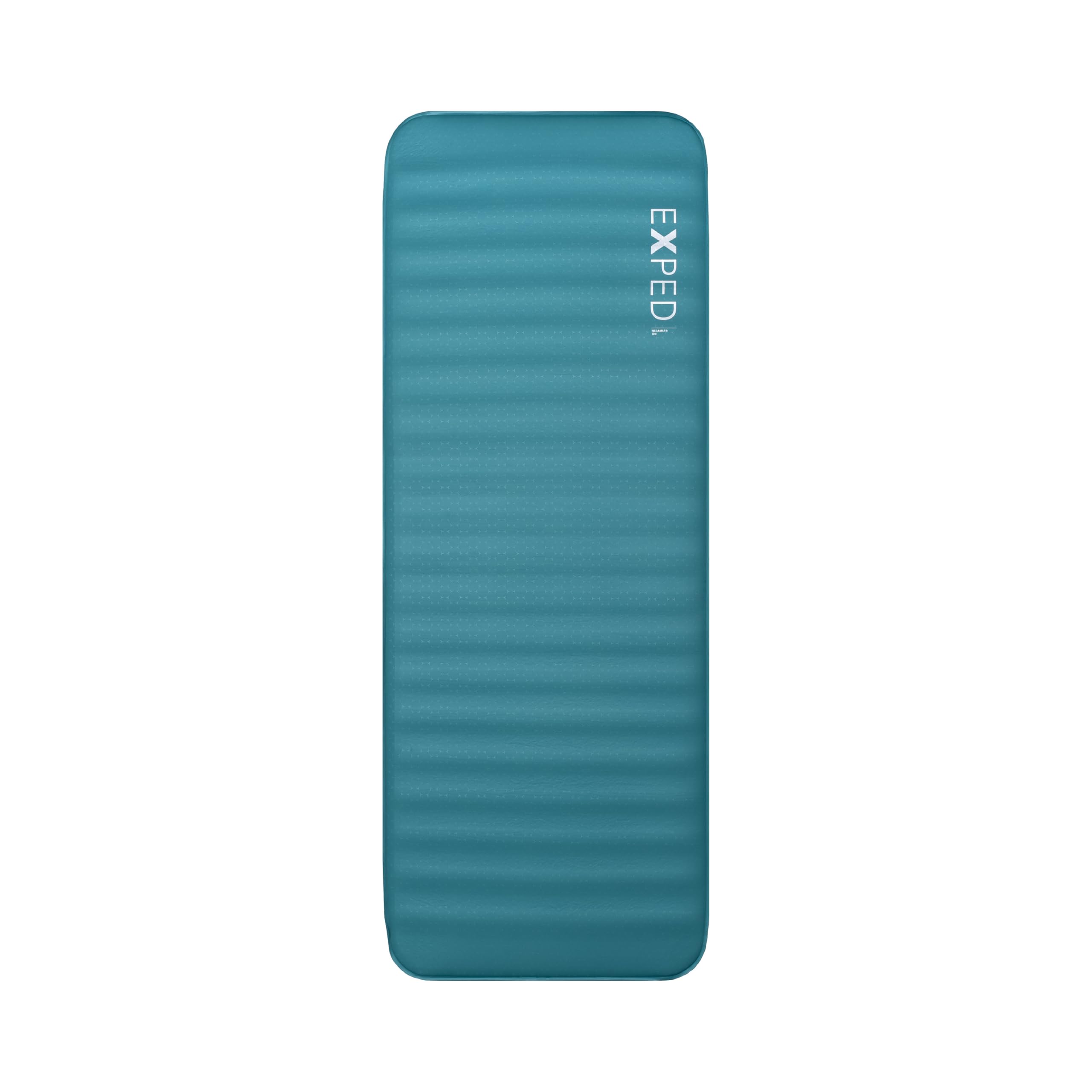
The premium 4-inch self-inflating pad that turns any tent or SUV into a bed
The MegaMat is a dual-purpose star: its 4-inch open-cell foam technology works equally well as a car mattress in your SUV or a camping pad on the ground, with an R-value of 8.1 for serious cold-weather insulation. The air-core-channeled construction with 3D vertical sidewalls prevents bottoming out, so you stay supported in any sleeping position — and the 100% recycled 4-way stretch tricot polyester fabric feels soft and cradling.
The included Top-Up Pump lets you customize firmness from ultra-plush to firm, and owners say a firm setting takes about 30 pumps while a soft fill uses just the valve. It has held 300 lbs plus kids without the rolling feel of an airbed, and it rolls up tight when packed. At 72 x 25.6 x 4 inches, the Medium Wide size suits most sleepers, though taller ones like a 5’6″ owner found the Duo version too short and stepped up to the XLW.
Buyers consistently report the best sleep of their camping lives, with some replacing their home guest air mattress with this pad entirely. The honest gripes are the slow first inflation and the mixed value feedback at its premium price — a few owners found it pricey for what it offers. Its 8.1 R-value outpaces both the Acacia and Hikenture while delivering that premium Exped feel.
Quality and comfort lead: owners say it is almost like sleeping on a regular mattress, with quick inflation and deflation as consistent wins.
Fair warning: air retention and durability get mixed reviews, and the value is debated — try before you commit to the premium price.
Reach for it if: you split time between tent camping and sleeping in your SUV, and want a premium 4-inch pad with strong insulation for both.
Pass if: you are simply looking for the best value — the price tag invites scrutiny, and owners are split on worth.
11. NEMO Equipment Tensor Extreme Sleeping Pad
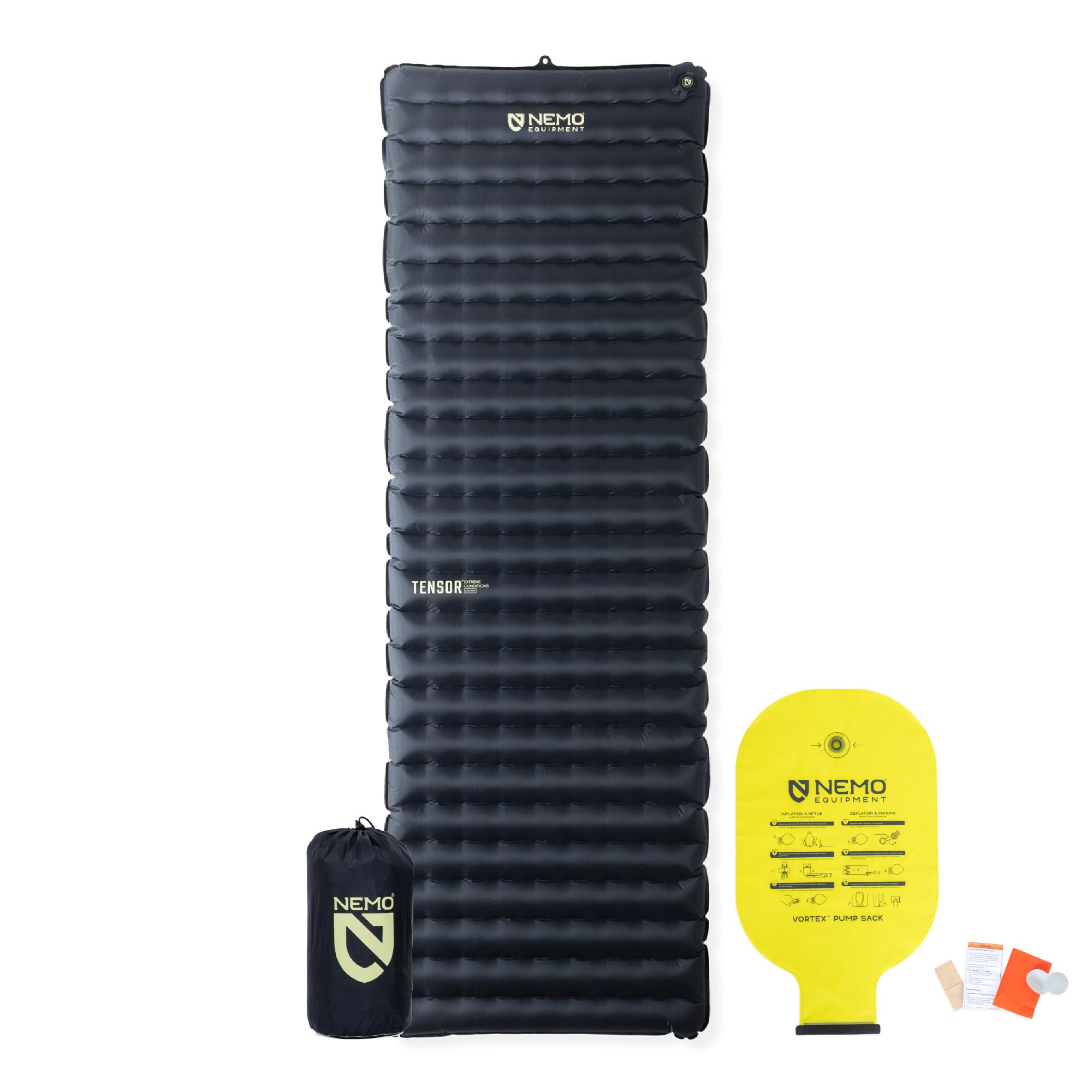
This mountaineering pad’s 8.5 R-value survived a Denali expedition.
Built for extreme cold, mountaineering, and trekking, the Tensor Extreme packs an 8.5 R-value into a 3.5-inch cushioned loft — one of the highest warmth-to-weight ratios you can buy. The Apex baffle design suspends more insulating layers than ever before, while four layers of floating Thermal Mirror metallized film provide quiet insulation with minimal weight.
It earned rave reviews after a 10-day Denali expedition, proving its extreme-cold design. The bluesign approved premium nylon fabrics shave grams while resisting punctures and tears, and owners specifically note it holds air overnight and sets up quickly. The Long Wide size at 76 x 25 inches fits a 6’4″ user comfortably.
Owners praise it as warm, comfortable, and impressively quiet — with one noting it beats a Therm-a-Rest Xtherm on noise alone. The lightweight construction keeps it packable even in the largest size, ideal for ultralight hikers who need serious warmth. The trade-off is the premium price and the fact that a pad this specialized demands care; it is a serious expedition tool rather than a casual camp pad.
Killer quality leads: owners call it comfortable all night with real warmth in cold weather — the exact trio you want for alpine use.
The catch: this is the most expensive pad here, and it requires careful handling despite its durable build.
Best for: mountaineers and extreme-cold trekkers who need expedition-grade warmth in a packable, quiet package.
Skip it for: casual weekend camping — the price and specialization are overkill unless you actually face extreme conditions.
Understanding the Specs
R-Value
This number measures how well the pad blocks ground cold — the higher it is, the warmer you stay. For alpine camping you want at least 3, and pads like the Lost Horizon’s 13 or the NEMO’s 8.5 handle seriously cold ground. A high R-value comes from foam, reflective layers, or both.
Weight and Pack Size
An ultralight air pad at 16-27 oz with a bottle-sized roll is the only option for backpackers. A self-inflating foam pad at 5-17 lbs with a larger roll is the choice for car campers who want real comfort. Match the weight to how far you actually carry it.
FAQ
What R-value do I need for alpine camping?
Is a self-inflating foam pad or an air pad warmer?
How much does a good alpine pad weigh?
Can I use a 3-season pad for winter camping?
Why does my self-inflating pad take so long to puff up?
What is the difference between 20-inch and 25-inch wide pads?
How do I inflate an alpine pad without a pump?
Will a sleeping pad fit inside my tent or SUV?
How do I repair a punctured alpine pad?
Is it worth paying more for a high R-value pad?
Final Thoughts: The Verdict
For most users the alpine sleeping pad winner is the Acacia 4″ Self Inflating because it pairs a winter-ready R-value of 6 with real bed-like 4.3-inch thickness at a price that keeps it accessible. If you want ultralight backpacking warmth, grab the Naturehike 27oz for its 4.6 R-value in a bottle-sized roll. And for couples who drive to camp, the Lost Horizon with its R-value of 13 delivers a home-mattress sleep that nothing else on this list matches.
How We Picked
We do not accept paid placement. Every pick is matched to a real buyer and a real use-case; we do not hands-on test units.
Sources & Methodology
Specifications: manufacturer listings and product documentation. Review insights: verified customer reviews, as of September 2026. Pricing: not shown on this page (it changes often); check the current price via the retailer link.
As an Amazon Associate, Gadgets Feed earns from qualifying purchases. This does not affect which products we feature.