
A bad back doesn’t take a vacation, but a tent floor is the last place your spine wants to spend the night. The wrong setup turns a wilderness escape into a week of stiffness, spasms, and regret. Choosing a camping bed that supports your lumbar curve while keeping you off cold, uneven ground is the single most important gear decision for anyone with chronic back issues.
I’m Min — the co-founder and writer behind Gadgets Feed. I’ve spent countless hours researching pressure-mapping studies, lumbar support geometries, and foam density specs to find the beds that actually protect a sensitive spine during outdoor sleep.
Whether you’re a side sleeper, have a herniated disc, or simply wake up sore after a night on the ground, the right gear changes everything. This guide cuts through the noise to help you find the best camping beds for bad backs for your specific needs and budget.
How To Choose The Best Camping Beds For Bad Backs
Your spine needs consistent support across its entire length. A camping bed that fails under your hips or allows your lower back to sag will undo any relief the outdoors provides. Focus on three factors: support structure, material composition, and thermal insulation.
Support Structure: Cots vs. Pads vs. Hybrids
A raised cot with a rigid frame prevents you from bottoming out, but if the fabric sags like a hammock, it can create a dangerous arch in your lumbar region. Thick, high-density foam pads conform to your body’s curves without the “banana effect” some cots produce. Hybrid systems that combine a stable cot frame with a thick mattress or pad offer the best of both worlds for back-pain sufferers.
Foam Density and Thickness
For a bad back, a sleeping surface under 4 inches thick is a risk. Open-cell foam compresses too quickly, letting your hips hit the ground. High-density memory foam or multi-layer foam cores provide the necessary resistance to keep your spine in neutral alignment. Look for a minimum of 4 inches of supportive material, with 6 inches being ideal for side sleepers.
R-Value and Ground Insulation
Cold ground saps heat from your muscles, causing them to tighten and spasm overnight. An R-value of 5 or higher is recommended for three-season camping if you have back issues. Insulated self-inflating pads and high-density foam mats passively block cold transfer better than air-only mattresses, which can feel like sleeping on a cold slab.
Quick Comparison
On smaller screens, swipe sideways to see the full table.
| Model | Category | Best For | Key Spec | Amazon |
|---|---|---|---|---|
| HEST Foamy | Premium Pad | Maximum Back Support | 8.8″ Thick Memory Foam | Amazon |
| Therm-a-Rest MondoKing 3D | Self-Inflating Pad | Cold Weather & Pressure Relief | 4.25″ / R-Value 7.0 | Amazon |
| ALPS Mountaineering Ready Lite | Ultralight Cot | Backpacking Comfort | 5 lbs / 300 lb Capacity | Amazon |
| Acacia 4″ Self-Inflating Pad | Self-Inflating Pad | Side Sleepers | 4.3″ Thick / R-Value 6 | Amazon |
| FUNDANGO Queen Cot | Hybrid Cot | Couples & Spacious Sleep | 600 lb Capacity / 80″x60″ | Amazon |
| SunsGrove Folding Bed | Rollaway Bed | Home Guest & Car Camping | 5″ Memory Foam Mattress | Amazon |
| GEMBED Tri-Fold Mattress | Folding Mat | Budget-Friendly Support | 6″ Memory Foam Queen | Amazon |
| ONETIGRIS SUPRANUBIS | Lightweight Cot | Versatile Height Setup | 9 lbs / 7075 Aluminum | Amazon |
| HABUTWAY Camping Cot | Entry-Level Cot | Budget Cot with Mattress | 2.5-3″ Mattress / 600 lbs | Amazon |
In‑Depth Reviews
1. HEST Foamy Camping Mattress Pad

The HEST Foamy is the closest thing to bringing your home mattress into the woods. Its 8.8-inch dual-layer memory foam core provides exceptional pressure point relief for the hips and shoulders, directly addressing the root cause of back pain for side sleepers and stomach sleepers alike. The dense foam prevents bottoming out, keeping your spine in a neutral position all night.
No pump or inflation is required, which eliminates the risk of air loss and deflation sag that plagues many air mattresses. The integrated compression strap and carry handle make transport straightforward for car camping setups. The water-resistant base layer also protects the foam from ground moisture that can lead to muscle-cooling and stiffness.
This is a premium, bulky solution best suited for vehicle-based camping where weight and packed size are secondary to sleep quality. Users report that the Foamy is firm enough for back sleepers yet forgiving enough for those with chronic conditions like sciatica. It’s an investment in genuinely pain-free mornings outdoors.
Why it’s great
- 8.8 inches of high-density memory foam rivals home mattress comfort
- No pump or electricity needed, eliminating deflation issues
- Excellent pressure point relief for hips and shoulders
Good to know
- Heavy and large when rolled, only suitable for car camping
- Premium price point reflects the materials and build quality
2. Therm-a-Rest MondoKing 3D Self-Inflating Pad

The MondoKing 3D uses a sophisticated StrataCore construction that sandwiches a continuous layer of thermal foam between alternating ridges of air and foam. This design delivers 4.25 inches of plush support with an R-value of 7.0, meaning your back muscles won’t tighten from cold ground seepage even in freezing temperatures. The self-inflating foam core provides a stable base that doesn’t shift under you.
The 3D vertical sidewalls maximize the usable sleep surface, which is critical for preventing your arms or hips from rolling off the pad and twisting your spine. The TwinLock valve system allows you to fine-tune firmness, letting you find the exact sweet spot between soft contouring and firm support. For a bad back, this adjustability is a clinical advantage.
Weighing 5.5 pounds and packing to 26×10.3 inches, it’s a car camping specialist but not a backpacking option. The stretch knit fabric layer feels soft against the skin and reduces friction noise that can disrupt sleep. Users with weight up to 300 pounds report no bottoming out and significantly less morning stiffness compared to standard air mattresses.
Why it’s great
- Industry-leading R-value 7.0 insulation prevents cold-induced muscle spasms
- Self-inflating design with adjustable firmness for precise support
- 3D sidewalls increase usable surface area for spinal alignment
Good to know
- Bulky packed size, not practical for backpacking
- Some users report sliding on smooth tent floors
3. ALPS Mountaineering Ready Lite Cot

For backpackers with bad backs who need to go light, the Ready Lite Cot is a breakthrough. Weighing only 5 pounds with a packed size of 18x3x8 inches, it uses a 7000-series aluminum frame that supports up to 300 pounds. The key feature for spinal health is the two-layer top that creates a sleeve for an air pad up to 2 inches thick, allowing you to combine a rigid cot base with a padded top layer.
The cot’s flat, rigid surface solves the “hammock sag” problem common in cheaper cots, where your hips sink into the center and your lower back arches unnaturally. By keeping you elevated off the cold, uneven ground, it also prevents the muscle tightening that exacerbates back stiffness. The 420D polyester honeycomb ripstop fabric is durable enough for repeated backcountry use.
Setup involves shock-corded poles that snap into place quickly once you learn the sequence. Users report that pairing this cot with a self-inflating pad creates a sleep system that rivals a home bed for side and stomach sleepers. This is the go-to option for thru-hikers and bikepackers who refuse to sacrifice spinal support for pack weight.
Why it’s great
- Ultralight at 5 lbs with a compact packed size for backpacking
- Air pad sleeve allows customization for back support
- Rigid aluminum frame prevents sag and lumbar arching
Good to know
- Requires an additional pad for optimal comfort and back support
- Assembly can be tricky on the first few attempts
4. Acacia 4″ Thick Self Inflating Sleeping Pad

The Acacia pad delivers 4.3 inches of foam support with a load capacity of 440 pounds, making it one of the most supportive options in its class. Its Y-shaped telescopic foam structure compresses the pad’s volume by up to 60% for packing, which is a clever engineering feat given the thickness. For back-pain sufferers, this thickness is the minimum threshold for keeping the hips elevated and the spine neutral.
The 2-way valve handles most inflation automatically, and you can fine-tune the firmness using the included pump sack. An electric pump can be used for speed, but the self-inflating foam core provides a more consistent contouring than pure air chambers. The R-value of 6 ensures year-round insulation, preventing cold ground from seeping into your back muscles.
Side buckles allow you to connect two pads for couples, expanding your sleep surface width to prevent arms from falling off the edge. The rugged 30D elastic fabric with TPU coating resists punctures and tears. It’s a mid-range investment that competes directly with much pricier pads from established brands, offering genuine spinal protection without the premium markup.
Why it’s great
- 4.3-inch thickness prevents bottoming out for side sleepers
- R-value 6 provides excellent thermal insulation
- Y-shaped foam compresses well for packing despite the thickness
Good to know
- Bulkier packed size compared to inflatable-only pads
- Requires some practice to master inflation techniques
5. FUNDANGO Queen Camping Cot with Electric Pump
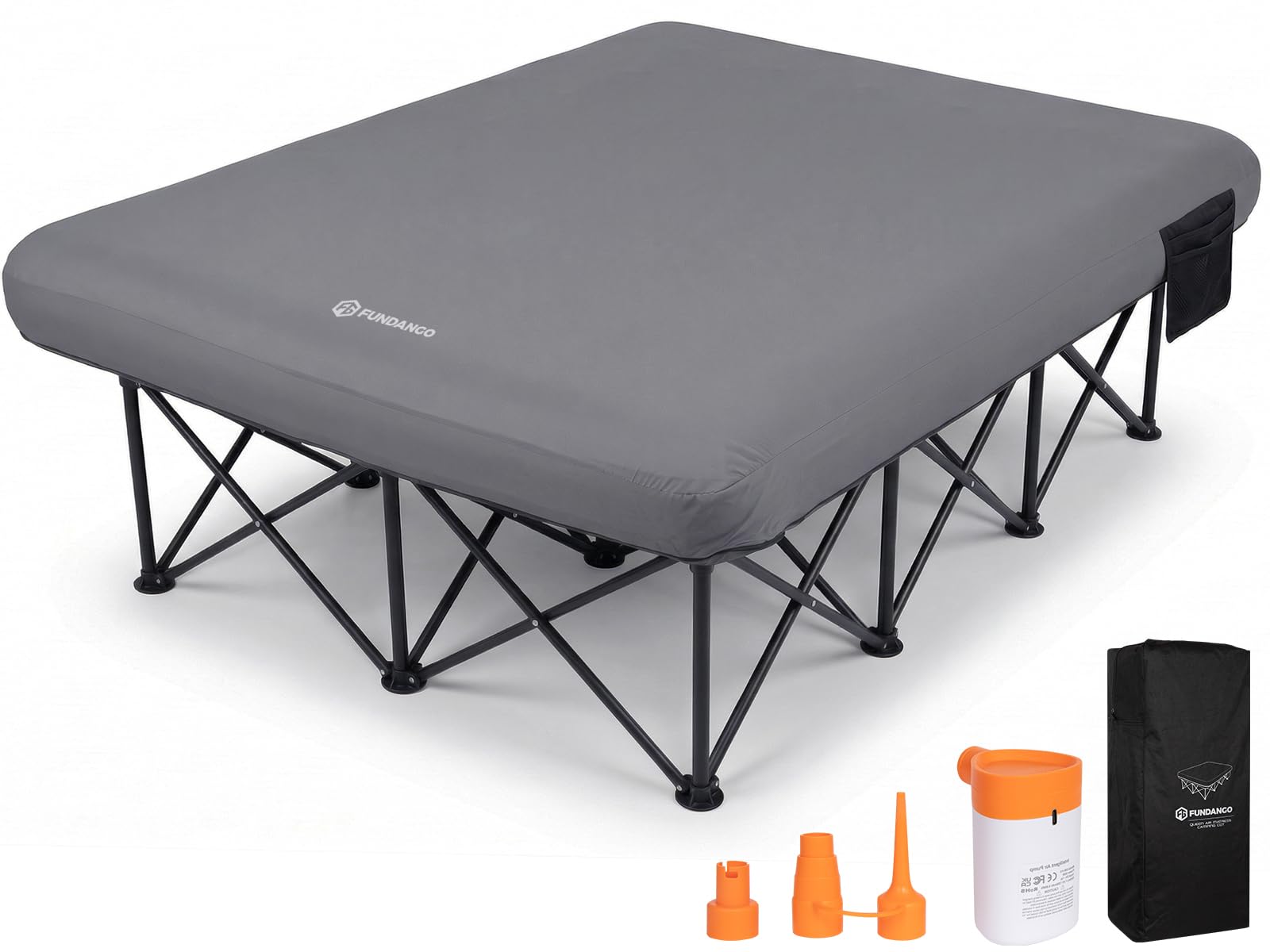
The FUNDANGO combines a rigid steel folding frame with a queen-size inflatable air mattress, creating a hybrid system that gets you 23.6 inches off the ground. This raised height is a game-changer for those with bad backs because it eliminates the need to crouch or kneel to get in and out of bed, a motion that often triggers lower back strain. The integrated rechargeable electric pump inflates the mattress in about three minutes.
The 600-pound capacity steel frame provides a stable platform, while the air layer offers cushioning. This dual-layer approach means your hips won’t hit a hard frame, but you still get the firm support of a cot. The side cup holders and storage pockets keep essentials within reach, and the removable machine-washable cover addresses hygiene concerns after dusty trips.
This system is ideal for couples or solo sleepers who value personal space and hate being confined to a narrow pad. The queen size (80×60 inches) gives you room to shift positions without falling off. The trade-off is weight and bulk: it’s strictly a car-camping setup. Users who previously wrestled with separate cot-and-pad combos appreciate the all-in-one simplicity.
Why it’s great
- Raised 23.6-inch height reduces back strain when getting in and out
- Queen size provides ample room for spinal repositioning during sleep
- Integrated electric pump eliminates manual inflation effort
Good to know
- Very heavy and bulky, not suitable for backpacking
- Some users report sagging at the head and foot ends
6. SunsGrove Folding Bed with 5″ Memory Foam Mattress
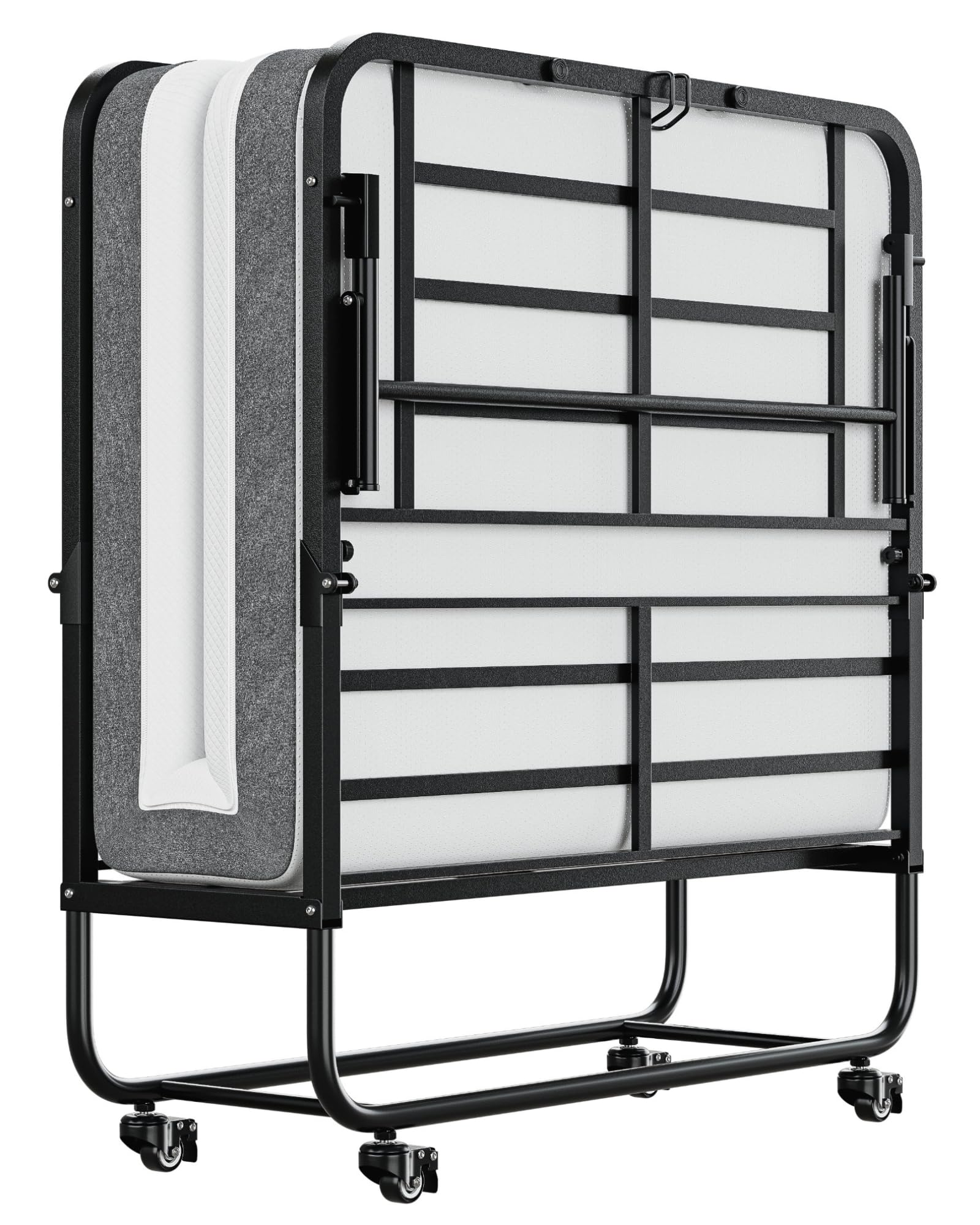
The SunsGrove is a rollaway bed that blurs the line between indoor guest sleeping and car camping. It uses upgraded iron slats instead of flimsy wire mesh, providing a flat, even foundation that doesn’t sag in the middle. The included 5-inch mattress features a dual-layer construction: 3.5 inches of high-density support foam topped with 1.5 inches of memory foam for pressure relief along the spine.
For back-pain sufferers, the most important advantage is the 17-inch ground-to-mattress height. This elevation makes it far easier to stand up from a lying position compared to a low cot or ground pad, which stresses the lumbar discs less. The four locking casters allow you to move the bed into position without lifting or twisting your back.
The mattress is separate from the frame and has a zippered cover for easy cleaning. Two metal retainers prevent the mattress from sliding off during the night. While it’s heavy at 55 pounds and bulky when folded, it’s an exceptional choice for RV camping, guest rooms, or anyone who needs a no-compromise sleeping surface that specifically accommodates mobility and back concerns.
Why it’s great
- 17-inch height eliminates painful bending to stand up
- 5-inch dual-layer foam mattress supports spinal alignment
- Sturdy iron slat frame prevents sagging and lumbar arching
Good to know
- Heavy at 55 pounds, only for car or RV camping
- Mattress may need time to fully expand to rated thickness
7. GEMBED Tri Folding Mattress Queen Size
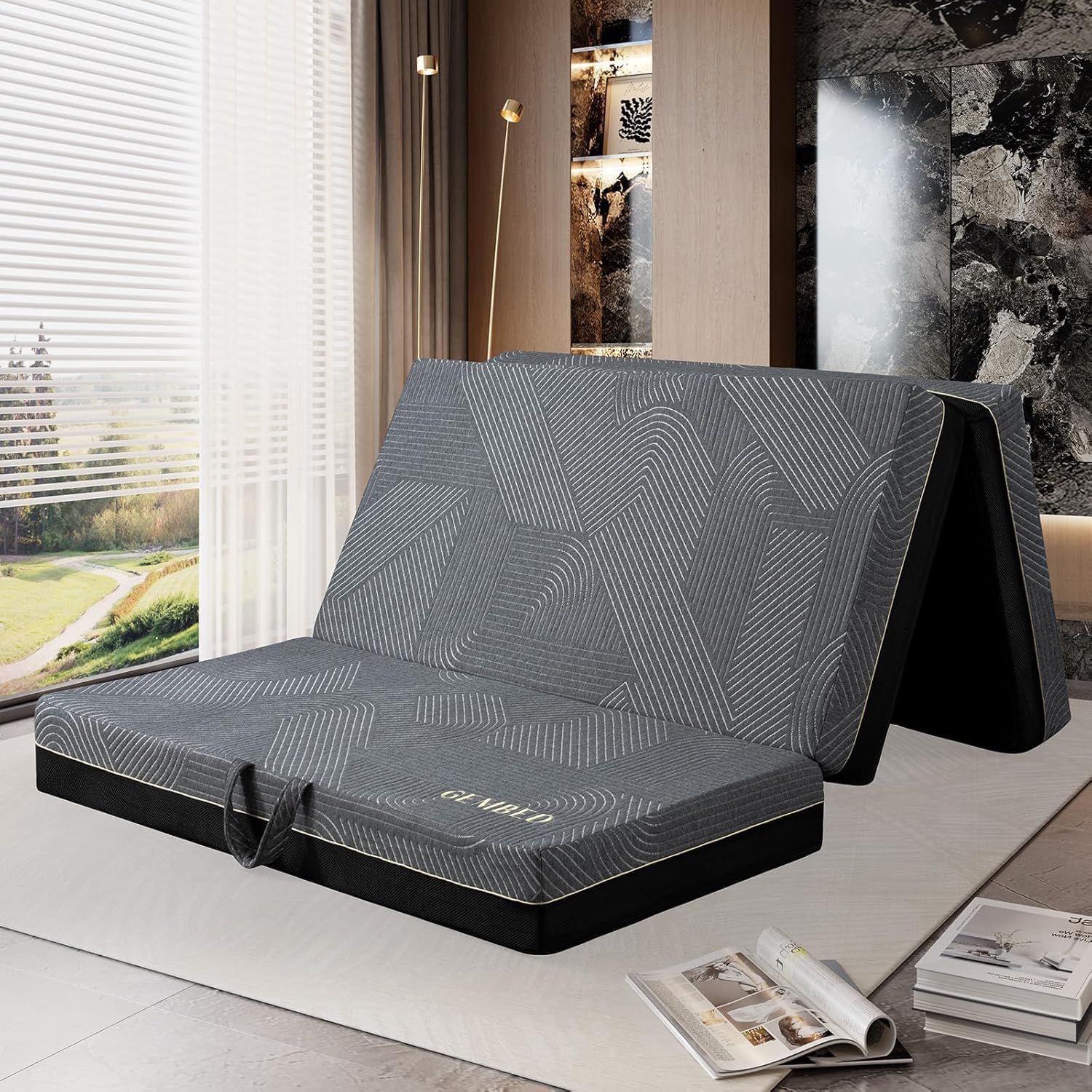
The GEMBED Tri Folding Mattress proves effective back support doesn’t require a complex frame or inflation system. At 6 inches thick, this memory foam pad provides substantial pressure relief for the spine when placed directly on a tent floor or RV surface. The queen size dimensions (78×58 inches) give you generous room to find a comfortable sleeping position without restriction.
Memory foam’s key advantage for bad backs is its ability to contour to your body’s curves while maintaining resistance, preventing the hips and shoulders from sinking into misalignment. The tri-fold design with integrated handles makes it easy to transport and set up—simply unfold and let it expand. The non-slip bottom keeps it stable on smooth tent floors.
This is a floor-based solution, so it lacks the elevation benefits of a cot. However, for campers who sleep in larger tents or RVs with flat floors, the pure foam thickness offers a consistent support profile that doesn’t depend on air pressure. Users find it slightly firm initially, which is actually preferable for lumbar support. It’s a straightforward, effective solution for back-pain-friendly sleep on a budget.
Why it’s great
- 6 inches of memory foam provides excellent spinal contouring
- Queen size allows position changes without rolling off
- No setup required beyond unfolding and letting it expand
Good to know
- Sits directly on the ground, lacks cot elevation benefits
- Actual thickness may be slightly less than advertised
8. ONETIGRIS SUPRANUBIS Camping Cot

The ONETIGRIS SUPRANUBIS offers a compelling balance of weight and utility at just 9 pounds. Its aircraft-grade 7075 aluminum frame supports 330 pounds while providing two height options: 15.75 inches for grass or muddy ground, and 5.9 inches for use inside a tent or on solid ground. This adjustable height lets you tailor the cot’s elevation to your specific mobility needs and back comfort preferences.
The 300D Oxford fabric is rip-stop and water-resistant, creating a taut sleeping surface that avoids the deep sag that stresses the lower back. The three-leg design and leverage locking mechanism make setup fast, with a side pocket and under-cot storage net adding convenience. At 74.8 x 27.5 inches, the width is generous enough for most adults to spread out.
Users consistently note that pairing this cot with a sleeping pad significantly improves comfort for side sleepers with back issues. The cot alone provides a firm, flat base, but adding a pad gives the necessary cushioning for pressure points. It’s an excellent mid-range option for car campers who want a lighter, more packable cot than the heavy steel-frame alternatives.
Why it’s great
- Two height settings allow customization for different terrain and needs
- Lightweight 7075 aluminum frame is strong yet packable
- Rip-stop fabric provides a taut, supportive sleeping surface
Good to know
- Requires a sleeping pad for optimal spinal comfort
- Assembly takes some effort the first few times
9. HABUTWAY Camping Cot with Mattress
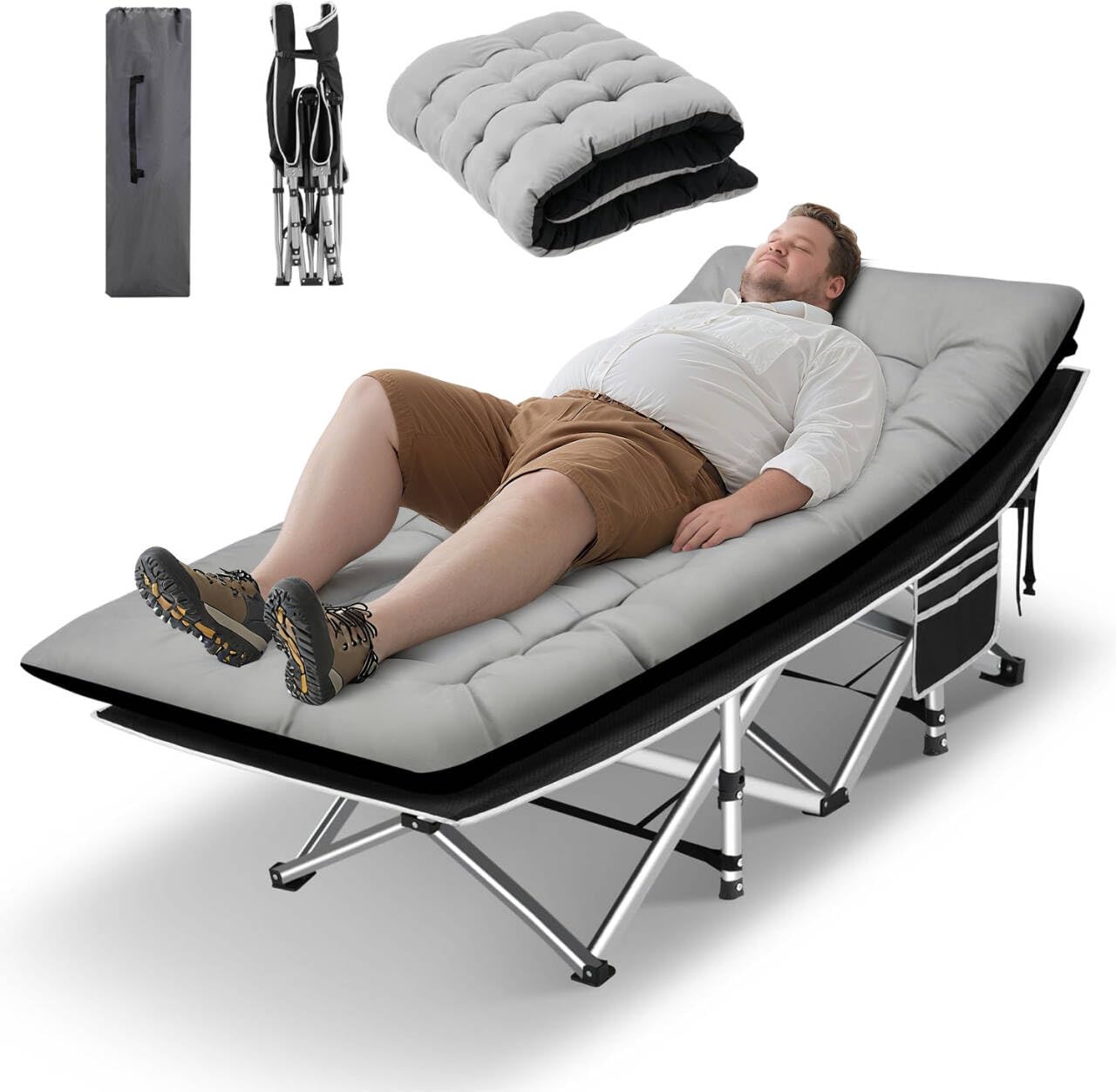
The HABUTWAY is a budget-friendly entry point for campers seeking a cot with a built-in mattress. Its carbon steel X-shaped frame with 10 non-slip legs supports up to 600 pounds, providing a stable platform. The included 2.5 to 3-inch removable mattress offers basic cushioning, and the 18-degree tilted headrest is designed to reduce strain on the neck and upper back.
While the mattress thickness is below the 4-inch threshold we recommend for significant back issues, the cot’s rigid structure prevents the sagging and hammocking that causes lower back pain on less stable cots. For users with mild back sensitivity or those who plan to add an aftermarket pad on top, this cot provides a solid and affordable foundation. The side pocket keeps your phone and glasses handy.
At 16.3 pounds, it’s heavier than aluminum alternatives but still manageable for car camping. Setup is straightforward with no tools required. The primary limitation for serious back issues is the thin mattress, so expect to supplement it with a thicker pad. For the price, it’s a capable cot that keeps you off the ground and provides a starting point for building a back-friendly sleep system.
Why it’s great
- High 600-pound weight capacity ensures long-term durability
- Included removable mattress provides basic cushioning
- X-shaped frame and 10 legs create a stable, non-sagging platform
Good to know
- 2.5-3 inch mattress is too thin for significant back support
- Heavier than aluminum frame cots at 16.3 pounds
FAQ
Should I choose a camping cot or a thick sleeping pad for a bad back?
How thick does a camping mattress need to be for back pain relief?
Does sleeping on an air mattress make back pain worse?
Final Thoughts: The Verdict
For most users, the best camping beds for bad backs winner is the HEST Foamy because its 8.8-inch memory foam core provides unrivaled pressure relief and spinal alignment in a car-camping-friendly form. If you need serious cold-weather insulation with adjustable firmness, grab the Therm-a-Rest MondoKing 3D. And for lightweight backcountry use where every ounce matters, nothing beats the ALPS Mountaineering Ready Lite Cot paired with a quality sleeping pad.