
Our readers keep the lights on and my morning glass full of iced black tea. As an Amazon Associate, I earn from qualifying purchases.
Specs are compiled from manufacturer listings and verified buyer reviews and can change over time — please confirm the key details on the product page before buying.
Searching for a “1kW” setup usually means you need around 1,100 watts of panels to actually generate 1,000 watts in the real world, because no panel hits its lab rating on a normal roof. The picks here are matched as closely as possible to that target, from rigid glass roof panels to flexible sheets that curve over a van. This guide breaks down which style fits your roof, your battery voltage, and your tolerance for heavy lifting.
I’m Min — the founder and writer behind Gadgets Feed. This guide is built by comparing the manufacturers’ published specifications and the patterns across verified customer reviews, so you get each pick’s real strengths and trade-offs instead of marketing spin.
From rigid 550W behemoths to bendable 100W sheets, here are the most honest options for building a 1kw solar panel array that actually delivers usable power for your home, RV, or off-grid cabin.
Our Picks at a Glance
How To Choose The Best 1kW Solar Panel Setup
Before you buy, you need to match the panel’s voltage and physical size to your roof space and your charge controller. A 1,100W array wired for 24V behaves very differently from a 1,000W array wired for 12V, so start with your battery bank.
Rigid Glass vs. Flexible Panels
Rigid panels with aluminum frames are the most efficient and durable, but they are heavy and need mounting rails. Flexible panels are thin, lightweight, and can bend up to 30 degrees, which makes them the only choice for curved RV roofs — but they need ventilation underneath so heat can escape.
Bifacial Panels and Reflected Light
A bifacial panel has a transparent backsheet, so it collects sunlight from both the front and the rear. If you mount it above a light-colored surface or a reflective one, you can get extra energy — some makers claim up to 30% more output than a standard panel.
Quick Comparison
| Model | Best For | Total Power | Weight | Cell Type | Amazon |
|---|---|---|---|---|---|
| JJN 550W x2★ Best Overall | Big Home Backup | 1100W | 123.4 lbs | Bifacial 10BB | Amazon |
| Callsun 200W x2Best for Vans | Class B Vans | 400W | 23.8 lbs | N-Type 16BB | Amazon |
| DOKIO 100W x10Flexible Pick | Curved Roofs | 1000W | 23.1 lbs | Flexible ETFE | Amazon |
| ECOBOSS 100W x10 | Large Arrays | 1000W | 120 lbs | N-Type 16BB | Amazon |
| STAR 430W x2 | Space Saving | 860W | 90 lbs | HJT A+ Grade | Amazon |
| NOVAX 440W x2 | Power Station | 880W | — | N-Type Bifacial | Amazon |
| ECOBOSS 200W x5 | Low Light | 1000W | 119.9 lbs | N-Type 16BB | Amazon |
| STAR 495W x2 | Frameless Roofs | 990W | 58.2 lbs | Monocrystalline | Amazon |
| Renogy 590W x2 | Pure Output | 1180W | 58.4 lbs | N-Type 16BB | Amazon |
| Renogy 320W x4 | High Voltage | 1280W | 142 lbs | N-Type 18BB | Amazon |
| SGPWATT 550W x14 | Full Property | 7700W | 62.4 lbs (each) | Monocrystalline | Amazon |
In‑Depth Reviews
1. JJN 550 Watt Solar Panels 2PCS (1100W)
Our pick — over 4.5★ from 750+ verified ratings; the strongest balance of quality and price.
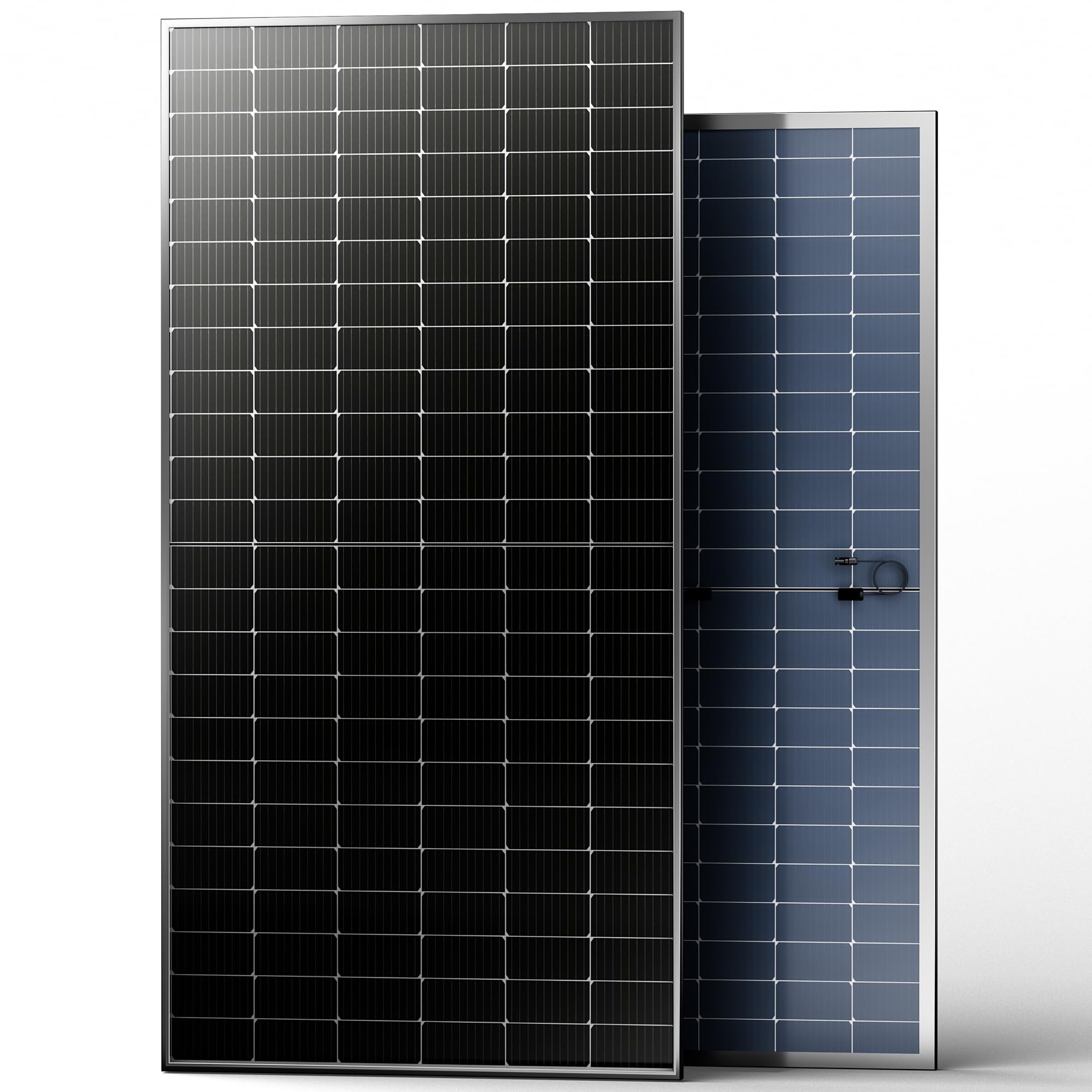
This 1,100W pair of 550W bifacial panels powers a workshop with real-world output that owners confirm.
This pair delivers a combined 1100 watts from two 550W bifacial panels, and owners treat it like a mini power plant. Buyers report running a shop exclusively on solar — pulling 15A at 24V during an outage, with four panels keeping things going for over 6 hours and the storage bank full again by 8 a.m. In winter, they stayed mostly solar-only.
The bifacial design produces from both the front and the back, adding up to 30% more efficiency than a regular panel. Each unit is a hefty 123.4 pounds and spans 89.61 inches long, so this is a two-person job on a roof, though some owners mention the size still feels manageable for one person during install. The 49.5V maximum voltage means it pairs well with 24V or 48V battery banks.
Performance is the thing everyone praises — nearly 200 owners single out how well it generates. The efficiency rating sits at 23%, and the tempered glass and aluminum frame give it a solid, well-made feel. What wins people over is the output: some customers note seeing up to 760 watts from this pair in medium sunlight, charging their batteries from low to full in just a couple of hours.
What makes it a powerhouse
- Two panels deliver 1100W — enough to run power tools and appliances
- Bifacial backsheet boosts efficiency up to 30% over standard panels
- Pre-drilled holes simplify roof mounting
The honest trade-offs
- At 123.4 lbs per pair, rooftop lifting demands two people
- The 89.61-inch length needs ample roof space
- A rare unit can arrive with cracks; support replaces quickly
Reach for this if: you want maximum watts per roof hole and have a 24V or 48V system that can swallow 49.5V input.
Look elsewhere if: your roof is small or you are installing solo — the weight and length are real hurdles.
2. Callsun N-Type 400W Bifacial (2x 200W)
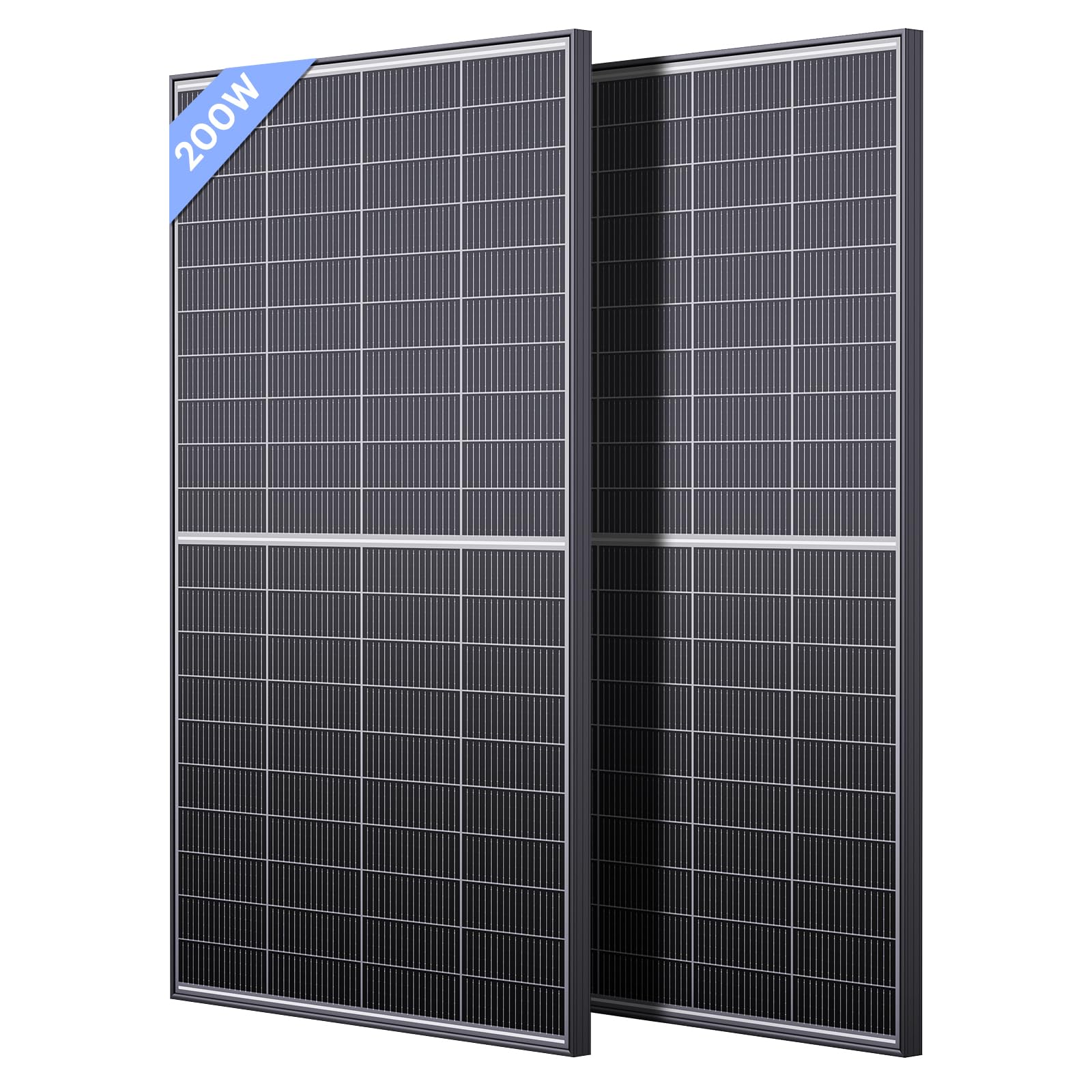
This 400W pair of 200W panels over-delivers in real-world tests and handles partial shade with its TwinCell design.
This is a two-pack of 200W panels built with N-Type cells and 16BB busbars, hitting a 25.6% conversion efficiency. The headline here is real-world over-performance: off-grid owners in Colorado report peaks above 420W, with one setup hitting 504W before the 500W charger capped it. That extra power keeps a fridge, TV, and internet running 24 hours a day.
Each panel weighs just 23.8 pounds and measures 51.3 inches long — a deliberate design for Class B vans and tight rooftops. The TwinCell anti-shade design splits each panel into two independent halves, so if tree shade covers one section, the other keeps generating. That is why reviewers point out it still works in overcast and rainy conditions.
The thing everyone raves about is power output, with quality a close second. A springtime test in Alabama showed 393W from one pair, with the bifacial backsheet adding roughly a 25% boost from reflected light. The 10-year technical support and 25-year performance commitment — keeping at least 84.5% output after 25 years — backs up the build.
Strongest watts-per-pound: at 23.8 lbs each, this is the lightest rigid glass route to serious power here.
The fit note: the included cables run short, so plan on buying extension MC4 leads for a roof install.
3. DOKIO 1000W Flexible Solar Panels (10x 100W)
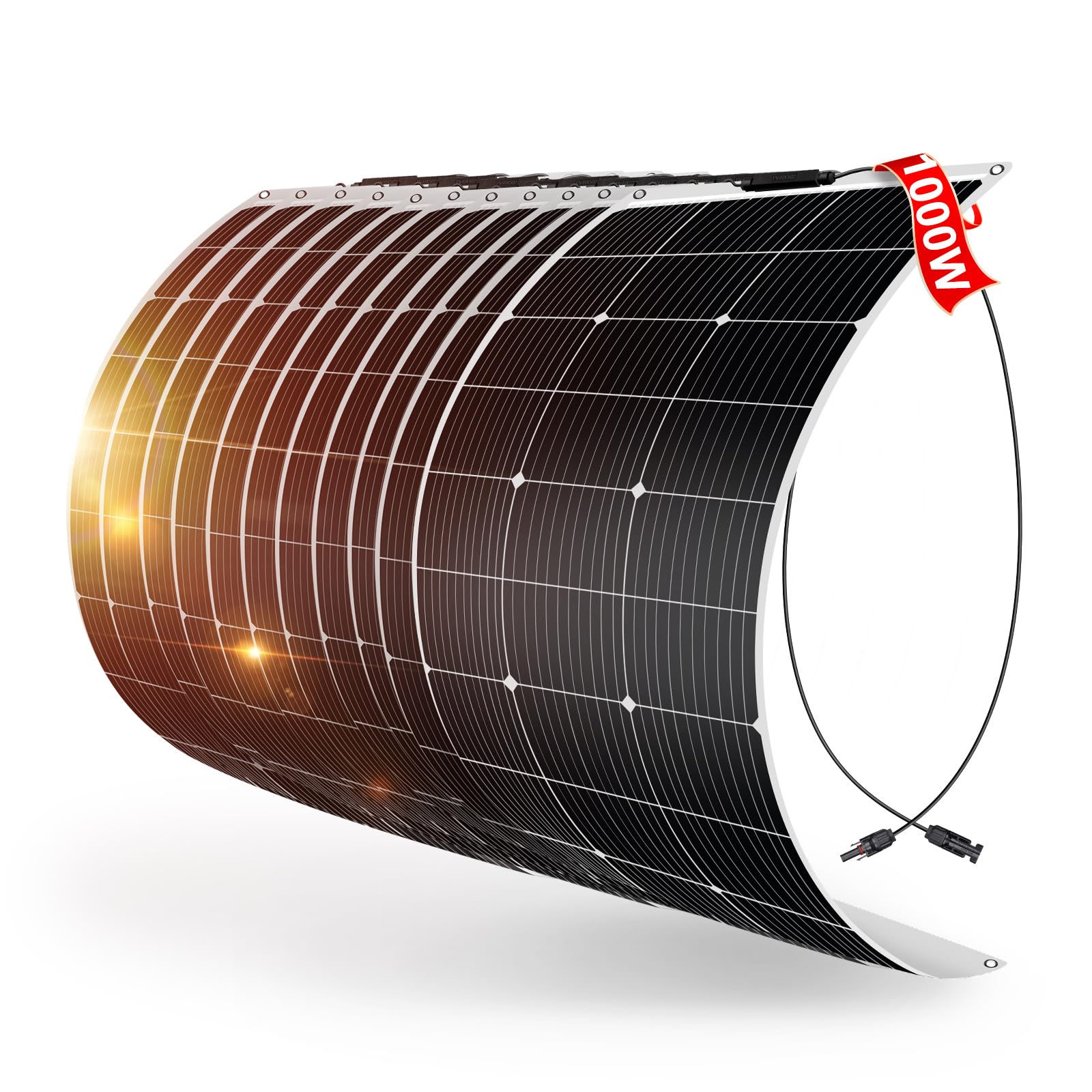
This 1,000W flexible array weighs just 23.1 pounds and bends up to 30 degrees for curved surfaces.
This is the oddball of the list: ten 100W semi-flexible panels totaling 1000 watts, but the whole set weighs just 23.1 pounds. Each panel is a thin 0.04 inches tall and bends safely up to 30 degrees, which is the only way to cover a curved camper roof or a boat deck where glass panels physically will not fit.
You wire them in series for higher voltage or in parallel for higher current, with MC4 connectors making the hookup straightforward. The ETFE top sheet gives better light transmission and wear resistance than cheaper flexible panels. One reviewer noted two of these keeping a 100Ah LiPo battery charged through several weeks of rainy, overcast weather.
What wins people over is the raw power output — easily the most-praised trait — with owners calling the panels easy to use and genuinely productive. The safety warning here matters: DOKIO says leave ventilation space underneath so heat escapes, and never mount directly on combustible surfaces like wood or foam. The flexible sheet has no frame, so heat management is on you.
Why flexible wins
- Bends up to 30° for curved roofs glass cannot cover
- 23.1 lbs total — light enough for one person to carry all ten
- Series or parallel wiring for system flexibility
Before you commit
- Must have ventilation underneath to avoid heat buildup
- Quality is the most mixed aspect in owner feedback
- An occasional dead-on-arrival panel shows up; the rest pull full power
Choose this for: a curved RV, boat, or trailer where rigid glass is impossible and weight matters more than peak efficiency.
Think twice if: you want the highest efficiency per square foot — flexible cells trail rigid glass on that metric.
4. ECOBOSS 1000W TÜV Certification Solar Panel (10x 100W)
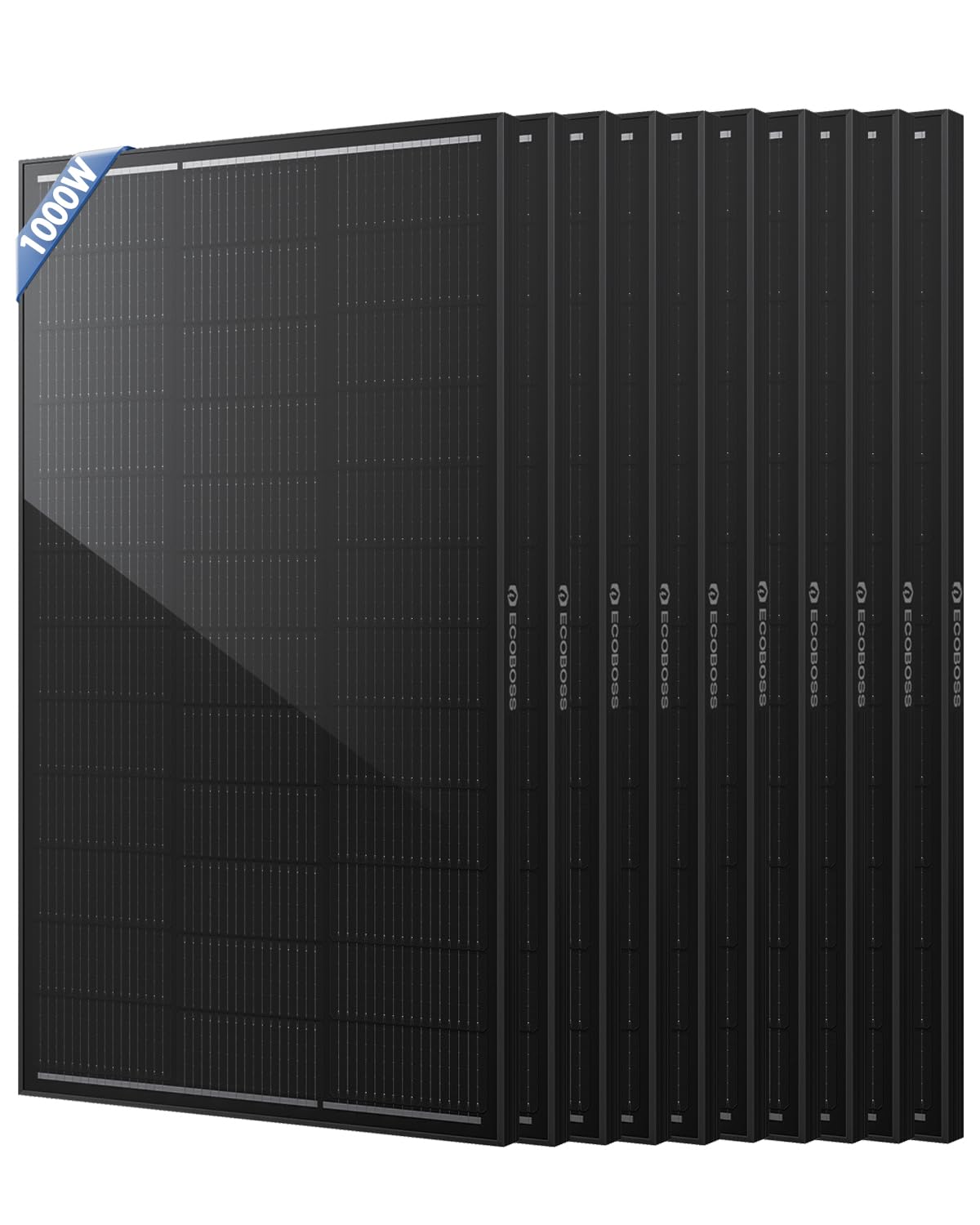
This 1,000W ten-pack is TÜV and UL certified for safe, permanent ground or roof installations.
This bundle stacks ten 100W N-Type panels to a full 1000 watts, each certified to IEC 61215, IEC 61730, and UL 61730 — independent testing for design durability and electrical safety. If you are building a home or cabin system and want paperwork behind the panels, this is the reassurance pick.
The 16BB architecture and N-Type cells reach up to 25.8% conversion efficiency, and the 3.2mm anti-reflective tempered glass handles rain, snow, and dust. The whole set weighs 120 pounds, so while each panel is portable, the full array is a weekend project. Shoppers say two panels pulling 160-170W in direct sun — above their combined 200W rating.
The most-praised trait is power output, with several buyers noting the panels met or exceeded claimed wattage in medium-to-full sun. One North Carolina owner reported nearly 210W from two panels at 2 p.m. — solidly over spec. The recurring note is shade tolerance: these have none, so they demand open, unshaded sky to shine.
Certified for confidence: the TÜV and UL marks (independent safety and quality certifications) mean this panel meets strict standards, so you can trust it for a permanent rooftop or ground install.
The catch: zero shade tolerance means one tree branch can cripple a panel — keep them in open sun.
5. STAR 860W Bifacial Solar Panels (2x 430W)

This 860W pair of 430W panels uses a half-cell design to fit 20% less roof space than standard 400W+ panels.
These two 430W panels use a half-cell design to deliver 860 watts total while the maker claims they occupy 20% less space than traditional 400W+ panels. The A+ grade monocrystalline cells use HJT technology, and the panel is UL61730 certified with a 30-year service life and the ability to handle 5400Pa of snow pressure.
This is also a bifacial panel, capturing reflected light from the rear for up to 30% extra output. One buyer pulled 490W from a single panel lying flat on its back — over its 430W rating — and another generated 410W right from the start into a Segway 5kW power station. The low temperature coefficient of -0.26%/°C keeps output stable in southern heat.
The recurring owner advice is to inspect panels carefully on arrival, since packaging has been the weak point and an occasional set arrives cracked. When they arrive intact, the feedback is squarely positive: efficient, high quality, and delivering more energy than their rating suggests. The shade-resistant smart multi-busbar design keeps part of the panel working even when a section is covered.
Performance per square foot: between the half-cell layout and bifacial rear gain, this is a strong space-efficiency play.
Arrival check: open and inspect immediately — shipping damage is the one recurring complaint.
6. NOVAX 880W Bifacial Solar Panels (2x 440W)

This 880W pair of 440W panels is designed to quickly recharge power station batteries after outages.
This two-pack of 440W bifacial panels targets a specific job: restoring stored power fast after storms or outages. Each panel can produce up to 2.2 kWh per day in good sun, and the N-Type cells deliver a 25.6% efficiency rating. The 31.67V Vmp makes it compatible with most mainstream power stations that have built-in MPPT controllers.
The anti-shade design keeps delivering usable output even when branches or roof vents block part of the surface — under partial shading it can still produce up to 50% power. That is a meaningful feature for a roof cluttered with vents. The 3.2mm tempered glass and rigid aluminum frame are built for year-round outdoor exposure.
Owners confirm the 440W panel hits near its rated output in optimal sun, with one buyer noting it “matches Ecoflow Delta 3 Classic specs” and praising the sturdy connectors and ample mounting holes. The value angle gets attention too — buyers call it a strong alternative to pricier big-name panels. The main shipping caveat is that a cardboard box has let an occasional unit arrive broken.
Built for power stations: the 31.67V Vmp and 38.47V Voc line up neatly with mainstream MPPT inputs.
Watch the box: delivery packaging has been the weak spot — an occasional panel arrives cracked in its cardboard box.
7. ECOBOSS 1000W TÜV (5x 200W)
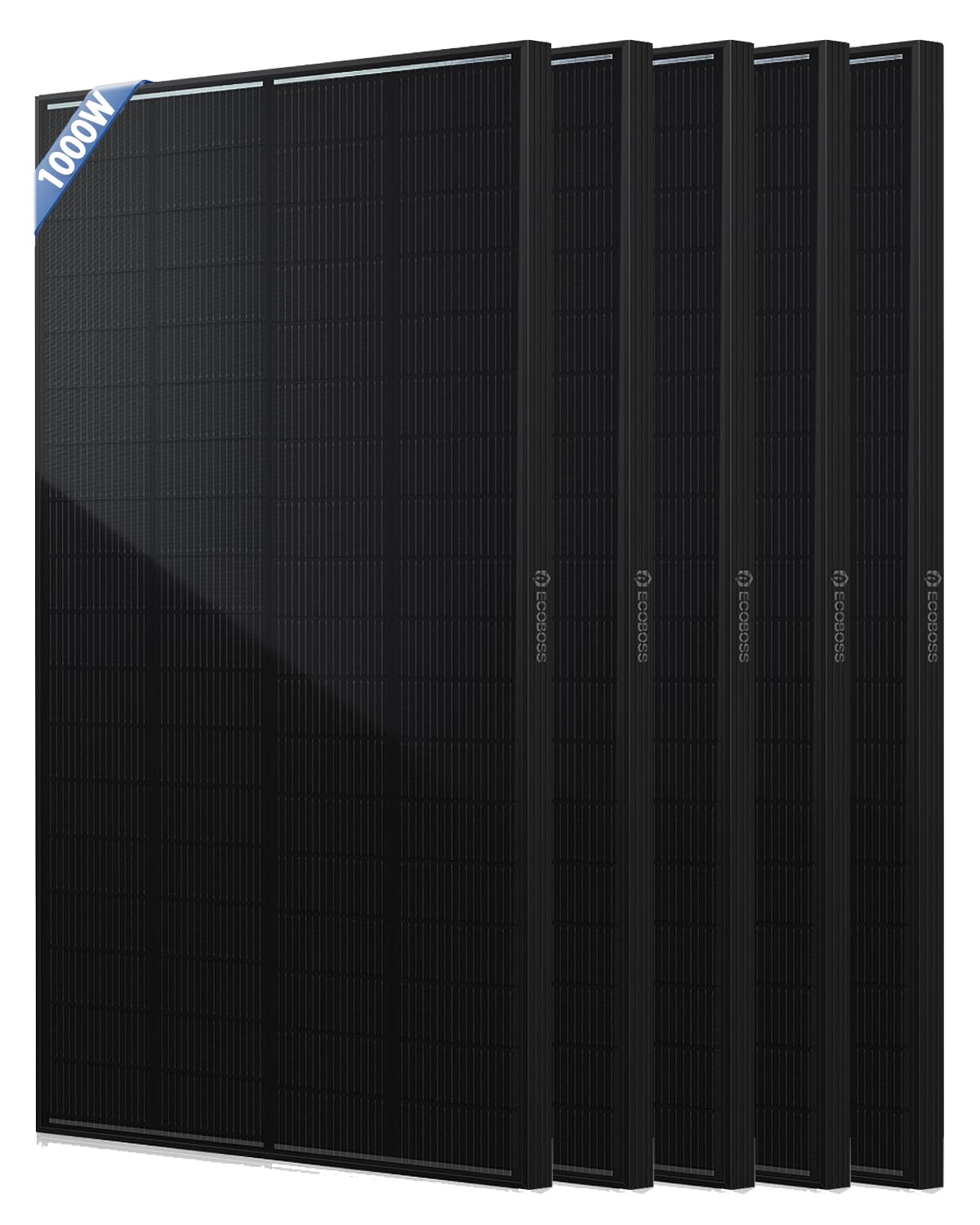
This 1,000W five-pack of 200W panels excels in low-light conditions, maintaining output late into the day.
This is the five-panel sibling of the ECOBOSS 100W kit, stacking five 200W N-Type panels to a full 1000 watts with the same TÜV certification to IEC 61215, IEC 61730, and UL 61730. What separates this from the 100W version is the stronger partial-shading performance: a series-parallel cell-string architecture lets unshaded sections keep generating.
Controlled testing showed up to 50% higher output than a comparable conventional three-string series design under partial shade. Each 200W panel measures 52.8 by 30.3 inches and weighs 23.8 pounds — a manageable size for a single person to carry, though buyers report a full five-panel install needs two people. The low temperature coefficient of -0.3%/K keeps output stable in summer heat.
The thing owners praise most is low-light performance, with one reporting 225 watts at 4 p.m. from a single 200W panel. A camper van owner charging a 400Ah battery bank says the five panels get close to 700W mounted flat — not ideal angle, but enough to top off batteries daily. Build quality gets consistent praise, and the 25-year performance warranty backs the long game.
Its strengths
- Exceptional low-light output into the late afternoon
- TÜV and UL certified for safety and durability
- Anti-shade architecture beats conventional series designs
Keep in mind
- At 119.9 lbs for all five, this is a two-person roof job
- Individual panels can fall short of the 200W rating depending on angle
- Maximum 3 panels in parallel or series — do not exceed that
Pick this for: a cabin or van in a region with weak sun angles, where late-day low-light output matters most.
skip it if: you need fewer, larger panels — five separate mounts take more roof time.
8. STAR 990W Frameless Solar Panel (2x 495W)
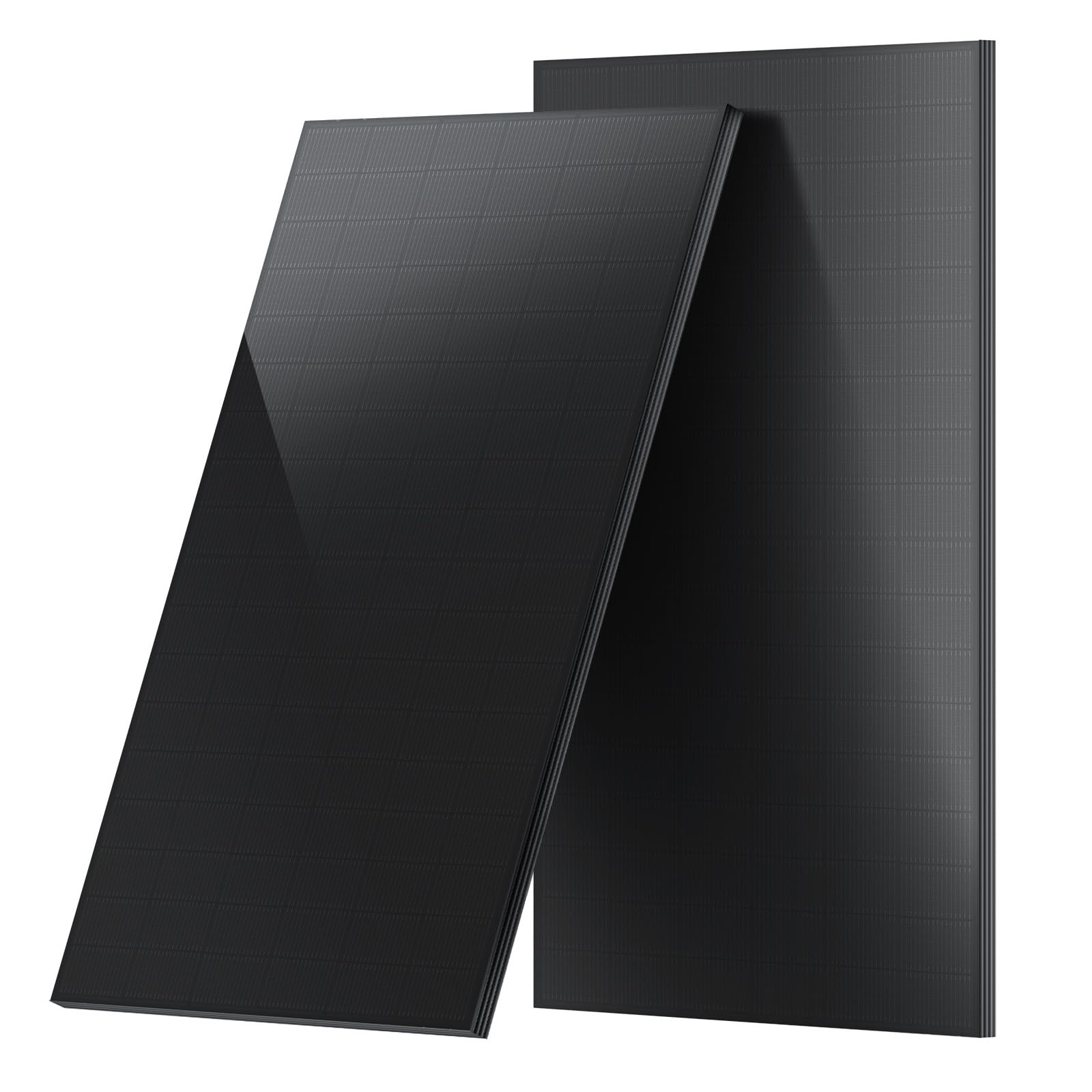
This 990W pair of frameless 495W panels uses a Cleanedge design that lets rain wash away dust for zero maintenance.
These two 495W panels ditch the traditional aluminum frame entirely. The frameless Cleanedge design means there is no lip where dust and water can pool, so rain washes the surface clean — the maker claims a 15% power boost from eliminating dust obstruction and zero cleaning maintenance. At 58.2 pounds for the pair, they are also notably lighter than framed panels of similar output.
Each panel uses 25% high-efficiency cells and carries UL, ISO9001, and CE certifications along with US patents. The 77.2-inch length and 44.6-inch width make them a space-efficient fit for van roofs. One buyer mounted them on a Ram Promaster with unistrut and L-brackets, calling the size perfect for the van while still fitting around an AC unit.
Owner feedback splits on the power output — some report close to rated performance (one saw 940W peaks from an 870W-rated setup), while others say they get less than advertised. The performance praise is consistent, though, with several buyers reporting solid daily yields like 3.3 to 3.5 kWh. The frameless edge sits flush with the glass, so owners advise using rubber clamps for mounting rather than anything that bites into the panel.
Zero-maintenance angle: no frame lip means no dust dams and no rooftop scrubbing — rain handles it.
The variable: real-world output reports vary more here than on framed panels, so temper your expectations.
9. Renogy Bifacial 1180W (2x 590W)
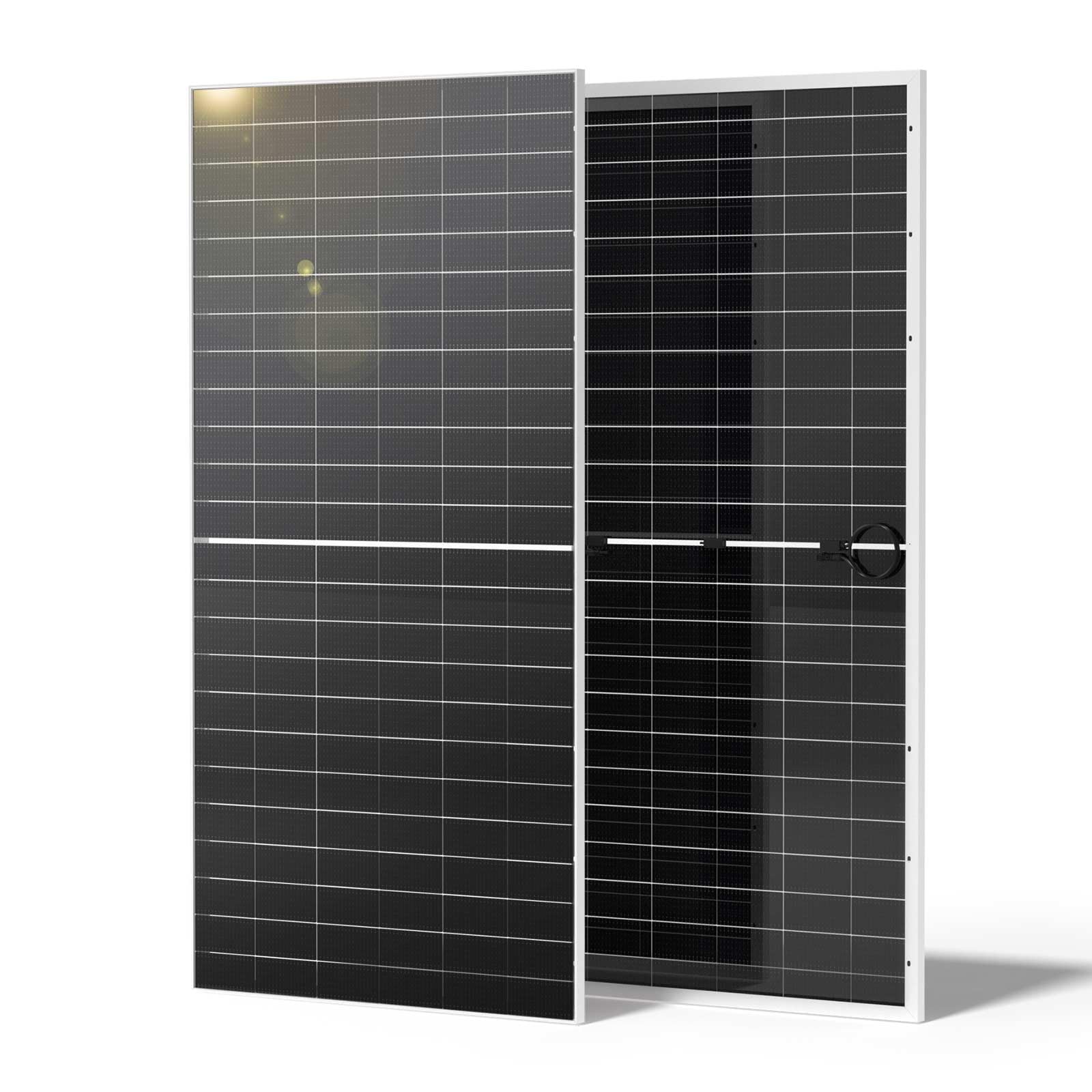
The name-brand 1180W pair delivering performance that famously exceeds its sticker.
Renogy brings its reputation to this 1180W pair — two 590W bifacial panels with A+ grade N-Type cells and 16BB technology for up to 25% greater conversion efficiency. The transparent backsheet adds between 5% and 30% more energy from reflected light, and the corrosion-resistant black aluminum frame withstands 2400Pa wind loads and 5400Pa snow loads. The IP68-rated junction box handles full water exposure.
Each panel weighs a manageable 58.4 pounds, and the pair generates serious power. Owners mention seeing output “up past 1000W” from the two panels wired in series — a central Indiana owner running them into a Renogy Rover 60A controller is very happy with the performance. The build quality is the most-praised aspect, with owners noting the panels arrived securely packed and installed cleanly.
The size is the honest caveat: at 89.7 inches tall, buyers warn these are huge and heavy to move, so plan your install path before they arrive. On the output side, the phosphorus-doped N-Type design resists light-induced degradation, meaning the panels hold their stabilized output far longer than older P-Type designs. If you have the roof space and want the confidence of a major brand, this is the premium route.
Brand-name output: owners consistently report performance above 1000W from the pair, exceeding expectations.
Physical reality: 89.7 inches tall and heavy — map out your install route before delivery.
10. Renogy 320W x4 (1280W)
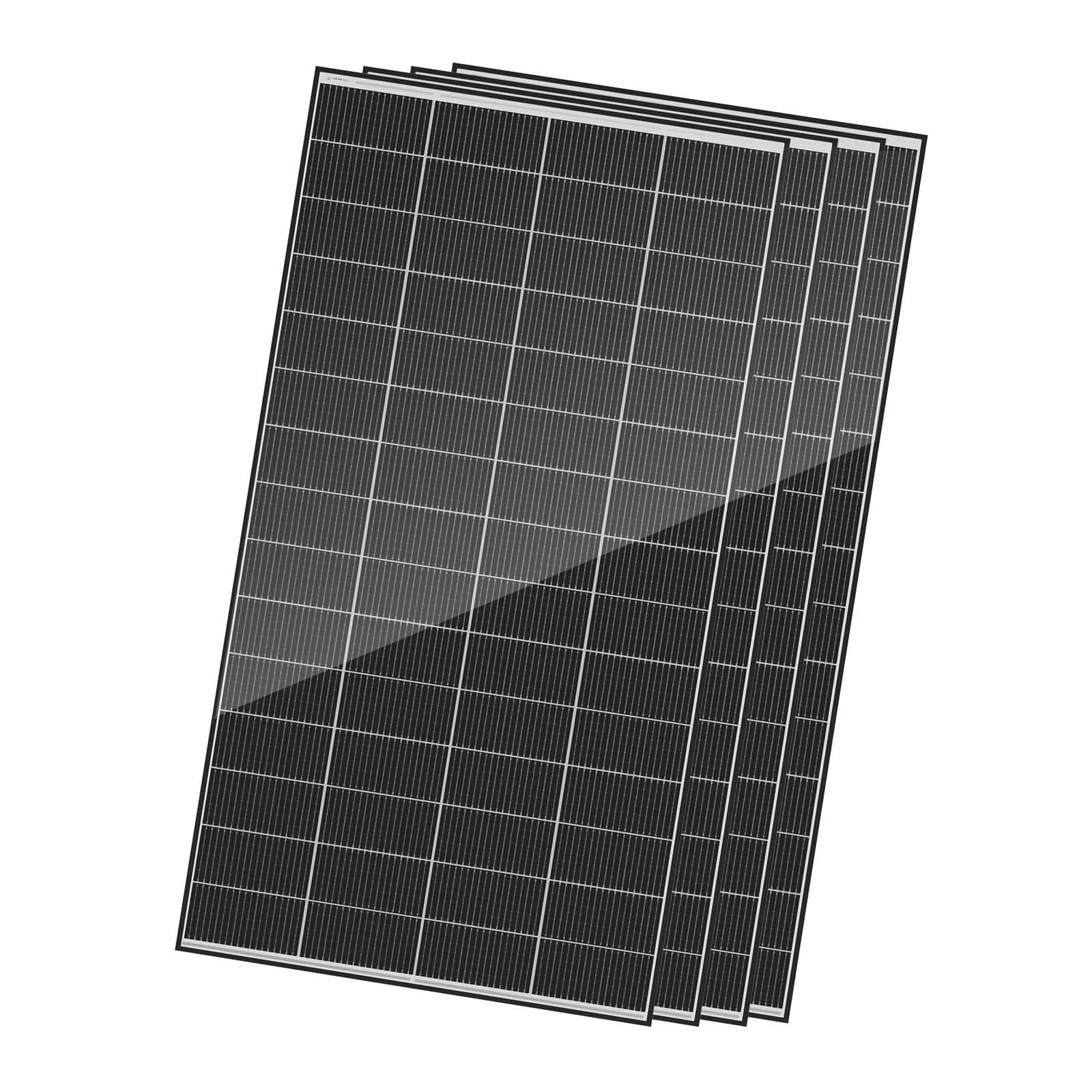
Four 320W panels built with 18 busbars to shrug off extreme weather hot spots.
This four-pack of 320W panels totals 1280 watts, using N-Type cells with 18 busbars — more than most panels on this list — which reduces hot spot effect in extreme weather. Each panel is rated for up to 1600Wh of electricity per day, putting it around 15% above the typical 300W panel output. The IP68 rating and anti-corrosion coating protect the cells from physical damage and distortion.
Customers note the panels exceed their 320W rating, especially at high altitude — one owner at 7,600 feet in Colorado says the thinner air boosts production. Another notes the panels work cleanly with an EcoFlow battery, calling Renogy quality “right on par for a smaller price.” The pre-drilled back holes make them compatible with Renogy’s ground mount, Z bracket, corner bracket, pole mount, and tilt mount accessories.
The 142-pound total weight for four panels makes this the heaviest array here, so it is firmly a ground-mount or permanent roof system rather than a quick van install. Packaging gets strong marks — one buyer watched a FedEx driver drop the box off the truck, and the panels survived undamaged thanks to superior packing. The EL-certified cells generate with no microcracks, protecting your battery and devices.
High-voltage flexibility: four panels give you 24V wiring options that two big panels cannot match as easily.
Weight warning: at 142 lbs total, plan a permanent mount, not a portable setup.
11. SUNGOLDPOWER 550W x14 (7700W)
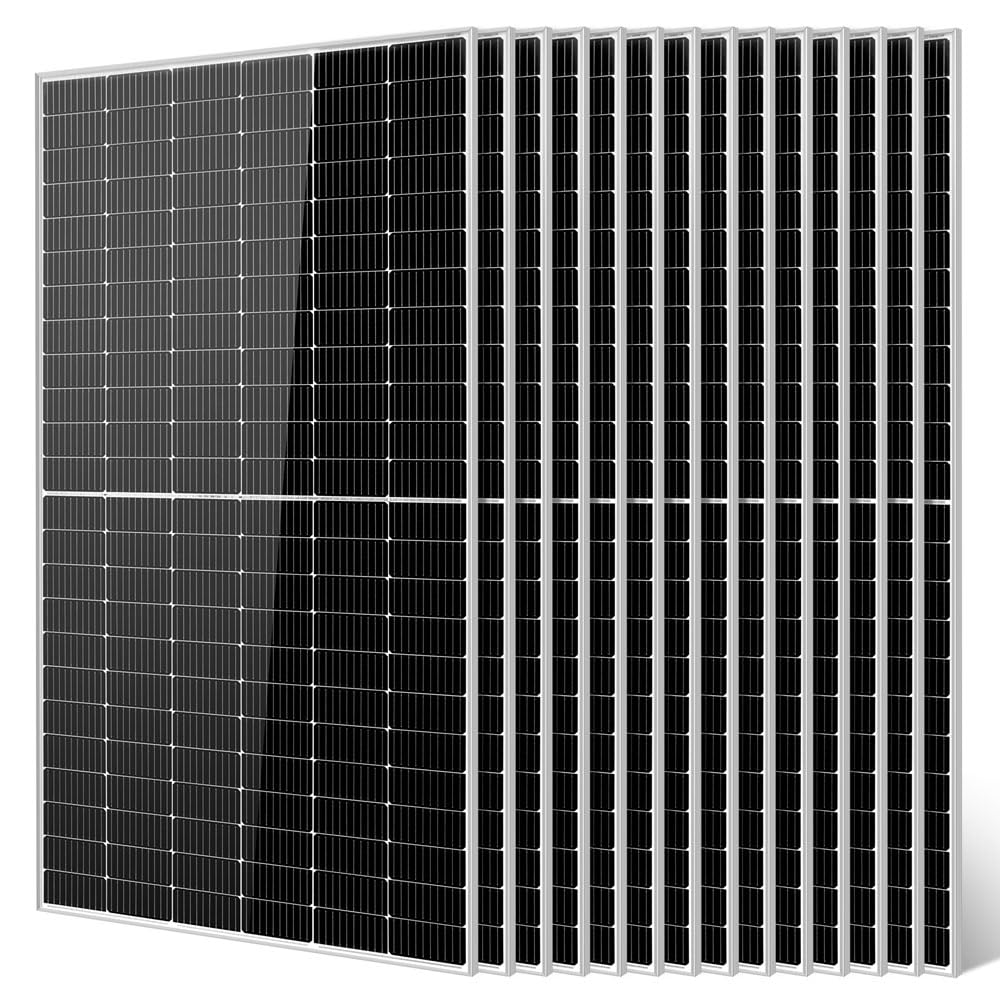
A 14-panel 7700W pro-grade array for anyone building a real off-grid homestead.
If you are not building a 1kW system but a whole property, SUNGOLDPOWER sells 14 panels of 550W each for a massive 7700W total. Each panel uses Grade A monocrystalline cells with 18 busbars and a scratch-resistant anodized aluminum twin-wall frame, built for industrial and professional applications. The UL61730 and CEC listings mean it is approved for grid-tied use in many regions.
The warranty structure is unusually clear: 5 years at 95% output, 10 years at 90% output, and 25 years at 80% output. Each panel weighs 62.4 pounds and measures 89.7 inches long, and the 49.7V maximum voltage lets it work in 12V, 24V, 36V, or 48V systems. Owners running two on a camper say they power a refrigerator and lights with no problem.
This is the crowd favorite on ratings — a rare near-perfect score from buyers who call it an unbeatable DIY solar deal. Owners praise the fast shipping, verified specs, and excellent packaging, with one noting it charges a solar generator storing up to 12,000W. The 41A amperage capacity is enormous, so your charge controller and wiring need to be sized for serious current.
Why go big
- CEC and UL61730 listed — approved for many grid-tied installs
- Clear 25-year output warranty: 80% output guaranteed
- Grade A cells with 18BB for industrial reliability
Scale reality
- 14 panels is a full property project, not a weekend DIY
- 41A amperage demands heavy-gauge wiring and a large charge controller
- Each panel is 62.4 lbs and 89.7 inches — plan the install crew
Reach for this if: you are building a permanent off-grid home or barn system and want panels with real certification paperwork.
Not the fit if: you only need around 1kW — this ships in a massive 14-panel block.
Understanding the Specs
Rated Watts vs. Real Watts
The wattage printed on a panel is measured in a lab under perfect light. In real life, heat, angle, and wiring all cut into that number. A good rule is to buy 10-20% more rated power than you actually need, so a “1kW” system usually starts with 1,100W of panels.
Bifacial Panels
A bifacial panel has a transparent backsheet, letting it harvest reflected light from the ground or a light-colored roof. That rear-side gain typically adds 5% to 30% more energy. It works best when mounted high above a bright surface, not flat against a dark roof.
N-Type Cells and Busbars
N-Type cells resist light-induced degradation better than older P-Type cells, holding their output longer. The busbar count (10BB, 16BB, 18BB) refers to thin metal strips that collect electricity — more busbars generally mean better tolerance for micro-cracks and hot spots.
System Voltage Matching
A panel’s maximum voltage (Vmp) must fit your charge controller and battery bank. A 12V battery system needs panels around 18-20V, while 24V systems want panels in the 30-50V range. Check your controller’s input limit before choosing between a 49.5V panel and a 23.7V panel.
FAQ
Do I need exactly 1000 watts of panels to get 1000 watts of power?
Can I wire these panels directly to my power station?
What is the difference between rigid and flexible solar panels?
What does bifacial mean on a solar panel?
How much roof space do I need for a 1kW array?
Will partial shade kill my whole solar array?
What voltage battery bank do these panels work with?
How long do these solar panels actually last?
Are these panels certified for home grid-tied use?
Final Thoughts: The Verdict
For the majority of shoppers, the 1kw solar panel winner is the JJN 550W pair because two panels deliver a true 1100W with bifacial gain and proven real-world output that runs a whole workshop. If you want shade tolerance and easy handling on a van, grab the Callsun 400W pair — it is the lightest rigid route to serious power. And for a permanent off-grid property with full certification, the SUNGOLDPOWER array offers a near-perfect owner score and a transparent 25-year warranty.
How We Picked
We do not accept paid placement. Every pick is matched to a real buyer and a real use-case; we do not hands-on test units.
Sources & Methodology
Specifications: manufacturer listings and product documentation. Review insights: verified customer reviews, as of September 2026. Pricing: not shown on this page (it changes often); check the current price via the retailer link.
As an Amazon Associate, Gadgets Feed earns from qualifying purchases. This does not affect which products we feature.