
Our readers keep the lights on and my morning glass full of iced black tea. As an Amazon Associate, I earn from qualifying purchases.
Specs are compiled from manufacturer listings and verified buyer reviews and can change over time — please confirm the key details on the product page before buying.
If you live in an RV, motorhome, or travel trailer, a silent killer in the form of carbon monoxide (CO) is a real threat while you sleep, cook, or run a generator nearby. Unlike smoke, CO is invisible and odorless, so your only defense is a reliable detector wired into your vehicle’s 12-volt electrical system, not one that relies on disposable batteries you might forget to change. This guide focuses specifically on alarms that accept 12V DC hardwired power, which is the standard for recreational vehicles, and pairs that with propane (LP) leak detection since most RVs run on gas appliances. The picks below are sorted for quality and value, so you can compare the best options side by side and choose the one that keeps your family safe on the road or at the campground.
I’m Min — the founder and writer behind Gadgets Feed. This guide is built by comparing the manufacturers’ published specifications and the patterns across verified customer reviews, so you get each pick’s real strengths and trade-offs instead of marketing spin.
To pick the right 12 volt carbon monoxide detector for your rig, you first need to match three things: your available wall space, if you want a flush or surface mount, and the safety certifications that back the unit. These choices ensure the detector fits your existing setup and meets the approved standards for your vehicle.
Our Picks at a Glance
How To Choose The Best 12 Volt Carbon Monoxide Detector
Choosing the right alarm for your RV starts with understanding the two main types of hazards it needs to catch. A dual LP/CO alarm monitors for propane gas leaks (the flammable fuel for your stove, furnace, or fridge) and carbon monoxide (the exhaust from generators, heaters, or engines) at the same time, using separate sensors inside one unit.
Understand the mounting style
Before you buy, look at the wall where the old detector sits. A flush mount alarm slides into the wall cavity so only the face is visible, which looks neat in a limited space. A surface mount unit attaches directly onto the outermost layer of the wall panel, so it protrudes into the room. This distinction matters more than you think, as the cutout size and screw hole spread often match specific factory models like the Atwood 31011, 31013, or 31014.
Check the certifications
Safety standards are not just marketing sticker text. A unit certified to UL STD 2034 RV or UL 1484 RV has been independently tested specifically for the vibration, temperature swings, and electrical quirks of a recreational vehicle. These standards ensure the sensor resets properly and alarms loudly at the correct gas concentrations, separating false security from true protection.
Quick Comparison
| Model | Best For | Detection Type | Mount Style | Weight | Amazon |
|---|---|---|---|---|---|
| Safe T Alert Mini Dual 25-742-BL★ Best Overall | Compact replacement for Atwood 31013/31014 | LP & CO | Flush Mount | 16 oz | Amazon |
| Leakbee R503 Detector | Atwood 31011 replacement with digital display | LP & CO | Flush Mount | — | Amazon |
| Safe-T-Alert 85 Series 85-741-WT | Slim profile with trim ring for dual detection | LP & CO | Surface Mount | 11.36 oz | Amazon |
| Safe-T-Alert 35 Series 35-741-WT | Straightforward surface mount with proven reliability | LP & CO | Surface Mount | — | Amazon |
In‑Depth Reviews
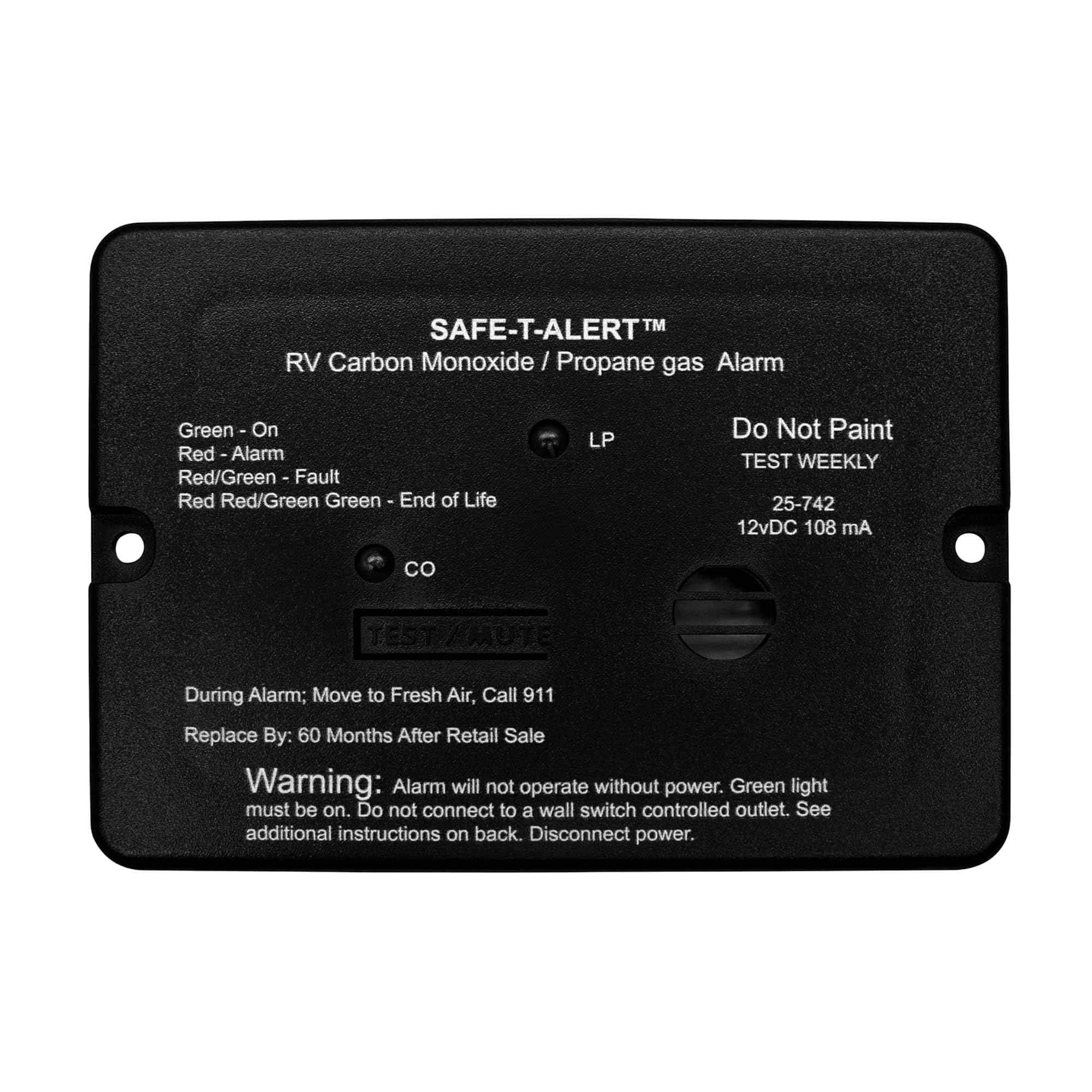
1. Safe T Alert – Mini Dual LP/CO Alarm – Flush Mount Black – 25-742-BL
Our pick — over 4.5★ from 100+ verified ratings; the strongest balance of quality and price.
The compact, certified flush mount that slides into tight RV walls without a fuss.
This is the pick for replacing a failing Atwood 31013 or 31014, upgrading a single-function propane alarm to catch both propane and carbon monoxide. Buyers report it fits perfectly in the designated space and is very easy to install, with one noting it reliably monitors for both LP and CO even after the initial hookup. Its compact case, 4.5 inches wide by 3.5 inches high, fits tight walls without dominating.
You never need to swap batteries because this detector draws power directly from your vehicle’s 12V DC system at 108mA (a tiny current that keeps the circuitry efficient for long-term use). For confidence, it meets RVIA/NFPA standards (industry safety guidelines for RVs) and carries UL STD 2034 RV / 1484 RV certification, meaning an independent lab has tested it for life-safety performance.
Before you commit, check the size: owners mention this unit runs about half an inch shorter than the original sensor, so while the cutout fits, the new face may not cover every millimeter of the old hole. It operates from -40°F to +158°F, so it works in freezing winters or scorching summers.
Why it earns the top spot
- Dual detection of propane and CO in one small flush mount unit
- UL 2034 RV and 1484 RV certified for actual RV safety
- Self-resetting sensor with an alarm mute button for ventilation
Where to measure twice
- Half an inch shorter than the original Atwood model, so cover may not be total
- Durability gets mixed feedback in the long run
Grab this if: you are swapping out an Atwood 31013 or 31014 and want a certified dual-sensor upgrade that fits the original hole.
Look closer if: you need the new cover to be exactly the same size as the old unit, as the quarter-size difference may show.
2. Leakbee 2-in-1 RV Propane Gas Detector – R503 Flush Mount Black
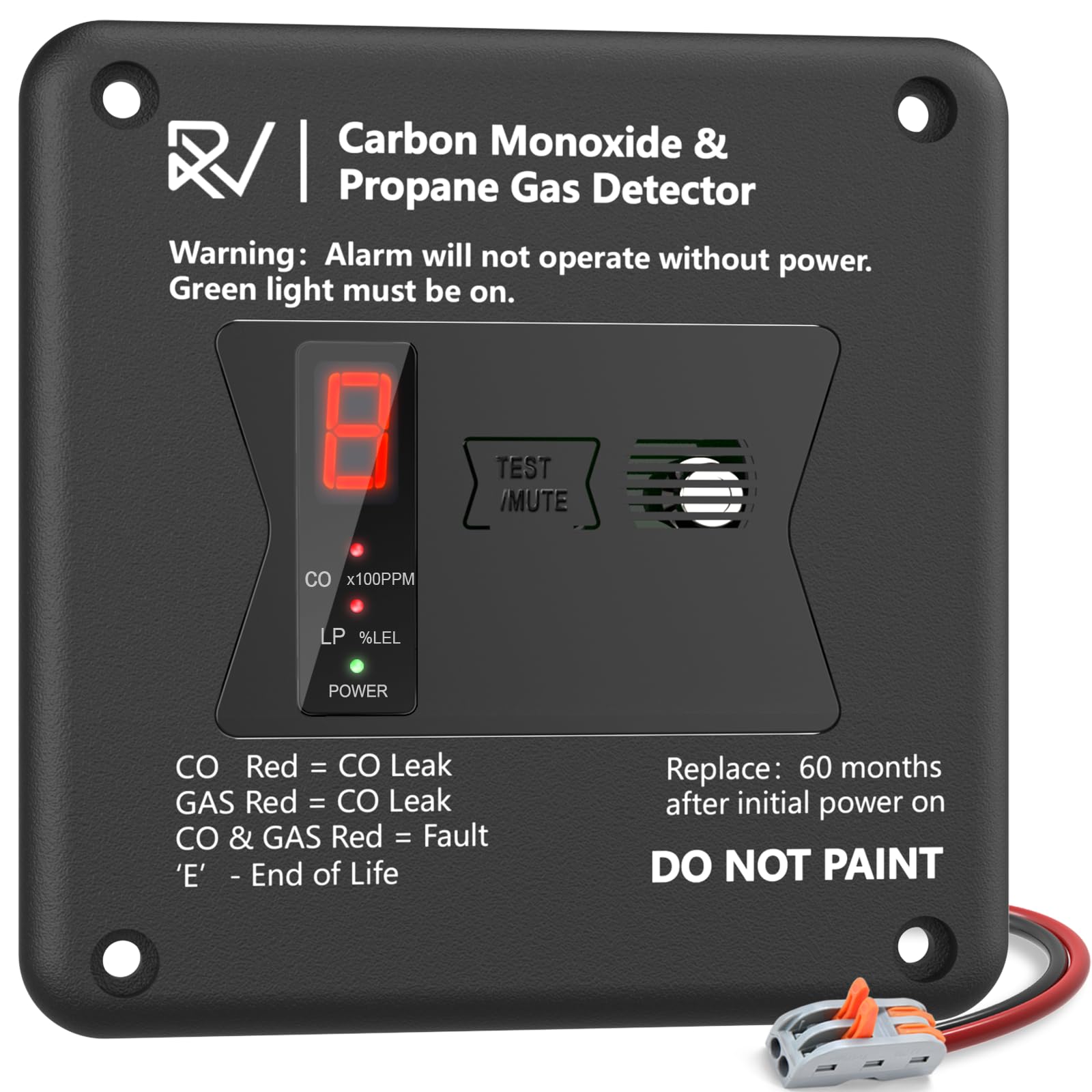
A digital readout and tool-free wiring make this the most user-friendly swap for an Atwood 31011.
If the idea of wrestling with electrical tape and butt connectors makes you wince, this is the detector built for you. The Leakbee R503 uses lever-nut connectors that click the wires together securely without tape or wrapping, which owners describe as a simple installation that saves real time. Screw holes match the factory Atwood 31011 spread, so it drops into the same spot where the old one came out.
The defining trait here is the digital LED display that shows the live level of carbon monoxide and propane, making visual detection much easier than a blind beeper. The face cover measures 4 5/8 inches square with a wall cutout range that flexes between 2 and 3 15/16 inches, so it adapts when your hole is not perfectly factory-fresh. A bright LED adds a soft ambient glow at night, a detail owners enjoy.
On the safety side, this runs on a wide 12V DC input with a +/-20% tolerance, which helps in older rigs with fluctuating power. The maker, staffed by gas company technicians, backs it with a lifetime warranty and a replacement within 60 months if anything fails. Customers note the alarm worked like a charm shortly after install, though a few found the functionality inconsistent from the start.
The things owners praise most
- Tool-free lever-nut connectors cut wiring time dramatically
- Digital display makes gas levels easy to see at a glance
- Screw spread matches the Atwood 31011 for a clean fit
The trade-offs
- Backing plates may be needed depending on your RV wall build
- Some units arrived without functioning properly, per a few owners
Reach for this if: you want a smarter, display-equipped replacement for a 31011 with the easiest wiring hookup available.
Consider others if: you require the longest possible certified lifespan and want to avoid any variance in sensor quality.
3. Safe-T-Alert 85 Series Carbon Monoxide Propane Gas Alarm – 12V – White

The sleekest, lowest-profile hardwired alarm that still packs a dual CO and LP punch.
This is the one to choose when appearance matters as much as safety, because its slim, low-profile design sits closer to the wall than older boxy alarms. Owners describe it as a plug-and-play repair that looks great and works exactly as intended. At just 11.36 ounces, this unit is noticeably lighter than the Mini Dual from the same brand, which weighs in 16 ounces, making it feel less intrusive on a thin RV wall panel.
The “Double-Duty” naming means it monitors for both carbon monoxide and propane gas in a single sensor, exactly what you need for a rig with gas appliances. It runs on a straightforward 12V DC hardwired connection, and a trim ring is included in the box so the edges look finished after installation. Reviewers point out it works great as a direct replacement for the original unit that came with their RV, with minimal fuss during setup.
What you trade for that slim profile is the flush mount look; this design sits on the surface of the wall rather than sinking into it. Owners consistently praise its reliability and easy installation across reviews.
Why owners stick with it
- Low profile and slim design look clean on any wall
- Trim ring included for a finished install
- Reliability is the most-praised trait among buyers
Know before you cut
- Surface mount only, so it does not recess into the wall
- Lighter build may feel less substantial than bulkier units
Pick this for: a clean, modern look with dependable dual sensing and the least visual bulk on your wall.
Pass on it if: you need to fill a recessed flush-mount cutout, since this sits proud of the surface.
4. Safe-T-Alert by MTI Industries 35 Series Dual LP/CO Alarm – 12V Surface Mount

The workhorse surface mount that keeps watch over gas leaks and CO with no batteries to babysit.
When your old alarm hits the end of its life, this is the reliable swap that requires just two wires to connect, per one camper owner. The double-duty sensor detects gas leaks and carbon monoxide at the same time, and the reliable 12V power means you will never chase a dead battery in a crisis. It checks the right regulatory boxes too, meeting RVIA/NFPA requirements and listed to both UL 1484 RV and UL 2034 RV standards.
Owners most often praise its quality and value for the money. Installation is a common thread in the feedback, praised for being easy after the original unit reaches its end-of-life. The casing spans 6-3/8 inches wide and 3-1/2 inches high, which is a larger footprint than the 85 Series, so it reads clearly as a dedicated safety device on your wall.
The honest caveats come down to sizing. Because this is a surface mount, anyone expecting a flush, recessed fit will be disappointed, and one buyer returned it after finding the photo misleading. Others had to add wall board when the old opening was too large for the new housing, a minor DIY fix rather than a major hurdle. A few reviewers noted the unit’s size is not what they expected, so measuring your space first is wise.
What earns the trust
- Quality and easy installation are the two most-cited positives
- UL 1484 RV and UL 2034 RV listed for RV-specific safety
- No batteries to replace, just a clean 12V hookup
What to verify first
- Surface mount only, so it will not recess into a flush cutout
- Larger face may need extra wall board if the old hole is bigger
Choose this when: you want a no-nonsense, certified surface mount that bolts on in minutes and is built to last.
Skip it for: installations where a flush, in-wall profile is required to match your interior.
Understanding the Specs
12V DC Hardwired Power
Instead of relying on AA batteries that corrode or die silently, these alarms draw power straight from your RV’s 12-volt house battery system. That means the detector is always on, always monitoring, and never needs a battery swap. The catch is that if your coach battery drains completely, the alarm loses power too, so it often pairs with a low-voltage warning to let you know the feed is weak.
Dual LP & CO Sensors
Propane is heavier than air and pools low, while carbon monoxide mixes evenly in the room, so detecting both requires two independent sensors tuned differently. A dual alarm mounts one unit that catches the flammable gas leak from your stove or fridge and the toxic exhaust from a generator or furnace. This is the critical upgrade if your rig burns propane for heat or cooking.
FAQ
Can I use a standard home CO detector in my RV?
What is the difference between flush mount and surface mount?
Will these alarms fit where my old Atwood detector was?
Do these detectors work without batteries?
What does UL 2034 RV certification actually mean?
How often should I replace my RV CO detector?
Will a 12V CO detector drain my RV battery when parked?
Why does a dual LP and CO alarm matter for safety?
Final Thoughts: The Verdict
For the majority of shoppers, the 12 volt carbon monoxide detector winner is the Safe T Alert Mini Dual 25-742-BL because it offers certified dual-sensor protection in a compact flush mount that fits the most common Atwood holes. If you want the easiest wiring you have ever done, grab the Leakbee R503 with its digital display and lever-nut connectors. And for a sleek, low-profile look that disappears into your interior, the Safe-T-Alert 85 Series is the one to reach for. All four picks run on reliable 12V power, so you can skip the battery anxiety and focus on the road ahead.
How We Picked
We do not accept paid placement. Every pick is matched to a real buyer and a real use-case; we do not hands-on test units.
Sources & Methodology
Specifications: manufacturer listings and product documentation. Review insights: verified customer reviews, as of September 2026. Pricing: not shown on this page (it changes often); check the current price via the retailer link.
As an Amazon Associate, Gadgets Feed earns from qualifying purchases. This does not affect which products we feature.