
Our readers keep the lights on and my morning glass full of iced black tea. As an Amazon Associate, I earn from qualifying purchases.
Specs are compiled from manufacturer listings and verified buyer reviews and can change over time — please confirm the key details on the product page before buying.
The single biggest mistake most home athletes make with butt machines is buying a wobbly, under-built box that slides mid-rep or a massive commercial unit that dominates the living room. Real glute work needs serious resistance — up to 780 lbs of load on some of these plates — but it also needs a footprint you can actually live with. This guide breaks down nine machines that range from a 5-pound foam thrust box to a 192-lb commercial-grade bridge, so you can match the hardware to your space, your strength, and your goals.
I’m Min — the founder and writer behind Gadgets Feed. This guide is built by comparing the manufacturers’ published specifications and the patterns across verified customer reviews, so you get each pick’s real strengths and trade-offs instead of marketing spin.
You’ll see everything from compact foldable units for apartment living to plate-loaded monsters built for progressive overload. No matter your starting point, this breakdown of the best butt machines helps you find the exact piece of kit your home gym is missing.
Our Picks at a Glance


How To Choose The Best Butt Machines
Before you click buy, you need to know what kind of lifter you are. A 5-foot-nothing beginner doing bodyweight bridges has completely different needs than a powerlifter stacking 315 lbs on a bridge machine. Match the machine to your strength level and your floor space, and you will actually use it.
Match Load Capacity to Your Strength
Check the frame’s rated load before anything else. The sturdy steel frames of the premium picks here support 350 lbs, 550 lbs, 780 lbs, or up to 1200 lbs — and that number tells you whether a machine will flex under a heavy barbell. If you are just starting out with resistance bands, a lighter-rated unit is fine and far cheaper. If you are already loading plates, buy for the weight you plan to lift next year, not today.
Decide Between Portability and Stability
This is the core trade-off in the whole category. Lightweight boxes around 5 pounds are easy to store in a closet and move around, but owners routinely note they slide on hard floors and need to be propped against a wall. Full-size plate-loaded machines weigh 147 to 192 lbs and refuse to budge mid-rep, but they occupy a serious footprint and need assembly time. Be honest about the space you have before you fall in love with a spec sheet.
Check Adjustability for Your Body
A machine that fits your height makes or breaks the exercise. Several of these offer 5 adjustable height levels or a footboard with 3 angles, so taller and shorter lifters can both find a comfortable position. Some compact boxes come in two heights (like 16″ and 13″) to accommodate different inseams. If your back bothers you on a standard bench, look for a design that cradles your spine fully rather than a narrow pad.
Quick Comparison
| Model | Best For | Load Capacity | Item Weight | Form Factor | Amazon |
|---|---|---|---|---|---|
| WINBOX Workout Box★ Best Overall | Compact home thrusts | — | 3.15 kg | Two-height foam box | Amazon |
| WINDFOOT Thrust BenchHeavyweight Portable | Heavy barbell thrusts | 780 lbs | 3.18 kg | Portable leather bench | Amazon |
| seanleecore Thrust & SquatMost Versatile | Multi-exercise training | 350 lbs | — | Metal squat frame | Amazon |
| Lifepro GluteBlast | Foldable home storage | 220 lbs | 16.7 kg | Foldable steel bench | Amazon |
| BootySprout | Resistance band thrusts | 400 lbs | 14.92 kg | Folding band trainer | Amazon |
| Body-Solid PGM200X | Plate-loaded isolation | 400 lbs | 67 lbs | Full-size plate loaded | Amazon |
| GMWD HRTQ | Commercial-grade bridging | 800 lbs | 192 lbs | Plate-loaded bridge | Amazon |
| Titan Fitness H-PND | Back rehab & strength | 550 lbs | 147 lbs | Full-size reverse hyper | Amazon |
| Dripex Leg Press Combo | Full lower body power | 1200 lbs | 103.6 lbs | 45° leg press / hack squat | Amazon |
In-Depth Reviews
1. WINBOX Hip Thrust Workout Box
Our pick — over 4.5★ from 150+ verified ratings; the strongest balance of quality and price.
A 5-pound foam block that turns any room into a glute studio.
At just 3.15 kg with a high-density foam core wrapped in heavy-duty vinyl, this box proves you do not need a garage full of steel to hit your glutes. Owners consistently praise its weight and height — the two most-mentioned features — noting that the two leveled surfaces (16″ and 13″) let a 5’5″ lifter and a 4’10” lifter both find a comfortable setup. Shorter users report that a regular workout bench sits too high and hurts the back, while this box supports the spine properly during thrusts.
The trade-off surfaces fast: at this featherweight, the box slides on smooth floors unless you wedge it against a wall. Stability is the most-discussed aspect, and Amazon flags it as mixed — some find it easy to move between rooms, others prop it up for every set. That is the honest cost of a portable design, and buyers accept it because the thing is genuinely versatile, doubling for Bulgarian split squats, push-ups, and ab crunches.
Density is the pleasant surprise here. Even though it looks soft in photos, the foam holds firm under single-leg work and barbell hip thrusts without collapsing or bruising your back. The leather coating shrugs off explosive sessions, and the fixed handle gives you something to grip during sissy squats or to carry the box between rooms.
budget pick you want a wallet-friendly, space-saving block that fits short lifters and stows in a closet between workouts.
skip for tall you train on slick hardwood and refuse to brace the box against a wall; the sliding will annoy you every single set.
2. WINDFOOT Hip Thrust & Glute Bridge Machine
A bench that carries 780 lbs but weighs almost nothing itself.
That combination makes it the surprise pick for serious barbell thrusters who still want portability. Owners describe it as the perfect height after finding a regular workout bench too tall, and the angled surface spreads load evenly so heavy thrusts do not dig into the spine.
Quality is the most-praised trait in the reviews, followed closely by functionality. A personal trainer who received it as a gift praised its quality and functionality., and heavyweight lifters report loading serious steel without the box feeling soft or unstable. The leather cover strikes a balance owners describe as “not too hard, not too soft” — firm enough to support a loaded barbell, plush enough to protect the back.
The honest caveat echoes the lightweight class: buyers report it performs best when wedged against a wall or solid surface for heavy work. Value for money splits opinion, with some calling it an excellent investment and others feeling a simple box carries a premium price tag. If you want the portable form factor but plan to pile on plates, this is the one that will not flex underneath you.
home favorite you are strong enough to load real weight but refuse to dedicate floor space to a permanent steel cage.
skip for pros you are on a strict budget and do not need the 780-lb ceiling; a lighter-rated box will handle bodyweight bridges fine.
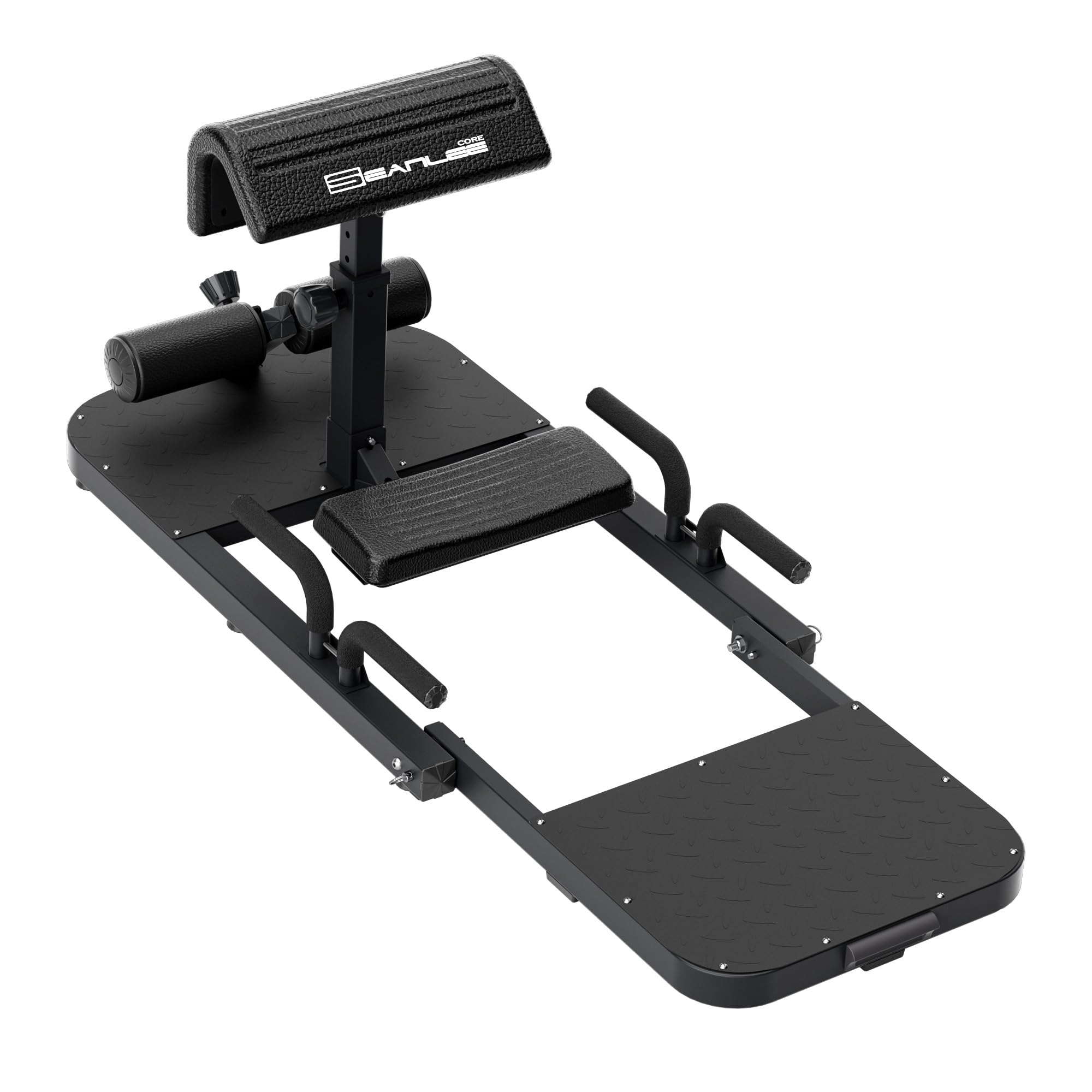
3. seanleecore Hip Thrust & Squat Machine
A 45-degree padded frame that swaps thrusts, squats, and lunges in seconds.
You get one machine that handles hip thrusts, deep sissy squats, forward lunges, and band squats, so you do not need to buy separate gear. The stable metal frame supports 350 lbs of load, and the 45° angle back pad keeps your posture honest through every rep. It ships 70% pre-assembled with wheels for rolling between rooms, and the two included 30 lbs resistance bands let you ramp intensity without buying plates.
Quality earns the most praise by a wide margin, and the five adjustable height levels make it work for a range of body sizes. One lifter with a meniscal tear found it enabled squats and split squats without knee pain, calling it functional even if the build is not top-tier. Another tested the back pad at 245 lbs and measured under 1 cm of movement — rock solid for home training.
The catch is the mixed stability feedback and the ease-of-use complaints. Barefoot lifters report feet slipping on the plate (a strip of grip tape fixes it), and some find the resistance lighter than expected. This machine wins if you want variety and knee-friendly squatting; it falls short if you need heavy, isolated glute loading like a dedicated bridge machine provides.
versatile choice knee-friendly squat variations and a full lower-body station rather than a single-purpose thrust box.
skip for small pure heavy glute isolation — the 350-lb rating and band resistance cap out well below the plate-loaded monsters here.
4. Lifepro GluteBlast Hip Thrust Machine
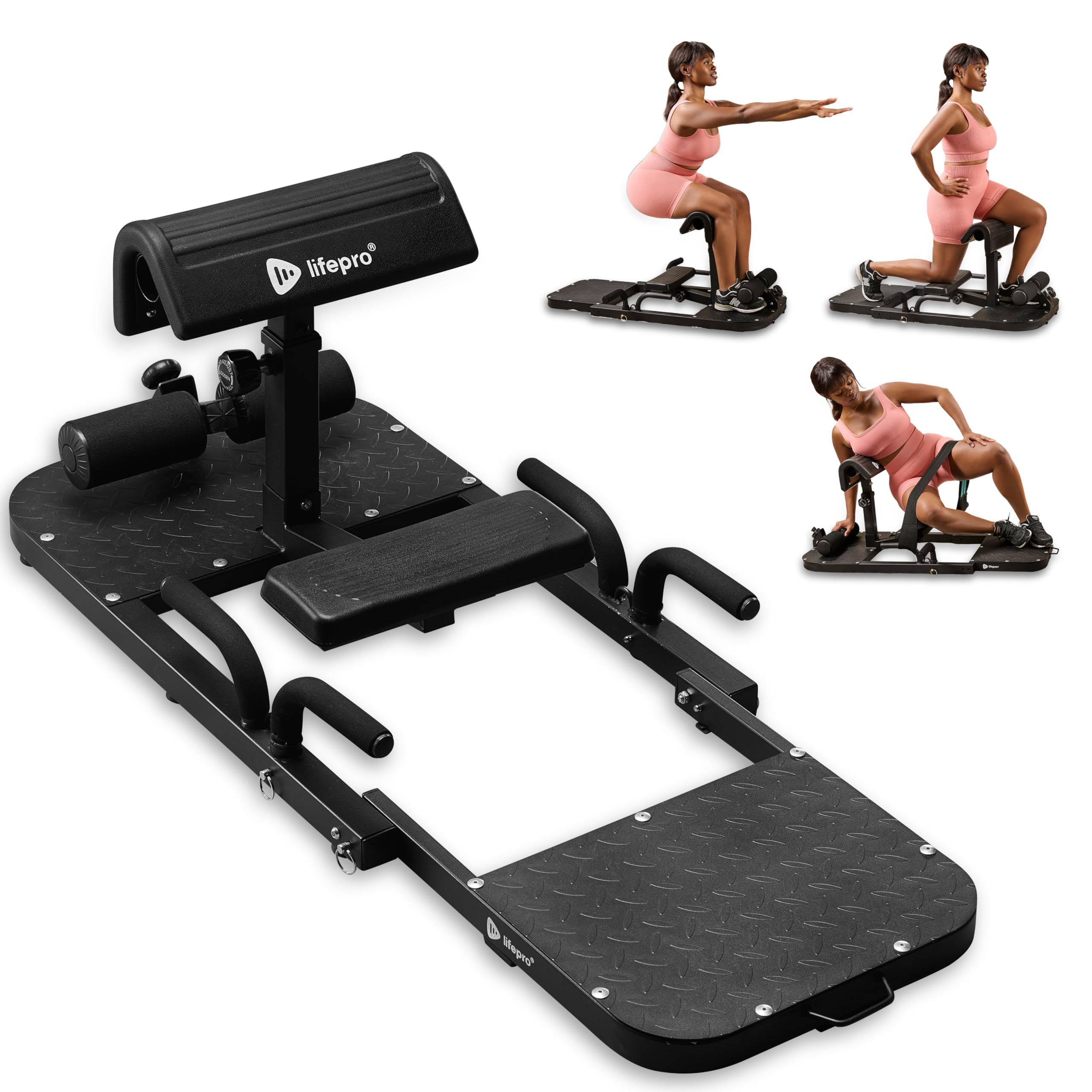
A powder-coated steel bench that folds down to lean against the wall.
Space is the whole story here. The GluteBlast’s powder-coated steel frame opens to 45.3″ × 27.2″ × 21.3″ for training, then folds to 39.0″ × 27.2″ × 18.9″ with built-in wheels so you can roll it into a corner. The frame supports up to 220 lbs, and the PU leather cushioning keeps thrusts, squats, and tricep dips comfortable. Adjustable handles and a foot plate mean it doubles as a sissy squat machine, not just a thrust bench.
Quality is what owners rave about most — it is the top aspect by a landslide — and effectiveness follows close behind. Users report genuine muscle activation in glute exercises, consistent squat depth, and an easy setup that takes minutes. The fold-flat design with wheels gets constant praise from apartment dwellers who cannot dedicate a room to gym gear.
The durability complaints are the thing to weigh here. A handful of owners mention bolts loosening over time and, in rarer cases, a base breaking after months of hard use, and the included resistance bands run too short for some body types. This is a quality home machine for moderate loads, not a commercial workhorse — treat the hardware gently and re-tighten bolts and it will serve you well.
space saver you live in a small space and want a real steel bench that disappears into a corner between sessions.
skip for tall you routinely thrust 300+ lbs; the 220-lb rating means this is built for bodyweight-to-moderate work.
5. BootySprout Hip Thrust Machine

A folding band trainer that isolates all three glute muscles without a barbell.
BootySprout attacks glutes from a completely different angle than every other pick here. Instead of loading plates onto your hips, you push against linear bearing straps that deliver smooth resistance through the full range of motion. The alloy steel frame handles up to 400 lbs of load, and it ships with 45, 90, and 135 lbs of resistance included — with 45- and 75-lb add-on bands sold separately for progressive overload. It folds to a compact 2’1″ × 2.5′ × 7″ footprint and tips the scale at 26 lbs, light enough to move but heavy enough to feel planted.
Owners praise how it performs, with functionality a close second. The machine collapses for corner storage and pops back out in seconds, which buyers love. One reviewer called it “way more comfortable for me than going to any public gym” and noted the booty results, while a 5’3″ lifter admits the setup takes a moment to get situated but still delivers a solid workout.
The fit warnings are real: very tall users risk the movement shifting to their quads, and comfort splits opinion based on body proportions. Stability also earns negative marks from some, so this rewards lifters who know how to hinge properly. If you already have impeccable hip thrust form and want a safer alternative to balancing a loaded barbell, this is a genuinely clever buy.
spring resistance feel: anyone who hates the bruising and setup hassle of a loaded barbell on the hips. Bands give constant tension without the compression.
sizing matters: ideal for average heights — owners around 5’3″ to 5’5″ report smooth sessions; very tall lifters should consider a longer-framed alternative.
6. Powerline by Body-Solid Glute Master

A dedicated glute kickback station from a 30-year industry veteran.
This is the first true plate-loaded isolation machine on the list, and it comes from Body-Solid, a brand that has built gym equipment for over three decades. The Glute Master measures 66″ × 26″ × 60″, weighs 67 lbs, and supports up to 400 lbs of weight on a 1″ plate post. Plush pads and rollers position your body so hip thrusts and glute bridges isolate the posterior chain instead of straining the lower back.
Quality leads the praise, with effectiveness close behind. Owners use it for glute kickbacks without aggravating lower back lordosis, report smooth bearings and quiet operation, and call assembly straightforward. One home gym builder called it “the missing link” in their setup, and the stable frame earned a “very sturdy” verdict from multiple buyers. For beginners, it is a safe, guided way to learn glute isolation without balancing a barbell.
The friction points are worth knowing. The 1″ plate post means standard 2″ Olympic plates need an adapter, and one owner reported a hip injury from the single-knee balancing position — a fair warning that this machine demands proper setup. Some also note the upward glide is not perfectly smooth. This is a solid mid-range isolation tool, not a replacement for compound barbell work.
solid plate loaded
- Guided motion keeps pressure off the lower back during kickbacks
- Easy assembly with smooth, quiet bearings
- Solid beginner-friendly introduction to plate-loaded glute isolation
basic design
- 1″ plate post needs an adapter for common 2″ Olympic plates
- Single-knee position can stress the supporting hip if not set up carefully
- Some owners find the upward glide less than perfectly smooth
gym quality a guided, back-friendly way to isolate glutes without the balance demands of free weights.
skip for budget you only own 2″ Olympic plates and do not want to buy an adapter on day one.
7. GMWD Hip Thrust Machine
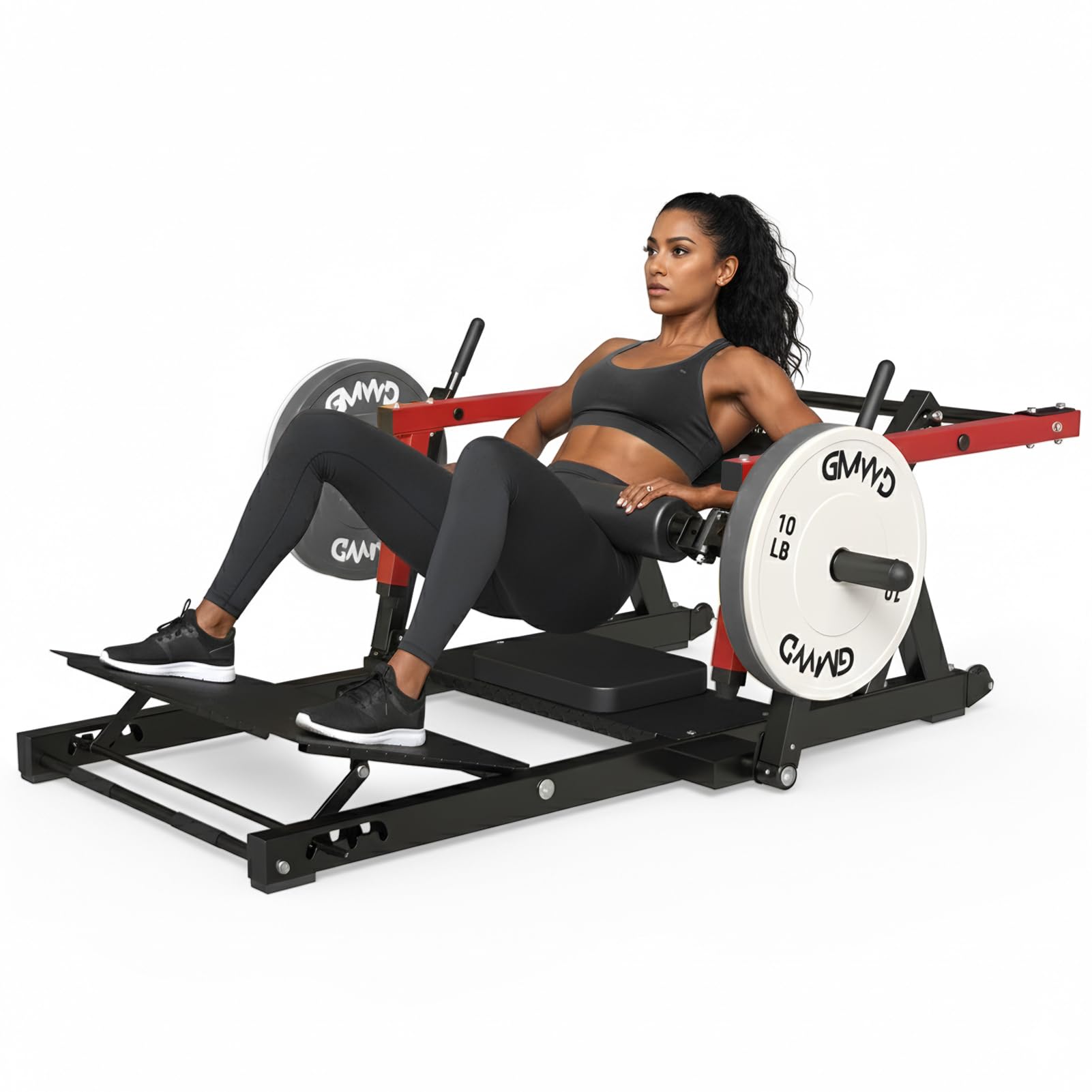
An 800-lb commercial-grade bridge machine that makes barbell setup look slow.
For dedicated glute bridging, this is the heaviest hitter in the lineup. The GMWD HRTQ weighs a colossal 192 lbs and carries a massive 800-lb load rating — nearly quadruple the seanleecore’s 350-lb capacity. A full-length back pad supports your spine, and a three-position adjustable footboard (21.8″ × 31.1″) lets you change pedal height. Weight holders fit both 1″ and 2″ plates with a 500-lb maximum per side, and dual pivot bearings keep the motion smooth even under serious load.
Performance dominates the conversation, with functionality second. Owners describe a commercial-quality machine that feels stable at heavy weight, delivers a great range of motion, and cuts setup time dramatically versus loading a barbell. One user at 5’2″ easily loads a few hundred pounds of thin plates and stays comfortable through the full range. The crossbar design beats a seatbelt-style alternative, and assembly is straightforward — done in under 2 hours even by one person taking their time.
The complaints are minor and cosmetic: weight horns run short (about three 45-lb bumpers per side), there are no band pegs, and a bit of rubber peeled off a safety latch on one unit. The foot platform can feel slippery until you add grip tape. This is the machine to buy when you are done fiddling with barbell balance and want your home gym to feel like a real training facility.
senior option: heavy lifters who want instant plate loading, full spinal support, and a frame that will never wobble.
Reconsider for… small apartments or light training — 192 lbs of steel needs floor space and a commitment to serious lifting.
8. Titan Fitness Economy H-PND
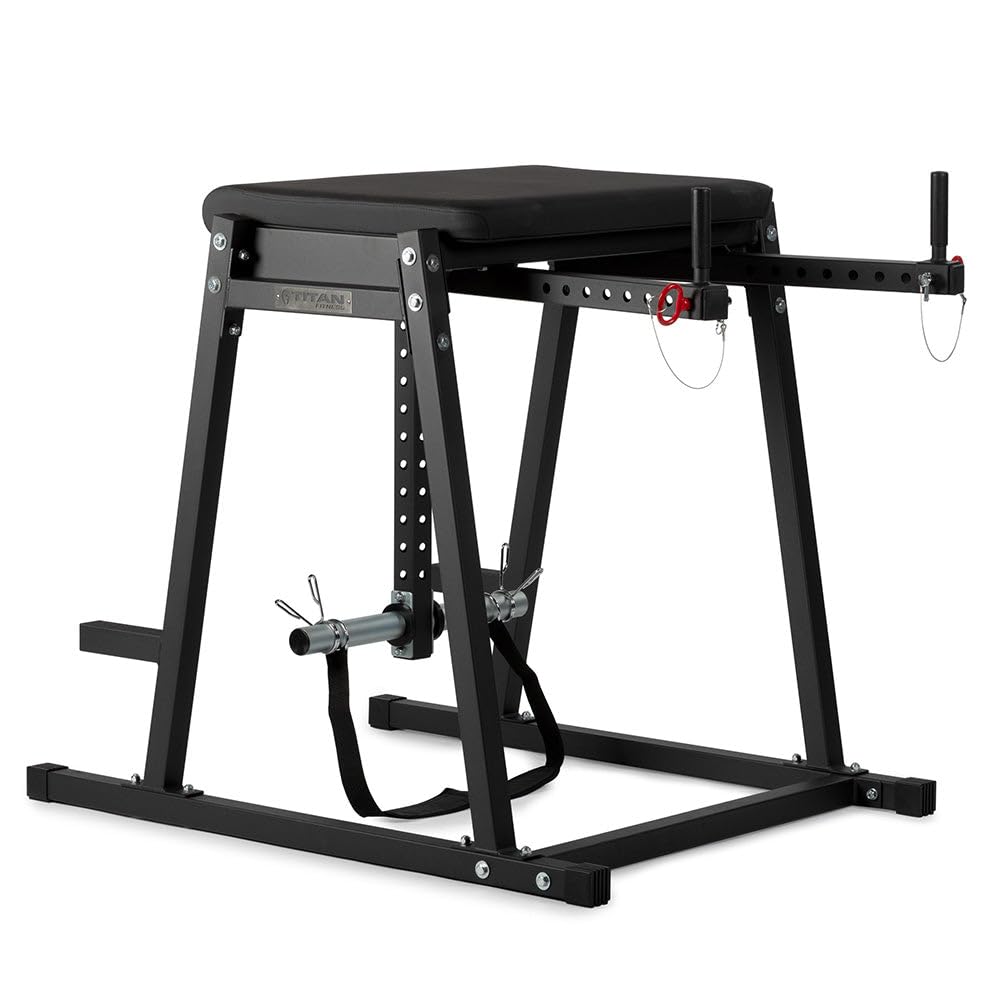
A reverse hyperextension bench that strengthens glutes while decompressing the spine.
Slightly different from a standard butt machine — and arguably more valuable for some buyers. The Titan H-PND is a reverse hyperextension station: you lie face-down on the padded top and let your legs hang off the edge, then swing them up against resistance. That motion hammers the glutes, hamstrings, and lower back simultaneously while gravity gently decompresses the spine. The heavy-duty steel frame stands 44.5″ tall with a 55″ × 39″ footprint, weighs 147 lbs, and carries a 550-lb loadable weight capacity.
Quality is the most-praised feature, with durability right behind it. Owners with herniated discs and sciatica report dramatic relief, with one restoring a 495-lb deadlift after a car accident. Assembly runs about 3 hours (the manual is a download, not paper), and the build is solid enough that buyers compare it favorably to far more expensive Rogue equipment.
The machine has one notable friction point: occasional missing parts in the box. The wide user weight capacity is listed at 300 lbs while the frame handles far more, and the 49mm loadable sleeve accepts standard plates. If your goal is back rehabilitation plus serious glute and hamstring strength, this machine does something no thrust box or bridge station can match.
The review pages sum it up: owners call it the best money they have spent on their back in years.
value pick anyone with lower-back issues who wants to strengthen the posterior chain while taking load off the spine.
skip for comfort if you want a classic hip thrust machine; this is a specialty rehab-and-strength tool, not a thrust box.
9. Dripex Leg Press Hack Squat Combo
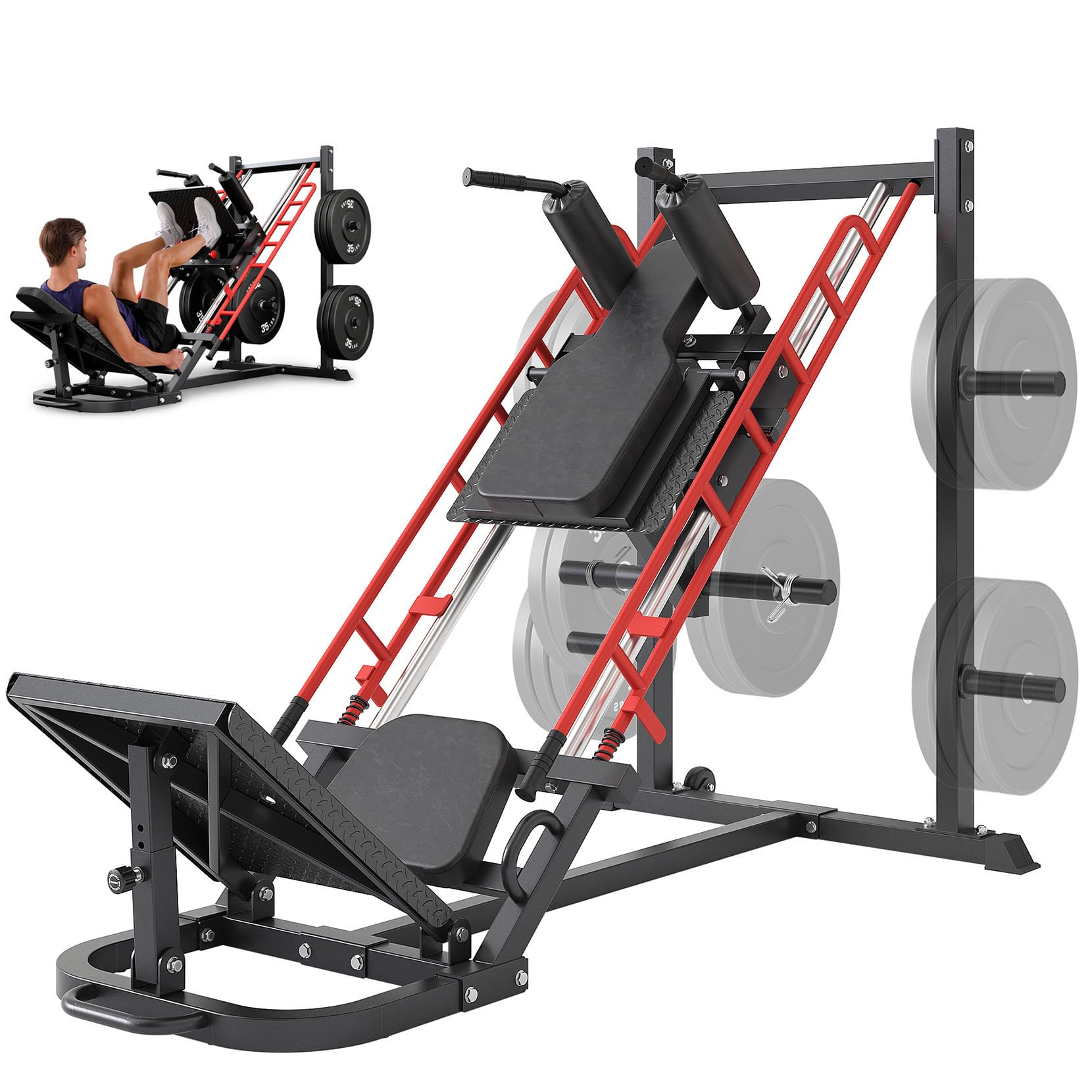
A 1200-lb capacity leg press and hack squat in one machine for serious lower-body volume.
If your butt goals come with quad and hamstring goals, this 2-in-1 changes the game. The Dripex combines a 45° leg press and a hack squat into a single 103.6-lb system that supports a staggering 1200 lbs of load — the highest rating in this entire guide. It carries four weight plate storage holders that add stability, uses a diamond-plated footplate for traction, and fits users from 5′ to 6’6″ thanks to multiple foot positions and angle options. The weight carriage accepts 2″ plates, and transport wheels let you roll it into place.
Quality earns the most praise, with assembly close behind. Owners consistently describe smooth motion, a comfortable high-density foam seat, and clear instructions — though nearly everyone agrees a second person makes assembly easier (budget 2 to 4 hours). One reviewer noted the carriage is the trickiest part to install solo, and the included wrenches run slightly oversized for the bolts.
The negatives are the shipping weight and minor quibbles. It arrives in three packages that have shown minor damage like bent parts and paint scratches (usually easily fixed), and one owner finds the hack squat footplate small for quad-focused work while the back pad wobbles slightly. Still, buyers call it professional-grade and an excellent value — the rare machine that delivers a full lower-body workout without a gym membership.
combo leg builder
- 1200-lb capacity dwarfs every other pick for serious progressive overload
- Combines leg press and hack squat so you skip buying two machines
- Compact footprint for a full lower-body station with 4 plate holders
takes up room
- Assembly takes 2-4 hours and really wants two people
- Arrives in three heavy packages with occasional cosmetic shipping damage
- Included wrenches do not fit the bolts perfectly
all in one: lifters who want a complete lower-body station — glutes, quads, hamstrings — under serious load without leaving home.
skip for small: anyone without assembly patience or the floor space for an 82.3″ deep machine.
Understanding the Specs
Load Capacity
This is the maximum weight the frame and carriage are engineered to support. It tells you whether the machine will wobble or flex under your heaviest set. Light boxes around 5 pounds have no formal rating, mid-range steel frames run 220 to 400 lbs, and the beefy plate-loaded units push 550 to 1200 lbs. Match this number to the weight you actually lift — buying way over your needs costs money and floor space, while buying under them risks a wobbly, unsafe rep.
Form Factor and Footprint
Butt machines range from foldable foam boxes you can stow in a closet to 192-lb steel frames that need a dedicated corner. Foldable units with wheels are the balance for apartments, while plate-loaded bridge machines reward you with rock-solid stability at the cost of square footage. Measure your space and know whether you will actually fold the machine away after each session — many owners admit they leave it set up.
FAQ
Is a hip thrust machine better than a barbell on the floor for glute growth?
What load capacity do I actually need for home use?
Which machine is best if I have lower back pain?
Will a 5-pound foam box slide around during heavy thrusts?
Are resistance band machines like the BootySprout as effective as plate-loaded ones?
How much assembly time should I expect for a full-size machine?
Do I need 1-inch or 2-inch weight plates for these machines?
Can a hip thrust machine replace other glute exercises?
What height machine do I need if I am shorter than average?
Final Thoughts: The Verdict
The right pick depends on how heavy you lift and how much floor you can spare. For the vast majority of home athletes, the butt machines balance is the WINDFOOT — a 780-lb rated bench that weighs almost nothing and disappears into a closet. If space is truly tight and your lifts are bodyweight-to-moderate, the WINBOX foam box is the crowd favorite at a fraction of the footprint. And when you are ready to commit to serious plate-loaded progress, the GMWD bridge machine delivers commercial-grade stability that will outlast every other piece of gear in your gym.
How We Picked
We do not accept paid placement. Every pick is matched to a real buyer and a real use-case; we do not hands-on test units.
Sources & Methodology
Specifications: manufacturer listings and product documentation. Review insights: verified customer reviews, as of September 2026. Pricing: not shown on this page (it changes often); check the current price via the retailer link.
As an Amazon Associate, Gadgets Feed earns from qualifying purchases. This does not affect which products we feature.