
Our readers keep the lights on and my morning glass full of iced black tea. As an Amazon Associate, I earn from qualifying purchases.
Specs are compiled from manufacturer listings and verified buyer reviews and can change over time — please confirm the key details on the product page before buying.
If your music library lives on hip-hop, EDM, or rock, you know the feeling of headphones that deliver polite bass instead of the chest-thumping rumble you crave. This guide cuts through the noise on wired-only models — the kind that never need charging and never drop signal — to find the ones that genuinely move air. We’ve ranked the standouts across over-ear studio cans, portable on-ears, and serious in-ear monitors so you can match the right driver setup to the thump you want.
I’m Min — the founder and writer behind Gadgets Feed. This guide is built by comparing the manufacturers’ published specifications and the patterns across verified customer reviews, so you get each pick’s real strengths and trade-offs instead of marketing spin.
From 50mm driver giants to hybrid multi-driver in-ear monitors, here are the best bass wired headphones that deliver genuine low-end power for every budget and listening style.
Our Picks at a Glance

How To Choose The Best Bass Wired Headphones
To feel bass in your chest, you need three things: a large driver to push air, a closed-back shell to trap the pressure, and a sound profile that boosts the low end. Here’s what separates a great bass pair from a merely loud one.
Start With the Driver Size
The driver is the tiny loudspeaker inside each earcup. Bigger drivers push more air, which usually means deeper, more physical bass. A 50mm driver is a common benchmark for serious low-end in over-ear models, while smaller 40mm drivers still deliver solid punch for studio use. In-ear monitors use different tech entirely — hybrid setups combine multiple driver types, including planar (a flat diaphragm that moves air evenly) and balanced armature (a small, precise driver for mids and highs), to get bass impact without a giant speaker.
Choose Between Over-Ear and On-Ear Comfort
Over-ear headphones enclose your entire ear with padded cushions, which helps create a seal that keeps bass pressure strong and blocks outside noise. On-ear models rest directly on your ears; they’re lighter and more portable, but they let more sound escape and can press on your ears during long sessions. If you plan to wear them for hours of mixing or commuting, over-ear is usually the more forgiving choice.
Check the Cable and Connectivity
Since you’re going wired, the cable matters as much as the drivers. A standard 3.5mm plug (the classic headphone jack) works with most phones, laptops, and game controllers, while a 6.35mm plug (a larger, quarter-inch jack) is what you find on studio gear like amplifiers and mixers. Many serious pairs include both plugs or a detachable cable so you can swap in a longer one or replace a damaged cord without replacing the whole headphone.
Quick Comparison
| Model | Best For | Driver Size | Fit Style | Cable Type | Amazon |
|---|---|---|---|---|---|
| OneOdio A71★ Best Overall | Budget studio mixing | 40mm | Over-Ear | Detachable, Coiled | Amazon |
| OneOdio Pro-10DJ Favorite | Bass-heavy DJ work | 50mm | Over-Ear | Detachable, Dual | Amazon |
| JBL Tune 530Compact Pick | Portable everyday listening | 33mm | On-Ear | Flat, Tangle-Free | Amazon |
| PHILIPS SHP6000 | Hi-Res detailed listening | 40mm | Over-Ear | Retractable | Amazon |
| Sony MDRXB800 | Deep sub-bass thump | 50mm | Over-Ear | Flat, Tangle-Free | Amazon |
| Sony MDR-XB55 | Pocketable bass on the go | 12mm | In-Ear | Tangle-Free | Amazon |
| beyerdynamic DT 770 Pro X | Studio tracking and mixing | 45mm | Over-Ear | Detachable mini-XLR | Amazon |
| Linsoul Martilo | Serious basshead IEMs | Hybrid | In-Ear | Detachable 0.78mm | Amazon |
| FiiO FH9 | Audiophile detail | 13.6mm | In-Ear | Detachable Silver | Amazon |
In‑Depth Reviews
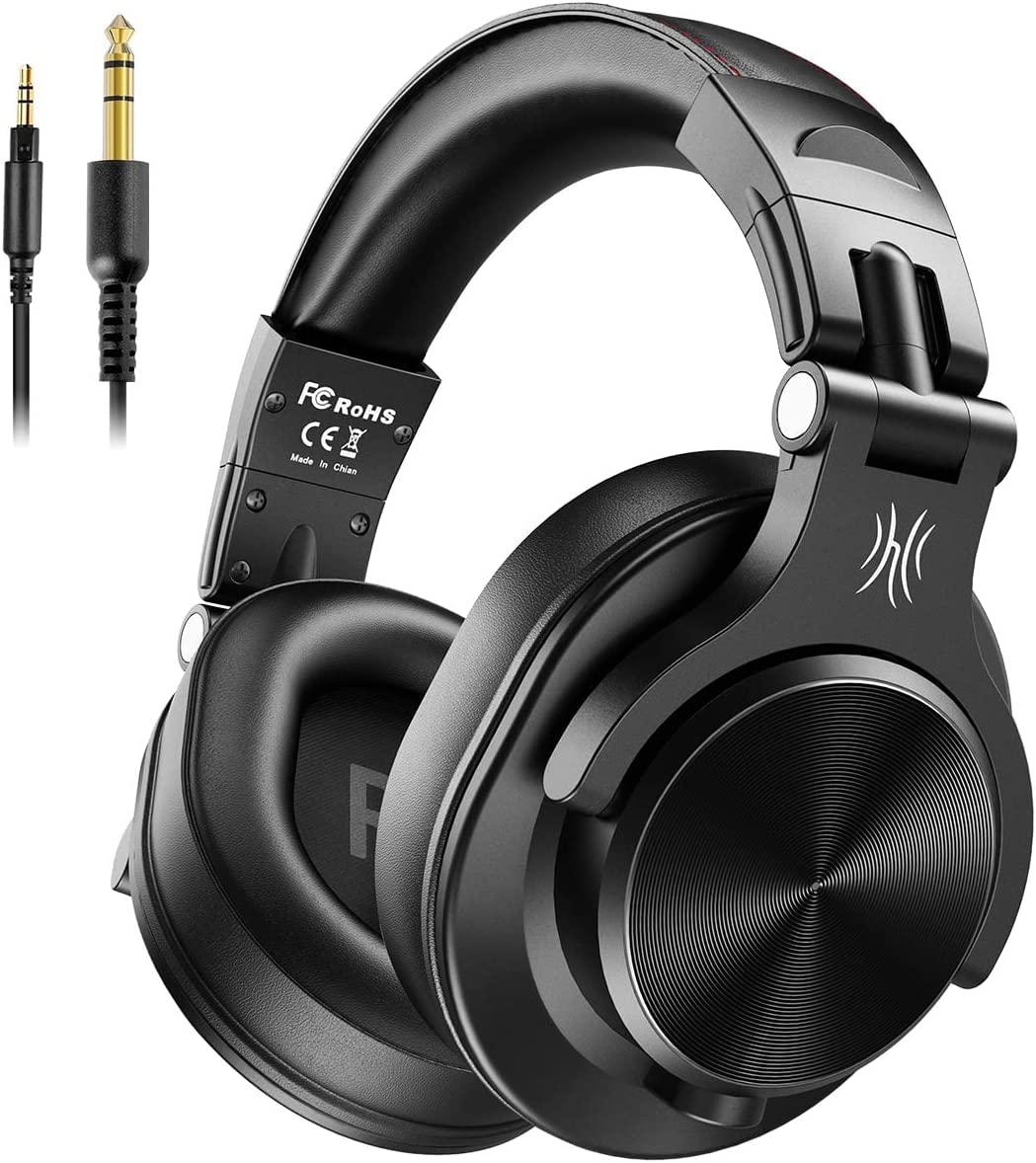
1. OneOdio A71 Hi-Res Wired Over-Ear Studio Headphones
Our pick — 4.5★ from 17,000+ verified ratings; the strongest balance of quality and price.
The budget studio workhorse that mixes comfort with genuinely clear, punchy sound.
This is the pair to grab when you want studio-style monitoring without emptying your wallet. The 40mm dynamic drivers deliver clear, detailed audio that owners repeatedly describe as some of the best they’ve heard at this level — the kind of clarity that works for editing tracks and casual listening alike. A shared audio port on the earcup even lets you plug in a second pair so two people can listen together with no splitter required.
Padded cushions and a stretchable headband make it comfortable for long sessions. The soft padded ear cushions are designed for long monitoring sessions, and the adjustable, stretchable headband lets you find the angle that fits your head. The 90° swiveling earcups mean you can rotate one cup away for single-ear monitoring — a move DJs and producers use to keep one ear free for conversation. As buyers put it: “Overall, great price, great sound, comfortable fit, and is built to last.”
The included cable setup covers nearly any device you own. You get a long-style coiled cord stretching 6.6-9.8 feet, plus both a standard-sized 6.35mm plug for studio gear and a 3.5mm plug for phones, laptops, and keyboards. The catch: the jack is proprietary, and some owners note that only thinner 1/8-inch cables fit it properly. A few also mention the clamp can feel tight if you have a larger head, so give the headband a gentle stretch before your first marathon session.
What Wins People Over
- Sound quality is the most-praised feature, with well over a thousand owners calling it out — strong clarity for the price
- Long coiled cable reaches from your computer to your comfy chair without an extension
- Padded cushions and swiveling cups make it a true all-day studio companion
Worth Knowing Before You Buy
- Proprietary jack means aftermarket cable swaps are tricky
- Not the loudest option — better for focused listening than drowning out a noisy room
Grab these for: a budget-friendly first studio headphone or a reliable daily driver for mixing and long listening.
Think twice if: you need maximum volume or plan to swap cables constantly — the proprietary jack limits both.
2. OneOdio Wired DJ Hi-Res Over-Ear Headphones
50mm drivers deliver powerful bass that punches well above this pair’s entry-level price.
If your priority is feeling bass in your chest, the 50mm speaker drivers here — a full 52% larger than the 33mm drivers on the JBL Tune 530 — move the air you need. Paired with neodymium magnets (small but powerful magnets that drive the speaker cone), this setup produces deep, punchy low-end with clear vocals and crisp highs. Buyers report the sound competes with far pricier Sony models, calling it big sound for a small price.
The DJ-ready design works for real use. The 90° swiveling ear cups flip up for single-ear monitoring, and the self-adjusting, flexible headband aims for a fatigue-free fit during long sets. Two detachable cables ship in the box — a 2-meter stretchable cord with a 6.35mm plug for mixers and amps, plus a 1.2-meter cord with a 3.5mm plug for phones and laptops — so you can stay wired into studio gear and your computer at the same time.
The honest trade-offs start with the rotating earpiece, which some owners find uncomfortable after extended wear, and a headband that can feel too tight for all-day sessions. Others note these are tuned for smaller ears and can cause fatigue over hours of mixing. The sound is also slightly bass-forward rather than perfectly neutral, which makes them a blast for casual listening but less ideal if you need surgically accurate monitoring for audio engineering.
The Big Wins
- Build quality is the most-mentioned plus — thousands of owners vouch for the sturdy feel
- Two included cables cover studio 6.35mm and consumer 3.5mm devices from the start
- Lightweight enough for glasses wearers to keep on for hours
The Real Trade-Offs
- Fit is the most-discussed gripe, with the rotating cup and tight headband splitting opinions
- Not sound-blocking — outside noise still gets in
Reach for this if: you DJ, produce at home, or just want serious bass on a tight budget.
Look elsewhere if: you need a perfectly neutral sound for critical studio mastering or have a larger head.
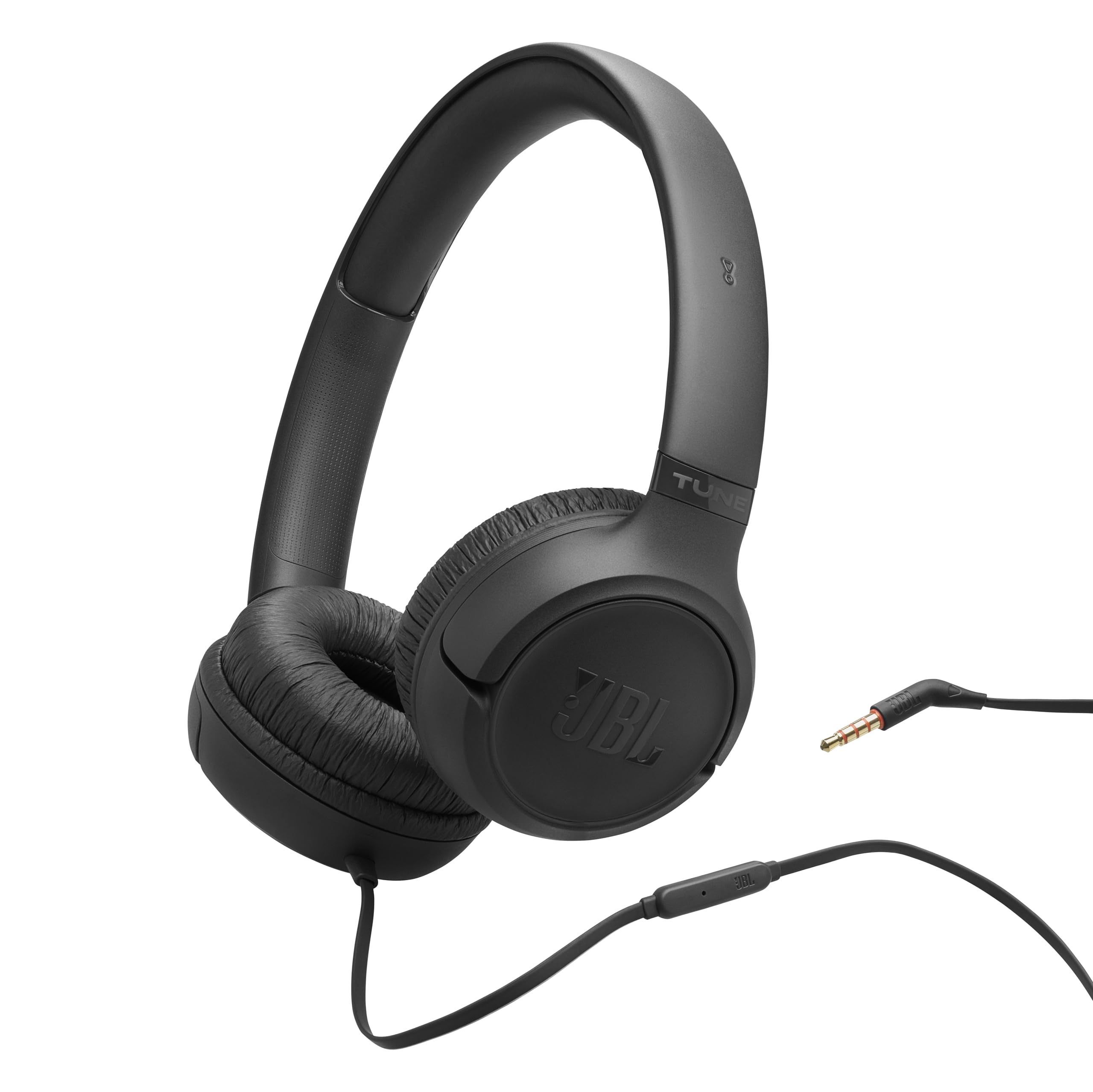
3. JBL Tune 530 Wired On-Ear Headphones
JBL’s signature bass sound squeezed into light, foldable on-ear cans for daily carry.
When you want the JBL Pure Bass sound (the brand’s signature tuning that boosts low frequencies for extra energy) in a package that disappears into your bag, this is the one. The 33mm drivers deliver that rich, powerful audio JBL is known for — the kind of energetic sound that makes workouts and commutes more fun. Owners consistently call it lightweight and comfortable, with one buyer simply summing up: “Lightweight and comfortable; great sound for such inexpensive headphones.”
These fold flat and pack easily into a bag. The soft on-ear cups and padded headband keep things comfortable, and when you’re done, the headphones fold flat so they slip into an everyday bag without a bulky case. That flat 3.5mm cable is tangle-free by design — no knots when you pull them out of your pocket — and reinforced connections add durability where cables usually fail first. An in-line one-button remote with a microphone handles hands-free calls.
The trade-off is the on-ear form factor. Because the cups sit on your ears rather than around them, comfort can fade during very long sessions, and sound isolation is weaker than over-ear designs. One owner found the ear pads uncomfortable after minutes of wear, though most disagree. The aggressive U-shaped sound signature — boosted bass and treble with recessed mids — is fantastic for fun listening but means vocals sit slightly behind the beat in the mix.
Perfect for: someone who wants recognized bass tuning in a pocket-friendly pair for travel, workouts, movies, and calls.
Not for: critical listeners who need flat, analytical sound or all-day on-ear comfort.
4. PHILIPS SHP6000 Wired Studio Monitor Headphones

High-resolution audio certification meets deep, balanced bass for discerning listeners.
This Philips pair carries the Hi-Res Audio stamp, a certification that means it’s engineered to reproduce studio master recordings more faithfully than standard CD-quality formats. For buyers who notice the difference between a compressed stream and a lossless file, that’s a meaningful promise. The 40mm dynamic drivers deliver well-balanced sound — owners praise deep, punchy bass with a wide soundstage, the spatial quality that makes instruments feel placed around you rather than squished together.
Comfort gets serious attention here. The over-ear design with memory foam pads has owners reporting marathon sessions — one describes wearing them for 11 straight hours with glasses on without discomfort. The memory foam (a slow-rebound material that molds to your head) pads the clamp loosens up after a break-in period. The foldable frame and retractable cable make them easy to store when they’re not on your head.
Know the catch before you commit: owners describe a flat, controlled bass rather than a subwoofer-style rumble, so this isn’t a pair for bassheads chasing maximum thump. The cable is very long, which is great for studio use but awkward for portable listening, and there are no in-line controls for your phone. An occasional owner finds the fit too large for smaller heads. This is a detailed, honest listening tool rather than a party speaker for your ears.
Best for critical listening: the sound quality is the most-praised feature by a wide margin, with owners noting superior resolution and a wider soundstage than much pricier reference headphones.
The honest catch: flat, accurate bass means bassheads chasing heavy rumble should look at the Sony or OneOdio DJ options instead.
5. Sony MDRXB800 Extra Bass Over The Head Headphones

Sony’s Extra Bass line turns your commute into a private subwoofer session.
These are for listeners who want subwoofer-like bass impact from over-ear cans. The 50mm diaphragms are tuned for deep, powerful bass, and the direct vibe structure — Sony’s internal bracing that transmits bass energy directly to the ear — makes every kick drum feel physical. Owners describe the low-end as rumbling and thumping, ideal for hip-hop, EDM, and drum and bass, with one noting “the bass is great” and another calling it outstanding sound that changes how you hear music.
Comfort for long stretches comes from pressure-relieving foam ear pads, and the dual folding design collapses the headphones compactly for storage. The Y-type, flat, tangle-proof serrated cord runs 1.2 meters, which is the right length for a phone in your pocket or a laptop on a desk. Owners also note the sound gets even better over the first few months as the drivers break in.
The sacrifice for all that bass is clarity at the top end. Reviews describe mids and highs as buried behind the low-end wall, and one owner found “no high end at all” with what they heard as mono sound. The fit is also finicky — it can feel tight and uncomfortable, especially with glasses, and the build has a fragile feel to some despite lasting years for others. If you want balanced audiophile sound, look elsewhere; if you want bass that rattles your skull, this delivers.
Why Bass Lovers Choose This
- Sound quality is the overwhelming favorite feature, with over 150 owners praising the deep low-end
- Memory foam pads keep extended wear enjoyable, and the foldable frame is travel-friendly
- Flat, tangle-proof cord survives bag life without knots
What to Weigh
- Durability splits owners — some last for years, others report breakage
- Mids and highs sit behind the bass, so detail lovers will feel shortchanged
Buy it for: bass-first genres like rap, EDM, and dubstep where sub-bass rumble is the point of the music.
Skip it for: neutral monitoring, glasses-heavy days, or anyone who wants vocals and treble to share the spotlight.
6. Sony MDR-XB55 Heavy Bass In-Ear Headphones

A heavy bass booster in a tiny in-ear shell that fits in your pocket.
When over-ear cans are too bulky but you still refuse to give up bass, Sony’s Extra Bass in-ear line steps in. The uniquely developed 12mm driver unit is small and highly sensitive, and it’s paired with a bass booster that transmits groove feeling directly to your ear canal. Owners mention clear sound with noticeable bass and strong noise isolation — the in-ear seal blocks outside chatter while the low-end stays front and center.
The package is genuinely complete for on-the-go use. You get a remote with built-in multifunction buttons and a microphone for play/pause and calls, and the tangle-free serrated cable resists the knots that plague ordinary earbuds. Sony throws in hybrid eartips in four sizes (SS, S, M, L, with two of each), a carrying pouch, and a clip, so you can find a secure fit and keep them organized. If you use an Xperia phone, the SmartKey app even lets you remap the remote to your preferred settings.
The catch with any wired in-ear that can’t be recabled is lifespan — the cable is the weak point, and one owner notes that once it fails, you can’t just swap in a new one. There’s no volume control on the remote, and the cord is sensitive to movement noise when you’re active. For the price, the sound quality and bass delivery are hard to fault, but treat the cable gently if you want years of use.
The appeal: big-brand heavy bass in a -class package with all the accessories you’d expect from a pricier set.
The limitation: a non-replaceable cable means eventual wear-out ends the pair — consider a detachable-cable IEM if you’re hard on cords.
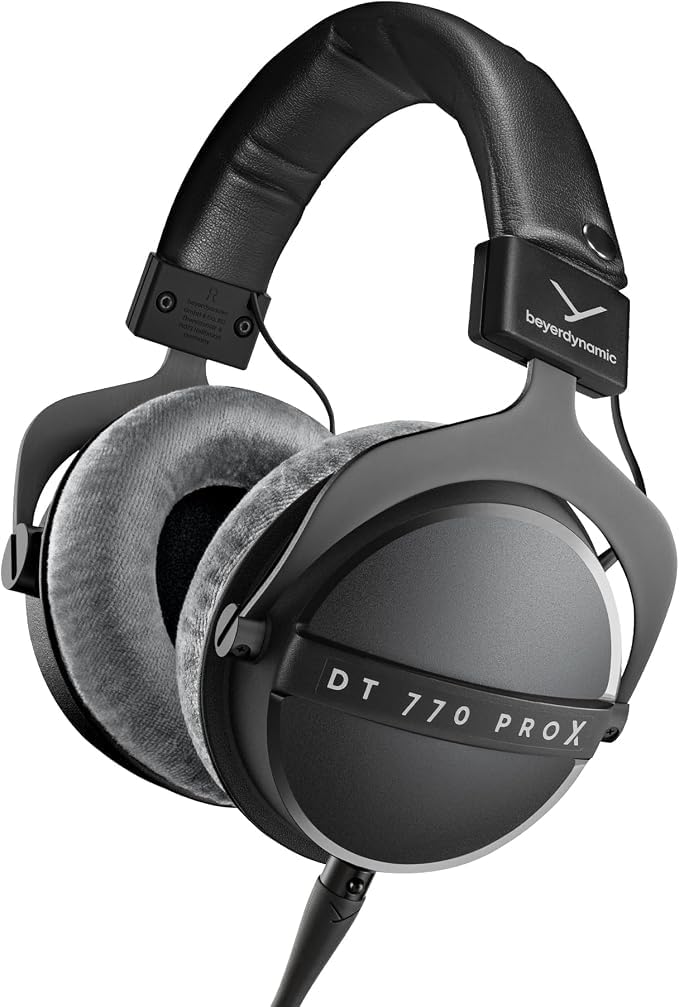
7. beyerdynamic DT 770 Pro X Closed-Back Studio Headphones
German-engineered studio reference sound with replaceable parts built for decades of daily use.
This is the serious studio investment. The DT 770 Pro X runs on beyerdynamic’s STELLAR.45 driver — their flagship transducer for precise, high-resolution sound — tuned for tracking and mixing. The 48-ohm drive (a measure of electrical resistance that determines how much power it needs) plugs straight into any laptop, interface, phone, or console with no headphone amp required, which removes a whole layer of gear from your setup. The closed-back isolation keeps headphone bleed out of your microphone while you record vocals or podcasts.
Durability is the defining philosophy here. The detachable mini-XLR cable swaps or replaces in seconds, and the velour ear pads (a soft, breathable fabric) are replaceable too, so the headphone itself can last for years of daily use. Owners describe the build as outstanding and built like a tank, with superb passive isolation that one owner rates as better than any active noise-cancelling headphone they’ve tried. It ships with the detachable 3-meter cable and a bag, handmade in Germany.
The sound signature demands a moment of honesty. from the start, several owners find the treble sharp and the midrange hollow — the sound needs equalization (adjusting the tone balance) to truly shine. Once EQ’d, customers note superb detail and clarity. The fit also splits opinions: the velour pads are soft, but the clamp can feel tight for some heads, and the long cable plug can bump your neck while you move.
Built to Last
- Sound quality is the most-praised aspect, with owners calling it a huge upgrade over gaming headsets
- Replaceable cable and ear pads mean this pair outlives cheaper alternatives by years
- No amp needed — 48-ohm drive works with any source you own
Know Before You Commit
- Treble can sound sharp from the start until you adjust the EQ
- Comfort is mixed — the clamp is tight for some heads, and pads run warm
This is the pick for: recording artists, podcasters, and gamers who want studio-grade isolation and a headphone that won’t die in two years.
Reconsider if: you want plug-and-play warmth with zero EQ setup or need a pair for all-day casual wear.
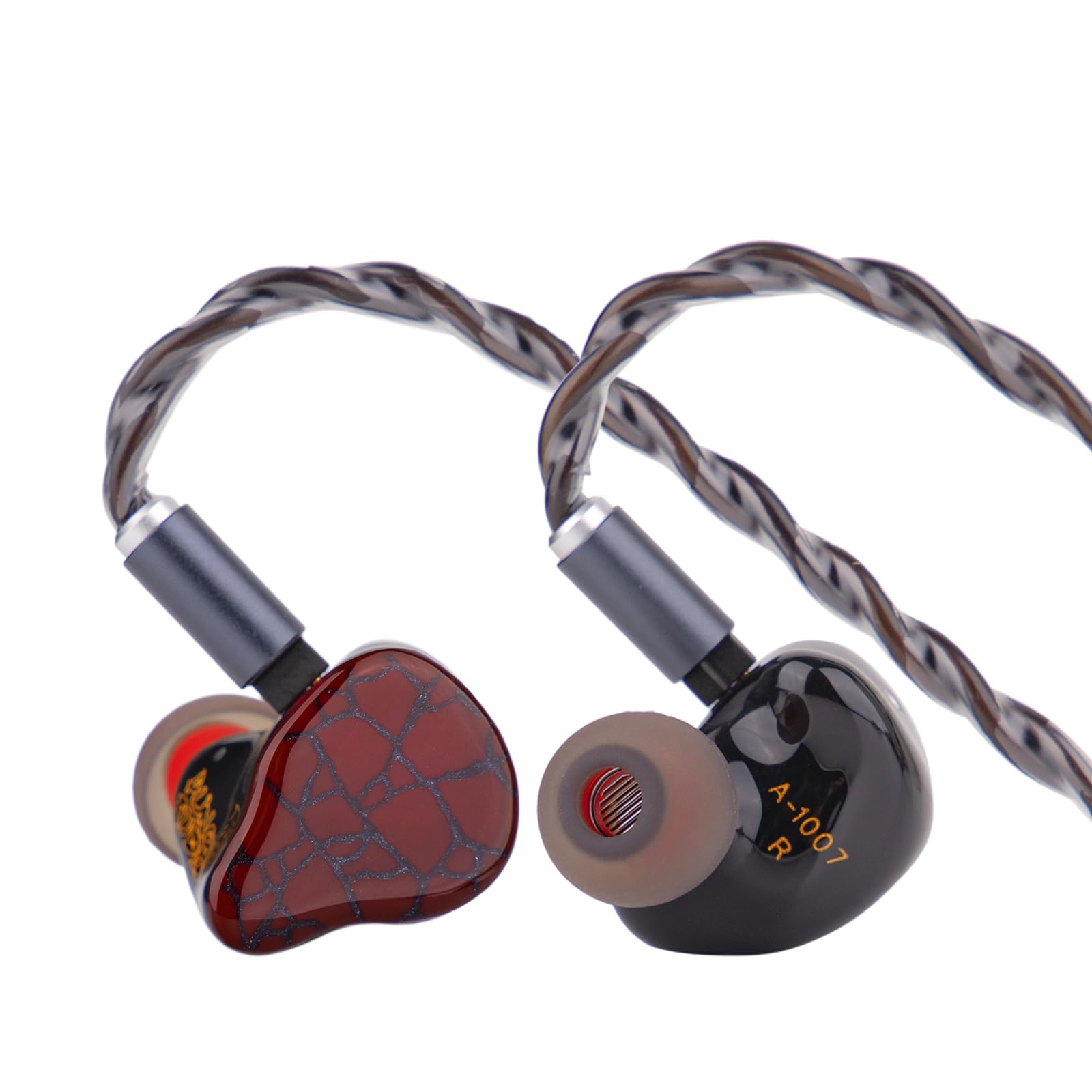
8. Linsoul Punch Audio Martilo In-Ear Monitors
A multi-driver bass machine engineered for people who measure music by its low-end rumble.
This IEM is engineered for bassheads who want extreme low-end impact. The Martilo packs a hybrid driver setup — one planar driver (a flat, thin diaphragm that moves air evenly for crisp detail) plus two Knowles balanced armature drivers (precision drivers that handle mids and highs) plus two dynamic drivers (the standard cone type) — to deliver extremely effective, punchy kickbass. A 15dB sub-bass shelf (a boost applied to the very lowest frequencies) creates that sock-rattling rumble, while a defined 200Hz bass-shelf crossover keeps the sound from getting muddy or bloated.
What impresses owners is that it doesn’t sacrifice everything else for bass. The low-mid frequencies stay full and rich, the midrange remains natural with minimal coloring, and the treble stays smooth with articulate detail. It’s tuned for EDM, heavy metal, and hip-hop — genres where bass texture matters — and owners describe phenomenal bass rumble alongside genuine detail, soundstage, and instrument separation. One delighted owner calls it the ultimate dream for bassheads.
The engineering extends to the cable. It’s a detachable 0.78mm 2-pin design with a modular plug system, letting you switch between a 3.5mm unbalanced plug and a 4.4mm balanced plug for different sources. The honest downsides: the fit is picky, with one owner returning them because the left earbud wouldn’t seat properly in their ear, and durability reports are concerning — several reviewers point out breakage within about a month of use. They also benefit significantly from a DAC (a digital-to-analog converter that improves sound quality from your device).
The Basshead Appeal
- Sound quality is the runaway favorite — over 50 owners praise the well-textured, rumbling bass
- Modular cable means you can drive it with 3.5mm or balanced 4.4mm sources
- Owners call it a daily driver that outperforms pricier bass-tuned IEMs
The Honest Risks
- Durability is the weak spot — several shoppers say failure within the first month
- Ear fit is inconsistent, and the left bud can be a problem for some ear shapes
Choose this when: you’re a dedicated basshead with a proper DAC who wants reference-grade rumble in an in-ear form.
Pass on this if: you have finicky ear fit or want maximum durability — the build quality is the gamble here.
9. FiiO FH9 Wired High Resolution In-Ear Monitors

A titanium-shelled flagship whose layered bass reveals details you never knew were in your music.
This is the flagship choice for audiophiles seeking reference-grade detail. The FH9 combines one 13.6mm dynamic driver with six balanced armature drivers — a 1DD+6BA hybrid configuration — to deliver deep bass that’s present and textured rather than overwhelming. Owners describe hearing everything in their music, from individual instrument positions to subtle details like a violinist breathing between phrases. It’s not a head-rattling bass cannon; it’s a precise, layered low-end that audiophiles describe as transformative.
The titanium alloy shells are CNC-machined for rigidity and minimal resonance. Each ear unit is machined from titanium alloy using five-axis CNC machining (computer-controlled precision cutting), chosen because its extreme rigidity minimizes unwanted harmonics that can color the sound. The stainless steel angled MMCX connectors — the standard detachable IEM connection — are angled for comfortable wearing, with left blue and right red indicators for quick setup. The included pure silver cable has 8 branches of 28 wires each, totaling 224 individually isolated wires braided in the Litz style, wrapped in a TPU sheath that resists yellowing and stiffening in cold temperatures.
Swappable plugs (2.5mm, 3.5mm, 4.4mm) let you connect to any source. The cable includes 2.5mm, 3.5mm, and 4.4mm terminations, so you can drive it from a phone, laptop, or high-end balanced player. Six sets of different eartips ship in the box — balanced, bass, foam, SpinFit, and vocals variants — so you can tune the fit and sound to your preference. The trade-offs: it needs a quality source (a good DAC or amp) to reach its full potential, isolation is only so-so for a semi-open design, and the sub-bass, while present, won’t satisfy someone seeking head-rattling thump. This is precision over brute force.
The flagship experience: owners consistently rank the sound quality as outstanding, calling it the last pair of earbuds they’ll ever need.
The real requirement: you’ll want a quality DAC or amplifier to hear what it can actually do, and you should expect balanced bass rather than subwoofer slam.
Understanding the Specs
Driver Size and Type
The driver is the speaker inside your headphone, measured in millimeters. Bigger drivers push more air, which translates to deeper, more physical bass — 50mm drivers are the benchmark for serious over-ear bass, while 40mm balances punch and clarity. Driver type matters too: dynamic drivers are the standard cone type, planar drivers use a flat diaphragm for even detail, and balanced armature drivers are tiny precision units that excel at mids and highs. Some premium in-ears combine all of these in a hybrid setup.
Impedance and Sensitivity
Impedance, measured in ohms, tells you how much power the headphone needs. Lower impedance (like 48 ohms or below) means it plays loud enough straight from your phone or laptop without a separate amplifier. Higher impedance models often need an amp to sound their best, especially for bass impact. Sensitivity, measured in decibels, tells you how efficiently it converts power into volume. For bass wired headphones, a lower-impedance design with a detachable cable is usually the balance for everyday use without extra gear.
FAQ
Do I need a headphone amplifier for bass-heavy wired headphones?
What is the difference between 3.5mm and 6.35mm headphone plugs?
Will bass wired headphones work with my iPhone or Android phone?
Why does driver size matter so much for bass?
What does “closed-back” mean and why does it matter for bass?
Is a detachable cable worth paying extra for?
What is a bass shelf and why should I care?
Over-ear or on-ear: which is better for bass?
How should I care for my bass wired headphones to make them last?
Why do some bass headphones sound muddy while others stay clear?
Final Thoughts: The Verdict
If you want one dependable pick, the bass wired headphones winner is the OneOdio Pro-10 because its 50mm drivers deliver powerful, crowd-pleasing bass at an entry-level price while still offering DJ-friendly features and dual-cable connectivity. If you want budget studio versatility with a 40mm driver and broader device compatibility, grab the OneOdio A71. And for bass that borders on a religious experience in a pocketable form, the Sony MDRXB800 is the one to reach for — the crowd favorite at 4.2 stars backed by 300+ owners who simply can’t stop raving about the low-end thump.
How We Picked
We do not accept paid placement. Every pick is matched to a real buyer and a real use-case; we do not hands-on test units.
Sources & Methodology
Specifications: manufacturer listings and product documentation. Review insights: verified customer reviews, as of September 2026. Pricing: not shown on this page (it changes often); check the current price via the retailer link.
As an Amazon Associate, Gadgets Feed earns from qualifying purchases. This does not affect which products we feature.