
Our readers keep the lights on and my morning glass full of iced black tea. As an Amazon Associate, I earn from qualifying purchases.
Specs are compiled from manufacturer listings and verified buyer reviews and can change over time — please confirm the key details on the product page before buying.
You can walk away from the kitchen without dread if a device physically kills the gas line or electric burner when a timer runs out or a smoke alarm sounds. Here are the top three real safety devices that do exactly that, so you and your aging parent or forgetful teen stay protected from a stove left on.
I’m Min — the founder and writer behind Gadgets Feed. This guide is built by comparing the manufacturers’ published specifications and the patterns across verified customer reviews, so you get each pick’s real strengths and trade-offs instead of marketing spin.
We’ve separated these devices by how they do the job: a direct gas-line timer versus smoke-alarm-syncing units. Here is our curated shortlist of the best automatic stove shut off options for your kitchen.
Quick Picks
- FireAvert – Electric Auto Stove Shut-Off Safety — Protects The Family
- FireAvert-Gas Stove Auto Shut-Off Device — Purpose-Built Safety
- NO WORRIEZ Safety Auto Shut-Off Gas Timer — Outdoor Companion
How To Choose The Best Automatic Stove Shut Off
Picking the right safety device for your stove starts with one simple question: do you cook with gas or electricity? The answer decides the entire category of hardware you need, because a gas solution and an electric solution work on completely different principles and are rarely interchangeable.
Know Your Stove’s Power Source
If you have a gas range, your main danger is an open flame left burning, which can ignite nearby items. The right device either fits directly into the gas line with a timer that cuts the flow after a set period, or it listens for your smoke alarm and shuts a valve when danger is detected. If your range is electric, a device that cuts the 220-volt power to the stove is the standard approach. Check the plug and outlet before buying — the unit must match your stove’s prong configuration to work.
Decide Between Timer Logic and Smoke Alarm Logic
The two operating styles serve different brains. A mechanical gas timer is perfect for the backyard griller who sets a 30-minute cook and wants the gas dead when the timer finishes, even if they wander off. A smoke-alarm-syncing unit is the better match for a senior loved one who may forget the stove entirely — that unit sits dormant until the smoke detector’s audible alarm triggers the safety mechanism. Think about which failure you are guarding against before you choose.
Match the Hardware to Your Setup
Before committing, measure the space behind your stove and inspect the gas piping. A compact inline solenoid can disappear behind the appliance, but a larger timer unit needs room to be reached and turned. Fixed lengths and fittings vary, so verify you have adapters and hoses on hand or a flexible power cord, otherwise you might end up with a device you cannot physically connect.
Quick Comparison
| Model | Best For | Safety Trigger | Power Source | Install Target | Amazon |
|---|---|---|---|---|---|
| FireAvert Electric | Owners of 220v electric stoves | Smoke alarm sound | Corded Electric | Wall outlet | Amazon |
| FireAvert Gas | Gas stoves with a smoke alarm | Smoke alarm sound | 110v outlet | Gas line | Amazon |
| NO WORRIEZ Timer | Grills, fire pits, patio heaters | Mechanical timer (0-60 min) | No batteries | Gas line | Amazon |
In-Depth Reviews
1. FireAvert – Electric Auto Stove Shut-Off Safety Device (4-Prong)
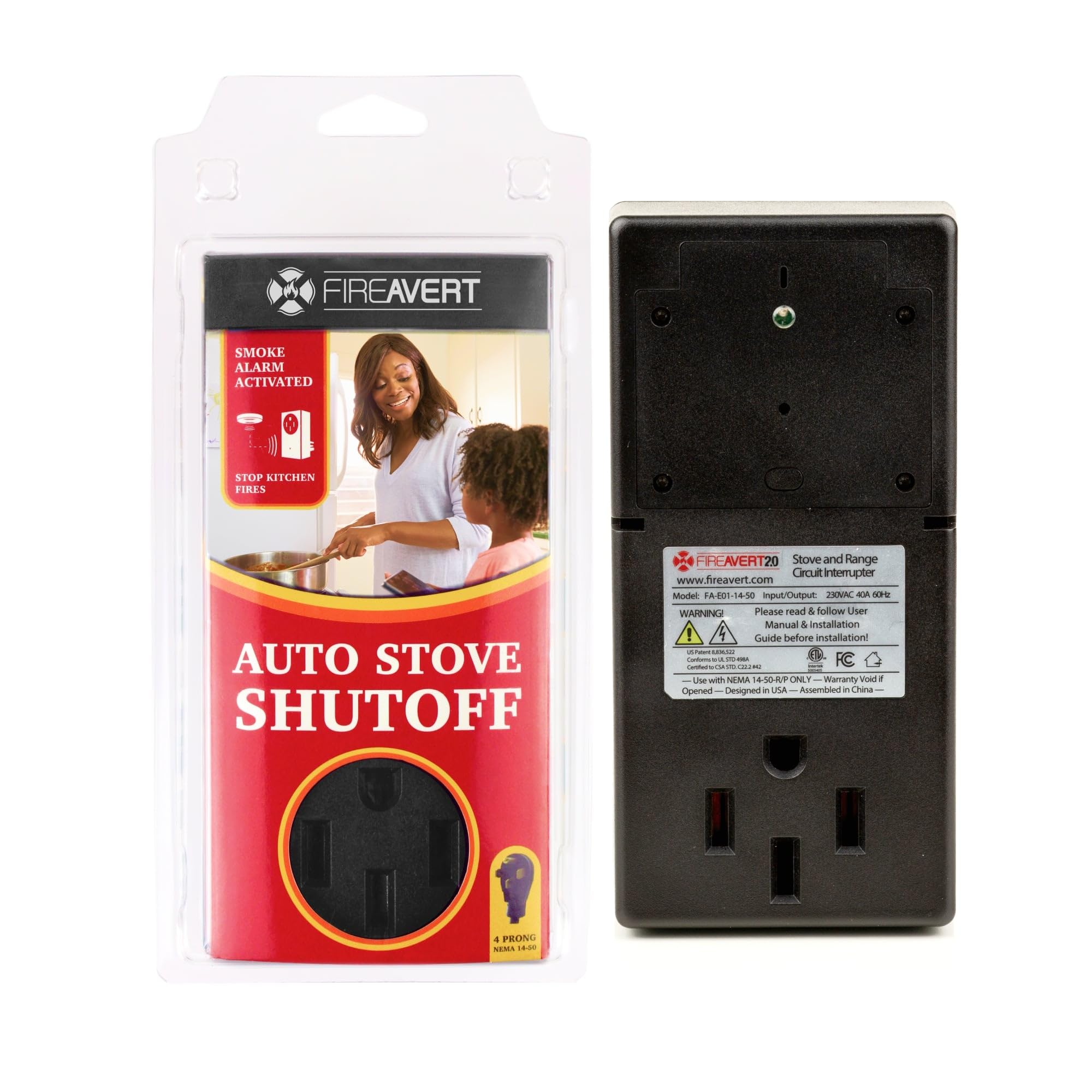
The smoke-alarm-syncing watchdog that kills power to a 220-volt stove in seconds.
This is the direct fix for the scariest scenario in home cooking: a forgotten pan that starts to burn. It listens for your existing smoke detector’s audible alarm, and when that sound hits its sensor, it cuts the 220-volt power to your stove entirely. The installation is refreshingly simple — you plug the unit into a 220-volt wall outlet, plug your stove into the FireAvert, and it’s wired up.
Protecting a senior parent is the scenario this was built for, and the review pages back that up. One family bought it after a son left a pan on the stove and caused in damages; when they manually set off the smoke alarm, the device cut the stove’s power immediately. For others, the response takes about a minute of the smoke detector beeping before the power drops, so do not expect an instantaneous trip.
You get real confidence for an aging parent or a forgetful teen, but you pay for it in bulk. This unit measures 7.5 inches tall and 3.7 inches wide, so it fits behind the stove, yet it can push your range away from the wall; the manufacturer suggests pairing it with an extension pigtail (a short flexible gas connector) to keep your stove flush. At 1.5 pounds, it is a noticeable chunk of hardware, but the safety it adds outweighs the extra space it takes up behind the appliance.
Choose it when: you have a 4-prong electric stove and want a tool-free, smoke-alarm-triggered guard.
Keep in mind: the alarm response takes about a minute, and behind-the-stove space is tight.
2. FireAvert-Gas Stove Auto Shut-Off Device

A gas-line solenoid that reacts to smoke alarms instead of a preset timer.
For gas kitchens, this is the automated emergency brake that works alongside the smoke detector you already own. It uses sound detection to listen for the specific audible alarm of your smoke detector; when it hears that signal, a valve in the gas line shuts, stopping the flow of fuel before a fire can grow. It is explicitly pitched for elderly parents who may leave the stove on without realizing it.
Owners consistently praise its reliability — it is the single most-discussed positive in the device’s history — and the setup is genuinely fast. You plug the unit into the 110-volt outlet behind your stove, install the solenoid into the gas line, then plug the stove into the FireAvert’s socket. Some buyers finished the entire job in under 20 minutes, though others recommend a professional for the gas-line work.
Be aware of a few quirks. One owner reported that a loud thunderclap triggered the gas shut-off unexpectedly, and resetting the unit requires following the manual carefully. A handful of buyers report frustration that the unit cut power but did not stop the gas — the only sure way to validate yours is to run a test with your own alarm after install to confirm the solenoid (the valve that physically blocks the gas) truly closes.
Reach for it if: you cook on gas and want an automated kill switch tied to smoke detection.
Think twice if: you want a set-and-forget timer rather than an alarm-initiated response.
3. NO WORRIEZ Safety Auto Shut-Off Gas Timer

A mechanical inline timer that seals off the gas when your grilling time is up.
This device solves a different problem than its counterparts: instead of reacting to a smoke alarm, it runs on pure countdown logic. You physically dial in a preset time between 0 and 60 minutes, and when the countdown ends, the timer shuts the gas flow to your appliance. Since it relies on a solid mechanical design, it needs no batteries, making it a true set-and-forget guard for propane and natural gas setups.
It is an advanced safety accessory rated for 100,000 BTU with 1/2-inch NPT piping on both ends, built for outdoor heating and cooking gear like grills, patio heaters, pizza ovens, and fire pits. The rugged construction earns frequent praise, with owners highlighting how they never have to worry again about whether they remembered to turn off the grill. A common trick buyers mention is dialing in extra burn time after cooking to clear residue off the grates without needing to run back outside.
Weighing almost nothing and built from aluminum, it handles weather well thanks to an IP43 rating, meaning it resists splashes. One important point: expect to buy adapters and hoses separately, because the base unit arrives bare and will not connect to your grill until you provide the right fittings. Its compact 3.9-inch depth keeps it unobtrusive on a gas line, though it is noticeably larger than the FireAvert’s hidden solenoid.
Ideal for: outdoor cooks who want a no-battery timer to kill the gas after a set period.
Not ideal for: indoor stove protection where a smoke-alarm trigger beats a countdown timer.
Understanding the Specs
Voltage and Prong Types
This decides whether a device can even plug into your stove. Most electric ranges in the U.S. run on 220 volts with a 3- or 4-prong plug, and the shut-off device must match your specific outlet configuration. A mismatch means you physically cannot connect the safety unit without an adapter or an electrician.
Gas Timer vs. Alarm Syncing
A mechanical gas timer works on a countdown you set manually, cutting the line when time expires. A smoke-alarm-syncing unit instead listens for the audible beep of your detector and reacts to that. Choose based on what you fear most: a forgotten burner (alarm sync) or an unattended timed cook (timer).
FAQ
Will an electric stove shut-off device work on my gas range?
How does a smoke-alarm-syncing shut-off know the alarm is real?
Can a mechanical gas timer work without electricity?
Does the FireAvert electric unit need tools to install?
How much space do I need behind my stove for a shut-off device?
Will a smoke alarm my stove produce trigger the gas shut-off?
Is the NO WORRIEZ timer suitable for indoor stoves?
What should I test after installing a stove shut-off device?
Final Thoughts: The Verdict
For most families, the strongest automatic stove shut off is the FireAvert Electric Safety Device because its tool-free, smoke-alarm-triggered power cut is the simplest guard to install on a 220-volt range. If your kitchen runs on gas, the FireAvert Gas Unit is the right match for syncing to your existing smoke detector. And for the griller who wants a battery-free countdown that seals the propane line, the NO WORRIEZ Timer stands alone in its niche.
How We Picked
We do not accept paid placement. Every pick is matched to a real buyer and a real use-case; we do not hands-on test units.
Sources & Methodology
Specifications: manufacturer listings and product documentation. Review insights: verified customer reviews, as of September 2026. Pricing: not shown on this page (it changes often); check the current price via the retailer link.
As an Amazon Associate, Gadgets Feed earns from qualifying purchases. This does not affect which products we feature.