
A wedding reception is a controlled chaos of fleeting expressions, dimly lit dance floors, and split-second moments that vanish forever if your gear can’t keep up. The difference between a sharp, emotional frame and a blurry miss often comes down to the sensor’s dynamic range, the autofocus system’s tracking algorithm, and the lens’s maximum aperture at the critical focal length.
I’m Min — the co-founder and writer behind Gadgets Feed. I’ve spent hundreds of hours parsing technical sheets, comparing phase-detection arrays, and cross-referencing edge-case performance data to separate the gear that genuinely earns its place in a wedding bag from the hype that doesn’t survive a dimly lit first dance.
Whether you are building a kit from scratch or upgrading for better low-light confidence, finding the best camera and lens for wedding photography requires matching sensor generation, AF capability, and lens speed to the specific challenges of a live event where there are no second takes.
How To Choose The Best Camera And Lens For Wedding Photography
A wedding photographer’s kit lives and dies by three pillars: sensor performance in mixed and low light, autofocus reliability under pressure, and a lens system that balances speed with reach. Body-only decisions shape the ceiling of your output, while glass determines how often you actually reach that ceiling.
Sensor Generation and Dynamic Range
Older full-frame sensors, like the 12MP FX sensor in the D700 or the 24MP CMOS in the D610, still produce pleasing files but lack the highlight recovery and shadow lift of newer back-illuminated (BSI) designs found in the Sony a7 III or the Nikon Z 6II. A sensor with 14 to 15 stops of dynamic range lets you underexpose to save a blown bridal dress and still pull detail from the shadows without noise banding.
Autofocus System Density and Low-Light Sensitivity
Wedding ceremonies often drop light to levels that confuse entry-level phase detection. Bodies with 51 to 693 AF points and a center sensitivity rating down to -4 or -6 EV (like the Sony a7 III and the Canon EOS R6 Mark II) maintain focus lock when the only light source is a candle. Cross-type points matter more than raw count — they detect contrast in both horizontal and vertical directions, which is crucial for tracking faces moving unpredictably through the frame.
Dual Card Slots and File Redundancy
A single memory card failure at a wedding is a career-ending event. Professional-tier setups demand bodies with at least two slots — either dual SD, SD plus CFexpress, or SD plus XQD — so you can record RAW files to both simultaneously. The Nikon D780, Canon EOS R5, and Sony Alpha 7 V all offer this safety net, while entry-level DSLR kits often force you to gamble with one slot.
Quick Comparison
On smaller screens, swipe sideways to see the full table.
| Model | Category | Best For | Key Spec | Amazon |
|---|---|---|---|---|
| Sony a7 III | Mid-Range | Best Overall Hybrid | 24.2MP BSI CMOS / 693 AF points | Amazon |
| Canon EOS R6 Mark II | Premium | Fast AF & Burst | 24.2MP / 40fps electronic / 8-stop IBIS | Amazon |
| Nikon Z 6II | Premium | Low-Light Versatility | 24.5MP BSI / 14fps / Dual card slots | Amazon |
| Nikon D780 | Mid-Range | DSLR Reliability | 24.5MP / EXPEED 6 / SnapBridge | Amazon |
| Panasonic S5II | Premium | Video & Stills Hybrid | 24.2MP / Phase Hybrid AF / Active I.S. | Amazon |
| Nikon D810 | Premium | High-Res Cropping | 36.3MP / No OLPF / 51 AF points | Amazon |
| Sony Alpha 7 V | Premium | AI Tracking & Speed | 33MP / 30fps / 16 stops DR | Amazon |
| Canon EOS R5 | Premium | Maximum Resolution | 45MP / 8K video / 20fps electronic | Amazon |
| Nikon Z 7II | Premium | Ultra-High Resolution | 45.7MP / 493 AF points / Dual slots | Amazon |
| Nikon D7100 Kit | Mid-Range | Budget Versatility | 24MP DX / 51 AF points / 6fps | Amazon |
| Nikon D610 | Mid-Range | Entry Full Frame | 24.3MP FX / 39 AF / 6fps | Amazon |
| Nikon D5300 Kit | Budget | Starter Set | 24MP DX / 39 AF / Dual lens kit | Amazon |
| Nikon D700 | Budget | Classic Low-Light IQ | 12MP FX / 51 AF / 8.45µm pixels | Amazon |
In‑Depth Reviews
1. Sony a7 III Full-Frame Mirrorless with 28-70mm Lens

The Sony a7 III remains a benchmark in the wedding photography space because its 24.2MP back-illuminated sensor delivers 15-stop dynamic range and clean files up to ISO 12,800, which directly translates to recoverable shadow detail from a dimly lit church aisle. The 693 phase-detection points cover 93% of the frame, allowing you to recompose without refocusing during the processional walk.
At 10fps with full AF/AE tracking, it keeps pace with ring exchanges and bouquet tosses using either the silent electronic shutter or the mechanical one. The kit 28-70mm f/3.5-5.6 is decent for daytime candids, but pairing the body with a Sigma 24-70mm f/2.8 Art or the Sony FE 85mm f/1.8 will unlock the sensor’s true low-light potential for first dances and reception details.
Battery life is rated for approximately 710 shots per charge, which is exceptional for a mirrorless body and covers an entire ceremony and reception without swapping packs. The single UHS-II slot is its only glaring compromise — you will want to pair it with a high-endurance card or carry a backup body for critical paid work.
Why it’s great
- Excellent 15-stop dynamic range for highlight/shadow recovery in wedding whites and blacks.
- 693-point phase-detection AF with reliable eye tracking for moving subjects.
- Impressive battery life for full-day event coverage.
Good to know
- Only one UHS-II card slot — no in-camera redundancy for paid work.
- Menu system is dense and takes time to configure for event-specific needs.
- Kit lens aperture is slow for low-light receptions without flash.
2. Canon EOS R6 Mark II Body

The R6 Mark II’s 24.2MP full-frame sensor paired with the DIGIC X processor delivers class-leading autofocus that detects human heads, faces, and eyes with uncanny reliability, even when the subject turns profile or drops below chin-level light. The 40fps electronic shutter with no blackout makes it trivial to capture the exact frame of a ring slide or a kiss without guessing.
In-body stabilization rated at up to 8 stops lets you handhold wide shots of the reception venue at 1/4 second, which eliminates the need for a tripod during ambient-light detail shots. The dual SD card slots support UHS-II speed, so you can record RAW to both cards simultaneously as a fail-safe for the entire wedding day.
Video shooters benefit from 6K oversampled 4K60p with C-Log 3, which matches the dynamic range of the stills output for a cohesive hybrid workflow. The only downside is battery life — expect around 300-450 shots per LP-E6NH pack, so you will need at least three batteries for a full-day event.
Why it’s great
- Fast, accurate Dual Pixel CMOS AF II with head/eye tracking for people and animals.
- 40fps electronic burst captures fleeting moments without blackout.
- 8-stop IBIS enables sharp handheld shots in dim reception lighting.
Good to know
- Battery life is moderate; expect to carry three or more packs for full-day weddings.
- No built-in flash — an external speedlite is mandatory for bounce fill.
- Overheating protection limits continuous 4K60p recording to about 40 minutes.
3. Nikon Z 6II with 24-70mm f/4 Lens

The Z 6II strikes a strong balance between resolution and noise handling, thanks to its 24.5MP BSI sensor and EXPEED 6 processor. At ISO 6400, files retain color accuracy and minimal luminance noise — critical when you are shooting a candlelit ceremony without a flash. The 273-point phase-detect AF system covers 90% of the sensor area and includes eye detection for human subjects in stills and video.
Its dual card slot layout accepts one CFexpress/XQD and one UHS-II SD card, giving you the option to use a high-speed CFexpress for the primary slot and an SD for backup. The 24-70mm f/4 kit lens is sharp across the frame and compact enough to be a walk-around lens for the getting-ready portion of the day, though an f/2.8 zoom is preferable for the reception.
USB-C constant power and charging allows you to tether the camera for extended timelapses or livestreams without burning through batteries. The 14fps burst rate with continuous AF is adequate for most action sequences, though sports-heavy moments like a bouquet toss may benefit from the faster Z 8 or Z 9 sensors.
Why it’s great
- Excellent high-ISO output with clean files up to ISO 12800.
- Dual card slots (CFexpress/XQD + UHS-II SD) for reliable redundancy.
- USB-C constant power supports tethered shooting without battery anxiety.
Good to know
- Kit lens (f/4) is slower than ideal for dim reception lighting.
- AF tracking can be distracted by similar-sized objects in crowded scenes.
- Playback and delete buttons are placed on the left side, which slows one-handed operation.
4. Nikon D780 Body

The D780 retains the familiar DSLR form factor and optical viewfinder that many wedding photographers prefer for long days, while integrating a 24.5MP FX sensor with EXPEED 6 that delivers strong low-light performance. Users consistently note that it produces virtually no noise at ISO 22,000, making it a low-light beast for dark ceremonies without a flash.
Its 51-point AF system with 15 cross-type sensors performs well in dim conditions through the optical viewfinder, though the live-view phase-detect AF is noticeably faster than older Nikon DSLRs and includes reliable eye detection. The dual SD card slots are UHS-II compatible, allowing a failsafe backup for every RAW file throughout the wedding day.
SnapBridge wireless connectivity makes it easy to send select JPEGs to a smartphone for a quick preview to clients or for social media posting during the reception. The D780 lacks the video-centric features of the Z series, but for stills-first wedding shooters who prefer an optical finder and proven ergonomics, it remains a professional-grade workhorse.
Why it’s great
- Exceptional low-light performance with usable output at ISO 22,000.
- Familiar DSLR ergonomics with a robust, weather-sealed build.
- Dual UHS-II SD slots provide in-camera redundancy for critical events.
Good to know
- AF system in live view is not as fast as native mirrorless competition.
- Video capabilities are competent but not on par with dedicated hybrid bodies.
- SnapBridge app can be inconsistent with connection stability.
5. Panasonic LUMIX S5II with 20-60mm Lens
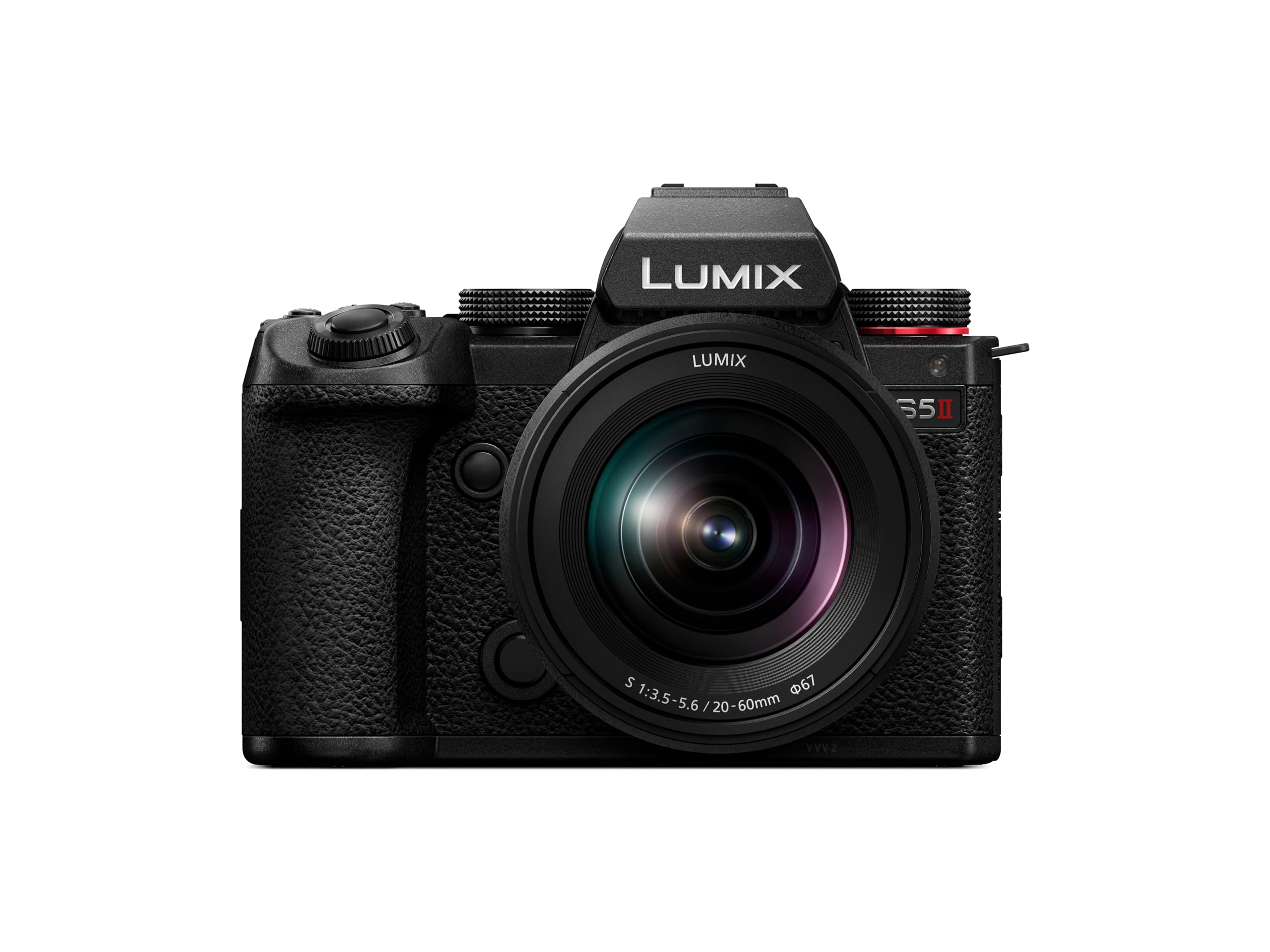
The LUMIX S5II marks Panasonic’s transition to phase-hybrid autofocus, solving the primary hesitation wedding shooters had with earlier S-series bodies. The 24.2MP full-frame sensor pairs with a dedicated phase-detection layer that locks onto human eyes and tracks them reliably during both stills and 4K60p video capture, even in low-light reception settings.
The Active I.S. system is among the best in class for gimbal-free walking shots, useful for steady B-roll of venue details or the couple’s entrance. Unlimited 4:2:2 10-bit recording with a built-in fan eliminates overheating concerns, which is a direct advantage over some competitor mirrorless bodies when shooting long wedding ceremonies in 4K.
Dual card slots (UHS-II SD + UHS-II SD) give you full backup capability, and the body supports USB-C PD charging. The 20-60mm f/3.5-5.6 kit lens provides a useful wide-to-normal range but is too slow for consistent low-light work — adding an f/1.8 prime or f/2.8 zoom is essential for reception coverage.
Why it’s great
- Phase hybrid AF system finally delivers competitive eye-tracking for weddings.
- Unlimited 4:2:2 10-bit video recording with active cooling — no heat limits.
- Outstanding Active I.S. for steady handheld video without a gimbal.
Good to know
- Kit lens aperture is slow; f/2.8 zooms or f/1.8 primes are recommended for receptions.
- Battery life is below average for mirrorless — plan for three or more packs.
- L-Mount lens ecosystem is smaller than Sony E or Canon RF.
6. Nikon D810 Body

The D810’s 36.3MP sensor with no optical low-pass filter captures exceptional fine detail that withstands heavy cropping — a lifesaver when you capture a candid moment at 50mm but need to frame tight on the couple’s expression in post. EXPEED 4 processing yields 14-bit RAW files with rich color depth, and the base ISO 64 delivers the cleanest shadows of any camera in this list.
Its 51-point AF system with 15 cross-type sensors is faster and more accurate than the D800 generation, and the Group Area AF mode improves subject tracking in cluttered reception scenes. The D810 has been used extensively for wedding work by many professionals; one reviewer noted shooting 180k frames with no mechanical failure, only minor stalling after years of service.
The quiet shutter mode reduces mirror slap noise during the ceremony, and the 1/8000s top speed lets you shoot wide open with fast primes even in bright outdoor sunlight. It lacks built-in Wi-Fi, and the single SD card slot is a liability — you will need a second body or a tethered storage solution for redundancy.
Why it’s great
- 36.3MP no-OLPF sensor delivers extreme fine detail and crop-friendly files.
- Base ISO 64 provides noise-free shadows for maximum dynamic range.
- Proven long-term reliability with high shutter cycle counts.
Good to know
- Only single SD card slot — no in-camera backup option.
- No built-in Wi-Fi for quick client previews during the event.
- High resolution demands sharp lenses and stable technique to avoid blur.
7. Sony Alpha 7 V Body
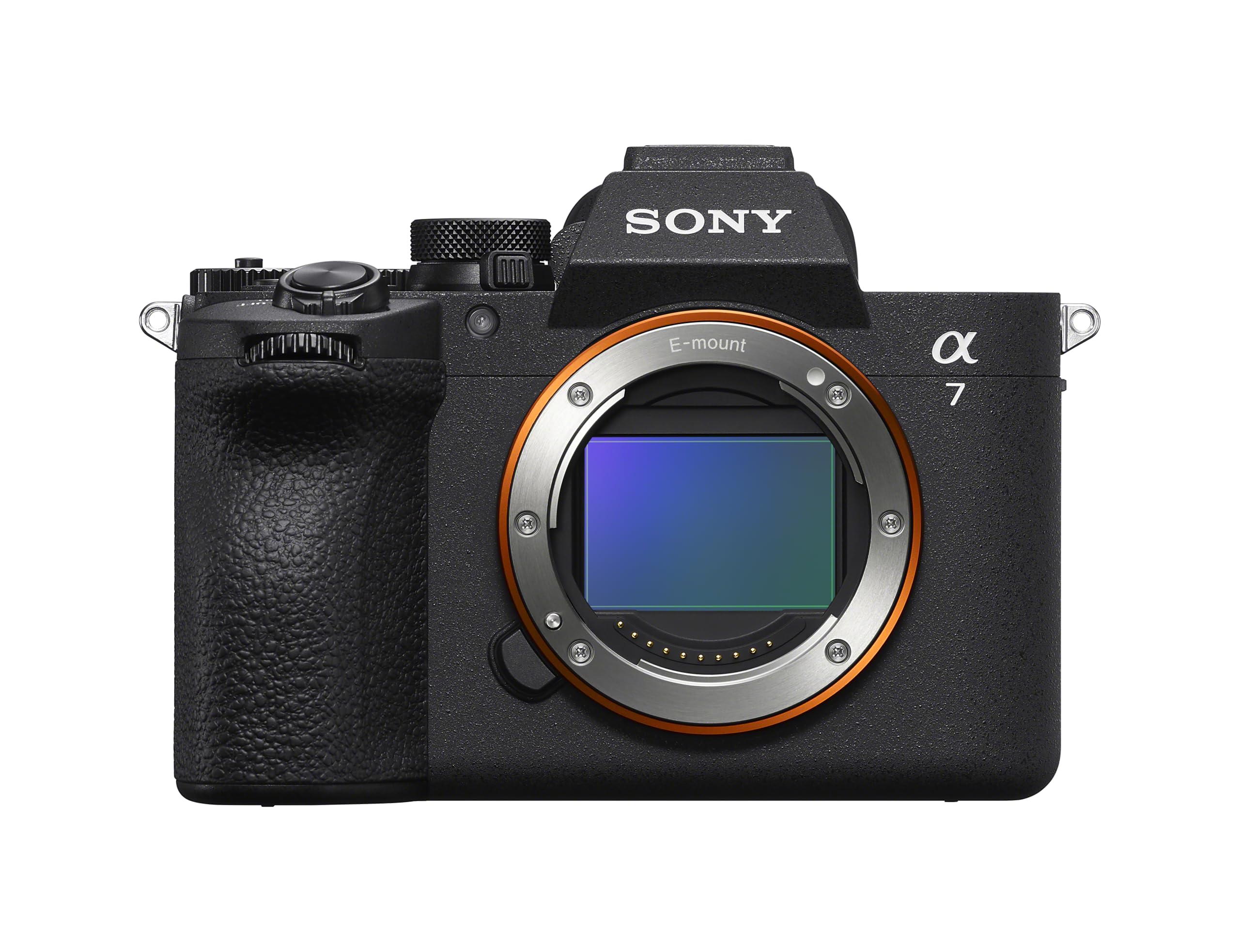
The Alpha 7 V uses a partially stacked 33MP Exmor RS sensor paired with the BIONZ XR2 processor to deliver blackout-free 30fps bursts with AF/AE tracking — enough to capture the exact frame of a ring exchange with zero hesitation. The AI-based recognition system uses human pose estimation to lock onto the subject’s eye, face, or body even when they are partially obscured or backlit.
Dynamic range reaches 16 stops, providing exceptional headroom for pulling up shadow detail in underexposed ceremony shots without introducing banding. The 759 phase-detection points cover the entire frame, and the real-time tracking algorithm maintains lock on a moving subject even as other people cross the frame during the processional.
Dual card slots support UHS-II SD and microSD, which is a less common configuration — you will need to invest in fast UHS-II cards for both slots to avoid write-speed bottlenecks. The battery life is improved over the a7 IV, but heavy use of the 30fps burst and 4K120p video will still require spare NP-FZ100 packs.
Why it’s great
- 30fps blackout-free burst with AI-powered subject recognition for fast action.
- 16 stops of dynamic range provide massive latitude for shadow recovery.
- 759 phase-detection points with reliable real-time tracking in busy scenes.
Good to know
- Card slot uses microSD alongside standard SD — an unusual and potentially slower secondary option.
- Sony menu complexity is a learning curve for those new to the ecosystem.
- Continuous high-speed burst drains the battery faster than most mirrorless bodies.
8. Canon EOS R5 with RF 24-105mm f/4 L

The EOS R5’s 45MP full-frame sensor is the highest-resolution option in this guide, providing wedding photographers with enormous flexibility for cropping and delivering massive prints. The Dual Pixel CMOS AF II covers 100% of the frame with 1,053 AF zones, and the deep-learning subject tracking recognizes human eyes with near-100% accuracy even in challenging profile shots.
Mechanical burst hits 12fps while the electronic shutter goes up to 20fps, both with full AF and AE tracking. The RF 24-105mm f/4 L lens included in this kit is a professional-grade L-series zoom with constant f/4 aperture, weather sealing, and fast AF — a versatile range for everything from getting-ready details to wide ceremony angles, though f/2.8 is preferable for dim receptions.
In-body image stabilization works with the lens’s IS for up to 8 stops of correction, enabling handheld 1/2-second exposures of reception décor. The dual card slot configuration uses one CFexpress Type B and one UHS-II SD, giving you the speed of CFexpress for high-res burst and video with SD backup for peace of mind.
Why it’s great
- 45MP sensor delivers maximum resolution for large prints and heavy cropping.
- 100% frame coverage with 1,053 AF zones and reliable subject recognition.
- RF 24-105mm f/4 L kit lens is a high-quality, sealed professional zoom.
Good to know
- Battery life is short; expect around 300-400 shots per LP-E6NH pack.
- 8K video recording can trigger thermal limits during extended warm-weather shoots.
- CFexpress Type B cards are expensive compared to standard SD media.
9. Nikon Z 7II Body

The Z 7II’s 45.7MP sensor, combined with the EXPEED 6 processor, captures wedding gown textures, floral details, and jewelry with a level of crispness that holds up under extreme pixel-peeping. The 493 phase-detection points provide broad frame coverage, and the improved buffer capacity over the original Z 7 allows longer RAW bursts for action sequences like the first kiss or ring exchange.
Dual card slots accommodate one CFexpress/XQD and one UHS-II SD, giving you both high-speed writing and a cost-effective backup option. The body is compatible with Nikon’s growing Z-mount lens line, and over 360 F-mount Nikkor lenses via the FTZ adapter — ensuring you can use existing EF-type glass while transitioning to native Z primes.
The silent shutter mode is genuinely silent, making it ideal for church ceremonies where mechanical shutter noise would be disruptive. 4K UHD 60p video with full pixel readout provides a high-quality video backup for the couple’s highlights reel, though the battery life demands spares for a full day of hybrid shooting.
Why it’s great
- 45.7MP resolution with no AA filter delivers exceptional sharpness for large prints.
- Dual card slots (CFexpress/XQD + UHS-II SD) for speed and redundancy.
- Silent electronic shutter is ideal for disruption-free ceremony coverage.
Good to know
- Battery life is limited; three or more EN-EL15c packs recommended for full-day events.
- AF subject tracking can occasionally hunt in very low-light reception environments.
- XQD/CFexpress cards require proprietary readers and are more expensive than SD.
10. Nikon D7100 with 18-140mm Lens

The D7100 remains one of the best-value APS-C DSLRs for wedding photography on a tighter budget, thanks to its 24MP DX sensor with no AA filter and a 51-point AF system with 15 cross-type sensors that perform well in moderate light. The 18-140mm f/3.5-5.6 VR kit lens covers a versatile 27-210mm equivalent range, useful from group shots to telephoto candids during the reception.
Its 6fps continuous burst is adequate for predictable moments, but not fast enough for capturing the exact peak of a bouquet toss. The dual SD card slots are a rare feature in this price bracket, providing the redundancy that every wedding shooter should demand regardless of sensor size.
Weather sealing on the D7100 body offers some protection against outdoor drizzle or dust, and the 100% viewfinder coverage matches what you find in higher-tier bodies. The crop sensor means you will need faster glass to achieve the same background separation and low-light performance as full-frame, but paired with a 50mm f/1.8G it produces beautiful portrait files at a fraction of the cost.
Why it’s great
- 51-point AF system with cross-type sensors provides solid performance for mid-range events.
- Dual SD card slots at an accessible price point.
- No AA filter delivers sharper out-of-camera detail than many DX competitors.
Good to know
- Crop sensor impacts low-light noise and background separation compared to full-frame.
- 18-140mm kit lens is not fast enough for dim receptions without flash.
- No built-in Wi-Fi for wireless previews or remote control.
11. Nikon D610 Body

The D610 is the least expensive full-frame body in this guide, making it an ideal entry point for photographers transitioning from crop sensors without sacrificing the depth-of-field control and high-ISO performance that FX sensors provide. Its 24.3MP CMOS sensor delivers clean files up to ISO 6400, with dual SD card slots providing the redundancy that paid wedding work requires.
The 39-point AF system with 9 cross-type sensors is capable in moderate light but hunts more aggressively in dim reception environments than the 51-point or 693-point systems found in higher-tier bodies. At 6fps, burst shooting is adequate for posed walking shots but misses the spontaneity of faster cameras.
One notable advantage over later budget FX bodies is the built-in flash, which can serve as a backup or a commander for off-camera speedlights. The D610 is larger and heavier than modern mirrorless alternatives, but the optical viewfinder, long battery life, and proven mechanical reliability make it a strong value for budget-conscious wedding shooters willing to work within its AF limitations.
Why it’s great
- Lowest-cost full-frame option with dual SD card slots for backup.
- Solid image quality up to ISO 6400 for mid-light wedding scenarios.
- Built-in flash can trigger off-camera speedlights without an external commander.
Good to know
- 39-point AF system hunts in very low ceremony lighting.
- 6fps burst is slow for unpredictable action like bouquet tosses.
- Heavier and bulkier than similarly-priced modern mirrorless options.
12. Nikon D5300 Dual Lens Kit

The D5300 dual lens kit is designed for someone entering the wedding photography space on a minimal budget, offering both an 18-55mm VR and a 70-300mm lens to cover wide-angle establishing shots and telephoto candid details. The 24MP DX sensor produces vibrant JPEGs with good dynamic range for its class, and the 39-point AF system is adequate for well-lit daytime ceremonies and posed portraits.
The bundled 70-300mm lens lacks VR, which is a significant limitation for handholding at the long end in anything less than bright midday light — reviewers strongly caution that the telephoto is essentially unusable for dim reception shots without a tripod or additional vibration reduction. The 18-55mm VR lens is solid for its size and price, covering focal lengths suitable for group formals and emotional portraits of the couple.
Lightweight and compact, the D5300 is easy to carry for a full day without fatigue, and its battery life is excellent for a DSLR of this tier. The lack of dual card slots and the entry-level autofocus system mean this kit should be treated as a learning platform — you will outgrow its capabilities once you graduate to dim ceremonies and fast-moving reception sequences.
Why it’s great
- Two-lens kit provides wide-angle and telephoto coverage out of the box.
- Lightweight body reduces fatigue during all-day event shooting.
- Excellent battery life for a non-pro DSLR, supporting 300+ shots per charge.
Good to know
- 70-300mm lens lacks VR, making telephoto shots difficult in low light.
- Single SD card slot with no backup option for paid work.
- 39-point AF is entry-level and struggles in dim ceremony lighting.
13. Nikon D700 Body

The D700’s 12.1MP FX sensor produces files that remain rich and smooth at ISO 1600, with usable output stretching to ISO 6400 thanks to the large 8.45µm pixel pitch. Many professional wedding photographers still rely on the D700 as a backup body because its 51-point AF system with 3D tracking delivers fast, decisive focus in low museum-level light that newer budget bodies cannot match.
It lacks dual card slots, built-in video, and any wireless connectivity — features that are now standard even on entry-level bodies. The D700 is a pure stills camera optimized for wedding shooters who value ergonomics, optical viewfinder comfort, and robust weather sealing over modern feature lists.
Pairing a D700 with a 50mm f/1.4G or a 85mm f/1.4G produces portraits with the filmic color response and smooth bokeh that many photographers associate with Nikon’s professional DSLR era. For a wedding shooter on a strict budget who already owns good F-mount glass, the D700 offers professional-grade low-light AF and build quality at a fraction of the cost of newer bodies.
Why it’s great
- 12MP FX sensor produces noise-free, smooth files with excellent color and tonality.
- Pro-grade 51-point AF with 3D tracking outperforms many modern entry-level bodies in low light.
- Robust, weather-sealed magnesium-alloy build designed for professional daily use.
Good to know
- No dual card slots, no video recording, and no wireless connectivity.
- 12.1MP limits cropping ability and large print size compared to modern sensors.
- Single CF card slot with no redundancy option for paid event coverage.
FAQ
Is a full-frame camera necessary for wedding photography?
Why do dual card slots matter for wedding work?
What lens aperture is ideal for a dim reception venue?
Final Thoughts: The Verdict
For most users, the camera and lens for wedding photography winner is the Sony a7 III because its 24.2MP BSI sensor, 693-point AF, and 15-stop dynamic range deliver professional-level results at a price that does not force compromises on lens budget. If you prioritize lightning-fast autofocus and burst speed for action moments, grab the Canon EOS R6 Mark II. And for maximum resolution and the ability to crop aggressively into reception candids, nothing beats the Canon EOS R5.