
Our readers keep the lights on and my morning glass full of iced black tea. As an Amazon Associate, I earn from qualifying purchases.
Specs are compiled from manufacturer listings and verified buyer reviews and can change over time — please confirm the key details on the product page before buying.
That moment your upstairs neighbor locks eyes with you mid-coffee is the reason you’re here. An apartment balcony privacy screen turns a fishbowl into a retreat, and the choice depends on one big fork in the road: a natural reed roll that looks like a garden wall, or a mesh or roller shade that blocks wind and sun without trapping heat. The best overall balances the two — dense enough to stop prying eyes, breathable enough that your balcony doesn’t turn into a greenhouse.
I’m Min — the founder and writer behind Gadgets Feed. This guide is built by comparing the manufacturers’ published specifications and the patterns across verified customer reviews, so you get each pick’s real strengths and trade-offs instead of marketing spin.
Match the material to your weather and your railing. If you face strong wind, mesh wins because it lets air pass through instead of catching it like a sail. If looks matter more and wind is mild, natural reeds give you that garden-wall feel. For a rental-friendly no-drill fix, look for screens that strap or clip on without leaving holes.
Our Picks at a Glance

How To Choose The Best Apartment Balcony Privacy Screen
Your balcony is a stage unless you cover it. The right screen depends on three things: how exposed you are to wind, how much you care about the view from inside, and whether you can drill into the walls or railing. Nail those three and the rest is just picking a color.
Mesh vs. Reed vs. Roller vs. Freestanding
The biggest decision is material family. HDPE mesh tarps — like the MVPNET and Abrotain picks — let wind pass through so they don’t act like sails, and they’re the go-to for upper-floor balconies that catch a breeze. Natural reed rolls (PAKNANO, ZNCMRR, Barydat) look like a slice of garden and give that warm, organic vibe, but they’re see-through up close and thinner reeds can be fragile. Roller shades (MeshyBlok, AOSKY) give you the closest thing to a real curtain — you raise and lower them with a crank or wand — but they need a sturdy mounting point. Freestanding metal panels (YESUNEED) need no drilling at all, but they’re heavy and need extra weight to stay put in wind.
Shade Percentage and What It Actually Means
You’ll see “80% shade” or “90% privacy” slapped on listings, and it’s worth understanding. These numbers describe light blockage, not total invisibility. An 80% blackout reed fence still lets light — and some sightlines — pass through the gaps between reeds. A 90% mesh screen does the same. If true one-way privacy is your goal, you often need to double up layers or accept that the screen filters the view rather than erasing it. Buyers report the Abrotain at 80% shade still reads as “see-through” from a few feet away.
Mounting and Rental Rules
Read your lease before you buy. Zip-tie-friendly screens (most reed rolls and mesh tarps with grommets) attach to railings and chain-link without a single screw — perfect for apartments. Roller shades and retractable awnings need brackets and, in the case of the LIFERUN retractable awning, actual drilling into the wall and floor, which usually violates a rental agreement. Freestanding panels sit on the ground and need sandbags if you’re on a windy floor. Measure your railing height and width first; a 6’6″x6’6″ square tarp won’t cover a 10-foot-wide balcony without leaving gaps.
Quick Comparison
| Model | Best For | Material | Dimensions | Privacy Style | Amazon |
|---|---|---|---|---|---|
| PAKNANO Reed Fencing★ Best Overall | Runner-up reed roll | Bamboo reed | 48″L x 196.8″W | 80% blackout | Amazon |
| ZNCMRR Reed FencingAlso Great | Best Overall natural look | Natural reed | 4FT x 16.4FT | See-through gaps | Amazon |
| Barydat Reed FenceBest Value Reed Roll | Best Value reed roll | Carbonized reed | 4 x 16.4 ft | 85% shading | Amazon |
| AOSKY Roller Shades | Best roller shade | HDPE mesh | 96″L x 96″W | Wand control | Amazon |
| LIFERUN Retractable Awning | Best retractable coverage | PU-coated polyester | 118″W x 71″H | Full block | Amazon |
| MVPNET Privacy Screen | Best wind-resistant mesh | HDPE mesh tarp | 6′ x 10′ | 90% privacy | Amazon |
| Abrotain Shade Cloth | Best value mesh | Polypropylene knit | 6’6″x6’6″ | 80% shade | Amazon |
| MeshyBlok Roller Shades | Best cordless safety | Sun-blocking fabric | 48″W x 72″H | Crank control | Amazon |
| YESUNEED Metal Screen | Best no-drill freestanding | Powder-coated metal | 47″W x 72″H | Louvered slats | Amazon |
In-Depth Reviews
1. PAKNANO Natural Reed Fencing
Our pick — over 4.5★ from 350+ verified ratings; the strongest balance of quality and price.
The 80% blackout reed roll that blocks sun and neighbors while still passing light for reading.
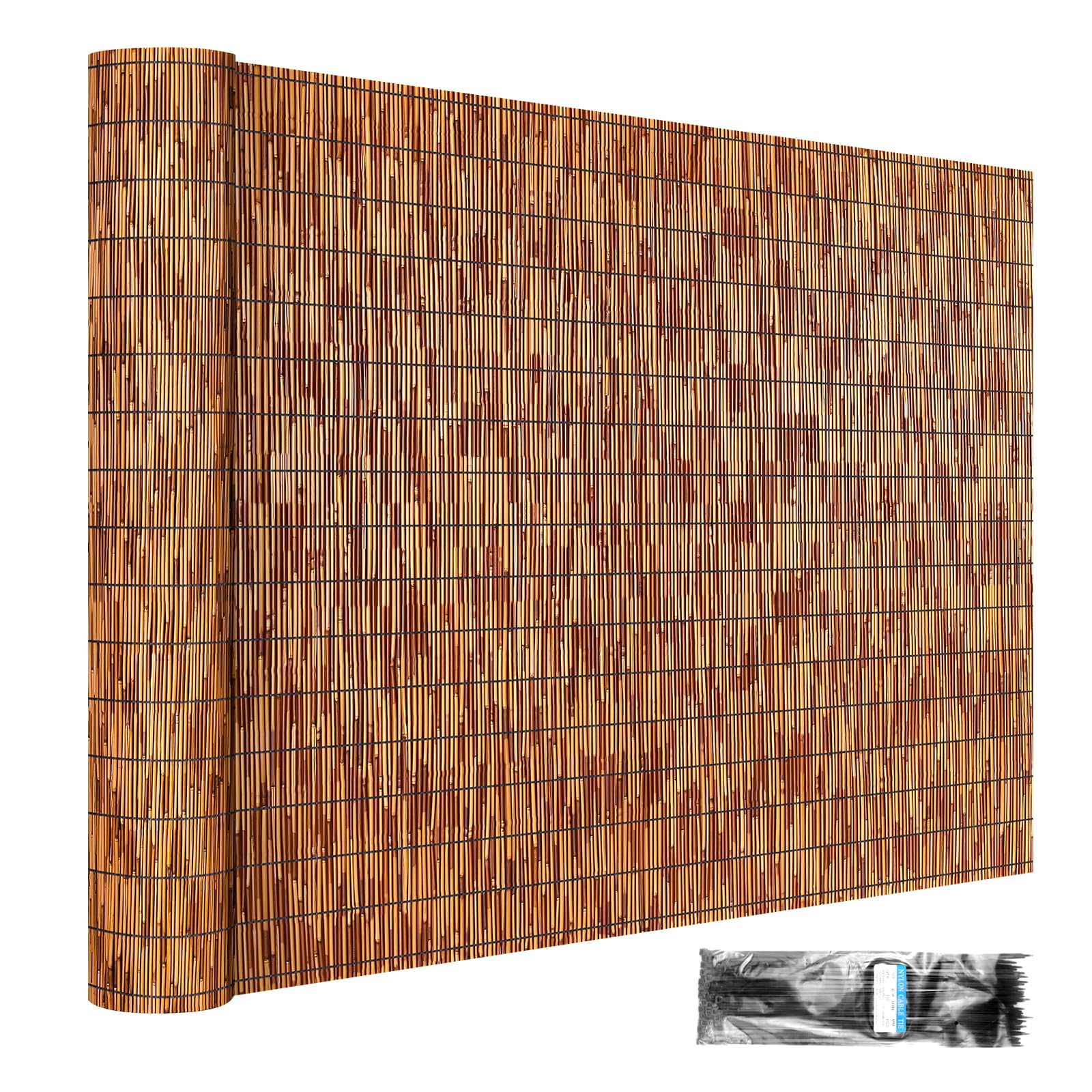
PAKNANO’s 48″L x 196.8″W bamboo reed fencing claims 80% blackout and privacy, carefully woven with cotton thread so it resists rust in rain where metal-thread versions fail. The reeds are selected to be clean, strong, and straight, and the natural water resistance means it’s built to last years if you store it dry when not in use. It’s the most explicitly “nature-forward” pick here — the brand pitches it for gardens, balconies, patios, and pool fencing, indoor or outdoor.
The 16.4 x 4-foot roll comes with 100 zip ties, and one person can fix it to any railing or post — owners mention zip-tying it to fences and gutters and it holding up great. It’s also adjustable along its length: cut the cord and retie a knot to fit your exact privacy space. One owner used it to hide party supplies, praising the amount of zip ties and how well it worked attached to a fence and gutter. The natural “island vibe” is a consistent point of praise.
Honest notes: the reeds are on the thin side, and owners openly speculate the lifespan is around 2 years. It’s genuinely see-through up close in a single layer — one reviewer called it “thin weak, but attractive,” noting it falls in light wind unless firmly attached. The brand itself warns of slight burrs (gloves recommended) and says spots on the bamboo are natural. So approach this as a beautiful, affordable natural screen that needs secure mounting and possibly layering for true seclusion, not a permanent fortress.
Owner favorites
- Gorgeous natural bamboo look that adds “island” character to a balcony
- 100 zip ties included — plenty for a full install
- Cotton-thread weave won’t rust in the rain
Know before you buy
- Thin single-layer reeds are see-through; lifespan likely ~2 years
- Needs firm attachment — it falls in light wind otherwise
- Wear gloves; natural burrs on the surface
Pick it up for: a quick, affordable, good-looking natural screen where the vibe matters as much as the blockage.
Look elsewhere if: you demand a solid, years-long privacy wall from a single roll.
2. ZNCMRR Reed Fencing Rolls
The natural-reed roll with the widest owner fan base balances looks, length, and real privacy.
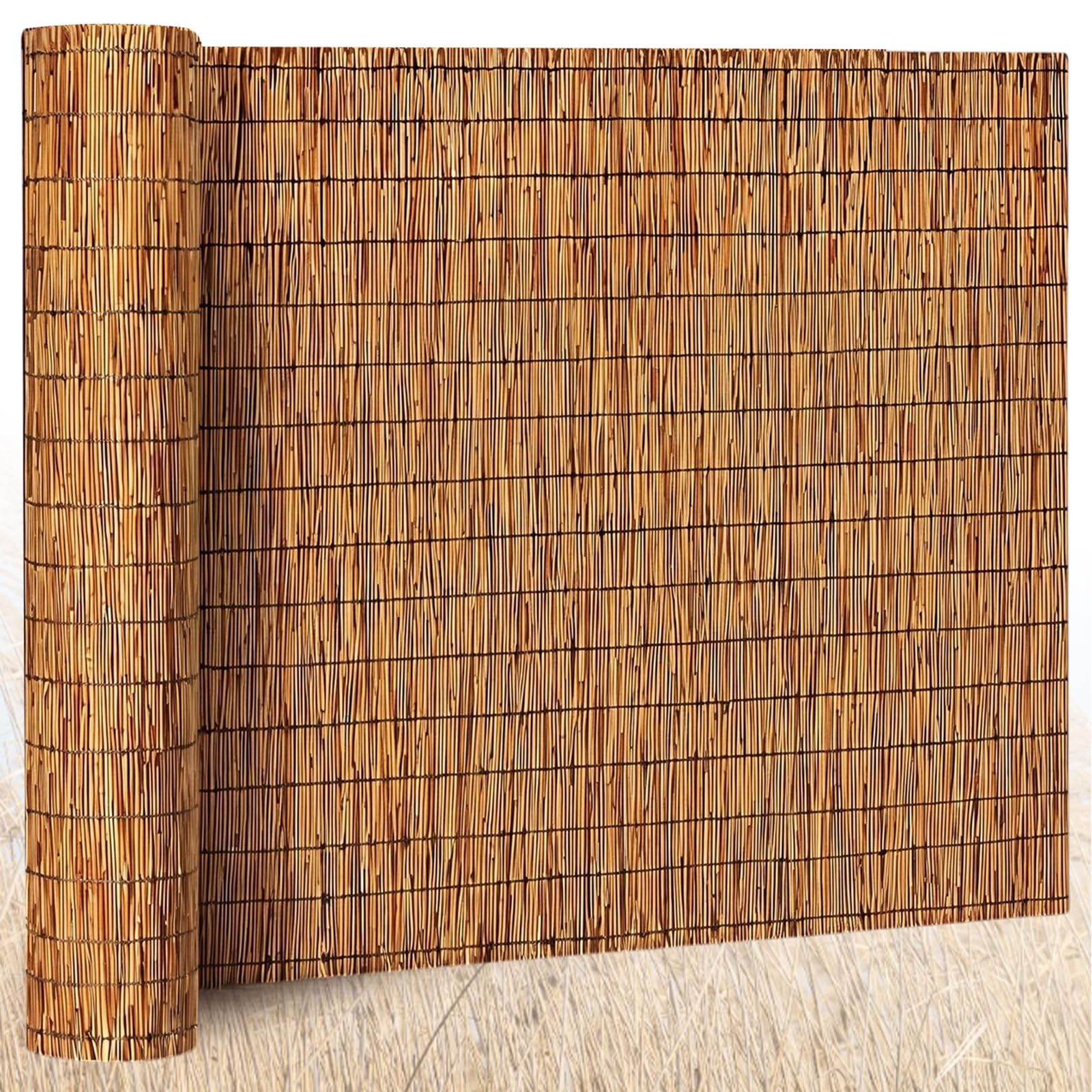
ZNCMRR’s roll spans 4FT x 16.4FT (196.85″L x 55.12″W of woven reed), which is enough to wrap a long balcony railing or cover a heat-pump condenser in the yard. It’s made from carbonized reed woven with cotton thread, so there’s no metal wire to rust in rain — a detail that matters if your balcony takes weather. The hand-selected reeds are closely knitted to block neighbor sightlines while still letting slight light and air through, so you don’t feel sealed in a cave.
Installation is genuinely one-person work: the package includes 1 reed fence and 100 zip ties, and owners mention attaching it to chain-link, wooden fences, and railings with ease. It doubles as a pet barrier on balconies and a decorative cover for old fences. The catch is honesty about transparency — single-layer reeds leave gaps. Multiple owners note they layered it two or three times for true seclusion, and one mentioned double-layering it to hide a heat pump while using a single layer elsewhere for light.
What wins people over is the boho look it brings — the “exceptional patio accent” consensus in the data is hard to argue. It’s genuinely attractive, blending with deck decor in a way plastic alternatives never will. The durability story is more mixed: some customers note it holding up fine season after season, while others found strings torn and reeds coming apart. Treat it as a multi-year natural product, not a forever fence, and store it dry when not in use.
What owners rave about
- Sturdy, well-constructed weave with a natural brown tone that blends into patios
- Long 16.4-foot roll covers wide spans without seams
- 100 zip ties included — genuinely no extra hardware needed
The honest trade-offs
- Single layer is see-through; true privacy needs 2-3 layers
- Some units arrive with torn strings that need re-tying
- Not built to survive harsh weather indefinitely
Reach for this if: you want a natural, attractive reed wall that covers a long railing in one roll and you’re okay layering for full privacy.
Think twice if: you need total one-way invisibility from a single layer, or your balcony faces brutal storms all year.
3. Barydat Reed Fence Roller
A carbonized reed roll that promises 85% shading and survives storms without the premium tag.
Barydat uses hand-selected carbonized reeds woven with cotton thread, hitting a claimed 85% shade and full privacy while still allowing air and gentle light through. The 4 x 16.4 ft roll (about 1.22 x 5 m) is the same generous footprint as the top pick, and it’s built to last outdoors with natural water resistance. Owners who’ve had it through two severe storms report it survived intact — a durability signal the brand leans on hard.
Installation needs no tools: zip ties or rope attach it to any railing, pole, or post, and one person can do it in minutes. The length is customizable by cutting the woven rope and retying a knot to fit your exact span. It’s also genuinely versatile — garden, balcony, pool fencing, tiki bars, or indoor wall decor. One owner wrapped an entire 18-foot pool with it, calling it cost-effective versus a much pricier fake-reed alternative they priced out.
The one genuine gripe: it doesn’t come with its own zip ties bundled, so have some on hand before you start. The natural look is the star here — owners describe the tiki style as elevating garden areas instantly, and even after a year and a half in the elements, it’s still holding up. The reeds do have a slight surface texture, so the brand advises gloves during installation, and dark spots are natural reed character, not defects.
The natural look, minus the fuss: Barydat delivers the same organic reed aesthetic as pricier rolls, with a durability track record that includes surviving two severe storms, all at a friendlier price.
The only speed bump: you’ll need to supply your own zip ties — a minor inconvenience before an otherwise tool-free install.
Grab it for: a budget-conscious reed upgrade that holds up in wind and rain while looking like a proper garden wall.
Keep shopping if: you expect bundled hardware, or you need a screen that’s opaque at close range from a single layer.
4. AOSKY Outdoor Roller Shades
A crank-operated mesh curtain that drops real shade on demand and rolls back up when you want the view.
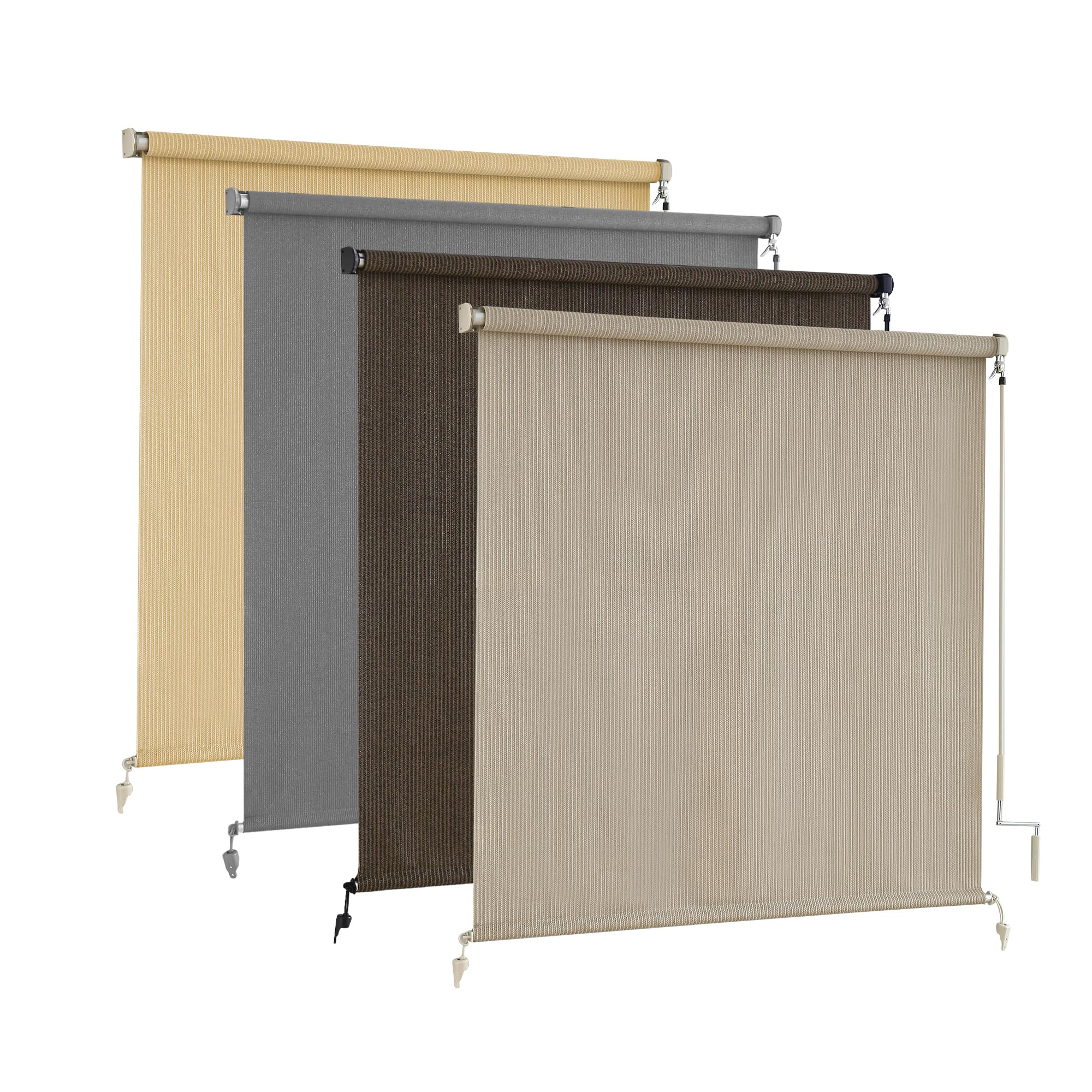
AOSKY is the closest thing to having a real curtain on your balcony. The 96″L x 96″W HDPE mesh shade blocks outside views and harsh sun while still letting air circulate, so you get privacy without the stale, trapped heat that solid screens create. The cordless wand-tilt mechanism is safety-first for households with kids and pets — no dangling cords, just a smooth raise-and-lower action. The sturdy frame is engineered not to deform, which is the difference between a shade that lasts and one that sags after a season.
Installation comes with all hardware and clear instructions, and reviewers point out it’s simple enough to handle solo. The quality is the standout — it blocks morning sun so effectively that one owner’s mother can now sit on her east-facing patio without sunglasses. It also keeps rain and snow off the porch, adding weather protection to the privacy job. The woven HDPE is fade-resistant and wrinkle-resistant, holding its sesame color through sun exposure.
The honest quirks: it’s light-filtering rather than room-darkening, so expect soft light through the mesh, not blackout. The crank-side reversal instructions are noted as incorrect by some owners, so if you need the crank on a specific side, be prepared for some trial and error. And one owner found the shade slides side-to-side slightly, suggesting glue dots as a fix. These are minor fit-and-finish notes on an otherwise highly recommended shade — it blocks sun, handles the elements, and looks clean doing it.
The wins
- Genuine privacy with air circulation — no greenhouse effect
- Cordless wand control is safe for kids and pets
- Withstands rain and snow while blocking sun and heat
Watch-outs
- Light-filtering mesh, not blackout — sun glow still comes through
- Crank-side swap needs disassembly and unclear instructions
- Shade can shift side-to-side without a small fix
Best fit: balconies and patios where you want adjustable privacy — full shade when you’re out, open sky when you’re not.
Not ideal for: renters who can’t mount brackets, since this needs a proper frame to attach to.
5. LIFERUN Retractable Side Awning

A pull-out awning that springs to 118 x 71 inches of solid shade and folds flat when the sun moves on.
LIFERUN is for the balcony that doubles as an afternoon-tea spot and needs serious, on-demand cover. The retractable screen stretches out to a full 71 x 118 inches on a rust-resistant aluminum alloy frame, with high-density polyester fabric that’s PU-coated for sun-resistance, water-resistance, and easy cleaning. The telescopic spring is strong and the handle is genuinely easy to pull open and push closed — shoppers say opening and securing it in seconds, and retracting it just as fast.
The real-world complaint it solves is wind and sun on exposed patios. Buyers report it keeps the wind down and blocks the sun effectively, providing a great deal of privacy that’s very sturdy once open. It’s designed for hot tubs, balconies, terraces, and porches where neighbors can see in — and it blocks prying eyes effectively. Because it folds away completely, you get your open view back the moment you want it, unlike fixed mesh or reed screens.
The trade-off is installation: this is not a zip-tie job. The brand is upfront that it requires drilling for installation. You fix the awning to the wall, then secure the posts to the floor with the provided screws. It suits concrete, hardwood, and patio surfaces, and the mounting wall needs at least 4.5 inches of width (5+ recommended) and a minimum height of 62.2 inches with no protruding obstructions. One owner used an SDS drill for concrete and larger tapcons with quikcrete for extra hold. Also, roll it up in strong winds, blizzards, or heavy rain — it’s a shade, not a storm wall. Owners note the retracting mechanism could use a lock to prevent wind-induced noise, but a year in, it still looks new.
The verdict: LIFERUN is the most flexible privacy solution here — full coverage when you want it, zero footprint when you don’t — but it’s an owner-install project that demands drilling, so it’s a condo or house pick, not a rental one.
Choose this for: a permanent balcony or patio where you control your privacy moment by moment and can handle a drill.
Pass if: you rent, can’t mount to walls, or need wind protection without remembering to roll it up in a storm.
6. MVPNET 90% Privacy Fence Screen
A breathable HDPE tarp that survived a 60mph wind storm without tearing off its moorings.
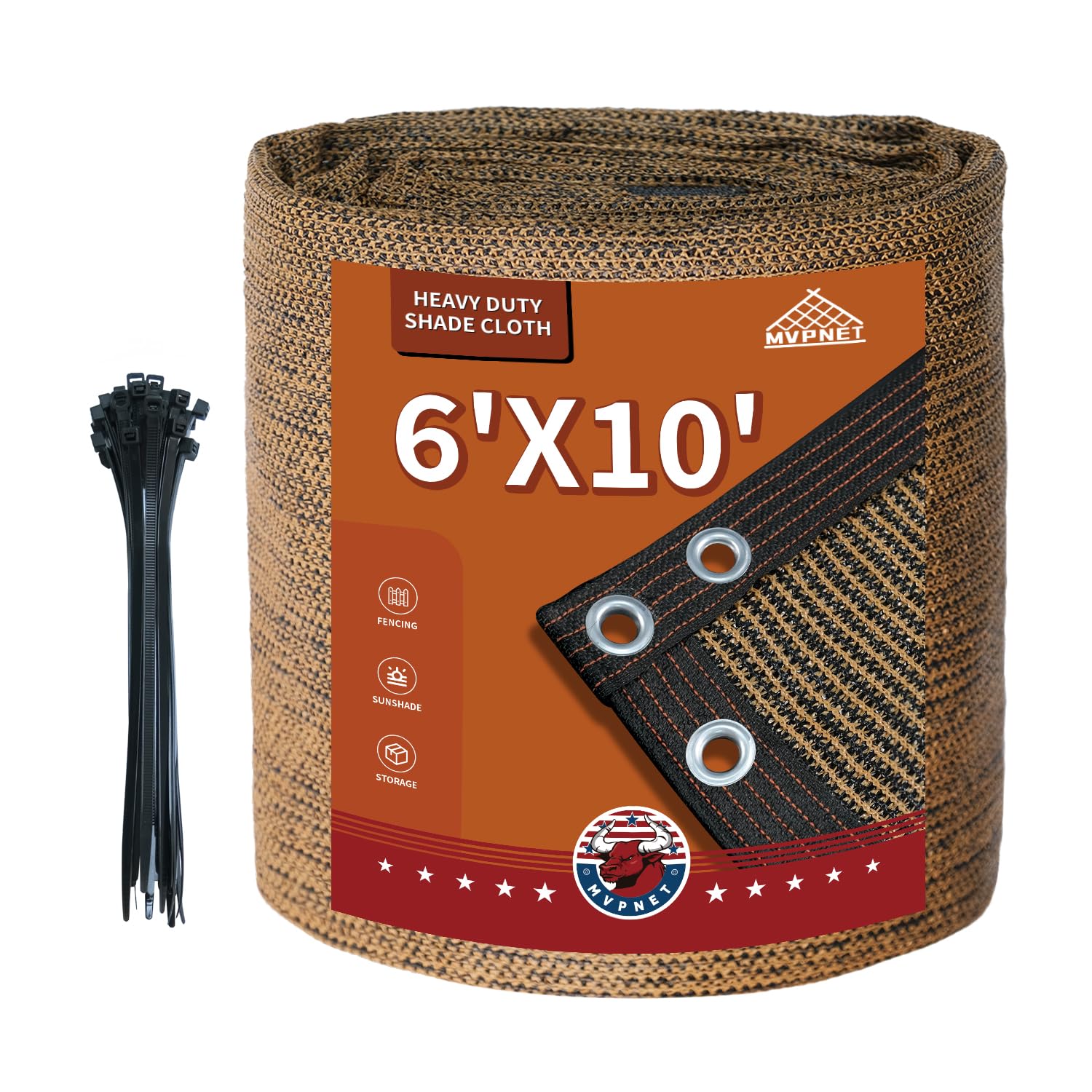
MVPNET is the pick for windy upper-floor balconies where a solid sheet would catch air like a sail and rip itself apart. The 6′ x 10′ HDPE mesh tarp is engineered to let wind pass through while still creating an effective visual barrier from neighbors and passersby. That breathability is the key difference from vinyl — wind flows through the weave, reducing stress on your railing and the screen itself. One owner confirmed it survived a 60mph wind storm intact.
Durability is built in: a reinforced hem with double stitching and rust-resistant aluminum grommets spaced every 2 feet along the entire edge. Attachment is simple — use the included zip ties to fasten it to chain-link, wood, or metal fences for a clean, finished look. One owner skipped the zip ties entirely and used staples on a wood deck for a cleaner appearance, reporting excellent results. The mocha color and 2.2-pound weight keep it manageable for one person to hang.
The material is rated water-resistant and one owner found it deflects most rain while staying breathable. The honest caveat is transparency — it’s “90% privacy” but slightly see-through up close; from a distance you can’t see through it, but if you stare long enough at close range, you can make out shapes. Another owner noted it cooled an area by 40% during summer heat, making it a dual-purpose sun shield and privacy screen. If you’re on a balcony that takes direct wind, this is the safer structural choice than any solid panel.
The wind-proof workhorse: MVPNET trades total opacity for storm survival — the right call on exposed balconies where a rigid screen would fail.
The reality check: “90% privacy” means filtered views from a few feet away, not a solid wall.
Reach for this if: your balcony faces wind and you need a light, durable screen that won’t rip or act like a parachute.
Skip if: you need neighbors completely unable to see you at close range.
7. Abrotain Fence Privacy Screen

A 6’6″x6’6″ knit shade that drops apartment temps enough to change your AC habits.
Abrotain is the square mesh tarp for renters who want fast, no-drill relief from afternoon sun. The 78″L x 78″W polypropylene shade cloth blocks 80% of bright sunlight while staying see-through enough to keep your view, and it lets breezes pass through so you don’t cook inside your own screen. The knitted construction resists tearing and fraying, and it doubles as a windscreen and weather barrier. Customers note it makes a real temperature difference — one owner adjusted their AC by 4 degrees after hanging it, and another said it saved AC use on 90°F days entirely.
Construction quality is strong for the price: edges are sewn with 6 threads, aluminum grommets come every 20 inches, and corner reinforcement uses additional plastic tapes with grommets to resist tearing under force. The package includes free nylon rope and cable ties, so installation takes minutes and needs no tools. It folds flat for storage, cleans easily, and dries fast. One buyer hung it vertically to shield from late-afternoon sun and noted wind passes through well enough that it won’t rip.
The recurring trade-off is appearance and sizing. It’s functional over beautiful — owners describe it as “not attractive but functional,” a workhorse tarp rather than a decor piece. Some found it slightly oversized versus the stated 6’6″ square (likely measurement variance), so measure your railing before ordering. And like all mesh, it’s reasonably transparent: it blocks sun and softens the view but won’t give you total invisibility from a close neighbor. For pure sun and heat relief at a budget price, it’s tough to top.
Why it’s a fan favorite
- Cuts real heat — owners adjusted AC by 4 degrees after install
- Tool-free install with rope and cable ties included
- Wind passes through the knit so it won’t rip as a vertical screen
The functional price
- Utility look — it reads as a tarp, not a decor piece
- May run slightly oversized versus the listed 6’6″ square
- Transparent mesh, so close-range privacy is partial
Buy it for: maximum sun and heat relief per dollar on a rental balcony where you can’t drill.
Move on if: you want a screen that looks as good as it performs.
8. MeshyBlok Outdoor Cordless Roller Shades
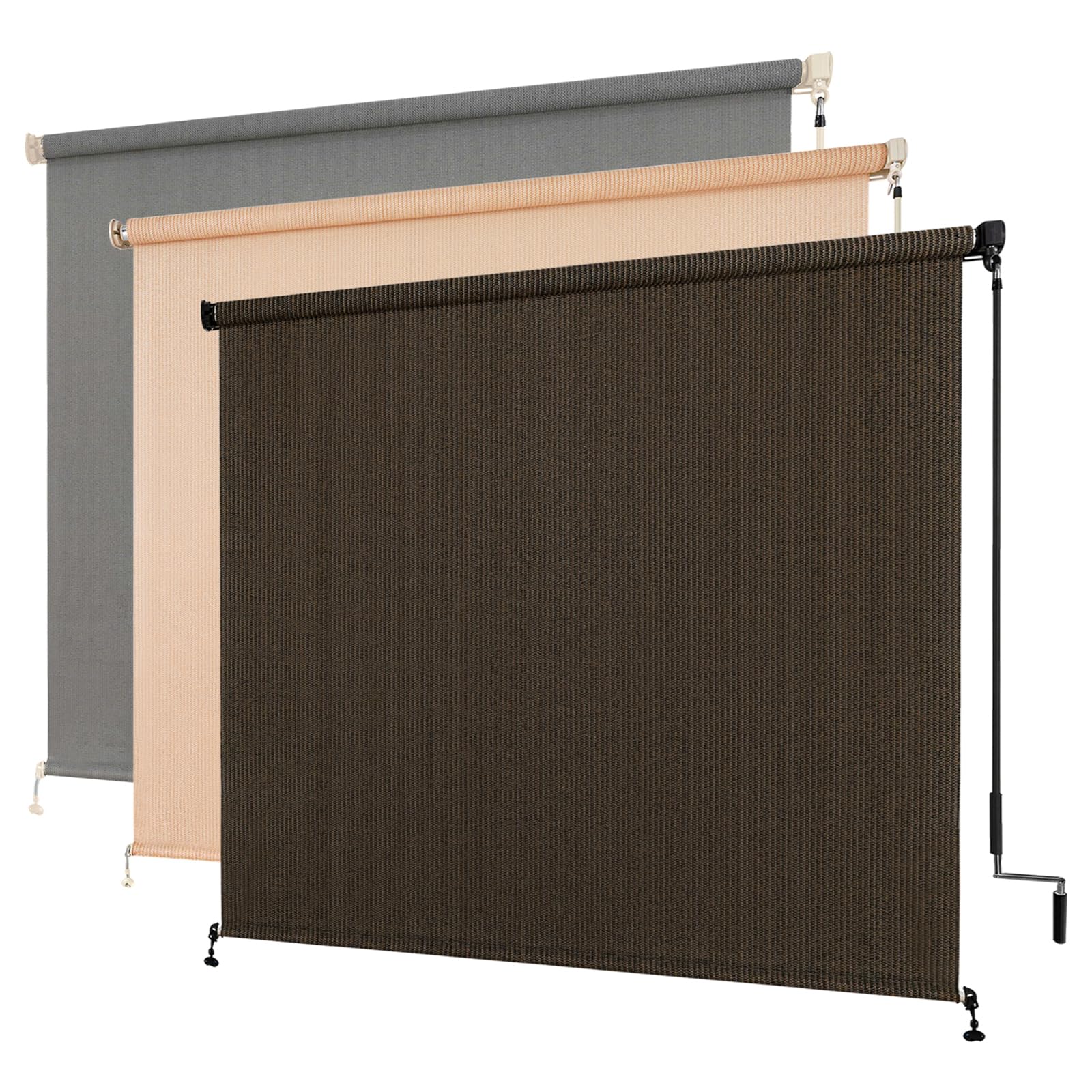
The cordless crank shade that cut one porch’s temperature by 20°F with a clean, curtain-like drop.
MeshyBlok is the safety-first roller shade: a completely cord-free design where you raise and lower the 48″W x 72″H panel with a smooth manual crank handle. That means no dangling cords for kids or pets to tangle with — a genuinely important detail for family balconies. The upgraded heavy-duty connecting hardware is designed for larger multi-panel setups, providing wider coverage without sagging across multiple shades. The all-weather mocha fabric blocks sun, resists fading, and stands up to wind and rain.
The temperature relief is the headline. One owner reported it cut their scalding-hot porch temperature by 20°F, filtering sun with a nice hue while even cooling the interior living room connected to it. It provides partial privacy — enough to feel secluded without losing all light. Installation is genuinely simple: everything needed is in the box with clear instructions, and the outside-mount design means you attach it above the opening you want to cover. Owners describe it as easy install, excellent operation, and great shade.
Value for money is where opinions split. Some find the price great for what it delivers, while others express dissatisfaction. Assembly is a real note: one owner found it didn’t come assembled and called the setup too much work, while others found it simple if you’re handy. Instructions are also a point of disagreement — some owners found them clear, others didn’t. If you’re comfortable with basic mounting hardware and want a cordless shade that drops real temperature relief, this is a strong mid-range pick. If you want zero assembly, consider whether the crank mechanism is worth the setup effort.
Choose it for: a family balcony where cord safety matters and heat relief is the priority.
Pass if: you want a ready-to-hang shade with zero assembly, or you’re not comfortable with basic mounting.
9. YESUNEED Metal Privacy Screen

A 72-inch louvered metal panel that stands on its own — no drilling, no railings, no lease violations.
YESUNEED is the answer for renters with no railing to attach to. This freestanding metal privacy screen stands 72 inches high and 47 inches wide on its own, with a black louvered design that reads as intentional decor rather than a temporary fix. The powder-coated metal finish is built to withstand outdoor elements, and the louvered slats block sightlines while still letting some light and sky through — owners specifically note it provides privacy without blocking the sky view. It ships with a screw set for assembly.
Assembly is straightforward with the included tools, and the appearance is the star — owners describe it as elegant, posh, and matching the advertised look exactly. It’s genuinely versatile: a decorative barrier for a balcony, patio corner, lawn, or garden, and several owners plan to buy more to ring a hot tub area. Because it’s freestanding, you can position it anywhere and move it when you need the space back, which no zip-tie or drilled screen offers.
The recurring catch is wind stability. Multiple owners are clear: in windy conditions you must weigh it down — roughly two 30-pound sandbags per panel keeps it planted. Without anchoring, the feet wobble, and some report panel screws working loose over time from wind vibration. It’s also the priciest pick here, and one owner felt it was overpriced for the value despite liking the appearance. If your balcony is sheltered or you don’t mind sandbags, this is the most elegant no-drill solution available. If you face constant wind or need total coverage across a wide railing, a mesh or reed roll will serve you better.
What stands out
- No drilling or mounting — truly freestanding and movable
- Elegant louvered design that improve a balcony’s look
- Blocks sightlines without killing the sky view
Plan around these
- Needs ~2 x 30lb sandbags per panel in any wind
- Screws can loosen over time from wind vibration
- Premium price for a single 47-inch-wide panel
Pick this if: you can’t drill, have a sheltered balcony, and want a decorative screen that doubles as furniture.
Look elsewhere if: your balcony takes wind, or 47 inches of width won’t cover your railing span.
Understanding the Specs
Shade Percentage vs. Privacy Percentage
Listings throw around “80% shade” and “90% privacy” as if they mean the same thing. They don’t. Shade percentage describes how much sunlight the fabric blocks — an 80% shade cloth knocks out most UV while still letting light through. Privacy percentage describes how well the screen blocks sightlines, but in practice, mesh and reed screens are rarely fully opaque up close. A 90% privacy screen can still be see-through from a few feet away. If true seclusion matters, look for dense weaves or plan to layer two screens.
Grommet Spacing and Mounting
Grommets are the metal-reinforced holes along the edges that you thread zip ties or rope through. Spacing matters for how secure your install is — the MVPNET screen spaces grommets every 2 feet, while the Abrotain goes every 20 inches. Closer spacing means fewer gaps where wind can flap the fabric and less stress on any single tie. For renters, grommet-based zip-tie mounting is the no-drill gold standard. For mesh tarps, also check if corner reinforcement is included — that’s where tears usually start.
Breathability and Wind Load
The single biggest physics decision on a balcony is whether your screen lets wind through. Solid vinyl or tightly woven fabric acts like a sail — wind pushes hard against it and can rip grommets or pull down railings. Breathable HDPE mesh and knitted polypropylene let air pass through, dramatically reducing wind load. The MVPNET and Abrotain picks are explicitly breathable. Reed rolls let some air through the gaps between reeds but catch more wind than mesh. If you’re on a high floor or exposed corner, breathability should top your priority list.
Natural Reed vs. Synthetic Materials
Reed fences are woven from natural bamboo or reeds with cotton thread, giving an organic, garden-like look. They’re naturally water-resistant but will degrade over a few years, and they can have natural burrs — gloves during install are a good idea. Synthetic HDPE (high-density polyethylene) mesh and polypropylene knits are engineered for the outdoors: they resist UV fading, tearing, and water while weighing less. Choose reeds for aesthetics and a natural vibe, synthetic mesh for durability and wind performance. Both block sun; only mesh is built to shrug off a serious storm.
FAQ
Will an apartment balcony privacy screen survive high winds on an upper floor?
How do I attach a privacy screen to a rental balcony without drilling?
Can my neighbors still see me through a 90% privacy screen?
What size privacy screen do I need for a standard apartment balcony?
What’s the difference between a reed fence and a mesh privacy screen?
Will a balcony privacy screen help cool down my apartment?
How long do natural reed balcony screens last?
Do I need one screen or multiple panels for full balcony coverage?
Which privacy screen is best for blocking afternoon sun and heat?
Are cordless roller shades safer than other options for homes with kids and pets?
Final Thoughts: The Verdict
For most apartment dwellers, the apartment balcony privacy screen winner is the ZNCMRR Reed Fencing because it pairs a genuine natural look with the longest coverage span and a strong owner base — the crowd favorite. If you want true wind survival on an exposed high floor, grab the MVPNET mesh screen, which owners confirm it rode out a 60mph storm. And for a no-drill, move-anywhere solution that doubles as decor, the YESUNEED metal panel stands on its own — just keep sandbags ready on breezy days.
How We Picked
We do not accept paid placement. Every pick is matched to a real buyer and a real use-case; we do not hands-on test units.
Sources & Methodology
Specifications: manufacturer listings and product documentation. Review insights: verified customer reviews, as of September 2026. Pricing: not shown on this page (it changes often); check the current price via the retailer link.
As an Amazon Associate, Gadgets Feed earns from qualifying purchases. This does not affect which products we feature.