
Our readers keep the lights on and my morning glass full of iced black tea. As an Amazon Associate, I earn from qualifying purchases.
Specs are compiled from manufacturer listings and verified buyer reviews and can change over time — please confirm the key details on the product page before buying.
The biggest mistake tent campers make is buying an evaporative swamp cooler when they need a compressor AC that actually chills air. This distinction determines if you sleep cool at 68°F or swelter at 85°F. Your choice hinges on whether you can plug into shore power or must run off a battery.
I’m Min — the founder and writer behind Gadgets Feed. This guide is built by comparing the manufacturers’ published specifications and the patterns across verified customer reviews, so you get each pick’s real strengths and trade-offs instead of marketing spin.
Expect clear answers and a data-driven shortlist of the best air conditioner for tent camping that balances real BTU output against honest battery and power demands.
Quick Picks
- Evapolar evaCHILL Portable AC — Compact Pick
- BAYKUL 5000 BTU Portable AC — Simple Value
- BougeRV PC35 PRO — App Control
- Outohome 5200 BTU Portable AC — Versatile Pick
- Outohome 5200 BTU Pro Unit — High Output
- Cybertake S2 Pro — Off-Grid Pick
- EcoFlow WAVE 3 — Cordless King
How To Choose The Best Air Conditioner For Tent Camping
First, assess your campsite’s power availability. You need a unit that runs off-grid, which means 12V DC (battery power from your car) or a portable power station with enough watt-hours to last the night.
Compressor vs. Evaporative Cooling
Compressor air conditioners use refrigerant and a pump to actively chill air, working in any humidity. Evaporative coolers (swamp coolers) blow air through a wet pad, which only feels cool in dry climates below roughly 70% humidity. If you camp anywhere humid, an evaporative unit is just a fancy fan.
Power Consumption and Battery Needs
Check the wattage draw. A unit that pulls 400W an hour drains a standard 1kWh power station in about 2.5 hours, so look for sleep modes or eco settings that lower draw. Focus on total energy consumption per night, not just peak cooling output.
Quick Comparison
| Model | Best For | BTU Output | Weight | Power Source | Amazon |
|---|---|---|---|---|---|
| Evapolar evaCHILL | Personal spot cooling in dry climates | Evaporative | 2 pounds | USB (10W) | Amazon |
| 5000 BTU BAYKUL | Small camper or room cooling | 5000 BTU | 27.5 pounds | Wall outlet | Amazon |
| BougeRV PC35 PRO | Small tent cooling with app control | 3500 BTU | 22 pounds | Wall outlet | Amazon |
| Outohome 5200 BTU | Versatile 4-mode cooling | 5200 BTU | 31.9 pounds | Wall outlet | Amazon |
| Outohome 5200 BTU Pro | High-output cooling for larger spaces | 5200 BTU | 31 pounds | Wall outlet | Amazon |
| Cybertake S2 Pro | Off-grid heating and cooling | 5100 BTU / 6100 BTU | 21 pounds | 48V DC / 12V / Wall | Amazon |
| EcoFlow WAVE 3 | Extended cordless runtime | 6100 BTU | 32 pounds | Built-in battery | Amazon |
In‑Depth Reviews
1. Evapolar evaCHILL Portable AC

The 2-pound cooler that fits in a backpack but only truly shines in arid desert air.
This is the only pick here that runs on USB power, drawing just 10W (a standard spec on the listing), so a small power bank can run it through a long afternoon. It uses evaporative technology, meaning it cools by pulling air through a wet basalt-fiber cartridge rather than a compressor. In dry climates, buyers report it can drop the air you feel by 8-10°F, which is genuinely refreshing at a campsite.
The trade-off is written all over the reviews: cooling performance gets mixed feedback, and it is explicitly designed to cool your body, not a room. It works best within 3-5 feet of the airflow, and effectiveness collapses when relative humidity exceeds 70%. For humid summer camping in the Southeast, this becomes just a quiet fan.
Compared to the 27.5-pound BAYKUL unit below, this is a featherweight at 2 pounds — a 13.8x gap — and slips into a cup holder. It uses a replaceable cartridge you soak for 20 minutes before use, and some owners note the media quality can vary. It shines as a personal spot cooler for a hammock or a desk at base camp, not as a tent-wide solution.
What wins people over
- Ultra-light 2-pound build with a handy handle
- Quiet operation — buyers call it a great bedside fan
- Simple one-button control and USB flexibility
The honest limits
- Only cools in dry climates under 70% humidity
- Spot cooling only — not a tent-wide chiller
- Small water tank lasts about 5 hours on higher speeds
Reach for it if: you camp in the arid West and want a whisper-quiet personal breeze that runs off a power bank all day.
Look elsewhere if: you need to actually cool the air inside a humid-climate tent — this cannot do that job.
2. BAYKUL 5000 BTU Portable AC
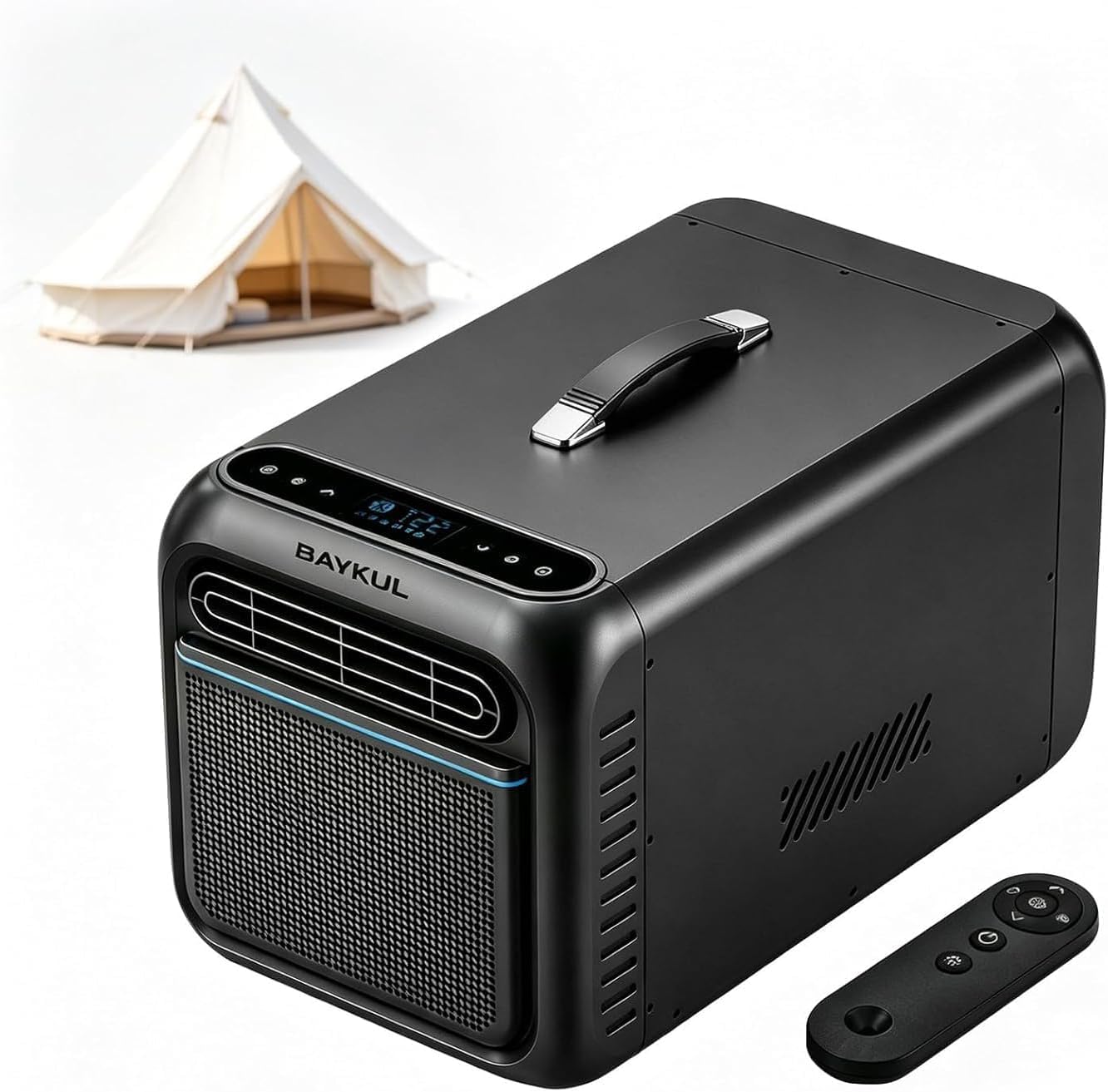
A hefty 5000 BTU unit promising 18°F drops in 5 minutes, but owner feedback tells a rougher story.
The headline spec here is serious: a 5000 BTU cooling power rating with a GMCC compressor that the maker says can lower ambient temperature by 18°F within 5 minutes. It also offers cooling, dehumidification, sleep, and fan modes, plus a built-in 24-hour timer. At 27.5 pounds, it is the heaviest of the compressor picks we reviewed and clearly built for a camper or small room rather than a backpack.
Real-world reviews are sharply divided. A few owners mention it gets a small garage “really cool really fast,” but a larger share say the opposite — one camper summarized it bluntly: “This device moves hardly any air and what air does get pushed around is barely cooled.” Another owner called it a weak fan rather than an air conditioner. This is early production feedback, so treat it as a caution flag, not a verdict.
The key contrast with the Evapolar above is weight and power delivery: this needs a wall outlet or a hefty generator, while the Evapolar runs on USB. For truck camping where you have shore power, the BTU potential is real; for dry camping off a small battery, the 400-watt annual energy consumption rating will drain most portable power stations fast.
Where it stands out
- Powerful 5000 BTU rating for fast cooling claims
- Compact 21.3-inch deep footprint for a big unit
- 24-hour timer and quiet sleep mode at 46-50dB
Where it stumbles
- Customers note weak airflow and barely-cooled output
- Several units arrived defective with no cooling
- Heavy 27.5-pound lug for a tent setup
Choose it if: you have shore power at a campsite and want a budget-priced compressor unit for a small camper.
Think twice if: you rely on a battery — the 27.5-pound weight and power draw make it a poor off-grid match.
3. BougeRV PC35 PRO
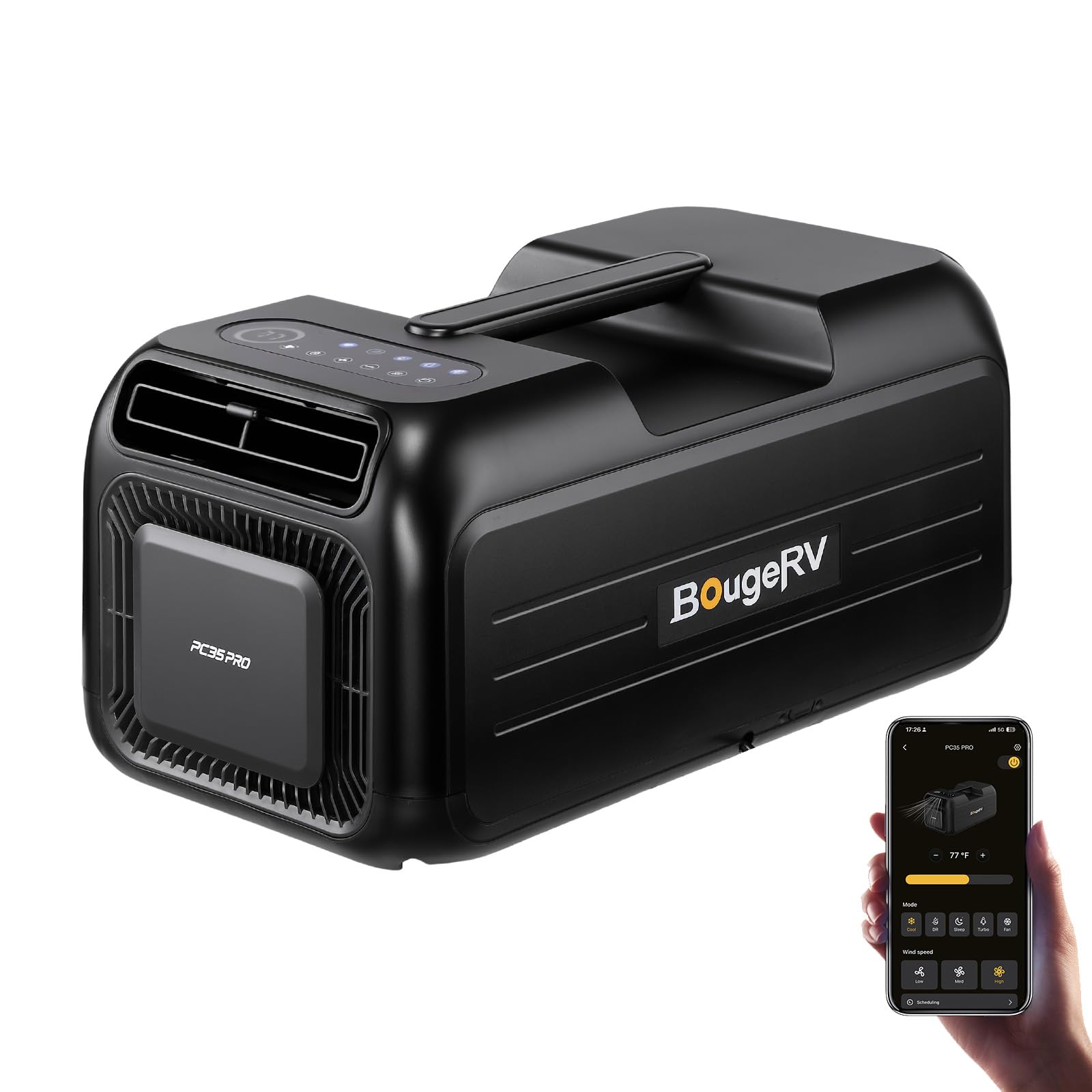
A smart 3500 BTU tent AC with app control specs, yet the review pages warn of hot-air failures.
The BougeRV PC35 PRO is pitched specifically at tent camping, with a cooling spec that targets a 64.58 ft² tent for 2 campers from 86°F down to 68°F. It offers a temperature range between 61°F and 90°F, long-range airflow up to 10 feet away, and control via the BougeRV App or a remote. The included parts list is complete: the AC unit, adapter, drain pipe, exhaust duct, remote, and manual.
Owner feedback is where this pick gets complicated. Reviewers point out units arriving with a dead compressor that blows warm air, and in testing, some found it actually heated a pickup cab rather than cooled it. The recurring pattern in reviews is poor cooling performance, with several owners returning multiple units. The ergonomic handle and 22-pound weight make it easy to move, but the cooling output is the deciding factor.
Set against the BAYKUL above, this tops out at 3500 BTU versus that unit’s 5000, so it targets smaller spaces. The app is a differentiator few rivals offer, but the real-world failure reports suggest treating this as a risky purchase until later production batches prove more reliable.
Given the quality issues reported, it is hard to recommend this as a primary cooling solution. It is best treated as a project unit — arguably one to avoid until reliability improves.
Smart on paper: App control and a remote are genuinely handy for a tent, and the 22-pound weight with an ergonomic handle is easy to reposition.
Broken in practice: The review consensus is a dead compressor and warm air, making this a gamble on a good unit.
Buy it only if: you find a later-batch unit and can test it immediately — the app control is unique in this group.
skip it if: you need dependable cooling on your first trip out; the failure rate in early reviews is too high.
4. Outohome 5200 BTU Portable AC

A 5200 BTU 4-in-1 unit whose real-world tent results swing from “blows very cold” to “minimal.”
The Outohome unit is built around a strong spec sheet: a GMCC compressor rated at 5200 BTU, claiming an 18°F drop in 5 minutes, with adjustable temperatures from 60°F to 88°F. It packs cooling, dehumidifying, sleep, and fan modes into a 31.9-pound body with a handy grip. The maker also rates power draw below 400W per hour, which is reasonable for a compressor unit of this size.
Real tent owners have split experiences. In a six-person tent, one reviewer noted it brought the temperature down to a “bearable” level and praised the cold output. Others found it only cooled a few degrees in hot conditions, with one camper noting it was ineffective in a shaded tent at 88°F but helpful for sleeping at night in a smaller space. The consensus frames it as a nighttime comfort tool rather than a midday chiller.
Compared to the BAYKUL above, this offers a bit more flexibility with drain-free operation below 70% humidity and a drain pipe for wetter conditions. At 31.9 pounds it is heavier, so it suits car camping where weight is less critical. The remote control adds convenience for adjusting airflow from a sleeping bag.
The strengths
- 5200 BTU output that genuinely cools a six-person tent for some owners
- Runs at a quiet 46-50dB in sleep mode
- Drain-free operation in dry conditions simplifies setup
The weaknesses
- Struggles to keep up when temperatures pass 90°F
- Verified mixed cooling performance across users
- Heavy 31.9-pound build is a two-hand carry for most
Best fit: car campers who want a real night-cooling compressor unit for a tent and have a generator or shore power.
Not for: hot-weather campers expecting arctic air in 95°F heat — set expectations to “comfortable sleep,” not “refrigerated tent.”
5. Outohome 5200 BTU Pro Unit
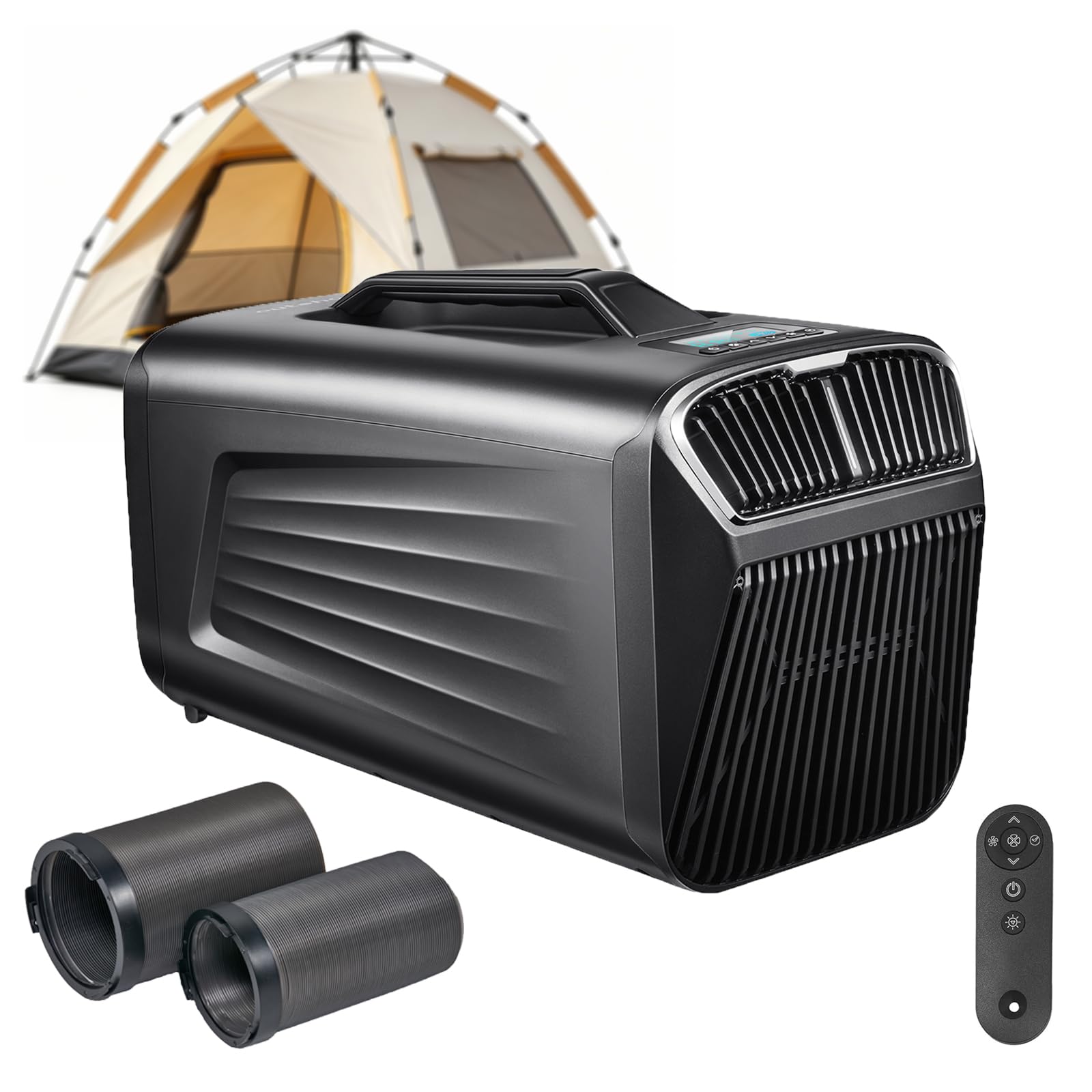
A sibling to the unit above with the same 5200 BTU specs, but shoppers say no cooling at all.
This grey-black version from Outohome shares the exact core spec sheet as the silver model: a GMCC compressor rated at 5200 BTU, an 18°F drop claim in 5 minutes, and a 31-pound weight. It also offers the same four modes — cooling, dehumidifying, sleep, and fan — with remote control and a 24-hour timer. The included components are just a hose and remote, keeping setup simple.
The review data here is starkly different from its sibling. Owners describe it as “a piece of junk,” with one buyer reporting zero cooling and another calling it the “crappiest AC” they have used. One buyer mentioned difficulties getting a refund processed. This is a case where the marketing specs and the real-world outcome diverge sharply.
Given that both Outohome units share a 5200 BTU rating, the silver model’s mixed-but-functional reviews contrast with this one’s mostly negative feedback. If you are considering this brand, the silver version appears to be the safer bet based on the review patterns we see.
Spec identical to the silver model: same 5200 BTU GMCC compressor and 4 functional modes, including sleep mode at 46-50dB.
But owners disagree: the feedback here is overwhelmingly negative on actual cooling, so buyer beware on this exact colorway.
Consider it only if: you find an unusually good deal and can verify the unit works immediately upon arrival.
Avoid otherwise: the review consensus says this specific unit fails to cool as advertised.
6. Cybertake S2 Pro
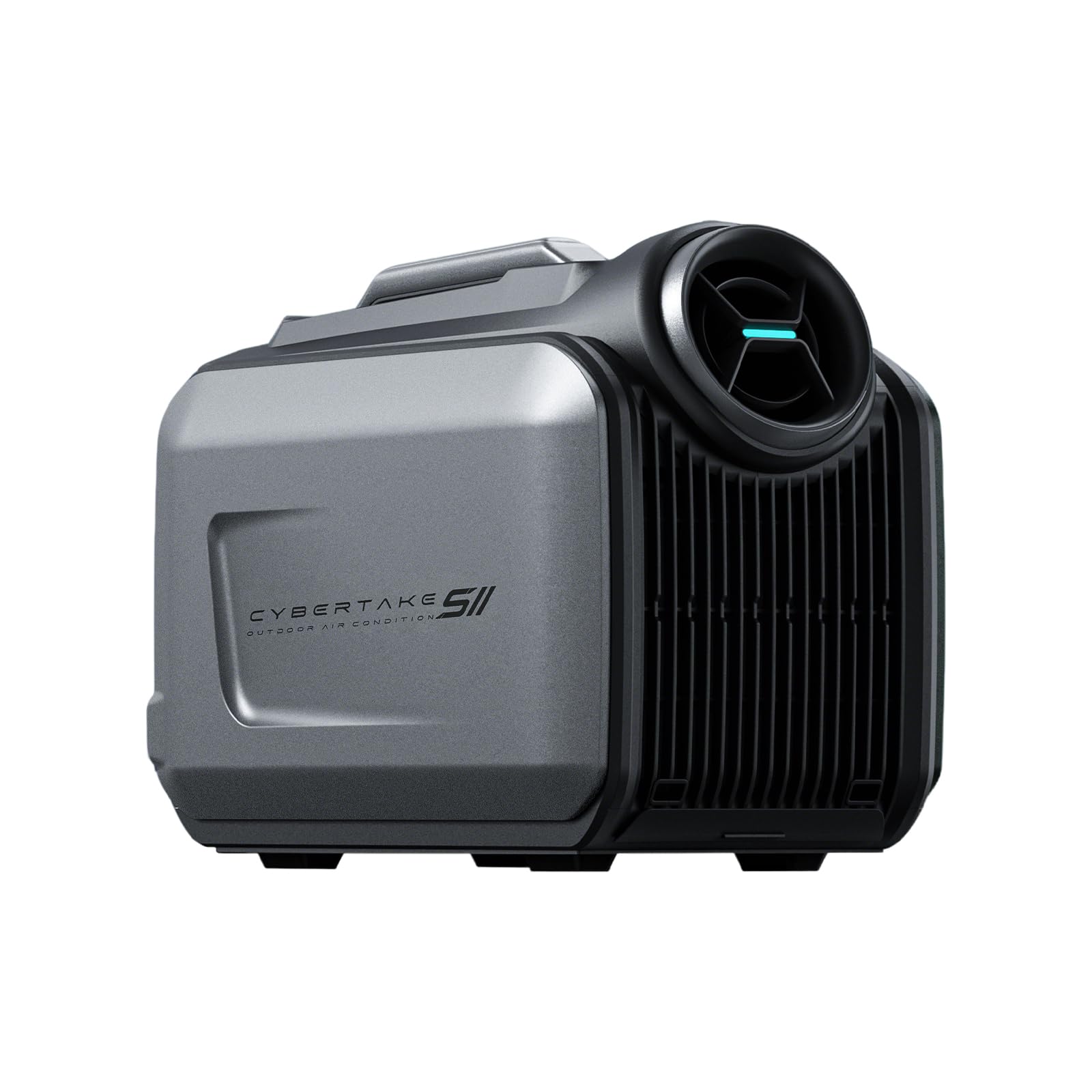
A 21-pound dual-purpose unit that cools and heats off-grid, with the rare flexibility of 48V DC power.
The Cybertake S2 Pro stands out for true off-grid flexibility. It delivers 5100 BTU of cooling and 6100 BTU of heating, enough to condition spaces up to 130 sq. ft., with an operating range between 41°F and 113°F. The smart part is the 3-way power input: standard wall AC (100-240V), vehicle 12V/24V, and 48V DC from a portable power station, which is exactly what serious campers own.
In Eco+ mode, the maker states it uses as little as 1kWh per 8 hours, which is the standout efficiency claim in this lineup. It also runs whisper-quiet at 40dB and has an IPX4 water-resistant shell for splashes or rain. Owners confirm it works well when placed outside a tent or truck with ducts feeding cool air in — one buyer used it that way for camping and praised the low power draw and lack of condensation.
Set against the EcoFlow WAVE 3 below, the S2 Pro is lighter at 21 pounds versus 32, and it can pull from an external 1kWh battery rather than carrying its own. The caveat is heat output: the exhaust pipe gets very hot, and owners warn the unit must sit outside the sleeping space, not inside a sealed SUV. At max cooling it draws roughly 550W, which drains batteries faster than the Eco mode suggests.
What makes it special
- Rare 48V DC input matches modern power stations directly
- Heating and cooling in one unit for year-round use
- IPX4 water-resistant shell for outdoor durability
Where it struggles
- Exhaust produces intense heat — must be vented outside
- Max mode drains batteries quickly at higher wattage
- App connectivity issues reported by some owners
Pick this for: van and tent campers with a 48V power station who want one machine that cools summer nights and heats chilly mornings.
Pass if: you need a unit to sit inside a small enclosed space — the exhaust heat makes that setup unsafe here.
7. EcoFlow WAVE 3

The premium cordless chiller with a built-in 1024Wh battery and hybrid heat-pump power for true all-night runs.
The EcoFlow WAVE 3 is the only pick with a self-contained battery, making it the closest thing to true cordless freedom. Its built-in 1024Wh LFP (lithium iron phosphate) battery delivers up to 8 hours of cordless operation, and a 1000W fast charger refills it in about 75 minutes. Cooling output is rated at 6100 BTU with 2000W heating, covering spaces from 120 to 180 sq ft — the most powerful compressor in this review.
The real-world numbers are compelling: in an outage, one owner kept a 100 sq ft space cool for 6 hours and still had 40% battery left, then tested the heat mode successfully. That aligns with the 8-hour claim in Eco mode. The Sleep mode runs at just 44dB, quieter than a dishwasher, and the APP adds remote temp control plus PetCare auto-activation if a cabin overheats.
Compared to the Cybertake S2 Pro, the WAVE 3 inverts the design: it carries its battery (32 pounds total, 11 pounds heavier than the S2 Pro) so you do not need a separate power station. Owners do note it is heavy and expensive, and battery life under max cooling is much shorter than the 8-hour eco claim. One insulated dog trailer test saw the battery drain in 2 hours, so match expectations to mode.
The payoff
- True 8-hour cordless runtime on the built-in battery
- 6100 BTU cooling and 2000W heating in one unit
- Quiet 44dB sleep mode for undisturbed rest
The cost
- Heavy 32-pound build with battery attached
- Eco mode cools less — max mode drains the battery in hours
- Premium pricing puts it above most camping budgets
Worth it for: serious vanlifers and overlanders who need dependable, cordless cooling overnight without a separate generator.
Not for: budget campers or those who only need a few hours of spot cooling — the premium cost buys capability you may not use.
Understanding the Specs
BTU Output
BTU (British Thermal Units) measures how much heat a unit can remove per hour. Higher BTU cools better but draws more power, so balance output with your battery capacity. A 5000 BTU unit like the BAYKUL can cool a small camper, while the 3500 BTU BougeRV targets a compact 2-person tent. Choose BTU output based on your tent’s square footage, not bragging rights.
Power Source and Battery
Compressor ACs need serious electricity. A unit drawing 400W per hour will drain a typical 1kWh power station in about 2.5 hours on full blast. Look for eco or sleep modes that cut draw — the Cybertake S2 Pro claims as little as 1kWh per 8 hours in Eco+, while the EcoFlow WAVE 3 carries its own 1024Wh battery for true portability.
FAQ
Will a 5000 BTU air conditioner run off a portable power station?
What is the difference between an evaporative cooler and a compressor AC for a tent?
How many BTU do I need for a tent?
Can I use a tent air conditioner with my car battery?
Why does my portable AC blow warm air?
What is the best AC for a tent without electricity?
How loud are portable tent air conditioners?
Is a tent AC unit worth the money compared to a simple fan?
Final Thoughts: The Verdict
For the majority of shoppers, the air conditioner for tent camping winner is the Cybertake S2 Pro because it uniquely combines 5100 BTU cooling with 6100 BTU heating and accepts 48V DC power from the power stations most campers already own. If you want true cordless freedom without any external battery, grab the EcoFlow WAVE 3. And for a small personal breeze in dry climates that costs next to nothing to run, the Evapolar evaCHILL is the lightweight pick to reach for.
How We Picked
We do not accept paid placement. Every pick is matched to a real buyer and a real use-case; we do not hands-on test units.
Sources & Methodology
Specifications: manufacturer listings and product documentation. Review insights: verified customer reviews, as of September 2026. Pricing: not shown on this page (it changes often); check the current price via the retailer link.
As an Amazon Associate, Gadgets Feed earns from qualifying purchases. This does not affect which products we feature.