
Our readers keep the lights on and my morning glass full of iced black tea. As an Amazon Associate, I earn from qualifying purchases.
Specs are compiled from manufacturer listings and verified buyer reviews and can change over time — please confirm the key details on the product page before buying.
When your young player practices sliding, the mat must stay flat and firm as cleats dig in—no bunching, twisting, or tearing mid-drill. The right choice hinges on backing grip, foam density, and mat length, not just the printed design. Stance trainers map foot placement for swings, while padded sliders cushion full-body slides, so match the mat to the drill.
I’m Min — the founder and writer behind Gadgets Feed. This guide is built by comparing the manufacturers’ published specifications and the patterns across verified customer reviews, so you get each pick’s real strengths and trade-offs instead of marketing spin.
The honest difference between a batting stance mat and a padded slider is thickness and grip, and we break down which baseball sliding mat fits your player’s age and drill type.
Quick Picks
- 2F22E Baseball Hitting Mat — Best Overall
- MOONACE Softball Pitching Mat — Compact Pick
- YiG9Sugr Baseball Hitting Mat — Wide Stance Pick
- ROYALAY Baseball Sliding Mat — True Slider
How To Choose The Best Baseball Sliding Mat
A sliding mat does a very different job from a batting stance mat. A hitting mat marks where your feet go for a swing, while a sliding mat has to absorb your body weight as you glide into a base. Once you know which type you need, three specs—backing grip, foam density, and length—decide the rest.
Backing grip versus surface slide
You want the top surface to let you slide, but the bottom to grip the ground hard. Rubber backing is the standard for stopping a mat from skidding on grass or concrete. If the bottom has no grip, the whole mat can move mid-drill — a safety issue, not just an annoyance. Look for “rubber backing” or “non-slip” in the material description before buying.
Foam thickness and density for impact
A true sliding mat needs cushioning thick enough to take the impact of a hip and thigh hitting the ground at speed. Look at the thickness in inches and the foam density rating — higher density foam (often stated as a number like 30D) means firmer support that won’t bottom out on a hard slide. A thin mat may be fine for stance work but offers little protection for sliding drills.
Size and length for real slides
Measure the mat against the actual distance of a slide. A young player needs enough length to land, glide, and stop. Mats designed for sliding tend to run several feet long, while hitting mats are often just a few feet square. Match mat length to the player’s slide distance; shorter mats suit youth league players’ compact slides.
Quick Comparison
| Model | Best For | Weight | Dimensions | Material | Amazon |
|---|---|---|---|---|---|
| 2F22E Baseball Hitting Mat | Youth batting stance training | 0.99 kg | 35.4″ x 23.6″ | Rubber | Amazon |
| MOONACE Softball Pitching Mat | Compact pitching drill mat | — | 54″ x 12″ | PVC | Amazon |
| YiG9Sugr Hitting Mat | Wide backyard cage stance work | 3.88 kg | 6 ft x 4 ft | Rubber / Neoprene | Amazon |
| ROYALAY Sliding Mat | Full-length padded sliding practice | 8.87 kg | 120″ x 43″ x 1.8″ | Polyester / Foam | Amazon |
In‑Depth Reviews
1. 2F22E Baseball Hitting Mat
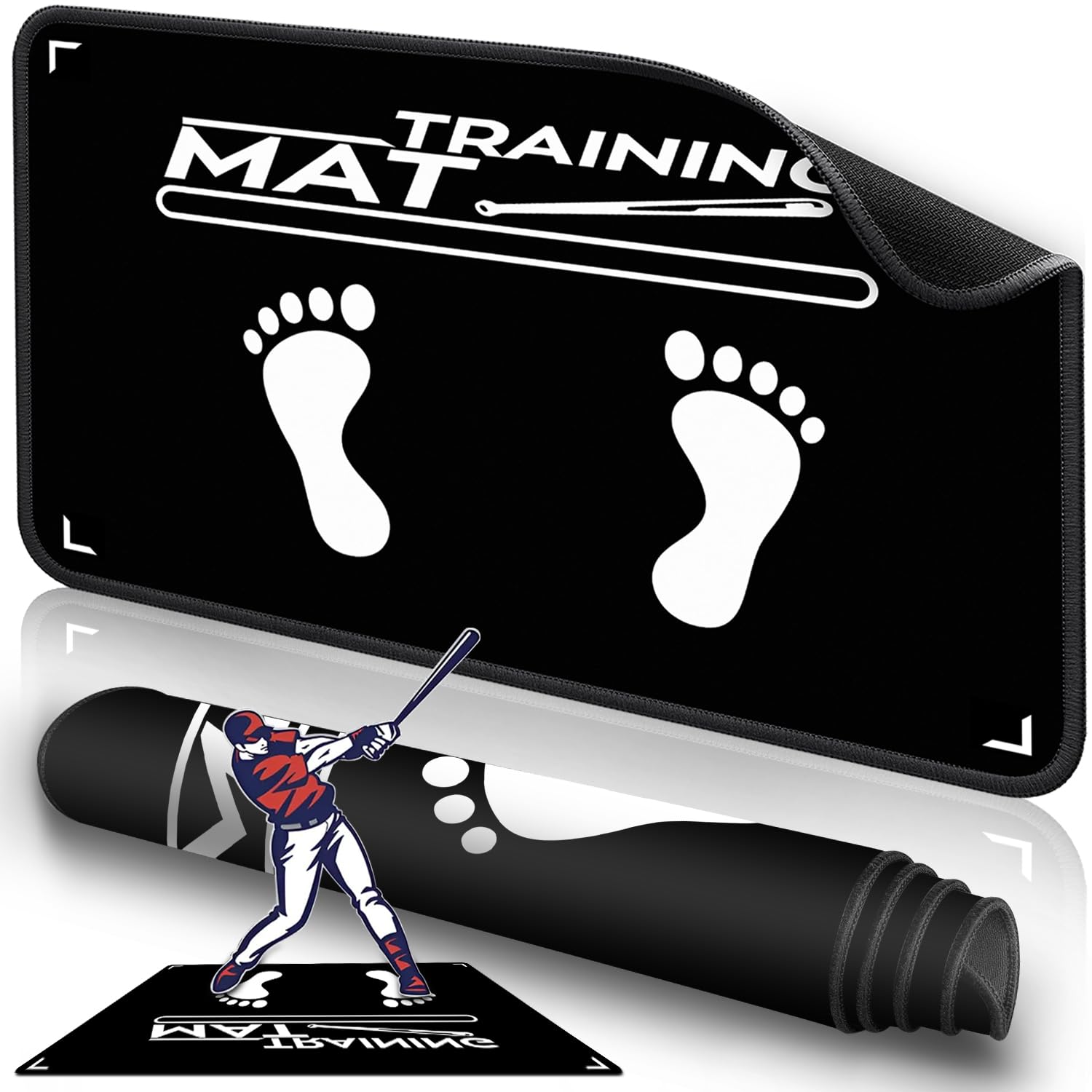
The visual foot-guide that young tee ball players actually understand.
This is the stance-training mat that makes “where do my feet go?” a solved problem. Its clear printed markings guide right- and left-handed hitters into the correct position, so coaches spend less time repositioning kids and more time on swings. Weighing just 0.99 kg, it is lighter than the 3.88 kg YiG9Sugr mat below — roughly a 3.9x gap — making it the easiest to roll up and tuck into a coaching bag between practices.
The natural rubber build delivers the anti-slip performance and cushioning you want under a batting stance. Because it is waterproof, it holds up for continuous training in garages, driveways, and batting cages regardless of weather. The locking edge technology is meant to extend its service life, and at this size it is built for the compact footwork of young players rather than the full stride of an adult.
What wins people over is how quickly it teaches foot placement — coaching a 6U team, kids became easier to set up in batting position during games. Buyers report the mat is well-suited for the youngest players but one notes it “moves a lot when my grandson is hitting” and suggests it could use grip on the bottom. This is the pick for coaches and parents of tee-ball through youth league players wanting a portable stance guide.
Why Coaches Keep It
- Printed foot markers speed up stance learning for kids
- Rubber build with superior cushioning for impact
- Waterproof and portable for any training spot
Where It Falls Short
- One buyer found it slides without bottom grip
- Size suits young players more than full-grown hitters
Reach for this if: you coach or parent a tee-ball or youth player who needs a clear, portable guide for stance and foot placement — this is the crowd favorite at 4.8 stars.
Look elsewhere if: your hitter wears cleats and plants hard enough to shove the mat around, since the base grip is the one recurring complaint.
2. MOONACE Softball Pitching Mat
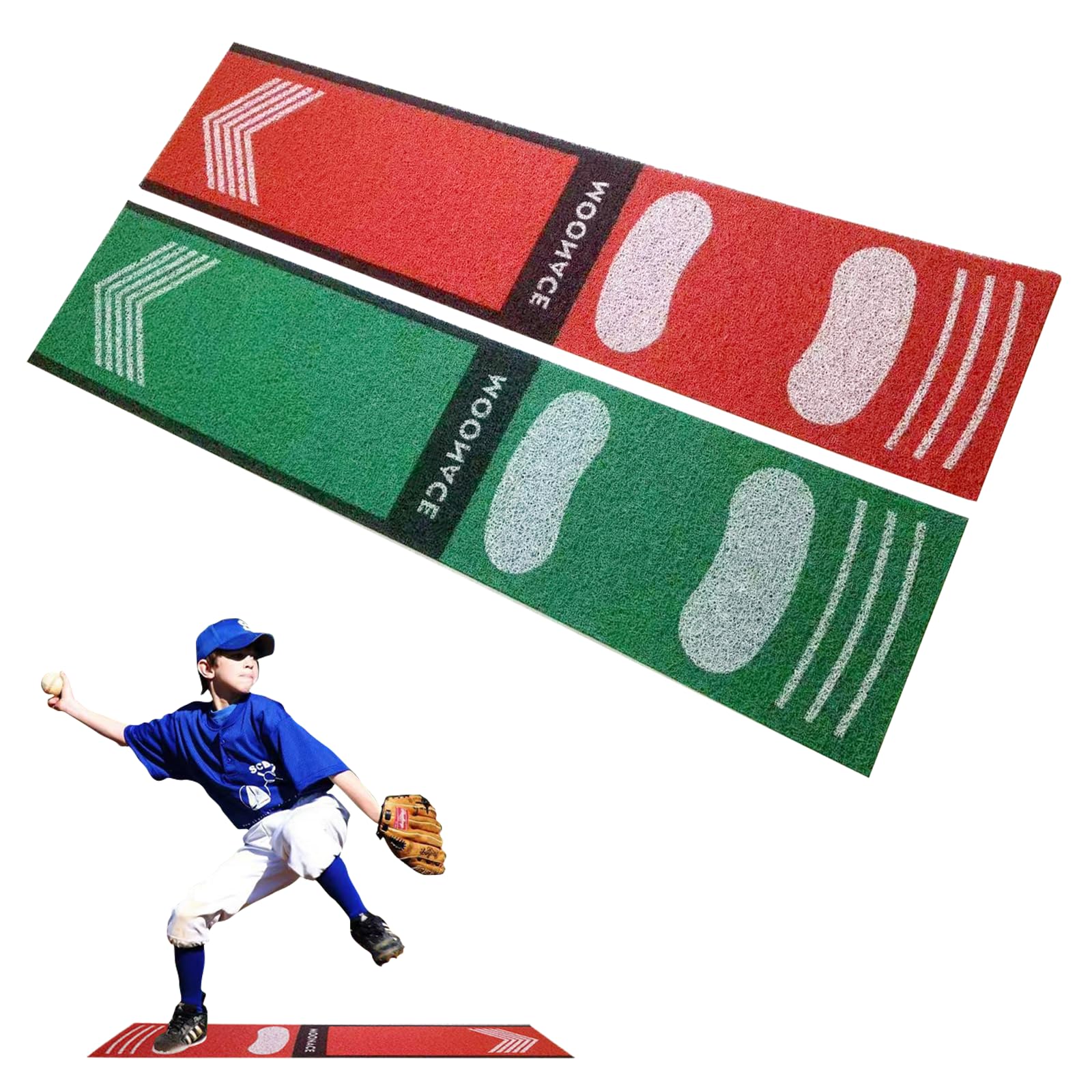
A stride-and-release mat that fits in a travel bag.
If your drill is pitching mechanics rather than sliding, this foldable 54 x 12-inch mat maps where the stride foot lands and where the ball should cross the zone. The printed strike zone gives instant visual feedback during bullpen sessions, which is why suitability is the trait owners praise most — it is a recognized teaching aid for fastball, curveball, and slider work. The high-density rubber build is designed to resist cracking under UV exposure and daily use outdoors.
One buyer notes it is “a little shorter than I would like for older kids,” but for 10U players it works fine with “good grip and stable.” That feedback matches the overall trend: younger players get real value, while the 12-inch width and 54-inch length feel limiting for advanced, older athletes. The non-slip textured surface is designed to secure your footing during wind-up and release, and the eco-friendly rubber helps cushion your joints against hard mound surfaces.
The honest caveat is stability, which draws mixed feedback — a few owners note it slides around during use. As one buyer flatly put it, “The mat slides,” so on very slick indoor floors you may want to weigh it down. This is the right choice for a 10U pitcher or a travel team looking for a lightweight, dedicated strike-zone trainer that sets up fast on grass, turf, or concrete.
Built for youth pitchers: the strike-zone markings and portable length suit players around 10U, but older, taller pitchers will find the stride length short.
The stability question: grip earns praise on most surfaces, yet enough owners mention sliding that slick floors need extra anchoring.
Grab it for: a young pitcher or a coach running bullpens who wants a foldable, surface-printed strike zone that lays flat.
Think twice if: your pitcher is older or throws from a long stride, since the 54-inch length is the most common size complaint.
3. YiG9Sugr Baseball Hitting Mat
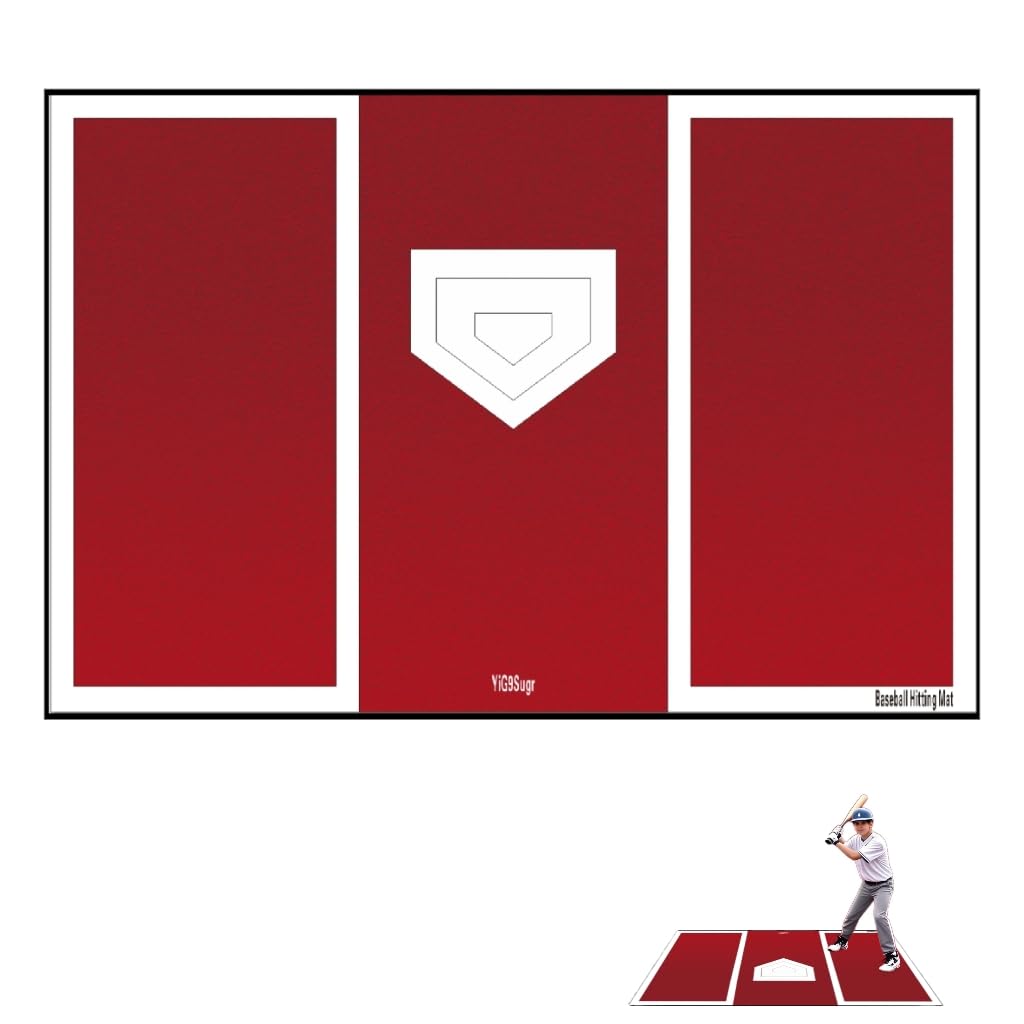
The 6-by-4-foot surface that swallows a full batting stance.
Unlike the compact 2F22E, this mat goes big. At 6 feet by 4 feet, it gives you ample room for various training postures in both baseball and softball, making it a strong anchor for a backyard batting cage. It is noticeably heavier than the MOONACE and 2F22E options at 3.88 kg, and that weight translates to a mat that owners describe as heavy duty and wide—customers note it has genuinely helped with batting and catching practice.
The anti-slip rubber backing is the headline feature here, designed to keep the mat stable through swing after swing on hard horizontal surfaces. The material is wear-resistant and quiet, and the roll-up form factor means you can commute with it to and from the training ground, storing it indoors between sessions. It is marketed for everyone from beginners to amateur enthusiasts, children and adults alike.
The trade-off is that reviewers point out the printing looks great but the mat itself runs thin — with cleats on, the foot’s natural rotation can make the mat “twist and wrinkle,” as one owner put it. The recurring suggestion is to add eyelets and stakes at the corners to keep it stationary outdoors. If you need a wide, roll-up surface for stance and swing drills in a cage, this is the size to beat, just be ready to pin it down on windy or high-impact days.
Big-surface verdict: the 6 x 4-foot footprint suits serious stance and swing work, but the thin build means cleats can grab and twist it.
Anchoring advice: owners consistently recommend staking the corners, so plan for that if you use it on grass outside.
Best for: a backyard cage or garage setup where you want one wide, roll-up mat for repeated stance and swing drills.
Not ideal if: your hitters wear cleats on this surface — the thin material wrinkles under cleat rotation without corner stakes.
4. ROYALAY Baseball Sliding Mat
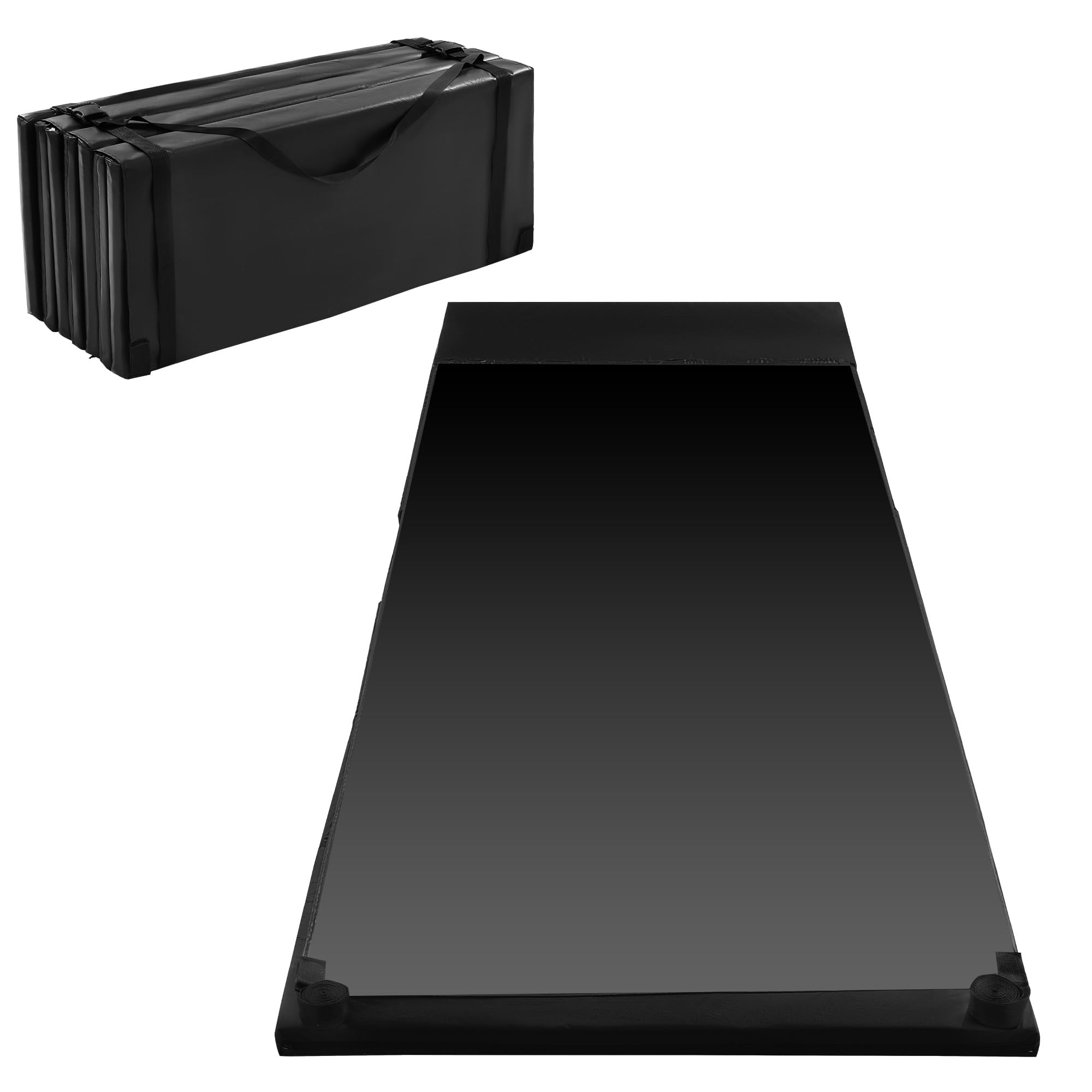
The only true padded slider here, built to teach a full-distance slide.
This is the mat that actually does what a sliding mat should. At 120 inches long, 43 inches wide, and 1.8 inches thick, it gives your player real room to land, glide, and stop, with the 30D high-density foam inside designed to cushion the impact of a hip hitting the ground. The Oxford cloth surface is sturdy and easy to wipe clean, and the whole thing folds up with an elastic band for storage—it even doubles as a yoga mat or travel pad.
Owners who use it for its intended purpose are enthusiastic, describing it as a durable, quality training aid with 2-inch foam that cushions well and resists cleats. The fold-and-strap design is convenient, though one reviewer noted a minor strap tear at the Velcro stitching. There is real enthusiasm for it as a teaching tool for safe, proper sliding technique.
The serious caveat is durability under repeated hard use. The most striking report is a 12-year-old weighing 90 pounds whose mat ripped on the sixth sock-footed slide, along with another owner describing the mat bunching up after each slide and needing a reset. The review pages sum it up: this is a safety-first teaching surface that may not survive aggressive, repeated drilling. For a coach teaching controlled technique with lighter repetitions, it delivers; for a player who is going to hammer it daily, the foam’s softness and the cover’s stitching are the weak points to weigh.
The Real Strengths
- 1.8-inch thick 30D foam genuinely cushions a slide
- 120-inch length fits a real full-body slide
- Washable Oxford cover wipes down easily
The Hard Limits
- One owner saw it rip on the sixth slide from a 90-pound player
- Mat bunches up after each slide, needing a manual reset
Choose it for: controlled, technique-focused sliding practice where cushioning and a long surface matter more than surviving endless repetitions.
skip it if: your player plans to slide hard and often — the durability reports on the cover and foam make frequent, aggressive use a real gamble.
Understanding the Specs
Foam Density (the 30D number)
The “D” in 30D stands for density, and it tells you how firm the foam is. A higher number means a denser, firmer foam that supports your weight better and won’t flatten out the way soft foam will. For sliding, you want foam dense enough that your hip doesn’t punch straight through to the ground beneath.
Thickness in Inches
Thickness is your cushioning budget. A true sliding mat runs around 1.5 to 2 inches thick so it can absorb the impact of a full-speed slide. A thin rubber hitting mat, by contrast, only marks foot position — it offers almost no impact protection, which is why the two are not interchangeable.
FAQ
What is the difference between a hitting mat and a sliding mat?
How thick does a sliding mat need to be?
Why does my sliding mat bunch up or slide around?
Will a sliding mat hold up to cleats?
What size sliding mat do I need for my player?
Can I use a batting stance mat for sliding practice?
Are these mats safe for indoor use?
How do I clean a sliding mat after practice?
Is a heavier mat always better?
Can a sliding mat be used for other sports?
Final Thoughts: The Verdict
For most coaches and parents, the top baseball sliding mat pick is the 2F22E Hitting Mat because it teaches young players correct foot placement with a clear, portable, and crowd-approved design. If you need a dedicated padded surface for actual sliding technique, the ROYALAY Sliding Mat is the one to reach for—just be mindful of its durability limits under heavy repetition. And for a young pitcher around 10U, the MOONACE Pitching Mat delivers a foldable strike-zone trainer that travels well. The 2F22E holds the strongest owner satisfaction here, so if torn between a stance mat and a slider, match the tool to the drill first.
How We Picked
We do not accept paid placement. Every pick is matched to a real buyer and a real use-case; we do not hands-on test units.
Sources & Methodology
Specifications: manufacturer listings and product documentation. Review insights: verified customer reviews, as of September 2026. Pricing: not shown on this page (it changes often); check the current price via the retailer link.
As an Amazon Associate, Gadgets Feed earns from qualifying purchases. This does not affect which products we feature.