
Our readers keep the lights on and my morning glass full of iced black tea. As an Amazon Associate, I earn from qualifying purchases.
Specs are compiled from manufacturer listings and verified buyer reviews and can change over time — please confirm the key details on the product page before buying.
Sleeping in a sweltering tent is miserable, and most so-called “tent ACs” are just weak fans in a plastic box. The real difference depends on BTU output, power source, and venting the hot air outside. This guide reveals which units truly cool a tent for sleep and which demand a power setup you may lack.
I’m Min — the founder and writer behind Gadgets Feed. This guide is built by comparing the manufacturers’ published specifications and the patterns across verified customer reviews, so you get each pick’s real strengths and trade-offs instead of marketing spin.
You need a machine that fits your tent and power source, and the best air conditioning units for tents balance BTU output against weight and energy draw.
Quick Picks
- Antarctic Star Portable Air Conditioners — Best Overall
- Portable Air Conditioner Camping 5000BTU Fast — Best Budget Wall-Power Pick
- BougeRV Portable Air Conditioner PC35 PRO — Compact 2-Person Pick
- Outohome Portable Camping Air Conditioner — Top Performer
- 5200 BTU Portable Tent Air Conditioner — Budget-Champion Specs, Risky Buy
- Cybertake S2 Pro Portable Camping Air — Premium Off-Grid Pick
How To Choose The Best Air Conditioning Units For Tents
Before buying, ask: where will the hot air go? A portable AC that just blows air inside your tent will actually make things warmer. Every real unit here needs a hose to push heat outside, so plan where that hose runs before you shop.
Match BTU to tent size
BTU (British Thermal Units) measures how much heat the unit removes per hour. A small 3500 BTU unit might handle a cozy 2-person tent, but a large family tent with 450 square feet needs a stronger 10000 BTU punch. Buying too weak means the compressor runs forever and never catches up on a hot afternoon.
Power source is the real trap
Tent ACs draw significant power. A standard 110V wall outlet unit works only where shore power exists, like an RV hookup. True off-grid freedom needs a 12V/24V vehicle connection or a 48V DC power station, but those units cost more upfront. Check your battery’s watt-hour capacity against the AC’s draw or you will drain a power station in a few hours, not a full night.
Quick Comparison
| Model | Best For | Cooling Power | Weight | Annual Energy | Amazon |
|---|---|---|---|---|---|
| Antarctic Star 10000 BTU | Large tents & campers | 10000 BTU | Not listed | 900 kWh/yr | Amazon |
| Countrymod 5000 BTU | Budget wall-power use | 5000 BTU | 30.8 lbs | 200 kWh/yr | Amazon |
| BougeRV PC35 PRO | Compact 64 ft² tents | 3500 BTU | 22 lbs | Not listed | Amazon |
| Outohome 5200 BTU | Campers & vans | 5200 BTU | 31.9 lbs | 200 watt-hours | Amazon |
| Outohome 5200 BTU Dupe | Same specs, risky buy | 5200 BTU | 31.9 lbs | 200 watt-hours | Amazon |
| Cybertake S2 Pro | Off-grid heating & cooling | 5100 BTU | 21 lbs | 1095 kWh | Amazon |
In‑Depth Reviews
1. Antarctic Star Portable Air Conditioners, 10000 BTU
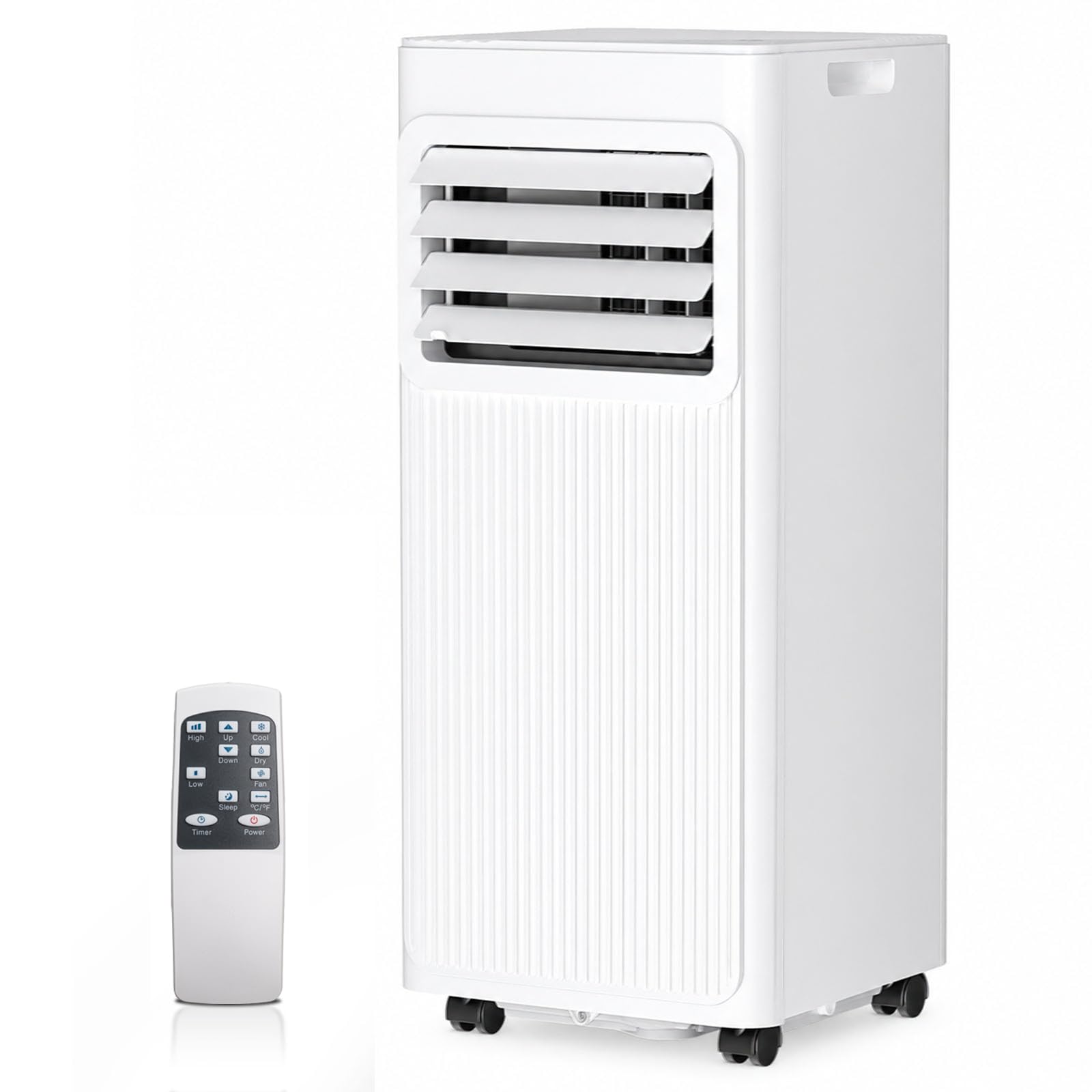
The heavy hitter that turns a sweltering army tent into a livable room.
Choose this for large canvas cabins, pop-up campers, or roomy family shelters. Its ASHRAE-rated 10000 BTU cooling power (with a SACC rating of 6000 BTU for real-world efficiency) is roughly 2.9 times the punch of the smaller BougeRV PC35 PRO at 3500 BTU, so it actually conquers heat instead of just stirring it. You can dial the temperature anywhere between 62°F and 86°F to match the night’s conditions.
Skip fumbling for buttons in the dark. A full-function remote and a 24-hour timer let you set it to switch off at 3 a.m., while sleep mode automatically lowers the fan and the compressor noise stays at or under 45 decibels (a soft white-noise hum rather than a rattle). Buyers report it held a pop-up camper cool for 7 straight days with the exhaust tube zipped into a window cover, and others describe it keeping a 998 sq ft house at about 75°F — serious muscle for a portable unit.
The trade-off is high power consumption. This machine eats 900 kilowatt hours per year, a 4.5x gap versus the smaller 5000 BTU countrymod unit at 200 kWh/yr, so it is not for a tiny backpacking shelter or a small power station. It is an AC that needs a reliable outlet. The crowd favorite hovers near 3.9 stars with a few dozen owner accounts, and while some find it quiet, others call it noisy — treat the noise claim with a grain of salt depending on your tent’s fabric.
Why it leads the list
- Real 10000 BTU power for large spaces and campers
- Remote, 24-hour timer, and sleep mode for hands-off comfort
- Sets up in minutes with a complete window kit (hose, adapter, fittings)
Where it struggles
- Heavy energy appetite at 900 kWh per year
- No battery option — a wall outlet is mandatory
- Noise level splits owner opinions down the middle
The pick if: you camp in a large tent or camper with shore power and want genuine, room-sized cooling instead of a breeze.
Look elsewhere if: you backpack or rely on a small solar battery — this unit needs a serious electrical connection.
2. Portable Air Conditioner Camping 5000BTU Fast Cooling Portable Ac Unit
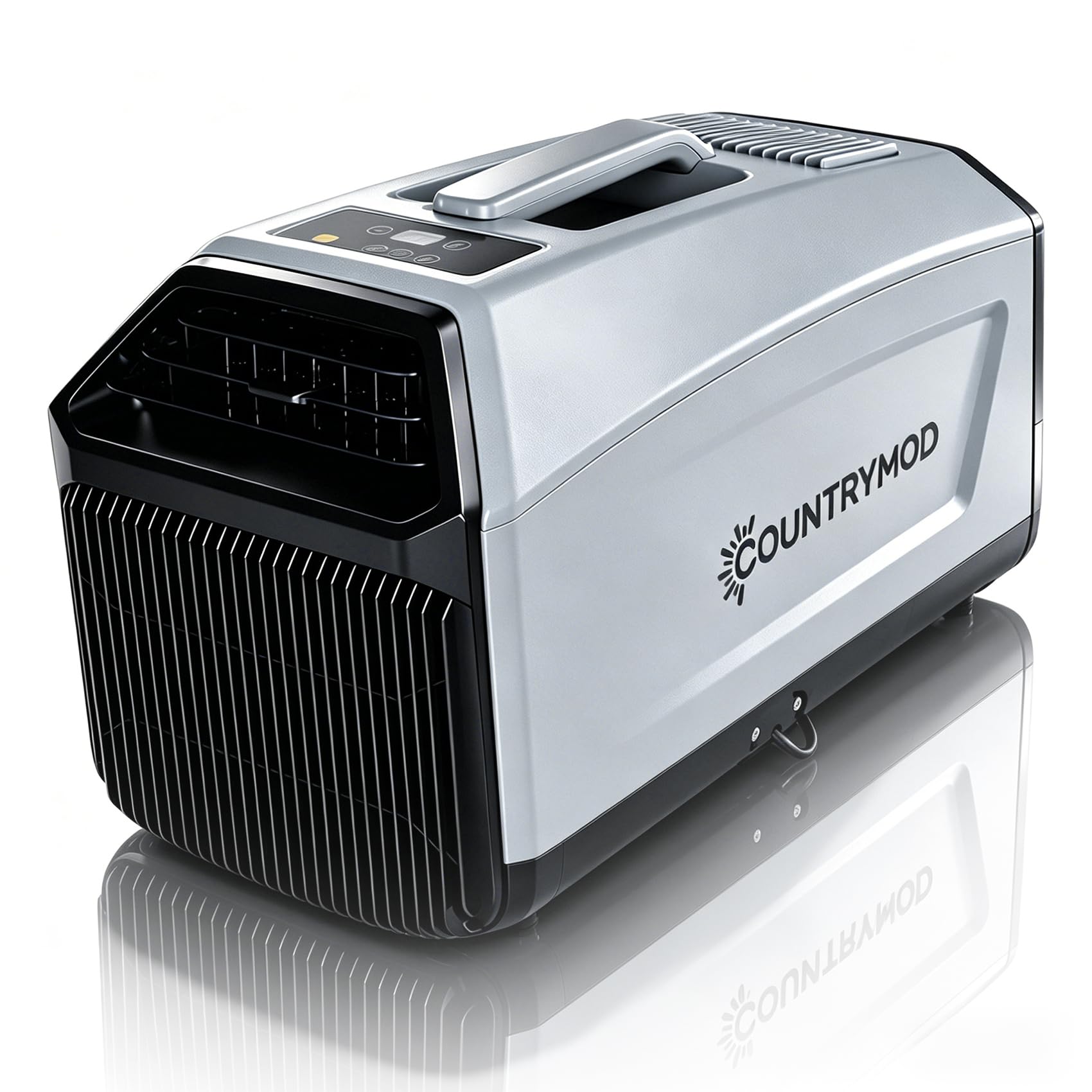
A lighter 5000 BTU unit that sips power but wants a wall outlet nearby.
This countrymod unit carves out a smart middle spot for campers who have electricity at the site but do not want to drag around a 50-pound behemoth. At 30.8 pounds and 21.3″D x 11.4″W x 13″H, it is noticeably more compact than the BougeRV PC35 PRO, which measures 24.02″D x 13.78″W x 17.32″H — a 13% size gap that makes a real difference when you are loading a car trunk. Buyers confirm it cools roughly the front 5 feet and drops the tent temperature about 10°F, which suits a small sleeping area perfectly. The built-in handle is genuinely handy for hauling it from car to tent.
You get four functions — cooling, sleep, dehumidifier, and fan — plus adjustable speeds and a timer, all runnable from the included remote. The standout number is energy: just 200 kilowatt hours per year, the same low draw as the premium Outohome 5200 BTU unit and a fraction of the Antarctic Star’s 900 kWh. That efficiency is the reason owners running it off a high-powered backup battery still got through the night, though a beefy Bluetti drained in about 4 hours — proof that no wall-powered unit is truly off-grid friendly.
The recurring gripe is that it is “not portable enough” for true tent camping and feels more like an RV machine, since it requires an outlet and has no battery inside. Cooling performance gets mixed reviews too, so set expectations: it cools a focused zone, not the whole campsite. It is a strong budget value for anyone camping near power, but think twice if you are truly roughing it far from a socket.
Solid value for RV campers: low 200 kWh/yr draw meets a compact 30.8 lb frame, but the cord dependency kills it for backcountry trips.
Reach for this if: you camp at powered sites and want an affordable, energy-frugal way to cool a small tent or RV bunk.
skip it if: you need true portability — this is an outlet-dependent machine that drains big batteries in about 4 hours.
3. BougeRV Portable Air Conditioner PC35 PRO, 3500 BTU Camping Tent AC Unit
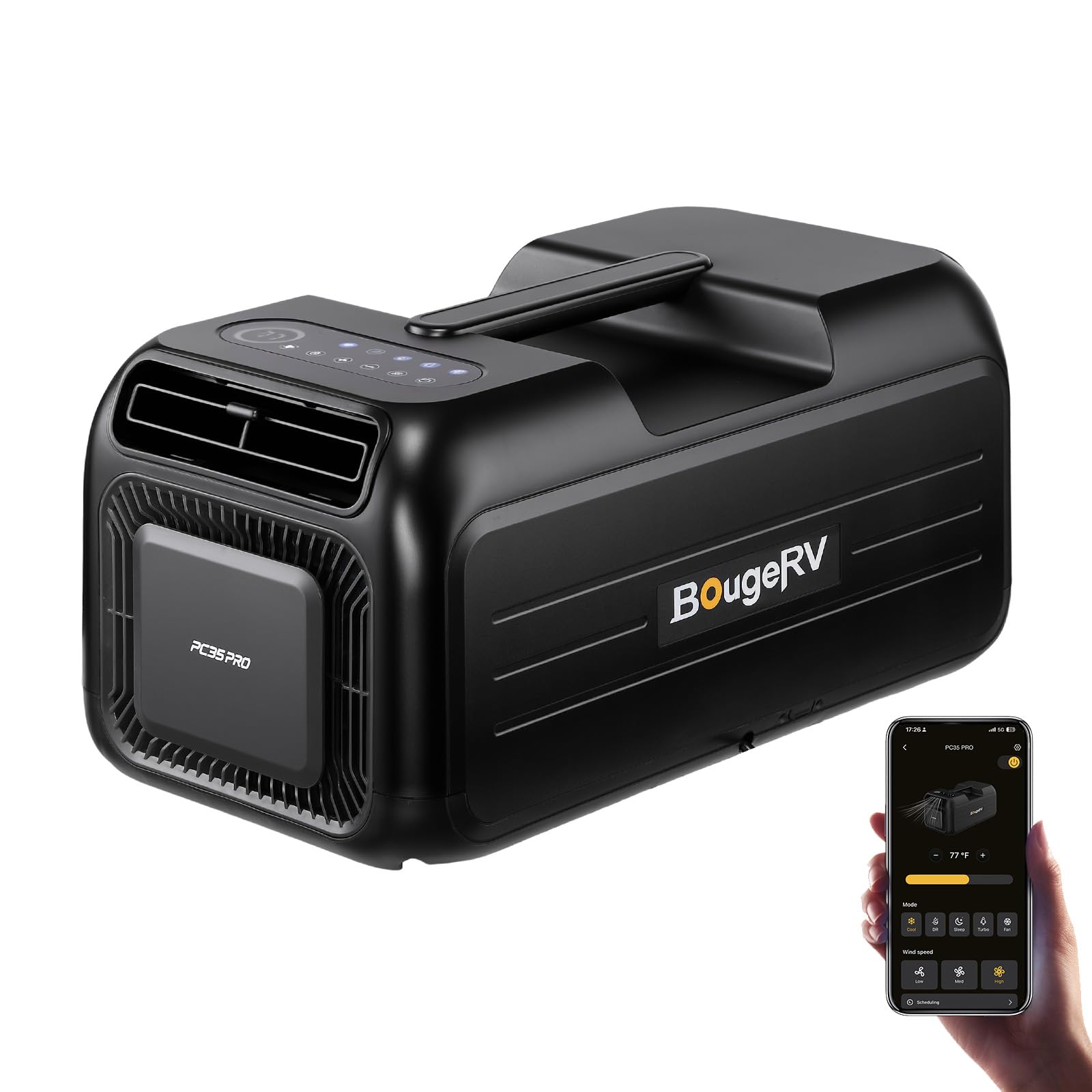
The featherweight 22-pounder aimed squarely at a cozy two-camper tent.
BougeRV designed this one for a specific job: cooling a 64.58 ft² tent for 2 campers. On paper the math looks great — the maker claims it can drop a tent from 86°F to 68°F in strong mode, and push cool air as far as 10 feet away. At just 22 pounds, it undercuts the countrymod 5000 BTU unit by a full 40% in weight, and its slim 24.02″D x 13.78″W x 17.32″H frame slides into a car trunk alongside your other gear. An ergonomic handle and app control (plus remote) round out a convenient package.
But this is the cautionary tale on the list. While the spec sheet promises serious cooling, the real owner verdict is brutal — owners mention the unit “does not produce cold air” and “cools it slightly, that’s it,” with one returning three separate units. The pattern in the reviews is consistent: at 90°F outside, it simply does not deliver, and several owners watched it blow warm air instead of cold before the compressor shut off. The 3500 BTU output is just a third of the Antarctic Star’s 10000 BTU, so it lacks the raw capacity to overcome serious heat.
If you camp only in mild conditions where the mercury stays near 75°F, this compact unit might suffice, and its light weight is genuinely appealing. But the overwhelming evidence says it struggles exactly when you need it most — on hot summer nights. This is a case where the spec sheet overpromises, so read it as a cautious fit for temperate camping, not a heat-wave solution.
Light but underwhelming: the 22 lb frame and app control are nice, yet dozens of customers note it simply fails to blow cold air in real heat.
Consider it if: your camping stays mild and you value a feather-light unit under 25 pounds above all else.
Think twice if: you camp in summer heat at 90°F — the owner evidence says this unit will disappoint you.
4. Outohome Portable Camping Air Conditioner, 5200 BTU Tent AC Unit
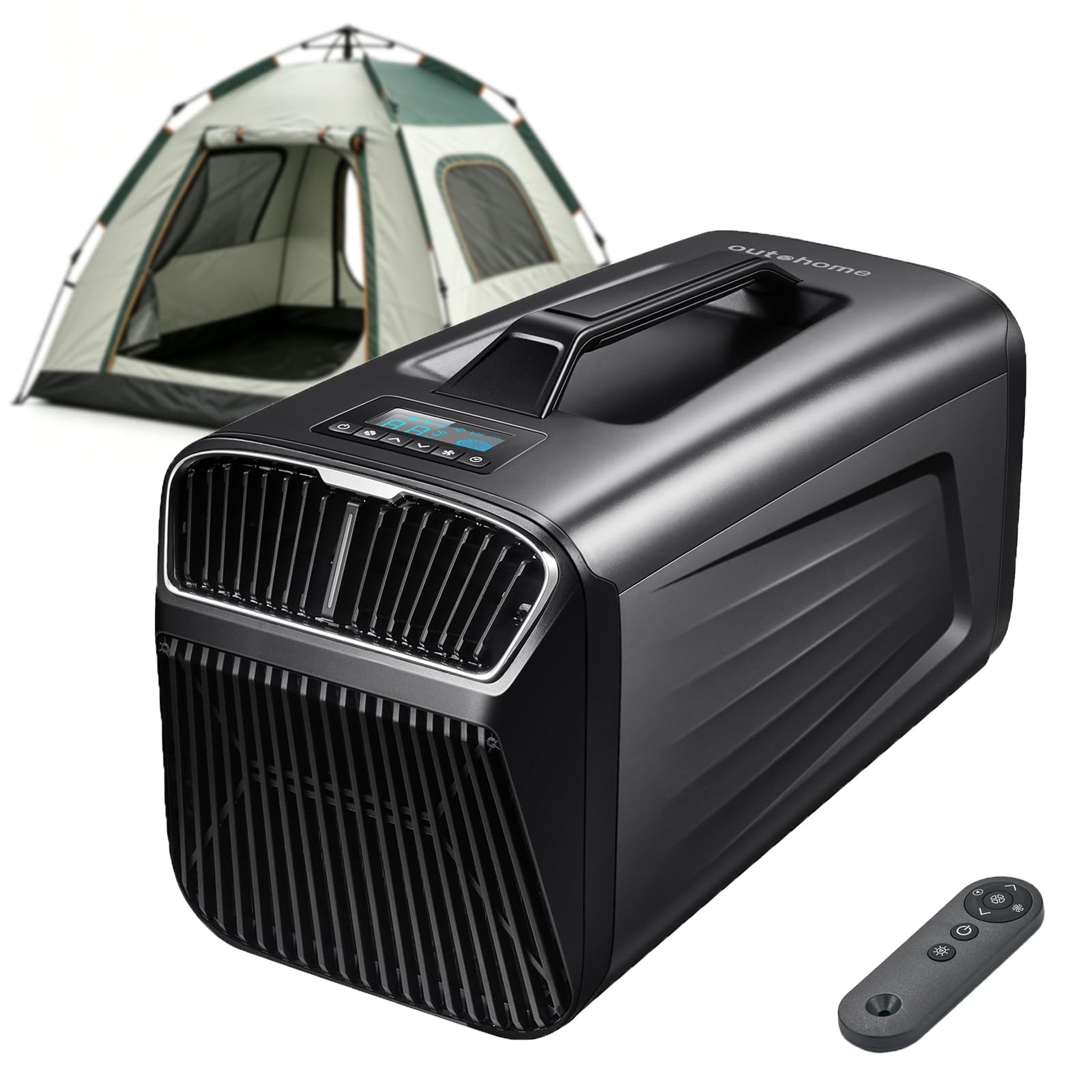
The efficient 5200 BTU performer that owners say sips watts while cooling fast.
This is the quiet overachiever of the group. Its premium GMCC compressor delivers 5200 BTU and can drop the ambient temperature by 18°F (10°C) in just 5 minutes — decisive cooling for a tent, van, or even a kitchen. Owners back up the speed with real numbers: one measured an 80°F room dropping to 70°F in 17 minutes, and others clocked the startup draw at just 284W with a max around 322W on low fan. That energy efficiency is the headline — at roughly 200 watt-hours of annual energy use, it sips power compared to the Antarctic Star’s 900 kWh/year appetite.
The smart placement trick that owners discovered: run the hoses into your tent from outside, keeping the machine itself outdoors. That double-hose design vents heat away efficiently while the cold air streams in, and the low power draw means it pairs well with a decent battery setup. Sleep mode keeps things quiet at 46-50dB, the remote handles all 4 modes (cool, dehumidify, sleep, fan), and a 24-hour timer lets you low-maintenance. The drain-free design works when humidity stays below 70%, with a pipe included for wetter nights.
The catch is setup. Owners note the included window baffle is flimsy and the hoses can slide off, so a little DIY reinforcement helps, and it does default to Celsius on power-off (a dark mode via the power button fixes screen glare). It is not a self-contained unit — the exterior hose venting is mandatory. But for campers and van-lifers who want real cooling without destroying their battery budget, this is the balanced pick the owners genuinely rave about.
What wins people over
- Snappy cooling — an 18°F drop in 5 minutes on paper
- Low draw around 284-322W keeps battery setups viable
- Quiet 46-50dB sleep mode for undisturbed rest
What needs work
- Included window baffle is weak and hoses can slip off
- No Bluetooth — remote control only
- Requires exterior hose venting to work properly
Best for: van-lifers and campers who want efficient, fast cooling without a huge power bill.
Not for: anyone expecting a no-venting plug-and-play unit — this needs outside hose routing to shine.
5. 5200 BTU Portable Tent Air Conditioner for Camping, Low Power Cooling Unit
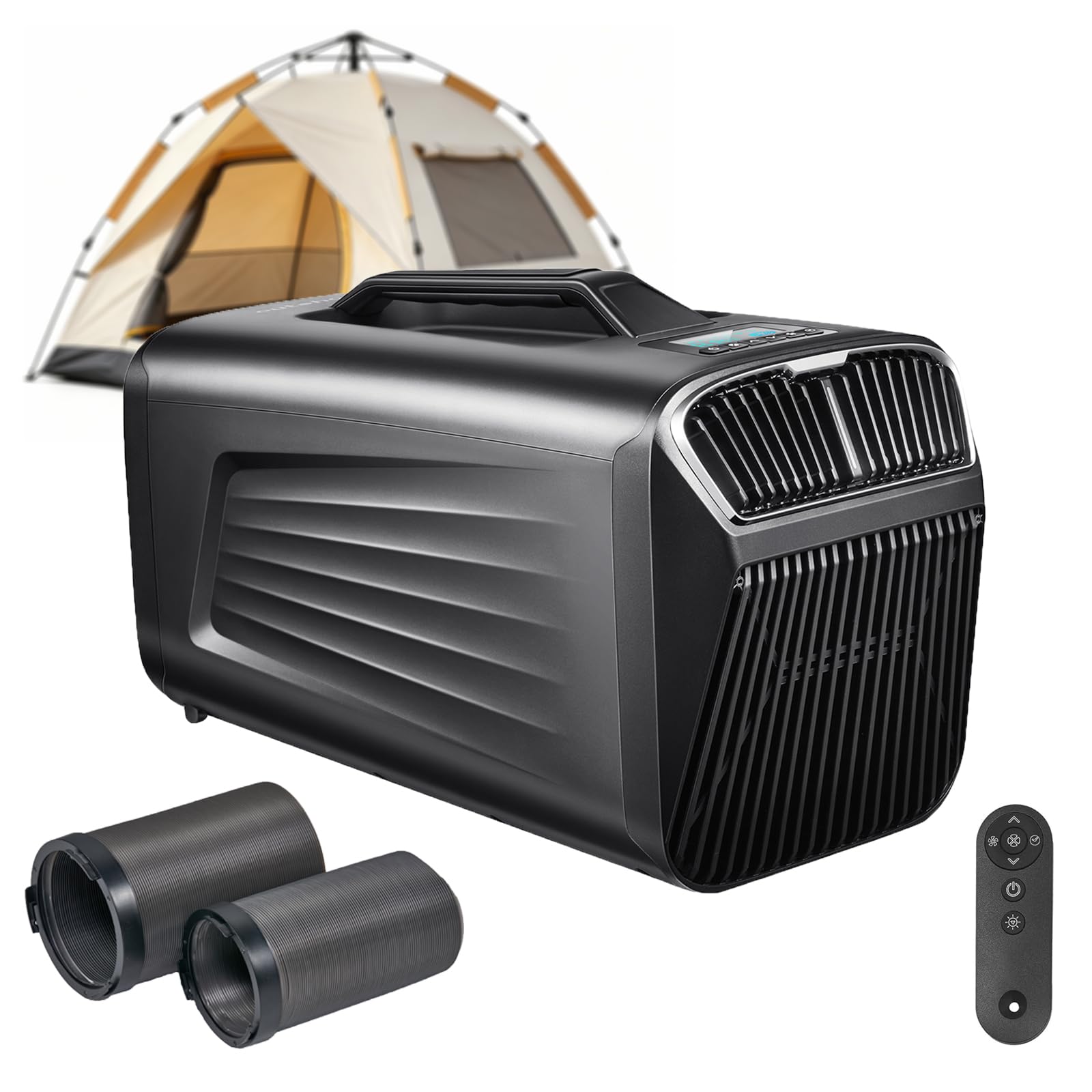
Identical specs to the Outohome above, but the owner stories turn grim.
On paper, this listing is a clone of the Outohome 5200 BTU unit reviewed above — same GMCC-style compressor claim, same 22.4″ x 11.2″ x 13.8″ dimensions, same 31 lbs weight, same 200 watt-hours annual energy, same 4 modes and 24-hour timer. It even shares the Grey-Black colorway. If you are price-shopping, this might look like the same machine for less, and that is exactly the trap.
The real owner verdict is the opposite of its twin. Where Outohome buyers rave about efficiency and speed, this listing’s buyers are furious — the words “piece of junk” and “no cooling” appear in multiple accounts, with one buyer describing it as “just a weak, noisy fan.” Several report the listing was removed to dodge negative feedback, and a couple mention refunds that never arrived despite supervisor promises. The spec sheet promises an 18°F drop in 5 minutes, but owners say it does not cool at all.
This is the clearest example on the list of why identical specs do not mean identical quality. The reciprocating compressor type is listed here versus the rotary scroll in the Outohome version, which may explain the difference in real-world behavior. If the lower price tempts you, weigh it against the overwhelming pattern of “does not work” feedback. The Outohome with the same BTU rating costs about the same and actually delivers the cooling its specs promise.
Steer clear if: you need dependable cooling — the buyer evidence here is overwhelmingly negative across multiple units.
Look at instead: the Outohome 5200 BTU unit above, which shares the specs but actually earns praise from owners.
6. Cybertake S2 Pro Portable Camping Air Conditioner, 5100 BTU Cooling and 6100 BTU Heating
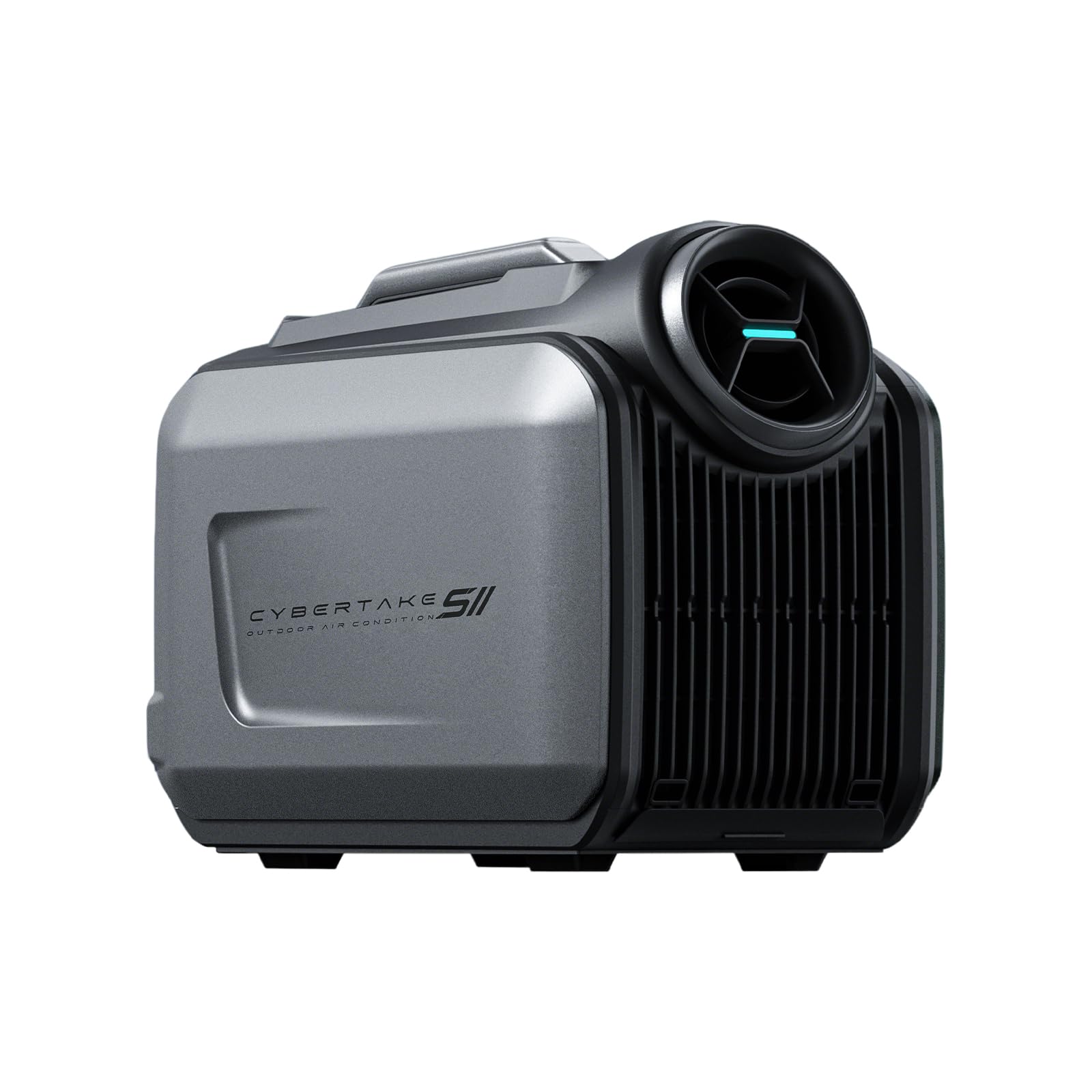
The do-everything unit that cools, heats, and runs off your car or power station.
This is the most versatile machine here, and the only one that heats as well as cools. It delivers 5100 BTU of cooling and a sturdy 6100 BTU of heating, enough to condition spaces up to 130 sq. ft. — covering everything from a large tent to an RV cabin. You can set it as low as 60°F for hot nights or crank it up to 90°F when the mercury plunges, with an operating range of 41°F to 113°F outside. At 21 pounds, it is also the lightest full-featured unit on this list.
The power flexibility is the real headline. It accepts 3-way input — a wall outlet (100-240V), your car or RV’s 12V/24V system, or a portable power station’s DC 48V — so it is genuinely off-grid capable where the wall-only units fail. In Eco+ mode, the maker promises it uses as little as 1kWh per 8 hours, which owners largely confirm as a realistic low-draw scenario. Setup takes 30 seconds with the included hose kit, and at 40dB it runs quieter than a dishwasher, earning consistent praise for sleep quality.
The honest trade-offs are real. Boost converters for certain hookups and even the remote control must be purchased separately, which adds to an already premium price. Cooling performance gets mixed feedback — it shines when running from outside a tent or small car with ducts routed in, but several reviewers point out it cannot cool the inside of a large SUV efficiently, and the hot exhaust pipe demands a short, well-vented run. One owner drained a 2400Wh station in about 5 hours on higher settings, so Eco mode matters for battery life. This is specialist gear for the serious overlander who wants year-round climate control, not a casual weekend camper.
What justifies the premium
- Both 5100 BTU cooling and 6100 BTU heating for year-round use
- Runs on 48V DC, 12-24V vehicle, or 100-240V wall power
- Quietest on paper at 40dB with a light 21 lb frame
What to know before buying
- Remote control and boost converters sold separately
- Cooling struggles inside large SUVs — best run from outside with ducts
- Premium price tag that casual campers may not justify
The pick if: you live the van-life or overlanding lifestyle and want one unit that cools in summer and heats in winter off any power source.
Pass if: you just need to cool a tent on a budget — the wall-only units above cover that for far less.
Understanding the Specs
BTU (British Thermal Units)
This is the raw cooling muscle. A higher BTU means the machine can remove more heat per hour, so it conquers larger spaces faster. A 3500 BTU unit suits a small 2-person tent, while 10000 BTU can handle a large family tent or camper. But more BTU also means more power draw, so it is a balancing act with your battery.
Power Source: 110V vs 12V/48V DC
This decides where you can actually use the unit. Standard 110V AC machines need a wall outlet or a generator, which anchors you to a powered campsite or an RV hookup. True off-grid freedom comes from units accepting 12V/24V vehicle power or 48V DC from a portable power station — but check your battery’s watt-hour capacity against the AC’s draw, or the compressor will drain it in hours.
FAQ
Will a portable AC actually cool a tent, or is it a waste of money?
How many BTU do I need for my tent size?
Can I run a tent AC off a portable power station?
Do these units work off my car’s 12V outlet?
What does the SACC versus ASHRAE BTU rating mean?
How do I vent the hot air from a tent AC?
Are these tent ACs quiet enough to sleep next to?
Is a 3500 BTU unit enough for two people?
What is the difference between rotary scroll and reciprocating compressors?
Do I need to drain water from these portable ACs?
Final Thoughts: The Verdict
The overall winner for serious campers is the Antarctic Star 10000 BTU because its raw cooling power actually conquers a large tent or camper instead of just stirring the air. If you live off-grid or in a van, the Cybertake S2 Pro is the one to reach for — its heating and 3-way power inputs make it a true year-round companion. And for the majority of campers who want efficient cooling without wrecking a battery budget, the Outohome 5200 BTU delivers the best balance of speed, low power draw, and owner satisfaction — the crowd favorite that earns its praise with real-world numbers around 284W startup draw.
How We Picked
We do not accept paid placement. Every pick is matched to a real buyer and a real use-case; we do not hands-on test units.
Sources & Methodology
Specifications: manufacturer listings and product documentation. Review insights: verified customer reviews, as of September 2026. Pricing: not shown on this page (it changes often); check the current price via the retailer link.
As an Amazon Associate, Gadgets Feed earns from qualifying purchases. This does not affect which products we feature.