
Our readers keep the lights on and my morning glass full of iced black tea. As an Amazon Associate, I earn from qualifying purchases.
Specs are compiled from manufacturer listings and verified buyer reviews and can change over time — please confirm the key details on the product page before buying.
The first thing you learn about anvils is that weight is only half the story. A cheap cast-iron block will ding and dent under a heavy hammer, while a proper steel face throws the energy back into your work. The real metric that separates them is rebound — how high a ball bearing bounces off the face — and that single number tells you more about a forging surface than any brand name.
I’m Min — the founder and writer behind Gadgets Feed. This guide is built by comparing the manufacturers’ published specifications and the patterns across verified customer reviews, so you get each pick’s real strengths and trade-offs instead of marketing spin.
Whether you are forging your first blade or upgrading a tired shop, these picks cover the honest range of what a blacksmith anvil should deliver for the money you actually spend.
Our Picks at a Glance


How To Choose The Best Blacksmith Anvil
An anvil is a one-time purchase that should outlive your hobby, so the material and the weight decide everything. You want a face hard enough to resist dents, a body heavy enough to stay put, and holes positioned where your tooling can actually reach them.
Cast steel versus cast iron — the material speaks first
Cast steel faces absorb heavy blows without deforming, which is why most serious picks here are steel. Cast iron is cheaper but softer, so it dents more easily under a misplaced hammer strike — buyers report that trade-off clearly on lighter models.
Rebound tells you how the face behaves
Drop a steel ball bearing onto the face and watch how high it returns. A rate around 70% is workable, but the forged and heat-treated steel models here measure far higher. — One owner measured 90% rebound with a 1″ ball bearing dropped from 24″ bouncing back to 21.5″.. That energy return is what makes forging feel easy.
Weight is your stability and your anchor
The heavier the anvil, the less it walks across your bench under hammer blows. A 73-pound model still needs securing to a stump, while a 110-pound base sits more calmly. Match the weight to your strength and your stand, not just your budget.
Quick Comparison
| Model | Best For | Material | Weight | Rebound | Amazon |
|---|---|---|---|---|---|
| VEVOR 86Lbs Steel Anvil★ Best Overall | Entry-level all-round work | Drop-forged steel | 73 pounds | Not specified | Amazon |
| Easmvetaln 66Lbs Cast SteelBest Value | Hard-face value seekers | Cast steel | 66 pounds | Over 70% | Amazon |
| HimaPro 55 LBS Cast Iron | Jewelry and small projects | Cast iron | 53.9 pounds | Not specified | Amazon |
| Easmvetaln 110Lbs Cast Steel | Serious hobbyists | Cast steel | 110 pounds | Over 80% | Amazon |
| NC Tool 70 Lb. Turning Cams | Horseshoeing and bar stock | Forged steel | 70 pounds | Not specified | Amazon |
| NC Tool Knifemaker Anvil | Blade forging on the move | Forged steel | 71 pounds | Not specified | Amazon |
| NC Tool Calvary Anvil | Knife work with turning cams | Alloyed casting | 112 pounds | 85% measured | Amazon |
In-Depth Reviews
1. VEVOR Single Horn Anvil 86Lbs
Our pick — over 4.5★ from 600+ verified ratings; the strongest balance of quality and price.
The starter anvil that shrugs off hard hits without breaking your budget
Drop-forged high-grade steel is the headline here, and it explains why this 73-pound anvil keeps impressing people who actually hammer on it daily. The crowd that praises it most — well over thirty owners — points straight at durability, calling it able to take hits despite the modest weight.
Owners mention it “can take hits, good small size, pretty durable, pretty light so as long as you secure it shouldn’t move.” That last line matters: at 73 pounds it is far lighter than the 110-pound brute further down this list, so you must bolt it to a solid stump. The fully polished, quench-treated face and spray coating resist oxidation, and the round horn handles smooth bending while the hardy hole accepts your accessory tooling.
The catch is honest and small. A few owners found the surface needs dressing before serious work, and one measured only “ok rebound” rather than spectacular. For a first anvil or a compact shop, though, this is the one people keep recommending to friends.
What wins people over
- Drop-forged steel face resists dents under heavy blows
- Compact 73-pound size suits small workshops and bladesmithing
- Buyers call it well worth the money for the price
Fair caveats
- Light enough that securing it to a stump is mandatory
- Surface may need light dressing before serious forging
Reach for this if: you want a proven steel anvil for getting into smithing without overthinking it.
Understand going in: rebound is decent but not elite — the heavier cast-steel options above outclass it there.
2. Easmvetaln 66Lbs Cast Steel Anvil
A hard steel face with rebound measured at 90% — at a price that stuns
This is the anvil that proves value and performance can share a box. The cast steel face goes through an 800° high-temperature heat treatment that reaches 55HRC hardness., which is exactly why owners measure a 90% rebound — a 1″ ball bearing dropped from 24″ springs back to 21.5″. The manufacturer claims over 70%, and real-world testing blew past that claim.
The 10.83″ x 3.15″ work surface gives you a flat, even bounce across the top, with slightly less energy near the hardy area. Quality is the most-praised trait here, with owners describing it as “great quality, cast steel, very balanced” and a professional blacksmith with two decades of experience endorsing it over similar models. A six-month hobbyist called it good value with a hard face and traditional London style.
The honest gripes are precise: the horn is not perfectly round, the step to the cutting shelf is minimal at about 1/8″, and the small hardy hole drew the most criticism — several owners found it too tight for standard tooling. This is a real trade-off to weigh if you already own hardy tools.
The standout quality: 55HRC hardness and measured 90% rebound put this in conversation with anvils costing far more.
The honest limit: the small hardy hole and rough casting edges mean you may need to dress the horn and shop for slimmer tooling.
Buy it for: the best rebound-per-dollar in this lineup — ideal for a starter who wants a serious face.
Think twice if: you need a standard-size hardy hole for existing accessories.
3. HimaPro Single Horn Anvil 55 LBS

The little anvil that jewelry makers and metal stampers swear by
Here is the anvil that keeps showing up in jewelry-making kits and light metal-stamping benches. At 53.9 pounds and 18.5″ x 5.6″ x 6.3″, it is physically the most compact footprint here — noticeably smaller than the 24″ x 7″ x 7″ VEVOR above — which is precisely why hobbyists with limited bench space love it. The polished flat surface handles hammering and punching, while the round horn takes on bending and shape forming.
Size is what wins people over most, and versatility runs second. Owners describe it as perfect for a jewelry-making hobby, with one noting it is “great size great weight and she can hammer on it.” The cast iron body carries a hardness rating of 45-58 HRC, which signals the trade-off: it is softer than the cast steel options, so heavy blacksmithing blows can dent the face more readily.
Buyers do flag one specific quirk — if you plan to shape metal over the horn, you may need to grind down the cast line running down the horn’s middle. For light work and smaller projects, though, owners call it a great little tool that consistently earns its place.
Where it shines
- Compact size fits small benches and jewelry setups
- Versatile — owners use it for stamping, hammering, and forming
- Polished flat face gives clean striking surface
Know the limits
- Cast iron dents more easily than cast steel under hard blows
- Cast line on the horn may need grinding for clean shaping
Choose this for: jewelry making, metal stamping, and small projects where a full-size anvil is overkill.
Pass it by if: your hammer work is heavy enough to test a cast iron face.
4. Easmvetaln 110Lbs Cast Steel Anvil
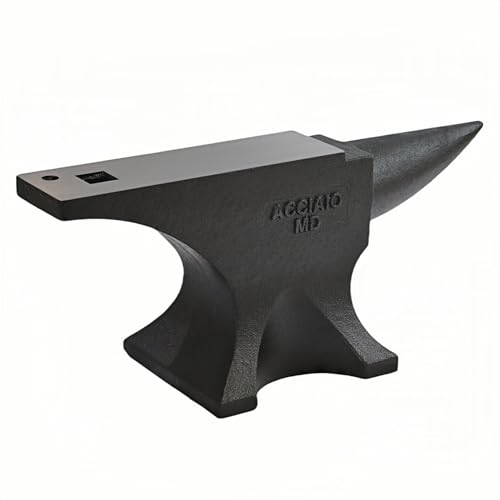
The heavyweight that serious hobbyists describe as a lifetime tool
This is the anvil you buy when you stop treating blacksmithing as a casual experiment. At 110 pounds with an 800° heat-treated face reaching 55HRC, it claims over 80% rebound., and owners confirm the face stays dent-free after months of use. The 13.1″ x 3.7″ work surface is the largest in this lineup, giving you room to spread out longer workpieces.
Functionality is the trait owners praise most, and they back it with strong language — one calls it “an absolute beast… professional-grade, lifetime tool,” while another notes it is the preferred go-to of the two anvils they own. A file test checking hardness came in at RC54+, confirming the face resists chipping., and the minimal ring means the anvil sings less and thuds more under the hammer.
Two honest notes temper the enthusiasm. The horn arrives slightly rough and needs smoothing time, and a few owners found the hardy hole larger than a 1-inch square — check your tooling fit before assuming compatibility. Owners also mention edges can ding if you catch them wrong, which is normal for any hard-faced anvil.
The big win: 110 pounds of stable, high-rebound cast steel that owners call a lifetime purchase.
The preparation: budget time to dress the horn and confirm your hardy tools fit the opening.
Grab this if: you are a serious hobbyist who wants a stable, professional-grade face that will not dent.
skip it if: you lack a stand strong enough for a 110-pound anchor.
5. NC Tool 70 Lb. Anvil with Turning Cams
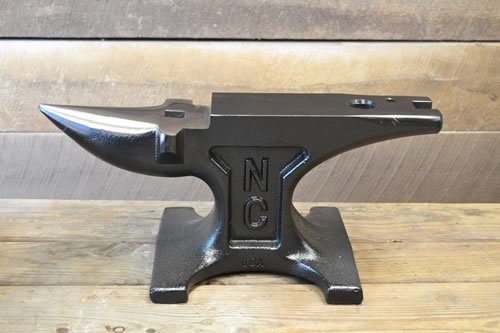
The mobile-style anvil with cams built for horseshoeing and bar stock
This NC Tool anvil answers a very specific question: how do you turn heels on horseshoes or bend bar stock without fighting the metal? The answer is the turning cams on the back, which owners call very handy and which effectively replace the need for a separate bending fork. It is a “mobile style” anvil, meaning it suits a traveling farrier setup as much as a fixed shop bench.
The face measures 3 1/4″ x 10 1/2″, with a flatter-style top on the horn, a 1″ Hardie hole, and the pritchel hole positioned nearer the heel. At 70 pounds it is portable enough to load into a truck, and owners confirm it is sturdy enough to weld onto a metal stand. A novice bladesmith calls it “a solid little anvil for a fair price,” with the explicit warning not to compare it to the cast iron junk in this range.
Customers note the build quality is excellent, and one calls it simply “a really good tool, well constructed.” The recurring theme from owners is that this is a purpose-built farrier anvil — if your work is horseshoes and bar stock, the cams make it worth the premium over a generic single horn. The single caution flagged: double-check the horn on delivery, as one unit arrived with packaging damage.
Built for the trade
- Turning cams handle horseshoe heels and bar stock bending
- 70-pound mobile size suits traveling farrier work
- Owners call build quality solid and well constructed
Watch for
- Inspect the protruding horn on delivery for shipping damage
- Specialized camel design is less general-purpose than a plain single horn
This is the one for: farriers and metalworkers who shape horseshoes or bend bar stock regularly.
Not the pick if: you want a general-purpose anvil and never touch horseshoe work.
6. NC Tool Knifemaker Anvil

A classic rectangular face with square clip horn, sized for the traveling bladesmith
Knife makers think differently about anvil shape, and this NC Tool model shows why. The classic, traditional design pairs a rectangular face with a square clip horn — the squared profile gives you precise control when forging blade bevels and tangs. The 3-1/4″ x 11-3/8″ face is longer and narrower than the farrier anvil above, which suits drawing out blade steel along a controlled line.
At 71 pounds shipping weight, owners describe it as “small enough to move around, and would work perfectly for a mobile set-up.” That portability is the defining trait — it works great in a garage or shop but does not chain you to one spot. The 1″ Hardie hole and pritchel hole both sit in the heel, keeping the face clear for blade work.
Owners are direct about its purpose: “Working metal. Knives etc.” This is not a multi-purpose farrier anvil — it is a specialist blade-forging surface that forgives the lack of turning cams because you are not bending horseshoes. The trade-off is that a square clip horn is less useful for general round bending than a traditional round horn.
The defining spec: a long 11-3/8″ rectangular face built for drawing out blade steel.
The honest fit: this is a specialist — superb for knives, less versatile for general blacksmithing.
Pick this up if: knife forging is your focus and you want a mobile, traditional-style anvil.
Look elsewhere if: you need a round horn for general bending and shaping work.
7. NC Tool Calvary Anvil, 112 Lb.

The 112-pound alloyed casting with an 85% rebound that knife makers call perfect
This is the anvil at the top of the food chain here, and the numbers justify the premium placement. The balanced alloyed casting carries turning cams, a 1-1/2 inch right and left hand square clip horn, and a 1 inch Hardie hole positioned in the horn itself — a layout knife makers love because it keeps the face unobstructed. Owners measure the rebound at 85% using a ball bearing, which is elite performance territory.
Knife makers are the ones raving loudest. One owner who forges blades calls the face “perfect” and confirms the 85% rebound with a ball bearing, while another says it is “really good quality. Perfect for forging knives.” The 112-pound weight gives you the stability that lighter anvils cannot match — this is not walking anywhere on your stand, which means your hammer energy goes into the steel, not into chasing a shifting anvil.
The commercial-grade alloyed build draws consistent praise for quality, with owners calling it a great upgrade they were excited to make. The honest consideration is simply the commitment: at 112 pounds with a premium price, this is a final anvil purchase, not an entry-level experiment. Owners describe it as fantastic and note the face delivers exactly what a serious knife maker needs.
The premium payoff
- 112 pounds of stable, alloyed mass that stays put under the heaviest blows
- 85% ball-bearing rebound delivers elite energy return
- Turning cams plus 1″ Hardie hole in the horn suit knife forging
The commitment
- Premium price positions this as a final, long-term anvil purchase
- 112-pound weight demands a permanent, heavy-duty stand
Make the upgrade to this if: you forge knives seriously and want a face with measured 85% rebound.
Only pass on it if: you are still deciding whether blacksmithing will be a lasting hobby.
Understanding the Specs
Rebound Rate
Drop a steel ball bearing onto the face and measure how high it bounces. Higher rebound means more of your hammer energy returns to the workpiece instead of vanishing into the anvil. A reading around 70% is workable, while the heat-treated steel models here push past 80% — One measured 85%, and another hit 90% with a 1″ ball bearing from a 24″ drop.
HRC Hardness
This scale measures how resistant the face is to denting. A rating around 55HRC, reached through an 800° heat treatment process, means the surface shrugs off misplaced hammer strikes without deforming. Softer faces in the 45 HRC range dent more readily — which is why cast iron models suit light work while hardened steel handles heavy blows.
FAQ
What does rebound rate actually tell me about an anvil?
Is cast steel always better than cast iron for an anvil?
How heavy an anvil do I actually need?
Will my existing hardy tools fit these anvils?
What is the difference between a round horn and a square clip horn?
What are turning cams for on an anvil?
Why does the anvil ring or sing when I strike it?
Do I need to prepare the anvil surface before first use?
How do I mount my anvil so it does not move?
Which anvil is best for making knives?
Final Thoughts: The Verdict
For most people, the blacksmith anvil winner is the VEVOR 86Lbs Steel Anvil because it pairs drop-forged steel durability with a crowd-approved track record. If you want the best rebound-per-dollar, grab the Easmvetaln 66Lbs Cast Steel. And for serious knife makers ready to commit, the NC Tool Calvary 112 Lb. is the one to reach for.
How We Picked
We do not accept paid placement. Every pick is matched to a real buyer and a real use-case; we do not hands-on test units.
Sources & Methodology
Specifications: manufacturer listings and product documentation. Review insights: verified customer reviews, as of September 2026. Pricing: not shown on this page (it changes often); check the current price via the retailer link.
As an Amazon Associate, Gadgets Feed earns from qualifying purchases. This does not affect which products we feature.