
Our readers keep the lights on and my morning glass full of iced black tea. As an Amazon Associate, I earn from qualifying purchases.
Specs are compiled from manufacturer listings and verified buyer reviews and can change over time — please confirm the key details on the product page before buying.
Your microphone’s sound quality depends on a humble 3-pin XLR cable—the connector type (three pins inside a metal shell) that carries your mic’s signal to your interface. If the cable lacks proper shielding, you may hear a faint hum from your computer. Because XLR’s balanced design is mature, even budget cords transmit clean audio over short runs.. Shielding, connector quality, and length determine whether a cable stays hum-free and reliable..
I’m Min — the founder and writer behind Gadgets Feed. This guide is built by comparing the manufacturers’ published specifications and the patterns across verified customer reviews, so you get each pick’s real strengths and trade-offs instead of marketing spin.
Whether you are wiring a microphone, a mixer, or DMX stage lights, you need a 3 pin xlr cable that delivers a clean signal without hum, buzz, or interference from nearby electronics.
Our Picks at a Glance

How To Choose The Best 3-Pin XLR Cable
Every XLR cable carries the same three pins and the same balanced signal, but the materials inside vary a lot. Your choice should start with whether you are sending a microphone-level audio signal or a DMX lighting control signal, because those two jobs put different demands on the cable.
Audio vs. DMX: Know Your Signal Type
A standard microphone or line-level audio cable works for mics, mixers, and speakers. A DMX cable is built specifically for stage lighting control, and it usually has a specific impedance (around 110 ohms) plus extra shielding to keep digital lighting data clean over long runs. Many DMX cables physically fit into audio gear, but they are tune for lighting signals, so think about your primary use before you buy.
Gauge and Conductor Quality
Wire gauge tells you the thickness of the copper conductor inside, and lower numbers mean thicker wire. A 22AWG conductor is thicker and more stable than 24AWG or 26AWG, which matters for maintaining signal strength over longer distances. Oxygen-free copper (OFC) resists oxidation and keeps the signal path clean, so look for that wording when you compare cords side by side.
Shielding and Connector Build
Shielding is your defense against hum and buzz. Copper braided shielding and aluminum foil (often used together as double shielding) block electromagnetic and radio frequency interference from power cables and electronics around you. Connectors matter too — zinc alloy shells resist corrosion better than aluminum, and gold-plated pins keep the contact smooth and stable over years of plugging and unplugging.
Quick Comparison
| Model | Best For | Length | Gauge | Connector Material | Amazon |
|---|---|---|---|---|---|
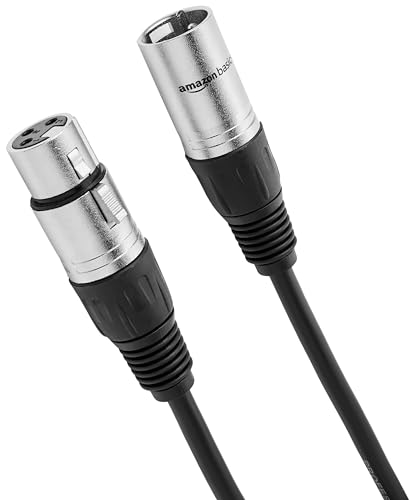
| Amazon Basics XLR Cable★ Best Overall | Everyday mic and PA use | 10 ft | All-copper | Zinc alloy | Amazon |
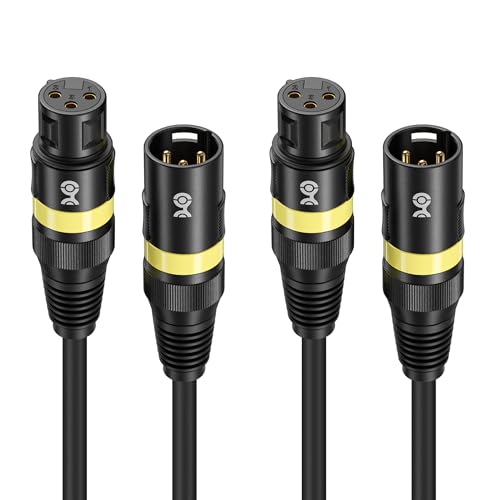
| Cable Matters DMX 2-PackLighting Pro | Stage lighting control | 3 ft (vs the 10 ft Basics) | 22 AWG | Metal | Amazon |
| Elecan Heavy Duty XLRLong-Run Star | Long runs, pro studios | 25 ft | 24 AWG | Nickel-plated pins | Amazon |
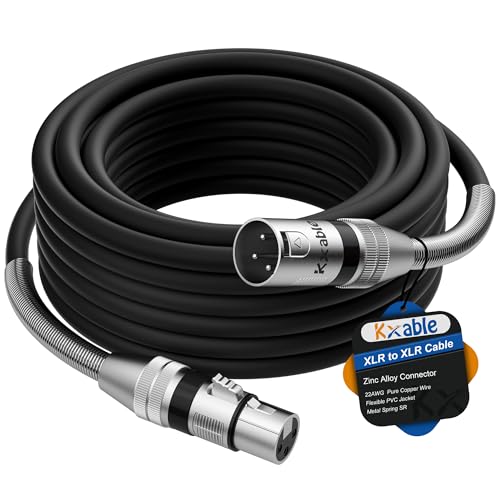
| Kxable 15 FT XLR | Podcast and home studio | 15 ft | 22 AWG | Zinc alloy | Amazon |
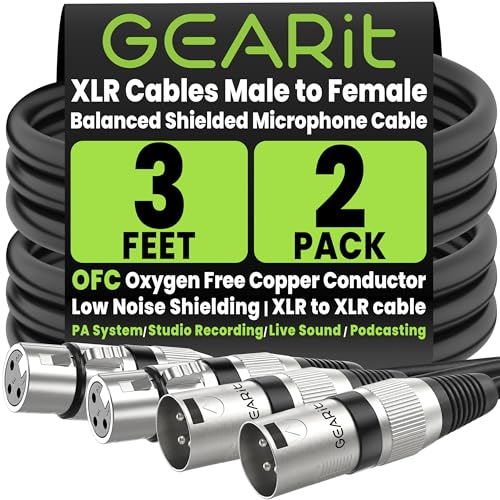
| GEARit 22AWG OFC 2-Pack | Short patch runs between gear | 3 ft (36 inches) | 22 AWG | Metal housings | Amazon |
| Kxable 8FT 2-Pack | Premium studio quality | 8 ft | 22 AWG | Zinc alloy | Amazon |
| AQOOL 3ft XLR 4-Pack | Color-coded cable management | 3 ft | OFC conductor | Gold-plated | Amazon |
| MFL. DMX Cable 4-Pack | Weddings, parties, DJ lighting | 10 ft (10.2 ft) | 22 AWG stranded, 110 ohms | Sterling silver-plated | Amazon |
| WorldLite DMX 10-Pack | Daisy-chaining many lights | 6.5 ft (2m) | — | Metal | Amazon |
In-Depth Reviews
1. Amazon Basics XLR Microphone Cable (10 ft)
Our pick — over 4.5★ from 44,000+ verified ratings; the strongest balance of quality and price.
The everyday workhorse that proves a budget XLR cord can sound completely silent.
If you only buy one cable, this is the one the crowd has already vouched for—Its massive buyer base signals proven reliability across countless studio setups.. It runs 10 feet, enough to stretch from your microphone to your interface across a desk or a small stage. The all-copper conductors with inner copper spiral shielding (a braided layer that blocks electromagnetic interference) keep buzz out, so your recordings stay clean.
Zinc alloy connectors and a flexible PVC jacket deliver durability that rivals pricier cords.. Zinc alloy 3-pin connectors with a nickel finish give you a firm, secure click when you plug in—no loose fit. The protective metal housing plus a flexible 6.0mm PVC jacket (a tough outer layer) means it can handle being coiled and uncoiled night after night in a home recording studio. Buyers report the sound is clean with no static, and that it coils easily for storage.
Owners consistently report secure connections and durable jackets over months of use. — buyers describe the connectors as secure and the jacket as durable, with some using midi equipment and finding the compatibility spot-on. As owners put it, the cable delivers “high quality sound through the noise no noise,” which sums up what you actually want from an XLR cord.
budget staple
- Zinc alloy connectors resist wear far better than plastic shells
- Inner copper spiral shielding keeps noise low near other electronics
- 10-foot length covers most desk-and-floor setups
basic build
- A few owners mention faint buzzing if placed near heavy electronics — treat shielding as good, not bulletproof
- Indoor use only, so leave it out of wet outdoor runs
value pick: you want a proven, reliable microphone cable for studio or PA use without overthinking.
pro users: you need a cable for DMX stage lighting control specifically.
2. Cable Matters 2-Pack 22AWG 3-Pin XLR DMX Cable (3 ft)
A lighting-first cable that keeps your stage show running without signal dropouts.
This one is built for DMX lighting control, not vocals — and that distinction matters. It is a short 3-foot run, which makes it perfect for patching between nearby lights or from a controller to the first fixture in a chain. Customers note it “worked perfectly” on their DMX lights, and that is the exact job this cord exists to do.
The 22 AWG wire is the detail that keeps digital lighting signals clean across your rig, and the cable carries extra shielding designed around EBU and AES standards for stable transmission. While the specs list it as 3 ft and the Amazon Basics cable stretches to 10 ft — a three-and-a-half-times gap in reach — this one is not meant to cross a room. It is meant to sit between two pieces of gear in tight quarters.
What makes it a smart buy is the 2-pack format. You get two cables for nearly the same cost as a single premium cord, so you can connect two lights or keep a spare in your bag for when a cable fails mid-gig. The build is solid, and owners consistently call it good value for the money.
studio pair: you run stage lighting and want dependable short DMX links with a built-in backup.
long runs: you are wiring a microphone — this is tune for low-voltage DMX signals, not audio.
3. Elecan Heavy Duty Balanced XLR Cable (25 ft)
The long-distance runner that keeps signal quality intact across a whole room.
When your microphone needs to reach a mixer on the far side of the stage, this 25-foot cable is the answer. It uses 24 AWG pure copper conductors and shields against both EMI and RFI, which means you can route it past power cables and wireless gear without picking up static. Owners describe the sound quality as clear, with one noting microphones sounded “a lot clearer” after switching to these cords.
Nickel-plated pins and a self-locking connector make this cord genuinely heavy-duty.. It uses pure copper nickel-plated XLR pins with a self-locking male-to-female design, so the connection stays firm while still being easy to pull out when you need to pack up. Its high-elastic PVC jacket survives over 10,000 bend cycles without cracking., and the kit includes 10 cable ties to keep long runs organized. Compared to the Amazon Basics at a 24 AWG vs all-copper difference, this one trades a little thickness for much more reach.
This cable is also a favorite for repeat buyers — one owner went back and bought four of the 100-foot versions, calling them better than pricier alternatives. For a home studio or a small venue where you need distance without signal loss, this is a genuinely pro-grade choice.
stage length: singers and engineers who need a long, clean run from mic to mixer across a stage or studio.
desk use: the included Velcro ties run short for bundling a 25-foot coil — grab your own straps if that matters.
4. Kxable XLR Microphone Cable (15 ft)
A chunky, flexible cable built for podcasters who want zero noise on the recording.
Kxable targets the growing podcast and home-studio crowd, and the 15-foot length is the thoughtful detail here — long enough to route from a mic on your desk to an interface or mixer without dangling slack everywhere. The 22 AWG pure copper conductor is thicker than the 24 AWG found on many competitors, which translates to a more stable signal and a slightly stiffer, more substantial feel in your hand.
The shielding setup is the real selling point. High-density copper braided shielding combined with aluminum foil blocks both EMI and RFI, so your recordings stay free of hum even with a computer monitor and phone sitting nearby. Owners describe it as a “great chonky” cable with solid connectors, and one user plugs it into a Scarlett 2i2 interface and calls it heavy duty enough for professional environments.
Kxable also uses a zinc alloy shell instead of aluminum, which resists corrosion better over time, and adds a metal spring at the strain-relief point so the cable does not crack where it meets the connector. It ships with 5 cable ties, and if you want shorter runs for patching gear, Kxable sells the same design in lengths from 1 ft up to 200 ft.
midrange balance: the copper braid plus foil double shielding is the kind of protection you usually only find on pricier studio cables.
single cable: owners are split on value, so if you are on a tight budget with a short desk run, a 3-foot patch cable might serve you just as well.
5. GEARit 22AWG OFC XLR Cables (3 ft, 2-Pack)
Short, tidy patch cords that clean up your rack without adding slack or noise.
This is a patch cable in the truest sense — 3 feet long, meant to connect gear that sits close together, like an audio interface to a preamp or a mixer to a patch bay. The 36-inch length (the data shows 36 inches) is ideal for tight setups where a 10-foot cord would leave you with a nest of coiled cable. Owners praise it as exactly what they needed to patch between hardware without extra slack.
The conductors are oxygen-free copper (OFC), which resists oxidation and keeps the signal path clean, and the cable is shielded to reduce static and EMI/RFI interference. This matters when you are routing short runs between multiple pieces of powered gear — that is exactly where hum likes to creep in. Some owners came from far pricier cables and found this one actually sounded better, with one noting their expensive cord changed sound when touched, a problem this one did not have.
Metal connector housings give you a secure fit that survives repeated plugging and unplugging, which is the daily reality of patching a studio. The 2-pack means you can wire two connections at once or keep a spare, and the build quality at this level has owners genuinely impressed.
audio purist: a clean, organized patch bay or connecting two close pieces of studio gear without cable mess.
tight bends: you need reach — 3 feet will not stretch from a mic stand to a floor mixer.
6. Kxable XLR Microphone Cables (8 ft, 2-Pack)

A premium two-pack whose quality gets compared to cables costing several times more.
This is the version of the Kxable design that some owners compare to Mogami silver standards — a serious compliment in the audio world. At 8 feet, it is the kind of length that works both on a desk and on a small stage, giving you flexibility without excessive slack. The 22 AWG pure copper conductor is thicker and more stable than the 24 or 26 AWG found on cheaper cords.
Durability is the headline trait here. Owners note these cables handle significant abuse, and the data backs that up with zinc alloy shells, a metal spring strain relief at the connector, and a high-elastic PVC jacket. Podcasters report plugging them straight into cameras and interfaces with perfect sound, calling them “a life saver” in a studio environment. The double shielding — copper braid plus foil — keeps noise out so your recordings stay clean.
The 2-pack format makes this a genuinely smart premium buy. You get two high-quality 8-foot cables for one purchase, which is ideal if you run a stereo pair of mics or want a main cable plus a dependable backup. Kxable offers the same build in lengths from 1 ft to 200 ft if you need something longer or shorter.
premium twin pack: studio owners and podcasters who want a tough, quiet cable that feels pro-grade from the first plug-in.
pricey pair: the single 15 ft Kxable above if you need more reach and only need one cord.
7. AQOOL 3ft XLR Cable (4-Pack)
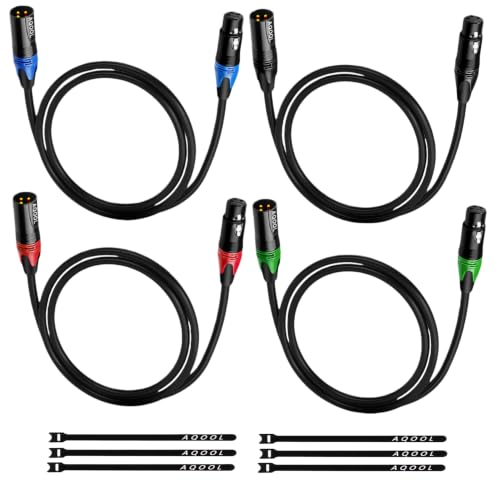
Four color-coded cables that make tracking your signal chain a visual no-brainer.
Here is a 4-pack of 3-foot cables where each one has a different colored connector — blue, black, red, and green. If you run a mixer or a small live setup, that color coding is a genuine time-saver. You can instantly tell which cable feeds which channel, and owners say the system makes organization much easier when you are setting up or tearing down.
Under the jacket, these use oxygen-free copper (OFC) with double shielding from copper braids and foil, which keeps hum and interference away. The gold-plated 3-pin contact points ensure smooth signal transmission, and the self-locking design makes them easy to plug and unplug without worrying about a loose fit. Reviewers point out clear voice output with no feedback, and one musician describes them as “very solid quality” that outperformed a cable from a guitar store at nearly double the price of one cord.
The flexible PVC jacket coils easily without tangling, and Its flexible PVC jacket endures over 10,000 bend cycles without kinking.. Each cable comes with a Velcro tie attached, making this set a practical grab-and-go option for mobile DJs and small stage setups where you need several short runs at once.
bulk utility: you need several short XLR runs and want color-coded organization built right in.
critical gigs: your setup needs longer reach — 3 feet only covers very close connections.
8. MFL. Flexible DMX Cable (10 ft, 4-Pack)

A properly specced DMX cable with the impedance your lighting rig actually needs.
For lighting control, impedance is the spec that matters, and this MFL. cable is built at 110 ohms — the standard DMX lighting controllers expect. At 10.2 feet, it gives you real reach between fixtures or from a controller out to the first light in a chain. The 22 AWG stranded conductor with multi-banded oxygen-free copper keeps the signal clean over that distance.
MFL. packs serious shielding into this cord: a helical shield and Duofoil at 100% coverage, plus a cotton and PVC jacket that resists kinking. Shoppers say using it successfully with Chauvet Swarm Wash FX fixtures and describe it as a must-have for stage lighting setups. The flexibility is a recurring highlight — no more wrestling with stiff cables that fight you during setup.
The connectors are plated with sterling silver and built with a chuck-type strain relief, which resists corrosion and handles the constant plugging and unplugging of event work. Coming as a 4-pack at 10 feet each, this kit can cover a small lighting rig for weddings, parties, or a DJ setup with room to spare.
mobile rig: DJs and event rigs that need multiple 10-foot DMX runs with proper 110-ohm impedance.
heavy duty: owners say it outperforms cheaper DMX cables that tend to develop issues over time.
9. WorldLite DMX Cables (6.5ft, 10-Pack)

A ten-pack of short DMX cables for lighting rigs that daisy-chain fixture after fixture.
When you are building a lighting rig with multiple fixtures close together, you need a lot of short cables — and that is exactly what this 10-pack of 6.5-foot (2-meter) cords delivers. Owners specifically call these out for daisy-chaining fill lights that sit near each other, and they work with DMX512 protocol fixtures like moving head lights and LED par lights.
Each cable uses duo foil and copper braided shielding to protect the wires and prevent signal interference across a whole show. The metal 3-pin XLR connectors are sturdy and click in with a positive lock, and the flexible PVC jacket resists kinking so you can coil these up fast at the end of the night. One owner accidentally yanked a light bar and was sure the cable snapped — it plugged right back in and worked fine.
At 6.5 feet each, these are shorter than the MFL. 10-foot cables above, but you get ten of them, which makes this the obvious choice if you are outfitting a rig with many fixtures in one area. The sturdiness and clean signal have owners describing the quality as professional and the value as the best deal on DMX cables they have found.
event install: you are wiring a cluster of DMX lights and want a full set of short, dependable links in one box.
audiophile: if you need longer 10-foot runs between fixtures spread across a stage.
Understanding the Specs
Wire Gauge and Conductor
Gauge (AWG) tells you the thickness of the copper wire inside the cable. A lower number like 22AWG is thicker and physically more stable than a 24AWG or 26AWG cord, which helps signal stay strong over longer distances. Oxygen-free copper (OFC) resists the oxidation that can degrade sound quality over years of use, so it is worth seeking out on any cable you plan to keep for a while.
Shielding and Impedance
Shielding blocks the electromagnetic and radio frequency interference that causes hum and buzz. Look for copper braided shielding, aluminum foil, or both (called double shielding) for the quietest signal. For DMX lighting cables specifically, impedance matters most — a 110-ohm cable is the standard that lighting controllers expect, so always confirm that number before buying a cord for stage lights rather than a microphone.
FAQ
What is the difference between an XLR cable and a DMX cable?
Does a thicker wire gauge like 22AWG sound better than 24AWG?
Why does my XLR cable pick up a buzzing sound near my computer?
Can I use a microphone XLR cable for my stage lighting?
How long should my XLR cable be for a home studio?
What does oxygen-free copper (OFC) actually do?
Do gold-plated XLR pins make a real difference?
Is a 2-pack or 4-pack of XLR cables worth buying?
What is a strain relief and why does it matter?
Can a bad XLR cable damage my microphone or mixer?
Final Thoughts: The Verdict
For most people, the 3 pin xlr cable winner is the Amazon Basics XLR Cable because it delivers clean, noise-free sound with sturdy zinc alloy connectors at a price that makes it the crowd favorite. If you run stage lighting, grab the Cable Matters DMX 2-Pack for dependable short links. And for long studio or stage runs where signal quality is critical, the Elecan 25 ft Heavy Duty is the one to reach for.
How We Picked
We do not accept paid placement. Every pick is matched to a real buyer and a real use-case; we do not hands-on test units.
Sources & Methodology
Specifications: manufacturer listings and product documentation. Review insights: verified customer reviews, as of September 2026. Pricing: not shown on this page (it changes often); check the current price via the retailer link.
As an Amazon Associate, Gadgets Feed earns from qualifying purchases. This does not affect which products we feature.