
Our readers keep the lights on and my morning glass full of iced black tea. As an Amazon Associate, I earn from qualifying purchases.
Specs are compiled from manufacturer listings and verified buyer reviews and can change over time — please confirm the key details on the product page before buying.
Choosing a Banarasi Silk Saree online often feels like a gamble on whether the color, weave, and fabric will match the glowing product photos. The real question you want answered is simple: which one is worth the money and will actually look like the picture when it arrives? This guide cuts through the marketing language of “premium” and “regal” to rank the options based on the only things that matter—the material, the zari work, the finishing, and what other buyers really experienced.
I’m Min — the founder and writer behind Gadgets Feed. This guide is built by comparing the manufacturers’ published specifications and the patterns across verified customer reviews, so you get each pick’s real strengths and trade-offs instead of marketing spin.
For a high-involvement purchase like this, the honest owner experience matters as much as the spec sheet. Here is our hands-on research into the banarasi silk saree market to find the ones that deliver on their promises.
In this article
Note: This list matches materials the way a human shopper would—it accepts pure silk or silk blends with zari (metallic thread) and skips anything clearly labeled synthetic. So not every pick is the exact weave you searched for; the closest same-type option serves the same purpose.
Quick Picks
- Chandrakala Banarasi Saree — Best Value
- SIRIL Women’s Kanjivaram Silk Saree — Lace Detail Pick
- Rang Priya Banarasi Silk Zari Woven Saree — Premium Zari Pick
- Pure Chanderi Banarasi Silk Saree with 3D Print — Modern Twist
How To Choose The Best Banarasi Silk Saree
For most women, the “perfect” Banarasi is one that drapes well, looks rich under indoor and outdoor light, and survives an entire wedding without snagging. To get that, you must look past the marketing words and check the fiber content and the construction details that define a real Banarasi.
The Fabric Literally Tells You Everything
Check what the listing says the saree is actually woven from. A pure silk saree has a distinct, slightly irregular texture and a deep sheen that shifts as you move. A cotton-silk blend (often labeled “cotton silk”) is softer and more breathable but has a matte finish. The catch is that some listings are vague, and buyers sometimes receive a synthetic fabric that feels stiff and shiny in a cheap way—one owner noted their saree felt nothing like the pure cotton silk that was promised. If the material isn’t clearly stated, that is a red flag you should not ignore.
Zari Work: Woven or Just Skimpy
Real zari is a metallic thread (usually gold or silver-toned) that is woven into the fabric, creating a pattern that feels slightly raised and catches the light on both sides. Cheaper versions print a gold-colored design onto the surface, which looks flat and will fade or crack with washing. When you are paying for a “zari woven” saree, you want the thread to be physically in the weave, because that is what gives the pallu (the decorative end piece) its weight and that unmistakable festive shimmer.
The Unstitched Blouse Piece Is a Double-Edged Sword
Most of these sarees come with an unstitched blouse piece, which is great because you can get a perfectly tailored fit rather than a standard size. The trade-off is that you are responsible for taking it to a tailor, buying a petticoat, and handling the finishing. Some buyers are surprised that the fabric edges arrive raw and need stitching. Factor that labor and time into your decision—it is part of the package.
Quick Comparison
| Model | Best For | Material Type | Zari Work | Blouse Piece | Amazon |
|---|---|---|---|---|---|
| Chandrakala Banarasi Saree | Value + Design | Cotton Silk Blend | — | Unstitched | Amazon |
| SIRIL Kanjivaram Silk Saree | Lace Detail Look | Silk | — | Unstitched | Amazon |
| Rang Priya Zari Woven Saree | Traditional Zari | Banarasi Silk | Woven | Unstitched | Amazon |
| Pure Chanderi 3D Print Saree | Unique Pattern | Chanderi Silk | 3D Print | Unstitched | Amazon |
In-Depth Reviews
1. Chandrakala Banarasi Saree

The crowd favorite—a crowd-pleasing drape that keeps the design conversation going
This Chandrakala saree is the pick to beat on value, the one buyers consistently call a great buy for the price. The design earns the loudest praise in the review pages, with the color and fabric quality also drawing consistent compliments. A tall 5’11” wearer reported getting a perfect ankle length with minimal tucking, which hints at a generous, easy-to-drape fabric that forgives a first-time wrapper.
It arrives with a running, unstitched blouse piece, which gives you the freedom of a tailored fit but means the edges arrive raw. In practice, buyers report that the pallu and blouse edges often need a tailor’s touch, and there is no sewn fall (the weighted hem that helps the saree hang straight). A few also flagged that the material feels more like a cotton-silk blend, with one owner feeling the quality did not justify a pure-cotton-silk price tag.
Weigh its strength honestly: if you value a beautiful, drapeable design and are ready to spend a little on finishing, it is the strongest all-rounder here. Just set your expectations that “cotton silk” comfort is the reality.
What wins people over
- Design stands out as the #1 praised aspect—the intricate pattern is what buyers talk about first
- Value for money is the second-most-mentioned positive, often called “an excellent saree” for the price
- Color delivery matches the product photos, so no surprise on arrival
- Works beautifully for traditional events like weddings
The finishing caveat
- Fabric reads as cotton-silk rather than pure silk—comfort over sheen
- No sewn fall and unstitched edges mean a tailor visit is essentially mandatory
- An occasional unit arrives looking different from the picture
Reach for this if: you want the safest blend of beautiful design, reliable color, and fair value, and you don’t mind handling the finishing.
Look elsewhere if: your heart is set on a true, heavy pure-silk drape—this one leans into the lighter cotton-silk comfort zone.
2. SIRIL Women’s Kanjivaram Silk Saree

The budget beauty that hinges on the luck of the draw
This SIRIL saree is the most affordable entry point here, and it wins people over on the visual details—specifically the “beautiful lace detailing” that buyers rave about. When it hits, it really hits: one buyer loved that it felt “exactly as shown in the picture,” praising the color and the overall fabric quality. The length also drew a positive note, hinting at a drape that suits a range of heights.
However, this is the gamble of the group. The review mix is noticeably polarized, with an equal share of delighted buyers and frustrated ones. The disappointment boils down to quality control—some units arrive feeling cheap, and a couple of buyers sent theirs back over the material. The data suggests you may receive a genuine silk beauty or a dud, depending on the batch.
This is the entry-level pick in this guide. Order it if your budget is the deciding factor and you are ready to return it if your unit misses the mark. The lace-work potential is real, but consistency is not there yet.
The sharpest trade-off: stand-out lace detailing and a lovely drape in the winning units, but a noticeable quality split means you are rolling the dice on consistency.
Budget reality check: this is the price-conscious pick, and that price shows up in the variability—expect to scrutinize your unit on arrival.
3. Rang Priya Banarasi Silk Zari Woven Saree
The heritage weave that gambles on workmanship over consistency
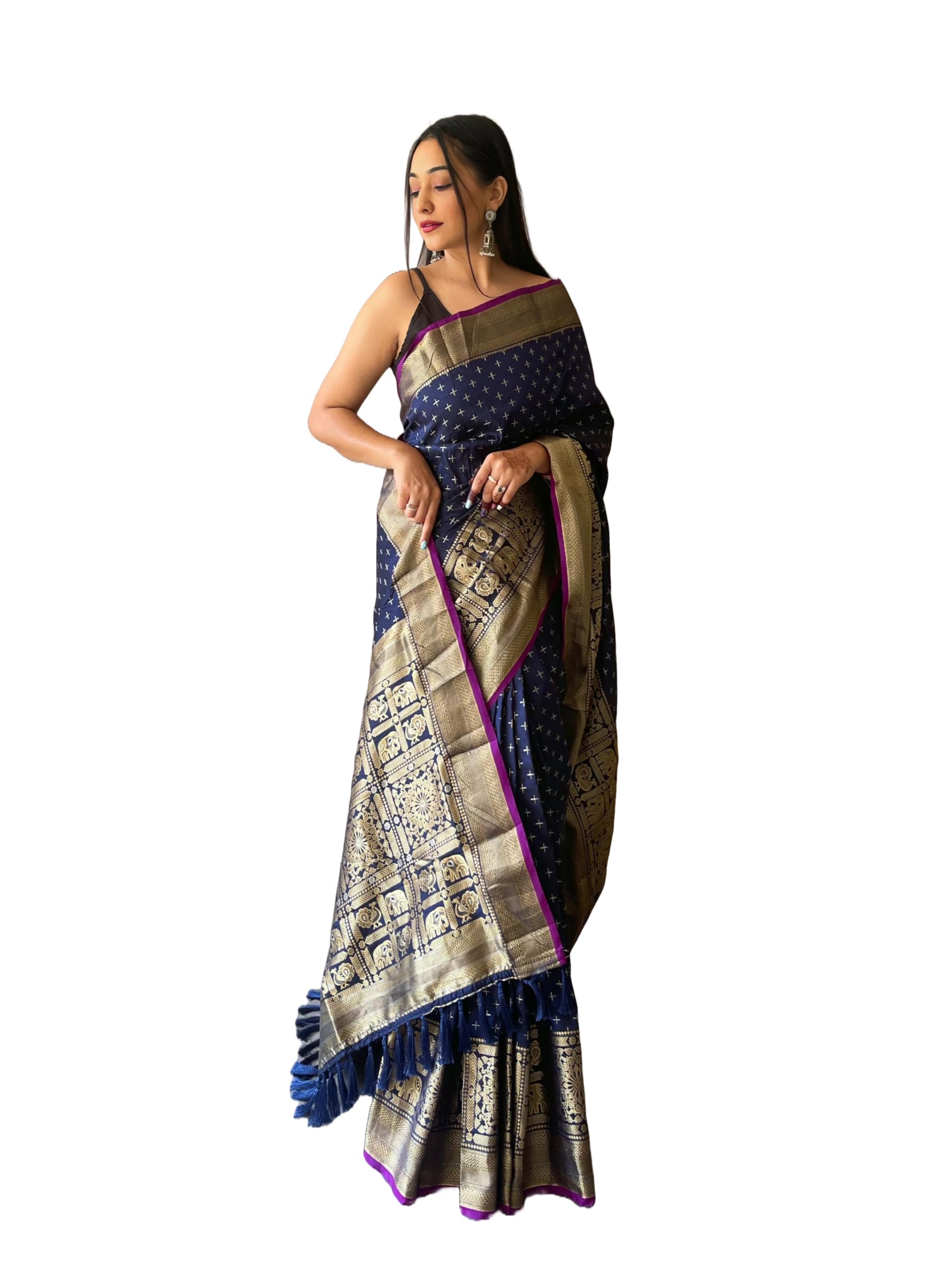
This Rang Priya saree is the one that leans hardest into tradition, promising genuine Banarasi silk with intricate zari woven patterns (the metallic thread physically worked into the fabric for that regal sheen). Buyers consistently confirm the visual payoff—the colors are described as perfect and the saree as beautiful, even earning repeat-purchase loyalty for special occasions like a mother’s celebration.
Yet the execution lets it down. The criticisms center on the finishing and handling of individual pieces: stitching that comes undone, threads pulling out, and at least one unit that arrived looking pre-worn and in a broken package. There is also a genuine point of confusion—the listing notes the unstitched blouse piece, but some buyers expected a fully stitched blouse to arrive with it.
What tips the scale is the silk itself. Unlike the cotton-silk blends, this is a heavier, more luxurious fabric with real zari, which is what you want for a formal, statement-making look. The recurring gripe is the stitching and the packaging—treat the piece with care and inspect it immediately upon arrival.
The honest read: this is the most traditional, premium-feeling silk on the list, and the ones that arrive in good condition are keepers.
Caveat to carry: between stitching flaws and a fragile package, quality control is the variable—give it a full inspection before you commit to keeping it.
4. Pure Chanderi Banarasi Silk Saree with 3D Print
The lightweight fusion that trades tradition for a printed pattern
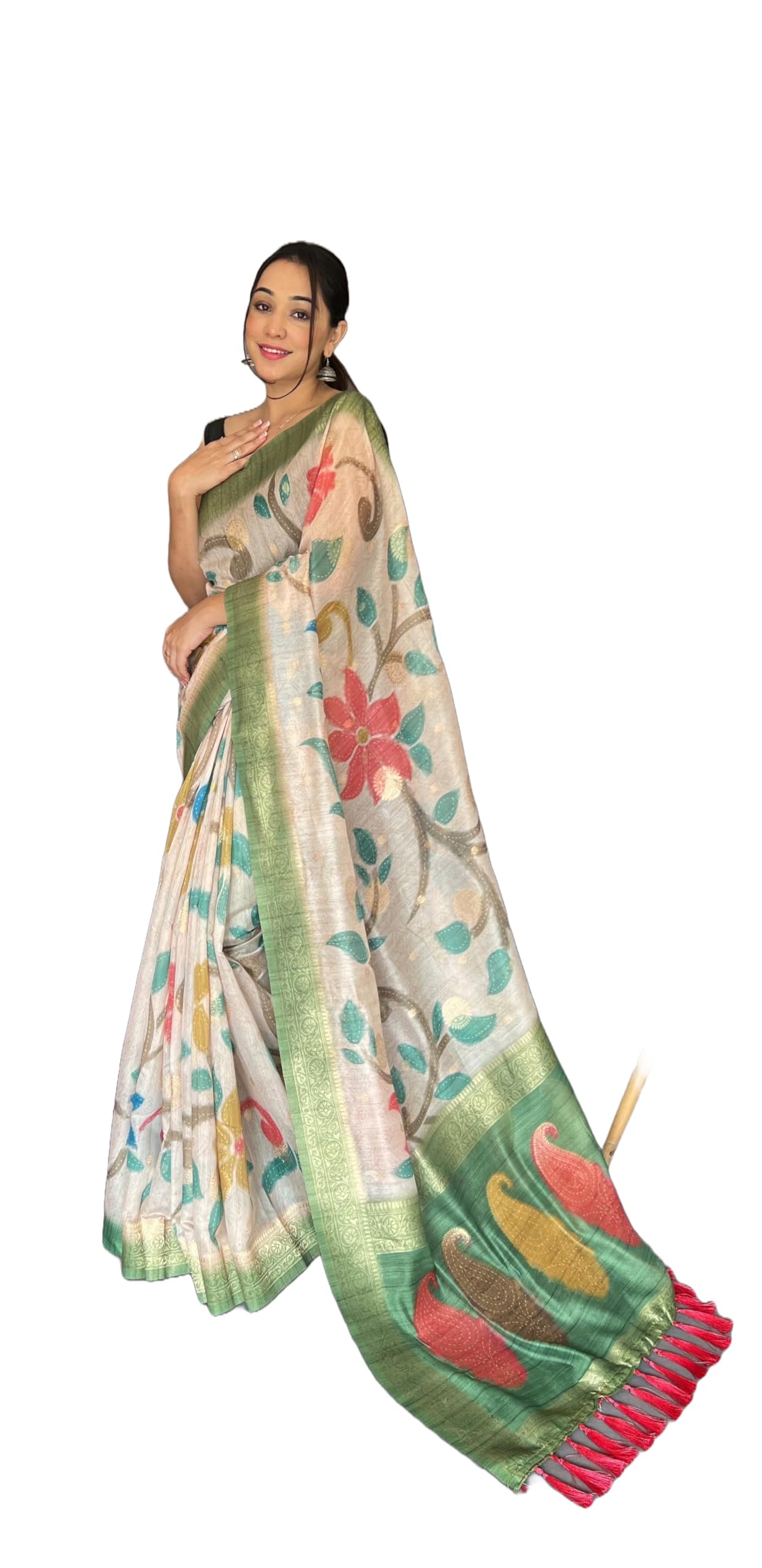
This Pure Chanderi saree takes a different route: premium Chanderi silk (a lighter, airier cousin of Banarasi silk) carrying a 3D digital print for a contemporary twist on the classic weave. Buyers who appreciate the modern aesthetic are happy, describing the color combinations as nice and the overall construction as good quality. Its defining advantage is the light, comfortable drape—a relief for a long day of celebrations.
The flip side is that a 3D digital print is fundamentally different from woven zari. You get the visual pattern of a Banarasi without the heavy, textured metallic thread that defines the traditional festive piece. The negative feedback focuses on presentation and consistency—one unit arrived crumpled and unfolded, looking like it had been worn before, and a few buyers felt the quality did not match the product photo.
This is the pick for the woman who wants the Banarasi aesthetic in a softer, easier-wearing fabric with a modern print, rather than the heirloom-weight traditional weave. The honest trade-off is that the “premium silk” feel varies, so expectations should be tempered toward the contemporary style rather than pure heritage.
The verdict: a comfortable, modern take on the Banarasi look—buy it for the lightweight Chanderi feel and the unique print, not for traditional woven zari.
Who it’s not for: anyone expecting the heavy, regal drape of a pure silk Banarasi—the 3D print is a visual effect, not a woven texture.
Understanding the Silk Specs
Silk Type and Weight
The fiber content determines everything about how the saree feels and drapes. Pure Banarasi silk is heavier and has a rich, deep sheen that catches light dramatically, making it ideal for evening weddings. Chanderi silk is noticeably lighter and more breathable, better for daytime events or warmer weather. Cotton-silk blends offer a middle ground—softer and easier to manage for a first-time wearer. If a listing is vague about the fiber, be wary: the difference between a real silk and a synthetic lookalike is felt the moment you touch the fabric.
Zari vs. Print
Traditional zari is a metallic thread (gold or silver-toned) woven into the saree, creating a pattern with slight texture and depth that reflects light differently from every angle—you can often feel the raised thread on the reverse side. A digital print, as seen on 3D-printed sarees, applies the color and pattern directly onto the fabric surface. It is cheaper, lighter, and more versatile, but it lacks the dimensional shimmer of true zari and can fade over time. Choose woven zari for formal, statement occasions; choose prints for comfort and a modern look.
FAQ
What is the difference between a Banarasi and a Kanjivaram saree?
How can I tell if a Banarasi silk saree is real or fake?
Why does my saree come with an unstitched blouse piece?
What is a “fall” and why do tails need to be stitched?
How do I care for and wash a pure silk saree?
Are all Banarasi sarees heavy to wear?
Can I wear a Banarasi saree for a daytime event?
What does “zari work” mean in a saree listing?
Final Thoughts: The Verdict
For most people, the banarasi silk saree winner is the Chandrakala Banarasi Saree because it offers the most consistent mix of a praised design, reliable color, and genuine value—making it the safest bet of the group. If you prioritize tradition and want the true heavy, woven zari feel of a pure Banarasi silk, the Rang Priya Zari Woven Saree is the one to reach for. And for a modern, lightweight twist on the classic style, the Pure Chanderi 3D Print Saree is your best pick for all-day comfort with a contemporary pattern.
How We Picked
We do not accept paid placement. Every pick is matched to a real buyer and a real use-case; we do not hands-on test units.
Sources & Methodology
Specifications: manufacturer listings and product documentation. Review insights: verified customer reviews, as of September 2026. Pricing: not shown on this page (it changes often); check the current price via the retailer link.
As an Amazon Associate, Gadgets Feed earns from qualifying purchases. This does not affect which products we feature.