
Our readers keep the lights on and my morning glass full of iced black tea. As an Amazon Associate, I earn from qualifying purchases.
Specs are compiled from manufacturer listings and verified buyer reviews and can change over time — please confirm the key details on the product page before buying.
A bass soundbar exists to replace your TV’s thin audio with deep, tactile low-end that makes action scenes feel physical. You want the rumble of an explosion to vibrate through the floor and the thump of a kick drum to hit your chest, without needing a separate box of wires. We’ve filtered the specs and owner feedback to spotlight the models that deliver genuine, room-filling bass for every space and budget.
I’m Min — the founder and writer behind Gadgets Feed. This guide is built by comparing the manufacturers’ published specifications and the patterns across verified customer reviews, so you get each pick’s real strengths and trade-offs instead of marketing spin.
You will find the bass soundbar that matches your space and taste, from compact all-in-ones to full theater systems that shake the couch.
Our Picks at a Glance


How To Choose The Best Bass Soundbar
Before you scroll through reviews, know that bass is not just about volume. It is about clean, controlled low frequencies that don’t muddy the dialogue. Here’s what separates a great bass soundbar from one that’s just loud.
Dedicated Subwoofer vs. Built-in Drivers
For deep, tactile bass, a separate wireless subwoofer is the most reliable route. A dedicated sub’s larger driver and built-in amp move more air, producing the chest-thump effect a soundbar alone can’t match. Built-in subwoofers save space, but their smaller drivers can’t pressurize a large room like a big external sub can.
Decoding the Channel Configuration
The first number in a spec like 2.1 indicates the main left and right speakers. The “.1” denotes the subwoofer. A “3.1” system adds a dedicated center channel, which is the secret to clear dialogue. A “5.1” system adds rear speakers for true surround sound, making you feel like you’re inside the action rather than just watching it.
Connection Priorities: eARC is Key
To get the highest-quality, uncompressed audio like Dolby Atmos, your TV and soundbar should both support HDMI eARC (enhanced Audio Return Channel). This single cable connection also lets you control the soundbar with your TV remote. If your TV is older, an optical cable or Bluetooth connection works, but you might miss out on the most advanced 3D sound formats.
Quick Comparison
| Model | Best For | Configuration | Subwoofer Setup | Power Output | Amazon |
|---|---|---|---|---|---|
| Amazon Fire TV Soundbar Plus★ Best Overall | Fire TV owners wanting easy bass | 3.1 channel | Wireless | Not specified | Amazon |
| TCL S55HBudget Champion | Budget buyers who want a big upgrade | 2.1 channel | Wireless | 220W | Amazon |
| LG S40TSmart Choice | LG TV owners wanting an easy pair | 2.1 channel | Wireless | Not specified | Amazon |
| JBL Bar 2.1 Deep Bass (MK2) | Music lovers who want custom bass levels | 2.1 channel | Wireless (6.5″) | 300W | Amazon |
| Samsung HW-B630F | Samsung TV owners wanting clear voice | 3.1 channel | Wireless | Not specified | Amazon |
| LG S40TR | Living room surround sound on a budget | 4.1 channel | Wireless + Rear Speakers | Not specified | Amazon |
| Yamaha SR-B30A | A clean, single-box setup with no external sub | Built-in subwoofers | Built-in | Not specified | Amazon |
| Klipsch Flexus CORE 100 | Audiophiles wanting Klipsch signature bass | 2.1 channel (Built-in) | Dual Built-in (4″) | Not specified | Amazon |
| JBL Bar 500MK2 | A serious home theater with chest-pounding bass | 5.1 channel | Wireless (10″) | 750W | Amazon |
| Sony BRAVIA Theater System 6 | Sony TV owners wanting a smooth 5.1 setup | 5.1 channel | Wireless + Rear Speakers | Not specified | Amazon |
| Nakamichi Shockwafe 11.2.6 | The absolute ultimate, reference-grade system | 11.2.6 channel | Dual Wireless (10″) | 2300W | Amazon |
In‑Depth Reviews
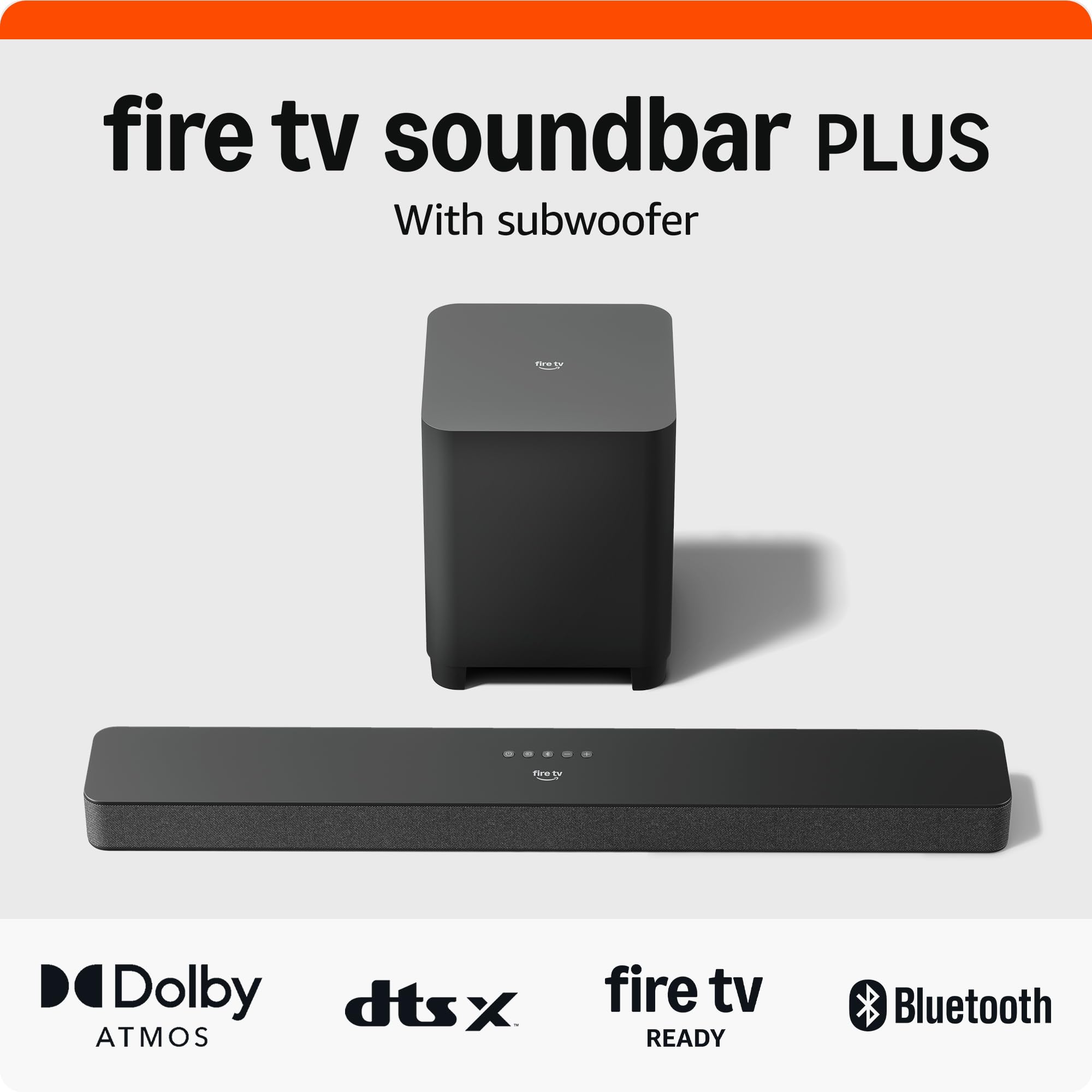
1. Amazon Fire TV Soundbar Plus with subwoofer
Our pick — 4.5★ from 300+ verified ratings; the strongest balance of quality and price.
Plug in the subwoofer, and it auto-connects for window-shaking bass you can feel.
This is the rare system where the crowd favorite and the critic’s choice are the same. Owners consistently describe the sound as “surprisingly good,” with a sealed 8-inch subwoofer that reportedly blends tightly with the bar, delivering “insane bass” without the boominess you often get at this level. It is a 3.1 channel setup (left, right, and a dedicated center for dialogue), and it decodes both Dolby Atmos and DTS:X for that 3D, object-based audio bubble.
Setup is genuinely plug-and-play. Buyers report the entire process takes less than 10 minutes from the start. The magic is if you own a Fire TV — one remote controls both, and sound modes like Movie, Music, Sports, and Night tune the audio to what you’re watching. If you don’t have a Fire TV, the Bluetooth streaming still makes it a fine music speaker for your phone or tablet.
The only fair knock against it is long-term reliability. While the majority of owners have no complaints, a minority report the unit failing after about 10 months of use. For most, though, this is the best blend of price, performance, and ecosystem smarts you can buy with a single subwoofer.
Why it wins: The crowd favorite — a 4.5-star average across over 300 owners — pairs a defined center channel with deep, non-bloated bass, making explosions and whispers equally enjoyable. It even outperforms far pricier brands in side-by-side comparisons.
The only doubt: A dedicated Fire TV remote works best to open up all features, and a small number of long-term owners mention failures around the 10-month mark.
Reach for this if: You live in the Fire TV or Alexa ecosystem and want a no-fuss, cinematic upgrade with serious low-end punch.
Look elsewhere if: You demand absolute maximum volume for a very large open-plan living space, or you are wary of potential reliability issues.
2. TCL S55H 2.1 Sound Bar
A budget bar with the bass authority to let you retire your old receiver.
The TCL S55H is proof you don’t need to spend big for a convincing home theater experience. It delivers a 2.1 channel setup with a wireless subwoofer pushing a powerful 220W of sound, enough to handle everything from a car engine’s low rumble to a helicopter’s high whir. For its price, it’s a staggering upgrade over the tinny speakers built into almost any TV.
Its standout feature is AI Sonic Auto Room Calibration, which uses the TCL app to analyze your room’s layout and adjust the audio for your specific seating position. Setup is famously easy — one owner noted it took “virtually no setup required to connect to my TCL TV,” and another said they “retired the receiver and jungle of cords to the basement.” It connects to almost anything, including HDMI eARC/ARC, optical, Bluetooth, and AUX.
The design is a low-profile 31.89″ wide bar that sits neatly under a TV, and the subwoofer itself is a compact 7.68″ square that is easy to tuck away. While the sound quality is the primary praise, the value is a close second — making it the perfect entry point for a bedroom, apartment, or a secondary TV in the house.
Why people rave
- “Good thump” from the wireless subwoofer for movies and music.
- Easy Bluetooth pairing and reliable auto-connection via HDMI ARC.
- Light on wires — the receiver and cable mess can be retired.
- AI Sonic room calibration fine-tunes the sound to your space.
Things to know
- The bass control via the remote may feel less effective on non-TCL TVs, per some owners.
- A few report the subwoofer occasionally needs a re-sync after a TV restart.
A genuinely great value: The TCL S55H is the smartest upgrade for budget-conscious shoppers wanting to feel the action, not just hear it.
3. LG S40T 2.1 ch. Soundbar
A powerful sub in a sleek design that shines brightest with LG TVs.
The LG S40T brings a “booming” wireless subwoofer to a 2.1 channel setup, designed to deliver a big audio punch without monopolizing your space. It’s a favorite among owners who want an easy, high-quality boost for their living room, but its most impressive feature is the WOW Interface. If you have a compatible LG TV, you can control the soundbar’s volume, sound modes, and settings from your TV’s own on-screen menu with a single remote.
Clear Voice Plus is a notable feature here, as it analyzes the audio in real-time to make conversations sound more realistic and distinct through the center speakers. For those who like to tinker, the LG Soundbar App offers a 3-band equalizer to fine-tune bass, treble, and mid-range frequencies. It supports Dolby Digital and DTS Digital for enhanced sound quality across all content.
The audio performance is generally celebrated, though opinions split on how it handles maximum volume, with a few owners finding it insufficient for very large rooms or loud sports events. It also lacks mounting holes if you planned to wall-mount it. Most agree, however, that it’s a “big upgrade” over standard TV audio and well worth the price, especially compared to older systems.
The core strength: smooth one-remote integration with LG TVs and a subwoofer that owners consistently call “powerful” and “worth it.”
The honest caveat: It’s best in a moderately sized room (around 14×14 feet); larger spaces will demand a bigger system with more headroom.
The fit: If you own a modern LG TV and want the easiest, cleanest control experience with excellent bass depth, this is your match.
4. JBL Bar 2.1 Deep Bass (MK2)

A soundbar with physical bass controls that lets you dial in the thump.
The JBL Bar 2.1 Deep Bass (MK2) is a music lover’s delight in a soundbar form. It pumps out a powerful 300W of total system power through a dedicated 6.5-inch wireless subwoofer. What makes this JBL stand out is the control it gives you over the low end — you get three selectable bass levels (Low, Mid, High) to fine-tune the output to your taste and content, letting you go from subtle rumble to window-rattling force.
It uses Dolby Digital to create an “authentic cinematic experience” right from your sofa, and the subwoofer auto-pairs wirelessly for a clean setup. While some owners note that it lacks the Dolby Atmos processing found on pricier models, the majority call it an “impeccable rich” experience for both movies and music, often with “zero distortion” at high volumes. It connects via a simple HDMI or Optical cable and streams music wirelessly over Bluetooth.
Reviews for this MK2 model indicate it’s a marked improvement in clarity over the previous generation, with distinct mids and highs. However, for rock music enthusiasts with very high standards, there’s a minority report of the bass dropping out and the sound becoming muddy on complex tracks like Tool, an issue that wasn’t fixed even after 50 hours of break-in. It is not a common complaint, but it’s note for hardcore rock listeners.
The standout spec: With 300W of power and a 6.5-inch sub, it delivers deep, thrilling sound that owners say surpasses older, far more expensive systems like the Bose Lifestyle.
The minority view: A few rock music purists found the bass handling on the most demanding tracks to be less controlled than expected.
Reach for this if: You watch a mix of content, love having bass level options at your fingertips, and want a big sound from a well-known brand.
5. Samsung B-Series HW-B630F 3.1

A 3.1 channel setup that puts dialogue first and surrounds you with virtual sound.
The Samsung HW-B630F is engineered for one primary goal: making sure you never miss a word of what’s being said. As a 3.1 channel system, it uses a dedicated, built-in center channel speaker to boost dialogue clarity, while the wireless subwoofer adds the rumbling bass for action sequences. It’s a fantastic choice for anyone with a Samsung TV, thanks to the One Remote function that controls power, volume, and sound effects from your existing TV clicker.
To create an rich bubble without rear speakers, it features DTS Virtual:X, which processes multi-directional spatial audio that seems to come from all around you. It also incorporates Adaptive Sound — the soundbar automatically analyzes the content and adjusts the audio settings in real-time to ensure voices are clear and sounds are detailed. With Bluetooth, you can connect two devices at once and switch smoothly between your phone and computer.
Customers note the sound quality is “great” and the setup is remarkably easy. There is one point of confusion for new buyers, though: most assume “wireless” means no cables at all, but both the soundbar and the subwoofer still need to be plugged into a wall outlet for power. The main downside reported by some is that it might not be as loud as expected at maximum volume for a very large room.
Clear strengths
- Voice Enhance Mode is a blessing for dialogue-heavy shows and movies.
- One Remote works smoothly with Samsung TVs, reducing clutter.
- Adaptive Sound tune the mix for whatever you’re watching.
Setup notes
- Remember both units need a wall outlet; it’s not fully cable-free.
- A few owners mention maximum volume is adequate, not ear-splitting.
Pick this one for: A Samsung TV household where crisp dialogue matters as much as bass depth for movies, news, and games.
6. LG S40TR 4.1 Soundbar

A 4.1 system that brings true rear surround sound without a receiver.
The LG S40TR is for those who want the enveloping feel of rear speakers but don’t want the complexity of an AV receiver. It’s a 4.1 channel home theater system that pairs a wireless subwoofer with two wireless rear surround speakers. The rear speakers connect wirelessly to the main bar, creating a true, multi-directional soundscape for movies and games.
The sound is described as “heart-thumping” and “excellent” by owners, with one even noting it was loud enough for a party of about 20 people. The WOW Orchestra feature is a clever trick for LG TV owners — it combines the audio from your LG TV’s speakers with the soundbar to create a wider, fuller soundstage using a single remote. Setup is generally easy, and the included rear speakers, once configured via the LG Soundbar App, provide a surprising amount of loudness and positional accuracy.
Note that the two rear speakers are wired to each other, but only one of them needs to be plugged into a wall outlet. Some owners found the instruction manual a bit vague on this specific point. A common tip is to use an HDMI ARC connection instead of Bluetooth for the best surround performance — Bluetooth can sometimes degrade the audio quality.
The value proposition: Owners call it a phenomenal value, essentially a full 4.1 wireless home theater system that punches well above its price point for casual viewing.
The tip: Use HDMI ARC (not Bluetooth) for the best audio; and remember one rear speaker needs its own power outlet.
Choose this if: You want actual rear channel effects to feel the action around you, but you’re not ready for a complex, expensive receiver-based system.
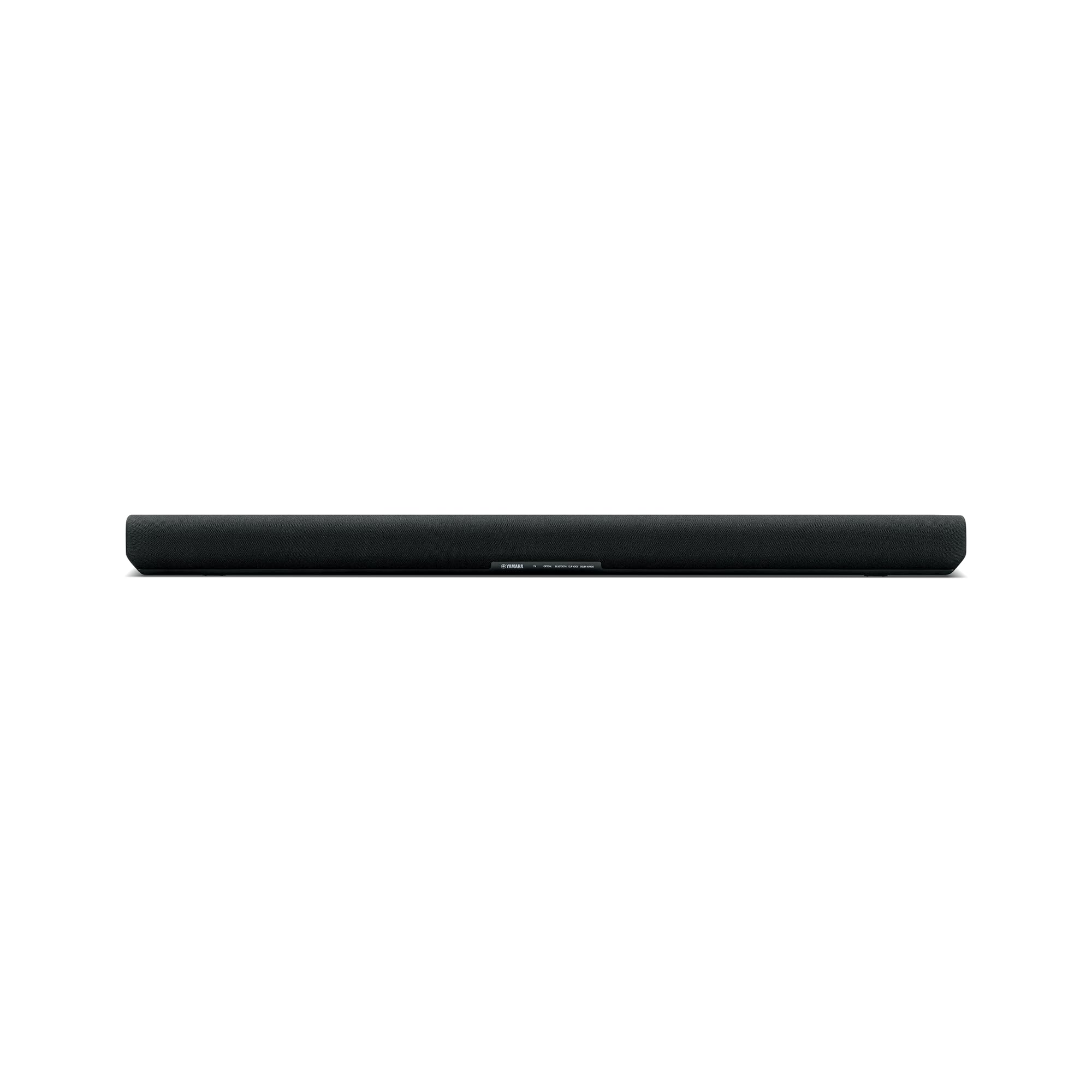
7. Yamaha SR-B30A Soundbar
A single elegant box that skips the external sub without losing the low end.
The Yamaha SR-B30A is the ultimate space-saving solution. It’s an all-in-one unit that packs two built-in subwoofers into its sleek chassis, delivering satisfying bass without the need for a separate, boxy subwoofer on your floor. It even decodes Dolby Atmos for a surprisingly rich 3D sound field that envelops you from a single bar.
This Yamaha features Clear Voice technology, which specifically enhances dialogue clarity that is often lost in the mix when there’s loud background music or effects. Owners consistently praise this feature, along with the general sound quality for movies, music, and dialogue. It’s also a breeze to set up, thanks to HDMI eARC/ARC support which carries high-resolution, uncompressed audio via a single cable from your TV.
Music streaming is handled with Bluetooth multipoint, meaning you can connect two devices and easily switch between them. While the built-in subs are impressive, they can’t physically move as much air as a large, dedicated external subwoofer. So, if you have a massive home theater room or crave the deepest chest-thumping bass, you might want to check systems like the JBL Bar 500 or Sony.
Yamaha’s strength: Delivers full, non-hollow sound with convincing built-in bass that surprised owners, all in a clean bar that fits on a console or mounts on a wall.
The limit: The physical size of the built-in drivers means it won’t pressurize a very large room the way a 10-inch external sub can.
Best for: Apartment dwellers and minimalists who want great bass and clear voices in a compact, clean-looking package with no extra boxes.
8. Klipsch Flexus CORE 100

Klipsch acousticians tune this bar’s dual subs for “top-tier bass.”
The Klipsch Flexus CORE 100 is a serious piece of audio equipment, powered by a collaboration with Onkyo. It differentiates itself by using dual 4-inch built-in subwoofers alongside two 2.25-inch ceramic drivers, all finely tuned by Klipsch acousticians to deliver what they call “best in class bass” — a bold claim that owners largely support. The result is punchy, detailed, and fast bass that does not require an external subwoofer.
This 2.1-channel bar features Dolby Atmos processing and uses Klipsch Transport technology, which allows you to easily expand it later with Flexus Surrounds or a Flexus Subwoofer for a full home theater system. Owners who use it with eARC on TCL TVs and watch content like Dune 2 report “palpable vibrations” and an rich sound that feels much wider than a single bar should. The remote control provides granular control over Bass, Treble, and Midrange levels.
For the audio purist, this is the kind of soundbar that shines, with owners calling the sound “crisp” and impressive for both music and movies. However, it’s important to note that to open up its full potential, including Dolby Atmos, you must connect via the HDMI eARC port. If your TV lacks eARC, some owners found the sound to be “nerfed,” with reduced bass and volume output.
The audiophile edge
- “top-tier” bass with clean, controlled dual subwoofers.
- Excellent midrange detail for clear voices and music reproduction.
- Expandable with Klipsch’s proprietary Flexus technology.
Know before you buy
- A TV with HDMI eARC is mandatory to get the full Atmos and bass performance.
- A few owners had Bluetooth pairing quirks, though most found it easy.
This is the one for: Audio enthusiasts who want a high-fidelity, compact 2.1 setup in a premium build, with the option to expand to a full system later.
9. JBL Bar 500MK2 5.1 Channel
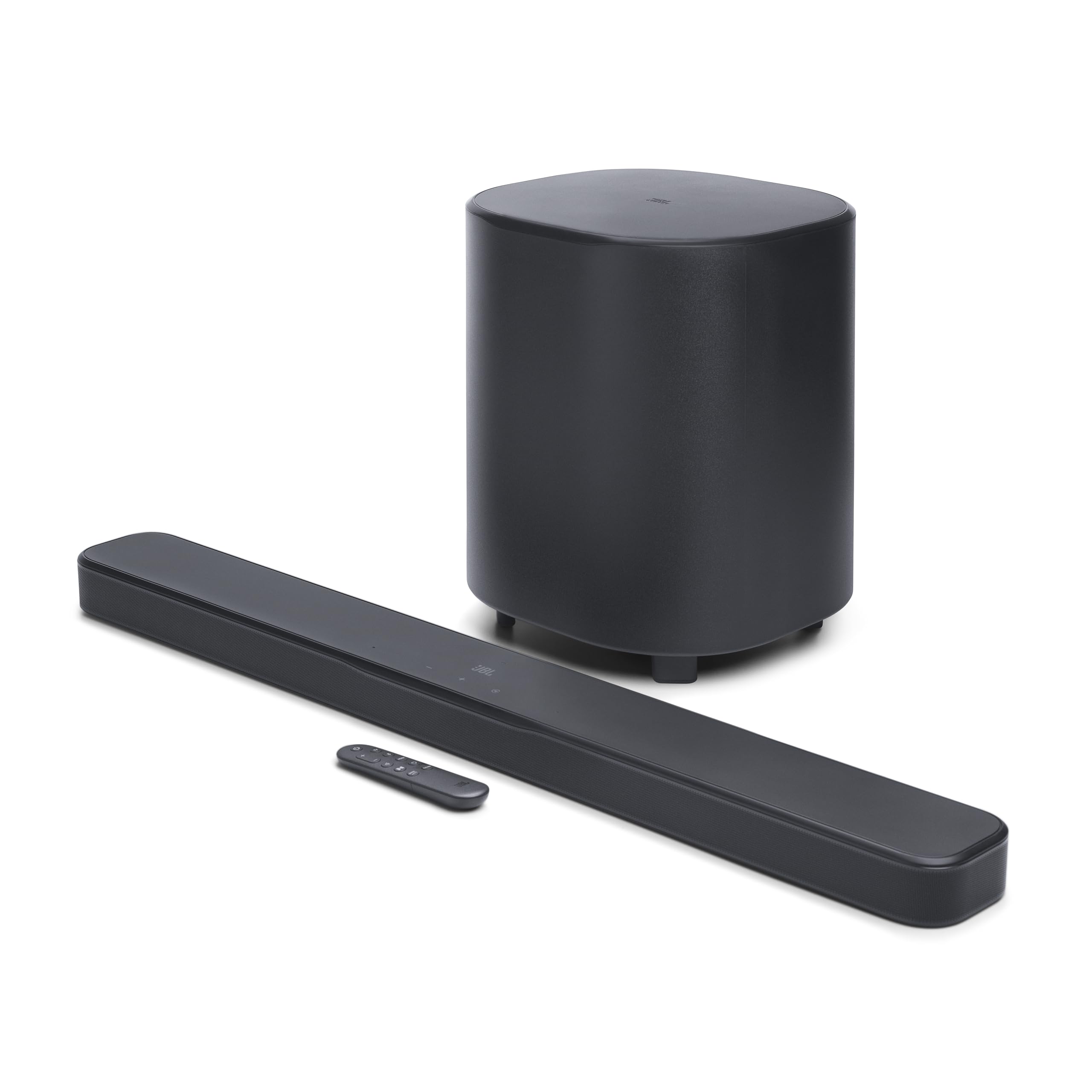
A 750W, 10-inch subwoofer system that makes every crash feel physical.
The JBL Bar 500MK2 is a statement piece for anyone serious about home cinema. It boasts a massive 750W of total system power, anchored by a huge 10-inch wireless subwoofer that delivers deep, distortion-free “thundering” bass you feel in your chest. Combined with its 5.1 channel setup, it creates a legitimately theater-like soundstage right in your living room.
The bar uses JBL’s MultiBeam 3.0 technology to produce a wide, cinema-like soundstage that fills the room, while PureVoice 2.0 works automatically to tune dialogue clarity based on the scene’s ambient sound and your volume. Owners say the setup is easy and the sound is “seriously impressive,” with one noting it outperformed their older, very expensive Bose system. It supports high-quality audio connections via HDMI eARC and has an HDMI input with 4K Dolby Vision passthrough for gaming consoles.
This system is incredibly loud — one owner noted that level 15 out of 100 was enough to disturb neighbors. It features Smart Calibration, where the soundbar uses a microphone to bounce sound off your walls and furniture to tune the 3D surround effect. The main trade-off is that very loud, complicated mixes can sound slightly harsh at the absolute top end of the volume range.
The headline spec: The 10-inch subwoofer and 750W of power are what set this apart, creating action-movie bass that owners say feels like being in a real theater.
The only nitpick: A few owners noted it sounds marginally “harsh” on some music at ear-splitting volumes, and a minority had initial Bluetooth connection quirks.
Grab this if: You want a real home theater experience with explosive, room-filling bass and clear dialogue for a large living space.
10. Sony BRAVIA Theater System 6

A true 5.1 setup that pairs magically with BRAVIA TVs for easy, deep bass.
It comes with a soundbar, a wireless subwoofer, and two wireless rear speakers to provide true cinematic surround sound. It’s the “perfect pair” for BRAVIA TVs, allowing you to control the entire system from the TV’s menu and utilize Voice Zoom 3 to enhance dialogue clarity.
Owners using it with a Sony Bravia TV marvel at the setup, describing it as working “like magic” and noting the system and TV “did most of the work.” The sound quality is superb, with praise for the powerful, clean bass from the subwoofer and the small yet clear surround speakers that create an rich field. The BRAVIA Connect app provides intuitive control from your smartphone, letting you tweak sound profiles and advanced settings.
For a full home theater setup, this is excellent value, often described as a “serious upgrade.” There are two main things to know. First, this system requires an HDMI connection — it does not offer an optical input, which can be a limitation if you have more than one or two gaming consoles. Second, the wireless subwoofer acts as the connection hub and must be wired to your TV with an HDMI cable, which some owners found slightly awkward for placement.
Why it’s great: smooth, magical integration with BRAVIA TVs and a clean, powerful 5.1 channel setup that encompasses the listener.
The setup catch: It relies solely on HDMI (no optical) and the subwoofer acts as the main hub that needs to be tethered to the TV.
The ideal buyer: A Sony TV owner who wants the simplest, most integrated path to a genuine 5.1 channel home theater experience.
11. Nakamichi Shockwafe 11.2.6
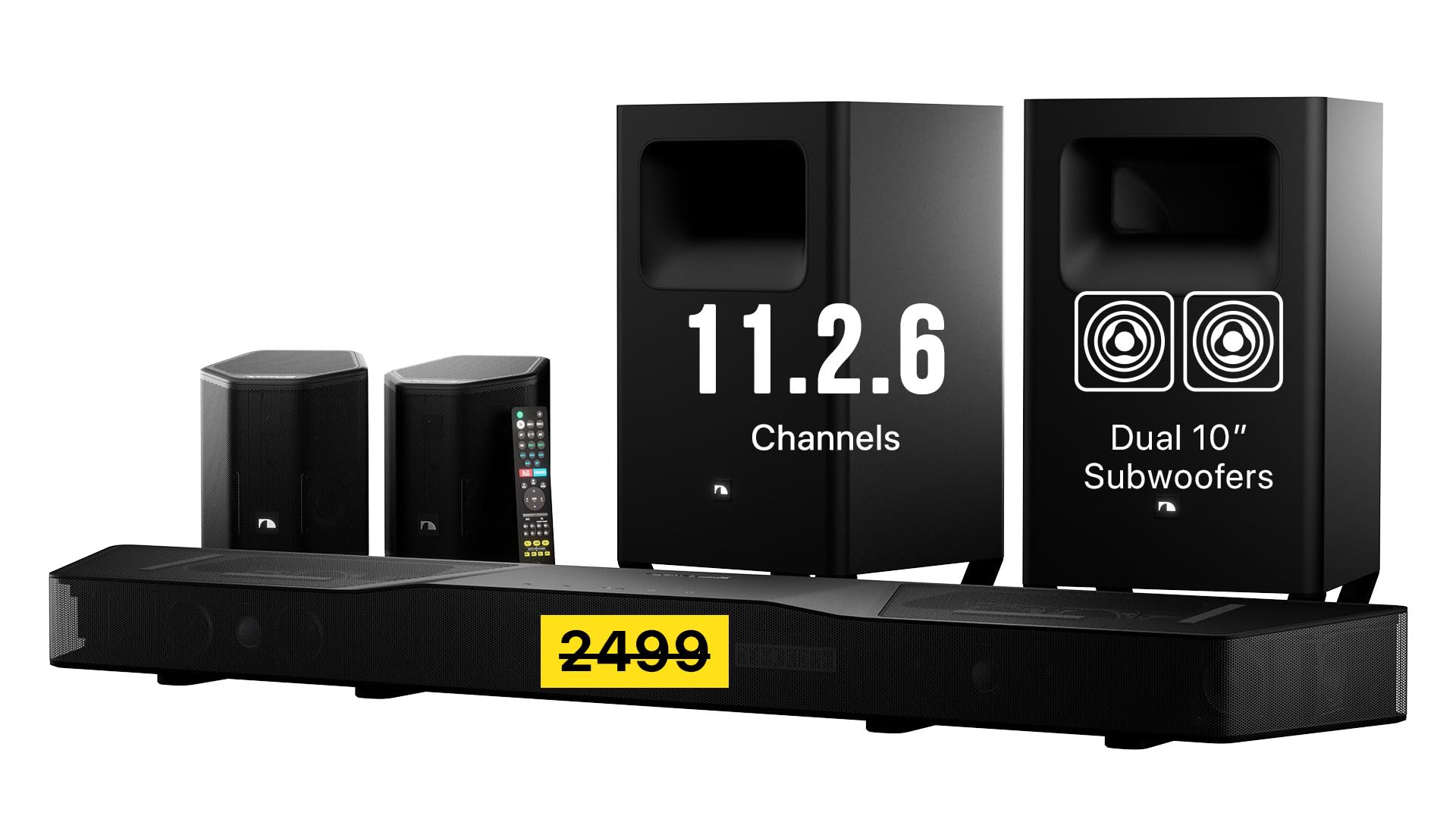
An 11.2.6-channel behemoth with dual 10-inch subs engineered to outperform a cinema.
The Nakamichi Shockwafe 11.2.6 is not a soundbar; it is a full-scale home theater sound system built on over 70 years of audio legacy. It lays out a genuinely unique 11.2.6-channel architecture, supporting a massive 2300W of power and dual 10-inch wireless subwoofers. The result is not just deep, room-filling bass, but hyper-real overhead effects from its six discrete height channels that create a 360-degree bubble of sound that owners say is better than a movie theater.
The sheer scale is intimidating — the main bar is 54 inches wide and the entire system weighs significant pounds, shipping in three boxes. But reviewers point out that setup is easier than it looks, mostly plug-and-play. The system shines with action films and sports, with one owner saying it “lives up to all of the promises” and describing it as an “IMAX-like” experience. The clarity of dialogue is astounding, even during chaotic scenes, and the dual subs hit hard and clean with precise, directional realism.
This system is unapologetically the most expensive and impressive on this list, designed for enthusiasts who want the absolute best. Owners warn it might take a few minutes to sync during initial setup and that a firmware update (via USB) might be needed to enhance the sound bubble. It’s a substantial investment in both money and physical space, but for those who can accommodate it and want to retire their movie theater membership, it’s the ultimate statement.
The flagship reason: Dual 10-inch subs and 2300W of power deliver powerful, speedy, and composed bass at any volume, with a whole room of sound around it.
The honest trade-off: It demands significant physical space, a large budget, and a bit of patience for firmware updates to achieve the pinnacle of performance.
This is for the connoisseur: If budget is no object and you want a reference-grade, theater-quality experience at home that makes movies feel truly rich, it has no equal here.
Understanding the Specs
Channel Configurations (2.1, 3.1, 5.1)
These numbers tell you how many separate audio channels the system can produce. A “2.1” setup has left and right speakers plus a subwoofer; it’s great for general viewing. A “3.1” adds a dedicated center channel, which is a must for clear dialogue and makes voices sound like they come from the screen. A “5.1” system adds two rear speakers so you get true surround sound, with effects moving from front to back for a more rich experience. Moving to higher numbers means more speakers to place around the room, but also a bigger, more complete sound bubble.
Dolby Atmos and DTS
Dolby Atmos and DTS are audio formats that add a “height” dimension to the sound, making it seem like audio objects are moving above you. This is what creates the sensation of a helicopter flying over your head. To get this effect, you need two things: the soundbar must support the format, and your TV app or player must be able to send it. For the cleanest transfer, you need an HDMI eARC connection, which has the bandwidth to carry these high-resolution, uncompressed signals.
Wireless Subwoofers and Rear Speakers
True wireless rear speakers are connected to the soundbar via radio signals rather than long speaker wires running to the back of the room. This is what sets a “4.1” or “5.1” system apart from a basic setup. It’s easier than running cables, but they still need a wall outlet for power. Some systems use “virtual” surround, which tries to trick your brain by bouncing sound off the walls, but physical rear speakers will always provide a more precise, convincing “you are in the action” effect.
The Real Measure of Bass Power
Bass isn’t just about wattage; it’s about driver size and air movement. A larger subwoofer driver (like a 10-inch) physically moves more air and produces deeper, more tactile bass you feel in your chest, whereas a 6.5-inch sub is tighter but won’t pressurize a large room as effectively. Don’t get blinded by total wattage alone. A cleaner metric is the subwoofer driver size: bigger drivers translate to deeper, more physical low-frequency output.
FAQ
Will a bass soundbar connect to my existing non-smart TV?
Can I add a soundbar to a TV that only has a headphone jack?
How much difference does a dedicated center channel make for dialogue?
Do I really need a TV with HDMI eARC, or is regular ARC fine?
Is a single soundbar with built-in subwoofers as good as one with a separate wireless sub?
How long should a bass soundbar last?
What does a 10-inch subwoofer do that a 6.5-inch one can’t?
Can I connect a soundbar wirelessly, with no cables at all?
Is Dolby Atmos on a soundbar actually worth it?
Final Thoughts: The Verdict
For most buyers, the bass soundbar winner is the Amazon Fire TV Soundbar Plus because it marries deep, clean bass with a dedicated center channel for dialogue and one of the easiest setups available — if you live in the Fire TV ecosystem. If you want the most value for the least money, grab the TCL S55H. And if you seek the absolute pinnacle of home theater performance with rigid, reference-grade bass, the Nakamichi Shockwafe is the one to reach for, provided you have the room and appetite for a truly cinematic system.
How We Picked
We do not accept paid placement. Every pick is matched to a real buyer and a real use-case; we do not hands-on test units.
Sources & Methodology
Specifications: manufacturer listings and product documentation. Review insights: verified customer reviews, as of September 2026. Pricing: not shown on this page (it changes often); check the current price via the retailer link.
As an Amazon Associate, Gadgets Feed earns from qualifying purchases. This does not affect which products we feature.