
That sagging, wobbly attic ladder that refuses to close flush or creaks under weight isn’t a lost cause — it’s a hardware problem. The spring tension drops, the spreader hinge arms bend under repeated cycles, and suddenly the staircase you trusted feels like a hazard. Swapping out the hinge kit or spring set returns the ladder to factory-smooth operation without the cost or labor of a full entry replacement.
I’m Min — the co-founder and writer behind Gadgets Feed. I’ve spent dozens of hours cross-referencing OEM part numbers, measuring spring lengths and hinge dimensions, and matching compatibility charts so you don’t order the wrong kit for your ladder’s generation.
Whether your Werner needs Mk 1–3 arms or a Mk 5 upgrade, the right replacement parts make that old pull-down feel solid again. This guide breaks down the best attic ladder hardware by fitment, material, and installation effort so you can order with confidence.
How To Choose The Best Attic Ladder Hardware
Attic ladder failures almost always trace back to two parts: the spreader hinge arms that guide the fold, and the counterbalance springs that lighten the lift. Ordering a kit mismatched to your ladder’s model year or material spec means drilling new holes or returning a part that simply won’t bolt up. The three rules below save you that headache.
Match the Werner Generation (Mk 1–3 vs. Mk 5)
Werner changed the spreader arm design around February 2010. Ladders built before that date use the 55-1 pattern with shorter arms and a different pivot geometry. Post-2010 ladders use the 55-2 pattern, which includes a Mk 5 marking on the frame. Installing a 55-2 arm on a Mk 3 ladder forces the hinge to bind, and vice versa. Always check the model plate riveted to the ladder frame — if you see “Mk 5” after the number, you need 55-2 hardware. If you see Mk 1, Mk 2, or Mk 3, you need 55-1.
Choose the Right Material: Zinc vs. Galvanized vs. Aluminum
Budget-oriented hinge arms are pressed from zinc, which holds up well under normal residential use but can bend permanently if your ladder sees heavy daily traffic. Premium kits use galvanized steel with an electrophoretic coating — they resist corrosion and maintain their shape through hundreds of cycles. Springs should always be made from heat-treated steel wire. A set of springs with 9-1/8” free length is the standard for most Werner models; anything shorter will reduce assist force, and anything longer makes the door too light.
Decide Between a Spring-Only Kit vs. a Full Hinge Assembly
If your ladder closes with a thud and one side drops faster than the other, the springs have lost tension. A spring-only replacement (like the Werner 56-1 kit) is the cheapest fix and takes 15 minutes with a wrench. If the arms themselves are bent, cracked, or the pin holes are wallowed out, you need the full spreader hinge assembly. Buying just springs when the arms are damaged means the new springs will still bind against crooked geometry. Inspect the hinge arms before ordering — look for deformation at the pivot slot and any side-to-side play when the ladder is extended.
Quick Comparison
On smaller screens, swipe sideways to see the full table.
| Model | Category | Best For | Key Spec | Amazon |
|---|---|---|---|---|
| Werner 55-2 | Premium OEM | Direct factory replacement for Mk 5 ladders | 30-inch aluminum arms, no springs | Amazon |
| Vanesa 55-2 Kit | Premium Combo | Hinges plus springs in one box | Galvanized steel, springs included | Amazon |
| Vanesa 55-1 Kit | Premium Combo | Older Werner (pre-2006) full replacement | Galvanized steel, springs included | Amazon |
| Louisville PR315500-LH | OEM Part | Louisville ladder left-hand arm | Aluminum, 10-lb arm assembly | Amazon |
| ECOTRIC 55-2 | Mid-Range Hinge | Durable replacement for Mk 5 arms | Thick zinc, 30-inch overall | Amazon |
| HECASA 55-2 | Mid-Range Hinge | Budget-friendly Mk 5 arm swap | Zinc, floor-mount design | Amazon |
| Werner 56-1 Spring Kit | Budget Fix | Quick spring refresh for Werner doors | Two 9-1/8” steel springs | Amazon |
In-Depth Reviews
1. Werner 55-2 Replacement Attic Ladder Hinge Arms

This is the genuine Werner OEM replacement for every 2010-and-newer Mk 5 ladder. The 30-inch aluminum hinge arms match the factory geometry exactly, so you avoid any binding at the pivot slot or mismatched bolt patterns that plague third-party kits. No springs are included — Werner assumes you re-use your existing counterbalance set or replace them separately if the tension has dropped.
The aluminum construction keeps the assembly light (6 pounds total for the pair) but rigid enough for the 300-pound load rating. Several buyers noted that the provided hardware screws are longer than the originals and may bottom out in shallow pilot holes, especially in older homes with 3/4-inch plywood framing. Pre-drilling 5/16-inch holes and using washers to protect the wood grain solves that in under five minutes.
Installation is a two-person job because the spring tension must be controlled when transferring it to the new arm. The instructions are sparse — expect to watch a Werner installation video online if you want guidance. Once fitted, the ladder operates as quietly as the day the house was built, with no lateral slop at the hinge.
Why it’s great
- Identical OEM geometry eliminates binding
- Lightweight aluminum resists corrosion
- 300-pound load rating matches original spec
Good to know
- Springs are not included
- Supplied screws may be too long for shallow jambs
- Installation requires two people and some mechanical confidence
2. Vanesa 55-2 Attic Ladder Hinge Arms with Springs
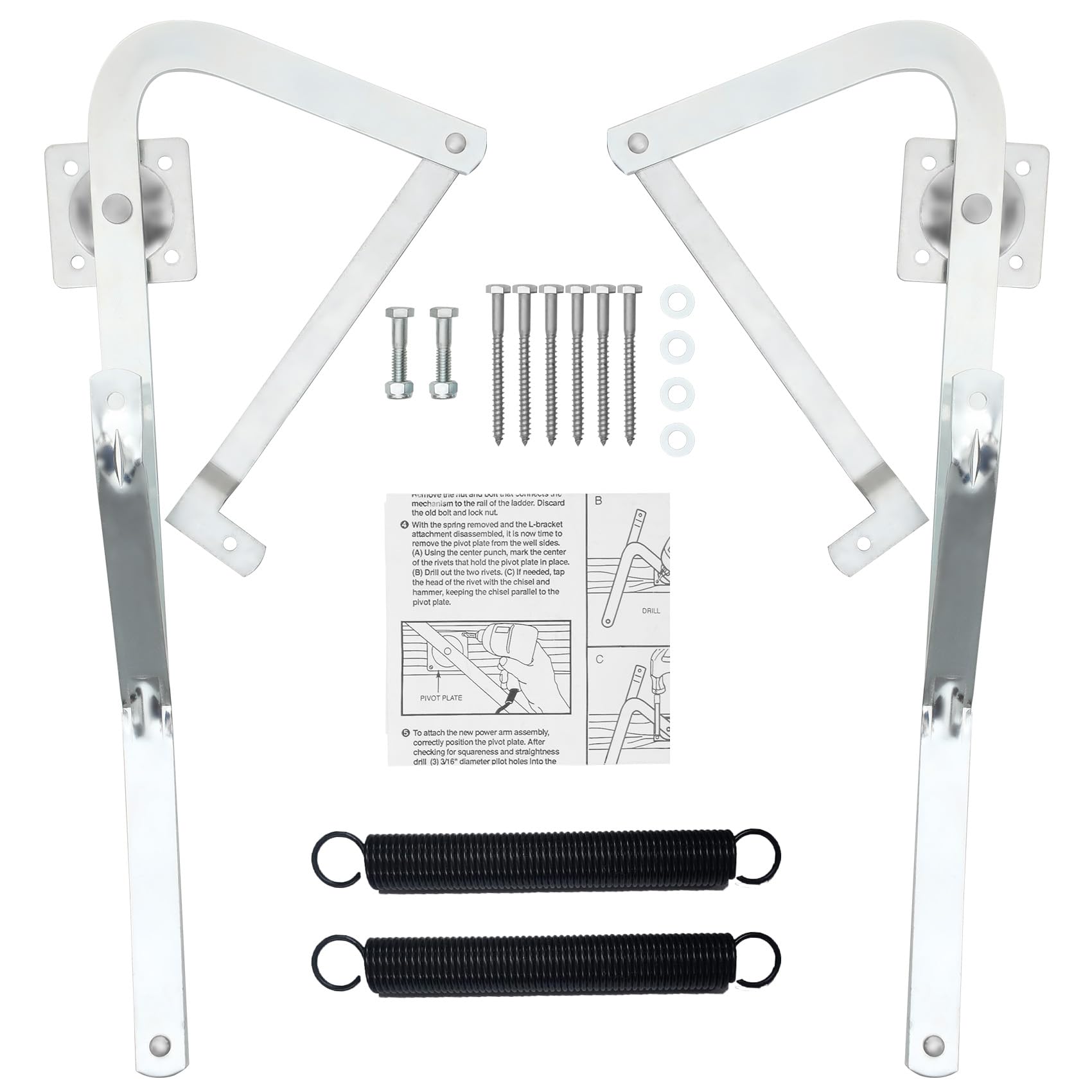
Vanesa’s 55-2 kit bundles the spreader hinge arms and the counterbalance springs together, removing the need for a separate spring purchase. The arms use a three-layer electrophoretic galvanizing process rather than plain zinc, which means the surface resists rust even in unconditioned attic spaces where humidity cycles are extreme. The springs themselves are made from heat-treated high-carbon steel wire, offering a noticeably higher tension rate than budget replacements.
Fitment is confirmed for Werner Mk 5, WU2210, W2208, and W2210 models manufactured after February 2010. The package includes all mounting hardware, though some users reported the 3-inch lag screws supplied were longer than the 2 inches listed on the packing slip — a detail worth checking if your jamb depth is tight. The hinge arms measure 20 x 3 x 10 inches per side, and the assembly weighs 7 pounds.
Owners of older Werner ladders (late 1980s to early 2000s) reported that this kit worked on their Mk 3 frames as well, despite being marketed for Mk 5. That cross-compatibility is not guaranteed, so inspect the pivot-hole spacing on your existing arm before buying. The instructions are poorly written — relying on a YouTube installation video is the recommended approach.
Why it’s great
- Hinges and springs in one convenient kit
- Electrophoretic coating resists rust and wear
- High-tension steel springs restore crisp action
Good to know
- Instructions are poorly written
- Lag screw length may vary from listing
- Compatibility with pre-2010 ladders not officially supported
3. Vanesa 55-1 Attic Ladder Spreader Hinge Arms with Springs
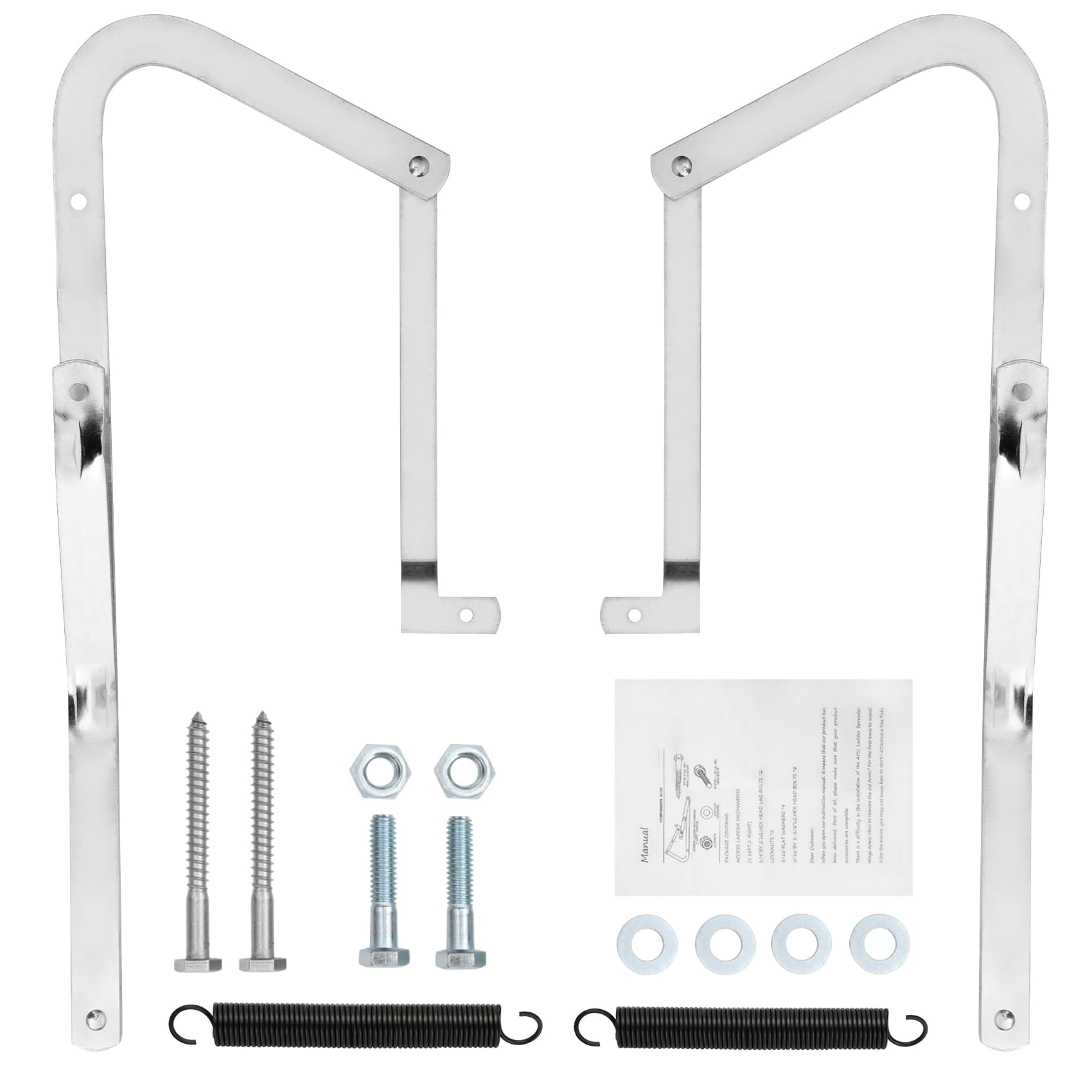
This is the 55-1 counterpart of the Vanesa kit, engineered specifically for Werner ladders manufactured before February 2006 — models Mk 1 through Mk 3, plus the A2208, A2210, W2508, WH3008, and WH3010 families. The 55-1 pattern has a different pivot-to-pivot distance than the 55-2, so installing this on a newer Mk 5 ladder is impossible without drilling new holes that would compromise the frame.
Like its 55-2 sibling, the arms use galvanized steel with an electrophoretic coating, and the springs are made from high-quality steel wire. At 6.3 pounds for the pair, the assembly feels denser than standard zinc arms and provides more resistance to bending during ladder extension. The kit includes the same mounting hardware, but again users noted the 3-inch lag screws and the need to pre-drill to avoid splitting aged wood on older attic frames.
Buyers with ladders from the late 1980s and 1990s consistently report a perfect fit and a significantly improved closing action. The spring tension is noticeably higher than the factory-original springs, so the door snaps shut more positively. A 3-star review flagged the instructions as the weakest part — the diagrams are small and the text is machine-translated. Plan on 45 minutes to an hour for a first-time install, with a second person holding the ladder section during spring attachment.
Why it’s great
- Dedicated to pre-2006 Werner models (55-1 pattern)
- Galvanized steel arms resist permanent bending
- High spring tension restores positive snap-close
Good to know
- Will not fit Mk 5 or any post-2010 ladder
- Instructions are confusing
- Lag screws may be oversized for 50-year-old wood
4. Louisville Ladder Attic Ladder Kit Power Arm Assy Left Hand

Louisville Ladder’s PR315500-LH is a dedicated left-hand power arm assembly for their own brand of attic ladders. It is not cross-compatible with Werner or other manufacturers — the mounting plate shape and bolt spacing are proprietary. The arm is stamped aluminum, matching the original factory part in every dimension, and the assembly includes the pivot pin and the attachment bracket.
Buyers consistently confirm that the part fits the existing holes without modification. The aluminum body weighs just over 2 pounds per arm, which keeps the overall ladder weight manageable. A common tip from installers is to add washers on both sides of the mounting bolts to distribute the clamping force and prevent the soft pine typically used for attic frame jambs from crushing or splitting.
The sticker price per arm is higher than an entire third-party pair, but for Louisville ladder owners it is the only guaranteed-fit option. Buying a non-OEM hinge arm designed for a Werner frame would require drilling new holes and potentially voiding the ladder’s safety rating. Installation difficulty is moderate — the spring tension makes it a two-person job, but the part itself bolts up in under 30 minutes once the old arm is removed.
Why it’s great
- Perfect OEM fit for Louisville ladders
- Lightweight aluminum matches original spec
- Includes pivot pin and mounting bracket
Good to know
- Single left-hand arm only — right-hand sold separately
- No washers included in the hardware pack
- Only compatible with Louisville brand
5. ECOTRIC 55-2 Replacement Attic Ladder Hinge Arms
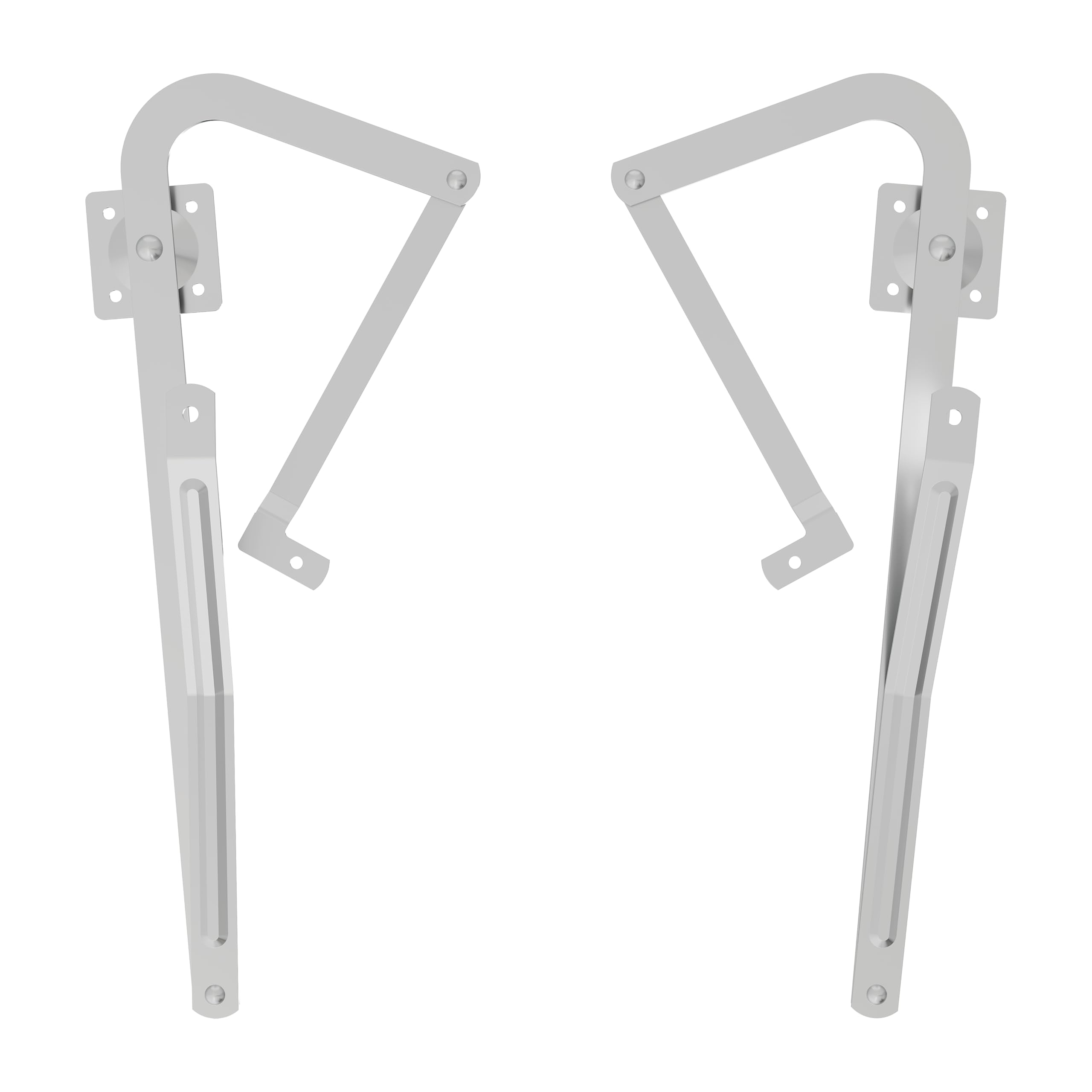
ECOTRIC’s 55-2 hinge arms are a direct answer to the Werner 55-2 pattern for Mk 5 ladders. The arms are pressed from thick zinc, a material choice that balances stiffness and cost — zinc is less brittle than cast aluminum and less prone to fatigue cracks than thin-gauge steel. The pair weighs 5.3 pounds, and the arms measure 30 inches overall. Springs are deliberately excluded; this kit is for hinge-only swaps where the existing springs are still in good condition.
Several buyers reported a perfect fit on Werner Mk 5, WU2210, W2208, and W2210 frames, with the left and right arms clearly marked to avoid orientation mistakes. The included hardware uses 5/16-inch lag bolts rather than puny sheet-metal screws, but one user sheared the head off a bolt during installation using a ratchet — the zinc bolts may be softer than the steel hardware OEM arms use. Substituting grade-8 hardware from a local store is a cheap insurance move.
A recurring observation in the reviews is that the arms feel strong in the vertical plane but can flex inward slightly under heavy load. This matches the experience of thicker-gauge zinc: it holds shape well under normal residential use but bends more easily than galvanized steel if someone stands on the ladder while it is partially folded. For standard attic access a few times a week, the flex never becomes an issue.
Why it’s great
- Thick zinc resists corrosion in humid attics
- Direct fit for Werner Mk 5 models
- Left/right arms clearly labeled
Good to know
- Included lag bolts may be soft — consider upgrading
- Arms can flex inward under heavy or off-center loads
- No springs included for combined replacement
6. HECASA 55-2 Attic Ladder Spreader Hinge Arms

HECASA’s offering is the most affordable full hinge arm set for Werner Mk 5 ladders. The arms are zinc with a white finish that matches the look of many factory Werner parts. The mounting style is floor-mount, meaning the bracket attaches to the attic floor framing rather than the side jambs, which can simplify installation if your existing holes are stripped or wallowed out from years of use.
The kit ships with installation hardware (six lag bolts, though several reviewers wished for eight) and a printed manual. Buyers generally report a good fit on WU2210, W2208, and W2210 frames. One reviewer noted that the bolts holding the arm to the ladder steps are smaller in diameter than the original fasteners, which is a common cost-saving choice — over-tightening them risks stripping the zinc threads. A dab of thread-locker and a modest torque setting avoids the problem.
A 3-star review mentioned that a rivet on the bracket snapped during initial installation, requiring a return. This appears to be an outlier rather than a pattern, but it highlights the trade-off of entry-level zinc versus pricier galvanized steel. For a homeowner who needs one functional fix without overspending, the HECASA set solves the problem at the lowest entry cost. Just inspect the rivets before installation and consider replacing them with bolts if any look loose.
Why it’s great
- Most affordable full hinge arm set for Mk 5
- Floor-mount design works with worn-out jamb holes
- Includes installation manual
Good to know
- Hardware bolts are smaller diameter than OEM
- Reported occasional rivet failure on bracket
- Will not work on Century or non-Werner ladders
7. Werner 56-1 Attic Ladder Spring Replacement Kit

This is the simplest and cheapest entry point for attic ladder repair — two replacement springs, period. The kit is designed for Werner models W2200, W2500, WH2200, and WH2500 from Mk 1 through Mk 3, as well as the A2208, A2210, W2508, and W2510 families. Each spring measures 9-1/8 inches overall when relaxed, which is the standard free length for Werner counterbalance springs across multiple generations.
The springs are made from steel and have a 300-pound load capacity rating, matching the original spec. Several buyers confirmed they fit perfectly on their Werner W2208 and W2210 doors, and the new springs eliminated the air gap caused by the door sagging open. A 4-star review noted that the replacement springs are slightly less powerful than the originals — if your ladder is heavier than standard (insulated door panel or added weatherstripping), you may want a heavy-duty spring set instead.
Installation is straightforward: unbolt the hinge arm, relieve the spring tension by slowly pivoting the arm, swap the spring onto the new arm, and reattach. The kit includes instructions, but many users found the process intuitive. The spring tension at full extension is still strong enough to assist the lift, but the lighter force means the door no longer slams shut — a welcome change for anyone disturbed by the bang. This is the ideal fix when your hinge arms are straight and only the springs have lost their snap.
Why it’s great
- Cheapest possible repair for sagging Werner doors
- Easy 15-minute swap with basic tools
- OEM-spec steel springs restore lift assist
Good to know
- Only includes springs — no hinge arms
- Slightly less tension than original springs
- Not compatible with Mk 5 or post-2010 ladders
FAQ
How do I determine if my Werner ladder is pre-2010 or post-2010?
Can I reuse my old springs when replacing hinge arms?
Why do some hinge arms come with springs and some without?
Final Thoughts: The Verdict
For most users, the best attic ladder hardware winner is the Vanesa 55-2 Kit because it delivers galvanized steel arms and matched springs in one box at a mid-range price — no piecemeal ordering, no compatibility guesswork for Mk 5 ladders. If you need a precise OEM replacement for a newer Werner, the Werner 55-2 is the no-compromise choice. And for a minimal-cost refresh when only the springs have sagged, nothing beats the Werner 56-1 Spring Kit.