
An unreliable solar power bank leaves you stranded mid-hike, staring at a device that somehow lost charge faster than the phone plugged into it. The difference between a backup brick and a true off-grid companion comes down to real battery capacity, panel efficiency, and build quality — not marketing specs.
I’m Min — the co-founder and writer behind Gadgets Feed. I’ve spent hundreds of hours dissecting solar power bank specs, cross-referencing real-world charging behavior with manufacturer claims, and separating the units that hold their charge from those that dim your flashlight and quit by sundown.
Whether you are prepping for a multi-day camping trip or just want a dependable emergency power source for your car, finding the right battery solar power bank means looking past the inflated milliamp-hour numbers and focusing on port selection, solar input rate, and how the bank handles partial charging cycles.
How To Choose The Best Battery Solar Power Bank
Solar power banks look similar on the shelf, but the gap between a unit that genuinely recharges in sunlight and one that barely trickles is wide. Focus on these three factors to avoid ending up with a heavy brick that can’t keep up with your actual devices.
Real Battery Capacity vs. Advertised Capacity
A 40,000mAh solar power bank sounds like a week’s worth of phone charging, but the usable capacity is typically 60–70% of the rated number because of voltage conversion losses and battery chemistry overhead. High-density polymer cells in premium units deliver closer to 70% usable power, while budget packs with generic cells often drop to 55% or lower. The actual energy you get — measured in watt-hours (Wh) — is more reliable than the milliamp-hour sticker.
Solar Input Rate: Speed Matters
Most portable solar panels on these power banks output between 2W and 6W under ideal sunlight — that is roughly 5–10% of what a wall charger provides. A bank that accepts a higher solar input voltage (e.g., 15–24V) charges faster when paired with an external panel. Built-in panels are emergency trickle chargers, not primary rechargers. If you plan to rely on solar for daily uses, look for a unit that supports external panel input over a dedicated DC or USB-C port.
Port Selection and Fast-Charging Protocols
PD 20W or higher USB-C output is now standard for fast-charging iPhones and Samsung devices. Older banks with only USB-A ports charge at 5V/2.1A, which is noticeably slower for modern phones. The number of simultaneous charging ports also matters — three ports are a baseline, but five dedicated outputs allow you to power a phone, tablet, headlamp, and camera battery simultaneously without collapsing the total output wattage.
Quick Comparison
On smaller screens, swipe sideways to see the full table.
| Model | Category | Best For | Key Spec | Amazon |
|---|---|---|---|---|
| Anker SOLIX C300 + 60W Panel | Premium Solar Generator | Extended camping, emergency home backup | 288Wh LiFePO4 / 300W AC | Amazon |
| VTOMAN Jump 600X | Power Station + Jump Starter | Road trips, vehicle emergencies, work sites | 299Wh LiFePO4 / 600W AC | Amazon |
| HOWEASY Portable Power Station | Compact Power Station | Light camping, laptop charging, travel | 98Wh / 135W AC / 65W PD | Amazon |
| DARAN Power Station | Pocketable Power Station | Airline-safe backup, small electronics | 89.6Wh LiFePO4 / 100W AC | Amazon |
| MINRISE Solar Power Bank | Mid-Range Panel Bank | Day hikes, festival charging, everyday carry | 40,000mAh / PD 20W / 4 built-in cables | Amazon |
| SOXONO Solar Charger Power Bank | Mid-Range Panel Bank | Rugged outdoor use, multi-device charging | 40,000mAh / PD 20W / IP67 | Amazon |
| Nuynix Solar Charger Power Bank | Budget Panel Bank | Minimal camping, emergency phone top-offs | 49,800mAh / 15W outputs / IP67 | Amazon |
In‑Depth Reviews
1. Anker Solar Generator SOLIX C300 with 60W Panel

This is the complete package: a 288Wh LiFePO4 power station paired with a dedicated 60W solar panel that actually charges it at a meaningful rate — 52W input in full sun, enough to top off the battery in about 1.5 hours. The 300W inverter (600W surge) handles a mini fridge, CPAP machine, or multiple laptop charges without breaking a sweat. The quiet 25dB fan means you can sleep beside it while it powers a fan or Air mattress pump all night.
The dual 140W USB-C ports are among the fastest on the market, supporting PD 3.1 for rapid laptop replenishment — an Anker flagship that charges a MacBook Pro from 0 to 80% in under an hour. Three AC outlets, a car socket, and pass-through charging let you run devices while the station itself recharges from the solar panel. The companion app displays real-time battery temperature and output wattage, giving you data that most budget units hide.
Build quality feels premium with impact-resistant casing and smart temperature management that prevents thermal throttling even under a direct summer sun. The 60W solar panel folds compactly and includes multiple adapter cables for flexible placement. For anyone who wants a true solar generator that arrives ready to work — not a trickle charger with a panel sticker — this Anker system is the benchmark.
Why it’s great
- 140W two-way USB-C charges laptops faster than any competitor at this size
- 60W solar panel provides real recharging in direct sun, not just trickle
- LiFePO4 chemistry rated for 3,000 cycles with app-based monitoring
Good to know
- No carry strap included — sold as a separate accessory
- Built-in panel is 60W; heavier users may prefer a 100W panel for faster solar recharge
2. VTOMAN Jump 600X Portable Power Station

The Jump 600X solves two emergencies with one device — it’s a 299Wh LiFePO4 power station and a car jump starter capable of cranking a Dodge Ram at 9% battery in three seconds. The 600W pure sine wave inverter delivers a constant 600W even when appliances exceed its rated wattage, meaning a 700W space heater won’t shut the unit off; it will simply limit power instead of cutting output. That continuous-power feature is rare in this price bracket and critical for survival gear.
The expandable battery system lets you scale from 299Wh to 939Wh with an add-on battery, turning this into a multi-day off-grid setup. Port selection is generous: two AC outlets, three USB-A (one QC3.0), a 60W USB-C PD port, regulated 12V DC outputs for a car fridge or CPAP, and a car cigarette lighter port — nine devices charging simultaneously with pass-through support. The regulated 12V ports are a standout for users who power 12V equipment without voltage fluctuation.
At 14.6 pounds, it’s not a pocket kit, but the built-in handle and compact footprint fit neatly in a trunk or RV compartment. Users report running a PC and dual monitors for over eight hours, and the LED light bar with five modes provides camp-side illumination. The ability to jump-start your vehicle from the same battery that runs your laptop eliminates the need for a separate booster pack, saving both money and trunk space.
Why it’s great
- Integrated car jump starter with genuine cranking ability, not a novelty feature
- Expandable to 939Wh without buying a whole new station
- Regulated 12V DC outputs maintain stable voltage for sensitive 12V devices
Good to know
- Full recharge from wall takes 3 hours — slower than 65W PD competitors
- Physical size and weight are substantial for carry-on or light backpacking
3. HOWEASY Portable Power Station 135W
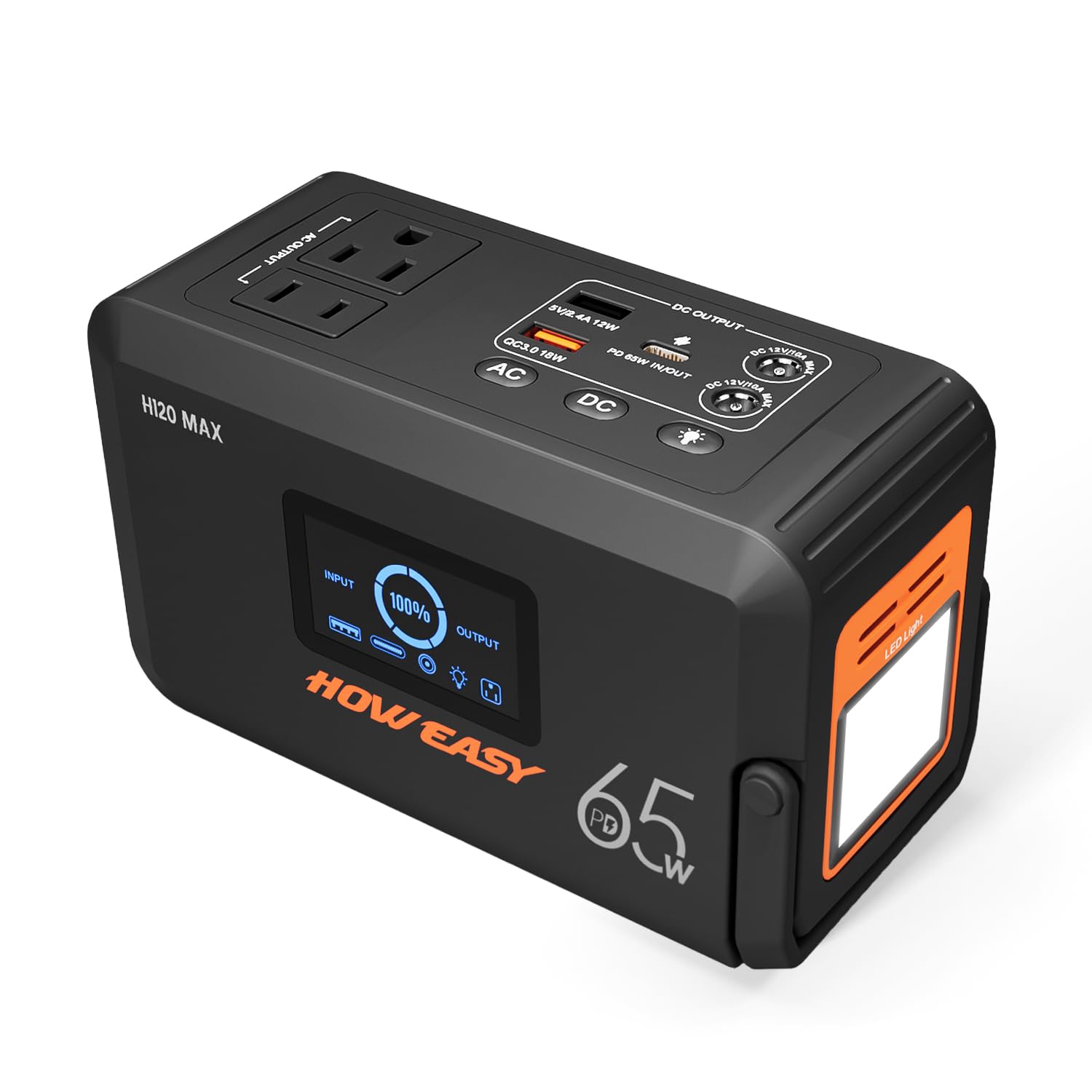
At 2.3 pounds with dimensions smaller than a hardcover book, the HOWEASY 98Wh power station is designed for travelers who need AC outlets without checking a bag. The 65W USB-C PD port charges a MacBook Pro to 80% in about an hour, and the dual AC outlets (110V/135W total) can power a Starlink Gen 2 terminal or a small projector for campsite movie nights. The BMS six-layer protection actively monitors voltage and current, preventing overcharge and short circuits.
The 4-mode LED flashlight (low/medium/high/SOS) provides 360-degree visibility for tent setup or emergency signaling. The unit supports solar input via a 15–24V DC port, drawing up to 65W from an external panel — not the built-in trickle style. Recharging via wall adapter hits 80% in one hour, making it one of the fastest top-ups in this Wh range. The metal casing dissipates heat efficiently during high-draw discharge.
Users report reliable performance powering ham radios for 12 hours of moderate use and running a small fan overnight. The lack of a physical on/off switch is a minor design oversight — the unit relies on a DC button that some find less intuitive. The fan is audible at mid-load, but stays quieter than typical inverter coolers. For lightweight campers or road trippers who need AC in a carry-on-friendly size, this is the sweet spot.
Why it’s great
- FAA-compliant 98Wh capacity for airline carry-on
- 65W PD charges laptops faster than most compact power stations
- Metal casing and 6-layer BMS for reliable thermal management
Good to know
- No dedicated power button — relies on DC button for on/off
- Cooling fan is louder than passive competitors at mid-to-high load
4. DARAN Portable Power Station 89.6Wh
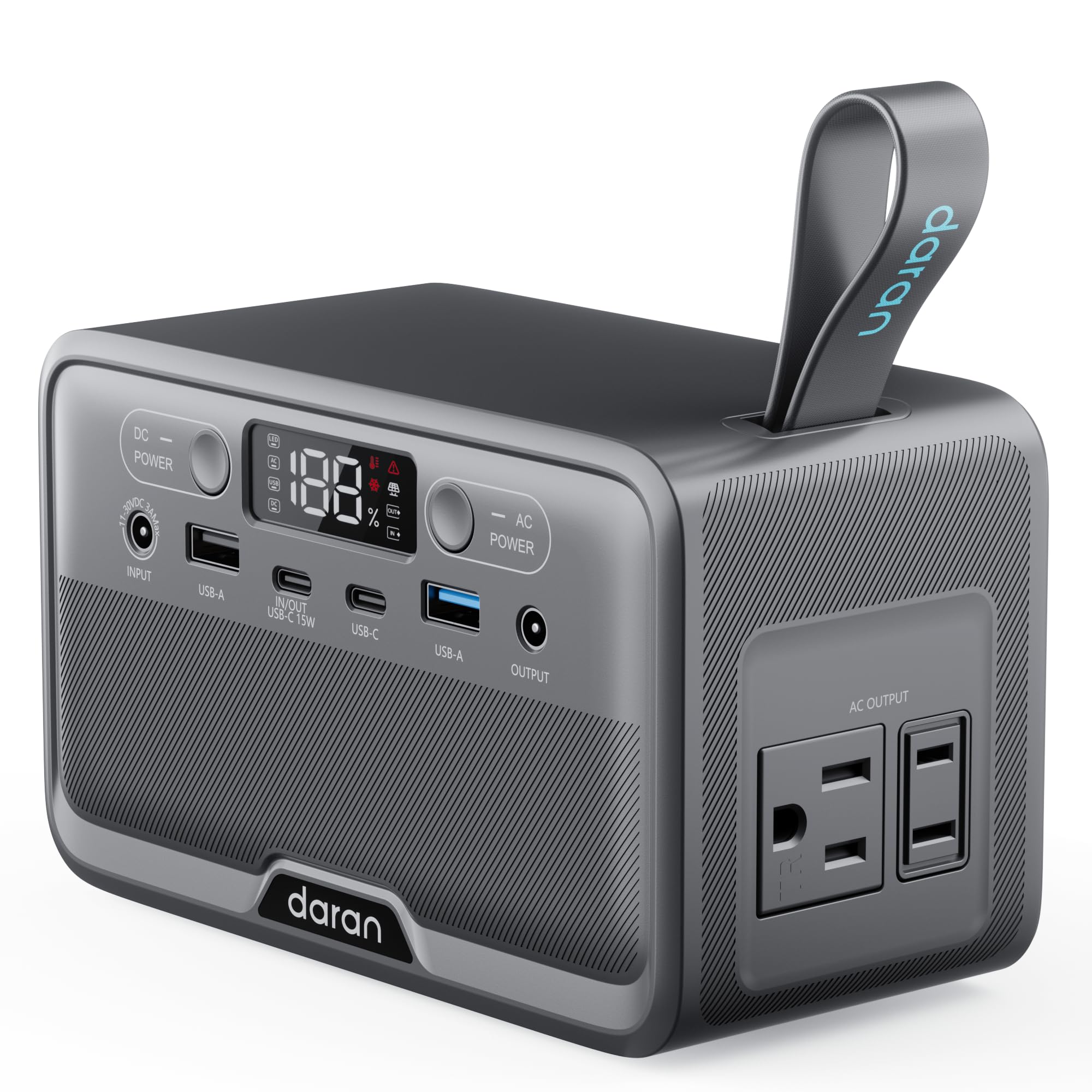
The DARAN power station packs a LiFePO4 battery into a form factor smaller than most smartphone boxes, weighing just 2.5 pounds. The dual AC outlets deliver a combined 100W (200W peak), enough to run a mini projector, charge a laptop, or power a small TV for a few hours. The 45W USB-C PD port is slightly slower than the 65W competition, but the four total USB ports (two USB-C, two USB-A) plus two DC5521 outputs give you seven simultaneous charging paths.
The star feature is charge speed: the unit goes from 0 to 80% in just 1.5 hours via AC wall charging, and supports solar input up to 60W via a separate panel (not included). The fanless design means silent operation — ideal for overnight use in a tent or beside a bed during a power outage. The 4-level LED flashlight with SOS mode adds emergency utility without sacrificing battery runtime.
Testers confirm it can run a CPAP machine for a full night, charge six half-dead phones, or keep an aquarium pump running for 24 hours. The 89.6Wh capacity qualifies as airline-safe (under 100Wh), making it a frequent flyer’s backup. One quirk: the AC/DC status icons are small and hard to read in low light. For anyone who needs AC power in a genuinely pocket-friendly package, this is an easy recommendation.
Why it’s great
- Fanless design means completely silent operation for overnight use
- 0 to 80% charge in 1.5 hours — one of the fastest in this Wh class
- LiFePO4 chemistry with 3,500+ life cycles far exceeds standard lithium
Good to know
- USB-C PD limited to 45W — slower than competing 65W units for laptop charging
- Solar panel not included; must be purchased separately
5. MINRISE Solar Power Bank 40000mAh
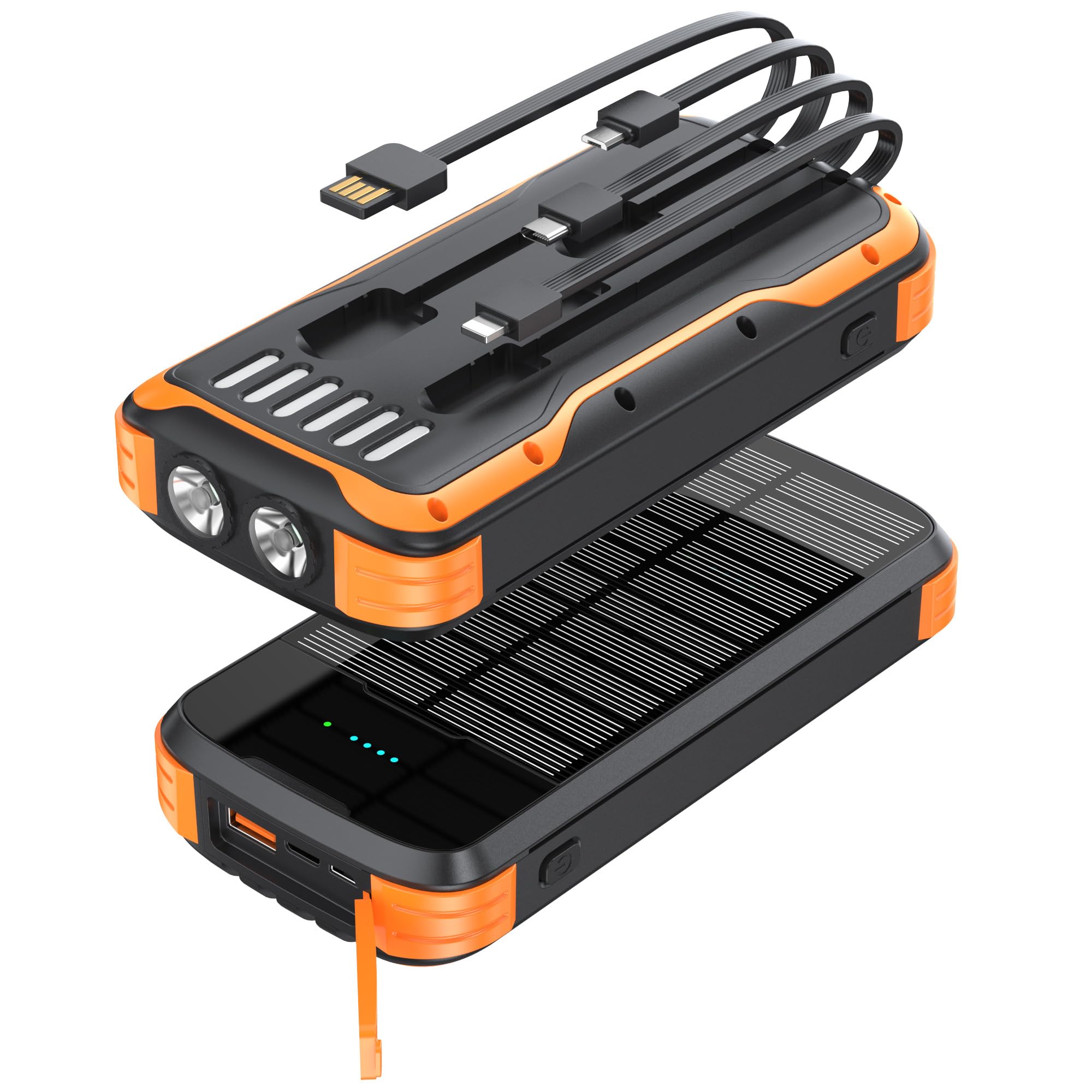
The MINRISE 40,000mAh bank solves the lost-cable problem with three built-in output cables (Type-C, iOS, Micro USB) and one USB-A input cable — nine total charging methods without carrying a single loose wire. The 20W PD USB-C output charges an iPhone 15 from 15% to 65% in 30 minutes, and the dual LED flashlights illuminate up to 165 feet for 25 continuous hours. The ABS shell with silicone corner bumpers provides drop resistance that matters when you toss it into a camping tote.
Solar charging is present as a backup — the bank collects a trickle under direct sunlight, but the manufacturer is transparent that solar is an emergency top-off, not a primary recharge. Real-world users report the battery holds its charge for weeks when idle and stays cool during high-draw operation. The 1.1-pound weight is reasonable for a 40,000mAh unit, and the 6.67 x 3.35 x 1.22-inch form slides into a backpack side pocket without bulging.
Customer feedback highlights the built-in cords as a genuine convenience for festival-goers and daily commuters, eliminating the common complaint of forgetting a cable. The bank supports simultaneous charging of up to three devices via the built-in cables plus the USB-C and USB-A ports. The only common gripe is that the battery depletes noticeably faster than expected when charging multiple devices at once — a trait shared by most high-capacity banks under active load.
Why it’s great
- Three integrated output cables eliminate the need to carry separate cords
- 20W PD fast charging is genuinely useful for quick phone top-offs
- Sturdy ABS build with silicone corner guards survives outdoor drops
Good to know
- Battery drains faster than expected during multi-device simultaneous charging
- Solar charging is very slow — treat it as an emergency feature only
6. SOXONO Solar Charger Power Bank 40000mAh
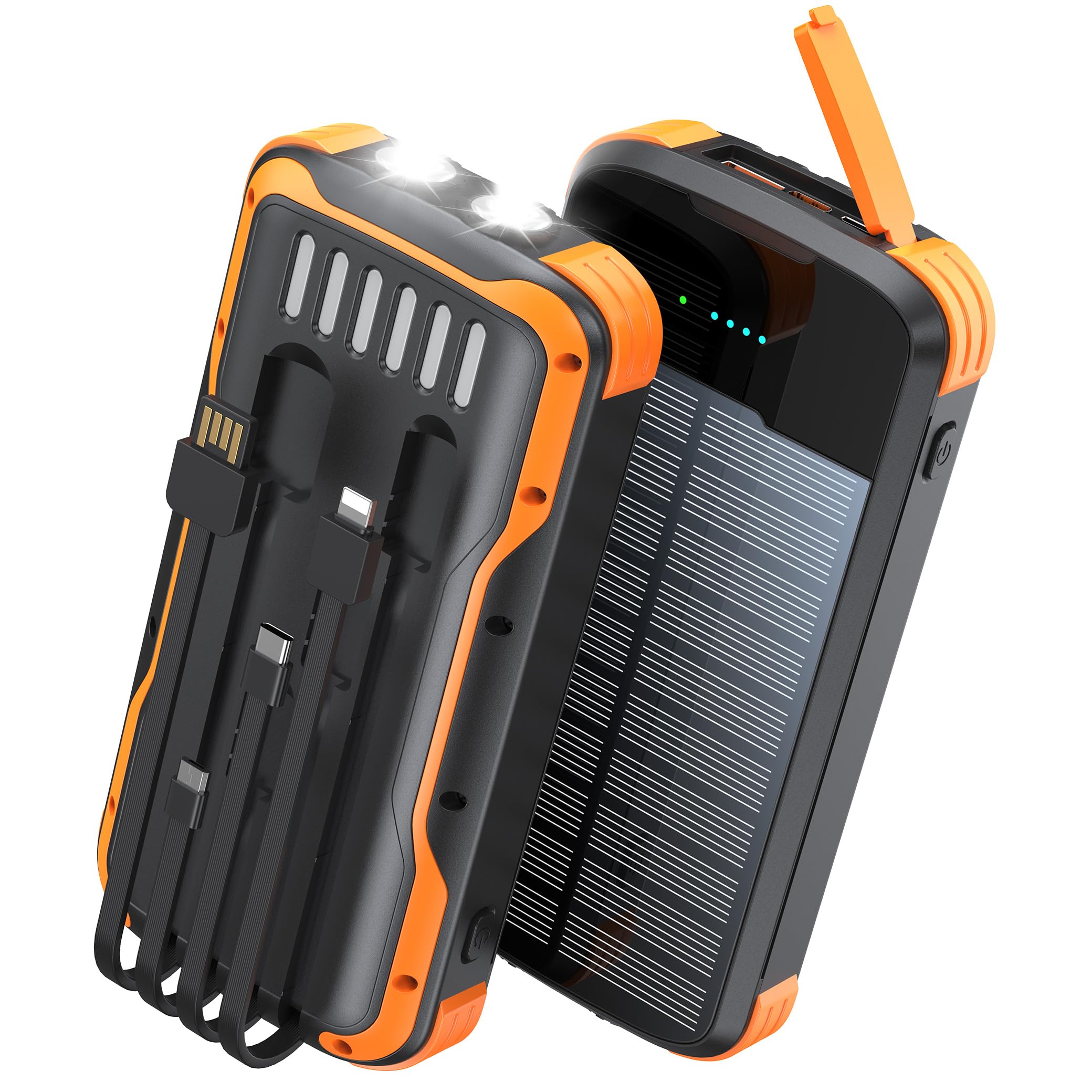
The SOXONO bank stands out with IP67 waterproofing — it survived submersion and still delivered 20W PD output to charge an iPhone 15 to 65% in 30 minutes. The dual high-brightness flashlights run for up to 30 hours continuously, making it a legitimate emergency light source for power outages. The four built-in cables (Type-C, iOS, Micro USB, USB-A input) mirror the MINRISE setup, but the SOXONO adds IP67-rated protection that allows it to operate in rain-soaked conditions or dusty trails without damage.
The ABS material is chemically resistant and heat-tolerant, meaning the bank won’t degrade if left in a car dashboard under summer sun. All ports and cable slots are covered by silicone flaps that seal tightly against moisture. The 1.17-pound weight is negligible for a 40,000mAh unit, and the lanyard attachment point (though poorly documented in the manual) lets you hang the bank from a tent loop or backpack strap for solar exposure while hiking.
User reports confirm the unit withstands extreme heat inside a saddle bag during motorcycle road trips and still charges devices faster in direct sunlight. The solar panel does generate a current — enough to extend battery life over a full day of exposure — but won’t refill the full 40,000mAh capacity in a single afternoon. For bikers, overlanders, or anyone who expects their gear to get rained on, the SOXONO’s sealing is the differentiator.
Why it’s great
- IP67 waterproof rating is rare among solar power banks at this price point
- Dual flashlights with 30-hour runtime provide genuine emergency lighting
- Heat-resistant ABS shell withstands prolonged exposure in vehicles
Good to know
- Lanyard installation is confusing — no clear guidance in the included manual
- Some units emit a persistent plasticky-electrical smell during first few charges
7. Nuynix Solar Charger Power Bank 49800mAh

The Nuynix bank offers the highest advertised capacity in this lineup at 49,800mAh, but the 15W USB output means it charges phones at roughly half the speed of the 20W PD competitors. It can still fast-charge an iPhone to 50% in 30 minutes, but charging an iPad or Android flagship will feel leisurely. The IP67 waterproofing and dual LED flashlights with steady/SOS/strobe modes match the more expensive SOXONO at a lower entry cost.
The battery uses high-density polymer cells that pack 49,800mAh into a 7 x 3.4 x 1.2-inch housing, and the included carabiner lets you clip it to a backpack for solar exposure while moving. The three-port output (two USB-A, one Type-C) can charge three devices simultaneously, and the smart protection IC chip prevents over-voltage and short circuits. At 100 grams, it’s remarkably lightweight for its rated capacity — among the lightest per-mAh in the group.
Reliability is the trade-off: multiple customer reports describe units that rattle internally, fail to hold charge after one day of idle storage, or shut off when connected to low-wattage devices like wireless earbuds. The solar charging speed is very slow even by budget standards, and the flashlight function on some units glitches after a few uses. For occasional emergencies or as a backup that stays in a car glovebox, the Nuynix is functional — but for regular outdoor use, the SOXONO or MINRISE are more consistent bets.
Why it’s great
- Highest raw mAh rating in the lineup (49,800mAh) at a budget entry point
- IP67 waterproofing and dual flashlights with three modes add genuine utility
- Very lightweight (100g) for its capacity — easy to carry on a backpack
Good to know
- 15W USB output is slow compared to 20W PD competitors for modern phones
- Some units have quality-control issues: rattle, battery drain, flashlight failure
FAQ
Can a solar power bank fully charge a phone on a cloudy day?
How many times can a 40,000mAh solar power bank charge an iPhone 15?
Does a solar power bank need direct sunlight to charge, or will shade work?
Final Thoughts: The Verdict
For most users, the battery solar power bank winner is the Anker SOLIX C300 because it combines genuine 60W solar panel charging, a robust 288Wh LiFePO4 battery, and the fastest USB-C ports in this class. If you need a car jump starter integrated with your power station, grab the VTOMAN Jump 600X. And for lightweight camping or airline-friendly AC power, nothing beats the DARAN 89.6Wh Power Station.