
Our readers keep the lights on and my morning glass full of iced black tea. As an Amazon Associate, I earn from qualifying purchases.
Specs are compiled from manufacturer listings and verified buyer reviews and can change over time — please confirm the key details on the product page before buying.
Your 2-year-old will feel confident on a balance bike only if their feet can sit flat on the ground while seated. That low seat height is the single most important spec to check before you buy. This guide focuses on that fit, plus the durability and ease of assembly that actually matter when a toddler is involved.
I’m Min — the founder and writer behind Gadgets Feed. This guide is built by comparing the manufacturers’ published specifications and the patterns across verified customer reviews, so you get each pick’s real strengths and trade-offs instead of marketing spin.
Below you’ll find the balance bike for 2 year olds that earns the top spot, with honest notes on sizing and value for every其他 finalist.
Our Picks at a Glance

How To Choose The Best Balance Bike For 2 Year Olds
Every bike here fits the same broad age group, but your child’s height — not their birthday — decides which one is right. A bike that’s too tall makes a toddler tip-toe and lose trust in the whole idea of riding. A bike that’s too small means they’ll outgrow it before the season ends.
Start with the inseam, not the age range
Manufacturers print ages like “2-5 years” on the box, but those labels are a rough guide at best. What actually matters is your child’s inseam — the length from their crotch to the floor. That measurement tells you if they can sit on the seat with both feet flat, which is the only way they’ll feel safe pushing off and stopping on their own.
Weigh foam tires against the surfaces you ride on
Most toddler balance bikes use foam or rubber tires that never go flat, which saves you from pump-and-patch duty. These are ideal for smooth driveways and indoor floors. If your plans include gravel or bumpy dirt paths, air-filled tires absorb more shock, but they need a pump and can puncture.
Look for safety details that fit a 2-year-old’s reality
A steering limiter stops the front wheel from turning a full 180 degrees, which prevents the sudden jackknife that sends new riders over the bars. Enclosed wheels keep little toes and pant legs from getting caught in the spokes. Both features turn a fun toy into a genuinely safer first ride, especially for a child who is still wobbly.
Quick Comparison
| Model | Best For | Seat Height | Tire Type | Frame Material | Amazon |
|---|---|---|---|---|---|
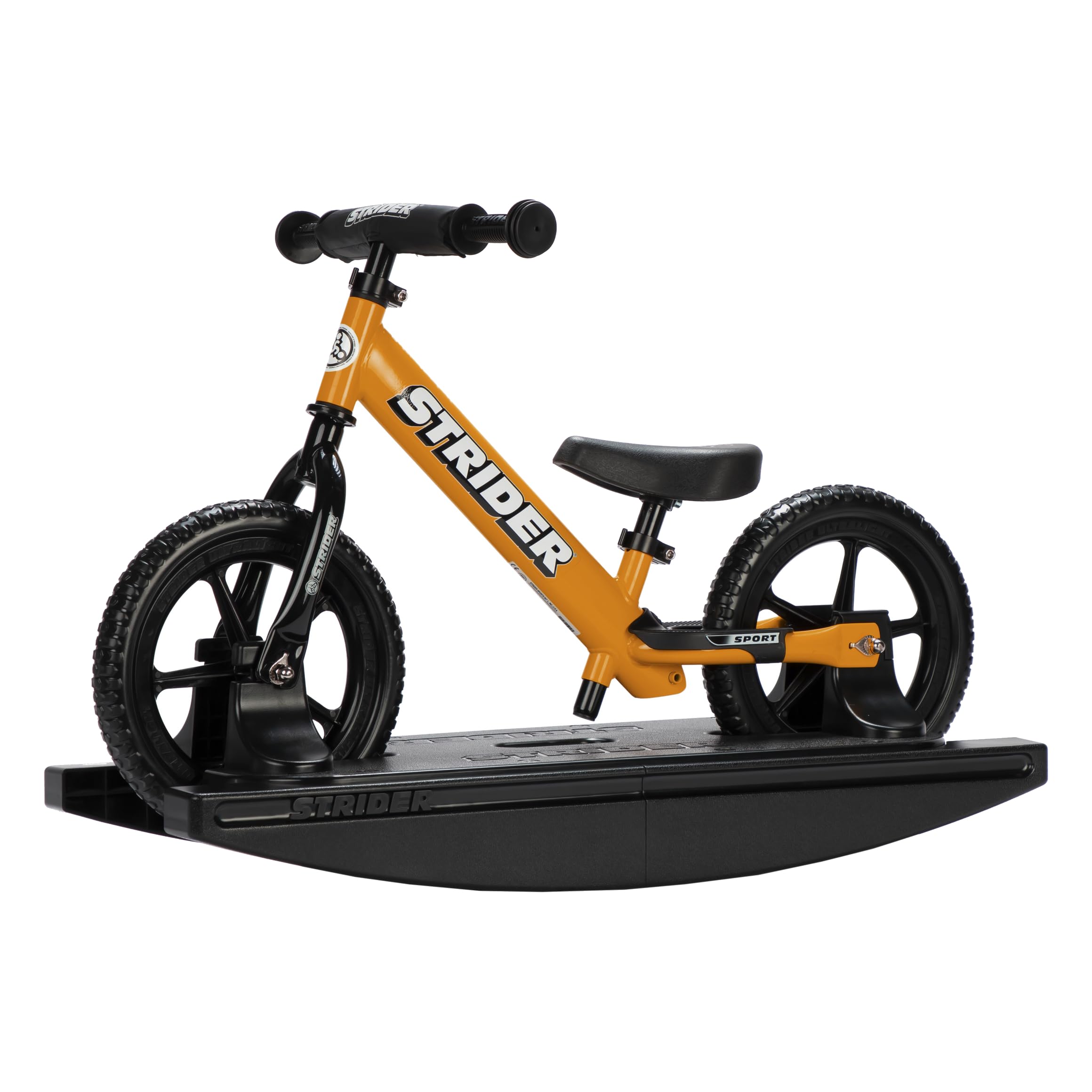
| Strider Sport 2-in-1 Rocking Bike★ Best Overall | Babies growing into toddlers | 9–17 in. | Foam rubber | Alloy Steel | Amazon |
| Bobike Toddler Balance BikeBest Value | Budget-friendly first bike | 28.5 in. min. rider height | Enclosed wheels | Aluminum | Amazon |
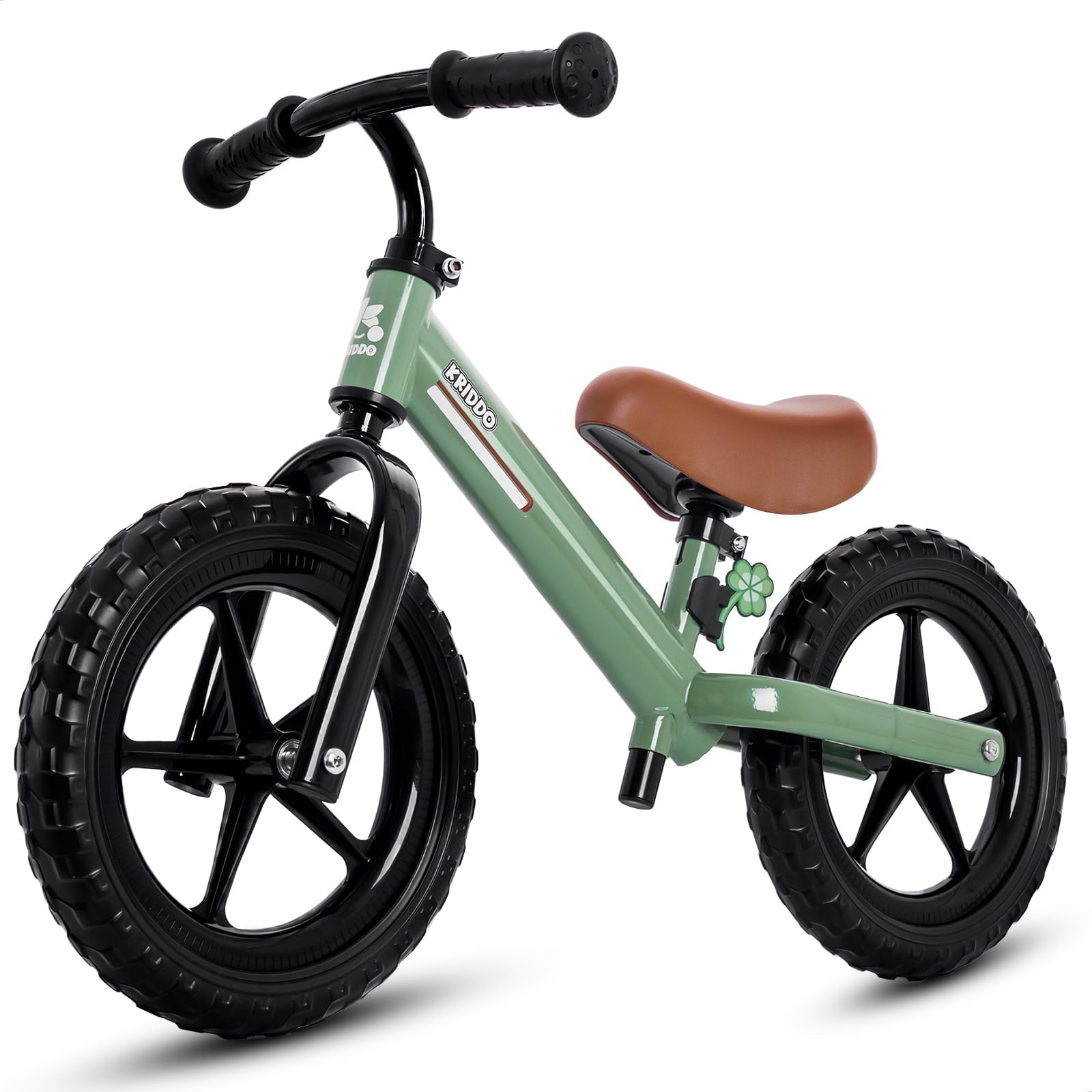
| KRIDDO Toddler Balance BikeTrail Ready | Multi-terrain adventures | 14.17–18.5 in. | Puncture-proof | Carbon Steel | Amazon |
| RIDYEE Toddler Balance Bike | DIY customizing families | 13.4–15.8 in. | All-terrain | Carbon Steel | Amazon |
| Phobby Baby Balance Bike | 12–24 month beginners | Adjustable | Silent | Sturdy Steel | Amazon |
| Gotrax KS12 | Gift-givers wanting LED fun | 16.5–18.3 in. | 12″ EVA | Iron | Amazon |
| Liberry Baby Balance Bike | Indoor smooth-surface riders | 9.7–11 in. | EVA | Alloy Steel | Amazon |
| KRIDDO 2-in-1 Trike & Balance Bike | Families buying one bike for two stages | Adjustable | Standard | Carbon Steel | Amazon |
| Retrospec Cub | Long-term durability seekers | 11–14.5 in. | Puncture-proof | Alloy Steel | Amazon |
In-Depth Reviews
1. Strider Sport 2-in-1 Rocking Bike
Our pick — over 4.5★ from 800+ verified ratings; the strongest balance of quality and price.
The rare two-stage ride that starts as a rocker and becomes a real balance bike.
This bike grows with your child thanks to its seat height range of 9 to 17 inches. You can drop it low enough for a 6-month-old on the rocking base, then raise it as your toddler’s legs grow to the full 12-inch Sport bike, which handles riders up to 60 lbs without the base. For a family that wants one purchase to span years, this reach is the whole story.
Owners most often praise the build quality, noting the sturdy frame survives even 70 lb dogs knocking the rocker base. Buyers report it’s sturdy enough that even 55 lb and 70 lb dogs can’t knock the rocking base over, and the bike itself is built to last until a child is 5 or 6. It arrives with all tools included, and the seat and handlebars adjust without tools as your kid shoots up.
The honest trade-off is the price, which sits well above the rest of this list, and the rubber mini-grips plus handlebar safety pad are thoughtful touches for the bumps along the way. An occasional parent notes the foam tires can slip on slick hardwood, so it’s happiest on pavement and carpet.
Why It Earns the Crown
- Two products in one box: the rocking base turns the bike into a stationary toy for babies
- Seat spans 9–17 in., so it fits a tiny toddler and a growing preschooler
- Never-flat foam tires need zero maintenance
What to Weigh First
- The premium price is the biggest hurdle for most buyers
- Foam tires can slip on polished wood floors
- Some owners say the rocker rocks less than they expected
Best if you want: a single, durable investment that starts as a baby rocker and grows into a proper balance bike.
Think twice if: your budget is tight — this costs several times more than the other picks here.
2. Bobike Toddler Balance Bike
A featherlight carbon-steel ride that survives river dunks and stair tumbles.
The Bobike’s light weight is what parents mention immediately — a 2-year-old can lift it themselves, which means they’re not waiting for help to start riding. That portability pairs with a standout durability story: owners mention their sons have thrown this bike into rivers, oceans, and down stairs multiple times, and it keeps rolling. The frame material is listed as carbon steel, and the lightweight body is easy to clean after those adventures.
Assembly tops owner praise, with clear instructions and no complicated tools needed—it’s together in minutes. The 135° steering limit design and fully enclosed wheels work together to prevent tip-overs and keep little feet safe, which matters most for a wobbly 2-year-old just finding their stride.
The catch is sizing: the minimum rider height is 28.5 inches, a 2.0x jump from the KRIDDO’s 14-inch minimum, so this suits a taller or slightly older toddler best. It’s rated up to 110 pounds, so there’s generous room to grow even if the bike itself runs on the smaller side.
Survivor-grade build: this is the bike that shrugs off the rough stuff toddlers dish out, from cross-country moves to water hazards, while staying light enough for them to carry.
Watch the fit: shorter 2-year-olds may find the minimum height a stretch — measure that inseam before buying.
3. KRIDDO Toddler Balance Bike 2 Year Old
The gravel-crushing green machine that teaches balance in days, not weeks.
The 12-inch puncture-proof tires are what set this KRIDDO apart — they handle tracks, grass, carpets, pavements, and wood floors, which means you don’t have to police where your toddler rides. Customers note a child learned to balance and steer in just a few days, a fast win that keeps the bike from becoming a dust collector. The dual-bearing wheels give a smooth, low-resistance glide that’s easier on little knees.
The sturdy metal frame, not plastic, is why quality tops owner mentions. The adjustable seat spans 14.17 to 18.5 inches, and handlebars adjust from 20.08 to 21.65 inches, so a tall 2.5-year-old has room to grow. Two cute plates, a flower and a clover, attach under the seat for a personal touch kids love.
Durability opinions run mixed—some owners see years of use, others find it less rugged than hoped. It’s also note the minimum rider height here is just 14 inches, far below the Bobike’s 28.5-inch floor, making this a better early fit for smaller toddlers.
Confidence builder: the fast learning curve plus all-terrain tires make this a top pick for active families who ride on varied ground.
Mixed long-term views: for heavy daily abuse, you may want the pricier Strider or Retrospec.
4. RIDYEE Toddler Balance Bike
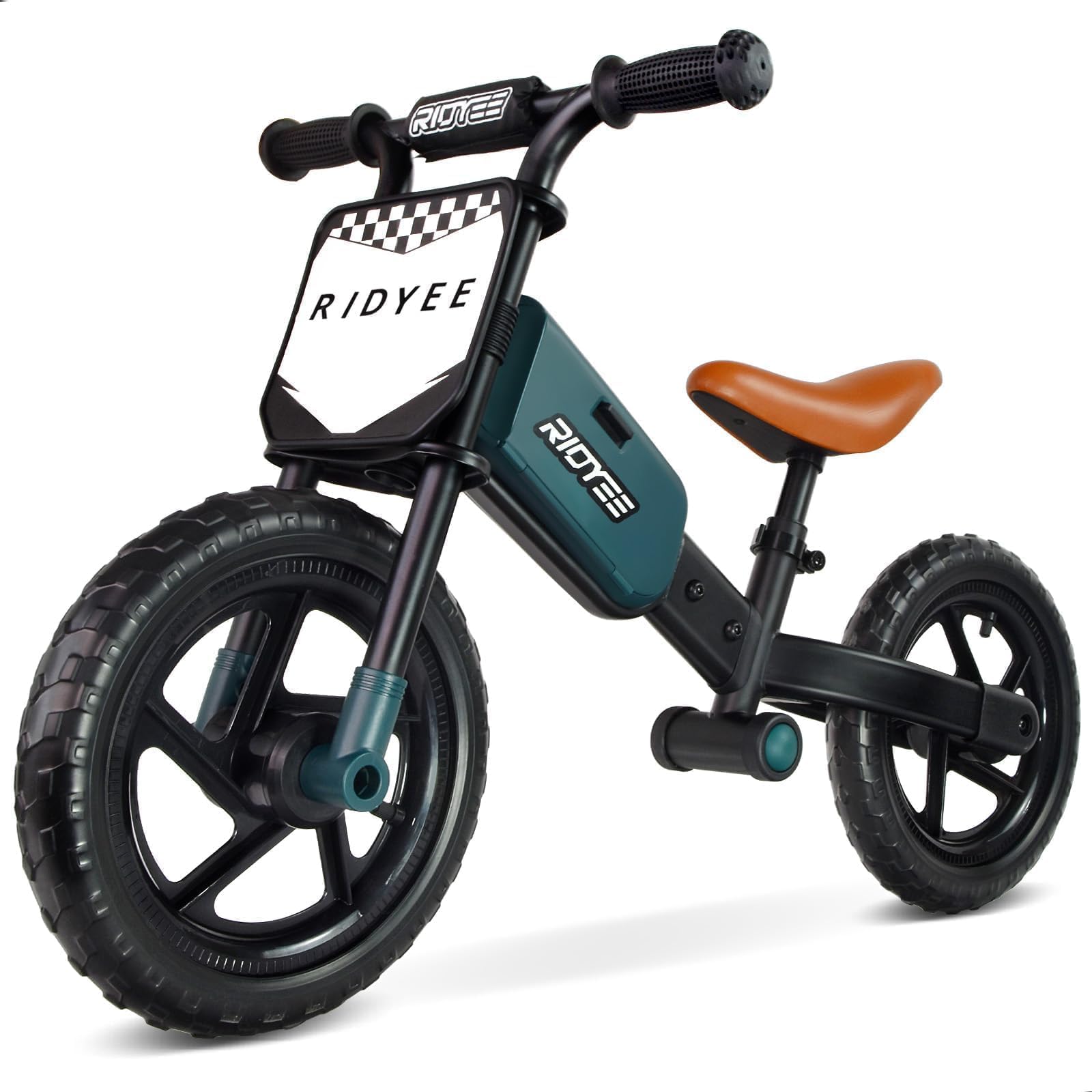
A sand-motocross-inspired frame that turns every driveway into a race track.
The sporty carbon steel frame is the first thing you notice — it borrows the look of sand motocross bikes to make a 2-year-old feel like they’re on a real off-road machine. The low center of gravity owners mention is a genuine safety win, making the bike harder to tip as a new rider builds confidence. That stable geometry pairs with a shock-absorbing seat to smooth out bumpy rides.
Assembly is a standout strength, and the tool-free adjustable seat spans 13.4 to 15.8 inches as your child grows. The included DIY plate and three sets of letter and number stickers let kids personalize their ride, which boosts fine motor skills while making the bike feel like theirs. Reviewers point out it’s a perfect size for a 35 lb 3-year-old, and parents of soon-to-be-2-year-olds like that the seat starts low.
The main caveat is that some 2-year-olds find it a touch heavy at first — one owner noted their child mastered it closer to 3 years old. The safety angle limit and all-terrain tires make it fine for both indoor and outdoor use, but if your child is on the smaller side, you might see a few weeks of walking before the gliding clicks.
The Cool Factor
- Motocross styling with a low center of gravity for stable first rides
- Tool-free seat adjustment from 13.4–15.8 in.
- Customizable plate plus three sticker sets for personalization
The Growth Note
- A few younger 2-year-olds need time to build strength for it
- Sporty look may not suit every taste
Reach for this if: your kid loves stickers and you want a bike that looks like a mini motocross machine.
Look elsewhere if: you need the absolute lightest frame for a petite toddler.
5. Phobby Baby Balance Bike

Four wheels and silent tires make this the gentlest intro for a not-quite-2-year-old.
This Phobby is built for the youngest end of the spectrum, aimed at 12 to 24 months, making it a strong pick if your child is on the younger side of 2. The four-wheel design is the standout feature — it offers more stability than a traditional two-wheeler, so a toddler still mastering walking can sit and push without the bike wanting to tip. The closed wheels prevent stuck feet, and the safe steering limit avoids sudden side falls.
Owners most appreciate the silent wheels—smooth and quiet indoors without scratching wood floors, though best on paved roads. The adjustable seat is made of soft PU material, and the bike supports up to 55 lbs, giving it a reasonable lifespan for a first ride. Quality is the aspect with the most mentions, with buyers noting it doesn’t wobble.
The trade-off is that this is a beginner stage, not a long-term bike — a 3-year-old will likely outgrow the four-wheel setup. An occasional unit has arrived with a damaged wheel, and while the seller offers support, it’s worth checking your box on arrival. One grandma’s 1-year-old grandson was off and moving himself within a week of assembly.
Perfect first step: the four-wheel layout gives the youngest riders a stable platform to build confidence before moving to two wheels.
Know the lifespan: this is a stepping stone — plan to size up within a year or two.
6. Gotrax KS12 Toddler Balance Bike
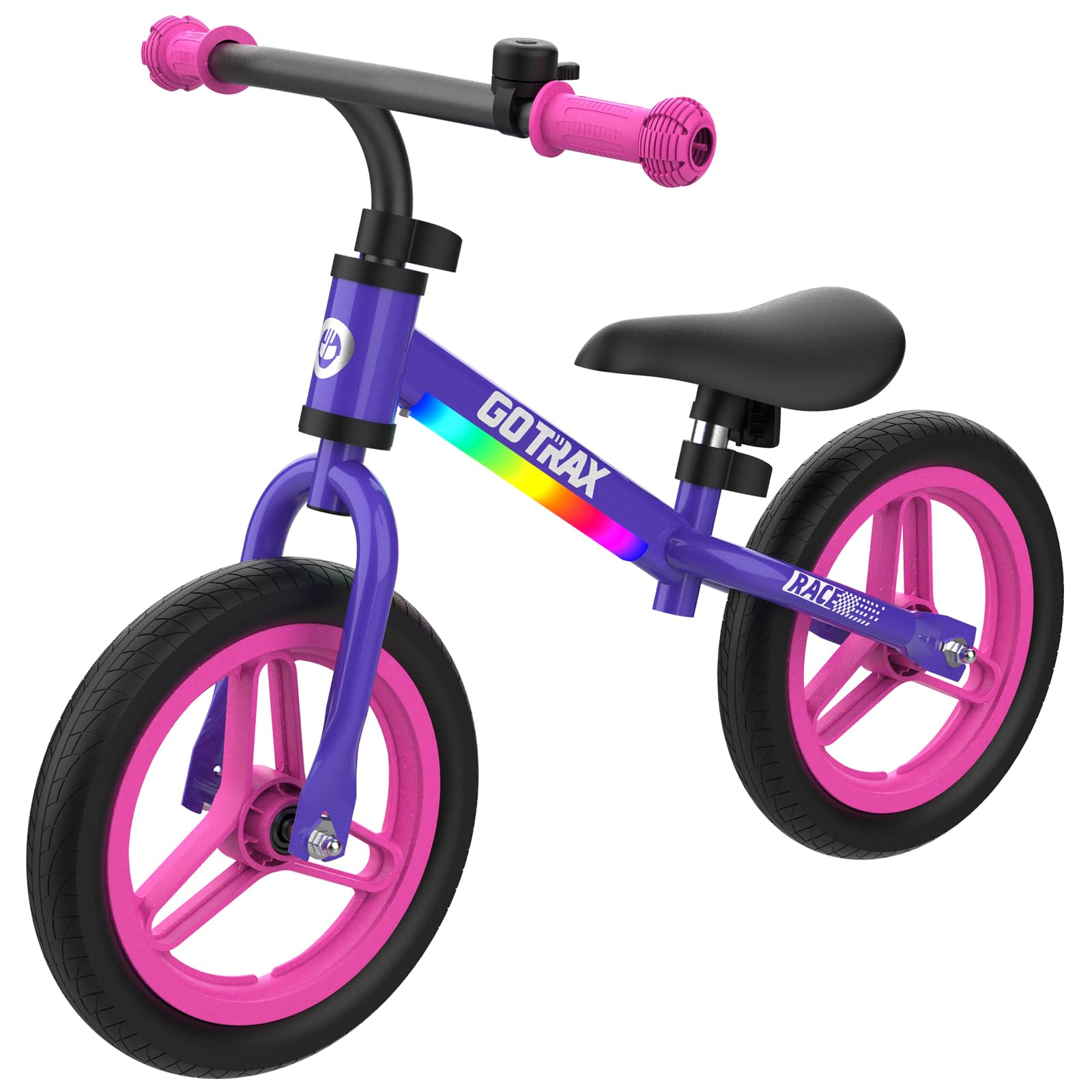
LED wheels and a safety bell turn an evening ride into the day’s main event.
The switchable LED lights are the hook here — they fire up as your child rides, creating a light show that keeps toddlers engaged even after dusk. That’s backed by a frame so light, at just 8.6 lbs, that a small rider can carry it themselves, and a 110 lb max load means it’ll easily outlast the toddler years. The 12-inch EVA wheels are puncture-proof, so no flats on whatever surface they choose.
The bike grows with your kid too: the seat adjusts from 16.5 to 18.3 inches and the handlebars from 22.8 to 26 inches, with a thicker seat cushion and silicone grips for comfort. Assembly is quick with the included tools, and Gotrax backs it with a 1-year manufacturer’s warranty. Shoppers say it feels as well-made as brands costing far more, at a fraction of the price.
The one recurring gripe is the lighting — a mix of opinions because the strobe light can be hard to turn off, and some owners find it never fully stops. If your child is sensitive to blinking lights, that’s worth knowing. Otherwise, this is a quality first bike that one family called the best push bike for a 2.5-year-old they’d found.
What Wins People Over
- Unique LED lighting that makes rides notable for toddlers
- Featherlight 8.6 lb frame a child can carry solo
- Grows with seat from 16.5–18.3 in. and handlebars to 26 in.
The Lighting Catch
- Strobe light sometimes won’t switch off — a mixed bag for some parents
- Taller 3-year-olds near the seat max may want more room
Best for gift-givers: the lights and bell make it the most notable box under the tree.
Skip if: you’d rather not manage a battery or blinking-light feature.
7. Liberry Baby Balance Bike
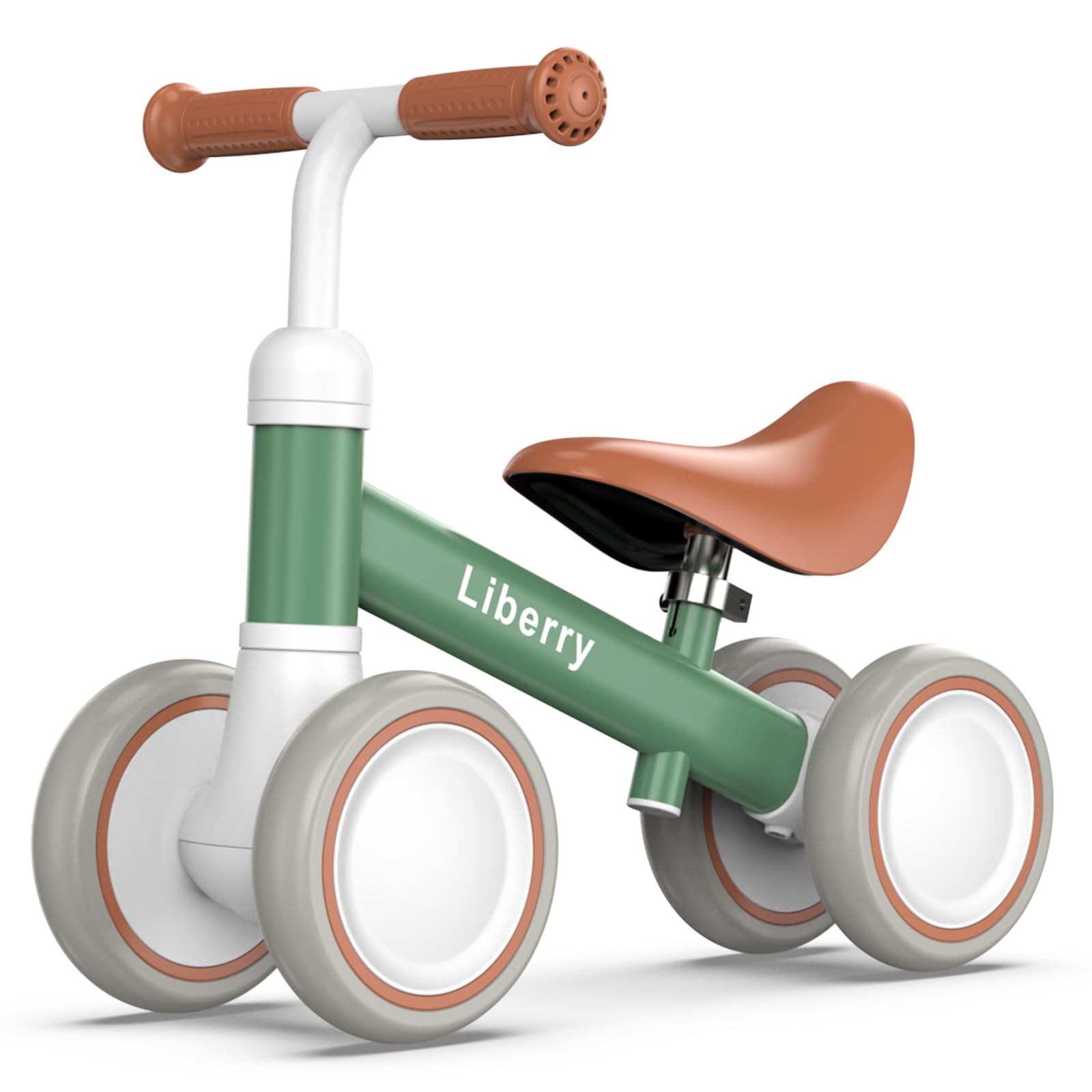
A tiny 6.4 lb four-wheeler that lets a 13-month-old mount and dismount solo.
The Liberry is designed for the just-learned-to-walk crowd, with a four-wheel layout that owners say lets a 13-month-old get on and off without the bike tipping. The integrated body uses strengthened steel and supports up to 55 lbs, yet the whole thing weighs just 6.4 lbs — light enough for a baby to steer and for you to carry one-handed. The PU seat adjusts from 9.7 to 11 inches to match your child’s growth.
The closed wheels are a genuine safety feature here, protecting little feet from getting pinched, and the EVA tires cut down on noise, shock, and skidding — buyers report it leaves no marks on wood floors. Handlebars are rubber rather than foam, which is safer if your toddler is in a chewing phase. A letter sticker set is included so you can DIY your child’s name on the body.
The catch is that this thrives on smooth ground only — the maker advises avoiding uneven roads like gravel paths. It’s also aimed squarely at 12 to 24 months, so a 2-year-old near the top of that range may outgrow the height quickly even though the seat adjusts. For indoor cruising and smooth driveways, it’s a sturdy, cute choice that owners call very sturdy and worth the price.
Ideal first ride: the stability of four wheels plus a light frame makes this perfect for a baby who just started walking.
Stay on smooth surfaces: gravel and bumpy paths are off-limits for this one.
8. KRIDDO 2-in-1 Tricycle and Balance Bike

One bike that flips from a stable trike into a classic balance bike as skills grow.
This KRIDDO is the answer for parents who don’t want to buy two bikes. In trike mode, your toddler gets the stability of three wheels to build confidence; in balance mode, they learn the gliding skill that leads straight to a pedal bike. The clever bit is the built-in pedal mount — pedals store in a slot under the rear seat so they don’t get lost when you switch modes, a first for balance bikes.
The training wheels are stowable too: lift them up as confidence grows, or remove them completely for a classic balance bike. Owners most often cite quality, with no ankle or foot contact in balance mode—a common irritation on cheaper models. Assembly is rated very easy with a helpful video, and the carbon steel frame stays intact through learning, per owners.
The trade-off is that with all those modes comes some complexity, and ease-of-use opinions run mixed — switching between modes takes a few minutes of fiddling. The item weighs 4.8 kg (about 10.6 lbs), so it’s not the lightest for a 2-year-old to carry. But for a family that wants trike stability now and balance training later, it saves both money and storage space.
One Bike, Two Stages
- Pedals tuck under the seat so they never get lost in transition
- Training wheels stow or fully detach as skills improve
- Quality build with no foot or ankle contact in balance mode
The Complexity Cost
- Switching between modes takes some fiddling
- Heavier than dedicated balance bikes at 4.8 kg
Choose this if: you want a single purchase that covers the trike-to-balance-bike journey.
Pass if: you prefer a simple, ultralight dedicated balance bike.
9. Retrospec Cub Toddler Balance Bike

The one-year-in review favorite that goes from wobbly to confident in a week.
This Retrospec is the pick for parents who want proof before they pay premium dollars, and the owner feedback delivers: owners mention kids as young as 1 year old were cruising within a week, and one family’s review after a full year of use still landed at five stars. Durability is the second most-praised aspect, with the solid, flat-free tires expected to last another year even through drops and drags. The low frame design lets small riders mount independently.
The adjustable seat spans 11 to 14.5 inches with quick-release handlebars, adapting as your child grows — though owners note the height maxes out around age 2.5 for taller kids. The airless, puncture-proof tires ride smoothly across pavement, grass, and dirt paths without the hassle of flats. Assembly takes under 15 minutes, and included stickers keep kids engaged in the process.
The catch is that the height ceiling is lower than some rivals — a taller 3-year-old will likely need the next size up. It’s also priced at the premium end here.
Built to Last Seasons
- Durability praised after a full year of heavy use
- Flat-free tires work on pavement, grass, and dirt
- Quick-release handlebars and easy seat adjustment
Know the Limits
- Seat maxes out around 14.5 in., suiting kids up to about 2.5 years
- Premium price for a bike with a shorter height range
The standout spec: 11–14.5 in. of seat adjustment plus durability that survives a year of drops — ideal for the 1-to-2.5 age window.
Note the ceiling: taller toddlers will outgrow the height sooner than the bike’s sturdiness wears out.
Understanding the Specs
Seat Height vs. Inseam
The seat height range tells you how low the saddle can go, but your child’s inseam — the distance from crotch to floor — is what decides if they fit. For a 2-year-old, both feet should rest flat on the ground while seated, with a slight knee bend. A bike that forces tiptoeing will crush confidence fast.
Steering Limiters and Wheel Design
A steering limiter stops the front wheel from turning a full 180 degrees, preventing the sudden jackknife that sends new riders over the handlebars. Enclosed or closed wheels keep little toes and pant legs out of the spokes, while four-wheel designs add extra stability for the youngest beginners. These features matter most when your child is still wobbly.
FAQ
How do I know if a balance bike fits my 2-year-old?
Are foam tires better than air-filled tires for a toddler?
What is a steering limiter and why does my child need one?
Should I buy a 2-in-1 balance bike and trike combo?
How long will a balance bike last my child?
What weight limit do I need for a 2-year-old balance bike?
Is a four-wheel balance bike better for a younger 2-year-old?
Do balance bikes work on grass and gravel?
Final Thoughts: The Verdict
For most families, the balance bike for 2 year olds winner is the Strider Sport 2-in-1 Rocking Bike because its 9-to-17-inch seat range and rocker-to-bike design carry a child from babyhood to preschool in one durable frame. If you want a featherlight, budget-friendly option that survives rough toddler play, grab the Bobike. And for a single bike that covers both trike stability and balance training, the KRIDDO 2-in-1 is the one to reach for.
How We Picked
We do not accept paid placement. Every pick is matched to a real buyer and a real use-case; we do not hands-on test units.
Sources & Methodology
Specifications: manufacturer listings and product documentation. Review insights: verified customer reviews, as of September 2026. Pricing: not shown on this page (it changes often); check the current price via the retailer link.
As an Amazon Associate, Gadgets Feed earns from qualifying purchases. This does not affect which products we feature.