
The wrong backup solution leaves you staring at a silent machine in the dark, wondering why your carefully chosen battery couldn’t handle the humidifier or heated tube draw. This guide isolates the power stations specifically engineered to keep your therapy uninterrupted, focusing on DC compatibility, pure sine wave output, and the runtime math that actually matches your machine’s pressure settings.
I’m Min — the co-founder and writer behind Gadgets Feed. I’ve spent hundreds of hours cross-referencing battery chemistries, inverter types, and CPAP voltage requirements to separate the marketing claims from actual overnight usability in this guide to the backup power for cpap market.
After analyzing dozens of models across lithium-ion and LiFePO4 chemistries with capacities from 192Wh to 768Wh, the real winners are those that deliver stable DC output, include the correct voltage cables for ResMed and Philips machines, and provide enough watt-hours to survive a full night with humidification disabled.
How To Choose The Best Backup Power For CPAP
Selecting a backup power supply for your CPAP machine is not about picking the biggest battery—it’s about matching the electrical profile of your specific device. Most CPAP machines draw between 30W and 90W depending on pressure settings, humidifier use, and heated tube activation. The key is finding a power station that delivers the correct DC voltage (12V, 24V, or variable) through a compatible cable, with enough capacity to sustain your prescribed therapy through an entire sleep cycle.
DC Output Voltage Matching
ResMed AirSense 10 and AirCurve 10 machines typically operate at 24V DC, while AirSense 11 and AirMini models use 12V or 15V depending on the adapter. The EASYLONGER ES720 and BLUETTI X30 include dedicated DC cables for ResMed and Philips machines, ensuring you get the exact voltage without an inefficient AC-to-DC conversion that wastes 15-20% of your battery capacity. Always verify the battery’s adjustable DC port or included cable set matches your machine’s operating voltage before purchasing.
Capacity Planning for Overnight Therapy
A CPAP machine with humidifier off typically draws 30-60W, meaning a 300Wh battery provides roughly 5-10 hours of runtime—adequate for a single night. With humidifier and heated hose enabled, draw can increase to 80-100W, cutting runtime to 3-5 hours. Premium units like the VTOMAN Jump 600X (299Wh expandable to 939Wh) and the BLUETTI AC70 (768Wh) offer the headroom needed for multiple nights or high-power settings. The real-world test is always the same: calculate your machine’s wattage, add a 20% safety buffer, and choose a battery that exceeds that number.
Battery Chemistry: LiFePO4 vs Lithium-Ion
Lithium Iron Phosphate (LiFePO4) batteries, found in the DaranEner NEOZ, VTOMAN Jump 600X, and BLUETTI AC70, offer 3000-3500 charge cycles before degrading to 80% capacity—roughly 8-10 years of weekly use. Standard lithium-ion packs typically manage 500-1000 cycles. For a device you’ll rely on during emergencies and travel, the longer lifespan and thermal stability of LiFePO4 chemistry justifies the higher upfront cost, especially when the battery lives in a bedroom or car where safety is paramount.
Quick Comparison
On smaller screens, swipe sideways to see the full table.
| Model | Category | Best For | Key Spec | Amazon |
|---|---|---|---|---|
| BLUETTI X30 | Premium CPAP-Specific | Multi-night CPAP with dedicated cables | 297Wh / 24V DC output / 3.9 lbs | Amazon |
| BLUETTI AC70 | Premium High-Capacity | Extended outages & multi-device power | 768Wh / 1000W AC / 1.5hr AC recharge | Amazon |
| EASYLONGER ES960 PRO | Premium CPAP-Specific | LiFePO4 safety with 4 DC cables | 297.6Wh / 12-24V DC / 6.6 lbs | Amazon |
| EASYLONGER ES720 | Mid-Range CPAP-Specific | Camping & emergency CPAP runtime | 266.4Wh / 4 DC cables included / 3.3 lbs | Amazon |
| VTOMAN Jump 600X | Premium Multi-Function | Car jump start + CPAP backup | 299Wh expandable / 600W AC / 14.6 lbs | Amazon |
| GRECELL EB300 | Mid-Range Portable | CPAP + wireless charging for gadgets | 288.6Wh / 330W AC / 7.94 lbs | Amazon |
| Jackery Explorer 290 | Mid-Range Entry | Budget-conscious travel & short outages | 290Wh / 200W AC / 7.5 lbs | Amazon |
| DaranEner NEOZ (192Wh) | Budnget LiFePO4 | Compact CPAP + device charging | 192Wh / 300W AC / 5.73 lbs | Amazon |
| DaranEner NEO (192Wh) | Budget Portable | Lightest CPAP emergency backup | 192Wh / 300W AC / 5.84 lbs | Amazon |
In‑Depth Reviews
1. BLUETTI X30

The BLUETTI X30 is the closest thing to a purpose-built CPAP battery on this list, delivering 297Wh of LiFePO4 power through three dedicated DC output ports configured for 12V/5A, 15V/4A, and 24V/4A. This voltage-specific design eliminates the need for a clunky inverter, maximizing usable runtime by avoiding the 15-20% efficiency loss typical of AC-to-DC conversion.
Users report 5-7 nights of therapy on a single charge when paired with ResMed AirSense 10 or AirCurve 10 machines without humidification. The included five-cable set comes with color-coded connectors for System One, AirSense 10/11, ResMed S9, and Transcend Mini, removing guesswork from setup. Weighing only 3.9 pounds with an integrated carry handle, the X30 slips into a travel bag without adding meaningful weight.
The LiFePO4 chemistry supports over 2000 recharge cycles, translating to roughly 5.5 years of nightly use before capacity drops to 80%. The LCD display provides real-time battery percentage, estimated runtime remaining, and output wattage, giving you precise visibility into how much therapy you have left. The only notable limitation is the single-device DC output at any given time, meaning you cannot charge a phone simultaneously while powering your CPAP through the DC circuit.
Why it’s great
- Dedicated 24V DC port eliminates inverter conversion losses for ResMed machines
- Ultra-light 3.9-pound design with color-coded cable set fits in a carry-on
- 2000+ cycle LiFePO4 battery provides 5+ years of reliable nightly service
Good to know
- DC output powers only one device at a time
- Not suitable for Philips DreamStation users despite advertised compatibility
- No wireless charging or USB-C PD 60W for fast laptop charging
2. BLUETTI AC70

The BLUETTI AC70 is the heavyweight champion for CPAP users who want multi-night security and the ability to power larger household devices during extended outages. Its 768Wh LiFePO4 battery paired with a 1000W pure sine wave inverter (2000W peak lift) runs a ResMed AirSense 10 with humidifier for over 12 hours, or more than 24 hours with humidity disabled—enough for multiple consecutive nights without recharging.
What sets the AC70 apart is the 950W AC input that charges from 0 to 80% in 45 minutes and to full in 1.5 hours, making it feasible to top up between power outage cycles. The 100W USB-C PD output charges a MacBook Pro or iPad at full speed, while the six AC outlets and multiple USB ports handle an entire CPAP setup plus phone, tablet, and lamp simultaneously. The built-in UPS mode with ≤20ms transfer time ensures your CPAP never reboots during a grid flicker.
At 22.5 pounds, the AC70 is not a travel-friendly companion like the X30—it lives in the bedroom corner or car trunk. The BLUETTI App provides real-time monitoring and charge/discharge scheduling, giving you control over when the unit charges during off-peak hours. For CPAP users with high-pressure settings or heated humidity needs, the AC70 offers confidence that no power fluctuation will interrupt therapy.
Why it’s great
- 45-minute 0-80% AC recharge enables quick turnaround between outage cycles
- 1000W inverter with 2000W power lift handles any CPAP configuration plus accessories
- UPS mode with sub-20ms transfer prevents CPAP reboot during grid flickers
Good to know
- 22.5-pound weight makes it a stationary backup, not a portable travel unit
- No dedicated CPAP DC cables—must use AC adapter with 15-20% efficiency loss
- Premium investment best suited for home emergency preparedness
3. EASYLONGER ES960 PRO
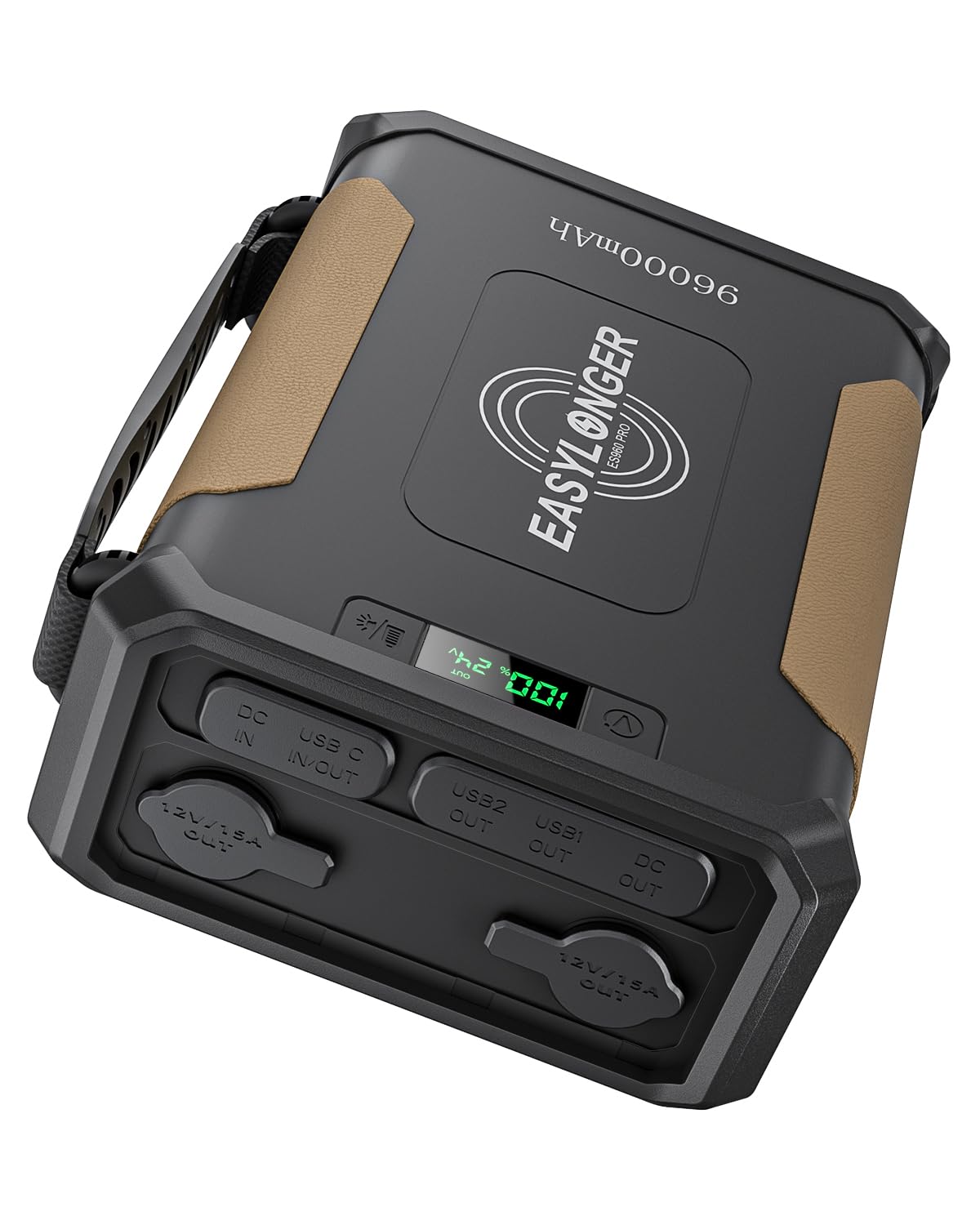
The EASYLONGER ES960 PRO upgrades the company’s CPAP battery line with LiFePO4 chemistry and a memory function that remembers your last DC voltage setting—a small convenience that eliminates the frustration of resetting voltage every time you power on. The 297.6Wh capacity delivers 2+ nights of therapy for ResMed AirSense 10/11 and AirCurve 10/11 machines without humidification, matching the BLUETTI X30 in per-night efficiency.
The included cable set covers four major CPAP families (ResMed S9, AirSense 10/11, AirCurve 10/11, Philips DreamStation 1/2) plus Luna TravelPAP, making it one of the most compatible packages available. The adjustable DC output supports 12V, 19V, and 24V via the cigarette lighter port, giving you flexibility for non-CPAP devices like laptops, car refrigerators, and air pumps. The 100W USB-C PD port provides high-speed laptop charging, a feature missing from the BLUETTI X30.
At 6.6 pounds, the ES960 PRO is heavier than the X30 but still backpackable, and the included carrying case organizes cables neatly. Real-world testing shows 4 hours of AirSense 11 use with heated hose and humidifier consuming about 52% battery, indicating roughly 8 hours total under high-power settings—adequate for a full night with some margin. The LiFePO4 chemistry supports 3000+ cycles, making this a long-term investment for frequent campers and emergency preppers.
Why it’s great
- Voltage memory function saves DC output setting between uses
- Four included CPAP cables cover ResMed and Philips families comprehensively
- LiFePO4 chemistry with 3000+ cycles for decade-long service life
Good to know
- Heavier than BLUETTI X30 at 6.6 pounds with case
- No direct 12V car charging cable included
- First-unit defect rate appears higher than average based on user reports
4. EASYLONGER ES720

The EASYLONGER ES720 strikes the best balance between price and CPAP-specific features, offering 266.4Wh of capacity with four dedicated DC cables for ResMed S9, AirSense 10, AirCurve 10, AirMini, AirSense 11, and Philips DreamStation machines. At 3.3 pounds and a slim 9.1 x 5.9 x 1.7-inch profile, it slides into a CPAP travel case alongside your machine without adding meaningful bulk.
The adjustable DC output port supports 12V/16.5V/20V/24V settings, allowing you to match your machine’s exact voltage requirement. In real-world tests, the ES720 powered a ResMed AirCurve 10 VPAP for three consecutive nights without full discharge, and an AirSense 11 provided two nights of dry camping use with over 50% remaining. The pass-through charging feature lets you run your CPAP while the battery recharges from wall power, effectively turning it into a UPS for grid-flicker protection.
The lithium-ion chemistry delivers solid cycle life, though it doesn’t match the 3000+ cycles of LiFePO4 models. The cable set is complete and labeled clearly, but the cigarette lighter port requires a separate voltage converter for CPAP connection—stick to the DC port for optimal efficiency. For CPAP users who camp occasionally or want a dedicated emergency backup that won’t break the budget, the ES720 delivers reliable nightly performance at an accessible entry point.
Why it’s great
- Four dedicated CPAP cables included with color-coded compatibility labels
- Lightweight 3.3-pound design fits inside most CPAP travel bags
- Pass-through charging provides UPS-like protection against grid flickers
Good to know
- Lithium-ion chemistry offers fewer total charge cycles than LiFePO4 alternatives
- Exceeds 160Wh airline limit—not approved for carry-on travel
- Some units report shorter runtime than advertised; test immediately upon arrival
5. VTOMAN Jump 600X

The VTOMAN Jump 600X solves two emergencies with one device: CPAP blackout backup and dead car battery. The 299Wh LiFePO4 power station includes regulated 12V/10A DC outputs specifically suitable for CPAP machines, and the built-in jump start port can revive a 12V vehicle battery instantly—even at 9% remaining capacity, as demonstrated by users jump-starting Dodge Rams without issue.
The expandable design accepts an optional external battery to increase capacity from 299Wh to 939Wh, making this the only mid-range model that can grow with your power needs. The 600W constant-power inverter (1200W surge) handles CPAP machines with humidifiers running at full draw, and the 9 output ports charge phones, laptops, coolers, and tire inflators simultaneously via pass-through charging. The 2.7-hour 0-80% recharge time via AC input is competitive for the capacity class.
At 14.6 pounds, the Jump 600X is heavy enough to stay in the car trunk or bedroom corner rather than a backpack. The LiFePO4 battery provides 3000 cycles before degrading, and the regulated DC output ensures consistent voltage delivery to sensitive CPAP electronics. Users consistently report 10+ hours of CPAP runtime with humidifier off, plus the ability to charge phones and lights throughout the night—exactly what a comprehensive emergency backup should deliver.
Why it’s great
- Expandable capacity from 299Wh to 939Wh for future-proof power growth
- Integrated car jump starter eliminates need for separate emergency battery
- Regulated 12V DC output ensures stable voltage for CPAP motor and sensors
Good to know
- 14.6 pounds is too heavy for backpack travel or carry-on luggage
- No dedicated CPAP DC cables included—requires aftermarket adapter purchase
- Some units ship with faulty ports; test all outputs during return window
6. GRECELL EB300
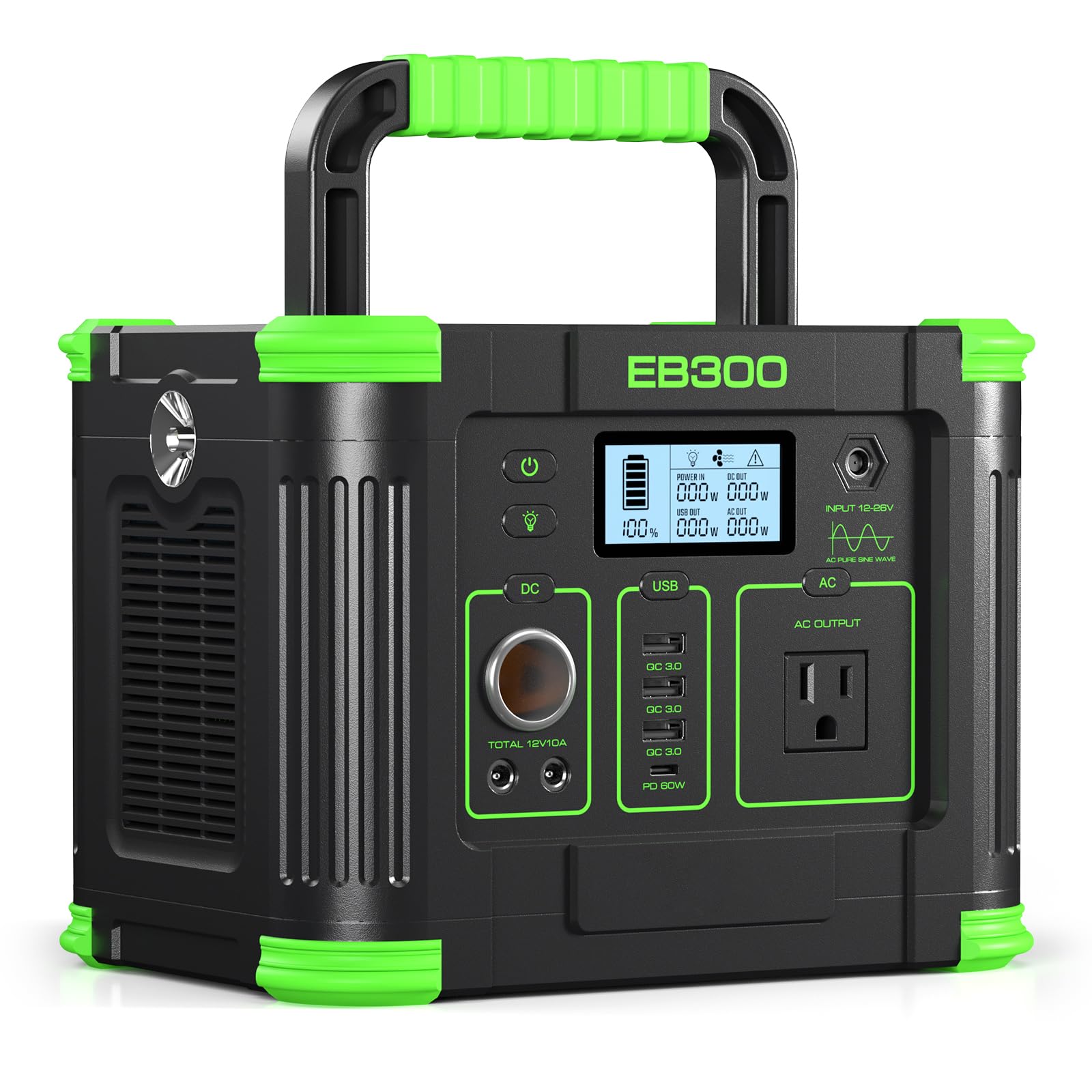
The GRECELL EB300 brings 288.6Wh of capacity and 330W pure sine wave output (600W surge) to the CPAP backup market with a clever addition: a 5W wireless charging pad on top. This eliminates cable clutter for CPAP users who also need to charge their phone overnight—simply set the phone on the pad and let it charge while the AC outlet powers your machine.
The 9-port output hub includes a 60W USB-C PD port capable of charging a MacBook Pro at full speed, two USB-A QC 3.0 ports (18W each), two DC ports, and a 12V car socket. The built-in MPPT solar controller accepts 60-120W panels and improves efficiency by 30% over standard controllers, making this a strong candidate for off-grid camping setups. Runtime estimates suggest 2-4 nights of CPAP use without humidification, depending on pressure settings.
The whisper-quiet dual-fan cooling system activates only under heavy loads, keeping the EB300 silent during typical CPAP operation. The 7.94-pound weight with a rugged carry handle is manageable for car camping and home storage, though heavier than dedicated CPAP-specific batteries. The 24-month warranty and US-based support provide peace of mind for a mid-range investment, though the plastic housing feels less premium than the BLUETTI or VTOMAN alternatives.
Why it’s great
- Built-in 5W wireless charging pad keeps smartphone accessible overnight
- 60W USB-C PD charges laptops at full speed alongside CPAP operation
- MPPT solar controller boosts panel efficiency by 30% for off-grid charging
Good to know
- No dedicated CPAP DC cables—relies on AC inverter with conversion loss
- 7.94 pounds is mid-weight for the capacity class
- Plastic housing feels less durable than metal-frame alternatives
7. Jackery Explorer 290

The Jackery Explorer 290 brings the brand reputation and 290Wh capacity to an entry-level price point, making it an accessible first backup for CPAP users who want proven reliability without a major investment. The 200W pure sine wave AC outlet delivers clean power to sensitive CPAP electronics, while the LCD screen displays charge level and estimated runtime in real-time.
With 200W continuous output, the Explorer 290 can handle most CPAP machines with humidification disabled, but may struggle if you need heated tubing or high-pressure settings simultaneously. The 7.5-pound weight and integrated handle make it easy to carry from bedroom to car, and the three recharge methods (wall, car, solar) provide flexibility for different outage scenarios. Users consistently report 6+ hours of CPAP runtime without humidity, enough for a single night’s therapy in most cases.
The Explorer 290 does not include any CPAP-specific cables, so you must use the AC adapter that came with your machine—this introduces the 15-20% conversion loss inherent in AC-to-DC conversion. The lithium-ion battery provides solid performance but only 500-800 cycles before noticeable degradation. For CPAP users who need backup only for rare power outages and want the simplicity of a well-known brand, the Explorer 290 provides reliable baseline performance at a low barrier to entry.
Why it’s great
- Trusted Jackery brand with widespread user community and support
- Clean pure sine wave output protects CPAP motor and electronics
- Three recharge methods (AC, car, solar) provide outage preparedness
Good to know
- No CPAP-specific DC cables—must use AC adapter with conversion loss
- 200W output may not support CPAP with humidifier and heated hose at full power
- Lithium-ion chemistry offers significantly fewer cycles than LiFePO4 alternatives
8. DaranEner NEOZ 192Wh
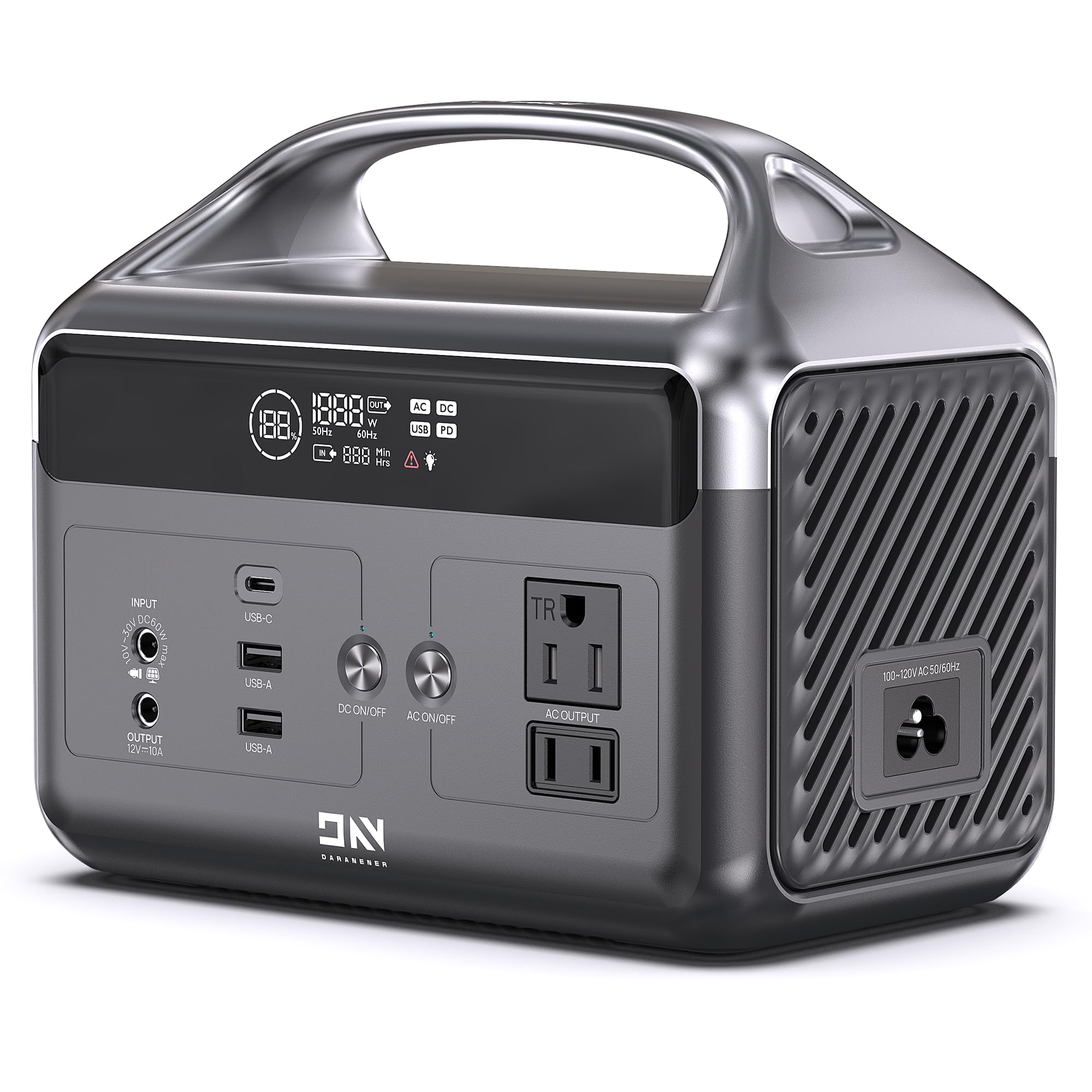
The DaranEner NEOZ proves you don’t need to spend a fortune to get LiFePO4 reliability for CPAP backup. At 192Wh and 300W pure sine wave output, this 5.73-pound unit delivers enough power for a single night of therapy without humidification, with the added benefit of 3500+ charge cycles from the automotive-grade LiFePO4 cells.
The six output ports include two AC outlets, a 60W USB-C PD port for fast laptop charging, two USB-A QC 3.0 ports, and a 12V DC output. Users report running their CPAP for most of the night while simultaneously charging a phone and tablet. The MPPT solar controller accepts up to 60W panels for off-grid recharging, and the built-in LED flashlight with SOS mode adds emergency utility. The compact 8.66 x 7.09 x 5.12-inch size fits in a glove box or CPAP case pocket.
The 192Wh capacity is the limiting factor—CPAP users with high pressure settings or those who require humidification will find the runtime insufficient for a full night. The NEOZ does not include any CPAP-specific cables, so you must use your machine’s AC adapter. The plastic construction feels adequate but not premium, and some units have shipped with defective AC outlets or USB ports. For the price, the NEOZ delivers exceptional value for compact emergency backup, but it’s best suited as a supplementary power source rather than a primary overnight solution for high-draw machines.
Why it’s great
- LiFePO4 chemistry with 3500+ cycles at entry-level investment
- Compact 5.73-pound design fits in CPAP case or glove box
- 60W USB-C PD provides fast laptop charging alongside CPAP operation
Good to know
- 192Wh capacity provides only one night of CPAP use without humidification
- No CPAP-specific DC cables—requires AC adapter with conversion loss
- Some units ship with defective grounded AC outlet or USB ports
9. DaranEner NEO 192Wh
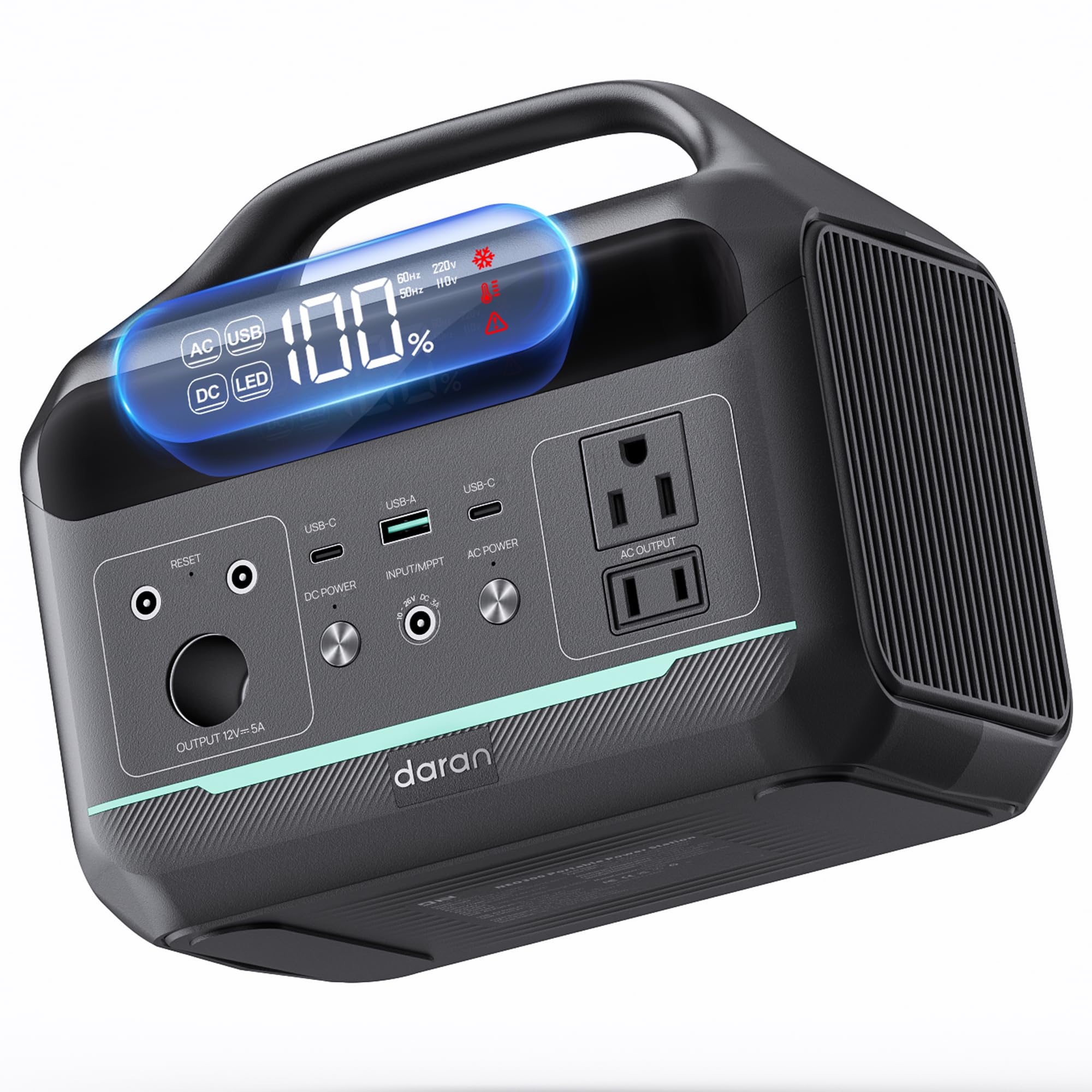
The DaranEner NEO shares the same 192Wh LiFePO4 foundation as the NEOZ but adds a second USB-C port (30W + 60W PD) for faster multi-device charging. The 300W pure sine wave inverter (600W surge) delivers clean power to CPAP machines, and the eight-port output hub includes two AC outlets, a 12V car socket, two DC5521 ports, and the USB array—enough connectivity to power a CPAP, phone, tablet, and lamp simultaneously.
The automotive-grade LiFePO4 cells support 3500+ cycles, matching the NEOZ in longevity. The compact 8.41 x 5.28 x 7.44-inch frame weighs just 5.84 pounds, making it the lightest option in the DaranEner lineup. The 90W AC input recharges the unit to full in approximately 2 hours, and the MPPT solar controller accepts 60W panels for off-grid charging. The integrated LED flashlight with Strobe and SOS modes adds emergency utility for power outages.
As with the NEOZ, the 192Wh capacity limits the NEO to approximately one night of CPAP use without humidification—users with heated tubing or high pressure settings will need supplemental capacity. The plastic build is lightweight but feels less robust than metal-frame competitors. Some users report that the unit trips its overload protection when powering appliances near the 300W limit, so careful power budgeting is necessary. For the price, the NEO delivers LiFePO4 longevity and versatile connectivity in a portable package suited for short-term CPAP backup.
Why it’s great
- Two USB-C ports (30W + 60W PD) for simultaneous laptop and phone fast charging
- Lightest LiFePO4 option at 5.84 pounds with 3500+ cycle battery
- 90W AC input charges to full in approximately 2 hours
Good to know
- 192Wh capacity limits CPAP use to one night without humidification
- Overload protection may trip when powering devices near 300W limit
- No CPAP-specific DC cables—must use AC adapter with conversion loss
FAQ
Will any portable power station work with my ResMed AirSense 10 CPAP?
How many nights of CPAP use can I expect from a 300Wh battery?
Can I travel on a plane with a CPAP backup battery?
Final Thoughts: The Verdict
For most users, the best backup power for cpap is the BLUETTI X30 because its dedicated 24V DC port eliminates inverter losses, the 3.9-pound design fits in any travel bag, and the 2000+ cycle LiFePO4 battery provides years of reliable service. If you need multi-night capacity and can handle the weight, the BLUETTI AC70 delivers 768Wh of power with 45-minute fast charging. And for the best value in a CPAP-specific package, the EASYLONGER ES720 includes four dedicated cables and pass-through charging at an accessible price point.