
Our readers keep the lights on and my morning glass full of iced black tea. As an Amazon Associate, I earn from qualifying purchases.
Specs are compiled from manufacturer listings and verified buyer reviews and can change over time — please confirm the key details on the product page before buying.
Choosing the right first cereal for your baby can feel overwhelming, especially when you are trying to avoid the heavy metals and additives that have made headlines in recent years. This guide focuses on organic options that prioritize clean, simple ingredients, giving you a clear starting point for introducing solid foods. You will see how single-grain staples compare to multi-grain blends, and which textures best suit a beginner eater versus a more experienced one.
I’m Min — the founder and writer behind Gadgets Feed. This guide is built by comparing the manufacturers’ published specifications and the patterns across verified customer reviews, so you get each pick’s real strengths and trade-offs instead of marketing spin.
Our Picks at a Glance

How To Choose The Best Baby Cereal Organic
Starting solids is a big milestone, and the cereal aisle is full of choices that all look similar. To pick the right one, match the grain to your baby’s age and check the label for organic certification and any added sugars or fillers—those details tell you if it’s safe and nutritious.
Match the Grain to the Stage
Single-grain cereals like oatmeal or rice are the standard first foods because they are easiest on a developing digestive system. Once your baby handles those well, a multi-grain blend with oat, spelt, corn, and wheat introduces more textures and flavors, but it is best to wait until around 6 months before offering that variety.
Read the Iron and Fortification Labels
Iron is critical for babies because their natural stores deplete by 4 to 6 months of age. Look for cereals that list a percentage of daily iron value, and check that the grains are whole rather than refined to get the most fiber and nutrition per serving.
Check Testing Transparency for Heavy Metals
Rice-based cereals have faced scrutiny for arsenic levels, so many parents now look for third-party testing as a safety net. Some brands advertise that every batch is checked for arsenic, lead, cadmium, and mercury, while others rely on organic certification alone to imply cleaner growing practices.
Quick Comparison
| Model | Best For | Grain | Iron Content | Package Size | Amazon |
|---|---|---|---|---|---|
| Quaker Organic Quick Cook Oatmeal★ Best Overall | Family bulk breakfast | Whole Grain Oats | Not Fortified | 96 oz (4 bags) | Amazon |
| Holle Oat Baby CerealPremium Pick | Picky eaters 6+ months | Whole Grain Oats | Not Fortified (Iron-free noted) | 48 oz (6 boxes) | Amazon |
| BARI Organic Baby Rice Porridge | Stage 1 heavy metal testing | White Rice | Not Fortified | 4.2 oz (10 packets) | Amazon |
| Gerber Stage 1 Organic Oatmeal | Iron-fortified baby staple | Oats | 60% Daily Value | 40 oz (5 boxes) | Amazon |
| Amara Oats and Berries | On-the-go travel cereal | Oats, Apple, Banana, Blueberries | Not Fortified | 10 pouches | Amazon |
| Earth’s Best Multi-Grain | Starting solids at 4-6 months | Oat, Spelt, Barley | Fortified | 48 oz (6 boxes) | Amazon |
| Holle Four Grain Blend | Variety for 6+ month babies | Oat, Spelt, Corn, Wheat | Not Fortified | 48 oz (6 boxes) | Amazon |
In‑Depth Reviews
1. Quaker Organic Quick Cook Oatmeal
Our pick — over 4.5★ from 600+ verified ratings; the strongest balance of quality and price.
The family-sized organic oatmeal that wins over picky toddlers and parents alike.
This pick is a bit different from the rest because it is not a traditional fortified baby cereal — it is a whole-grain oatmeal the entire family can share. Each of the four resealable bags holds 24 ounces, giving you a total of 96 ounces of USDA Certified Organic oats that carry the Non-GMO Project Verified seal.
What wins people over here is the consistent quality, which buyers mention more than any other trait, followed closely by value for money. The oats cook in 60 seconds, making a warm breakfast feasible even on chaotic mornings, and they work for babies, toddlers, and adults alike.
Keep in mind that unlike dedicated baby cereals, this oatmeal is not fortified with iron, so check that your little one gets that nutrient elsewhere in their diet. The honest trade-off shows up in the review pages: the quality is praised, but the expiration date can come sooner than you would like with this much product in one order.
grab for speed: you want one organic oatmeal that feeds the whole family, with a 96-ounce bulk supply that saves repeated store runs.
skip for flavor: your baby needs a high-iron fortified cereal specifically designed for infancy.
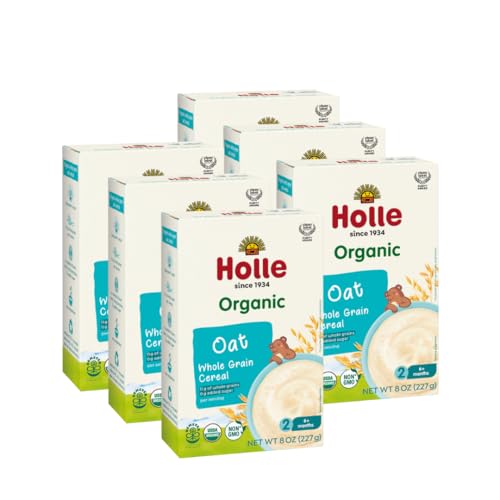
2. Holle Organic Whole Grain Oat Baby Cereal
The European biodynamic oat cereal that picky babies actually ask for by name.
This is the cereal that parents describe as a “generational product,” with buyers reporting they grew up on the Holle brand themselves. It is made with biodynamic and organic whole grain oat flour plus thiamin mononitrate, with no added sugar and no artificial flavors or preservatives.
Taste is the standout feature here — it is the most-discussed aspect in the reviews, and the comments show it is the rare cereal a fussy baby will eat every single time. Each of the six boxes holds 8 ounces, giving you 48 ounces total, and it mixes into a smooth porridge with your baby’s usual milk or water.
One point to weigh carefully is that buyers split on the iron content, since this is not an iron-fortified cereal. There is also a mixed view on value, so know that you are paying a premium for the brand’s clean reputation and biodynamic farming approach rather than added vitamins.
gentle grain start: If your baby rejects every other cereal you try, this oat porridge is worth a shot. The digestibility and taste get consistent praise, but parents who want a high-iron store-cupboard staple should look at the fortified options on this list.
3. Gerber Stage 1 Organic Oatmeal Cereal
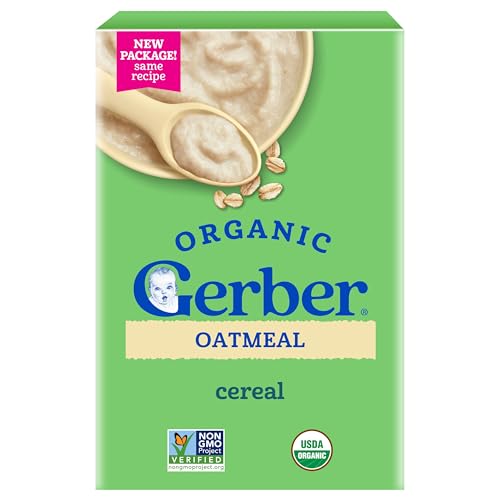
The pediatrician-recommended organic oatmeal that delivers 60% of the daily iron value per serving.
If your priority is iron, this is the cereal to beat. Gerber’s Stage 1 organic oatmeal delivers 60% of the daily value of iron per serving to support brain development, plus 14 essential vitamins and minerals including zinc and vitamin B12.
This is also the heaviest multi-pack option here at 2.5 pounds across five 8-ounce boxes, which works out to a substantial 40 ounces of cereal. Clean Label Project certification and 100+ quality checks give it a credible safety profile for a first food.
Buyers report using this cereal to thicken breastmilk on a doctor’s advice, and while the baby accepts the taste, one reviewer notes the organic version seems to thin out faster than the traditional blue-box formula. It is labeled for babies 6 months and older, so do not rush this one into a 4-month-old’s diet.
iron-fortified base
- 60% daily iron value for brain development
- 14g whole grains per serving
- Smooth mixing with breastmilk or formula
single grain dull
- Labeled for 6 months and older, not Stage 1 newborns
- Some find it thickens milk less than the non-organic version
4. Amara Organic Oats and Berries
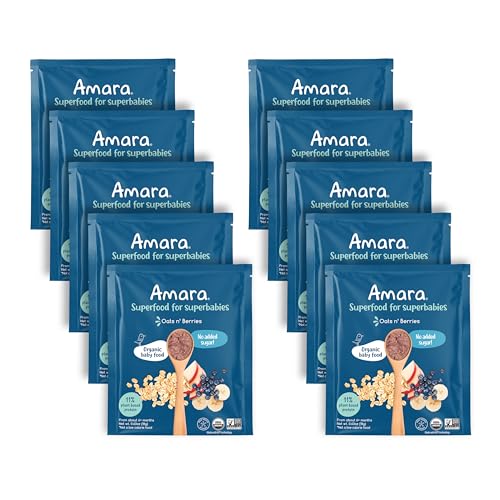
The pouch cereal that keeps breakfast ready for travel, camping, or any busy morning.
This is a different breed of baby cereal because it skips the traditional jar or box format entirely. Each package holds a single pouch of freeze-dried mix made from just organic oats, apple, banana, and blueberries — no sugars, additives, or fortified extras.
What stands out is how parents describe the taste as the most-loved feature, making it easy to introduce new flavors and textures. The patented no-high-heat process keeps the nutrients closer to fresh food, which is a meaningful difference from typical baby jars that rely on repeated heating.
The real value shows up when you are away from home. A grandmother reports simply ripping open a pouch and mixing to her preferred consistency with water — no measuring, no cooking, no cleanup. Travelers and campers praise it as a go-to breakfast solution, and allergy-prone babies with wheat, dairy, and egg sensitivities handle it well.
reach for taste: summer road trips, airplane meals, or any morning when a warm pot of cereal is not practical. The pouch format is genuinely mess-free.
avoid for sugar: you want a budget staple — value gets mixed reviews, with some parents finding cheaper alternatives for everyday home use.
5. Earth’s Best Organic Whole Grain Multi-Grain Cereal
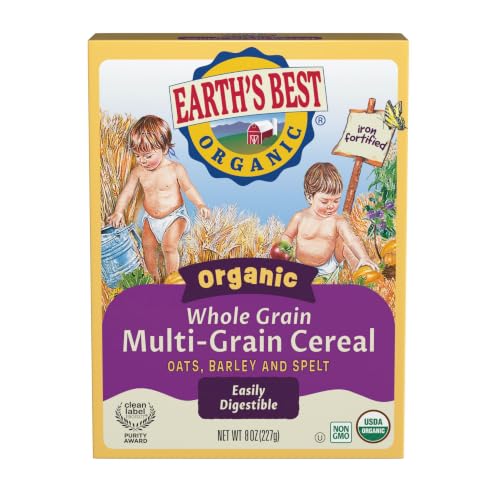
The wholesome multi-grain blend that has fed multiple generations of babies on a budget.
Here is a cereal that proves organic does not have to mean expensive. This 6-pack holds 48 ounces of cereal made from a simple blend of organic whole grain oat, spelt, and barley flour, fortified with iron for babies transitioning to solid foods between 4 and 6 months.
Parents praise its nutrition and easy digestion—a grandmother sending it to her 7-month-old in Jamaica reports no allergy issues, and a parent of triplets says all three enjoy it and digest it well. You can mix it with formula, breastmilk, or water to whatever consistency your baby prefers.
Parents who have bought this for years note that their older kids still enjoy it occasionally, which speaks to the pleasant taste. The catch is that the ingredient list has drawn some mixed feedback around trace heavy metals, so if you are highly sensitive to that issue, the third-party tested options on this list may suit you better.
multi-grain texture: it delivers whole-grain nutrition, iron fortification, and enough cereal to overwhelm your pantry shelf for one reasonable price. A strong default for families starting solids.
6. Holle Organic Whole Grain Four Grain Blend

The four-grain European blend that wakes up a baby’s palate with variety.
Once your baby has conquered single grains, this is the natural next step. The Holle Four Grain Blend combines oat, spelt, corn, and wheat in one cereal, giving 48 ounces of variety across six 8-ounce boxes with 0 g added sugar.
Parents report the texture and taste are both really good, and the cereal blends quickly with warm water or formula for a smooth porridge. Beyond simple feeding, some use it to thicken purees or mix it with flour for baking, which makes it a flexible pantry item rather than a single-purpose food.
This cereal is labeled for babies 6 months and up, so it is not for newborns just starting solids. The one practical complaint is the non-resealable box design — fine cereal powder can spill easily if you are not careful with storage.
four grain blend
- Four whole grains for flavor variety
- Zero added sugar and no artificial ingredients
- Blends easily with milk, water, or into purees
digestive load high
- Contains wheat, so not for gluten-sensitive babies
- Box lacks a resealable closure
7. BARI Organic Baby Rice Porridge
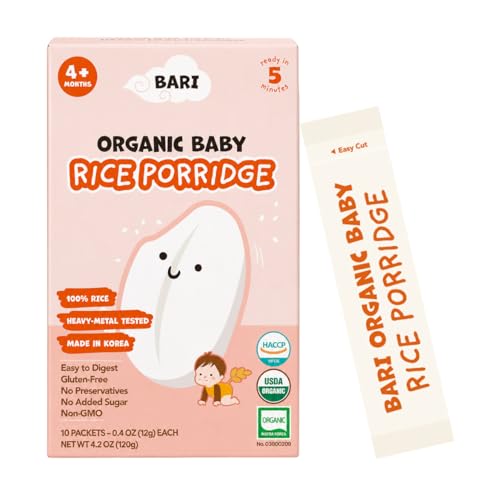
The rice porridge that answers the heavy metal question before you even ask.
If rice cereal is your choice, this is the version designed to address the arsenic concern head-on. Every batch is independently third-party tested for arsenic, lead, cadmium, and mercury, a transparency claim few rice cereals can match.
The ingredient list is remarkably short: 100% USDA Organic Korean white rice and nothing else. No sugar, salt, flavors, preservatives, or fortified additives. It is hypoallergenic and labeled for babies from 4 months, cooking in just 2 minutes on the stovetop or in the microwave with water, breastmilk, or formula.
The packaging is genuinely convenient, with 10 individual sealed packets making portion control and mess-free feeding simple. However, this is the pick with the most honest caveats of the group: the reviewers who loved it praise its simplicity, but others report issues getting the consistency right, sometimes ending up too watery.
use occasionally: you want a rice-based option with documented heavy metal testing and single-ingredient purity.
avoid daily: this is your baby’s very first solid food — the reviews suggest starting with simpler, gentler grains before moving to rice.
Understanding the Specs
Iron Fortification vs. Natural Grains
Some cereals, like the Gerber oatmeal, are fortified with up to 60% of the daily value of iron because babies naturally deplete their iron stores around 6 months. Others, like the Holle oat cereal, skip fortification entirely and rely on the natural grain alone, which some parents prefer for a cleaner label but which requires supplementing iron elsewhere in the diet.
Single Grain vs. Multi Grain
Single-grain cereals such as plain oats or white rice are the standard first foods because they are easiest on a developing digestive system. Multi-grain blends that combine oat, spelt, corn, and wheat introduce more textures and potential allergens, so they are generally labeled for babies 6 months and older rather than for true beginners.
FAQ
What is the safest first baby cereal organic option?
Which organic baby cereal has the most iron?
Can I mix organic baby cereal with breastmilk?
Is rice cereal safe for my baby?
What is the difference between Stage 1 and Stage 2 baby cereal?
At what age can my baby eat multi-grain cereal?
How do I prepare organic baby cereal for the right texture?
Which cereal is best for a baby with food allergies?
Final Thoughts: The Verdict
For most families, the baby cereal organic winner is the Quaker Organic Oatmeal because it balances verified organic quality, bulk value, and a taste that wins over babies and adults alike. If your priority is iron fortification for a 6-month-old, the Gerber Stage 1 Oatmeal delivers the highest iron content of the group. And for travel or allergy-sensitive babies, the Amara Oats and Berries pouches offer mess-free, clean-ingredient convenience wherever your day takes you.
How We Picked
We do not accept paid placement. Every pick is matched to a real buyer and a real use-case; we do not hands-on test units.
Sources & Methodology
Specifications: manufacturer listings and product documentation. Review insights: verified customer reviews, as of September 2026. Pricing: not shown on this page (it changes often); check the current price via the retailer link.
As an Amazon Associate, Gadgets Feed earns from qualifying purchases. This does not affect which products we feature.