
Our readers keep the lights on and my morning glass full of iced black tea. As an Amazon Associate, I earn from qualifying purchases.
Specs are compiled from manufacturer listings and verified buyer reviews and can change over time — please confirm the key details on the product page before buying.
Picking the right speaker wire for your car is the difference between crisp, clean sound and a system that leaves you wondering if you installed something wrong. Thicker isn’t automatically better, and the cheapest spool can cost you signal quality on a long run to your trunk amp. This guide breaks down the only specs that matter—gauge, conductor material, and length—using the real-world specs and owner feedback for the top contenders.
I’m Min — the founder and writer behind Gadgets Feed. This guide is built by comparing the manufacturers’ published specifications and the patterns across verified customer reviews, so you get each pick’s real strengths and trade-offs instead of marketing spin.
The wires below are the ones that hold up to heat, vibration, and repeated bending without cracking or corroding. Here is how to choose the best car audio speaker cable for your specific setup, from a quick 4-foot door speaker run to a full 100-foot amplifier install.
Our Picks at a Glance


How To Choose The Best Car Audio Speaker Cable
Before you buy, you need to match the wire to the distance it will travel and the power your amplifier pushes. A mismatch means wasted money or weak sound, so here are the three things to get right.
Gauge: The Thickness That Carries the Signal
To get clear sound to your speakers, you need the right wire thickness, called the gauge (like 14 AWG or 18 AWG). A lower gauge number means a thicker copper wire with less electrical resistance, so the signal stays strong over long distances. For a 50-foot run to rear speakers, a 14-gauge wire is the balance for most amplifiers, while a shorter 10-foot dash speaker might only need 16 or 18 gauge.
Conductor Material: CCA vs. OFC
You will see two main types of metal inside: Copper-Clad Aluminum (CCA), which has an aluminum core with a copper coating, and Oxygen-Free Copper (OFC), which is pure solid copper. CCA is lighter and cheaper, making it great for budget builds, but OFC carries more current and resists corrosion better, which is why it is the pick for high-power subwoofer systems.
Flexibility and Jacket Quality
Car interiors are full of tight corners and sharp metal edges, so a stiff wire is a nightmare to route. Look for a soft, flexible PVC or silicone jacket that bends easily without kinking. A jacket that resists fraying is essential when you are pulling the wire through a door boot or under the carpet, because the last thing you want is a short circuit after installation.
Quick Comparison
| Model | Best For | Gauge (AWG) | Length | Conductor Type | Amazon |
|---|---|---|---|---|---|
| InstallGear 14 Gauge★ Best Overall | All-around car installs | 14 | 100 Feet | Aluminum | Amazon |
| Recoil 9-ConductorSmart Bundle | 4-speaker amp wiring | 18 | 20 Feet | Copper | Amazon |
| DS18 Ultra Flex | Heavy-duty long runs | 12 | 100 Feet | CCA | Amazon |
| Install Link 10 AWG | High-power subwoofers | 10 | 50 Feet | CCA | Amazon |
| NVX OFC 16 Gauge | Pure copper purity | 16 | 75 Feet | OFC | Amazon |
| GEARit CL3 Rated | Outdoor & in-wall runs | 14 | 100 Feet | CCA | Amazon |
| GEARit 500FT | Whole-system bulk jobs | 14 | 500 Feet | CCA | Amazon |
In‑Depth Reviews
1. InstallGear 14 Gauge Speaker Wire 100 ft
Our pick — over 4.5★ from 29,000+ verified ratings; the strongest balance of quality and price.
The 100-foot spool that has become the default for car audio fans who want a single roll for everything.
This is the wire people keep coming back for — many buy a second roll after the first, and the reason is that it handles the bulk of real car jobs without complaint. The 14 AWG thickness is the perfect middle ground: thick enough for 50-foot runs to your rear deck or amp, yet flexible enough to route through door panels and under carpets. Buyers report the color-coded polarity makes it easy to keep positive and negative straight, which cuts install time and prevents those frustrating phase issues that kill bass.
The quality is the headline here, and the crowd data backs it up — quality is what owners praise most by a wide margin. They note it cuts cleanly with standard strippers, the soft jacket does not fight you when bending around corners, and there is enough on the roll for a full vehicle. The one thing owners mention is that for runs longer than 50 feet, you would want to step up to a 12 AWG to avoid resistance, so plan your longest path before you cut.
Why It Wins
- Flat, color-coded conductors make polarity checks instant
- Soft jacket stays pliable even in cold car interiors
- Versatile gauge for both speakers and accessories
Who Should Pass
- Not ideal for massive 100-foot subwoofer runs needing thicker 10 AWG
- Aluminum conductor isn’t the top-tier choice for hardcore SPL builds
Grab this if: you want one dependable roll for a full car stereo install that balances cost, flexibility, and signal quality.
Think twice if: you are feeding a massive competition sub setup that demands a thicker pure-copper conductor.
2. Recoil 20-Feet 9-Conductor Speaker Cable
One pull replaces four separate wires — the install shortcut for adding a 4-channel amplifier.
This is a totally different idea from standard two-conductor wire, and it solves the messiest part of an amp install. Instead of running four separate pairs of speaker wire from your head unit to the amplifier, this single cable bundles eight speaker leads plus one remote turn-on lead into a 20-foot run. For a 4-speaker to amplifier installation, you pull one cable through the dash and door sills instead of threading multiple wires, which is why ease of use is the top reason owners pick this up.
It is built to make bypassing the factory amp simpler, with buyers reporting it did the job of connecting all channels and the 12v signal wire in one clean bundle. The 18 AWG high-strand CCA wire is thinner than the other picks here, which is fine for the relatively short signal path to an amp that then feeds the speakers with heavier gauge. The honest trade-off is that the leads are 18 AWG, and customers note wishing they had ordered a heavier gauge like 16 AWG for extra headroom on high-power systems.
Install time saver: this is the rare product that makes the whole job easier, since one easy-peel jacket protects all nine conductors from shorts.
Match to your amp: ideal for a stock or moderate upgrade, not for a giant mono-block pushing serious wattage.
Reach for this if: you are wiring an amplifier to a factory head unit and want to keep the harness tidy and quick.
Look elsewhere if: your amp puts out huge power that would push this 18 AWG gauge past its comfort zone.
3. DS18 12-Gauge Ultra Flex Speaker Wire

Bulky 12-gauge wire that still bends like rope, giving high-power builds a wire that routes cleanly.
If your system needs serious current, this spool steps up to a thicker 12 AWG conductor while keeping the soft rubber coating that people love. The flexibility is the standout feature here — reviewers point out it is easy to bend around tight corners in the car and hook up to receivers without the wire fighting back. Despite the heavy-duty size, the soft jacket means it does not kink when you are tucking it into tight spaces behind the dash or along the door sill.
The quality earns strong praise, with owners calling it the best they have used and noting a couple of months of use across all their speakers brought zero problems. It is built from CCA (an aluminum core with a copper coating), which is the economical route for power transfer, and DS18 notes that systems needing even more power should look at OFC wiring. The recurring note is that the thickness is almost too much for some terminal connections, so check your speaker terminals can accept a chunky 12-gauge wire before you commit.
Power Ready
- Thicker 12 AWG handles longer runs with less signal loss
- 100 feet covers multiple cars or a whole home theater
- Soft jacket stays flexible in tight routing spots
Heads Up
- CCA conductor, not pure OFC copper for ultimate conductivity
- Some find the thickness bulky for small terminals
Best if: you are running long distances or want headroom for future upgrades and dislike fighting stiff wire.
skip it if: your speakers use tiny spring clips that will not accept this hefty gauge.
4. Install Link 10 AWG Speaker Wire

The thickest wire in this lineup, built for subwoofers that demand maximum current flow.
This is the wire you grab when the bass needs to hit hard and the amplifier is hungry for current. At 10 AWG, this is a full 80% thicker than the 18 AWG in the Recoil cable above, which means dramatically less electrical resistance on the path to your subwoofer. The 50-foot length is a realistic amount for a single subwoofer run from the amp in the trunk to a box, and the frosted blue and black jacket makes polarity identification simple even in low light.
The CCA construction keeps the price sensible while delivering solid conductivity for high-power audio. Owners call it strong, easy to work with, and note the outer layer cuts easily when you need to strip it back for a clean connection. As heavy-duty wire, it holds up well, with reviews pointing out the quality and value as the main reasons to buy — the legible markings on the jacket get specific praise for making installs faster.
For the bass heads: this singular 10 AWG conductor is overkill for tweeters but exactly right for a big sub.
Not a generalist: using this chunky wire for every door speaker is overkill and harder to hide.
Choose this for: a serious subwoofer install where you want zero worry about the wire bottlenecking your power.
Forget it if: you only need to run small door speakers — a 14 or 16 AWG is far easier to manage.
5. NVX Professional Grade OFC Speaker Wire

100% virgin copper with a silver-tinned finish, giving you premium signal purity in a flexible jacket.
Most wire in this price range uses CCA, but this NVX spool is built from 100% Oxygen-Free Copper (OFC) with a silver-tinned coating. That matters because pure copper conducts better than the aluminum-core wires, and the tinning makes it easy to solder without corrosion building up over time. This is the pick for an audiophile who wants the cleanest possible path for their signal, even on a shorter 75-foot run.
This wire uses twisted-pair technology (two wires twisted together to cancel out electrical noise) to reject interference, and the EnvyFlex jacket keeps it remarkably flexible despite the quality construction. Shoppers say it feels nice to work with, strips easily, and looks good once installed. The 16 AWG gauge is lighter than most car-audio wire, so this suits component speakers and shorter runs rather than high-power subs — and a few buyers report the actual thickness comes across as thicker than expected, which is a pleasant surprise for durability.
Audiophile Edge
- True OFC copper resists corrosion and carries signal cleanly
- Silver-tinned strands solder fast and stay durable
- Double insulation protects against chafing
Not For Everyone
- 16 AWG is thin for long, high-power subwoofer runs
- Premium construction costs more per foot than CCA spools
Best for: the listener chasing clean mid and high frequencies who values pure metal over pure cost savings.
Pass if: you are wiring a 500-watt sub and need the current capacity of a fat 10 or 12 AWG.
6. GEARit Outdoor Speaker Wire CL3 Rated
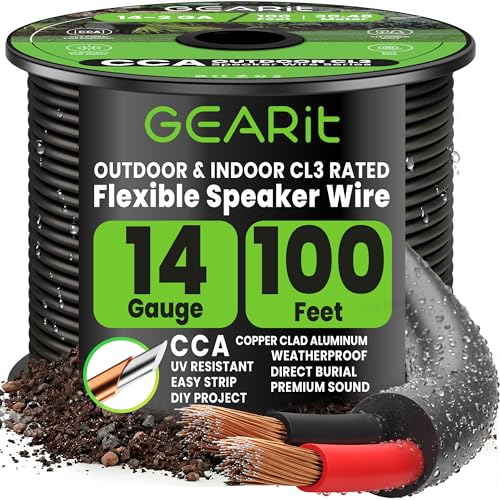
A flame-retardant, weather-ready jacket makes this the go-to for wiring that leaves the car interior.
This GEARit spool earns its keep the moment your install goes beyond the cabin — it is CL3 rated, meaning the flame-retardant jacket is certified for in-wall and outdoor use. If you are running wire from the car battery to a light bar, or from a home amp to outdoor patio speakers, this jacket resists fraying and environmental wear far better than basic PVC. The 100-foot length gives you room to route a long path safely.
What wins people over is the sequential foot markers printed right on the black jacket, so you can measure and cut precisely without a tape measure. The red and black color coding makes hooking up the amp and speakers take seconds. Owners who buried it in the yard or ran it to outdoor Yamaha speakers report the sound quality is excellent, and the flexible jacket pulls around corners without kinking — making it a favorite for hidden, long-term installs.
Built For Exposure
- CL3 jacket is rated for in-wall and outdoor safety
- Foot markers printed on the jacket for exact cuts
- Thick insulation holds up to underground and rock contact
Know The Fit
- CCA core is not the highest-conductivity option
- Outdoor focus means the jacket is stiffer than indoor-only wire
Reach for this if: your wiring crosses from a car into the open air, under a yard, or through a wall cavity.
Look elsewhere if: you need maximum flexibility for tight in-dash routing — a softer indoor jacket bends freer.
7. GEARit 14 Gauge Speaker Wire 500FT
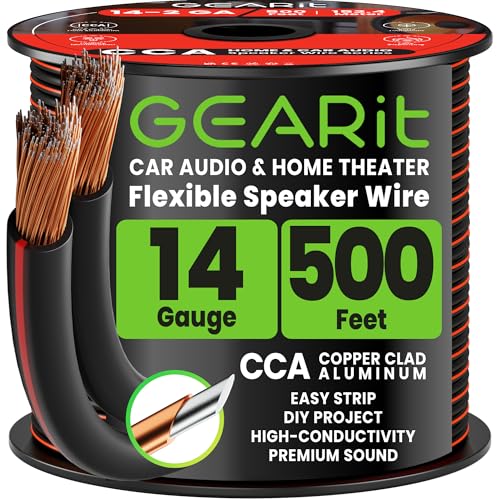
Half a thousand feet of 14-gauge wire, for the installer who would rather stock up once than run out mid-project.
If you are wiring a whole car, a home theater, and a workshop all in one go, this giant spool stops the annoying “I need one more roll” trip. At 500 feet, it is five times the length of the Recoil 20-foot cable above, giving you enough copper-clad aluminum conductor to handle every speaker in a full multi-room setup or several vehicles. The 14 AWG gauge remains the versatile all-rounder that fits most terminals without adapters.
The draw here is value and convenience — the sequential foot markers let you cut precise lengths, and the polarity markings take the guesswork out of matching positive and negative terminals. Owners describe it as quality wire that feels well coated in the hand and works great for a shop or home theater system. Durability gets mixed feedback in the review data, so keep it away from sharp metal edges during install, and use grommets where it passes through the firewall.
Never Run Out
- 500 feet covers a fleet of vehicles or a whole house
- Marker lines make every cut exact
- Soft jacket routes around furniture and trim
Commitment Check
- Huge investment if you only need one short run
- Store it indoors — the jacket is not rated for direct burial
Get this when: you have multiple projects queued up and the per-foot cost saving of a giant spool makes sense.
Avoid it if: you just need one 30-foot run — a smaller roll wastes less money and space.
Understanding the Specs
AWG Gauge Numbers
AWG stands for American Wire Gauge, and the number tells you the wire’s thickness. The trick is that smaller numbers mean thicker wire — a 10 AWG is much fatter than an 18 AWG. Thicker wire has less resistance, so it carries more current over long distances without losing power. For car audio, use 18 or 16 AWG for short speaker runs, 14 AWG for most mid-length runs, and 12 or 10 AWG for subwoofers and long paths to the trunk amp.
CCA vs OFC Conductors
Copper-Clad Aluminum (CCA) wire has an aluminum center wrapped in copper. It is lighter and cheaper, which keeps budget builds affordable, but it has more resistance than pure copper. Oxygen-Free Copper (OFC) is solid copper with no oxygen trapped inside, so it conducts better and resists corrosion longer. If you run high power or want the install to last for years, OFC is worth the extra cost per foot.
FAQ
Is 14 AWG speaker wire good enough for car audio?
What is the difference between CCA and OFC speaker wire?
Does speaker wire gauge affect sound quality in a car?
Can I use home theater speaker wire in my car?
How long should my car speaker wire runs be?
What does the polarity marking on speaker wire mean?
Is a 9-conductor speaker cable better than standard 2-conductor wire?
How does wire flexibility affect my car install?
Final Thoughts: The Verdict
Across the board, the winner for the best car audio speaker cable is the InstallGear 14 Gauge because the crowd favorite — 4.8 stars across 29,000+ owners — pairs a versatile gauge with the flexibility that makes a full install easy. If you want the purest signal for an audiophile build, grab the NVX OFC spool. And for a fast 4-channel amp hookup, the Recoil 9-Conductor saves you an entire afternoon of cable wrestling.
How We Picked
We do not accept paid placement. Every pick is matched to a real buyer and a real use-case; we do not hands-on test units.
Sources & Methodology
Specifications: manufacturer listings and product documentation. Review insights: verified customer reviews, as of September 2026. Pricing: not shown on this page (it changes often); check the current price via the retailer link.
As an Amazon Associate, Gadgets Feed earns from qualifying purchases. This does not affect which products we feature.