
Getting a sharp, detailed photograph of a tiny subject — a butterfly’s wing scales, the intricate eye of a jumping spider, or the delicate veins of a flower petal — demands equipment that can focus extremely close and resolve fine detail at a 1:1 reproduction ratio. A standard zoom lens simply cannot deliver the magnification or the flat-field sharpness required for true macro work. Without the right optics, the world of the very small remains frustratingly out of reach, resulting in soft, blurry images that fail to capture the subject’s true structure.
I’m Min — the co-founder and writer behind Gadgets Feed. I’ve spent countless hours comparing optical designs, minimum focusing distances, and sensor capabilities to separate the dedicated macro tools from the general-purpose pretenders.
Whether you need a rugged point-and-shoot for the field or a high-resolution mirrorless system for studio work, this guide meticulously evaluates the top contenders to help you buy the best camera for macro photography.
How To Choose The Best Camera For Macro Photography
The decision hinges on three critical factors: the magnification ratio your chosen lens or camera system can achieve, the working distance you have to light your subject, and the sensor’s ability to capture fine detail without introducing excessive noise. A dedicated macro lens with a 1:1 or greater reproduction ratio is non-negotiable for serious work. The working distance determines whether you’ll spook a live insect, and high-resolution sensors allow for aggressive cropping without losing detail.
Magnification Ratio and Reproduction Ratio
True macro photography begins at a 1:1 reproduction ratio, where the image on the sensor is the same size as the subject in real life. Lenses like the Sigma 105mm F2.8 and Sony 90mm F2.8 achieve this, while dedicated systems like the OM System M.Zuiko 90mm F3.5 go further to 2:1 (twice life-size on the sensor). A 0.25x or 0.5x lens, like the kit zooms included with many cameras, is not suitable for genuine macro work.
Working Distance and Minimum Focusing Distance
This is the space between the front of the lens and the subject when you achieve 1:1 focus. A long working distance — typically found on 90mm, 100mm, and 105mm focal lengths — is invaluable. It allows you to position lights without blocking them, avoid casting shadows on the subject, and approach skittish insects without disturbing them. A short working distance, common on wide-angle macro solutions, can make lighting challenging and often forces you to work very close, which may be impractical for living subjects.
Sensor Resolution and Image Stabilization
Higher megapixel counts, such as the 45.7MP on the Nikon D850, provide incredible cropping flexibility but demand flawless technique and a solid tripod. Image stabilization (either in-body or in-lens, like the Optical Steady Shot on the Sony 90mm) is crucial for handheld macro shots, where even the slightest camera shake is magnified. Systems with high-resolution sensors also reveal optical flaws more readily, making lens quality paramount.
Quick Comparison
On smaller screens, swipe sideways to see the full table.
| Model | Category | Best For | Key Spec | Amazon |
|---|---|---|---|---|
| Nikon D850 Body | Full-Frame DSLR | Maximum resolution and cropping | 45.7MP BSI sensor | Amazon |
| Sony 100mm F2.8 GM OSS | Macro Prime Lens | High-end Sony mirrorless | 1.4x magnification with OSS | Amazon |
| OM System 90mm F3.5 Macro PRO | M4/3 Macro Lens | Extreme magnification | 2.0x native magnification | Amazon |
| Panasonic S5IIX + Lenses | Full-Frame Mirrorless | Hybrid photo/video macro | Phase Hybrid AF, 24.2MP | Amazon |
| Canon EOS RP + 24-105mm | Full-Frame Mirrorless | Entry-level full-frame | 0.5x center focus macro | Amazon |
| Sony 90mm F2.8 Macro G OSS | Macro Prime Lens | Sharp Sony macro work | 1.0x magnification, OSS | Amazon |
| Viltrox 135mm F1.8 LAB FE | Telephoto Prime Lens | Close-up with background isolation | 0.25x magnification | Amazon |
| Nikon D7500 + 18-140mm | DSLR Kit | Versatile DSLR system | 20.9MP, 51-point AF | Amazon |
| Sigma 105mm F2.8 OS HSM | Macro Prime Lens | DSLR macro value | 1.0x magnification, OS | Amazon |
| Canon EOS R100 + 18-45mm | Mirrorless Kit | Beginner entry point | 24.1MP APS-C sensor | Amazon |
| OM System Tough TG-7 | Rugged Compact | Outdoor and underwater macro | 1cm microscope mode | Amazon |
In‑Depth Reviews
1. Nikon D850 FX-Format Digital SLR Camera Body

The Nikon D850 remains a benchmark for high-resolution macro work. Its 45.7MP back-side illuminated (BSI) sensor delivers extraordinary resolution and dynamic range, providing unparalleled cropping ability for extreme close-ups. Paired with a dedicated macro lens like the Nikon 105mm F2.8, the D850 can resolve the finest details in insect anatomy or mineral structures, outperforming many medium-format systems in real-world detail capture.
The 153-point autofocus system is exceptionally accurate, and the tilting touchscreen is a game-changer for low-angle shooting without contorting your body. The focus shift shooting mode allows for automated focus stacking in-camera, a critical feature for maximizing depth of field at high magnifications. The 9 fps continuous shooting rate at full resolution is a bonus for capturing fleeting moments of insect behavior.
However, the D850 is a heavy and large DSLR body, and its video autofocus is not as sophisticated as mirrorless rivals. The lack of built-in image stabilization means a tripod or a stabilized macro lens is practically mandatory for sharp handheld 1:1 shots. It represents the pinnacle of the DSLR era and is a top-tier choice for dedicated macro shooters who demand maximum image quality.
Why it’s great
- Exceptional 45.7MP sensor ideal for cropping.
- In-camera focus shift shooting for stacking.
- Excellent dynamic range and low-noise ISO 64.
Good to know
- No in-body image stabilization.
- Heavier and bulkier than mirrorless competitors.
- Video autofocus performance is lackluster.
2. Sony FE 100mm F2.8 GM OSS

The Sony 100mm F2.8 GM OSS is a professional-grade macro lens that pushes beyond the standard 1:1 ratio, offering 1.4x maximum magnification natively. When paired with a compatible teleconverter, it can achieve up to 2.8x magnification, allowing photographers to fill the frame with subjects that are mere millimeters across. The G Master design delivers breathtaking resolution and bokeh, even at these extreme magnifications.
Optical image stabilization (OSS) is built into the lens, critical for combating the amplified camera shake at 1.4x. The four XD linear motors provide fast, precise, and silent autofocus, a rarity in macro lenses where focus hunting is common. The focus ring offers excellent damping for precise manual adjustments, and the lens is dust and moisture resistant for outdoor use.
The main consideration is its premium price tag, placing it as a serious investment. For Sony E-mount users, however, it is arguably the most optically refined macro lens available, combining extreme magnification with reliable autofocus and excellent stabilization. It is a top-tier choice for serious nature and product photographers.
Why it’s great
- Excellent 1.4x native magnification ratio.
- Fast, quiet, and accurate autofocus.
- Integrated Optical Steady Shot for handheld use.
Good to know
- Premium price point, high investment.
- Requires a high-resolution Sony body for best results.
3. OM SYSTEM Olympus M.Zuiko Digital ED 90mm F3.5 Macro IS PRO
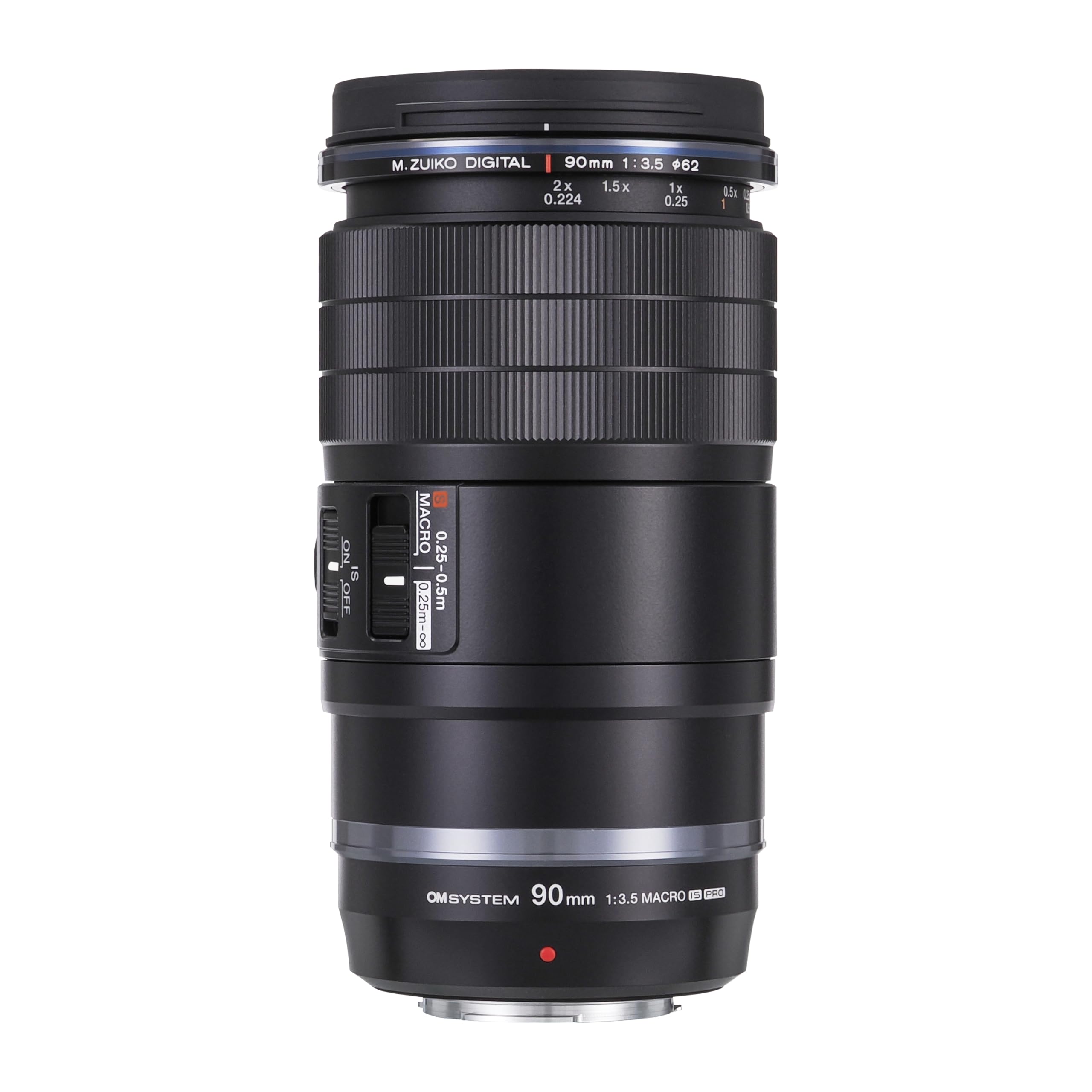
The OM System 90mm F3.5 Macro PRO is a tour de force in macro optics, providing a native 2.0x magnification ratio without any teleconverter. In 35mm full-frame equivalent terms, this represents a massive 4x magnification factor. With the optional MC-20 teleconverter, it reaches an astounding 4.0x (8x 35mm equivalent), allowing you to capture microscopic details invisible to the naked eye, like the crystalline structure of a fly’s eye or the pollen grains on a stamen.
Built for the Micro Four Thirds system, the lens is surprisingly lightweight at 739 grams and features class-leading high-speed autofocus. The IP53 splashproof and dustproof rating means it can handle rain and dust in the field. The minimum focusing distance of 0.224 meters provides a comfortable working distance even at 2x magnification.
The lens demands a capable M4/3 body like the OM-1 to unlock its full focus stacking and stabilization potential. The smaller sensor does introduce more noise at higher ISOs compared to full-frame, but for dedicated macro shooters, the sheer magnification capability and portability are unmatched. It is the ultimate specialized tool for extreme close-up work.
Why it’s great
- Incredible 2.0x native magnification ratio.
- Lightweight and compact for the capability.
- Excellent weather sealing for outdoor use.
Good to know
- Requires a compatible Micro Four Thirds body.
- Maximum aperture of F3.5 limits low-light performance.
4. Panasonic LUMIX S5IIX Mirrorless Camera
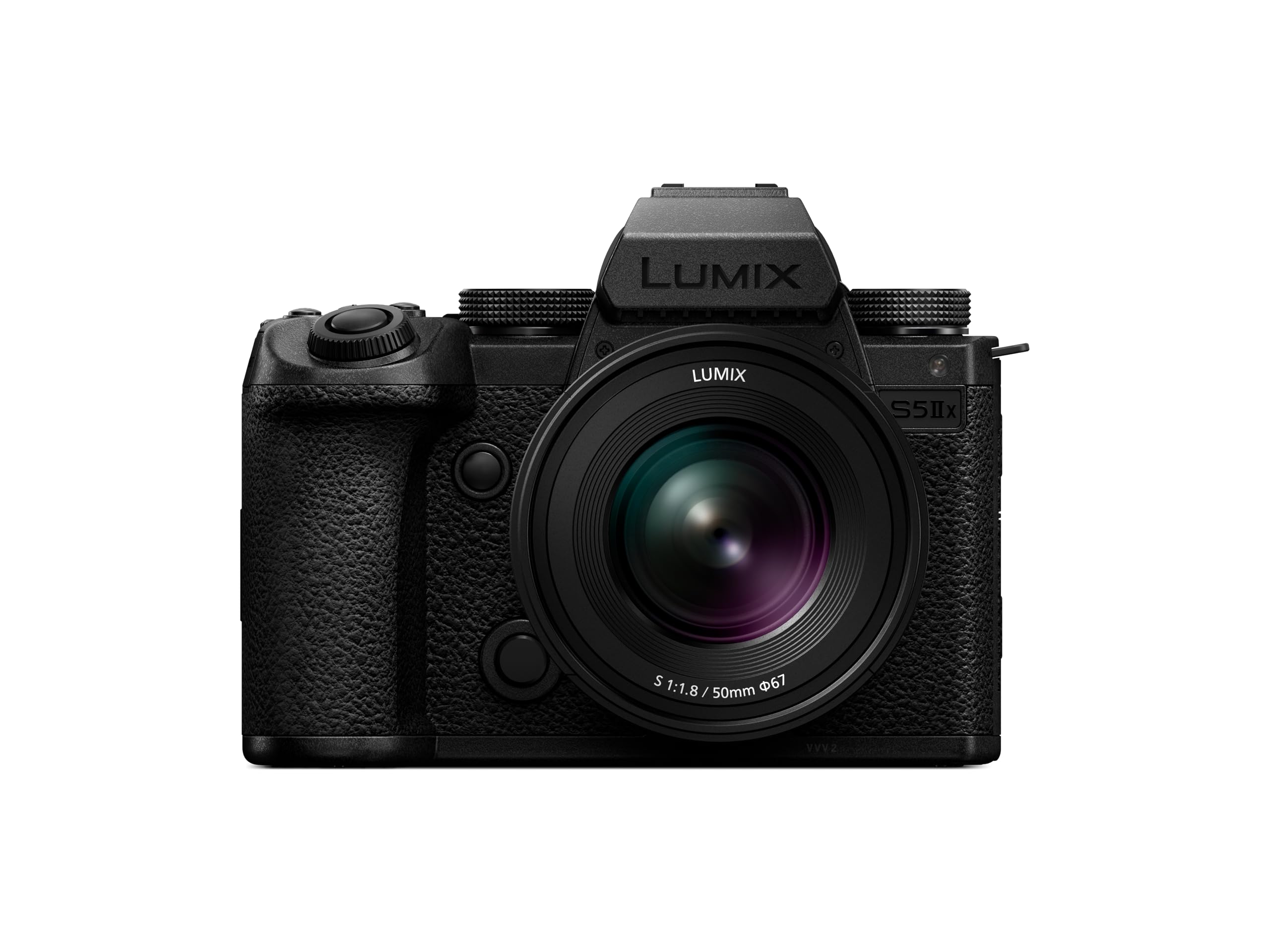
The Panasonic S5IIX is a hybrid powerhouse that excels in both stills and video macro work. Its 24.2MP full-frame sensor, combined with the new Phase Hybrid Autofocus system, delivers reliable and quick focus acquisition even for small, low-contrast macro subjects. The 5.8K ProRes internal recording allows for incredible video detail, which can be cropped down for extreme close-up sequences.
The Active I.S. stabilization system is one of the best in the industry, providing rock-solid handheld footage and stills at high magnifications, reducing the need for a tripod in many scenarios. The unlimited video recording capability, thanks to an internal fan, is essential for time-lapse macro work or long recording sessions. The included 20-60mm and 50mm F1.8 lenses provide a versatile starting point, though you’ll need a dedicated macro lens like the L-Mount 100mm for 1:1 work.
Its video-focused design means stills photographers may find the menu system less intuitive than dedicated photo cameras. The 24.2MP sensor is lower resolution than the D850, offering less cropping headroom. However, for those who want a single system for both macro photography and videography, the S5IIX is an exceptional value proposition.
Why it’s great
- Excellent Phase Hybrid AF for macro subjects.
- Best-in-class active image stabilization.
- Unlimited 5.8K ProRes video recording.
Good to know
- Menu system can be complex for pure stills shooters.
- Requires a dedicated L-mount macro lens for 1:1.
5. Canon EOS RP + RF24-105mm Lens

The Canon EOS RP represents the most affordable entry point into full-frame mirrorless photography, and it’s a solid platform for macro work. Its 26.2MP sensor delivers great image quality, and the Dual Pixel CMOS AF is fast and accurate for focusing on close-up subjects in live view. The kit lens offers a center focus macro mode that achieves a 0.5x magnification ratio, which is useful for larger subjects like flowers and coins.
The camera body is compact and lightweight, making it easy to handle on a macro rail or in the field. The tilting touchscreen is excellent for composing low-angle shots. The RP’s compatibility with Canon’s RF mount gives you access to the outstanding RF 100mm F2.8L Macro IS USM lens for true 1:1 macro performance when you’re ready to upgrade.
The kit lens only reaches 0.5x magnification, so it is not a true macro solution out of the box. The camera’s battery life is modest, and the 4K video has a heavy crop. But for a budget-conscious shooter who wants to start with full-frame foundation and upgrade lenses over time, the EOS RP is a very smart buy.
Why it’s great
- Lowest price entry into full-frame mirrorless.
- Excellent Dual Pixel AF for live view focusing.
- Compact and lightweight body.
Good to know
- Kit lens only achieves 0.5x magnification.
- Relatively poor battery life.
- 4K video has a significant crop.
6. Sony SEL90M28G FE 90mm f/2.8-22 Macro G OSS

The Sony 90mm F2.8 Macro G OSS is a legendary performer in the Sony E-mount ecosystem. It delivers corner-to-corner sharpness even wide open at F2.8, with beautiful bokeh that can separate a tiny subject from a busy background. The 1.0x magnification ratio is achieved at a comfortable working distance of about 28 centimeters, which is excellent for both insects and product work.
Optical Steady Shot (OSS) is built into the lens, making handheld macro shots much more feasible. The Direct Drive SSM provides quiet and precise autofocus, which is helpful for video. The Nano AR coating effectively suppresses flare and ghosting, maintaining contrast even when shooting backlit subjects like leaves and petals. The lens also features an instant manual/auto focus selection ring for quick control.
At high magnifications, the lens can hunt for focus in low contrast situations, even with the focus limiter engaged. It also tends to require a lot of light; a ring light or flash is often necessary for sharp shots at 1:1. Despite these minor quirks, its optical quality is so high that it remains a must-have for any serious Sony macro photographer.
Why it’s great
- Exceptional corner-to-corner sharpness.
- Built-in Optical Steady Shot.
- Creamy bokeh and great color rendition.
Good to know
- AF can hunt in low contrast.
- Heavy and can feel front-heavy on smaller bodies.
7. Viltrox AF 135mm F1.8 LAB FE

The Viltrox 135mm F1.8 LAB FE is a fast telephoto prime that, while not a true 1:1 macro lens, is an excellent tool for close-up photography. Its 0.25x magnification ratio at a minimum focusing distance of 0.72 meters allows for tight close-ups with an extraordinary background compression and bokeh. The F1.8 aperture creates a very shallow depth of field, perfect for isolating small subjects from their environment.
The lens features a sophisticated optical design with 4 ED and 2 HR elements, ensuring sharp results with minimal chromatic aberration. The VeryVCM motor is fast and quiet, and the dual floating focus system maintains image quality across the focusing range. The magnesium-aluminum alloy construction feels premium and includes dust and splash protection.
For dedicated macro photography requiring a 1:1 reproduction ratio, this lens falls short. It is best suited for larger subjects like butterflies, flowers, and product details where you want a significantly compressed perspective and creamy bokeh, but not extreme magnification. For Sony E-mount users who prioritize subject isolation over life-size reproduction, it is a fantastic specialty lens.
Why it’s great
- Exceptional bokeh and subject separation.
- Large F1.8 aperture for low light.
- Solid build quality with weather sealing.
Good to know
- Only 0.25x magnification, not true 1:1 macro.
- Long 135mm focal length requires more working space.
8. Nikon D7500 + AF-S DX NIKKOR 18-140mm

The Nikon D7500 is a versatile mid-range DSLR that serves as an excellent platform for macro photography, especially when paired with a dedicated macro lens. Its 20.9MP APS-C sensor provides a 1.5x crop factor, effectively increasing the working distance of any macro lens you attach. The 51-point autofocus system with 15 cross-type sensors is robust and reliable for tracking small, moving subjects.
The 18-140mm kit lens is a general-purpose zoom and does not offer 1:1 macro capability. However, the camera body itself is a superb foundation. Its tilting 3.2-inch touchscreen is ideal for low-angle macro compositions. The 8 fps continuous shooting is useful for capturing multi-shot focus stacks. It is also built with a weather-resistant construction, suitable for outdoor macro work in less-than-ideal conditions.
The camera is older and lacks the latest mirrorless features like in-body image stabilization and a high-resolution electronic viewfinder. You will need to invest in a macro lens like the Nikon 105mm F2.8 Micro or the Sigma 105mm to achieve true 1:1 macro capability. For the price, it offers excellent image quality and a familiar DSLR ergonomic experience.
Why it’s great
- 1.5x crop factor improves macro lens reach.
- Excellent 51-point AF system for tracking.
- Durable, weather-resistant body.
Good to know
- Kit lens not a true macro lens.
- No in-body image stabilization.
- Older model with smaller sensor.
9. Sigma 258306 105mm F2.8 EX DG OS HSM Macro

The Sigma 105mm F2.8 EX DG OS HSM Macro offers incredible value for DSLR users seeking a true 1:1 macro lens. It delivers a full life-size magnification ratio at a comfortable working distance of 12.3 inches, making it suitable for both insects and small objects. The optical stabilization system helps in reducing camera shake, a significant advantage for handheld macro work in the field.
The lens is built like a tank, with a solid metal barrel and smooth focusing ring. The ring-type ultrasonic HSM motor is relatively fast and silent. At F2.8, it produces excellent sharpness and beautiful bokeh. It includes a hood adapter and lens hood in the box, which is a nice touch. The 105mm focal length is ideal for avoiding casting shadows on your subject.
It is heavy and can feel front-heavy, especially on smaller APS-C DSLR bodies. The autofocus can be slow and jittery in general use, though the focus range limiter helps. It is also prone to chromatic aberration in high-contrast situations. However, for its price point, the Sigma 105mm F2.8 is a remarkably capable macro lens that punches well above its weight.
Why it’s great
- Excellent value for a 1:1 macro lens.
- Comfortable working distance.
- Optical stabilization included.
Good to know
- Heavy and front-heavy on small bodies.
- Slow and jittery in general autofocus.
- Prone to chromatic aberration.
10. Canon EOS R100 + RF-S18-45mm Lens Kit

The Canon EOS R100 is the smallest and most affordable entry into the Canon RF mirrorless system, making it a low-cost starting point for macro photography. Its 24.1MP APS-C sensor and DIGIC 8 processor produce good image quality, and the Dual Pixel CMOS AF is responsive for face and eye detection. The compact size makes it very portable for carrying into the field for spontaneous macro opportunities.
The kit’s 18-45mm lens is a standard zoom and cannot achieve 1:1 macro. The camera lacks in-body image stabilization, so you will need a stabilized lens or a tripod for sharp macro results. However, the RF mount provides a clear upgrade path to the Canon RF 35mm F1.8 Macro IS STM, which offers 0.5x macro, or the professional RF 100mm F2.8L Macro for 1:1 work.
It is a basic body with a simple menu, which is great for beginners, but it has limitations. The 4K video is cropped, and the burst rate is modest. It is fundamentally a beginner’s camera, not a dedicated macro tool. For the price, it provides a capable, modern platform to learn macro techniques and invest in macro lenses without the premium body cost.
Why it’s great
- Very affordable entry into Canon RF system.
- Compact and lightweight for portability.
- Good Dual Pixel CMOS AF performance.
Good to know
- No in-body image stabilization.
- Kit lens is not suitable for macro.
- Cropped 4K video and limited burst rate.
11. OM System OLYMPUS Tough TG-7 Red Underwater Camera

The OM System Tough TG-7 is a completely unique proposition: a rugged, waterproof compact camera that excels at macro photography. Its variable macro system, including a microscope mode that focuses down to 1 centimeter from the end of the lens, allows it to capture incredible detail on tiny subjects. The 4x optical zoom and F2.0 lens deliver good brightness for close-up work.
It is built for the toughest environments: waterproof to 15 meters, shockproof from 2.1 meters, and freezeproof to -10°C. This makes it the ultimate companion for outdoor adventures like hiking in the rain, snorkeling, or exploring tide pools. The five underwater modes, including underwater microscope, open up a world of aquatic macro that other cameras simply cannot manage without expensive housings.
Its small sensor means image quality is not comparable to a full-frame system, and noise is evident in low light. The autofocus system is basic contrast-detection, which can be slow. It is a specialist tool for a specific purpose: getting extreme macro shots in the field, in the rain, or underwater. For any conventional macro work, a larger system is better, but for its niche, it is peerless.
Why it’s great
- Extreme outdoor durability (water, shock, freeze).
- Excellent 1cm microscope mode for tiny subjects.
- Dedicated underwater macro modes.
Good to know
- Small sensor limits low-light performance.
- Autofocus is basic and can be slow.
- Image quality can’t match larger systems.
FAQ
What is the minimum magnification I should look for in a macro lens?
Why is working distance important for macro photography of insects?
Do I need a tripod for macro photography?
Final Thoughts: The Verdict
For most users, the best camera for macro photography winner is the Nikon D850 Body because its combination of a massive 45.7MP sensor, excellent dynamic range, and in-camera focus stacking provides the ultimate platform for capturing and cropping extreme detail. If you need extreme magnification without bulky gear, grab the OM System 90mm F3.5 Macro PRO. And for a rugged, go-anywhere solution that includes waterproof macro capabilities, nothing beats the OM System Tough TG-7.